

P0303 on 2005-2011 Audi A6 3.2L V6: Cylinder 3 Misfire Causes and Fixes
On the 2005-2011 Audi A6 3.2L, a P0303 code is most often caused by a failed ignition coil or a worn spark plug in cylinder 3. A DIY-friendly coil swap can quickly diagnose the problem. Carbon buildup on the intake valves is another very common cause for misfires on this specific FSI engine, often requiring professional cleaning.
- P0303 on the Audi A6 3.2L V6 means cylinder 3 is misfiring.
- The most likely cause is a bad ignition coil, followed by a worn spark plug. A simple coil swap test can confirm a bad coil in minutes.
- Due to the FSI engine design, heavy carbon buildup on the intake valves is a very common cause of misfires and should be investigated if new coils and plugs don't solve the issue.
- Do not drive if the check engine light is flashing, as this can destroy your catalytic converter, a very costly part to replace.
What's Unique About the 2005-2011 Audi A6

The C6 generation Audi A6 with the 3.2L V6 engine uses Fuel Stratified Injection (FSI), a form of direct injection. While this technology improves power and efficiency, it is notoriously prone to heavy carbon buildup on the intake valves. This buildup disrupts airflow and is a primary cause of misfires, especially on cold starts or under load, often setting it apart from simpler ignition-only issues on other platforms. This issue is so prevalent that walnut blasting the valves is considered a routine maintenance item by many owners. The timing chain system, located at the rear of the engine, also has plastic guides that can wear, which can lead to timing-related misfires, often preceded by a rattling noise on startup.
Symptoms You May Notice
- Rough or vibrating idle.
- Hesitation or stumbling during acceleration.
- Flashing or solid Check Engine Light.
- Noticeable loss of engine power.
- Reduced fuel economy.
- Strong smell of gasoline from the exhaust.
- Engine shaking, especially under load or at certain RPMs.
- Replacing only the spark plug without testing the ignition coil first. The coil is a more frequent failure point and easy to test by swapping its position.
- Replacing fuel injectors before confirming significant carbon buildup, which is a more probable cause for misfires on the 3.2L FSI engine.
- Assuming a catalytic converter is bad due to a rich smell or related codes, when the root cause is a persistent misfire flooding it with unburnt fuel.
Most Likely Causes

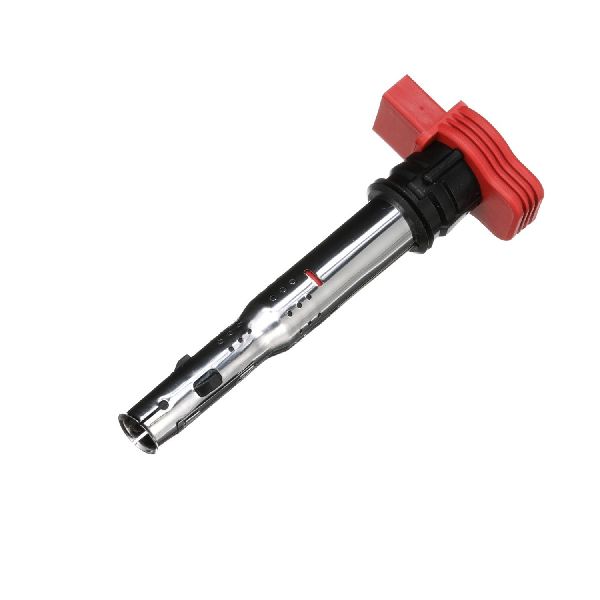
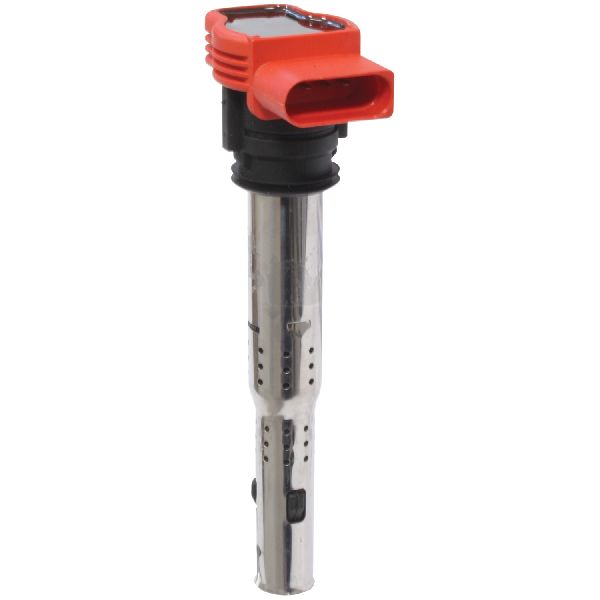
- Faulty Ignition Coil 🔴 High Probability Ignition coils are a common failure item on many Volkswagen and Audi products of this era. Heat cycles and age cause the internal windings to fail or the plastic housing to crack. Owners frequently report resolving P030x codes by replacing coils.
How to confirm: Swap the ignition coil from cylinder 3 with another cylinder (e.g., cylinder 1). Clear the codes and drive. If the code changes to P0301, the ignition coil is the faulty part. This is the most common and effective first diagnostic step. 🎬 Watch: A master tech's guide to solving Audi misfire issues.
Typical fix: Replace the failed failed ignition coil. It is often recommended to replace all six coils at once, especially on higher mileage vehicles, as they tend to fail around the same time. Use a reputable brand like Bosch, NGK, or Eldor.
Est. part cost: $40-$80 per coil - Worn or Fouled Spark Plug 🔴 High Probability
How to confirm: After ruling out the ignition coil, remove the spark plug from cylinder 3. Inspect it for excessive wear on the electrode, cracks in the ceramic, or fouling (a wet, black, or sooty appearance indicates it's not firing correctly).
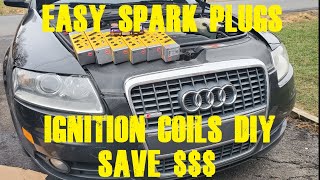
Typical fix: Replace all six spark plugs as a set. Using old and new plugs together can cause inconsistent performance. Ensure they are torqued to the manufacturer's specification (typically around 22 ft-lbs or 30 Nm for these engines 🎬 See this easy DIY walkthrough for plugs and coils., but always verify).
Est. part cost: $15-$30 per plug - Carbon Buildup on Intake Valves 🔴 High Probability The 3.2L FSI engine injects fuel directly into the cylinder, so gasoline detergents never wash over the intake valves. Oil vapor from the PCV system bakes onto the hot valves, forming hard carbon deposits that restrict airflow and cause misfires, particularly when the engine is cold or at higher RPMs.
How to confirm: This requires a visual inspection using a borescope inserted into the intake port for cylinder 3. The presence of thick, black, crusty deposits on the valve stems and head confirms the issue. The engine may also show symptoms like rough cold starts and loss of power.
Typical fix: Professional cleaning is required, most commonly via walnut shell blasting. This procedure uses crushed walnut shells propelled by compressed air to safely scour the carbon off the valves without damaging the engine components. 🎬 Watch: How to perform a carbon cleaning on the 3.2L V6. Some owners have attempted DIY cleanings, but it requires specific tools and great care to avoid engine damage.
Est. part cost: $0 (service cost is labor-based, typically $700-$1500 at a shop). - Faulty or Clogged Fuel Injector 🟡 Medium Probability Direct injectors operate under very high pressure and can become clogged or fail electronically. Some owners report leaky injectors causing cold start misfires or injectors getting stuck open, causing a rich condition. Cracks can also develop in the injector body.
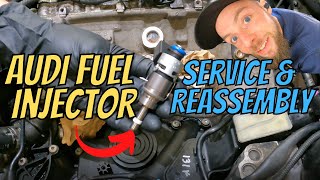
How to confirm: This is a more advanced diagnosis. A mechanic can perform a flow test. A DIY method involves listening for a consistent clicking sound from the injector with a mechanic's stethoscope. Swapping injectors between cylinders is possible but labor-intensive and requires replacing the single-use Teflon seals.
Typical fix: Replace the faulty fuel injector. It is critical to replace the injector seals (O-rings and Teflon combustion chamber seal) anytime an injector is removed.
Est. part cost: $150-$300
Rare But Worth Checking
- Low Compression: If ignition and fuel system checks do not resolve the misfire, a mechanical issue like a burnt valve, worn piston rings, or a timing chain problem could be the cause. A compression test and cylinder leak-down test are needed to diagnose this. In severe cases, cylinder wall scoring has been reported, requiring engine replacement.
- Vacuum Leak: A leak from a cracked hose (a known issue on some vacuum lines) or failed gasket in the intake system can lean out the air-fuel mixture and cause a misfire. This would typically be accompanied by a P0300 (random misfire) code or lean codes (P0171/P0174) as well.
- Intake Manifold Runner Flap Issue: The intake manifold has internal flaps that adjust airflow. The mechanism or sensor can fail, causing airflow problems and triggering misfires or other codes like P2004 or P2070. Sometimes the plastic components can break.
Diagnosis Steps
- Read the fault codes with an OBD-II scanner (like VCDS for VW/Audi) to confirm P0303 and check for any other codes. Note the freeze frame data, which shows engine conditions when the fault occurred.
- If the Check Engine Light is flashing, stop driving to prevent catalytic converter damage.
- Determine the location of cylinder 3. On the longitudinally mounted 3.2L V6, the passenger side bank (Bank 1) contains cylinders 1, 2, and 3, from front (radiator) to back (firewall). Cylinder 3 is closest to the firewall on the passenger side. The driver's side bank (Bank 2) holds cylinders 4, 5, and 6.
- Swap the ignition coil from cylinder 3 with the coil from cylinder 1. Clear the codes and drive the vehicle. If the code returns as P0301, the ignition coil is bad. This is the most crucial first step.
- If the code remains P0303, swap the spark plug from cylinder 3 with cylinder 1. If the code moves to P0301, the spark plug is faulty. However, it is best practice to replace all six plugs if they are old.
- If the misfire persists on cylinder 3, inspect the wiring and connector for the cylinder 3 ignition coil and fuel injector for any damage, corrosion, or loose connections.
- The next most likely cause is carbon buildup. Use a borescope to inspect the intake valves for cylinder 3. If significant deposits are found, a professional walnut blast cleaning is necessary.
- If valves are clean, investigate the fuel injector. Listen for a consistent clicking sound with a stethoscope. A more advanced test is to swap injectors between cylinders, but this is labor-intensive and requires new seals.
- As a final step for a persistent misfire, perform a compression test and a cylinder leak-down test to rule out mechanical engine damage like a bad valve or piston rings.
Parts You'll Likely Need

- Ignition Coil
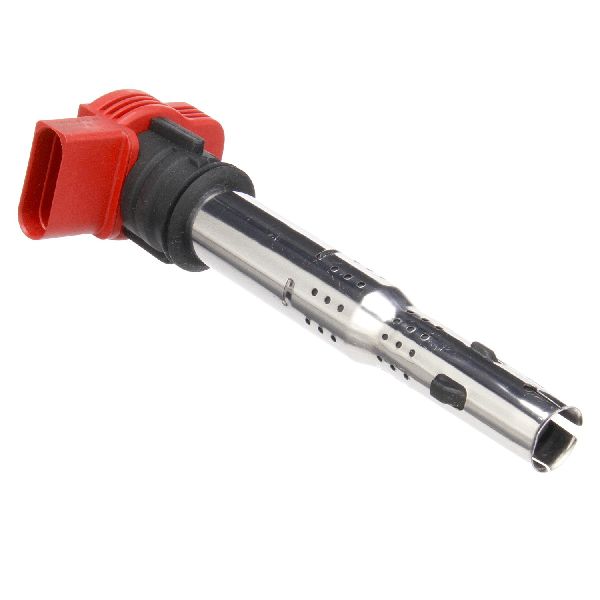
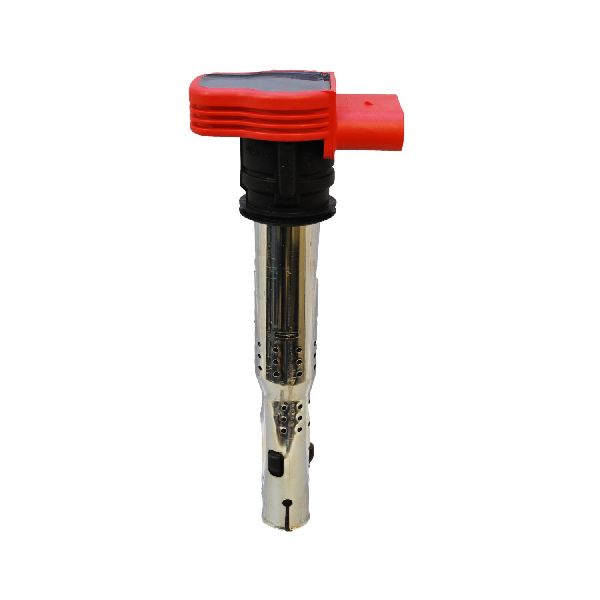
(OEM #06E905115F (or newer revisions like 06E905115G))— This is the most common failure part for a single-cylinder misfire on this engine. Revisions exist, so it's good to get the latest version.
Trusted brands: Bosch, NGK, Eldor, Genuine Audi
OEM price range: $60-$90
Aftermarket price range: $40-$70 - Spark Plug
(OEM #101905622 (or equivalent like NGK PFR6W-TG))— Spark plugs are a regular maintenance item and a common cause of misfires. If they haven't been changed in over 40,000 miles, they are a likely culprit.
Related Codes That Often Appear With This One
- P0300 — If P0300 (Random Misfire) is present, it suggests a problem affecting multiple cylinders, such as a large vacuum leak, low fuel pressure, significant carbon buildup across all cylinders, or a timing issue.
- P0301, P0302, P0304, P0305, P0306 — The presence of other cylinder-specific misfire codes indicates the problem is not isolated to cylinder 3 and points towards a more systemic issue, such as a failing fuel pump, bad batch of fuel, or a problem with one entire cylinder bank (e.g., a timing issue on Bank 1 or 2).
- P0172 / P0175 — These codes indicate 'System Too Rich' on Bank 1 and Bank 2, respectively. A stuck-open fuel injector on cylinder 3 could cause a rich condition on that bank.
Technical Service Bulletins (TSBs) & Recalls
- 24 08 10: Addresses issues with the intake flap motor and runner position sensor, which can cause performance problems. Service involves checking and possibly replacing the motor and updating ECM software. While not directly for P0303, a faulty intake runner system can contribute to airflow issues causing misfires.
- 24 14 55: Pertains to DTCs P2070, P2006, and P2007 related to intake manifold components sticking open or closed due to cracked vacuum lines. A vacuum leak can cause misfires.
- Bulletin #A0124212069038_5: Provides information for cases where the MIL is illuminated specifically for cylinder misfires including DTC P0303.
- Bulletin #A0123912069038_5: A manufacturer service bulletin addressing the illumination of the MIL and the storage of misfire codes P0300 through P0306.
- Bulletin #A0123802069038_4: Notes that the MIL may illuminate due to cylinder misfires, specifically citing DTC P0303 among others.
- Bulletin #A0123612069038_3: This bulletin provides diagnostic information for when the MIL is on and DTC P0303 may be stored in the engine control module.
- Bulletin #A0123352069038_2: Provides instructions for technicians when the MIL is illuminated and one or more DTCs such as P0303 are stored.
Platform-Specific Known Issues
- The 3.2L FSI engine is widely known for issues with carbon accumulation on intake valves, leading to misfires, rough idle, and performance loss. This is not a matter of 'if' but 'when' for most of these engines and should be a primary suspect for any misfire code, especially if coils and plugs are good.
- While less common for a single cylinder misfire, the timing chain tensioners and plastic guides can wear out over time, often signaled by a rattling noise on startup. If this progresses, it can cause the timing to jump, leading to misfires across an entire bank and potentially catastrophic engine damage.
Mechanic-Grade Diagnostic Values
- Healthy Cylinder Compression — expected: 177-187 PSI. Failure: A cylinder reading significantly lower (e.g., near zero) indicates a major mechanical issue like bent valves or piston/ring damage.
- Low-Side Fuel Pressure — expected: Approximately 6 bar (87 PSI) at the lift pump.. Failure: Significantly lower pressure indicates a failing in-tank fuel pump or clogged filter, which can cause misfires under load.
- High-Side Fuel Pressure (at idle) — expected: Around 40-50 bar (580-725 PSI).. Failure: Pressure that is erratic or significantly below specification points to a failing High-Pressure Fuel Pump (HPFP) or a faulty pressure sensor (G247).
- VCDS Misfire Counter (KWP-2000 ECUs) — expected: 0 counts at idle and under load.. Failure: An incrementing count in the field for cylinder 3 confirms the misfire is actively occurring.
Scan Tool Commands That Help
- VCDS (VAG-COM): Measuring Value Blocks (MVB) for Misfire Detection — To see live misfire counts per cylinder to confirm which cylinder is the problem. For the 3.2L V6, check group 014 for cylinders 1-3 and group 015 for cylinders 4-6. An increasing number for cylinder 3 confirms the fault location in real-time.
- VCDS (VAG-COM): Advanced Measuring Values - Search for 'Misfire' — On newer UDS protocol controllers, this is the modern way to access the same per-cylinder misfire counters as the older measuring blocks.
- VCDS (VAG-COM): Output Tests — Can be used to individually cycle components like the fuel injectors to listen for an audible 'click', helping to determine if an injector is electronically dead without having to remove it.
Wiring & Ground Locations
- Ignition Coil Fuse — In a fuse holder located in the ECU box at the back of the engine bay (firewall), often near the washer fluid filler cap. It is typically a yellow 20-amp fuse.. If an ignition coil short-circuits, it can blow this fuse, causing a no-start condition or lack of power to all coils. This is often missed after replacing a failed coil, leading to a misdiagnosis of a larger issue.
- ECM Connector 'A', Pin A31 — On the main Engine Control Module (ECM) harness connector.. This is the specific pin that sends the signal to the ignition coil for cylinder 3. It can be used for advanced continuity or voltage testing if a wiring fault is suspected.
- ECM Connector 'A', Pin A35 — On the main Engine Control Module (ECM) harness connector.. This is the specific pin that controls the fuel injector for cylinder 3. It is a key test point for diagnosing a suspected injector wiring problem.
- Engine Ground Straps — Multiple locations, but a key one is from the engine block to the chassis frame rail. Poor grounding is a known issue that can contribute to premature ignition coil failure.. A weak or corroded ground can cause insufficient spark energy, leading to intermittent misfires that are hard to diagnose. Some technicians recommend adding a dedicated ground wire for the ignition coils.
Real Owner Repair Stories
- AudiWorld Forums user 'InfamousAvant' (Audi A6 Avant C6) — P0303 with a flashing check engine light after replacing timing chain tensioners.
❌ Tried (didn't work) Checking timing again, Replacing spark plugs, Swapping ignition coils, Swapping fuel injectors
✅ What actually fixed it A compression test revealed cylinder 3 had almost no compression. The owner concluded the exhaust valves were bent during the initial timing chain work when the timing had slipped. The final fix required cylinder head repair by an independent shop. - Ross-Tech Forums user 'A6 4F' (2007 Audi A6 4F 3.2L) — Car ran rough, shut down, and would not restart. VCDS showed a code for 'Cylinder 5 Ignition Circuit - Short to Plus'.
❌ Tried (didn't work) Replacing the failed ignition coil on cylinder 5., Replacing the old battery.
✅ What actually fixed it The user found a blown 20-amp yellow fuse located in the ECU box at the rear of the engine compartment. Replacing this fuse allowed the car to start immediately. The shorted coil had caused the fuse to blow, disabling the entire ignition system. - AudiWorld Forums user 'Bigvaglover' (2008 Audi A6 Avant 3.2L) — Multiple misfires on cylinders 1, 2, and 4. Codes for EVAP leak and intake manifold flaps stuck closed.
❌ Tried (didn't work) Replacing PCV valve, Replacing vacuum hoses and MAP sensor
✅ What actually fixed it A compression test showed 0 PSI on the misfiring cylinders. An endoscope inspection revealed a burnt exhaust valve with a piece missing. The root cause was theorized to be intake manifold flaps stuck closed, causing a rich condition and detonation that eventually destroyed the valve. This highlights the importance of a compression test when basic fixes fail.
"I Checked Everything" — The Actual Cause
- In several documented cases, owners have performed smoke tests to find vacuum leaks and found none, only to later discover the issue was a cracked PCV valve/hose assembly. The cracks may only open under specific vacuum conditions not replicated by a smoke test, or the leak is internal to the system.
OEM Part Supersession History
06E905115A/B/C/D/E→06E905115F, 06E905115G— Successive internal revisions by the manufacturer (Bosch/Eldor) to improve reliability and prevent premature failure due to heat and vibration.
Heads up: While older revisions may work, it is highly recommended to use the latest available part number (e.g., 'F' or 'G') and replace all six coils as a set to ensure consistent performance and longevity. Mixing old and new revisions is discouraged.
Model Year Variations Within This Range
- 2005-2008 (Pre-facelift): Early C6 models with the AUK engine code may have different PCV system components and vacuum hose routing compared to the later BKH engine. While the misfire causes are largely the same, part numbers for items like the PCV valve may differ.
- 2009-2011 (Facelift): The facelifted models received updates to the MMI system and minor cosmetic changes. The BKH engine code became standard. While the core engine mechanics related to a P0303 are identical to the AUK, some electronic modules and software versions may differ, potentially affecting advanced diagnostics.
Diagnostic Flowchart
Real Owner Stories
Aggregated from forums and TSBs cited above. Mileages and costs reflect what owners reported in those sources.
2007 Audi A6 3.2L
Symptoms: The owner experienced engine stuttering and received a P0303 code shortly after having the spark plugs replaced.
What fixed it: Replacing all of the ignition coils resolved the stuttering and cleared the misfire code.
Source hint: Reddit r/AudiA6 thread titled 'Engine code P0303'
Audi A6 3.2L
Symptoms: The vehicle developed a persistent misfire that could not be resolved with standard ignition component replacements.
What fixed it: The issue was traced to a completely clogged fuel injector. The owner attempted to clean it, but ultimately had to replace the injector to fix the misfire.
Source hint: AudiWorld Forums thread titled 'UK: A6 3.2l engine failure'
Audi A6 3.2L
Symptoms: The owner experienced a cylinder 3 misfire (P0303) immediately following a timing chain service.
What fixed it: The owner swapped plugs, coils, and injectors without success, and had to proceed to a compression test to check for internal mechanical engine damage related to the timing service.
Source hint: AudiWorld Forums thread titled 'Cylinder 3 Misfire'
Related OBD-II Codes
Frequently Asked Questions
Where exactly is cylinder 3 located on the 3.2L V6 engine?
Does carbon buildup really cause the P0303 code on the 3.2L FSI?
I scanned my 2006 A6 with VCDS and got 'P0303-007 - Short To Ground'. Does this mean my wiring is bad?
Could a rattling noise on startup be related to my P0303 code?
Are there any TSBs for the 2005-2011 A6 that might explain a misfire?
What brand of ignition coils should I buy for my A6?
Helpful Videos


Used OEM Parts in Stock

New Aftermarket Parts Available


The information in this article is provided for general reference and educational purposes only. Vehicle specifications, procedures, and part compatibility can vary by production date, trim level, and region. Always consult your vehicle's factory service manual and verify part numbers before purchasing or performing repairs. Safety-critical components such as airbags, seat belts, and braking systems should be installed by a qualified professional.
- Audi A6:
- 🎬 Helpful Videos
- 🛍️ Shop This Part
- What's Unique About the 2005-2011 Audi A6
- Symptoms You May Notice
- Most Likely Causes
- Rare But Worth Checking
- Diagnosis Steps
- Parts You'll Likely Need
- Related Codes That Often Appear With This One
- Technical Service Bulletins (TSBs) & Recalls
- Platform-Specific Known Issues
- Mechanic-Grade Diagnostic Values
- Scan Tool Commands That Help
- Wiring & Ground Locations
- Real Owner Repair Stories
- "I Checked Everything" — The Actual Cause
- OEM Part Supersession History
- Model Year Variations Within This Range
- Diagnostic Flowchart
- Real Owner Stories
- 2007 Audi A6 3.2L
- Audi A6 3.2L
- Audi A6 3.2L
- Related OBD-II Codes
- Frequently Asked Questions
- 🎟️ Get 5% Off