

OBD-II Code P2070: Intake Manifold Tuning (IMT) Valve Stuck Open
What P2070 means, why it triggers, and how to fix it
- Code P2070 indicates the intake manifold tuning valve is stuck open, robbing your engine of low-RPM torque and reducing fuel economy by 5-10%.
- Before buying expensive parts, spend 5 minutes visually inspecting the outside of the intake manifold for a broken $15 plastic linkage arm or bushing.
- Never replace the IMT actuator without first disconnecting the linkage and verifying the valve flap moves freely by hand, as carbon buildup frequently causes the valve to stick.
- If a shop quotes $800+ for a full intake manifold replacement, ask them to physically show you the internal failure to rule out a cheap external clip repair.
What Does P2070 Mean?

The P2070 code means the Powertrain Control Module (PCM) detects the Intake Manifold Tuning (IMT) valve is stuck open. This valve controls airflow by changing the intake runner length to optimize performance at different speeds. When stuck open, the engine loses low-RPM torque, directly hurting acceleration and fuel efficiency.
Technical definition: Intake Manifold Tuning (IMT) Valve Stuck Open, Bank 1. This indicates the engine control module (ECM) commanded the IMT valve to close at lower RPMs, but the actuator's position sensor reports it remains open. Bank 1 is the side of the engine containing cylinder #1.
Can I Drive With P2070?
Yes, But With Caution. You can drive the vehicle, but you will experience reduced engine power, poor fuel economy, and a rough idle. Repair it soon to prevent carbon buildup, restore fuel efficiency, and pass emissions. Driving for hundreds of miles risks severe internal engine damage if brittle plastic linkage parts break off and enter the cylinders.
Common Causes

- Broken or missing plastic bushings/linkage on the actuator rod (Very Common) — Vehicles use small plastic bushings or clips to connect the actuator rod to the IMT valve lever. These become brittle from heat, break off, and leave the valve stuck in its last position.
- Carbon buildup on the IMT valve flaps or shaft (Common) — On direct-injection (GDI) engines, carbon and oil sludge accumulate inside the intake manifold, causing the valve flaps to stick and preventing free movement.
- Failed IMT valve actuator (motor or vacuum diaphragm) (Common) — The actuator moves the valve. These fail electrically (burnt-out motor) or mechanically (torn diaphragm), leaving them unable to move the valve as commanded.
- Internal actuator position sensor failure (Common) — The actuator assembly contains an integrated position sensor reporting the valve's position to the PCM. This sensor fails, causing the PCM to believe the valve is stuck open even if it moves correctly.
- Leaking vacuum lines or faulty control solenoid (Less Common) — On vacuum-operated systems, a cracked hose, leaking reservoir, or failed control solenoid prevents the actuator from getting the vacuum needed to operate.
- Damaged wiring or poor electrical connection (Less Common) — The wiring harness going to the IMT actuator chafes, cracks, or corrodes from heat and vibration, leading to a loss of signal or power.
- Faulty Powertrain Control Module (PCM) (Very Rare) — The PCM itself fails with a bad driver circuit. Consider this only after thoroughly ruling out all wiring and mechanical faults.
Symptoms

- Reduced engine power and poor acceleration at low RPM — The car feels sluggish, hesitates, or bogs down when accelerating from a stop due to the loss of low-RPM torque.
- Rough or unstable idle — The engine idles erratically, with RPMs fluctuating up and down, and stalls in severe cases.
- Decreased fuel economy — You will notice a drop of 5-10% in miles per gallon because the engine runs inefficiently with incorrect airflow.
- Engine hesitation or stumble — The engine hesitates or stumbles at specific RPMs as the air-fuel mixture is incorrect for the engine speed.
- Engine noise — A broken plastic linkage arm rattles against the intake manifold, creating a ticking or buzzing sound.
- Check Engine Light is on (also visible on scanner) — The most common and first symptom is the illumination of the Check Engine Light on the dashboard.
Diagnostic Flowchart

Tap your situation to follow the diagnostic path that matches what you're seeing on this code.
Common Fixes & Costs
- Replace broken or missing actuator rod bushings/clips
— Parts: $10-$30, Labor: $50-$150, ~0.5 hr book time
(DIY)
Chevrolet Cruze/Sonic (1.8L): OEM Associated with manifold 55570283, but often sold aftermarket. (Alt: {"brand": "Dorman, APDTY", "part_no": "911-001 (Dorman kit)", "price_comparison": "Significantly cheaper than manifold r)
Ford Focus (2.0L): OEM Not typically sold separately by Ford. (Alt: {"brand": "Dorman", "part_no": "911-908 (Dorman metal clip)", "price_comparison": "Aftermarket metal clips are a durable) - Replace the Intake Manifold Tuning Valve Actuator/Solenoid
— Parts: $80-$250, Labor: $100-$250, ~2.5 hr book time
(Intermediate)
GM 3.6L V6 (Traverse, Acadia, etc.): OEM 12643532, 12626000 (Varies by model year) (Alt: {"brand": "ACDelco (OEM), Dorman", "part_no": "Dorman 615-520", "price_comparison": "Aftermarket is often 30-50% cheaper)
Mazda RX-8 (SSV Control Solenoid): OEM KL01-18-741 (Alt: {"brand": "Standard Motor Products", "part_no": "VS159", "price_comparison": "Significantly less expensive than Mazda OE) - Clean carbon buildup from the intake manifold and IMT valve — Parts: $20-$40, Labor: $250-$500, ~4 hr book time (Intermediate)
- Replace the entire Intake Manifold Assembly
— Parts: $250-$900, Labor: $200-$700, ~3.5 hr book time
(Professional)
Chevrolet Cruze (1.8L): OEM 55570283 (Alt: {"brand": "Dorman", "part_no": "615-493", "price_comparison": "Aftermarket is $100-$400 cheaper than OEM."})
Volkswagen/Audi (2.0T): OEM 06J133201BH (Varies by engine code) (Alt: {"brand": "Dorman", "part_no": "615-375", "price_comparison": "Aftermarket options save several hundred dollars."})
Mercedes-Benz (M272 V6): OEM 2721402401 (Alt: {"brand": "URO Parts", "part_no": "URO-011283", "price_comparison": "Aftermarket is 50-70% cheaper. Metal repair levers ) - Repair damaged wiring or connectors — Parts: $5-$50, Labor: $100-$300, ~1.5 hr book time (Intermediate)
DIY vs Professional
- Replace broken or missing actuator rod bushings/clips — Beginner:
Tools: Flashlight, small pick or flathead screwdriver. Sometimes no tools are needed. - Replace the Intake Manifold Tuning Valve Actuator/Solenoid — Beginner:
Tools: Basic metric socket set, ratchets, extensions, screwdrivers, torque wrench. - Clean carbon buildup from the intake manifold and IMT valve — Beginner:
Tools: Mechanic's tool set, torque wrench, new intake gaskets, throttle body cleaner, brushes, plastic scrapers. - Replace the entire Intake Manifold Assembly — Beginner:
Tools: Comprehensive mechanic's tool set, torque wrench, new gaskets, fuel line disconnect tools. - Repair damaged wiring or connectors — Beginner:
Tools: Multimeter, wire strippers, crimpers, heat shrink tubing, soldering iron, wiring diagram.
Used vs. New Parts: Buying Guide
When a used part is worth it: Buying a used intake manifold or actuator is not recommended. These parts contain plastic linkages and electronic motors that degrade with heat and mileage. A used part carries a high risk of premature failure.
Donor-vehicle mileage cap: roughly under 40000 miles for the part to have meaningful remaining life.
Donor quality checklist:
- Match the part number exactly; visual matches often have different internal calibrations.
- Avoid parts from high-mileage vehicles or extreme heat regions, which accelerates plastic degradation.
- Inspect used manifolds for cracks around bolt holes and actuator mounting points.
Decision logic:
- If The failure is a simple external bushing or clip → Buy a new aftermarket repair kit. It is extremely cheap and often more durable than the original plastic.
- If The actuator or the entire manifold needs replacement → Buy a new aftermarket or OEM part. The warranty and reliability outweigh the small savings of a used part.
- If Vehicle is older than 15 years and budget is the absolute top priority → A used part from a low-mileage, accident-damaged vehicle is acceptable, but acknowledge the failure risk.
Warranty tradeoff: Used parts typically have a 30-90 day warranty. New aftermarket parts carry a 1-year to lifetime warranty. New OEM parts carry a 1-2 year warranty.
Worst-case if a used part fails: $300-$800 if a used manifold or actuator fails after installation, requiring you to pay labor a second time plus the cost of another part.
What Happens If You Wait — Timeline
- 0-1 month: Check Engine Light illuminates. At idle and low speeds, the engine has a slightly rough idle and hesitation when accelerating from a stop. (MPG impact: 3-5%% · Added cost: $10-$25 in wasted fuel)
- 1-3 months: Rough idle becomes more pronounced, and the engine stalls when coming to a stop. Power loss at low RPM is significant, and fuel economy drop is noticeable. (MPG impact: 5-10%% · Added cost: $50-$100 in wasted fuel and potential cost of a tow.)
- 3-6 months: The lean condition caused by the stuck-open valve leads to increased carbon buildup on pistons and stresses the catalytic converter. (MPG impact: 7-12%% · Added cost: $250-$500 for a future intake cleaning service.)
- 6+ months: A piece of the brittle plastic linkage breaks off and is ingested by the engine, causing severe internal damage. The prolonged lean condition overheats and destroys the catalytic converter. (MPG impact: 10-15%% · Added cost: $1,200-$3,000+ for catalytic converter replacement or engine repairs.)
Cost of Not Fixing It
- 0-1 month: Noticeable drop in fuel economy (5-10%), poor acceleration from a stop, and a rough idle. Automatic failure on any emissions test. (Added cost: $20-$50 per month in wasted fuel, depending on mileage.)
- 1-6 months: The incorrect air-fuel mixture causes increased carbon buildup on intake valves and pistons. The engine runs lean, increasing combustion temperatures. (Added cost: $250-$500 for a future intake cleaning service.)
- 6+ months: Prolonged lean conditions overheat and destroy the catalytic converter. Broken plastic linkage pieces fall into the intake and cause severe internal engine damage. (Added cost: $1,200-$2,800 for catalytic converter replacement. Potentially $3,000+ for engine repair.)
Diagnosis Steps
- Read the Trouble Code
Use an OBD-II scanner to confirm P2070 is active. Note other codes (e.g., P0660 for electrical, P0171 for lean condition) as they provide critical diagnostic clues.
Tools: OBD-II Scanner (Beginner) - Perform a Thorough Visual Inspection
Carefully inspect the IMT valve assembly on the intake manifold. Look for disconnected plastic arms or broken bushings. Inspect the wiring harness for chafing, melting, or corrosion. Check vacuum lines for cracks.
Tools: Flashlight (Beginner) - Manually Check Valve Movement
Disconnect the actuator linkage from the valve. Move the valve lever by hand. It must move smoothly without binding. If it is stiff, the valve is gummed up with carbon and requires cleaning. If it moves freely, the actuator or control system is at fault.
Tools: Basic hand tools (Intermediate) - Test the Actuator with a Bi-Directional Scan Tool
Navigate to the active test for the 'Intake Manifold Runner Control'. Command the IMT valve open and closed. Listen for the actuator motor running and visually confirm arm movement. A buzzing sound with no movement indicates broken internal gears. No sound points to an electrical issue.
Tools: Advanced Bi-Directional OBD-II Scanner (Intermediate) - Check for Power and Ground at the Actuator
Disconnect the electrical connector from the IMT actuator. With the ignition on (engine off), check for battery voltage (12V) on the power wire and good continuity to ground (near 0 ohms) on the ground wire. A lack of either points to a wiring issue or blown fuse.
Tools: Multimeter, Wiring Diagram (Intermediate) - Test Vacuum System (if applicable)
For vacuum-operated systems, inspect lines for leaks. Use a hand vacuum pump to test the actuator diaphragm—it must hold vacuum. Use a vacuum gauge to confirm vacuum is supplied by the control solenoid when commanded.
Tools: Vacuum Gauge, Hand Vacuum Pump (Intermediate) - Test the Position Sensor Signal
Back-probe the position sensor signal wire at the actuator connector. The voltage (typically 0-5V) must change smoothly as the valve moves. A voltage stuck high or low regardless of valve position indicates a failed sensor.
Tools: Multimeter or Oscilloscope, Wiring Diagram (Advanced) - Check Live Data PIDs
Monitor live data for 'IMRC Position Command' and 'IMRC Position Actual'. The 'Actual' PID must closely follow the 'Commanded' PID. If commanded changes but actual does not, the valve is not moving. High positive fuel trims (> +10%) at idle indicate a lean condition caused by the stuck valve.
Tools: Advanced OBD-II Scanner (Advanced) - Inspect for Internal Intake Manifold Issues
If external components test correctly, the issue is internal (e.g., broken flap, dislodged shaft). This requires removing the intake manifold for direct inspection.
Tools: Mechanic's Tool Set (Advanced)
When This Code Triggers (Freeze-Frame Conditions)
- Engine Coolant Temp: 180-210°F (82-99°C) (The code sets when the engine is fully warmed up.)
- RPM: 700-1500 RPM (Triggers during deceleration or when returning to idle after high-speed driving, as the PCM commands the valve to close.)
- Engine Load: 15-40% (Occurs under light load or idle conditions, where the valve must be closed for low-end torque.)
- Vehicle Speed: 0-20 mph (0-32 kph) (Sets after the vehicle slows down from highway speeds and comes to a stop.)
Related Codes
- P2071 — This code means the Intake Manifold Tuning Valve is stuck closed. P2070 causes poor low-RPM torque, while P2071 causes poor high-RPM power. The diagnostic process is identical.
- P0660 — Indicates a malfunction in the IMT valve control circuit (open or short). If present with P2070, the problem is electrical. If only P2070 is present, the cause is mechanical.
- P2004 / P2008 — Similar codes for 'Intake Manifold Runner Control Stuck Open' (P2004) and 'Circuit Open' (P2008). Functionally, they describe the same system. Diagnosis and repair are virtually the same.
- P0171 / P0174 — These codes mean the system is running too lean. A stuck-open IMT valve causes unmetered air to enter at low RPMs, triggering a lean condition. Fixing the P2070 fault resolves these codes.
Climate & Environmental Factors
- Extreme Heat: Prolonged exposure to high ambient temperatures and engine heat accelerates the aging process of plastic components, making the IMT actuator linkage and bushings brittle and prone to breaking.
- High Humidity / Damp Conditions: Manufacturer TSBs (e.g., Ford TSB 13-8-1 for EcoBoost engines) identify high humidity as a contributing factor to related intake system and drivability issues due to condensation.
How to Talk to a Mechanic About This Code
Say this: "I have a P2070 code and I'd like to schedule a diagnostic. I'd like you to start by visually inspecting the IMT valve's external linkage and bushings, and then check if the valve moves freely by hand before testing the actuator or recommending a new manifold."
This signals you've done your research and directs the mechanic to follow a logical, cost-effective diagnostic path. It prioritizes checking for the most common and cheapest failures (broken clips, stuck valve) before assuming a more expensive part (actuator, manifold) has failed.
Avoid saying:
- 'Just fix whatever's wrong'
- 'My check engine light is on, can you look at it?' (too vague — invites upsell)
- 'Whatever you recommend'
Questions to ask before authorizing the repair:
- Did you find a broken external linkage or bushing? If so, can we use an aftermarket repair kit instead of replacing the whole manifold?
- Were you able to move the valve flap by hand? Was it stuck or did it move freely?
- If you're recommending an actuator replacement, did you confirm it doesn't respond to a scan tool command?
- If you're recommending an intake manifold replacement, can you show me the internal failure that makes this necessary?
Where to Take It: Dealer vs Independent vs Chain
- Dealer:
Recommended only if the vehicle is under warranty or has a known service campaign for this issue. Otherwise, an independent shop is more cost-effective.
Best for: Vehicles still under powertrain or emissions warranty., Vehicles with known warranty extensions for this part (e.g., certain VW/Audi models)., Complex electrical issues where access to proprietary manufacturer diagnostic tools is essential.
Downsides: Significantly higher labor rates (30-50% more) and parts costs., More likely to recommend replacing a full assembly (intake manifold) rather than attempting a smaller repair. (Typical cost: +40% vs. baseline) - Independent Shop:
Best fit for most P2070 repairs. A reputable independent shop handles the majority of causes for this code, from mechanical to electrical, at a much lower cost than a dealer.
Best for: Most out-of-warranty vehicles., Diagnosing and fixing common failures like broken bushings, bad actuators, or carbon cleaning., Providing more affordable repairs by using aftermarket parts.
Downsides: Quality and expertise vary greatly; choose a shop with good reviews and ASE certifications., May lack the specific tools for very new or complex European models. (Typical cost: +0% vs. baseline) - Chain Shop:
AVOID for P2070 diagnosis. While they handle a simple external bushing replacement, they are ill-equipped to diagnose between carbon buildup, actuator failure, and wiring issues, increasing the risk of misdiagnosis.
Best for: Simple, high-volume jobs like oil changes and brake replacements.
Downsides: Technician skill varies dramatically and is often inadequate for a multi-step diagnosis like P2070., Business model creates pressure for upselling, leading to recommendations for unnecessary full manifold replacements. (Typical cost: -10% vs. baseline)
When to Walk Away From the Repair
If the estimated repair cost exceeds 40% of the car's private-party value, seriously consider selling or trading in the vehicle instead of repairing it.
- Car worth $3000, fix is $1500: Walk away. The repair is 50% of the car's value, and on an older car, other expensive failures are likely to follow.
- Car worth $10000, fix is $1200: Fix it. The repair cost is well below the threshold and is a worthwhile investment to keep a more valuable car running properly.
- Car worth $5000, fix is $400: Fix it. This represents a low-cost repair (likely an actuator or cleaning) that is a small fraction of the car's value.
What Scan Tool You Need for This Code
Minimum: A scan tool with bi-directional control (also called 'active test' capability) for the Intake Manifold Runner Control (IMRC).
A basic $20-$50 code reader only shows the P2070 code. It cannot command the IMT valve actuator to move, which is a critical diagnostic step. Without this test, you are guessing whether the fault is the valve, the actuator, or the wiring.
Budget: MUCAR BT200 Max / XTOOL A30D (~$90) — These smartphone-based dongles offer full system diagnostics and limited bi-directional controls, often including the active test for the IMT valve. They represent the cheapest entry point for the necessary diagnostic capability.
Mid-range: Innova 5610 / Foxwell NT510 Elite (~$350) — These powerful handheld scanners offer strong bi-directional support across many vehicle makes. They reliably command the IMT valve open and closed, and display live data streams (commanded vs. actual position).
Professional: Autel MaxiCOM MK808Z-BT / XTOOL D7 (~$600) — Provides full OE-level bidirectional control, extensive live data graphing, and access to manufacturer-specific codes. These tools are essential for diagnosing complex electrical or module-related faults.
How to Clear the Code After You Fix It
- Use an OBD-II scan tool to clear the P2070 code and erase freeze frame data.
- Ensure the fuel tank is between 25% and 75% full.
- Perform a complete OBD-II drive cycle to allow readiness monitors to run.
Drive cycle (~20 minutes): Start the engine cold and idle for 2-3 minutes. Drive in mixed city/highway conditions, including steady-state cruising between 45-60 mph for 5-10 minutes. Perform several smooth accelerations and decelerations. Allow the vehicle to cool down completely.
Readiness monitors affected: Catalyst (CAT) Monitor, Evaporative (EVAP) System Monitor, Oxygen (O2) Sensor Monitor
Before emissions retest: drive at least 50 miles to fully set monitors.
Watch out for:
- Clearing the code resets all readiness monitors to 'Not Ready'; you will automatically fail an emissions test until they complete.
- Disconnecting the battery is not a substitute for a proper drive cycle and erases learned idle adaptations.
- The code returns immediately if the underlying mechanical or electrical fault remains unfixed.
Will This Fail Emissions / State Inspection?
Yes — this code typically fails an OBD-II emissions inspection.
- California: An active P2070 code results in an automatic smog check failure. After repair, a full drive cycle must be completed to set all readiness monitors to 'Ready' before a re-test.
- New York: A vehicle with an illuminated Check Engine Light automatically fails the emissions portion of the NYS inspection.
- Texas: In counties requiring emissions testing, an active P2070 code is an automatic failure. After clearing the code, most vehicles pass with no more than one 'Not Ready' monitor.
Most Commonly Affected Vehicles
- Chevrolet Cruze, Sonic (2011-2016) — Very common on the 1.8L engine. The plastic actuator arm on the intake manifold (OEM Part 55570283) breaks. Aftermarket repair kits are available to avoid full manifold replacement.
- GM (Buick, Chevrolet, GMC) Enclave, Traverse, Acadia, Uplander (2007-2017) — On the 3.6L and 3.9L V6 engines, the IMT valve actuator fails. A pro tip for replacement is to separate the new actuator from its valve flap to install it more easily in the tight space.
- Mazda RX-8 (2004-2011) — Known as the Secondary Shutter Valve (SSV) sticking open due to heavy carbon buildup. Regular engine cleaning ('decarbing') is a common preventative measure.
- Dodge / Chrysler Avenger, Charger, Sebring, 200 (2007-2014) — Models with 2.4L four-cylinder and V6 engines experience issues with the intake manifold runner control valve and actuator, often requiring manifold assembly replacement.
- Ford Focus, Fusion, Escape (2012-2018) — On models with the 2.0L GDI engine, the intake manifold runner control fails. Aftermarket metal linkage clips (e.g., Dorman 911-908) are available as a more durable repair than the OEM plastic.
- Volkswagen / Audi Jetta, GTI, Passat, A3, A4 (2008-2015) — On 2.0T TSI/TFSI and 2.5L engines, runner flaps get stuck due to carbon buildup or actuator motor failure. An extended warranty (Campaign VWP-21-03) covered this for 10 years or 120,000 miles.
- Subaru Legacy, Outback, Forester (2013-2019) — On 2.5L engines, the tumble generator valves (TGV) get stuck and trigger analogous codes, sometimes requiring TGV assembly replacement.
- Mercedes-Benz C-Class, E-Class (with M272 V6 engine) (2006-2011) — The M272 engine is notorious for failure of the plastic lever operating the tumble flaps. The fix is replacing the intake manifold (Part No. 2721402401) or using an aftermarket metal repair lever.
Manufacturer-Specific Notes
- General Motors (Chevrolet/GMC): On many GM 1.8L and 3.6L engines, a small plastic arm or bushing on the intake manifold breaks. TSB 11-06-01-007C addresses this issue for some 3.6L V6 models.
- Mazda: On the RX-8, this code refers to the Secondary Shutter Valve (SSV) and is almost always caused by heavy carbon buildup. The fix involves manually cleaning the valve and intake manifold.
- Ford: On 2.0L GDI engines, the issue is frequently a broken plastic linkage clip. Aftermarket metal clips are available as a durable, cost-effective repair.
- Volkswagen / Audi: For VW and Audi 2.0T engines, the P2070 equivalent code (P2004) is so common that Campaign VWP-21-03 extended the warranty for the intake manifold to 10 years or 120,000 miles.
Real Owner Stories
2009 Audi Q5 3.2L with reduced power
Owner experienced reduced acceleration and lower MPG, followed by a P2070 code. Clearing the code resulted in it reappearing shortly after.
What they tried:
- Visually inspected vacuum lines and the IMT flap, which appeared normal.
- Replaced the vacuum control solenoid valve (Part No. 037906283C) based on forum research.
Outcome: Replacing the $40 solenoid valve completely resolved the P2070 code. Performance and fuel economy returned to normal.
Lesson: For vacuum-actuated systems, the inexpensive control solenoid fails and mimics a much more expensive actuator or manifold problem. Testing this small part first saves significant money.
2006 Mazda RX-8 with 90k miles, rough idle after highway driving
Car ran perfectly on the highway, but developed a rough idle and loss of power at low RPMs after exiting.
What they tried:
- Replaced spark plugs and ignition coils, which improved overall driving but didn't fix the idle.
- Cleaned the MAF sensor and throttle body, with no change.
- Used an OBD-II scanner and noticed voltage fluctuating wildly at idle (11V-14V).
Outcome: The root cause was a bad battery connection causing electrical havoc, affecting the SSV (the RX-8's IMT valve). Fixing the connection stabilized the system. A later P2070 code was resolved with a Seafoam treatment to clean carbon buildup.
Lesson: Symptoms of P2070 can be caused by underlying electrical issues or heavy carbon buildup, especially on rotary engines. Check battery connections and consider chemical cleaning before replacing parts.
2008 Chevy Uplander 3.9L with intermittent P2070
The Check Engine Light for P2070 prevented the vehicle from completing its OBD-II drive cycle. The code appeared intermittently.
What they tried:
- Used a bi-directional scan tool to command the IMT valve, but it was inoperative.
- Discovered the wiring harness leading to the IMT actuator was rubbing against a hot transmission line, causing a short.
Outcome: The damaged wiring harness was repaired and secured away from the heat source, restoring function to the IMT valve actuator and permanently clearing the code.
Lesson: An intermittent P2070 code points to a wiring issue rather than a component failure. Always inspect the wiring harness for chafing or melting before replacing parts.
GM 3.6L V6 (Chevy Traverse) with P2070
Check Engine Light on with code P2070. The IMT valve actuator needed replacement, but access was extremely tight.
What they tried:
- The owner found removing the entire actuator assembly difficult due to clearance issues.
- Discovered a pro-tip online suggesting the new actuator could be taken apart.
Outcome: By separating the motor from the valve flap on the new part, the owner installed the valve flap into the intake manifold first, then slid the motor component on. This trick made a difficult job manageable.
Lesson: For repairs in tight locations, creative installation techniques make the job possible for a DIYer. Check forums and videos for model-specific tricks before starting a difficult replacement.
How to Prevent This Code From Triggering
- Use Top Tier gasoline with high-quality detergents (Every fill-up) — Detergent additives help keep fuel injectors clean and reduce the rate of carbon deposit formation on intake valves, a primary cause of the valve sticking.
- Perform periodic intake system cleaning (Every 20,000-30,000 miles) — On GDI engines, fuel doesn't wash over the intake valves. Using a PEA-based fuel system cleaner or a professional intake valve cleaning service dissolves deposits, preventing the IMT valve from sticking.
- Install an oil catch can (especially on GDI engines) (One-time installation; empty every oil change) — An oil catch can intercepts oil vapor from the PCV system before it enters the intake manifold, significantly reducing the oil that bakes onto hot intake valves.
- Perform regular 'Italian tune-ups' (Once every few weeks) — Driving the vehicle at higher RPMs increases airflow and temperature within the intake, which helps burn off light carbon deposits formed during short-trip city driving.
- Use high-quality engine oil and maintain change intervals (Per manufacturer's schedule (e.g., 5,000 miles)) — High-quality synthetic oils are more resistant to vaporization, reducing the amount of oil vapor passing through the PCV system into the intake.
Frequently Asked Questions
What is an Intake Manifold Tuning (IMT) Valve?
It is a set of flaps inside the intake manifold that open and close to change the length of the air's path into the cylinders. A long path at low RPMs increases air velocity for better torque, while a short path at high RPMs allows more air volume for better horsepower.
Can I fix a P2070 code myself?
Yes, if the cause is a broken external plastic bushing or clip, it is a cheap and easy DIY repair. However, if the entire intake manifold requires removal for cleaning or replacement, stop DIY and take it to a professional shop.
How much does it cost to fix P2070?
A simple bushing replacement costs under $150 total. Replacing the actuator costs between $200 and $600 for parts and labor. A full intake manifold replacement is the most expensive fix, ranging from $500 to over $1,800 depending on the vehicle.
Will driving with a P2070 code damage my engine?
Driving for an extended period leads to poor performance, higher emissions, and rapid carbon buildup. The biggest risk is a piece of a broken linkage falling into the engine, causing severe and expensive internal damage.
Will a P2070 code cause me to fail an emissions test?
Yes, an active Check Engine Light and a powertrain code like P2070 results in an automatic failure of an emissions inspection in all regions.
What are the most common misdiagnosis mistakes for P2070?
A common mistake is immediately replacing the IMT valve actuator without checking if the valve itself moves freely by hand. Another error is failing to perform a visual inspection for simple mechanical issues like a broken plastic linkage.
My mechanic wants to replace the whole intake manifold. Is that necessary?
It often is necessary on modern vehicles where the IMT valve, linkage, and actuator are integrated into the plastic intake manifold and not sold separately. If any internal component fails, the entire assembly requires replacement.
Can a vacuum leak cause code P2070?
Yes, on vacuum-operated systems, a cracked hose or bad control solenoid prevents the actuator from getting the vacuum needed to close the valve, leaving it stuck open.
Key Takeaways
- Code P2070 indicates the intake manifold tuning valve is stuck open, robbing your engine of low-RPM torque and reducing fuel economy by 5-10%.
- Before buying expensive parts, spend 5 minutes visually inspecting the outside of the intake manifold for a broken $15 plastic linkage arm or bushing.
- Never replace the IMT actuator without first disconnecting the linkage and verifying the valve flap moves freely by hand, as carbon buildup frequently causes the valve to stick.
- If a shop quotes $800+ for a full intake manifold replacement, ask them to physically show you the internal failure to rule out a cheap external clip repair.
Helpful Videos

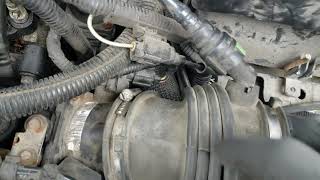

The information in this article is provided for general reference and educational purposes only. Vehicle specifications, procedures, and part compatibility can vary by production date, trim level, and region. Always consult your vehicle's factory service manual and verify part numbers before purchasing or performing repairs. Safety-critical components such as airbags, seat belts, and braking systems should be installed by a qualified professional.
- 🎬 Helpful Videos
- What Does P2070 Mean?
- Can I Drive With P2070?
- Common Causes
- Symptoms
- Diagnostic Flowchart
- Common Fixes & Costs
- DIY vs Professional
- Used vs. New Parts: Buying Guide
- What Happens If You Wait — Timeline
- Cost of Not Fixing It
- Diagnosis Steps
- When This Code Triggers (Freeze-Frame Conditions)
- Related Codes
- Climate & Environmental Factors
- How to Talk to a Mechanic About This Code
- Where to Take It: Dealer vs Independent vs Chain
- When to Walk Away From the Repair
- What Scan Tool You Need for This Code
- How to Clear the Code After You Fix It
- Will This Fail Emissions / State Inspection?
- Most Commonly Affected Vehicles
- Manufacturer-Specific Notes
- Real Owner Stories
- 2009 Audi Q5 3.2L with reduced power
- 2006 Mazda RX-8 with 90k miles, rough idle after highway driving
- 2008 Chevy Uplander 3.9L with intermittent P2070
- GM 3.6L V6 (Chevy Traverse) with P2070
- How to Prevent This Code From Triggering
- Frequently Asked Questions
- What is an Intake Manifold Tuning (IMT) Valve?
- Can I fix a P2070 code myself?
- How much does it cost to fix P2070?
- Will driving with a P2070 code damage my engine?
- Will a P2070 code cause me to fail an emissions test?
- What are the most common misdiagnosis mistakes for P2070?
- My mechanic wants to replace the whole intake manifold. Is that necessary?
- Can a vacuum leak cause code P2070?
- Key Takeaways
- 🎟️ Get 5% Off