

P0302 on 2009-2016 Volkswagen Jetta: Cylinder 2 Misfire Causes and Fixes
P0302 on a 2009-2016 VW Jetta most often means a bad ignition coil on cylinder 2. A new coil costs about $25-$50 for an aftermarket part or $50-$90 for OEM. It's a simple 15-minute DIY fix for most owners. For TSI engines (1.4T, 1.8T, 2.0T), if new coils and plugs don't solve the issue, carbon buildup on the intake valves is the next most likely culprit, requiring professional cleaning.
- P0302 means cylinder 2 is misfiring.
- The most likely cause is a bad ignition coil, which is an easy and affordable DIY replacement.
- Always diagnose by swapping the coil from cylinder 2 to another cylinder to confirm it's the faulty part before buying a new one.
- If you have a TSI engine (1.4T, 1.8T, 2.0T) and new coils/plugs don't fix the issue, the next most likely cause is carbon buildup on the intake valves.
- Avoid driving with a flashing check engine light to prevent expensive damage to the catalytic converter.
What's Unique About the 2009-2016 Volkswagen JETTA

The 2009-2016 Jetta spans two generations (Mk5 and Mk6) with several different engines. For the port-injected 2.5L 5-cylinder engine (engine codes like CBUA, CBTA), P0302 is almost always a failed ignition coil or spark plug. For the direct-injection turbocharged TSI engines (1.4T, 1.8T Gen3, 2.0T EA888), while ignition components are still the primary suspect, carbon buildup on the intake valves is a very common cause of misfires that isn't a factor on the 2.5L engine. This happens because fuel is injected directly into the cylinder, so it no longer washes over and cleans the intake valves.
Diagnostic Flowchart

Tap your situation to follow the diagnostic path that matches what you're seeing on this vehicle.
Generation note: This range covers the late Mk5 Jetta (2009-2010) and the Mk6 Jetta (2011-2016). The primary difference affecting this code is the engine type. Mk5 models and early Mk6s heavily featured the 2.5L 5-cylinder port-injected engine. Later Mk6 models transitioned to smaller, turbocharged direct-injection (TSI) engines like the 1.4T, 1.8T (Gen 3), and 2.0T (EA888 family). These TSI engines are known to have issues with carbon buildup on intake valves, which can cause misfires, especially on cold starts. The 2.0L non-turbo base engine is also present and behaves similarly to the 2.5L regarding this code.
Symptoms You May Notice
- Rough or erratic idle
- Hesitation or stumbling during acceleration
- Noticeable loss of engine power
- Flashing or solid Check Engine Light
- Increased fuel consumption
- Engine shaking or vibrating more than usual, especially on a cold start
- Smell of unburned gasoline from the exhaust
- Replacing only the spark plug when the ignition coil is the actual problem.
- Replacing fuel system components on a TSI engine when the root cause is carbon buildup on the intake valves.
- Replacing mass airflow sensors or O2 sensors when a failed PCV valve is causing lean conditions and misfires.
Most Likely Causes

- Ignition Coil Failure 🔴 High Probability Ignition coils are a very common failure item on most VW engines from this era, including the 2.5L, 1.8T, and 2.0T. They are subjected to high heat and vibration, causing the internal electronics to fail over time. Many owners recommend replacing them as a set for preventative maintenance.
How to confirm: Swap the ignition coil from cylinder 2 with another cylinder (e.g., cylinder 1 or 3). Clear the codes and drive the car. If the code changes to P0301 or P0303, you have confirmed the coil is bad. This is the most common and effective diagnostic step.
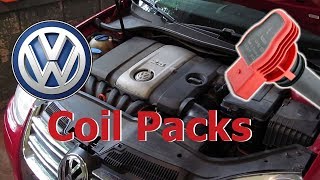
Typical fix: Replace the faulty ignition coil. It is often recommended to replace all coils and spark plugs at the same time to ensure reliability and restore performance. 🎬 See this walkthrough for replacing ignition coils on a 2.5L.
Est. part cost: $25-$90 per coil - Worn or Fouled Spark Plug 🔴 High Probability Spark plugs are a regular maintenance item with a finite lifespan. If they are old, have an incorrect gap, or are fouled with oil or carbon, they cannot produce a strong enough spark to ignite the air-fuel mixture.
How to confirm: After ruling out the ignition coil, remove the spark plug from cylinder 2. Inspect it for wear (worn electrode), damage (cracked porcelain), or deposits (black carbon, white ash, or wet oil). You can swap it with another cylinder's plug to see if the misfire follows.
Typical fix: Replace the spark plug. It is best practice to replace all spark plugs as a set to maintain consistent performance. Ensure the new plugs are gapped correctly; for a 2013 2.0L, the factory gap is around .043 inches.
Est. part cost: $10-$25 per plug - Carbon Buildup on Intake Valves (TSI Engines) 🟡 Medium Probability The 1.4T, 1.8T, and 2.0T TSI engines use direct injection, which sprays fuel directly into the cylinder. This means fuel doesn't wash over the intake valves, allowing carbon deposits from oil vapors (via the PCV system) to bake onto the hot valves. This buildup can disrupt airflow and cause misfires, especially on cold starts, with symptoms often appearing between 30,000 and 60,000 miles.
How to confirm: This is difficult to confirm without some disassembly. A visual inspection using a borescope after removing the intake manifold is the most definitive way. Multiple random misfire codes (P0300, P0301, P0304, etc.) that persist after replacing plugs and coils often point to this issue.
Typical fix: The intake valves need to be professionally cleaned. The most effective method is walnut blasting, where crushed walnut shells are used as a media to blast the carbon off without damaging the metal valves. A Reddit user reported a dealer quote of $1250 for this service.
Est. part cost: $0 (service cost is labor, typically $600-$1300) - Faulty Fuel Injector ⚪ Low Probability A fuel injector can become clogged or fail electronically, preventing the correct amount of fuel from reaching cylinder 2. In some cases, an injector can get stuck open, dumping too much fuel.
How to confirm: A stuck-open injector can be diagnosed by checking fuel rail pressure; if it primes and then immediately drops, an injector is likely leaking. A clogged injector is harder to confirm. A mechanic can perform a fuel injector balance test. Swapping injectors between cylinders is possible but is a more involved job than swapping coils.
Typical fix: Replace the faulty fuel injector. If one has failed, it's wise to have the others cleaned and tested. A leaking injector can wash oil from cylinder walls and contaminate the engine oil, so an oil change is recommended after replacement. 🎬 Watch: How to troubleshoot and check your fuel injectors.
Est. part cost: $50-$150 per injector
Rare But Worth Checking
- Vacuum Leak: A vacuum leak near the intake manifold runner for cylinder 2 can lean out the air-fuel mixture and cause a misfire. This might also be accompanied by other codes like P0171 (System Too Lean) or P0106.
- PCV Valve Failure (TSI Engines): A failed Positive Crankcase Ventilation (PCV) valve is a common issue on 2.0T TSI engines. It can cause a variety of issues, including vacuum leaks, rough running, and misfire codes (P0300-P0304), by disrupting the crankcase pressure and air-fuel mixture.
- Low Cylinder Compression: This indicates a mechanical engine problem, such as worn piston rings, a bad valve, or a leaking head gasket. A compression test is needed to diagnose this. VW TSB 15-12-03 advises performing a combustion pressure leakage test before replacing components for misfire codes. This is the least likely and most serious cause.
- Damaged Ignition Coil Wiring Harness: The plastic connectors and wiring for the ignition coils can become brittle and break over time, causing a poor connection. One Reddit user reported this as the ultimate cause after replacing other parts.
Diagnosis Steps
- Read the trouble codes with an OBD-II scanner. Note if P0302 is alone or with other codes like P0300. A VW-specific tool like VCDS or OBDeleven can provide more detailed misfire counter data.
- Identify cylinder 2. On the inline engines in the Jetta, it is the second cylinder from the front of the engine (the side with the belts).
- Swap the ignition coil from cylinder 2 with the coil from cylinder 3.
- Clear the codes and start the engine. Let it run until the check engine light reappears or for a few minutes.
- Re-scan for codes. If the code is now P0303, the ignition coil is faulty and needs replacement. This is the most likely outcome.
- If the code remains P0302, the coil is likely good. Move on to the spark plug. Swap the spark plug from cylinder 2 with cylinder 3.
- Clear codes and test again. If the code moves to P0303, the spark plug is the issue.
- If the code remains P0302, inspect the ignition coil connector and wiring for damage. The plastic can become brittle.
- For TSI engines, if ignition components are good, strongly suspect carbon buildup on the intake valves, especially if the car has over 40,000 miles and exhibits cold start misfires. A borescope inspection of the intake ports is the next step.
- Check for vacuum leaks by inspecting hoses connected to the intake manifold and PCV system. A failing PCV valve on a TSI engine can cause similar symptoms.
- If all else fails, consider a more complex issue like a faulty fuel injector or low compression, which may require professional diagnosis.
Parts You'll Likely Need
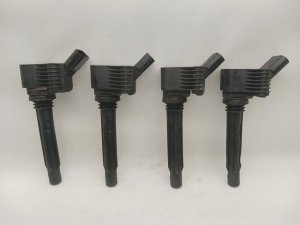
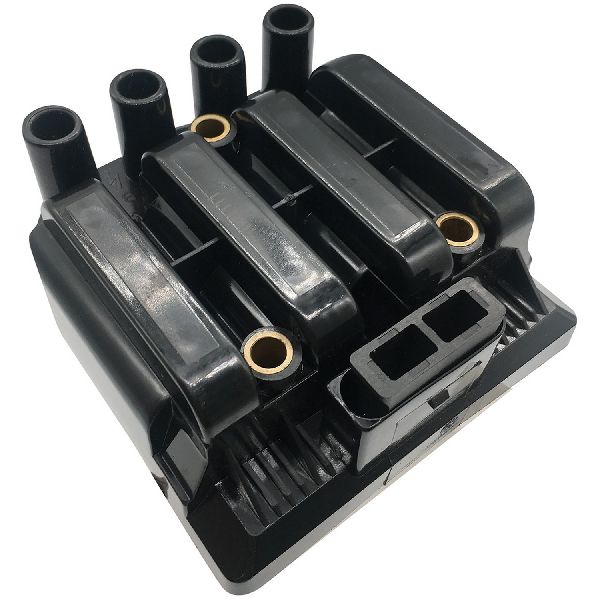
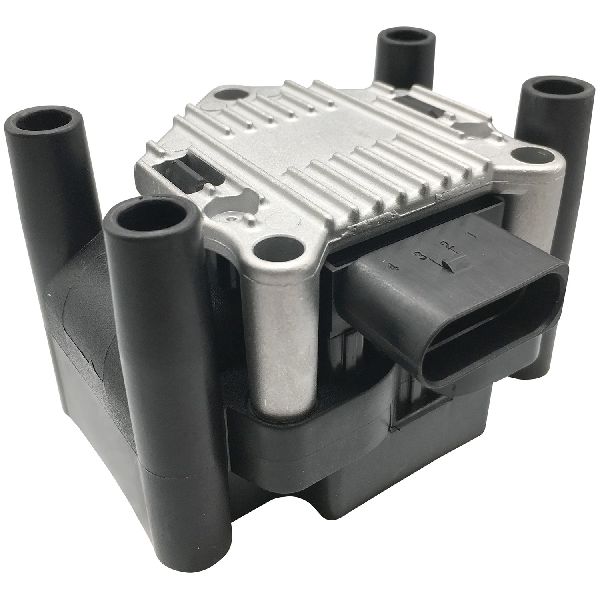
- Ignition Coil
(OEM #07K905715F (for 2.5L), 06H905115B / 06E905115G (for 2.0T TSI))— This is the most frequent cause of a single-cylinder misfire on this platform.
Trusted brands: Bosch, NGK, Eldor, Delphi
OEM price range: $50-$90
Aftermarket price range: $25-$50 - Spark Plug
(OEM #101905601F / 101905617C (for 2.0L base/2.5L))— A worn or fouled spark plug is the second most common cause and is a standard maintenance item.
Trusted brands: NGK, Bosch
OEM price range: $20-$30
Aftermarket price range: $10-$20
Related Codes That Often Appear With This One
- P0300 — If multiple cylinders are misfiring intermittently, you will see P0300 (Random/Multiple Cylinder Misfire) along with codes for specific cylinders. This often points to a systemic issue like a vacuum leak, bad fuel, or carbon buildup.
- P0301, P0303, P0304, P0305 (2.5L) — These codes indicate misfires in other cylinders. Seeing them together with P0302 often points to a common problem like bad fuel quality, a vacuum leak, or carbon buildup on TSI engines.
- P0087 — As noted in TSB #VIN4APIN20220118, misfire codes can appear with P0087 (Fuel Rail/System Pressure - Too Low), suggesting a fuel delivery issue (like a failing high-pressure fuel pump) could be the underlying cause of the misfires.
- P0491 — On some 1.8T models, misfire codes can be accompanied by secondary air injection system faults like P0491. TSB 01-15-14 addresses this combination for certain engine codes.
Technical Service Bulletins (TSBs) & Recalls
- TSB 15-12-03: Advises technicians to perform a Cylinder Combustion Pressure Leakage Test before replacing any components when diagnosing misfire faults P0300-P0306.
- TSB 01-15-14 / TPI 2040822: Addresses issues where secondary air injection faults (P0491, P2440) appear alongside misfire codes on 1.8T Gen 3 engines (CPRA, CPKA, etc.).
- TSB 01-16-15 / TPI 2014815: Discusses how poor gasoline quality can lead to deposits, rough running, and misfire (P030x) or lean (P0171) codes.
- NHTSA Bulletin #VIN4APIN20220118: Notes that misfire codes P0300-P0304 can appear in conjunction with fuel pressure codes like P0087, pointing towards a fuel delivery problem.
Platform-Specific Known Issues

- Ignition Coil Failure: Coils on the 2.5L and various TSI engines are known to fail frequently, making them the first part to check for any misfire code. Many owners replace all of them at once when one fails.
- Carbon Buildup (TSI Engines): Direct-injected engines (1.4T, 1.8T, 2.0T) are highly susceptible to carbon deposits on intake valves, which impede airflow and cause misfires that ignition parts won't fix. This typically requires cleaning every 60-80k miles and is often misdiagnosed at first.
- PCV Valve Failure (TSI Engines): The PCV valve on EA888 2.0T engines is another common failure point that can lead to lean codes, rough idle, and misfires. It's often replaced as a preventative measure during other services.
Mechanic-Grade Diagnostic Values
- Ignition Coil Primary Resistance (2.5L Engine) — expected: 0.62 Ω ± 10% (0.56 - 0.68 Ω). Failure: A reading outside this range indicates a faulty coil.
- Ignition Coil Secondary Resistance (2.5L Engine) — expected: 9.2 kΩ ± 10% (8.1 - 10.1 kΩ). Failure: A reading outside this range indicates a faulty coil.
- High-Pressure Fuel Pump (HPFP) Max Pressure (2.0T TSI) — expected: Up to 240 bar / 3480 PSI for aftermarket high-performance pumps. Stock pumps operate at lower pressures, often over 2,000 PSI.. Failure: Inability to build or hold pressure. A key-on prime that immediately drops off suggests a leak, often a stuck-open injector.
- Cylinder Compression (1.8T Engine Example) — expected: ~155-160 psi per cylinder. Failure: Significant deviation between cylinders (more than 10-15%) or a reading far below spec indicates a mechanical engine issue.
Scan Tool Commands That Help
- VCDS (VAG-COM) or ODIS: Advanced Measuring Values (or Measuring Blocks) — To view live misfire counters for each specific cylinder. On non-UDS modules, this is often in Groups 014, 015, and 016. This allows a technician to see misfires happening in real-time, even if they aren't frequent enough to set a permanent code.
Wiring & Ground Locations

- Engine Ground Connection — On the Mk6 Jetta, a primary engine ground strap is typically located from the engine block or transmission to the chassis frame rail. The exact point can vary, but it's a critical connection to check for tightness and corrosion.. A poor engine ground can cause a weak spark across all cylinders, leading to intermittent and hard-to-diagnose misfires. While it would likely cause multiple misfire codes (P0300, etc.), it can sometimes manifest as a single cylinder code initially.
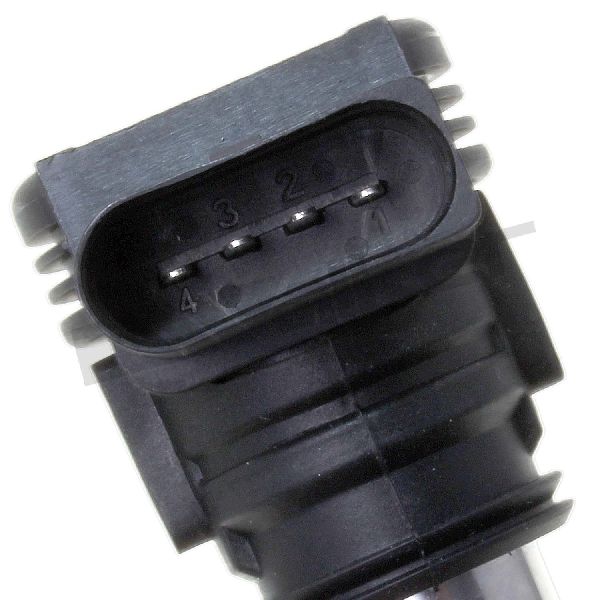
- Ignition Coil Connector — Directly on top of each ignition coil, pushed onto the 4-pin connector.. The wiring and plastic connector itself can become brittle from heat and vibration, leading to a poor connection at the coil for cylinder 2. A visual inspection for cracked plastic or loose pins is crucial if swapping the coil doesn't solve the problem.
Real Owner Repair Stories
- YouTube channel 'DiagnoseDan' (2014 Volkswagen Jetta 2.0L) — Extended crank, rich exhaust smell, P0302 misfire code.
❌ Tried (didn't work) Initial analysis of secondary ignition waveforms was misleading, suggesting a lean misfire.
✅ What actually fixed it A leaking fuel injector on cylinder 2 was stuck open. This was confirmed by attaching a fuel pressure gauge, priming the system (key-on), and watching the pressure immediately drop to zero. The leaking fuel also contaminated the engine oil, necessitating an oil change after the injector replacement. - YouTube channel 'Dr. Cool' (Volkswagen Jetta (year not specified, but relevant engine)) — P0302, hesitation, and power loss.
❌ Tried (didn't work) Checking the spark plug and ignition coil.
✅ What actually fixed it The ignition coil wire (spark plug lead) was arcing and leaking spark before it reached the plug. The video demonstrates hearing the spark leak and swapping the wire confirmed the fault moved. This applies to engines with separate coil packs and wires, not coil-on-plug designs. - Ross-Tech Forums (2014 Jetta SE 1.8T) — Persistent P0302 misfire at idle.
❌ Tried (didn't work) Replaced timing chain, crank/cam sensors, coil packs, spark plugs., Replaced intake camshaft, water pump, thermostat., Replaced all 4 fuel injectors., Replaced head gasket and valve springs., Re-wired splice on coil plug connector., Replaced ECU at the dealer.
✅ What actually fixed it The user's diagnostic journey was extremely thorough, ruling out almost every common and uncommon cause. The final resolution was not posted in the thread, making this a cautionary tale about how difficult this code can be on the 1.8T engine when it's not a simple ignition or carbon issue.
OEM Part Supersession History
07K905715 (and revisions A, B, C, D, E)→07K905715F, 07K905715G— Standard revision and improvement over time for reliability.
Heads up: These part numbers are generally for the 2.5L 5-cylinder and some 2.0T engines. While they may physically fit other engines, always verify by VIN. Part numbers like 06H905115B are also common on the 2.0T engines in this range.06H103495A, 06H103495E→06H103495AC, 06H103495AH— Revisions to the PCV valve assembly for 2.0T TSI engines to improve reliability and prevent failures that lead to vacuum leaks and misfires.
Heads up: Using an outdated PCV version can lead to a repeat failure. It is critical to install the latest available revision.06J127025J (HPFP for 2.0T)→06J127025L (example)— Revisions to the high-pressure fuel pump for EA888 Gen 1/2 engines.
Heads up: HPFPs are highly specific. EA888 Gen 1/2 pumps (06J prefix) are not compatible with EA113 (06F prefix) or EA888 Gen 3 (06L/06K prefix) engines.
Model Year Variations Within This Range
- 2009-2014 (approx.): The 2.5L 5-cylinder engine was a very common base engine. For P0302 on these, the cause is almost exclusively ignition (coil, plug) or fuel injector related. Carbon buildup is not a common issue.
- 2014-2016: In 2014, the 2.5L was replaced by the 1.8T TSI (EA888 Gen 3) as the volume engine. In 2016, the base 2.0L NA engine was replaced by the 1.4T TSI. These TSI engines introduce carbon buildup on intake valves as a significant potential cause for P0302 that did not exist on the 2.5L.
Helpful Videos
Used OEM Parts in Stock


New Aftermarket Parts Available


The information in this article is provided for general reference and educational purposes only. Vehicle specifications, procedures, and part compatibility can vary by production date, trim level, and region. Always consult your vehicle's factory service manual and verify part numbers before purchasing or performing repairs. Safety-critical components such as airbags, seat belts, and braking systems should be installed by a qualified professional.
- Volkswagen JETTA:
- 🎬 Helpful Videos
- 🛍️ Shop This Part
- What's Unique About the 2009-2016 Volkswagen JETTA
- Diagnostic Flowchart
- Symptoms You May Notice
- Most Likely Causes
- Rare But Worth Checking
- Diagnosis Steps
- Parts You'll Likely Need
- Related Codes That Often Appear With This One
- Technical Service Bulletins (TSBs) & Recalls
- Platform-Specific Known Issues
- Mechanic-Grade Diagnostic Values
- Scan Tool Commands That Help
- Wiring & Ground Locations
- Real Owner Repair Stories
- OEM Part Supersession History
- Model Year Variations Within This Range
- 🎟️ Get 5% Off