

P0302 on 2010-2017 Volkswagen Golf: Cylinder 2 Misfire Causes and Fixes
The P0302 code on a 2010-2017 VW Golf means cylinder 2 is misfiring. The most common fix is replacing the ignition coil and spark plug for that cylinder. This is a simple DIY job with parts costing between $50 and $120. For direct-injection models (TSI), persistent misfires may be due to carbon buildup on intake valves.
- P0302 means cylinder 2 is misfiring.
- Start your diagnosis by swapping the ignition coil from cylinder 2 with another cylinder. This is a free, 10-minute test that often finds the problem.
- If the coil isn't the issue, inspect and/or swap the spark plug next.
- On TSI engines (2.0T, 1.8T), if ignition parts don't fix the misfire, the cause is likely carbon buildup on the intake valves, which requires professional cleaning.
- Avoid driving with a flashing check engine light to prevent expensive damage to your catalytic converter.
What's Unique About the 2010-2017 Volkswagen GOLF

The 2010-2017 Golf spans two generations, the Mk6 and Mk7, which use different primary engines. While ignition components are a common failure point on both, the direct-injection TSI engines (2.0T in the Mk6 GTI, 1.8T in the Mk7) are particularly susceptible to carbon buildup on the intake valves. This buildup can disrupt airflow into the cylinder and cause persistent misfires that aren't fixed by new spark plugs or coils. This issue is less prevalent on the 2.5L 5-cylinder engine due to its port-injection design, which washes the valves with fuel.
Diagnostic Flowchart

Tap your situation to follow the diagnostic path that matches what you're seeing on this vehicle.
Generation note: This range covers the Mk6 (2010-2014) and Mk7 (2015-2017) generations. The Mk6 commonly used a 2.5L 5-cylinder or a 2.0T TSI engine (GTI). The Mk7 introduced the 1.8T TSI as the standard engine. While ignition issues are common to all, the TSI engines are known for carbon buildup on intake valves and potential timing chain tensioner issues, which can also lead to misfires. Early Mk6 2.0T engines (2010-2013) are particularly noted for a faulty timing chain tensioner design that can lead to catastrophic failure.
Symptoms You May Notice

- Rough or shaky idle
- Hesitation or stumbling during acceleration
- Noticeable loss of engine power
- Flashing or solid Check Engine Light
- Reduced fuel economy
- A smell of unburned gasoline from the exhaust
- Engine knocking or pinging
- Replacing only the spark plug when the ignition coil is the actual culprit. The diagnostic swap (moving the coil to another cylinder) is crucial to avoid this.
- Assuming a misfire is always an ignition problem, especially on high-mileage TSI engines where carbon buildup is a likely cause if plugs and coils are good.
- Replacing all ignition components when the actual cause is a vacuum leak from a failed PCV valve or a cracked breather hose.
Most Likely Causes

- Faulty Ignition Coil 🔴 High Probability Ignition coils are a very common failure item on VW/Audi engines, often failing without warning and causing immediate misfires. They are considered a wear item by many owners.
How to confirm: Swap the ignition coil from cylinder 2 with another cylinder (e.g., cylinder 1). Clear the codes and drive the car. If the code changes to P0301, the ignition coil is faulty. This is the most definitive DIY diagnostic step.
Typical fix: Replace the faulty ignition coil. It is often recommended to replace all coils at the same time, especially if they are original or high-mileage.
Est. part cost: $30-$60 per coil - Worn or Fouled Spark Plug 🔴 High Probability
How to confirm: Remove the spark plug from cylinder 2 and inspect it. Look for a worn electrode, cracks in the porcelain, or heavy deposits of oil or carbon. You can also swap it with another cylinder's spark plug to see if the misfire follows.
Typical fix: Replace the spark plug. It is best practice to replace all spark plugs as a set at the manufacturer's recommended interval, typically every 40k-60k miles. Ensure the new plugs are gapped correctly for your specific engine, although many come pre-gapped.
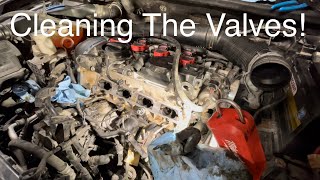
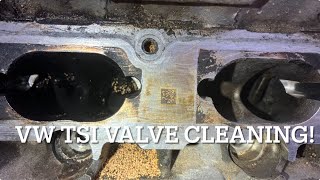
Est. part cost: $15-$30 per plug - Carbon Buildup on Intake Valves 🟡 Medium Probability This is a well-documented issue on VW's direct-injection (TSI/FSI) engines. Fuel is injected directly into the cylinder, so it never washes over the intake valves to clean them. Over time, oil vapor from the PCV system bakes onto the hot valves, restricting airflow and causing misfires, especially on cold starts.
How to confirm: This requires visual inspection of the intake valves, which involves removing the intake manifold. A borescope can be used to see the valves. Misfires that persist after replacing plugs and coils often point to carbon buildup.
Typical fix: The intake valves must be manually cleaned, typically through a process called walnut blasting. This is a labor-intensive job often costing between $600 and $1000 at an independent shop.
Est. part cost: $100-$200 for gaskets and seals; shop cost is primarily labor. - Clogged or Faulty Fuel Injector ⚪ Low Probability
How to confirm: After ruling out ignition issues, a technician can test the fuel injector's function or swap it with one from another cylinder to see if the misfire moves. You can also listen to the injector with a mechanic's stethoscope to ensure it's clicking.
Typical fix: Replace the faulty fuel injector. It's often recommended to replace the injector seals at the same time.
Est. part cost: $50-$150 per injector
Rare But Worth Checking
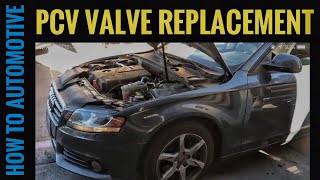
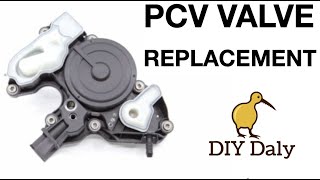
- Failed PCV Valve: A failed Positive Crankcase Ventilation (PCV) valve is a common issue on TSI engines. It can create a significant vacuum leak, leading to a rough idle, whistling noises, and misfire codes across multiple cylinders, including P0302. Symptoms may include the engine stalling when the oil cap is removed.
- Low Engine Compression: If ignition and fuel systems are confirmed to be working, a compression test is necessary. Low compression in one cylinder can be caused by serious mechanical issues like a bad valve, worn piston rings, or a failed head gasket.
- Vacuum Leak: A leak from a cracked hose or a failed intake manifold gasket can introduce unmetered air and cause a lean condition, leading to misfires. A cracked breather hose between the valve cover and intake is a known issue that can cause misfires. This would typically affect multiple cylinders but can sometimes isolate to one.
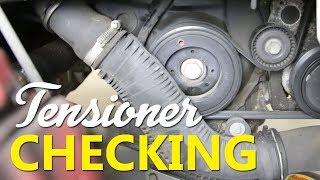
- Failed Timing Chain Tensioner: On early Mk6 GTI models (approx. 2010-2013), a faulty timing chain tensioner design can fail, causing the timing chain to jump. This is a catastrophic failure. Early symptoms can include a rattling noise on cold starts and timing-related fault codes. If left unaddressed, it can lead to bent valves and severe engine damage.
Diagnosis Steps
- Read the fault codes using an OBD-II scanner to confirm P0302 and any other related codes.
- Visually inspect the wiring and connector for the cylinder 2 ignition coil for any damage or corrosion.
- Swap the ignition coil from cylinder 2 to cylinder 1. Clear the codes, run the engine, and re-scan. If the code is now P0301, the coil is bad.
- If the code remains P0302, move the spark plug from cylinder 2 to cylinder 3. Clear codes and re-test. If the code becomes P0303, the spark plug is bad.
- If the misfire still remains on cylinder 2, investigate fuel and air systems. Listen to the fuel injector with a mechanic's stethoscope to ensure it is clicking. Compare the sound to the other injectors.
- On TSI engines, check for PCV valve failure. With the engine running, try to remove the oil cap. If there is strong suction or the engine stumbles/stalls, the PCV valve has likely failed.
- Inspect for vacuum leaks, paying close attention to the plastic breather hose running from the PCV to the intake manifold.
- Perform a compression test on all cylinders to check for mechanical engine problems. Compare the reading from cylinder 2 to the others.
- If compression is good and the engine is a TSI model with over 60,000 miles, suspect carbon buildup. This requires removing the intake manifold for inspection, often with a borescope.
Parts You'll Likely Need
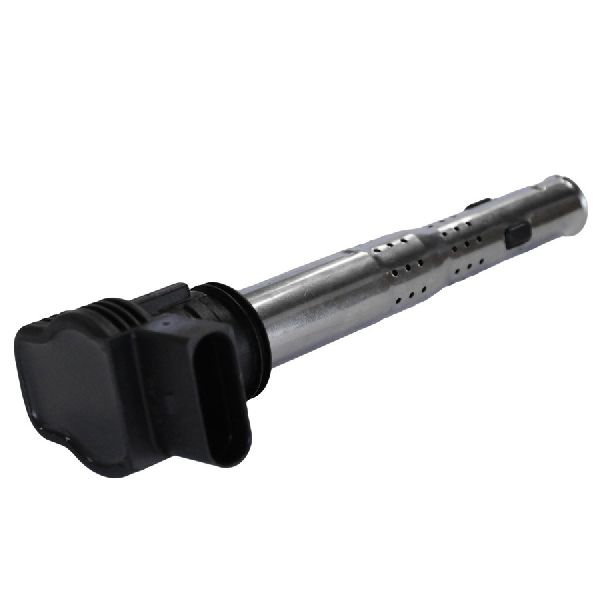
- Ignition Coil
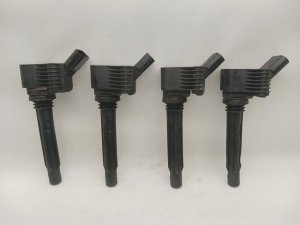
(OEM #06H905115B (Bosch), 07K905715F/G (Bosch, for 2.5L), 06E905115E/F (Eldor 'R8' Coil))— This is the most frequent cause of a single-cylinder misfire on these engines. Many owners upgrade to the red 'R8' style coils for reliability and aesthetics.
Trusted brands: Bosch, NGK, Eldor
OEM price range: $50-$80
Aftermarket price range: $30-$60 - Spark Plug
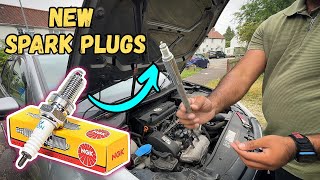
(OEM #NGK PFR7S8EG (For 2.0T TSI))— A worn or fouled spark plug is the second most common cause and should be replaced as part of regular maintenance.
Trusted brands: NGK, Bosch, Denso
OEM price range: $20-$35
Aftermarket price range: $15-$25 - Intake Manifold Gasket — This part must be replaced if the intake manifold is removed for carbon cleaning, a common procedure for TSI engines with misfires.
Trusted brands: Victor Reinz, Elring
OEM price range: $30-$50
Aftermarket price range: $20-$40 - PCV Valve / Oil Separator
(OEM #06H103495AH, 06K103495BM)— A common failure on TSI engines that causes vacuum leaks and widespread misfires. Part numbers vary by generation and engine code.
Trusted brands: VW/Audi Genuine, Vaico, Topran
OEM price range: $120-$180
Aftermarket price range: $50-$100
Related Codes That Often Appear With This One
- P0300 — If the misfire is intermittent or affects other cylinders, a P0300 (Random/Multiple Cylinder Misfire) may be stored alongside P0302. This often points to a systemic issue like a vacuum leak, PCV failure, or fuel delivery problem.
- P0301, P0303, P0304 — These codes indicate misfires in other cylinders. Seeing them together with P0302 points towards a common problem like a vacuum leak, fuel delivery issue, or severe carbon buildup affecting all cylinders.
- P0171 — System Too Lean (Bank 1). This code often accompanies misfires caused by a vacuum leak, such as a failed PCV valve, which allows unmetered air into the engine.
Technical Service Bulletins (TSBs) & Recalls
- VIN4APIN20220118: Mentions that P0302 can appear with a combination of other codes like P0300, P0301, P0303, and P0304, indicating it can be part of a wider issue.
- Ross-Tech Wiki TSB [01 13 73] / TPI: Notes that for 2.0L TFSI (EA888) engines, it may be necessary to reset misfire adaptations in the ECU after a repair by clearing fault codes three times in a row.
Platform-Specific Known Issues
- Direct-injection (TSI) models are prone to significant carbon accumulation on intake valves, which can cause misfires even at relatively low mileage (starting around 60k-80k miles).
- Failure of the PCV (Positive Crankcase Ventilation) valve is common and can create a vacuum leak, leading to misfires and other engine performance issues. An updated part is available from VW.
- Early Mk6 GTI models (2010-2013) with the 2.0T TSI engine used a timing chain tensioner prone to failure. A class-action lawsuit addressed this issue. Failure can be catastrophic, so any rattling noise on startup should be investigated immediately.
Mechanic-Grade Diagnostic Values
- High-Pressure Fuel Pump (HPFP) at idle (TSI Engines) — expected: Approx. 40 bar (580 PSI). Failure: Pressure drops to 6-10 bar (87-145 PSI) or is erratic.
- High-Pressure Fuel Pump (HPFP) under load (TSI Engines) — expected: Over 1800 PSI (124 bar). Failure: Failure to reach specified pressure under acceleration, leading to hesitation.
- Low-Pressure Fuel Pump (in-tank) — expected: Approx. 6.6 bar (96 PSI). Failure: Pressure significantly below specification; a reading of 58-87 PSI is a common test range for key-on, engine-off.
- Ignition Coil Primary/Secondary Resistance — expected: Not specified for Coil-on-Plug (COP) systems.. Failure: N/A. Resistance tests are not a reliable method for modern COP ignition coils.
Hidden / Shadow Codes Worth Checking
- VAG 16686: This is the VAG-specific fault code that corresponds directly to the generic OBD-II code P0302. (see via VW/Audi specific scan tools like VCDS or OBDeleven will display this native code.)
Scan Tool Commands That Help
- VCDS (VAG-COM): Advanced Measuring Values (or Measuring Blocks on older controllers) — This function is critical for diagnosing misfires. You can select and log 'Misfire counter' for each individual cylinder to see which one is misfiring in real-time during idle, specific RPMs, or load conditions.
- VCDS (VAG-COM): Measuring Block Groups 014, 015, 016 — On non-UDS controllers (typically found in earlier Mk6 models), these specific groups show the misfire counts for cylinders 1-3 (Group 015) and 4-6 (Group 016), allowing a technician to confirm if the misfire is isolated to cylinder 2.
Wiring & Ground Locations
- Engine Block Ground (Mk6) — On the engine block itself. Designated as point '18' in wiring diagrams.. A poor engine ground can cause a weak spark or erratic sensor readings, leading to misfires. This is a primary ground point for the engine management system.
- Transmission/Engine Ground Connection (Mk6) — A ground strap connecting the transmission or engine to the chassis. Designated as point '652'.. This main ground strap ensures the entire powertrain has a solid connection to the chassis ground. Corrosion or looseness here can cause widespread electrical issues, including misfires.
- Main Engine Bay Ground Point (Mk7) — A stud on the chassis located just above and behind the battery, near the windshield. It typically has multiple brown wires attached.. This is a central grounding hub for many engine bay components. Corrosion here can lead to intermittent and hard-to-diagnose electrical faults, including misfires and communication errors between modules.
- Cylinder Head Ground (Mk7) — On the cylinder head, designated as point '15' in some diagrams. Some aftermarket grounding kits for the ignition coils specifically use this point.. The ignition coils for the Mk7 ground through the wiring harness, a design which can become problematic with age. A poor ground connection for the coil on cylinder 2 can directly cause a P0302 code.
Real Owner Repair Stories
- Golfmk6.com forum user '1RMDave' (2011 GTI 6MT with APR Stage 1 tune) — Flashing CEL at idle, solid while driving. Constant P0302 misfire code.
❌ Tried (didn't work) Replaced intake manifold, Walnut blast cleaning of intake valves, Replaced PCV valve, Replaced all coils and spark plugs, Checked compression (was 140 psi), Swapped fuel injector from cylinder 2 to cylinder 4
✅ What actually fixed it The user reported that after moving the injector from cylinder 2 to 4, the problem did not follow the injector, suggesting the injector was not the cause. The thread continued with suggestions pointing towards potential tuning or mechanical issues, but the user's final confirmed fix was not posted after the injector swap failed to resolve it. However, another user in the same thread reported that 3 out of 4 of their injectors had to be replaced under warranty to solve their misfire issues. - Golfmk6.com forum user 'bulletproofskin9' (VW GTI with 64k miles) — Check engine light and EPC light on, jerky acceleration, P0302 code.
❌ Tried (didn't work) The user first suspected spark plugs as they were recently changed.
✅ What actually fixed it The user swapped the ignition coil from cylinder 2 to cylinder 4. After clearing the codes and re-scanning, a new code P0304 appeared, confirming the ignition coil was faulty. Replacing the bad coil resolved the issue.
OEM Part Supersession History
06H905115A / 06H905115→06H905115B, 06E905115E, 06E905115F, and others.— Revisions to improve reliability and prevent premature failure. The original coils on 2.0T engines were known for high failure rates.
Heads up: While many coils are interchangeable, it is best practice to replace them as a full set with the latest revision to ensure consistent performance. The popular red-topped 'R8' coils (e.g., 06E905115E) are a common performance and reliability upgrade.06H103495A, 06H103495E→06H103495AH, 06H103495AJ (For Gen1/Gen2 TSI)— The internal diaphragm in the PCV valve is prone to tearing, causing a massive vacuum leak. Later revisions aimed to improve the durability of the diaphragm.
Heads up: PCV valves are specific to the engine generation (e.g., Gen1/2 TSI vs. Gen3 TSI). A Mk7 Golf (Gen3 engine) uses a different part number entirely (e.g., 06K103495BM). Using the wrong generation PCV will not work.
Model Year Variations Within This Range
- 2010-2014 (Mk6): The Mk6 generation used either the 2.5L 5-cylinder port-injected engine or the 2.0T TSI (EA888 Gen1/2) direct-injected engine. The 2.5L is not prone to carbon buildup on intake valves, whereas it is a common cause for P0302 on the 2.0T TSI after 60k-80k miles.
- 2015-2017 (Mk7): The Mk7 generation primarily uses the 1.8T or 2.0T TSI (EA888 Gen3) engine. While still direct-injection, the PCV and ignition systems were revised. The ignition coils use a different grounding strategy that has led to a market for aftermarket grounding kits to improve stability and prevent misfires.
- 2010-2013 (Mk6 GTI): Early EA888 Gen1/2 TSI engines in this range were fitted with a timing chain tensioner design that is known to fail without warning. While not a direct cause of an isolated P0302, a failing tensioner can cause timing to jump, leading to misfires and catastrophic engine damage. Later revisions of the tensioner resolved this issue.
Helpful Videos
![How to Fix VOLKSWAGEN P0302 Engine Code in 3 Minutes [2 DIY Methods / Only $4.22]](https://img.youtube.com/vi/h7ejJ7Y0D2Q/mqdefault.jpg)

Used OEM Parts in Stock




New Aftermarket Parts Available

The information in this article is provided for general reference and educational purposes only. Vehicle specifications, procedures, and part compatibility can vary by production date, trim level, and region. Always consult your vehicle's factory service manual and verify part numbers before purchasing or performing repairs. Safety-critical components such as airbags, seat belts, and braking systems should be installed by a qualified professional.
- Volkswagen GOLF:
- 🎬 Helpful Videos
- 🛍️ Shop This Part
- What's Unique About the 2010-2017 Volkswagen GOLF
- Diagnostic Flowchart
- Symptoms You May Notice
- Most Likely Causes
- Rare But Worth Checking
- Diagnosis Steps
- Parts You'll Likely Need
- Related Codes That Often Appear With This One
- Technical Service Bulletins (TSBs) & Recalls
- Platform-Specific Known Issues
- Mechanic-Grade Diagnostic Values
- Hidden / Shadow Codes Worth Checking
- Scan Tool Commands That Help
- Wiring & Ground Locations
- Real Owner Repair Stories
- OEM Part Supersession History
- Model Year Variations Within This Range
- 🎟️ Get 5% Off