

P0302 on 2012-2014 VW Beetle: Cylinder 2 Misfire Causes and Fixes
For a 2012-2014 VW Beetle, a P0302 code almost always points to a failed ignition coil or a worn spark plug in cylinder 2. A simple coil swap between cylinders is the definitive DIY diagnostic. If you have the 2.0TSI engine, carbon buildup on the intake valves is another very common cause, especially if the misfire is worse on cold starts. A DIY coil swap costs around $30-$70 for the part, while a professional carbon cleaning can be $400-$800.
- P0302 indicates a misfire specifically in cylinder 2.
- The most probable cause is a bad ignition coil or spark plug, which are common failure points on these cars.
- The easiest diagnostic step is to swap the ignition coil from cylinder 2 to another cylinder and see if the misfire code follows.
- If you have the 2.0L TSI engine, carbon buildup on the intake valves is a very likely culprit, especially if the misfire is worse when the engine is cold.
- Never drive with a flashing check engine light, as this can quickly lead to costly catalytic converter damage.
What's Unique About the 2012-2014 Volkswagen BEETLE

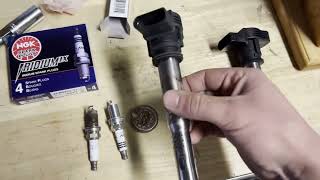
On the 2012-2014 Beetle, the cause of a P0302 misfire often depends on the engine. The direct-injected 2.0L TSI engine (engine codes CCTA/CBFA) is notoriously prone to heavy carbon buildup on the intake valves, which disrupts airflow and is a leading cause of misfires, especially on cold starts. Both the 2.0L TSI and the port-injected 2.5L I5 engines (engine codes CBTA/CBUA) are also known for having ignition coils that fail more frequently than on other vehicles, making a bad coil a top suspect for any 🎬 Watch: Why these ignition coils fail and how to check them. single-cylinder misfire code.
Diagnostic Flowchart
Tap your situation to follow the diagnostic path that matches what you're seeing on this vehicle.
Symptoms You May Notice
- Rough or vibrating idle
- Hesitation or stumbling during acceleration
- Noticeable loss of engine power
- Flashing Check Engine Light (CEL)
- Solid (non-flashing) Check Engine Light
- Reduced fuel economy
- Engine stalling
- Unusual odor from the exhaust
- Replacing only the spark plugs when the ignition coil is the actual problem.
- Replacing oxygen sensors, as they can be affected by misfires but are rarely the cause.
- On 2.0TSI engines, repeatedly replacing coils and plugs when the underlying issue is heavy carbon buildup on the intake valves.
Most Likely Causes

- Faulty Ignition Coil 🔴 High Probability Ignition coils are a well-documented common failure item on this generation of VW engines, for both the 2.0T and 2.5L. Early revisions of the parts were less durable, and many owners replace them as a set when one fails.
How to confirm: Swap the ignition coil from cylinder 2 with another cylinder (e.g., cylinder 1). Clear the codes and drive. If the code changes to P0301, the ignition coil is faulty. This is the most definitive and common DIY diagnostic step.
Typical fix: Replace the faulty ignition coil. It is often recommended to replace all coils at the same time as a preventative measure, especially if they are the original, older-revision parts.
Est. part cost: $30 - $70 per coil - Worn or Fouled Spark Plug 🔴 High Probability
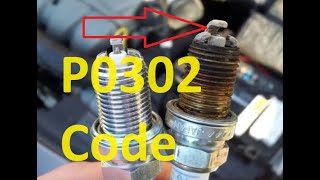
How to confirm: After ruling out the coil, remove the spark plug from cylinder 2. Inspect it for wear, carbon fouling, oil, or damage. A worn electrode or cracked porcelain is a clear sign of failure. You can also swap it with another cylinder's plug to see if the misfire follows.
Typical fix: Replace the spark plug. It is best practice to replace all spark plugs as a set at the manufacturer's recommended interval (typically 40k-60k miles).
Est. part cost: $15 - $30 per plug - Carbon Buildup on Intake Valves (2.0L TSI Engine) 🔴 High Probability The 2.0L TSI is a direct-injection (DI) engine. Fuel is injected directly into the cylinder, so it never washes over the intake valves. Oil vapor from the PCV system bakes onto the hot valves, forming hard carbon deposits that restrict airflow and cause misfires. This issue is considered inevitable and typically appears after 60,000 miles.
How to confirm: This requires a visual inspection using a borescope inserted into the intake ports after removing the intake manifold. Misfires that occur primarily on cold starts and may disappear as the engine warms up are a strong indicator of this issue.
Typical fix: The intake manifold must be removed and the valves must be manually cleaned. This is typically done via walnut shell blasting or by using specialized picks and brushes with chemical solvents.
Est. part cost: $10 - $20 (for gaskets if doing it yourself) - Clogged or Faulty Fuel Injector 🟡 Medium Probability
How to confirm: Listen to the injector with a mechanic's stethoscope to ensure it's clicking. You can also test its resistance with a multimeter or have a professional perform a flow test. On the 2.0TSI, leaking injectors are a known issue that can cause misfires.
Typical fix: Replace the faulty fuel injector for cylinder 2. On TSI engines, this can be a more involved job requiring special tools.
Est. part cost: $50 - $150
Rare But Worth Checking
- Vacuum Leak: A vacuum leak from a cracked hose or failed PCV (Positive Crankcase Ventilation) valve can cause a lean condition and misfires. On the 2.0TSI, a failed PCV valve is common and can cause multiple misfire codes (P0300, P0301, etc.), a high idle (P0507), and a lean code (P0171). A torn rear main seal, often caused by a bad PCV, can also create a large vacuum leak leading to misfires.
- Low Cylinder Compression: Internal engine damage such as a burnt valve, worn piston rings, or issues from a failed timing chain tensioner can cause a loss of compression, leading to a persistent misfire. A compression test is needed to diagnose this.
Diagnosis Steps

- Read the trouble codes with an OBD-II scanner and note any other codes present. A P0302 by itself points towards a cylinder-specific issue.
- Check if the Check Engine Light is flashing. If it is, avoid driving the vehicle to prevent catalytic converter damage.
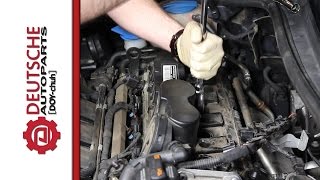
- Swap the ignition coil from cylinder 2 with an adjacent cylinder (e.g., cylinder 1). The coils are held by a single bolt or are simply press-fit and can be pulled straight up.
- Clear the codes and run the engine. If the code changes to P0301, the ignition coil is bad and needs replacement. This is a very common outcome.
- If the code remains P0302, swap the spark plug from cylinder 2 with the one from cylinder 1. Clear codes and re-test. If the code moves to P0301, the spark plug is bad.
- If the misfire still remains on cylinder 2, inspect the wiring and connector for the ignition coil and fuel injector for any damage or corrosion.
- Listen to the fuel injector on cylinder 2 with a stethoscope; a consistent clicking sound indicates it is operating.
- For 2.0TSI engines, if misfires are worse on cold starts or you have over 60k miles, strongly suspect carbon buildup and plan for an inspection of the intake valves with a borescope.
- Perform a cylinder compression test to rule out mechanical engine problems like bad rings or valves.
- If multiple misfire codes and lean codes (P0171) are present on a 2.0TSI, inspect the PCV valve. A strong vacuum when trying to remove the oil cap while the engine is running is a sign of a failed PCV diaphragm.
Parts You'll Likely Need

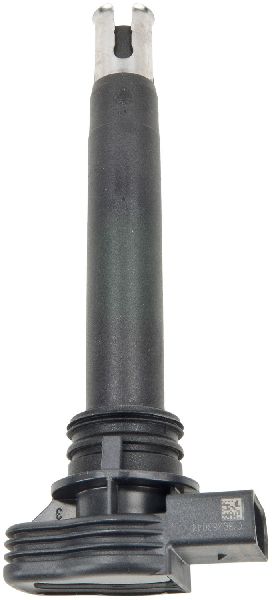
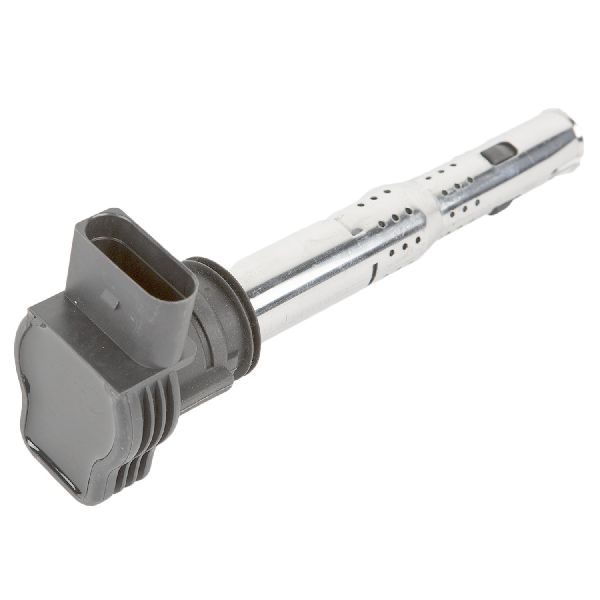
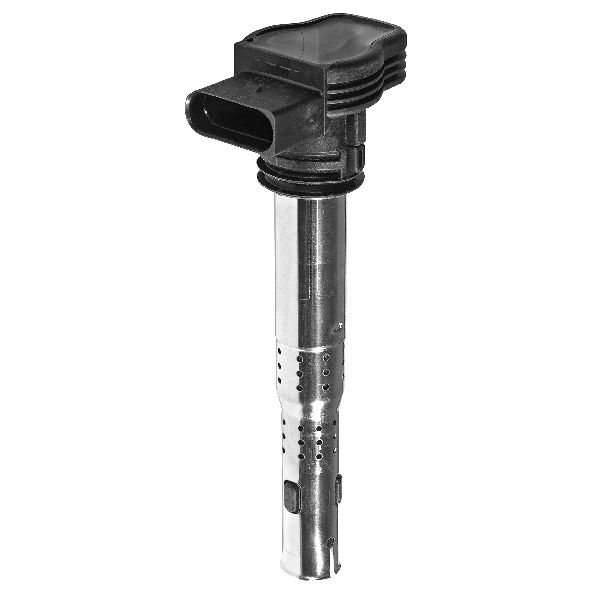
- Ignition Coil (2.0L TSI & 2.5L I5)
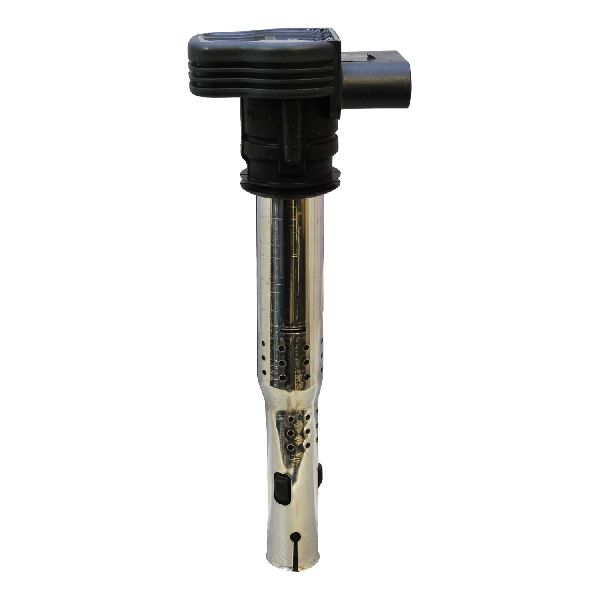
(OEM #07K905715F (or newer revision like 07K905715G))— This is the most common failure point for a single-cylinder misfire on this platform. Both engines often use the same coil.
Trusted brands: Bosch, Eldor, NGK, Beru
OEM price range: $45-$70
Aftermarket price range: $30-$55 - Spark Plug (2.0L TSI)
(OEM #06H905601A (often NGK PFR7S8EG))— As a routine maintenance item, a worn or fouled spark plug is a frequent cause of misfires.
Trusted brands: NGK, Bosch
OEM price range: $20-$30
Aftermarket price range: $15-$25 - Spark Plug (2.5L I5)
(OEM #101905617C (often NGK BKR6EKUE))— A routine maintenance item that can cause misfires when worn.
Trusted brands: NGK, Bosch
OEM price range: $15-$25
Aftermarket price range: $10-$20
Related Codes That Often Appear With This One
- P0300 — Indicates random/multiple cylinder misfires. If the root cause (like a vacuum leak, failed PCV valve, or low fuel pressure) affects the whole engine, P0300 may appear with P0302.
- P0301, P0303, P0304 — Misfire codes for other cylinders. Seeing these together points to a systemic issue rather than a single component failure on cylinder 2. A failing PCV valve on the 2.0TSI is a common cause for multiple cylinder misfires.
- P0087 — Fuel Rail/System Pressure - Too Low. This code was cited in a VW Technical Service Bulletin alongside P0302, indicating a potential fuel delivery issue could be the underlying cause of the misfire. [VIN4APIN20220118, VIN4APIN20211026, 48]
- P0171 — System Too Lean (Bank 1). This often appears with misfire codes when there is a significant vacuum leak, such as from a failed PCV valve or a cracked intake hose.
Technical Service Bulletins (TSBs) & Recalls
- VIN4APIN20220118: Mentions customer complaints of MIL-on with a combination of codes including P0302, P0300, P0301, P0303, P0304, and fuel pressure codes.
- VIN4APIN20211026: Also cites customer complaints of MIL-on with P0302 and other misfire/fuel pressure codes.
- TT 15-12-03: While for a different VW model, this TSB discusses diagnostic procedures for P030x misfire codes, indicating a broader VW focus on proper diagnosis, including compression checks.
Platform-Specific Known Issues
- 2.0L TSI Engines: These direct-injection engines are highly susceptible to carbon accumulation on the back of the intake valves, which can cause cold start misfires, rough idling, and a general loss of performance. This issue typically requires professional cleaning every 60,000-80,000 miles.
- Ignition Coil Failure: Both the 2.0L TSI and 2.5L I5 engines in this Beetle generation have a high incidence of premature ignition coil failure. Many owners choose to replace all coils at once when one fails. The OEM part has gone through several revisions to improve reliability.
- PCV Valve Failure (2.0TSI): The crankcase ventilation valve (PCV) is made of plastic with a rubber diaphragm that frequently tears, causing a massive vacuum leak. This leads to a rough idle, lean codes, and multiple misfire codes.
Mechanic-Grade Diagnostic Values
- 2.0L TSI High-Pressure Fuel Rail Pressure (at idle) — expected: Approximately 40 bar (580 PSI). Failure: Significantly lower pressure, such as 6-10 bar, indicates a failing High Pressure Fuel Pump (HPFP).
- 2.0L TSI Low-Pressure Fuel Pump Pressure — expected: Approximately 80-90 PSI. Failure: Pressure below 50 PSI indicates a failing in-tank low-pressure fuel pump (LPFP).
- 2.5L I5 Fuel Pressure (at hot idle) — expected: Approximately 60 PSI. Failure: Pressure around 42 PSI at idle, which drops further under load (e.g., to 35 PSI), indicates a failing fuel pump.
- Ignition Coil Secondary Resistance (2.5L Coil P/N 07K905715F) — expected: 4.75 MΩ (Mega-ohms). Failure: A reading significantly outside this value can indicate an internal failure. This is an upgrade over the stock 2.0TSI coil (06H905115A) which is ~3.3 MΩ.
Hidden / Shadow Codes Worth Checking
- Live Misfire Counters (non-UDS): A VW-specific diagnostic tool can monitor live misfire counts for each cylinder before a DTC is formally logged. This is invaluable for diagnosing intermittent misfires. (see via Using VCDS (VAG-COM), go to [01-Engine] -> [Meas. Blocks - 08]. Group 015 will show counters for cylinders 1, 2, and 3. Group 016 shows cylinders 4, 5, and 6.)
- Live Misfire Counters (UDS): On newer UDS-based controllers, live misfire counts are accessed differently but provide the same critical data for intermittent issues. (see via Using VCDS (VAG-COM), go to [01-Engine] -> [Adv. Meas. Values] and search for terms like "Misfire recognition" or "misfire count cylinder".)
Scan Tool Commands That Help
- VCDS (VAG-COM) or ODIS: Reset Misfire Adaptions — After replacing ignition or fuel components for a persistent misfire on 2.0L TFSI (EA888) engines. The ECU can store learned adaptations that may continue to cause issues even after the hardware is fixed. To perform the reset, you must clear the fault codes in the 01-Engine module three times in a row within 30 seconds.
Wiring & Ground Locations
- G15 (Cylinder Head Ground) — On top of the cylinder head, often near the ignition coils.. This is a primary ground point for ignition components. A loose or corroded connection here can cause weak spark and lead to intermittent misfires that are difficult to diagnose.
- G2 (Transmission Ground) — On top of the transmission, near the engine block.. This is a main engine-to-chassis ground strap. Degradation of this strap can cause a host of electrical issues, including unstable voltage to the ECU and ignition system, resulting in misfires.
- Ignition Coil Connector (Cylinder 2) — The 4-pin electrical connector on top of the cylinder 2 ignition coil.. The wiring to this connector can become brittle from heat. A technician can perform a resistance check on the wiring between the connector and the ECM. For example, on some VW engines, the signal wire for coil 2 goes to pin 95 of the ECM connector.
Real Owner Repair Stories
- Scirocco Central forum user (2009 VW Scirocco 2.0TSI with 83k miles (shares engine with Beetle)) — Slight intermittent judder, flashing CEL, rough idle. Misfires occurred at idle and when slowing down, but not during acceleration.
❌ Tried (didn't work) Replaced ignition coil on cylinder 1 (initial code), Replaced fuel injector on cylinder 1, Replaced all spark plugs
✅ What actually fixed it The user's final update did not confirm the fix, but the symptoms (misfires on multiple cylinders at idle and decel, but not under load) strongly pointed to a systemic issue like a large vacuum leak (e.g., PCV valve) or a fuel delivery problem, rather than the cylinder-specific components that were replaced.
OEM Part Supersession History
07K905715 (and revisions A, B, C, D, E)→07K905715F, 07K905715G— To improve reliability and durability. The ignition coils for these engines are a known high-failure part, and VW/Audi have released multiple updated versions over the years.
Heads up: While older revisions will physically fit, it is highly recommended to use the latest available revision (e.g., 'F' or 'G') for longevity. It is also recommended to replace all coils as a set to ensure uniform performance and resistance.
Model Year Variations Within This Range
- 2012-2014: The 2.0L TSI engine could be either a CCTA or CBFA code. The CBFA is the California-emissions (SULEV) version and includes a secondary air injection system for faster catalyst warm-up, which the CCTA lacks. This adds an extra air pump and associated plumbing that could potentially be a source of vacuum leaks on CBFA engines, though it's not a common cause for a single-cylinder misfire.
Helpful Videos
Used OEM Parts in Stock


New Aftermarket Parts Available


The information in this article is provided for general reference and educational purposes only. Vehicle specifications, procedures, and part compatibility can vary by production date, trim level, and region. Always consult your vehicle's factory service manual and verify part numbers before purchasing or performing repairs. Safety-critical components such as airbags, seat belts, and braking systems should be installed by a qualified professional.
- Volkswagen BEETLE:
- 🎬 Helpful Videos
- 🛍️ Shop This Part
- What's Unique About the 2012-2014 Volkswagen BEETLE
- Diagnostic Flowchart
- Symptoms You May Notice
- Most Likely Causes
- Rare But Worth Checking
- Diagnosis Steps
- Parts You'll Likely Need
- Related Codes That Often Appear With This One
- Technical Service Bulletins (TSBs) & Recalls
- Platform-Specific Known Issues
- Mechanic-Grade Diagnostic Values
- Hidden / Shadow Codes Worth Checking
- Scan Tool Commands That Help
- Wiring & Ground Locations
- Real Owner Repair Stories
- OEM Part Supersession History
- Model Year Variations Within This Range
- 🎟️ Get 5% Off