

P0302 on 2005-2009 Subaru Legacy: Cylinder 2 Misfire Causes and Fixes
P0302 indicates a misfire on cylinder 2. On a 2005-2009 Legacy GT with the EJ255 turbo engine, start by checking the spark plug and ignition coil. If those are good, the issue could be a clogged fuel injector or a more serious mechanical problem like a burnt valve or piston ringland failure, which are known issues for this engine. A persistent P0302 after basic ignition and fuel checks warrants an immediate compression test.
- P0302 on a 2005-2009 Subaru Legacy GT points to a misfire in the front driver's side cylinder.
- Always start diagnosis with the cheapest and easiest parts: check the spark plug and swap the ignition coil with cylinder 4.
- Due to the EJ255 engine's reputation, do not ignore a persistent P0302. It could be an early warning of serious internal engine damage like ringland failure or a burnt valve.
- A flashing check engine light is a critical warning to stop driving immediately to prevent catalytic converter damage.
- A compression and leak-down test is the definitive way to confirm or rule out a major mechanical engine problem.
What's Unique About the 2005-2009 Subaru Legacy

While any car can have a misfire from a bad spark plug, the EJ255 turbo engine in the Legacy GT has a reputation for more serious mechanical issues. These engines are known to be susceptible to piston ringland failure, especially when modified or driven hard. A persistent P0302 code that isn't resolved by new plugs or coils should prompt a compression and leak-down test sooner rather than later to rule out internal engine damage like a cracked piston or a burnt valve. Forum discussions among owners frequently show that a P0302 that survives a plug and coil swap often ends up being a burnt exhaust valve.
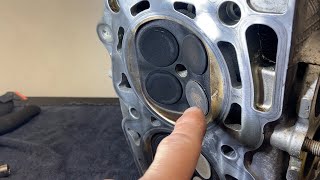
🎬 Watch: Finding a stuck open exhaust valve on a Legacy GT.Symptoms You May Notice
- Rough or shaking idle.
- Hesitation or stumbling during acceleration.
- Noticeable loss of engine power.
- Solid or flashing Check Engine Light.
- Fuel smell from the exhaust
- Engine stalling at low RPM, especially after reaching operating temperature.
- Replacing oxygen (O2) sensors or the Mass Airflow (MAF) sensor without proper diagnosis. These parts are less likely to cause a single-cylinder misfire and would more commonly trigger other codes or a random misfire (P0300).
Most Likely Causes

- Worn or Fouled Spark Plug 🔴 High Probability Turbocharged engines are harder on spark plugs, requiring more frequent changes. Accessing them on a boxer engine can be difficult, so they are sometimes neglected.
How to confirm: Remove the spark plug from cylinder 2 and inspect it for wear, carbon fouling, oil, or damage to the electrode or ceramic. A cracked insulator is a common failure point.
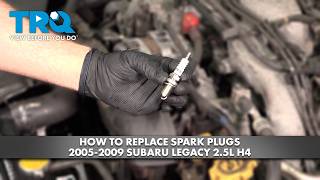
Typical fix: Replace the spark plug. It is 🎬 Watch: Step-by-step guide to replacing spark plugs on this engine. recommended to replace all four spark plugs at the same time. NGK is a common OEM supplier.
Est. part cost: $10-$25 per plug - Faulty Ignition Coil 🔴 High Probability Heat cycles in the engine bay can cause ignition coils to fail over time, leading to a weak or non-existent spark.
How to confirm: Swap the ignition coil from cylinder 2 with the coil from cylinder 4 (the other cylinder on the driver's side). Clear the codes and drive. If the code changes to P0304, the ignition coil is faulty. This is the universally accepted diagnostic step on forums. 🎬 See a mechanic's walkthrough of common Subaru misfire causes and diagnosis.
Typical fix: Replace the failed ignition coil with a new one. Denso and Diamond are common OEM suppliers.
Est. part cost: $70-$150 - Clogged or Failed Fuel Injector 🟡 Medium Probability Fuel injectors can become clogged with deposits over time, affecting their spray pattern and flow, leading to a lean misfire.
How to confirm: Listen to the injector with a mechanic's stethoscope to ensure it's clicking. You can also test its resistance with a multimeter or, more definitively, swap it with another cylinder's injector (e.g., cylinder 4) to see if the misfire follows. If P0302 becomes P0304 after the swap, the injector is the culprit.
Typical fix: Replace the faulty fuel injector. It's often recommended to replace them as a set or have them professionally cleaned and balanced, especially on higher mileage vehicles.
Est. part cost: $80-$200 per injector - Low Compression (Mechanical Engine Failure) 🟡 Medium Probability The EJ255 engine is known for potential piston ringland failure, which causes a loss of compression. Burnt exhaust valves are also a very common issue on turbo Subarus, often presenting as a P0302 that doesn't respond to other fixes.
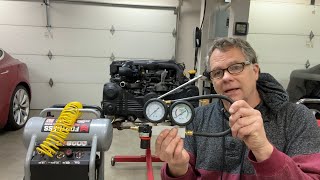
How to confirm: Perform a compression test on all cylinders. A healthy EJ255 should show around 140-150 PSI per cylinder, with minimal variation. Follow up with a cylinder leak-down test to pinpoint the source of the pressure loss (piston rings vs. valves). A significant drop in cylinder 2 indicates a mechanical problem.
Typical fix: This requires major engine repair. Ringland failure typically necessitates a new short block or forged pistons. A burnt valve requires removing the cylinder head for machine work and valve replacement.
Est. part cost: $2000-$5000+
Rare But Worth Checking
- Vacuum Leak: A leak in a vacuum hose or intake manifold gasket near the cylinder 2 runner can lean out the mixture and cause a misfire. A thorough guide to finding leaks on this platform can be found on LegacyGT.com.
- Wiring Harness Damage: Damage to the wiring for the ignition coil or fuel injector on cylinder 2 can cause an intermittent connection and misfires. Check for chafing, corrosion, or loose pins at the connectors.
- Carbon Buildup on Intake Valves: While more common on direct-injection engines, significant carbon buildup on the intake valves can disrupt airflow into the cylinder and cause misfires. This can sometimes be resolved with a chemical cleaning or walnut blasting service.
Diagnosis Steps

- Verify the code with an OBD-II scanner. Note if the Check Engine Light is flashing and if any other codes are present.
- Inspect the spark plug for cylinder 2. Look for excessive wear, fouling, or damage. Replace if questionable. A common recommendation is the NGK LFR6AIX-11.
- Swap the ignition coil from cylinder 2 with cylinder 4. Clear the codes and see if the misfire code moves to P0304. If it does, the coil is bad.
- If the misfire remains on cylinder 2, inspect the fuel injector wiring and listen for a consistent clicking sound with a stethoscope. If possible, test its resistance or swap it with another cylinder's injector (e.g., cylinder 4) and see if the code follows.
- Inspect for vacuum leaks around the intake manifold near cylinder 2. A smoke test is the most effective method.
- If the above steps do not resolve the issue, perform a dry and wet compression test on all four cylinders. A healthy engine should be around 140-150 PSI. Significant deviation on cylinder 2 points to mechanical failure.
- If compression is low on cylinder 2, perform a cylinder leak-down test to determine if the cause is piston rings (air escaping into crankcase), intake valves (air escaping into intake), or exhaust valves (air escaping into exhaust). This is the definitive test for burnt valves or ringland failure.
Parts You'll Likely Need
- Spark Plug
(OEM #NGK LFR6AIX-11 or SILFR6A)— Spark plugs are a common wear item and the most frequent cause of single-cylinder misfires.
Trusted brands: NGK, Denso
OEM price range: $15-$25
Aftermarket price range: $10-$20 - Ignition Coil
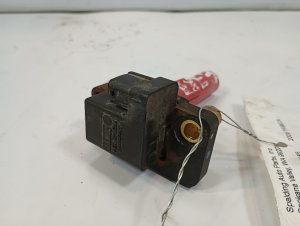
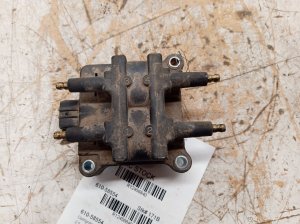
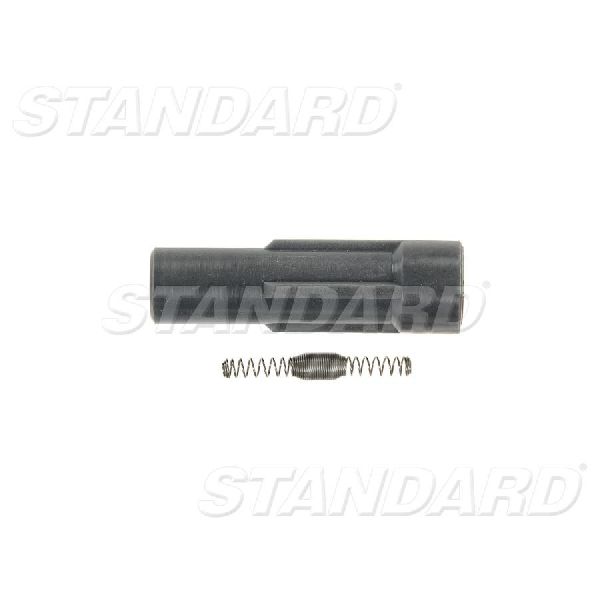
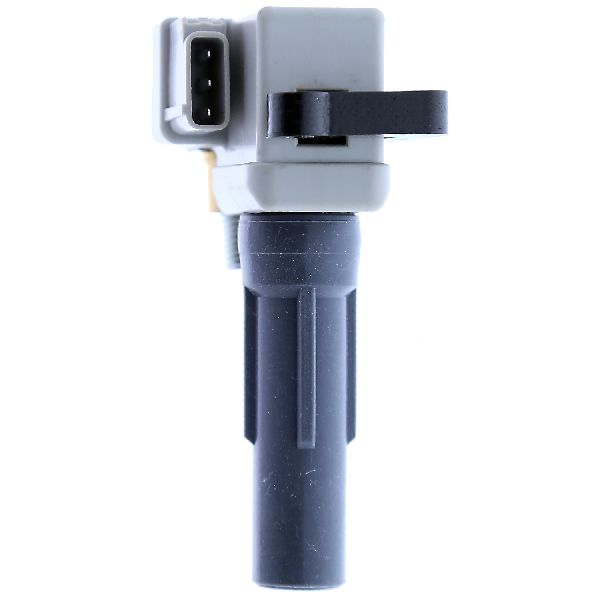
(OEM #22433AA540 (Superseded by 22433AA541, 22433AA640, and 22433AA542))— Ignition coils are the second most likely cause after spark plugs and can be easily diagnosed by swapping them between cylinders.
Trusted brands: Subaru (OEM), Denso, Diamond, NGK
OEM price range: $120-$180
Aftermarket price range: $70-$120 - Fuel Injector
(OEM #16611AA720)— A clogged or failing injector can cause a lean misfire on a single cylinder.
Trusted brands: Subaru (OEM), DeatschWerks (aftermarket upgrade)
OEM price range: $150-$220
Aftermarket price range: $80-$150
Related Codes That Often Appear With This One
- P0300 — If the misfire is intermittent or affecting other cylinders randomly, a P0300 (Random/Multiple Cylinder Misfire) may appear alongside P0302.
- P0304 — If a problem affects the entire driver's side bank (e.g., a vacuum leak on that side's intake runner, or a failing front O2 sensor for that bank), you might also see a P0304 for cylinder 4.
Technical Service Bulletins (TSBs) & Recalls
- 09-74-21R: While not for P0302 specifically, this TSB addresses using P.E.A. carbon cleaner to resolve misfires (P030x), rough idle, and lack of power caused by carbon deposits on injectors and intake valves.
- 02-103-07: This service bulletin discusses the mesh screen inside the turbo oil supply banjo bolt. While not directly causing a misfire, a clogged screen can lead to turbo failure, which can send debris into the engine or cause oiling issues that might indirectly contribute to engine problems. Many owners preemptively remove this screen.
- Bulletin #11-130-13R: This manufacturer bulletin provides specific inspection and repair procedures for engine misfire DTCs including P0302, as well as rough idle and camshaft position-related issues.
- Bulletin #11-125-12: A manufacturer service bulletin for related Subaru models that addresses misfire codes P0301 through P0304 in conjunction with camshaft sensor codes.
- Bulletin #11-100-11R: This bulletin notes that difficulty starting and rough idle may be accompanied by misfire codes P0301, P0302, P0303, and P0304.
- Bulletin #11-124-12R: Manufacturer documentation describing repair procedures for rough idle and misfire DTCs P0301, P0302, P0303, or P0304.
Platform-Specific Known Issues

- Piston Ringland Failure: The pistons in the EJ255 engine are known to be a weak point, particularly the ringlands (the area between the piston rings). Detonation or high cylinder pressures can cause them to crack, leading to a loss of compression and a persistent misfire. This is often diagnosed after a compression/leak-down test fails.
- Burnt Exhaust Valve: Turbocharged engines generate high exhaust temperatures, which can lead to premature failure of exhaust valves. A burnt valve will not seal properly, causing a major loss of compression. Many owner stories on LegacyGT.com detail a P0302 that was ultimately traced to a burnt exhaust valve in cylinder 2 after plugs, coils, and injectors were ruled out.
Mechanic-Grade Diagnostic Values
- Fuel Injector Resistance — expected: 11.5 - 12.5 ohms. Failure: A reading significantly outside this range, or that differs by more than 0.5-1.0 ohm from the other injectors, indicates a faulty injector.
- Ignition Coil Secondary Resistance — expected: 9.5 - 12.9 kOhms. Failure: A reading outside this range suggests the coil is failing. Note that the primary resistance cannot be measured on the integrated ignitor/coil assembly.
- Fuel Pressure at Idle (vacuum line connected) — expected: ~32-36 PSI. Failure: Significantly lower or higher pressure can indicate a failing pump, clogged filter, or faulty regulator.
- Fuel Pressure (vacuum line disconnected from FPR) — expected: ~43.5 PSI (Static Pressure). Failure: Failure to reach this pressure points to a weak fuel pump or leak. If pressure is too high, the regulator may be stuck.
- Engine Compression (warm engine) — expected: 140-150 PSI, with less than 10 PSI variation between cylinders.. Failure: A reading on cylinder 2 that is significantly lower (e.g., below 120 PSI) or more than 10-15% different from the other cylinders points to a mechanical issue.
- Injector Harness Voltage (Key-On, Engine-Off) — expected: ~12V (Battery Voltage). Failure: No voltage or significantly low voltage indicates a wiring problem between the ECU and the injector connector.
Hidden / Shadow Codes Worth Checking
- Roughness Monitor Count: This is not a DTC but a live data parameter available in the Subaru Select Monitor (SSM) and some advanced scan tools. It shows a real-time count of misfire events per cylinder. (see via Subaru Select Monitor (dealer tool), some versions of ScanGauge with custom X-Gauge commands, or other high-end scanners with Subaru-specific software.)
Scan Tool Commands That Help
- Subaru Select Monitor (SSM): Engine Diagnosis -> Each System Check -> Roughness Monitor — Use this to confirm which cylinder is actively misfiring and how frequently. A high and rapidly increasing count on 'Roughness Monitor #2' confirms the P0302 is active and helps gauge the severity of the misfire during different engine loads and temperatures.
- Subaru Select Monitor (SSM): Freeze Frame Data (FFD) Display — When a P0302 is stored, the FFD captures a snapshot of all engine sensor values at the exact moment the fault was registered. This is critical for seeing if the misfire occurred when the engine was cold, hot, at idle, or under load, which helps narrow down the cause.
Wiring & Ground Locations
- GE (Engine Ground) — There are key ground points on the intake manifold. On many EJ255s, ground wires attach to the TGV (Tumble Generator Valve) housings on both sides of the manifold. Another primary ground strap connects the manifold to the chassis near the firewall.. A loose or corroded ground on the driver's side of the intake manifold can cause erratic signals for the cylinder 2 and 4 ignition coils and fuel injectors, leading to misfires.
- Cylinder 2 Injector Connector — The front-most fuel injector on the driver's side of the engine, under the intake manifold runner.. This is the connector to test for voltage and resistance for the cylinder 2 fuel injector. Damage to the wiring pigtail here from heat or abrasion is a possible, though less common, cause of P0302.
Real Owner Repair Stories
- LegacyGT.com Forum User (2005 Subaru Legacy GT) — Persistent P0302 misfire, rough idle, hesitation under load.
❌ Tried (didn't work) Replaced spark plugs, Swapped ignition coils (misfire did not move), Swapped fuel injectors (misfire did not move), Performed smoke test (no leaks found)
✅ What actually fixed it A cylinder leak-down test revealed a significant leak from the exhaust. Upon removing the cylinder head, a burnt exhaust valve on cylinder 2 was discovered. The cylinder head was sent to a machine shop for a valve job, and reassembly with a new valve fixed the misfire completely.
OEM Part Supersession History
22433AA540→22433AA541, 22433AA640, 22433AA641, 22433AA542— Revisions for improved reliability and performance.
Heads up: The listed part numbers are generally interchangeable for this application. However, it is always best practice to replace coils in pairs on a bank or as a full set of four to ensure consistent performance.
Model Year Variations Within This Range
- 2005-2006 vs 2007-2009: The EJ255 engine saw revisions during this period. Later models (2007+) used a slightly different short block (AB630) and cylinder heads (AB820). While the fundamental causes of P0302 remain the same, sourcing a replacement long block or specific head components requires confirming the exact model year to ensure compatibility.
Diagnostic Flowchart

Other Known Issues on This Vehicle
Issues unrelated to this code that are worth knowing about as an owner of this generation:
- Turbocharger Oil Starvation (Banjo Bolt Filter) 🔴 High — Common on vehicles not meticulously maintained with 3,750-mile oil change intervals. Failure can occur at any mileage if the filter becomes clogged. (Ref: TSB 02-103-07)
- Catted Uppipe Failure 🔴 High — Affects 2005-2006 models primarily. The catalytic converter material in the uppipe can break apart and be ingested by the turbo, causing catastrophic failure.
- Piston Ringland Failure 🔴 High — A well-known weak point of the stock cast pistons in the EJ255. Can occur at any mileage, but is more frequent on modified or hard-driven vehicles. Often presents as a misfire code (like P0302) and excessive oil consumption.
- Premature Wheel Bearing Failure 🟠 Medium — Common enough that Subaru issued an extended warranty on them. Typically manifests as a roaring or humming noise that changes with vehicle speed and turning. (Ref: Warranty Extension)
- Cracked Plastic Radiator End Tanks 🟠 Medium — The plastic end tanks crimped to the aluminum radiator core become brittle with age and heat cycles, often cracking and causing a coolant leak around 100k-125k miles.
Used vs. New Parts: Buying Guide for This Vehicle
When a used part is the smart pick: Used parts like ignition coils and fuel injectors can be a cost-effective option, especially when sourced from a reputable auto recycler with a warranty. A complete used engine or short block is a common repair for major mechanical failures like ringland or bearing failure, often being more economical than rebuilding the original engine.
Donor-vehicle mileage cap: roughly under 80000 miles for the part to have meaningful remaining life.
What to inspect on the donor part:
- For ignition coils/injectors, check for cracks, corrosion, or signs of oil/coolant contamination.
- For a used engine, ask for video of it running, a compression test chart if available, and check for signs of oil leaks (especially around head gaskets and cam seals) or milky oil (coolant mixing).
- Ensure the donor vehicle was not in a severe front-end collision that could have damaged engine components.
OEM-only on this vehicle (don't cheap out):
- Engine Gaskets (Head Gaskets, Valve Cover Gaskets): Use OEM Subaru or high-quality aftermarket like Fel-Pro to prevent premature leaks.
- PCV Valve: A cheap but critical part; aftermarket versions can fail and cause oil consumption issues.
- Sensors (MAF, O2, Cam/Crank): While some aftermarket brands are good, OEM sensors are recommended to avoid compatibility and performance issues.
Aftermarket brands forum-validated for this vehicle:
- Ignition Coils: NGK, Denso, Diamond (often the OEM supplier)
- Fuel Injectors (Upgrade/Replacement): DeatschWerks, Injector Dynamics (for performance builds), Standard Motor Products (for OEM-style replacement)
- Engine Internals (for rebuilds): IAG Performance, Manley, CP Pistons (forged components stronger than OEM)
Brands owners have reported issues with on this vehicle:
- Unbranded, no-name ignition coils and fuel injectors from online marketplaces. These often have high failure rates and incorrect specifications, causing more problems than they solve.
Real Owner Stories
Aggregated from forums and TSBs cited above. Mileages and costs reflect what owners reported in those sources.
2005-2009 Subaru Legacy GT EJ255 — 97000 miles
Symptoms: A detailed saga of chasing a P0302 code and rough idle, initially suspecting a cracked piston.
What fixed it: The source documents a complex diagnostic process involving investigation of internal mechanical failure at 97k miles.
Source hint: LegacyGT.com - 'Just another misfire/rough idle thread...'
2005-2009 Subaru Legacy GT EJ255
Symptoms: Sporadic P0302 codes that eventually became a constant, rough idle. Swapping coils and injectors did not resolve the issue.
What fixed it: A compression test showed low numbers on cylinder 2, leading to a diagnosis of a burnt exhaust valve which required pulling the cylinder head.
Source hint: LegacyGT.com - 'Misfire - cylinder 2 P0302'
2005-2009 Subaru Legacy GT EJ255
Symptoms: P0302 code appeared after spirited driving. A leakdown test showed 35% leakage on cylinder 2, while other cylinders were at 20%.
What fixed it: The engine needed to be pulled to address either a valve or ringland issue.
Source hint: LegacyGT.com - 'Cylinder 2 Misfire'
Related OBD-II Codes
Frequently Asked Questions
Which spark plugs are recommended for the EJ255 engine in my 2005-2009 Legacy GT?
How can I tell if my P0302 is a bad ignition coil or something more serious like a burnt valve?
Does Subaru have a TSB for misfires caused by carbon deposits on this model?
I heard about a mesh screen in the turbo oil line; could this cause my P0302 misfire?
What are the typical compression numbers for a healthy 2005-2009 Legacy 2.5L Turbo?
Why is cylinder 2 specifically prone to misfires on the Legacy GT?
Helpful Videos
Used OEM Parts in Stock

New Aftermarket Parts Available

The information in this article is provided for general reference and educational purposes only. Vehicle specifications, procedures, and part compatibility can vary by production date, trim level, and region. Always consult your vehicle's factory service manual and verify part numbers before purchasing or performing repairs. Safety-critical components such as airbags, seat belts, and braking systems should be installed by a qualified professional.
- Subaru Legacy:
- 🎬 Helpful Videos
- 🛍️ Shop This Part
- What's Unique About the 2005-2009 Subaru Legacy
- Symptoms You May Notice
- Most Likely Causes
- Rare But Worth Checking
- Diagnosis Steps
- Parts You'll Likely Need
- Related Codes That Often Appear With This One
- Technical Service Bulletins (TSBs) & Recalls
- Platform-Specific Known Issues
- Mechanic-Grade Diagnostic Values
- Hidden / Shadow Codes Worth Checking
- Scan Tool Commands That Help
- Wiring & Ground Locations
- Real Owner Repair Stories
- OEM Part Supersession History
- Model Year Variations Within This Range
- Diagnostic Flowchart
- Other Known Issues on This Vehicle
- Used vs. New Parts: Buying Guide for This Vehicle
- Real Owner Stories
- 2005-2009 Subaru Legacy GT EJ255 — 97000 miles
- 2005-2009 Subaru Legacy GT EJ255
- 2005-2009 Subaru Legacy GT EJ255
- Related OBD-II Codes
- Frequently Asked Questions
- 🎟️ Get 5% Off