

P0302 on 2014-2018 Subaru Forester: Cylinder 2 Misfire Causes and Fixes
P0302 means cylinder #2 is misfiring. On the 2014-2018 Forester, this is most often a bad ignition coil or an oil-fouled spark plug. Swapping the coil from cylinder #2 to #4 is the fastest way to diagnose a bad coil. Expect to pay $50-$120 for a new coil and $40-$80 for a set of four spark plugs. In some cases, a faulty alternator pulley can create a 'phantom' misfire code when the engine is running fine.
- P0302 on a 2014-2018 Forester is a misfire on the driver's side rear cylinder.
- The most common causes are a bad ignition coil or a worn/oil-fouled spark plug.
- Always start diagnosis by swapping the cylinder #2 ignition coil with another cylinder (like #4) to see if the code follows.
- If the check engine light is flashing, stop driving to prevent catalytic converter damage.
- Be aware of this engine's tendency to consume oil, which can foul spark plugs and cause this code to appear.
What's Unique About the 2014-2018 Subaru Forester
The 2014-2018 Forester uses the FB25B engine, an early version of which was known for higher-than-normal oil consumption due to faulty piston rings. This can cause spark plugs to become 'fouled' with oil, leading directly to misfire codes like P0302. Additionally, some owners have experienced 'phantom' misfire codes where the engine runs perfectly fine, an issue that can sometimes be traced back to a faulty alternator clutch pulley assembly creating vibrations that trick the crankshaft sensor. Subaru issued TSB #07-112-16R to address this specific 'phantom misfire' issue on 2014-2016 models.
Symptoms You May Notice
- Rough or shaky idle
- Hesitation or stumbling during acceleration
- Solid or flashing Check Engine Light
- Reduced fuel economy
- Loss of power
- Unusual odor from the exhaust
- Replacing oxygen (O2) sensors. A misfire will often disrupt exhaust readings and may trigger O2 sensor codes, but the root cause is the misfire itself, not the sensor.
- Unnecessarily replacing spark plugs and coils when the true cause is the alternator pulley creating a 'phantom' misfire code.
Most Likely Causes
- Failed Ignition Coil 🔴 High Probability Ignition coils are a common wear item that fail from heat cycles and vibration over time. Given the location of cylinder #2, it is exposed to significant heat.
How to confirm: Swap the ignition coil from cylinder #2 (driver's side, rear) with the coil from cylinder #4 (driver's side, front). Clear the codes and drive. If the code changes to P0304, the coil is faulty. This is a widely accepted diagnostic step in owner forums.
Typical fix: Replace the single faulty ignition coil. Using an OEM or reputable brand like Denso or NGK is recommended. The OEM part number has been superseded; 22433AA682 is a common replacement.
Est. part cost: $50-$120 - Worn or Oil-Fouled Spark Plug 🔴 High Probability Early FB25B engines can consume oil, which fouls spark plugs and prevents them from firing correctly. Even without oil issues, spark plugs are a regular maintenance item that wear out, typically every 60,000 miles.
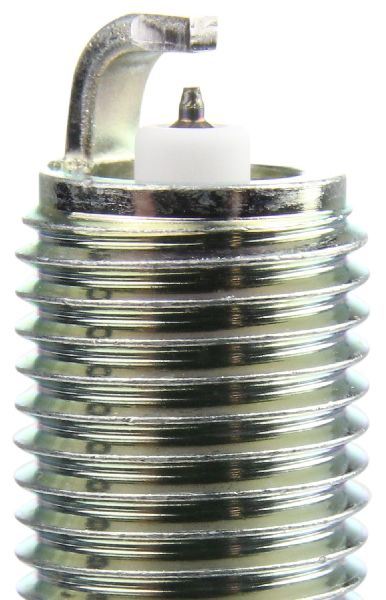
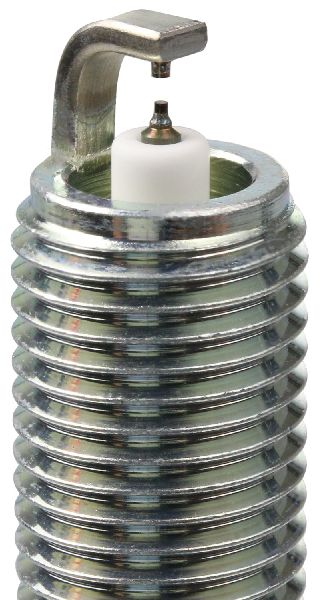
How to confirm: After confirming the coil is good, remove the spark plug from cylinder #2. Inspect it for black, oily residue, heavy carbon buildup, or a worn-down electrode. A severely worn gap can also cause misfires.
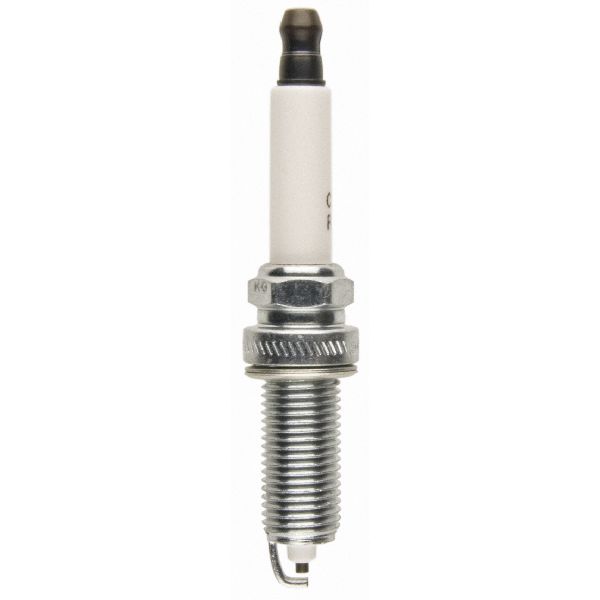
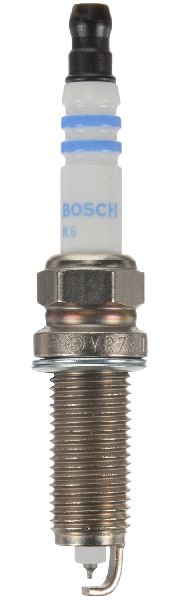
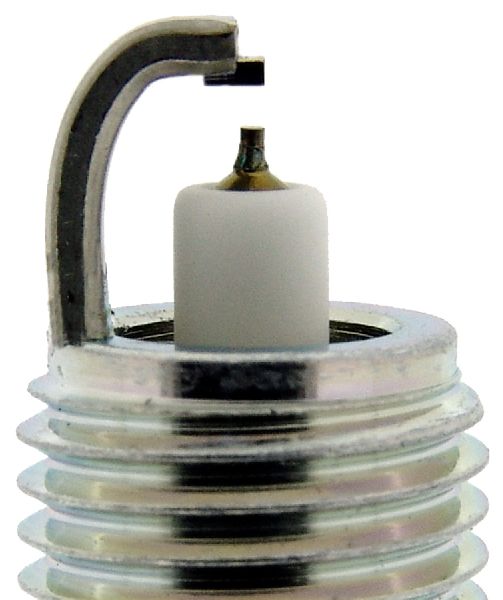
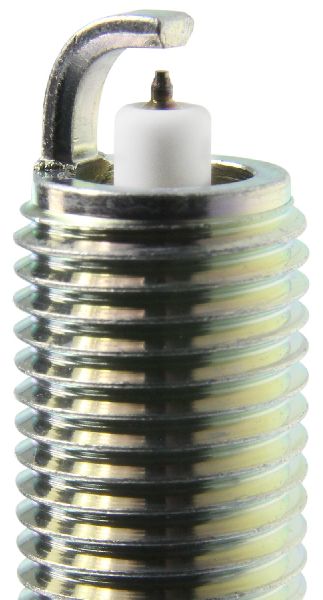
Typical fix: Replace all four spark plugs as a set with the OEM-specified NGK iridium plugs (NGK part SILZKAR7B11) to ensure proper performance.
Est. part cost: $40-$80 - Faulty Fuel Injector 🟡 Medium Probability
How to confirm: If the coil and plug are good, you can test the injector. A power balance test or swapping the fuel injector from cylinder #2 with another cylinder (e.g., cylinder #4) can confirm the fault. If the misfire code follows the injector (e.g., becomes P0304), the injector is bad. This is more labor-intensive than an ignition coil swap.
Typical fix: Replace the faulty fuel injector. It is often recommended to replace the O-rings and seals at the same time.
Est. part cost: $70-$150 - Vacuum Leak ⚪ Low Probability
How to confirm: Inspect all vacuum hoses and the intake manifold gasket for cracks, brittleness, or damage. A smoke test is the most effective way to find a leak. A leak localized to the cylinder #2 intake runner could cause a P0302.
Typical fix: Replace the leaking hose or gasket.
Est. part cost: $10-$100
Rare But Worth Checking
- Faulty Alternator Clutch Pulley: Subaru TSB #07-112-16R identifies that a failing alternator clutch pulley on 2014-2016 Foresters can create electrical noise and vibrations that the crankshaft position sensor misinterprets as a misfire, setting 'phantom' codes like P0302 even when the engine is running smoothly. The updated alternator has a silver pulley surface, while the original problematic one is black.
- Low Cylinder Compression: Internal engine damage, such as a burnt valve, worn piston rings, or a leaking head gasket, can cause a loss of compression. This is a serious mechanical issue that requires a compression test and possibly a leak-down test to diagnose.
- Camshaft Position Sensor Issue: Though less common, TSB #11-130-13R indicates that issues with camshaft position sensors, such as an incorrect air gap, can trigger misfire DTCs. This is more likely if camshaft-related codes (P034x, P036x, P039x) are also present.
Diagnosis Steps
- Read the codes with an OBD-II scanner to confirm P0302 and check for any other stored codes. Note if the Check Engine Light is flashing.
- If the engine is running smoothly with no perceptible misfire, investigate the 'phantom misfire' issue. Check the alternator pulley; if it has a black surface, it may be the original, problematic part per TSB #07-112-16R.
- If a tangible misfire is felt, perform the ignition coil swap. Swap the coil from cylinder #2 (driver's side, rear) with the coil from cylinder #4 (driver's side, front).
- Clear the codes, start the engine, and see if the misfire code returns as P0304. If it does, the ignition coil is bad.
- If the code remains P0302, inspect the spark plug in cylinder #2. Look for oil fouling, carbon buildup, or excessive wear.
- If the plug is fouled or worn, replace all four spark plugs with the correct OEM-spec plugs (NGK SILZKAR7B11).
- If the coil and plug are good, the next step is to check the fuel injector. This can be done by swapping it with another cylinder or by testing its resistance with a multimeter.
- If ignition and fuel components are confirmed to be good, check for vacuum leaks using a smoke machine, focusing on the intake manifold area for cylinder #2.
- As a final step for persistent issues, perform a cylinder compression test and a leak-down test to check for mechanical engine problems like worn rings or a bad valve.
Parts You'll Likely Need
- Ignition Coil
(OEM #22433AA682 (supersedes 22433AA642, 22433AA680, 22433AA681))— This is the most common failure part for a single-cylinder misfire on the FB25B engine due to wear from heat and vibration.
Trusted brands: Denso, NGK, Subaru (OEM)
OEM price range: $80-$120
Aftermarket price range: $50-$90 - Spark Plugs (Set of 4)
(OEM #22401AA781)— Spark plugs are a routine maintenance item, and oil fouling from the FB25B's oil consumption issue makes them a frequent cause of misfires. The OEM plug is an NGK Iridium, part number SILZKAR7B11.
Trusted brands: NGK
OEM price range: $50-$80
Aftermarket price range: $40-$60
Related Codes That Often Appear With This One
- P0300 — If the misfire condition is not confined to one cylinder, or if the alternator pulley issue is present, a P0300 (Random/Multiple Cylinder Misfire) may be stored.
- P0304 — This code for a cylinder #4 misfire will appear during diagnosis if a faulty ignition coil from cylinder #2 is swapped to cylinder #4.
- P0340, P0341, P0365, P0390 — Subaru TSBs #11-130-13R and #11-100-11R note that camshaft position sensor codes can appear alongside misfire codes, pointing to a potential timing system issue as the root cause.
Technical Service Bulletins (TSBs) & Recalls
- Bulletin #11-130-13R: Provides inspection and repair procedures for misfire DTCs (including P0302) that may be related to camshaft position sensor issues.
- Bulletin #11-100-11R: Notes that difficulty starting and a rough idle may be accompanied by misfire codes P0301, P0302, P0303, and P0304.
- Bulletin #02-157-14R: Addresses excessive oil consumption due to piston rings, which can cause P0302 by fouling spark plugs. The ultimate fix was often a short block replacement.
- Bulletin #07-112-16R: Details the diagnosis and repair for 'phantom' misfire codes caused by a faulty alternator and clutch pulley assembly on 2014-2016 models.
Platform-Specific Known Issues
- Excessive Oil Consumption: Early FB25B engines (especially 2014-2015 models) were subject to a class-action lawsuit for oil consumption caused by ineffective piston rings. This leads to oil-fouled spark plugs, a direct cause of misfires. Subaru issued TSB 02-157-14R, and the eventual fix was often a complete short block replacement, covered under an extended warranty.
- Phantom Misfire Codes: A Technical Service Bulletin (TSB #07-112-16R) exists for an issue where a faulty alternator clutch pulley on 2014-2016 models can create vibrations that are falsely detected as an engine misfire, storing codes like P0302 even with a smooth-running engine.
Mechanic-Grade Diagnostic Values
- Fuel Injector Resistance — expected: Approximately 12 Ohms at 68°F (20°C). Failure: A reading significantly higher or lower than 12 Ohms, or an open circuit (infinite resistance), indicates a faulty injector coil.
- Ignition Coil Primary Resistance — expected: Not measurable on this type of coil.. Failure: The ignitor is integrated with the coil, so the primary resistance cannot be measured directly.
- Ignition Coil Secondary Resistance — expected: 9.5 kOhms to 12.9 kOhms. Failure: A reading outside of this range indicates a faulty secondary winding in the coil.
Scan Tool Commands That Help
- Subaru Select Monitor (SSM) or equivalent professional scanner: Misfire Count Data / Cylinder Power Balance — Use this to view live misfire counts for each cylinder. This is crucial for confirming the misfire is isolated to cylinder #2 and for verifying if a repair has been successful. It's also useful for identifying intermittent misfires that may not set a code immediately.
Wiring & Ground Locations
- GE1 & GE2 — Bolted to the top center rear of the engine block.. Ground GE2 is the primary ground for all four ignition coils. A loose or corroded connection here can cause weak spark and misfires on any cylinder, including P0302.
- ECM Ground — The ECU/ECM grounds through the intake manifold, which must be properly grounded to the engine block and chassis.. A poor ground connection at the intake manifold can cause a wide range of erratic sensor readings and engine management issues, including misfires. This is a known issue on Subarus, especially if TGV deletes or spacers have been installed, as they can interrupt the ground path.
Real Owner Repair Stories
- Reddit user in r/MechanicAdvice ('09 Subaru Forester (similar EJ engine, but diagnostic principle applies)) — Persistent P0302 misfire on cylinder 2, occurring three times during a road trip.
❌ Tried (didn't work) Replaced all spark plugs and wires., Replaced the ignition coil for cylinder 2.
✅ What actually fixed it The user was advised that the next logical step was a faulty fuel injector on cylinder 2, as the entire spark system had been replaced without resolving the issue.
OEM Part Supersession History
22433AA680, 22433AA681→22433AA682— Standard part revision and improvement by the manufacturer.
Heads up: The newer part number (22433AA682) is backward compatible with vehicles that used the older numbers.
Model Year Variations Within This Range
- 2014-2016: These model years are specifically mentioned in TSB #07-112-16R regarding the faulty alternator pulley causing 'phantom' misfire codes.
- 2014-2015: These earlier models with the FB25B engine were more prone to the excessive oil consumption issue due to piston ring design, making oil-fouled spark plugs a more likely cause of P0302.
- 2017-2018: While the Pass 2 article covers the FB25B, it's worth noting some later Foresters began using direct injection (DI) engines. While the 2014-2018 Forester primarily used the port-injected FB25B, if a DI engine is present, intake valve carbon buildup becomes a much higher probability cause for misfires.
Diagnostic Flowchart
Other Known Issues on This Vehicle
Issues unrelated to this code that are worth knowing about as an owner of this generation:
- Excessive Oil Consumption 🔴 High — Common on 2011-2015 models. Caused by faulty piston rings. Many owners report needing to add oil between changes. (Ref: TSB #02-157-14R. Led to a class-action lawsuit and a service campaign to replace the engine short block on affected vehicles.)
- CVT Failure/Hesitation 🔴 High — Widespread enough that Subaru extended the CVT warranty to 10 years/100,000 miles for many models, including the 2014-2018 Forester. Symptoms include shuddering, hesitation, and whining noises. (Ref: CVT Warranty Extension Program.)
- Broken Rear Coil Springs 🟠 Medium — Particularly common on 2014 models, but affects the entire generation. Springs can corrode and break. (Ref: Recall #WRK-21 (NHTSA 21V197000). Subaru initiated a recall to replace the rear suspension coil springs.)
- Failing A/C Compressor or Clutch 🟡 Low — Numerous owner complaints of A/C system failing prematurely. Often requires replacement of the compressor or clutch assembly.
- Premature Wheel Bearing Failure 🟠 Medium — Owners report wheel bearings, particularly in the rear, failing earlier than expected, causing a droning or grinding noise at speed.
Used vs. New Parts: Buying Guide for This Vehicle
When a used part is the smart pick: An ignition coil is a reasonable part to purchase used, provided it is from a low-mileage, reputable salvage yard. It is a simple electronic component that either works or doesn't, with no significant wear pattern.
Donor-vehicle mileage cap: roughly under 60000 miles for the part to have meaningful remaining life.
What to inspect on the donor part:
- Verify the OEM part number (e.g., 22433AA682) is stamped on the coil.
- Inspect the plastic housing for any cracks, melting, or signs of arcing (white or black marks).
- Check the electrical connector pins to ensure they are straight and free of corrosion.
- Avoid parts from vehicles with obvious signs of engine fire or flood damage.
OEM-only on this vehicle (don't cheap out):
- Spark Plugs (always buy new)
- Fuel Injectors (due to risk of clogging and unknown spray pattern, new or professionally remanufactured is best)
- Alternator (specifically to avoid the known pulley issue from TSB #07-112-16R; a new or remanufactured unit with the updated silver pulley is required)
Aftermarket brands forum-validated for this vehicle:
- Denso (often the OEM supplier for ignition coils and injectors)
- NGK (OEM supplier for spark plugs and a reliable source for ignition coils)
Brands owners have reported issues with on this vehicle:
- Unbranded, no-name ignition coils from online marketplaces. These often have incorrect internal resistance, leading to weak spark, immediate failure, or even damage to the ECU driver.
Real Owner Stories
Aggregated from forums and TSBs cited above. Mileages and costs reflect what owners reported in those sources.
2014 Subaru Forester 2.5L FB25B — 80000 miles
Symptoms: Excessive oil consumption leading to engine issues.
What fixed it: Short block replacement to resolve oil consumption, covered by the dealership.
Cost: $0-$0
Source hint: Reddit r/SubaruForester thread titled 'people with 2014-2016 foresters, what's the worst problem you had and how much did it cost?'
Related OBD-II Codes
Frequently Asked Questions
My 2014 Forester has a P0302 code but the engine feels smooth. Could this be a 'phantom' misfire?
Is there a specific spark plug I should use for my FB25B engine to fix a P0302?
Could the excessive oil consumption in my 2015 Forester be causing this misfire?
What is the correct replacement part number for a failed ignition coil on this vehicle?
I have a P0302 and a rough idle; could this be related to the camshaft position sensor?
Where is cylinder #2 located on my 2.5L Forester engine?
Helpful Videos
Used OEM Parts in Stock


New Aftermarket Parts Available

The information in this article is provided for general reference and educational purposes only. Vehicle specifications, procedures, and part compatibility can vary by production date, trim level, and region. Always consult your vehicle's factory service manual and verify part numbers before purchasing or performing repairs. Safety-critical components such as airbags, seat belts, and braking systems should be installed by a qualified professional.
- Subaru Forester:
- 🎬 Helpful Videos
- 🛍️ Shop This Part
- What's Unique About the 2014-2018 Subaru Forester
- Symptoms You May Notice
- Most Likely Causes
- Rare But Worth Checking
- Diagnosis Steps
- Parts You'll Likely Need
- Related Codes That Often Appear With This One
- Technical Service Bulletins (TSBs) & Recalls
- Platform-Specific Known Issues
- Mechanic-Grade Diagnostic Values
- Scan Tool Commands That Help
- Wiring & Ground Locations
- Real Owner Repair Stories
- OEM Part Supersession History
- Model Year Variations Within This Range
- Diagnostic Flowchart
- Other Known Issues on This Vehicle
- Used vs. New Parts: Buying Guide for This Vehicle
- Real Owner Stories
- 2014 Subaru Forester 2.5L FB25B — 80000 miles
- Related OBD-II Codes
- Frequently Asked Questions
- 🎟️ Get 5% Off