

P0302 on 2007-2013 Mini Cooper: Cylinder 2 Misfire Causes and Fixes
On a 2007-2013 Mini Cooper, code P0302 is most often caused by a failed ignition coil or spark plug. A simple coil swap between cylinders can diagnose the issue in minutes. If ignition parts are good, suspect carbon buildup on the intake valves, a known issue for these direct-injection engines. A failing high-pressure fuel pump (HPFP) is also a very common culprit on this platform.
- Always diagnose P0302 by first swapping the ignition coil from cylinder 2 to another cylinder. This is a free, 5-minute test that identifies the most common culprit.
- If ignition components (coils, plugs) are good, the next most likely cause on this specific engine is carbon buildup on the intake valves, especially on 2007-2010 N14 models.
- Do not ignore a flashing check engine light. Driving with a severe misfire can cause rapid and costly damage to your catalytic converter.
- When replacing one ignition coil or spark plug, it is strongly recommended to replace all four to prevent future misfires and ensure balanced engine performance.
What's Unique About the 2007-2013 Mini Cooper

The 2007-2013 Mini Cooper S models use direct-injected N14 and N18 'Prince' engines, which are uniquely prone to specific issues causing misfires. Unlike port-injected engines, these don't have fuel washing over the intake valves, leading to severe carbon buildup that can choke airflow and cause codes like P0302. Additionally, failures of the high-pressure fuel pump (HPFP) and ignition coils are exceptionally common on this platform, making them primary suspects for any misfire code. The plastic valve cover, which has an integrated PCV system, is also a frequent failure point, leading to oil leaks into the spark plug tubes or vacuum leaks that cause misfires.
Generation note: This range covers the second-generation (R56) Mini Cooper S. It includes two different engines: the N14 (2007-2010) and the updated N18 (2011-2013). The N14 engine is significantly more prone to heavy carbon buildup on intake valves, timing chain issues, and failures of the plastic valve cover/PCV system. While the N18 is an improvement with a redesigned cylinder head to reduce carbon buildup, it still suffers from HPFP failures. MINI extended the warranty on the HPFP for both N14 and N18 engines to 10 years/120,000 miles due to the high failure rate.
Symptoms You May Notice
- Rough or vibrating idle
- Hesitation or stumbling during acceleration
- Flashing or solid Check Engine Light
- Noticeable loss of power, sometimes referred to as 'limp mode'
- Difficulty starting the engine, especially when cold
- Unusual smell from the exhaust or black soot
- Engine stalling
- Replacing only the spark plug when the ignition coil was the actual cause (or vice-versa).
- Replacing fuel system components before checking for the extremely common issue of carbon buildup on the intake valves.
- Assuming the issue is fixed after replacing a coil, without addressing the underlying cause like a worn spark plug or oil leak from the valve cover gasket.
Most Likely Causes

- Failed Ignition Coil 🔴 High Probability Ignition coils on this platform have a high failure rate due to heat and material degradation over time. There was a Technical Service Bulletin (M120415) acknowledging the issue and recommending replacement of all coils if one fails.
How to confirm: Swap the ignition coil from cylinder 2 with one from another cylinder (e.g., cylinder 1). Clear the codes and drive the car. If the code changes to P0301, the coil is confirmed bad. This is a very common and effective diagnostic step mentioned frequently in owner forums.
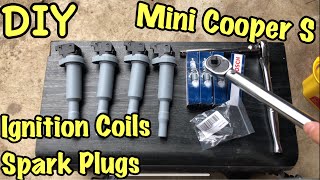
Typical fix: Replace the faulty ignition coil. It is highly recommended to replace all four coils and spark plugs 🎬 Watch: Easy DIY guide for replacing spark plugs and ignition coils. at the same time, as they wear at a similar rate and an old spark plug can damage a new coil.
Est. part cost: $30-$60 per coil - Worn or Fouled Spark Plug 🔴 High Probability
How to confirm: After ruling out the coil, swap the spark plug from cylinder 2 with another cylinder. If the misfire code follows the plug, the plug is the issue. Visually inspect the plug for wear, oil, or carbon fouling. Oil on the plug threads points to a leaking valve cover gasket.
Typical fix: Replace the spark plug. It is best practice to replace all four spark plugs as a set to ensure consistent performance. Use of non-OEM plugs has occasionally been cited as a source of issues.
Est. part cost: $15-$25 per plug - Carbon Buildup on Intake Valves 🟡 Medium Probability As a direct-injection engine, fuel is sprayed directly into the cylinder, so it never cleans the intake valves. Oil vapor from the PCV system bakes onto the hot valves, restricting airflow and causing misfires. This is especially severe on the N14 engine. Owners on forums frequently discuss this as a root cause after ignition components are replaced without success.
How to confirm: This requires visual inspection using a borescope inserted into the intake port or by removing the intake manifold. This is often suspected after ignition and basic fuel system checks do not resolve the misfire.
Typical fix: The intake valves must be physically cleaned. The most common and effective method is walnut shell blasting, which uses crushed walnut shells and compressed air to safely remove the carbon deposits. This is a well-documented procedure in the MINI community.
Est. part cost: $50-$100 for walnut media and tool adapters (DIY), but shop labor is significant, often $500-$1000. - Failed High-Pressure Fuel Pump (HPFP) 🟡 Medium Probability The HPFP is a notorious weak point on both N14 and N18 engines, with a history of failures leading to a class-action lawsuit and an extended warranty from MINI to 10 years/120,000 miles.
How to confirm: This is harder to diagnose for a DIYer. It often causes multiple misfires and may set a specific low fuel pressure code (like 2880). Diagnosis requires a scan tool that can read the fuel rail pressure to see if the actual pressure is significantly below the desired pressure, especially during cold starts or high load.
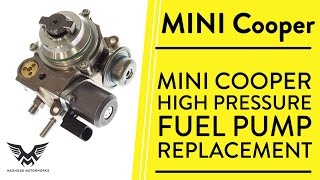
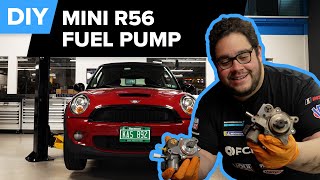
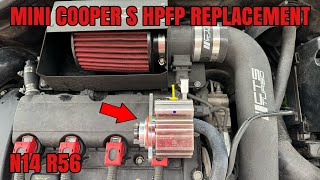
Typical fix: Replace the high-pressure fuel pump. There are several part numbers depending on the engine (N14 vs N18) and production date. 🎬 Watch: How to replace the high pressure fuel pump yourself.
Est. part cost: $300-$800 for the part, with some owners opting for rebuilt units. - Faulty Fuel Injector ⚪ Low Probability
How to confirm: If the misfire stays on cylinder 2 after swapping the coil and plug, the injector is a suspect. A professional may need to test the injector's flow rate and spray pattern, or you can swap injectors between cylinders (a more involved job) to see if the misfire moves.
Typical fix: Replace the fuel injector for cylinder 2. It's often recommended to replace the injector seals at the same time.
Est. part cost: $50-$150
Rare But Worth Checking
- Low Engine Compression: If all else fails, a compression test is necessary. A low reading in cylinder 2 points to a serious mechanical problem like a burnt valve, damaged piston, piston rings, or cylinder wall. This is often the 'worst-case scenario' discussed on forums after all other options are exhausted.
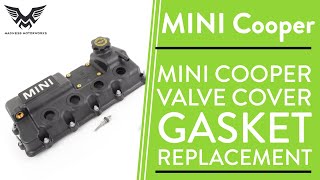
- Leaking Valve Cover Gasket: A leaking valve cover gasket can allow oil to fill the spark plug tube, shorting out the ignition coil and fouling the spark plug, causing a misfire. If you see oil on the coil boot or spark plug when you remove it, the valve cover gasket needs to be replaced. The entire valve cover is often replaced as the PCV system is integrated and fails.
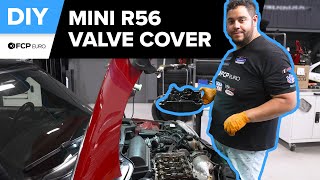
- Failed PCV System: The Positive Crankcase Ventilation (PCV) valve is integrated into the valve cover on N14/N18 engines. When it fails, it can create a significant vacuum leak, leading to a lean condition, rough idle, and misfires. Since the PCV valve is not separately serviceable, the entire valve cover must be replaced. 🎬 See this step-by-step walkthrough for replacing the MINI valve cover.
Diagnosis Steps

- Read the code with an OBD-II scanner to confirm P0302 and check for any other codes like P0300 or 2880.
- Swap the ignition coil from cylinder 2 to cylinder 1. Clear the codes, start the engine, and see if the misfire moves to cylinder 1 (code P0301). If it does, the ignition coil is faulty.
- If the misfire remains on cylinder 2, swap the spark plug from cylinder 2 to cylinder 3. If the code changes to P0303, the spark plug is faulty.
- Inspect the spark plug well for oil. Oil presence indicates a leaking valve cover gasket which must be replaced. Often the entire valve cover is replaced due to the integrated PCV system.
- If the misfire persists on cylinder 2, the issue is likely fuel, air, or mechanical. Inspect the intake valves for carbon buildup using a borescope. This is a very common issue.
- If no significant carbon is found, investigate the fuel injector on cylinder 2. This may involve swapping injectors to see if the fault moves, which is a more advanced DIY task.
- Check fuel rail pressure using an advanced scan tool to rule out a failing HPFP. Look for pressure drops during cold starts or acceleration. Compare actual vs. requested pressure.
- As a final step for persistent misfires, perform a compression test and a cylinder leak-down test on all cylinders to check for mechanical engine health (e.g., piston rings, valves).
Parts You'll Likely Need

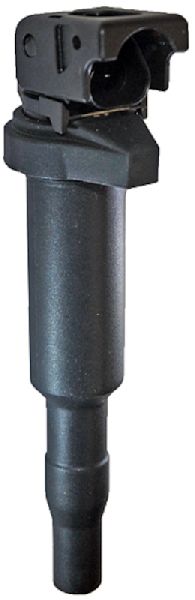
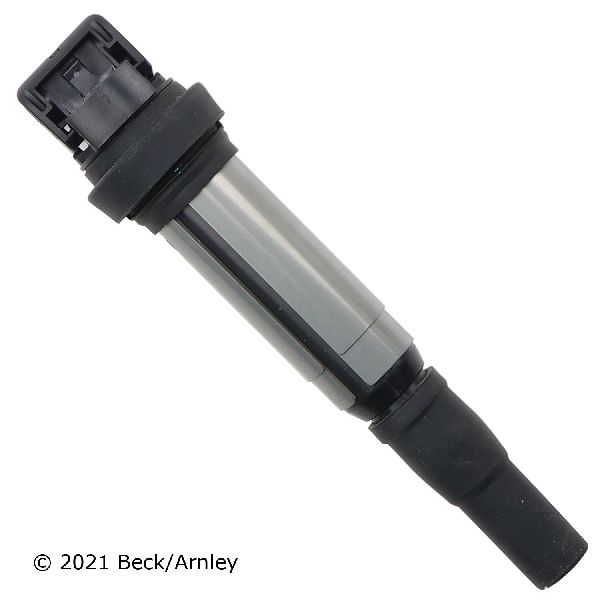
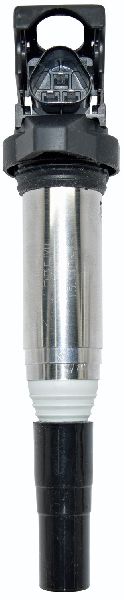
- Ignition Coil
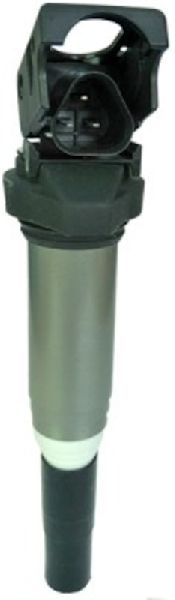
(OEM #12138616153 (Delphi, often supersedes earlier Bosch/Eldor parts 12137575010, 12137550012))— This is the most frequent cause of a single-cylinder misfire on this engine. They are known to fail intermittently and eventually completely.
Trusted brands: Bosch, Delphi (often recommended as the updated replacement), Eldor, NGK
OEM price range: $60-$90
Aftermarket price range: $30-$50 - Spark Plug
(OEM #12120035915)— Spark plugs are a regular maintenance item and can cause misfires when worn, especially in a turbocharged engine. A bad plug can also ruin a new coil.
Trusted brands: NGK, Bosch, BERU
OEM price range: $20-$30
Aftermarket price range: $15-$20 - High-Pressure Fuel Pump (HPFP)
(OEM #N14: 13517588879; N18 (early): 13517592429; N18 (late): 13518605102)— A very common failure item on this platform, causing a wide range of misfire and drivability issues. Subject to a warranty extension.
Trusted brands: MINI (Continental/Bosch), Bosch
OEM price range: $600-$1000
Aftermarket price range: $300-$800 (Rebuilt options are also available) - Valve Cover
(OEM #11127646555 (N14), 11127646552 (N18))— The integrated PCV system fails, causing vacuum leaks and misfires. The cover itself can warp or the gasket can leak oil into the spark plug tubes.
Trusted brands: MINI (OEM), Vaico, Aftermarket aluminum versions
OEM price range: $350-$450
Aftermarket price range: $100-$250
Related Codes That Often Appear With This One
- P0300 — If the underlying issue, like a failing HPFP or major vacuum leak, becomes severe enough to affect multiple cylinders, a P0300 (Random/Multiple Cylinder Misfire) code may appear alongside P0302.
- P0301, P0303, P0304 — These codes indicate misfires in other cylinders. Seeing them together with P0302 points towards a systemic problem like the HPFP, carbon buildup across all cylinders, or a major vacuum leak.
- 2880 — This is a MINI-specific code for 'High Pressure System Plausibility'. It often appears when the High-Pressure Fuel Pump (HPFP) is failing and is a strong indicator that the misfire is fuel-pressure related.
Technical Service Bulletins (TSBs) & Recalls
- M120415 / SIM 12 04 15: Discusses engine misfires due to failed ignition coils and the recommendation to replace all coils if one has failed, especially on cars over 24 months or 10,000 miles.
- M010116 / SIM 01 01 16: Details the warranty extension for the N18 engine's High-Pressure Fuel Pump (HDP) to 10 years/120,000 miles.
- M010419 / Class Action Settlement: Details the warranty extension for the N14 engine's High-Pressure Fuel Pump (HDP) to 10 years/120,000 miles as part of a class action settlement.
- M010410 / SIM 01 04 10: An earlier TSB from 2010 also announcing an extended emissions warranty for the N14 HPFP to 10 years/120,000 miles.
Platform-Specific Known Issues

- Severe carbon deposits on intake valves due to the direct-injection design, requiring periodic walnut shell blasting for removal.
- High rate of failure for the high-pressure fuel pump (HPFP), leading to misfires and hard starting, particularly when the engine is cold.
- A known TSB was issued for premature ignition coil failure.
Mechanic-Grade Diagnostic Values
- High-Pressure Fuel Pump (HPFP) Rail Pressure at Idle — expected: Approx. 725 psi (50 bar) for early N14/N18. Later N18s with a software update may idle higher, around 1100 psi (75.9 bar).. Failure: Pressure that fluctuates wildly, drops below 700 psi at idle, or fails to reach ~1,740 psi (120 bar) under full load.
- Low-Pressure Fuel Pump (in-tank) feed to HPFP — expected: At least 5 bar (72.5 psi).. Failure: Pressure below 5 bar indicates the in-tank pump is failing, which will starve the HPFP and cause misfires.
- Ignition Coil Primary Resistance — expected: Approximately 0.5 to 0.7 ohms.. Failure: A reading significantly higher, like 1.3 ohms, or an open circuit (infinite resistance) indicates a bad coil.
- Ignition Coil Power Supply Voltage — expected: 12V+ with ignition on at the power supply wire (color varies by cylinder).. Failure: No voltage indicates a wiring or fuse issue upstream of the coil.
Hidden / Shadow Codes Worth Checking
- 2D60: VANOS, exhaust, adaptation stop. This code indicates the exhaust VANOS solenoid is jammed or not adapting correctly, which can cause rough running and misfires. (see via Dealer-level scanners like ISTA or advanced OBD2 tools.)
- 2EFE: Misfire, several cylinders: detected. Often appears with specific cylinder misfire codes and points to a systemic issue. (see via Advanced OBD2 scanners, ISTA.)
- 2F00: Misfire, cylinder 2: detected. This is the hexadecimal equivalent of P0302 that would be seen on BMW/MINI specific software. (see via ISTA, INPA, or other BMW/MINI diagnostic software.)
Scan Tool Commands That Help
- ISTA (Integrated Service Technical Application): Call up ECU functions -> Diagnosis Scan -> DME -> Component triggering -> Fuel injector test — To individually activate and test the fuel injector for cylinder 2 after ignition components have been ruled out. This can help determine if the injector is clicking or electronically functional.
- ISTA (Integrated Service Technical Application): Vehicle Management -> Service Functions -> Drive -> Digital engine electronics -> Misfire detection — To view the misfire counter for each cylinder in real-time. This is more sensitive than generic OBD-II and can show minor misfires that haven't yet triggered a CEL, helping to confirm if a repair was successful.
- Autel MaxiCOM/similar advanced scanner: Onboard monitor (Mode $06) -> Misfire data for cylinder X — To view the raw misfire counts for each cylinder during the last and current driving cycles. This can confirm the misfire is isolated to cylinder 2 and verify that a coil/plug swap successfully moved the misfire count to a different cylinder.
Wiring & Ground Locations
- Engine Ground Strap — A thick braided cable running from the passenger side engine mount to a bolt on the frame rail below it.. A corroded or loose main engine ground can cause a weak spark, erratic sensor readings, and intermittent misfires that are difficult to diagnose. It provides the primary ground path for the ignition coils.
- Ignition Coil Connector (Cylinder 2) — The second connector from the left (passenger side) on the engine's valve cover. Wire colors are typically Blue for the signal wire on cylinder 2, with a common power and ground wire color for all coils.. Damage to the connector or wiring harness pigtail is common. A visual inspection for broken clips, pushed-out pins, or chafed wires is crucial. The OEM connector part number is 12527519996.
- Main Loom Earth Point — On older classic Minis, a key ground point is on the bulkhead cross member. For R56 models, multiple ground points exist in the engine bay, often under plastic covers, with a primary one near the gearbox.. Poor grounding of the main wiring loom can affect the Digital Motor Electronics (DME) and its ability to properly control ignition and fuel, leading to misfires.
Real Owner Repair Stories
- YouTube user comment (2015 Mini Cooper Countryman S R60 (similar N18 engine)) — Car would not start after experiencing issues.
❌ Tried (didn't work) Replaced the starter motor.
✅ What actually fixed it The issue was a corroded main engine ground strap. After replacing the strap, which connects the engine mount to the frame, the car started and ran correctly. - North American Motoring forum user (2009 MINI Cooper JCW (N14 Engine)) — Sudden loss of power on highway, flashing CEL, codes P0300, P0301, P0302.
❌ Tried (didn't work) Replaced all four spark plugs., Replaced all four ignition coils.
✅ What actually fixed it The user suspected carbon buildup as the next logical step after the full ignition system replacement did not solve the multiple misfire codes.
OEM Part Supersession History
13517573436, 13537528345→13517588879— Updated design for the High-Pressure Fuel Pump (HPFP) for the N14 engine to improve reliability.
Heads up: The N14 HPFP (PN 13517588879) will NOT fit the later N18 engine.13537528351 (and others)→13537591623, then 13538682350— Multiple revisions of the direct fuel injectors for N14/N18 engines. Later versions have improved reliability and performance.
Heads up: Some early part numbers are not retrospectively exchangeable with the newest versions. It is highly recommended to replace all four injectors as a set to ensure they are matched.
Model Year Variations Within This Range
- 2007-2010 (N14 Engine): Significantly more prone to severe carbon buildup on intake valves. Also more susceptible to timing chain tensioner failure and PCV system failure integrated into the valve cover.
- 2011-2013 (N18 Engine): Features a redesigned cylinder head which reduces, but does not eliminate, carbon buildup issues. The HPFP issues persist. Some later N18 models (2013+) may use a more reliable Bosch-style HPFP. An ECU update may have increased idle fuel rail pressure to ~1100 psi from ~750 psi.
Diagnostic Flowchart
Real Owner Stories
Aggregated from forums and TSBs cited above. Mileages and costs reflect what owners reported in those sources.
2011 Mini Cooper R56 S
Symptoms: Experienced a sudden P0302 code accompanied by the vehicle going into limp mode.
What fixed it: Diagnosed by swapping coils and plugs to isolate the faulty component.
Source hint: North American Motoring forum thread titled 'P0302 this morning'
2013 Mini Cooper S
Symptoms: Chased a persistent P0302 misfire code after initially replacing a coil and spark plugs with aftermarket parts.
What fixed it: Determined that non-OEM parts were causing ongoing issues; required switching to OEM parts and considering a compression test.
Source hint: North American Motoring forum thread titled 'R56 P0302 + OEM Spark Plugs'
2011 Mini Cooper
Symptoms: Experienced a cylinder 2 misfire (P0302) overnight.
What fixed it: Replaced the single faulty ignition coil, though community members strongly advised replacing all four coils and plugs as a set.
Source hint: Reddit r/MINI thread titled 'I had my 2nd cylinder misfire happen last night'
Mini Cooper
Symptoms: Experienced a P0302 misfire that only occurred at specific RPMs while driving in a high gear.
What fixed it: Swapped plugs and coils, but the root cause remained elusive, demonstrating how difficult intermittent misfires can be to track down.
Source hint: North American Motoring forum thread titled 'Drivetrain P0302 - Cylinder 2 Misfire'
Related OBD-II Codes
Frequently Asked Questions
Is the high-pressure fuel pump (HPFP) covered under warranty for my 2007-2013 Mini Cooper?
Does TSB M120415 apply to my Mini Cooper's ignition coils?
Why do people recommend walnut blasting for a P0302 code on the N14/N18 engine?
I found oil on the threads of my cylinder 2 spark plug. What does this mean?
Can I use aftermarket spark plugs and ignition coils to fix a P0302 on my R56?
How can I tell if my P0302 is caused by a bad ignition coil or a failing HPFP?
Helpful Videos
Used OEM Parts in Stock




New Aftermarket Parts Available



The information in this article is provided for general reference and educational purposes only. Vehicle specifications, procedures, and part compatibility can vary by production date, trim level, and region. Always consult your vehicle's factory service manual and verify part numbers before purchasing or performing repairs. Safety-critical components such as airbags, seat belts, and braking systems should be installed by a qualified professional.
- Mini Cooper:
- 🎬 Helpful Videos
- 🛍️ Shop This Part
- What's Unique About the 2007-2013 Mini Cooper
- Symptoms You May Notice
- Most Likely Causes
- Rare But Worth Checking
- Diagnosis Steps
- Parts You'll Likely Need
- Related Codes That Often Appear With This One
- Technical Service Bulletins (TSBs) & Recalls
- Platform-Specific Known Issues
- Mechanic-Grade Diagnostic Values
- Hidden / Shadow Codes Worth Checking
- Scan Tool Commands That Help
- Wiring & Ground Locations
- Real Owner Repair Stories
- OEM Part Supersession History
- Model Year Variations Within This Range
- Diagnostic Flowchart
- Real Owner Stories
- 2011 Mini Cooper R56 S
- 2013 Mini Cooper S
- 2011 Mini Cooper
- Mini Cooper
- Related OBD-II Codes
- Frequently Asked Questions
- 🎟️ Get 5% Off