

P0302 on 2012-2015 Mercedes-Benz C-Class: M276 Cylinder 2 Misfire Causes and Fixes
On the Mercedes M276 V6 engine, code P0302 is most often caused by a failed ignition coil. Because accessing cylinder 2 requires removing the entire intake manifold, it is strongly recommended to replace all six ignition coils and spark plugs at the same time. Expect to pay $300-$600 for a full set of OEM-quality parts.
- P0302 means your engine has a misfire in cylinder 2, the middle cylinder on the passenger side.
- The most likely cause is a bad ignition coil, a very common issue on the M276 V6 engine.
- Repair is labor-intensive because the intake manifold must be removed to access the coils and plugs.
- To save money and future headaches, replace all six ignition coils, all six spark plugs, and the intake gaskets at the same time.
- Do not continue to drive with a flashing check engine light, as you risk damaging your expensive catalytic converters.
What's Unique About the 2012-2015 Mercedes-Benz C-Class
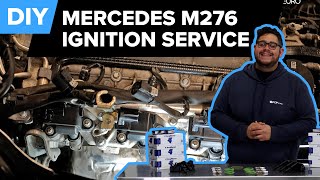
The key issue for this platform is not the cause, but the repair process. Ignition coils are a known common failure item on the M276 engine, often failing intermittently. However, unlike many engines where coils are easily accessible, the M276's design requires the complete removal of the intake manifold 🎬 Watch: Step-by-step guide to replacing M276 coils and spark plugs. to access the coils and spark plugs. This significantly increases labor time and makes it practical to replace all six coils and plugs at once to avoid repeating the job when another original coil fails.
Generation note: The 2012-2015 C-Class range covers the end of the W204 generation (2008-2014) and the start of the W205 generation (2015-2021). This guide, referencing the 3.5L M276 engine, is primarily applicable to the facelifted W204 C-Class models (like the C300 and C350) from 2012-2015.
Symptoms You May Notice
- Flashing Check Engine Light
- Rough, vibrating idle
- Engine hesitation or stumbling during acceleration
- Noticeable loss of power
- Reduced fuel economy
- Replacing only the cylinder 2 ignition coil. While this might fix the immediate problem, another original coil is likely to fail soon, requiring the expensive labor of removing the intake manifold again.
- Assuming the misfire is ignition-related when it is actually caused by oil contamination in the wiring harness from leaking camshaft sensors, which can mimic ignition failure.
Most Likely Causes
- Failed Ignition Coil 🔴 High Probability Ignition coils are a well-documented common failure point on the M276 engine, sometimes failing intermittently before failing completely.
How to confirm: The standard diagnostic method is to swap the suspect coil with one from another cylinder. However, due to the intake manifold removal required for access, this is not a simple test. If you have already disassembled the engine to this point, it is best to replace all coils.
Typical fix: Replace all six ignition coils and spark plugs. Given the labor involved, replacing only one is not cost-effective.
Est. part cost: $250-$500 for a set of 6 OEM-quality coils. - Worn or Fouled Spark Plug 🟡 Medium Probability Spark plugs are a regular maintenance item. If they are original or past their service life (typically 60,000 miles), they can cause a misfire.
How to confirm: Once the intake manifold and ignition coil are removed, inspect the spark plug for wear, oil fouling, or damage. A visual inspection can often confirm the plug is bad.
Typical fix: Replace all six spark plugs. This is always done along with the ignition coils due to the shared labor.
Est. part cost: $60-$120 for a set of 6 OEM-quality plugs. - Faulty Fuel Injector ⚪ Low Probability While the M276 direct injection system is generally reliable, a fuel injector can become clogged or fail electrically, causing a misfire in a single cylinder.
How to confirm: After ruling out ignition components, a mechanic can perform a fuel injector balance test to check flow rates or test the injector's resistance with a multimeter. This is a more advanced diagnostic step.
Typical fix: Replace the faulty fuel injector for cylinder 2. Note that new injectors may need to be coded to the ECU with a specific calibration number found on the new part.
Est. part cost: $100-$200 for a single OEM-quality injector.
Rare But Worth Checking
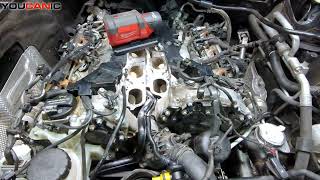
- Oil in Wiring Harness: The M276 engine can suffer from oil leaks at the camshaft position sensors (Part No. A2769051000 🎬 See how oil in the harness can damage your ECU.). This oil can wick through the entire engine wiring harness, eventually reaching the ECU and oxygen sensor connectors, causing a variety of bizarre electrical faults, including persistent or phantom misfires. Check the sensor connectors for any sign of oil during diagnosis.
- Low Cylinder Compression: A mechanical engine problem, such as a burnt valve, worn piston rings, or a leaking head gasket, can cause a lack of compression and a persistent misfire. This is confirmed with a compression test and a cylinder leak-down test. In some cases, heavy carbon buildup on intake valves can also affect compression and cause misfires, particularly at idle.
- Intake Manifold Gasket Leak: A vacuum leak from a failed intake manifold gasket specific to the runner for cylinder 2 could lean out the air/fuel mixture and cause a misfire. When removing the manifold for a coil/plug job, these gaskets should always be replaced.
Diagnosis Steps
- Confirm the code P0302 is present using an OBD-II scanner.
- As an early step, inspect the electrical connectors at the four camshaft position sensors for any signs of engine oil. If oil is present, this is a likely root cause for electrical issues and must be addressed.
- Plan for significant disassembly. To access cylinder 2, the engine cover, airbox assembly, and entire intake manifold must be removed. This requires tools like T15, T25, and slim E10 external Torx sockets.
- Once the intake manifold is off, locate cylinder 2 (passenger side, middle cylinder).
- The most efficient approach is to assume the ignition components are the cause. Replace the ignition coil and spark plug for cylinder 2. It is highly recommended to replace the coils and plugs for all six cylinders at this time.
- While the manifold is off, replace all six intake manifold gaskets (Part No. 2761410180) to prevent future vacuum leaks.
- Reassemble the engine, ensuring the intake manifold bolts are torqued correctly to 9 Nm (Newton-meters). Clear the trouble codes.
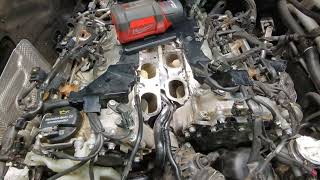
- If the misfire persists on cylinder 2, the problem is less common. One forum user reported a case where even after replacing the coil, plug, and injector, the P0302 code returned, with the next diagnostic step being a compression test to check for carbon buildup on the valves 🎬 Watch: How carbon buildup causes persistent misfires and how to fix it.. Other potential causes for a persistent idle-only misfire could be a vacuum leak or faulty PCV valve.
Parts You'll Likely Need
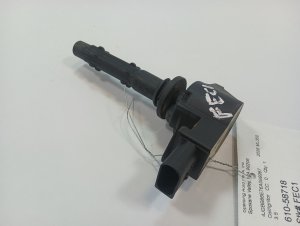
- Ignition Coil
(OEM #A2769060501)— This is the most common cause of misfires on the M276 engine.
Trusted brands: Bosch, Delphi, Beru
OEM price range: $60-$90 each
Aftermarket price range: $40-$70 each - Spark Plug
(OEM #A0041598103)— A standard maintenance item that should always be replaced with the ignition coils due to the labor required for access.
Trusted brands: Bosch, NGK
OEM price range: $15-$25 each
Aftermarket price range: $10-$18 each - Intake Manifold Gasket
(OEM #A2761410180)— These are single-use gaskets that must be replaced anytime the intake manifold is removed for service. Six are required.
Trusted brands: Victor Reinz, Elring, Mercedes-Benz Genuine
OEM price range: $9-$12 each
Aftermarket price range: $5-$8 each
Related Codes That Often Appear With This One
- P0300 — If the misfire is intermittent or affects multiple cylinders, a P0300 (Random/Multiple Cylinder Misfire) code may be stored alongside P0302.
- P0301, P0303 — Codes for other cylinders on the same bank (Bank 1) may appear if the root cause is something that affects the entire bank, like a vacuum leak or fuel pressure issue on that side.
Technical Service Bulletins (TSBs) & Recalls
- TSB LI05.10-P-056435: Addresses a common 2-10 second engine rattle on cold starts in early M276 engines. The cause is oil pressure bleed-down from the secondary timing chain tensioners. The fix requires installing updated tensioners and adding check valves to the oil supply passages in the cylinder heads.
- TSB LI07.08-P-058759: Notes that fault codes related to combustion misfiring can be logged in the ECU, sometimes resulting in the engine entering a limp-home mode even if no other performance issues are apparent.
Platform-Specific Known Issues
- Persistent Misfire After Parts Replacement: In a thread on MBWorld.org, an owner with a P0302 code replaced all six ignition coils, spark plugs, and fuel injectors, yet the misfire on cylinder 2 returned. The discussion pointed towards less common causes, such as low compression from carbon buildup on the valves or a mechanical issue with a hydraulic lifter.
- Idle-Only Misfire: Another owner on MBWorld.org reported a P0302 misfire that only occurred at idle or below 2000 RPM. After replacing the coil, plugs, and injector, the problem persisted, and the dealer was unable to diagnose it. Forum members suggested investigating a vacuum leak, a faulty PCV valve, or sticking valves as potential causes for an idle-specific misfire.
Mechanic-Grade Diagnostic Values
- High-Pressure Fuel Rail Pressure (at idle and RPM) — expected: 150 to 200 bar (2175 to 2900 PSI). Failure: Pressure significantly below this range, or dropping unexpectedly, can cause misfires. A failing sensor may default to a steady reading of ~6 bar.
- Fuel Injector Resistance (Piezoelectric) — expected: 150 to 210 kΩ (kilo-ohms). Failure: A reading of open circuit (infinite resistance) or a value outside the specified range indicates a failed injector coil. Also check for any connection to the injector casing (ground), which should not exist.
- Low-Pressure Fuel Pump Pressure — expected: ~6 bar (~87 PSI). Failure: This is the supply pressure to the High-Pressure Fuel Pump (HPFP). If this pressure is low, the HPFP cannot function correctly, leading to misfires under load.
Hidden / Shadow Codes Worth Checking
- Misfire Event Counter: Mercedes' XENTRY/DAS software does not use a simple shadow code but records detailed 'event memory' for misfires. It logs the specific engine speed (RPM), load, and temperature at which the misfire occurred, and maintains a counter for each cylinder. This is crucial for diagnosing intermittent misfires that happen under specific conditions. (see via Mercedes-Benz XENTRY/DAS diagnostic system)
Scan Tool Commands That Help
- Mercedes-Benz XENTRY/DAS: Smooth Running Test — This function graphically displays the rotational speed contribution of each cylinder. A cylinder that is misfiring will show a significant deviation from the others, helping to confirm the location and severity of the misfire in real-time, even if it's a subtle idle vibration.
- Mercedes-Benz XENTRY/DAS: High-Pressure Fuel Pump Test — If a fuel supply issue is suspected, this guided test commands the HPFP to build pressure and holds it, verifying the pump's ability to reach and maintain the specified pressure (up to 200-220 bar). A failure here points directly to a weak HPFP or a leak in the high-pressure system.
Wiring & Ground Locations
- W11 — Combustion engine ground point. This is a primary ground strap, typically a braided cable running from the engine block (often near the bell housing on the driver's side) to the vehicle's chassis.. A corroded or loose main engine ground can cause unstable voltage for all engine electronics, including the ECU, ignition coils, and injectors, leading to phantom misfires and other electrical gremlins.
- W16/5 — Left major assembly compartments electronics ground point. Its exact location in the W204 is poorly documented in official Mercedes literature, but it is a critical ground point for the Engine Control Unit (ME-SFI). It is believed to be on the left side of the engine bay, near the frame rail.. The ECU directly uses this ground. A poor connection at W16/5 can cause erratic ECU behavior, including miscalculating fuel and spark timing, which can manifest as a persistent, hard-to-diagnose misfire on one or more cylinders.
Real Owner Repair Stories
- YouTube user 'Uchanic Garage' (Mercedes with M276 engine (model not specified, but engine is the same)) — Persistent, intermittent misfire on cylinder 5 (P0305) that was more noticeable at idle.
❌ Tried (didn't work) Replacing spark plugs, Replacing other unspecified ignition components
✅ What actually fixed it The issue was caused by heavy carbon buildup on the intake valves, preventing the valve for cylinder 5 from closing properly. A chemical intake valve cleaning (by spraying cleaner through the intake with the engine running) significantly reduced the misfire and eliminated the check engine light for at least 20,000 miles. The user notes the ideal fix is a mechanical walnut blasting, but the chemical clean was an effective, less expensive solution. - MBWorld.org Forum User (2013 E300 with 3.5L M276 engine) — Severe misfires on multiple cylinders, engine won't rev, smells of unburnt fuel. Codes P0190 and multiple misfire codes.
❌ Tried (didn't work) Initial diagnosis pointed to a bad high-pressure fuel rail sensor, which was replaced.
✅ What actually fixed it The root cause was oil leaking from the camshaft position sensors and wicking down the wiring harness to other electrical connectors. Cleaning the oil from the harness connectors provided temporary relief, but the permanent fix required replacing the leaking camshaft position sensors and magnets to stop the source of the oil contamination. - NHTSA ODI #11679991 (Mercedes GLE 350 with similar engine architecture) — An owner reported that the vehicle experienced a cylinder head failure confirmed by diagnostic code P0302, resulting in rough idling and reduced power.
"I Checked Everything" — The Actual Cause
- A failed diaphragm in the PCV (crankcase ventilation) system can cause a large, unmetered vacuum leak. This may not show up on a smoke test of the intake manifold itself. Symptoms include a high-pitched whistle at idle, difficulty removing the oil cap with the engine running, and rough idle/misfires. The excessive vacuum disrupts the air/fuel ratio, leading to codes like P0302.
OEM Part Supersession History
A2769063700→A2769060501, A2769061001, A2769060401— Standard part evolution for reliability and manufacturing improvements.
Heads up: The listed part numbers are generally interchangeable for this application. The most current part number is typically recommended. Bosch (e.g., 0221604067) is an OEM supplier for this part.
Model Year Variations Within This Range
- 2012-2014 (Early M276): Early M276 engines were more prone to timing chain tensioner issues, leading to a startup rattle (TSB LI05.10-P-056435). While not a direct cause of a P0302 misfire, it's a known issue for this engine generation. The fix involves updated tensioners and check valves.
Diagnostic Flowchart
Other Known Issues on This Vehicle
Issues unrelated to this code that are worth knowing about as an owner of this generation:
- Timing Chain Rattle on Cold Start 🔴 High — Common on early production M276 engines (pre-2014). A metallic rattle for 2-10 seconds after a cold start. (Ref: TSB LI05.10-P-056435. The fix involves installing updated secondary chain tensioners and new check valves in the cylinder head oil passages to prevent oil pressure bleed-down.)
- Oil Wicking into Engine Wiring Harness 🔴 High — A well-documented problem where oil leaks from the camshaft position sensors (and sometimes magnets) and travels through the wiring harness to the main engine control unit (ECU), causing widespread and difficult-to-diagnose electrical faults. (Ref: No official recall, but updated sensor parts exist. Owners report dealers quoting thousands for harness and ECU replacement. Proactive replacement of sensors and installation of sacrificial pigtail harnesses are common preventative measures.)
- High-Pressure Fuel Pump (HPFP) Failure 🟠 Medium — The HPFP can fail, leading to long crank times, stuttering, hesitation, and loss of power. It is a potential cause for misfire-like symptoms that don't resolve with ignition component replacement.
- Upper Timing Cover Oil Leaks 🟠 Medium — The sealant on the upper front timing covers can degrade, causing oil to leak down the front of the engine, often onto the alternator, potentially causing alternator failure.
- Cooling System Leaks 🟡 Low — At higher mileage, plastic components like the water pump, thermostat housing, and various inlet flanges can become brittle and leak coolant.
Used vs. New Parts: Buying Guide for This Vehicle
When a used part is the smart pick: For this repair, used parts are generally not recommended for the core failure items. However, if the intake manifold itself were damaged during repair, a used manifold from a reputable salvage yard is a viable and cost-effective option, as it is a non-wear item.
Donor-vehicle mileage cap: roughly under 100000 miles for the part to have meaningful remaining life.
What to inspect on the donor part:
- For an intake manifold, check for any cracks, especially around bolt holes.
- Ensure all threaded inserts are intact and not stripped.
- Verify the mating surfaces are flat and not warped or deeply scored.
OEM-only on this vehicle (don't cheap out):
- Intake Manifold Gaskets (Always buy new, single-use items)
- Spark Plugs (Always buy new)
- Ignition Coils (New is strongly recommended due to high failure rate and labor cost)
Aftermarket brands forum-validated for this vehicle:
- Ignition Coils: Bosch, Delphi, Beru are OEM suppliers or have a strong reputation.
- Spark Plugs: NGK, Bosch.
- Gaskets: Victor Reinz, Elring.
Brands owners have reported issues with on this vehicle:
- Unnamed or generic 'white-box' ignition coils from online marketplaces. Failure rates are high, and given the labor involved to replace them, the risk outweighs the initial cost savings.
Real Owner Stories
Aggregated from forums and TSBs cited above. Mileages and costs reflect what owners reported in those sources.
2012 Mercedes-Benz E350 M276 3.5L V6
Symptoms: The owner replaced all six ignition coils, spark plugs, and fuel injectors, yet the P0302 misfire on cylinder 2 returned.
What fixed it: The issue was not resolved by standard parts replacement; the next diagnostic step recommended was a compression test to check for carbon buildup on the valves or a mechanical issue with a hydraulic lifter.
Source hint: MBWorld.org thread titled 'P0302 - Replaced coils, injectors, plugs'
2013 Mercedes-Benz C-Class M276 3.5L V6
Symptoms: Misfire specifically occurring only at idle or below 2000 RPM. The problem persisted even after the dealer replaced the coil, plugs, and injector.
What fixed it: The source suggests investigating a vacuum leak, a faulty PCV valve, or sticking valves for this idle-specific misfire.
Source hint: MBWorld.org forum discussion on idle-only misfire
Related OBD-II Codes
Frequently Asked Questions
Can I just swap the ignition coil on cylinder 2 to another cylinder to test it on my M276 engine?
My 2012 C-Class has a metallic rattle for a few seconds when I start it cold; is this related to my P0302 code?
What specific parts do I need to replace when fixing a P0302 misfire on the M276?
Could oil in my wiring harness be causing the P0302 misfire code?
What is the correct torque specification for the intake manifold bolts on the 3.5L V6?
Does Mercedes-Benz have a TSB regarding misfire codes causing limp-home mode?
Helpful Videos

Used OEM Parts in Stock

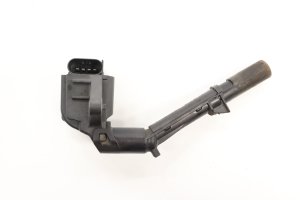
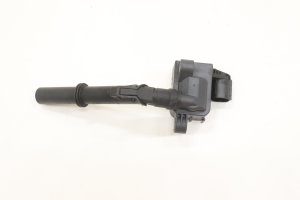


New Aftermarket Parts Available

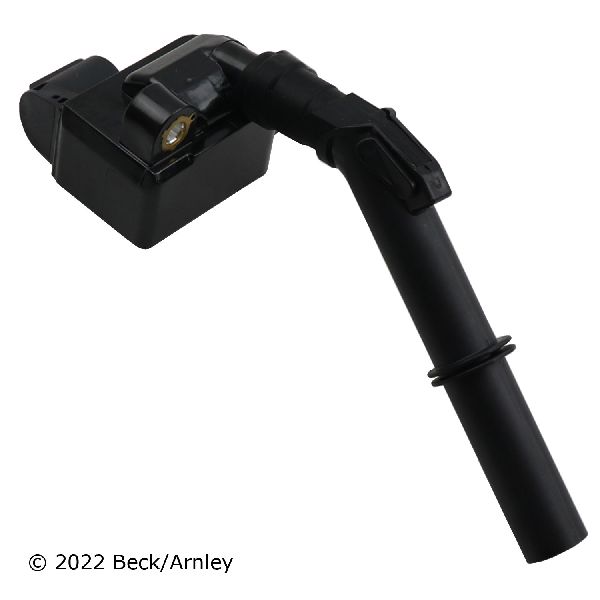
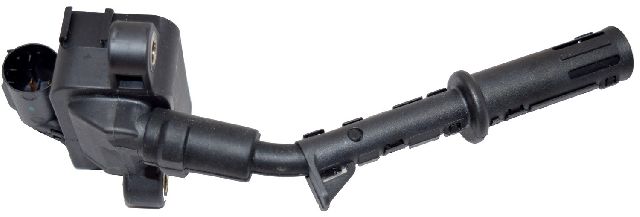



The information in this article is provided for general reference and educational purposes only. Vehicle specifications, procedures, and part compatibility can vary by production date, trim level, and region. Always consult your vehicle's factory service manual and verify part numbers before purchasing or performing repairs. Safety-critical components such as airbags, seat belts, and braking systems should be installed by a qualified professional.
- Mercedes-Benz C-Class:
- 🎬 Helpful Videos
- 🛍️ Shop This Part
- What's Unique About the 2012-2015 Mercedes-Benz C-Class
- Symptoms You May Notice
- Most Likely Causes
- Rare But Worth Checking
- Diagnosis Steps
- Parts You'll Likely Need
- Related Codes That Often Appear With This One
- Technical Service Bulletins (TSBs) & Recalls
- Platform-Specific Known Issues
- Mechanic-Grade Diagnostic Values
- Hidden / Shadow Codes Worth Checking
- Scan Tool Commands That Help
- Wiring & Ground Locations
- Real Owner Repair Stories
- "I Checked Everything" — The Actual Cause
- OEM Part Supersession History
- Model Year Variations Within This Range
- Diagnostic Flowchart
- Other Known Issues on This Vehicle
- Used vs. New Parts: Buying Guide for This Vehicle
- Real Owner Stories
- 2012 Mercedes-Benz E350 M276 3.5L V6
- 2013 Mercedes-Benz C-Class M276 3.5L V6
- Related OBD-II Codes
- Frequently Asked Questions
- 🎟️ Get 5% Off