

P0302 on 2020-2025 Kia Telluride: Cylinder 2 Misfire Causes and Fixes
P0302 means cylinder 2 is misfiring. On the Telluride's 3.8L V6, this is most often caused by a bad ignition coil or a worn spark plug. Cylinder 2 is on the front bank (radiator side), making it one of the easier cylinders to access. Swapping the coil from cylinder 2 with another cylinder is a quick way to diagnose the issue. A new OEM coil costs about $75.
- P0302 on a Kia Telluride means cylinder #2 is misfiring.
- The most likely culprits are a bad ignition coil or a worn spark plug for cylinder 2.
- A simple diagnostic is to swap the cylinder 2 ignition coil with another cylinder's coil to see if the misfire code follows the coil.
- Cylinder 2 is on the front bank (radiator side), making it one of the easier cylinders to access for diagnosis and repair.
- If you have an early 2020 model and the misfire only happens on cold starts, check with a dealer about TSB ENG228 for a software update.
What's Unique About the 2020-2025 Kia Telluride
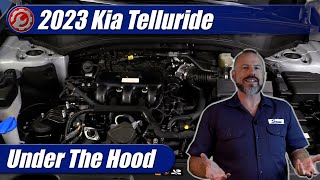
The Kia Telluride's Lambda II 3.8L GDI V6 is a modern direct-injection engine. 🎬 Watch: A detailed breakdown of the Telluride's V6 engine. While the causes for P0302 are typical (ignition, fuel, compression), GDI engines can be prone to carbon buildup on intake valves and issues with high-pressure fuel injectors. For early 2020 models, Kia issued a technical service bulletin (TSB ENG228) to update the engine control module's logic to prevent false misfire codes during a cold start. Unlike some V6 layouts, cylinder 2 on the Telluride's transverse-mounted engine is on the front bank (radiator side), making access for diagnosis and repair of common parts like coils and plugs relatively easy.
Symptoms You May Notice
- Check Engine Light is on or flashing
- Rough or shaky idle
- Hesitation or stumbling during acceleration
- Reduced engine power
- Poor fuel economy
- Engine stalling
- Smell of gasoline from the exhaust
- Replacing oxygen sensors. An O2 sensor will report a lean or rich condition caused by the misfire, but it is not the cause of the P0302 code itself.
Most Likely Causes
- Faulty Ignition Coil 🔴 High Probability Coil-on-plug systems are a common failure point for misfires on most modern engines. Heat and vibration eventually cause the electronics inside to fail. The front and rear banks on the 3.8L V6 use different ignition coils, so it's important to get the correct part for the location.
How to confirm: Swap the ignition coil from cylinder 2 with another cylinder on the same bank (e.g., cylinder 4 or 6). Clear the codes and drive. If the code changes to P0304 or P0306, the coil is bad. Cylinder 2 is on the front bank (radiator side), far left when facing the engine.
Typical fix: Replace the faulty ignition coil. It's often recommended to replace the corresponding spark plug at the same time.
Est. part cost: $40 - $75 - Worn or Fouled Spark Plug 🔴 High Probability Spark plugs are a regular maintenance item with a service interval. An owner complaint for a P0302 on another Kia model was caused by oil on the spark plug. Fouling can also occur from carbon buildup, a common trait of GDI engines, or from oil dilution issues seen in some of these engines during short-trip driving cycles.
How to confirm: Remove the spark plug from cylinder 2 and inspect it. Look for a worn electrode, heavy carbon deposits, oil, or coolant fouling. Compare it to a plug from a healthy cylinder. The OEM plugs are typically Iridium type.
Typical fix: Replace the spark plug. If all plugs are of a similar age or mileage (approaching the 100,000-mile interval), it is best practice to replace all six.
Est. part cost: $15 - $30 per plug - Clogged or Faulty Fuel Injector 🟡 Medium Probability GDI (Gasoline Direct Injection) systems use high-pressure injectors that operate inside the combustion chamber. They are more susceptible to clogging from carbon deposits than traditional port injectors. Some owners of the sister vehicle, the Hyundai Palisade, have reported rough idling and stalling that were traced to faulty injectors.
How to confirm: This is more difficult to diagnose. A professional may use a scan tool to monitor fuel trims or perform an injector balance test. Swapping injectors is possible but labor-intensive as it requires removing the intake manifold.
Typical fix: Replace the faulty fuel injector. This is a more advanced DIY or professional job. The high-pressure fuel lines are typically single-use and must be replaced as well.
Est. part cost: $80 - $150 per injector
Rare But Worth Checking
- Low Engine Compression: Mentioned in an NHTSA complaint on a different Kia model (ODI #11725093), a loss of compression in cylinder 2 caused misfires. This could be due to a bad valve, worn piston rings, or a damaged head gasket. A compression test is needed to confirm. Recall SC296 for 2024 models highlights the potential for broken valve springs, which would cause a loss of compression.
- Intake Manifold Gasket Leak: A vacuum leak near the cylinder 2 intake runner can lean out the air/fuel mixture for that cylinder only, causing a misfire. This can be diagnosed with a smoke test.
- ECU Logic Issue on early 2020 models: Kia TSB ENG228 addresses an issue where early 2020 models could falsely report misfire DTCs (including P0302) on a cold start. The fix is a software update performed by a dealer.
- Poor Ground Connection: While not specific to P0302, Kia has issued TSBs for other models like ELE283 for poor ground strap connections causing various electrical issues. A poor engine ground could potentially lead to weak spark and misfires.
Diagnosis Steps
- Read the codes with an OBD-II scanner. Confirm that P0302 is the primary code. Note any other codes present and check for a flashing vs. solid check engine light.
- Locate Cylinder 2. On the Telluride's transverse 3.8L V6, the rear bank (firewall side) contains cylinders 1, 3, 5 (from passenger to driver side). The front bank (radiator side) contains cylinders 2, 4, 6 (from passenger to driver side). Therefore, Cylinder 2 is on the front bank, passenger side.
- Perform an ignition coil swap. Swap the ignition coil from cylinder 2 with the coil from cylinder 4 (middle cylinder, front bank). Clear the codes and drive the vehicle.
- Re-scan for codes. If the code is now P0304, the ignition coil is faulty and needs to be replaced. If the code remains P0302, the coil is likely good. Proceed to the next step.
- Inspect the spark plug. Remove the spark plug from cylinder 2. Check for wear (worn electrode), damage (cracked porcelain), or fouling (black carbon, wet oil, or white ash). If it looks bad, replace it. It is recommended to replace all six if they are near the end of their 100,000-mile service life.
- Check the fuel injector wiring. Ensure the electrical connector to the fuel injector for cylinder 2 is secure and the wiring is not damaged, frayed, or corroded.
- If the problem persists, more advanced diagnostics are needed. This includes checking for a clogged fuel injector (may require a professional injector balance test), performing a compression test to check for mechanical engine problems (valves, rings), and checking for vacuum leaks near cylinder 2 with a smoke test. These steps may require professional assistance.
Parts You'll Likely Need
- Ignition Coil (Front Bank)
(OEM #27310-3L000)— This is the most common cause of a single-cylinder misfire and is the easiest to diagnose via a swap test. Cylinder 2 is on the front bank. Note: Rear bank coils may have a different part number (e.g., 27310-3L030).
Trusted brands: Kia (OEM), NGK, Delphi, Denso
OEM price range: $70-$90
Aftermarket price range: $40-$75 - Spark Plug
(OEM #18863-08105)— Spark plugs are a routine maintenance item and can cause misfires when worn or fouled. They should be replaced as a set if near their service life.
Trusted brands: Kia (OEM), NGK, Denso
OEM price range: $20-$30
Aftermarket price range: $15-$25 - Fuel Injector
(OEM #35310-3L100)— A less common but significant cause, especially on GDI engines where carbon can clog the injector tip. This is a more involved repair.
Trusted brands: Kia (OEM), Bosch
OEM price range: $120-$180
Aftermarket price range: $80-$150
Related Codes That Often Appear With This One
- P0300 — If the misfire is intermittent or affects other cylinders, a P0300 (Random/Multiple Cylinder Misfire) code may be stored alongside P0302.
- P219D — This code for 'Cylinder #2 Air-Fuel Ratio Imbalance' can appear with a P0302, as seen in NHTSA complaint ODI #11725093. It points more specifically towards a fuel delivery or compression issue for that cylinder.
- P0018 — Crankshaft Position - Camshaft Position Correlation (Bank 2). This can appear with misfire codes if there is a timing issue on the front bank of the engine, which includes cylinder 2.
Technical Service Bulletins (TSBs) & Recalls
- ENG228 - '3.8L GDI Misfire DTC Judgment Logic Improvement' for some 2020 Telluride models to fix cold start misfire detection.
Platform-Specific Known Issues
- TSB ENG228: For 2020 Tellurides produced between Jan 9, 2019, and May 19, 2020, an ECM software update is available to correct false misfire DTCs (including P0302) that may occur during a cold start.
- Recall SC296: Affects some 2024 Tellurides for defective engine valve springs which could break and cause misfires, rough running, and potential engine failure. While this is a specific VIN range, it highlights a potential for serious mechanical issues leading to misfires.
- Forum Discussion on Tellurideforums.org: A user chasing a P0304 misfire code confirmed that front and rear bank ignition coils have different part numbers, highlighting the importance of ordering the correct part
Mechanic-Grade Diagnostic Values
- Ignition Coil Secondary Resistance — expected: 5,000 to 15,000 ohms (5kΩ - 15kΩ). Failure: A reading outside of this range indicates a faulty coil winding.
- Ignition Coil Primary Resistance — expected: 0.3 to 1.5 ohms (Ω). Failure: A reading outside this very low range suggests a problem with the primary winding.
- Total Fuel Trim (Short Term + Long Term) at Idle — expected: Between -10% and +10%. Failure: Values consistently exceeding +/-10% suggest a problem. For example, a high positive trim on Bank 2 (which includes cylinder 2) could indicate a vacuum leak affecting that bank, while a high negative trim could indicate a leaking injector.
- Fuel Pressure (Low Side) — expected: Typically 45-65 PSI, though specific values for the Telluride require a service manual.. Failure: Low pressure could cause lean misfires across multiple cylinders, but a localized restriction could affect one.
Hidden / Shadow Codes Worth Checking
- Mode 6, Test ID $82, Component ID $02: This is not a 'code' but a data parameter within OBD-II Mode 6. It tracks the raw misfire count for Cylinder 2 during the current and last 10 driving cycles. Even if the misfire count is not high enough to set a P0302 code and turn on the check engine light, these counters can show intermittent or developing issues. (see via Requires an advanced scan tool capable of displaying Mode 6 data. Not all basic code readers can access this.)
Scan Tool Commands That Help
- Kia GDS (Global Diagnostic System) or equivalent advanced scan tool: Cylinder Power Balance Test — This is a crucial diagnostic step when a misfire is felt but the cause isn't obvious. The tool deactivates one cylinder at a time (by cutting fuel or spark) and measures the resulting drop in engine RPM. If deactivating cylinder 2 causes little or no RPM drop compared to other cylinders, it confirms cylinder 2 is not contributing power, pointing to a significant ignition, fuel, or compression issue on that cylinder.
- Kia GDS or equivalent: Fuel Injector Activation Test — To test the electronic side of the fuel injector. This command will cycle the injector for cylinder 2, allowing the technician to listen for an audible 'click' to confirm the solenoid is working. It does not, however, confirm if the injector is clogged.
Wiring & Ground Locations
- GC202 (example) — While the specific designator for the main engine-to-chassis ground on the Telluride was not found, a common location for main grounds is on the chassis rail near the battery or on the transmission housing. A wiring diagram for the Lambda II 3.8L GDI engine shows multiple ground points for the ECM.. A poor engine ground can cause a weak or inconsistent spark across all cylinders, but can sometimes manifest as a single cylinder misfire if that cylinder's coil is most sensitive to the voltage drop.
- Instrument Panel Fuse Box Ground — On similar Kia models, a primary grounding bolt with multiple wires is located near the interior fuse panel, under the driver's side dash. This is typically a 10mm or 12mm bolt.. While less likely to cause a single engine misfire, poor interior grounds can cause a wide range of erratic electronic behaviors, including issues with the Powertrain Control Module (PCM) that detects the misfire.
- Part # 91862-S9010 — This is the OEM part number for a transmission ground cable for the 2020-2022 Telluride, located on the left side.. A faulty transmission ground can impact the overall engine grounding scheme, potentially leading to electrical issues that could cause misfires.
Real Owner Repair Stories
- ScannerDanner Forum, user post (2021 Kia Telluride) — Started with a cylinder 1 misfire (cracked plug). After replacing with aftermarket coils and plugs, random misfires appeared on both banks. After switching to OEM parts, misfires stopped but customer reported a 'fish bite' intermittent misfire with no codes.
❌ Tried (didn't work) Replaced original cracked spark plug on cylinder 1., Installed a full set of aftermarket (TRQ) ignition coils and spark plugs, which made the problem worse., Installed a full set of OEM ignition coils and spark plugs, which resolved the hard codes but not the intermittent hesitation.
✅ What actually fixed it The diagnosis was ongoing. The technician observed fuel trims were high on Bank 2 (approx. +20%) while Bank 1 was normal (6-10%), with an 'OL fault B2' code in the generic EOBD data. The next planned step was a smoke test to check for a vacuum leak affecting only Bank 2. This story highlights that even after replacing common parts (coils/plugs), the root cause can be elsewhere, and points to monitoring fuel trims as a key secondary diagnostic step.
OEM Part Supersession History
Unknown→27310-3L000— This is the current OEM part number for the front bank ignition coil for the 2020-2025 Telluride.
Heads up: This part is listed for the 'Right' or 'Right Rear' position in some catalogs, which corresponds to the front bank on a transverse V6. It is critical to confirm the part number for the specific bank, as front and rear coils may differ.
Model Year Variations Within This Range
- 2023-2025: The 2023 model year introduced a mid-cycle refresh with revised styling, a new dashboard with a standard 12.3-inch screen, and new X-Line and X-Pro trims. However, the core powertrain, the 3.8L V6 engine and 8-speed automatic transmission, remained unchanged. Therefore, the causes and diagnosis for P0302 are identical to the 2020-2022 models.
- 2020-2021: The final drive axle ratio was changed from 3.65 for the 2021 model year to 3.51 for the 2023 model year. This does not affect the diagnosis or cause of engine misfire codes like P0302.
Diagnostic Flowchart
Other Known Issues on This Vehicle
Issues unrelated to this code that are worth knowing about as an owner of this generation:
- Spontaneously Cracking Windshields 🟠 Medium — Widespread owner complaints across 2020-2023 models. Hundreds of NHTSA complaints filed. Cracks can appear without impact, sometimes repeatedly on the same vehicle. (Ref: A 'Customer Satisfaction Initiative' was issued for some 2020 models, but no formal recall. A class-action lawsuit was filed alleging the windshields are defective.)
- Tow Hitch Wiring Harness Fire Risk 🔴 High — Affects 2020-2022 models equipped with the genuine Kia 4-pin tow hitch harness. Over 36,000 Tellurides were recalled. (Ref: NHTSA Recall 22V-626 (Kia SC247). Moisture and debris can short the module's circuit board, causing a fire risk even when the vehicle is parked and off. Owners were advised to park outside until the repair was completed.)
- Blank or Glitching Instrument Cluster/LCD Screen 🟡 Low — Common complaint on earlier models (2020-2022). The screen for the gauges or infotainment may go blank, freeze, or flicker. (Ref: Kia issued recalls and TSBs (e.g., ELE213 for camera flicker) to address these issues, often with a software update performed by the dealer.)
- Excessive Oil Consumption / Fuel Dilution 🟠 Medium — Some owners of the 3.8L GDI engine, particularly on its sister platform the Hyundai Palisade, report high oil consumption or fuel smell in the oil. This is often attributed to short-trip driving where the engine oil doesn't get hot enough to burn off fuel blow-by.
- Vehicle Rollaway When in Park 🔴 High — A recall was issued for over 427,000 Tellurides from 2020-2024 model years due to an improperly assembled driveshaft that could lead to the vehicle moving while in Park. (Ref: NHTSA Recall 24V-177 (Kia SC300))
Used vs. New Parts: Buying Guide for This Vehicle
When a used part is the smart pick: For an ignition coil, a used OEM part from a low-mileage, verified running donor vehicle can be a cost-effective option. Given the relative ease of access for cylinder 2, the labor risk is low if the used part fails.
Donor-vehicle mileage cap: roughly under 50000 miles for the part to have meaningful remaining life.
What to inspect on the donor part:
- Check for cracks or damage to the plastic housing.
- Inspect the electrical connector for corrosion or bent pins.
- Ensure the rubber boot is pliable and free of tears or swelling.
- Ask for the VIN of the donor car to verify mileage and model year.
OEM-only on this vehicle (don't cheap out):
- Fuel Injector: GDI injectors operate under very high pressure and have tight tolerances. Aftermarket injectors may have inconsistent flow rates, leading to persistent fuel trim issues or misfires. It is strongly recommended to use OEM injectors.
- Spark Plugs: While not strictly 'OEM-only', using the specified NGK or Denso Iridium plugs is critical. Using incorrect heat range or type of plug can cause misfires or even engine damage.
Aftermarket brands forum-validated for this vehicle:
- NGK (Ignition Coils, Spark Plugs)
- Denso (Ignition Coils, Spark Plugs)
- Delphi (Ignition Coils)
Brands owners have reported issues with on this vehicle:
- Unbranded 'no-name' ignition coils from online marketplaces. A technician's experience shared on a forum indicated that installing TRQ-branded coils and plugs resulted in immediate random misfires across multiple cylinders, which were only resolved by switching back to OEM parts.
Real Owner Stories
Aggregated from forums and TSBs cited above. Mileages and costs reflect what owners reported in those sources.
2020 Kia Telluride 3.8L GDI V6
Symptoms: Check engine light (P0302) appearing specifically during cold start conditions.
What fixed it: Dealer performed an ECM software update per TSB ENG228 to correct the misfire judgment logic.
Source hint: TSB ENG228 - '3.8L GDI Misfire DTC Judgment Logic Improvement'
2024 Kia Telluride 3.8L GDI V6
Symptoms: Misfires and rough running; potential for sudden engine failure.
What fixed it: Engine valve spring replacement under safety recall.
Source hint: Recall SC296
Kia Telluride 3.8L GDI V6
Symptoms: Chasing a misfire code (P0304) and discovered that parts ordered did not fit both sides of the engine.
What fixed it: Confirmed that front and rear bank ignition coils have different part numbers and installed the bank-specific part.
Source hint: tellurideforum.org - Discussions on this forum helped corroborate the location of cylinder 2 and the difficulty of access.
Related OBD-II Codes
Frequently Asked Questions
I have a 2020 Telluride with a P0302 code that only happens during cold starts. Is there a specific fix for this?
Where is Cylinder 2 located on the 3.8L V6 engine in my Telluride?
Can I use the same ignition coil for any cylinder on my Telluride's 3.8L engine?
Is there a recall for my 2024 Telluride that could cause a P0302 misfire?
My Telluride is idling roughly and stalling, similar to issues reported on the Hyundai Palisade. Could this be the fuel injectors?
How often should I replace the spark plugs on my 3.8L GDI Telluride to prevent misfires?
Helpful Videos
We Have This Part in Stock



The information in this article is provided for general reference and educational purposes only. Vehicle specifications, procedures, and part compatibility can vary by production date, trim level, and region. Always consult your vehicle's factory service manual and verify part numbers before purchasing or performing repairs. Safety-critical components such as airbags, seat belts, and braking systems should be installed by a qualified professional.
- Kia Telluride:
- 🎬 Helpful Videos
- 🛍️ Shop This Part
- What's Unique About the 2020-2025 Kia Telluride
- Symptoms You May Notice
- Most Likely Causes
- Rare But Worth Checking
- Diagnosis Steps
- Parts You'll Likely Need
- Related Codes That Often Appear With This One
- Technical Service Bulletins (TSBs) & Recalls
- Platform-Specific Known Issues
- Mechanic-Grade Diagnostic Values
- Hidden / Shadow Codes Worth Checking
- Scan Tool Commands That Help
- Wiring & Ground Locations
- Real Owner Repair Stories
- OEM Part Supersession History
- Model Year Variations Within This Range
- Diagnostic Flowchart
- Other Known Issues on This Vehicle
- Used vs. New Parts: Buying Guide for This Vehicle
- Real Owner Stories
- 2020 Kia Telluride 3.8L GDI V6
- 2024 Kia Telluride 3.8L GDI V6
- Kia Telluride 3.8L GDI V6
- Related OBD-II Codes
- Frequently Asked Questions
- 🎟️ Get 5% Off