

P0302 on 2007-2012 Hyundai Santa Fe 3.3L V6: Cylinder 2 Misfire Causes and Fixes
P0302 means cylinder 2 is misfiring. On the 3.3L V6 Santa Fe, this is most often a bad ignition coil. Since cylinder 2 is on the easily accessible front bank, swapping the coil with an adjacent one (like cylinder 4) is a simple, no-cost way to confirm the diagnosis. A new OEM coil costs around $150, with aftermarket options between $40 and $80. If not the coil, suspect a worn spark plug.
- P0302 indicates a misfire specifically on cylinder 2.
- On the 3.3L V6 Santa Fe, cylinder 2 is conveniently located in the front, making diagnosis and repair much easier than for rear cylinders.
- The most likely cause is a bad ignition coil, which can be diagnosed for free by swapping it with another coil on the same bank (e.g., cylinder 4).
- If the check engine light is flashing, avoid driving to prevent expensive damage to the catalytic converter.
- If a coil swap doesn't move the misfire code, the next most likely culprit is a worn spark plug.
What's Unique About the 2007-2012 Hyundai Santa Fe

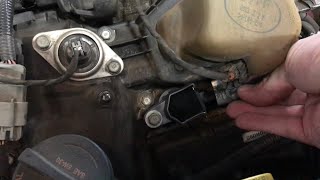
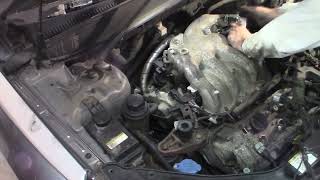
On the transversely mounted 3.3L Lambda V6 (engine code G6DB) in the Santa Fe, the cylinders are divided into two banks. Bank 1 (cylinders 1, 3, 5) is against the firewall, and Bank 2 (cylinders 2, 4, 6) is at the front, near the radiator. The firing order is 1-2-3-4-5-6. This is good news for a P0302 code, as cylinder 2 is on the easily accessible front bank. 🎬 Watch this diagnostic video for a P0302 misfire on this engine. This makes diagnosis and repair, such as swapping or replacing an ignition coil, significantly easier and cheaper than for a misfire on the rear bank (e.g., P0301, P0303, P0305), which requires removing the entire upper intake manifold to access coils and plugs.
Symptoms You May Notice
- Rough or shaky idle
- Hesitation or stumbling during acceleration
- Noticeable loss of engine power
- Flashing or solid Check Engine Light
- Reduced fuel economy
- Engine shaking or wobbling
- Unusual odor from the exhaust due to unburnt fuel
- Replacing the oxygen sensor. An O2 sensor will not cause a single-cylinder misfire code like P0302. It may report a rich or lean condition as a result of the misfire (e.g., P2198), but it is not the root cause.
- Replacing all six ignition coils and spark plugs immediately. Since cylinder 2 is on the front bank, diagnose the issue by swapping the coil first before committing to the expensive and labor-intensive job of replacing the rear bank components.
Most Likely Causes

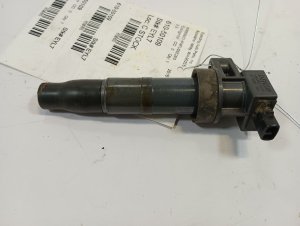
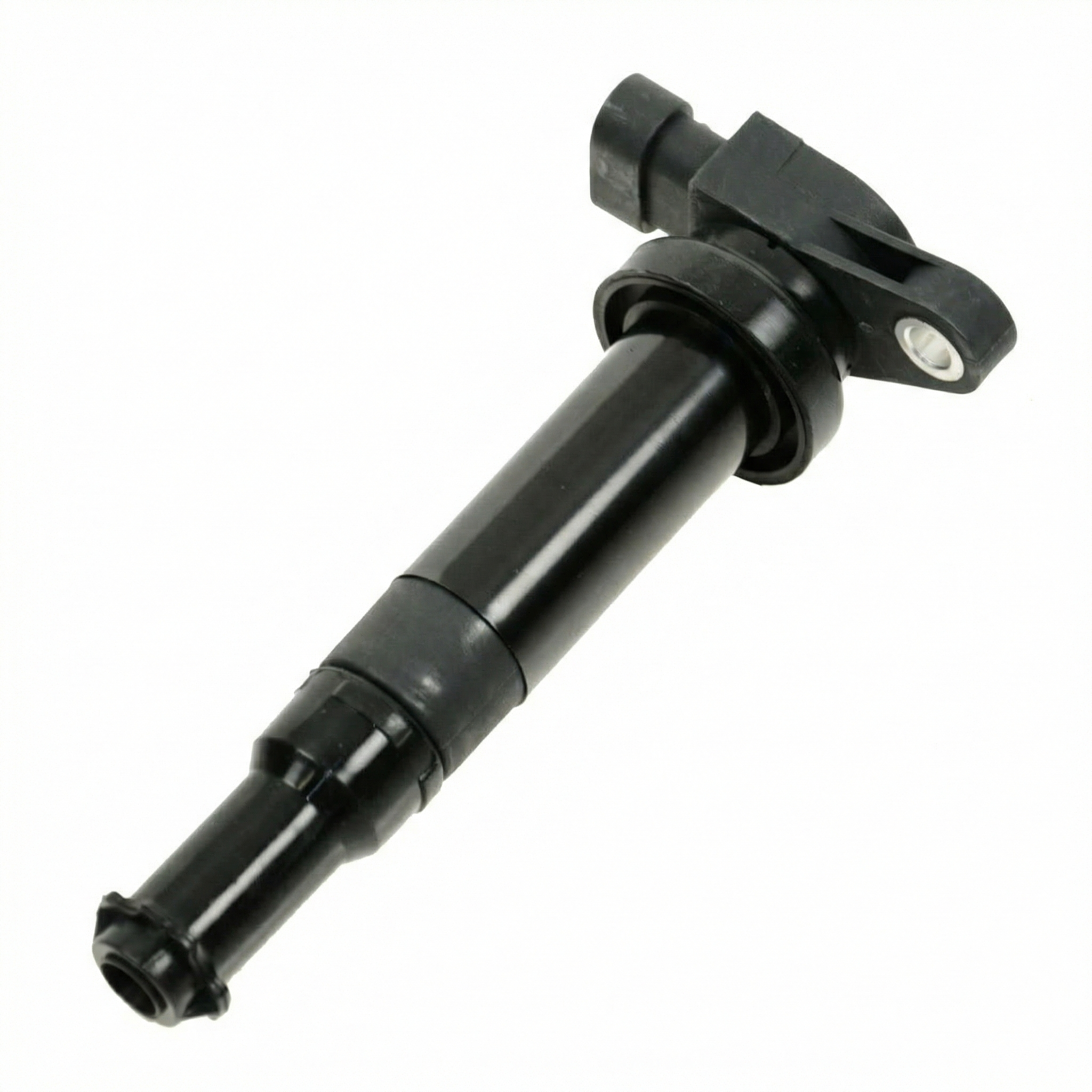
- Failed Ignition Coil 🔴 High Probability Ignition coils are a common wear item that fail from heat cycles and vibration. A faulty coil is the most frequent cause of a single-cylinder misfire on many modern engines, including this one. The original coils can become brittle and the internal windings can fail, preventing a strong spark.
How to confirm: Swap the ignition coil from cylinder 2 with the coil from cylinder 4 (the middle, front cylinder). Clear the codes and drive the vehicle. If the code changes to P0304, the ignition coil is confirmed to be faulty. Cylinder 2 is the front-most cylinder on the engine bank near the radiator (passenger side of the engine bay).
Typical fix: Replace the faulty ignition coil. Since it's easily accessible, only the single failed coil needs to be replaced. 🎬 See this quick walkthrough on replacing a front bank ignition coil. Use a small amount of dielectric grease in the boot of the new coil.
Est. part cost: $40-$160 - Worn or Fouled Spark Plug 🟡 Medium Probability Spark plugs are a maintenance item with a finite lifespan (typically 60,000-100,000 miles). If they are past their service interval, the electrode can wear down, increasing the gap and causing a weak spark. Additionally, a leaking valve cover gasket (a known issue on this platform) can cause oil to pool in the spark plug tube, fouling the plug and shorting out the coil.
How to confirm: After swapping the coil (and the problem remains on cylinder 2), remove the spark plug from cylinder 2. Inspect it for a worn electrode, heavy carbon buildup, oil fouling, or a cracked insulator. You can also swap the plug with another cylinder to see if the misfire follows.
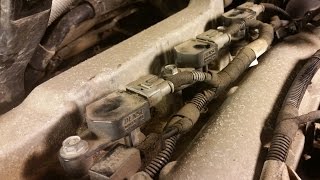
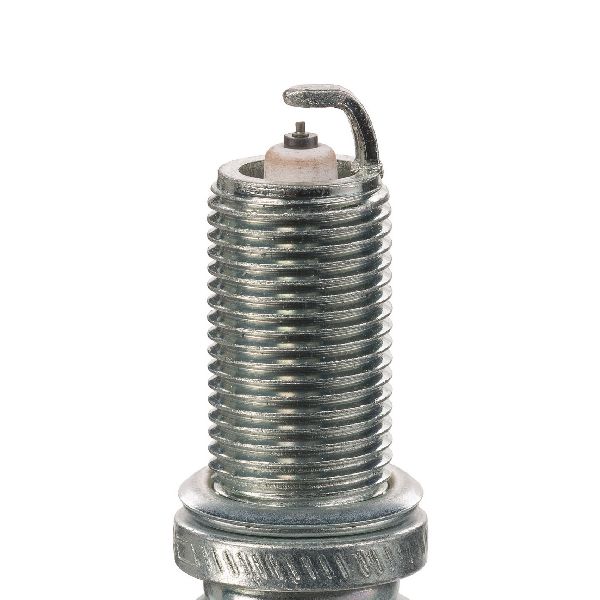
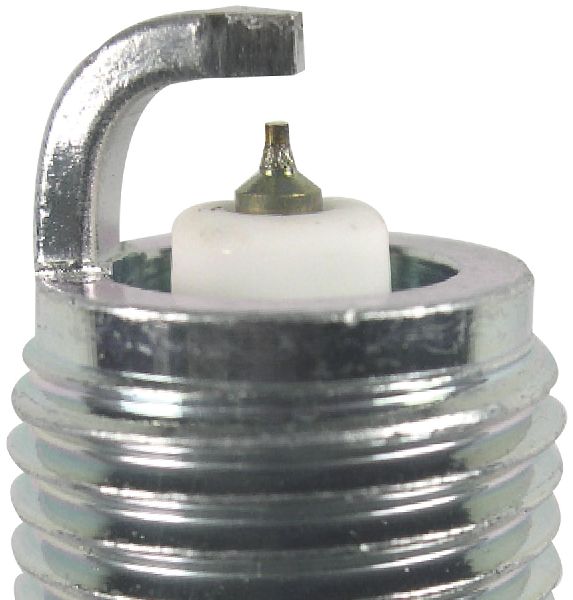
Typical fix: Replace the spark plug in cylinder 2. The recommended OEM plugs are typically Iridium type. It is best practice to replace all six spark plugs if they are near the end of their service life, but this requires removing the intake manifold for the rear bank. 🎬 Watch a step-by-step guide on replacing all six spark plugs.
Est. part cost: $10-$25 per plug - Faulty Fuel Injector ⚪ Low Probability Fuel injectors can become clogged with deposits over time or fail electrically, preventing the correct amount of fuel from reaching the cylinder. While less common than ignition issues, it's a possibility on higher-mileage vehicles. NHTSA ODI #11606012 describes a severe case where a fuel injector failed open, flooding the cylinder with fuel and causing gas to enter the oil, which can lead to a lack of compression.
How to confirm: If swapping the coil and plug doesn't resolve the issue, the fuel injector is the next suspect. A DIY method is to use a mechanic's stethoscope or a long screwdriver to listen to the injector; it should make a consistent clicking sound like the others. A more definitive test involves swapping the injector with another cylinder, but this is more labor-intensive as it requires removing the fuel rail.
Typical fix: Replace the faulty fuel injector. It is recommended to replace the O-rings and seals when reinstalling the fuel rail.
Est. part cost: $70-$150
Rare But Worth Checking
- Low Engine Compression: If ignition and fuel components check out, a mechanical issue like a worn piston ring, a burnt valve, or a leaking head gasket could be the cause. This is confirmed with a compression test. Nominal compression for this engine is around 174 psi (1200 kPa), with a maximum difference of 15 psi between cylinders. NHTSA ODI #11632465 notes a case where a dealership diagnosed a P0302 misfire code and claimed the only fix was to replace the engine due to a "dead cylinder."
- Damaged Wiring or Connector: The plastic connector for the ignition coil can become brittle from heat and break, causing a poor connection. The wiring itself can also be damaged by chafing or rodents. Visually inspect the harness going to the cylinder 2 coil for any signs of damage, corrosion in the pins, or looseness.
- Leaking Valve Cover Gasket: A common issue on the Lambda V6 is the valve cover gaskets becoming hard and leaking oil into the spark plug tubes. This oil can foul the spark plug and damage the ignition coil, leading to a misfire. If you find oil in the spark plug well when you remove the coil, the valve cover gasket must be replaced.
Diagnosis Steps

- Read the code with an OBD-II scanner to confirm P0302 and check for any other stored codes.
- Identify cylinder 2. On the 3.3L V6, Bank 2 is at the front of the vehicle. Cylinder 2 is the cylinder on the passenger side of that front bank.
- Swap the ignition coil from cylinder 2 with the coil from cylinder 4 (the middle cylinder on the same bank).
- Clear the codes using the scanner and drive the vehicle until the check engine light returns.
- Scan the codes again. If the code is now P0304, the ignition coil is the problem. Purchase and install a new coil in the cylinder 2 position.
- If the code remains P0302, the coil is not the issue. Proceed to inspect the spark plug.
- Remove the ignition coil and then the spark plug from cylinder 2. Check the spark plug tube for oil, which indicates a leaking valve cover gasket. Inspect the plug for wear, damage, or fouling. If it looks bad, replace it.
- If the spark plug appears fine, you can swap it with cylinder 4's plug to definitively rule it out.
- If the misfire still persists on cylinder 2 after swapping the coil and plug, the problem is likely a fuel injector, wiring issue, or a mechanical engine problem.
- For a suspected fuel injector, listen for a steady clicking sound from the injector with a mechanic's stethoscope. Compare it to the sound from the cylinder 4 injector.
- If all else fails, perform a compression test on cylinder 2 and compare the reading to other cylinders to check for mechanical engine damage.
Parts You'll Likely Need

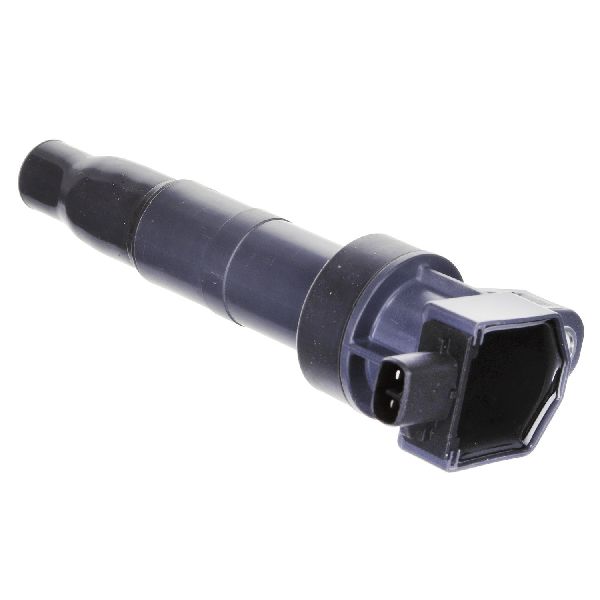
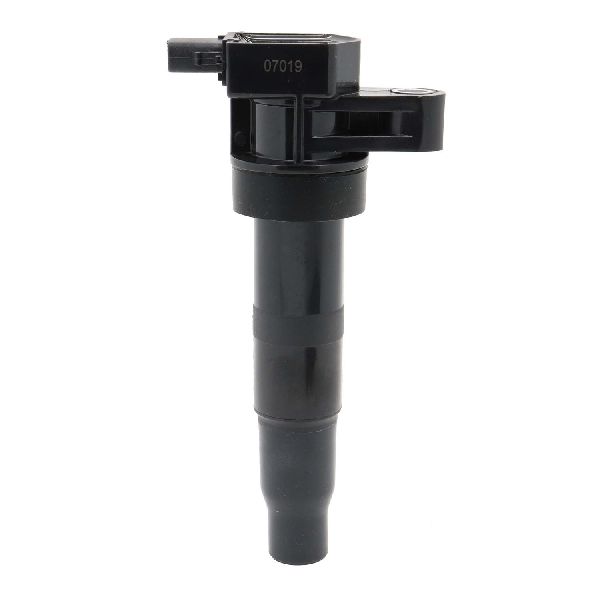
- Ignition Coil
(OEM #27301-3C000)— This is the most common cause of a single-cylinder misfire. Heat and vibration cause the internal windings to fail over time. The OEM part number 27301-3C000 may be superseded by 27301-3C010, but they are interchangeable.
Trusted brands: Genuine Hyundai/Kia, Delphi, NGK, Bosch
OEM price range: $100-$160
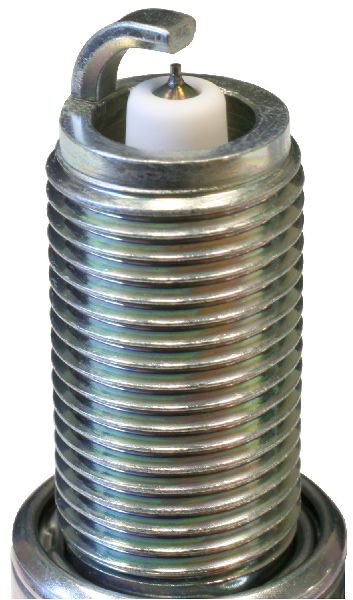
Aftermarket price range: $40-$80 - Iridium Spark Plug
(OEM #NGK IFR5G-11 or Denso SK16PR-L11)— A worn or fouled spark plug is the second most likely cause. It is a standard maintenance item that wears out and can no longer produce a strong spark. Oil fouling from a leaking valve cover gasket is also a common reason for premature failure.
Trusted brands: NGK, Denso
OEM price range: $20-$30
Aftermarket price range: $10-$25
Related Codes That Often Appear With This One
- P0300 — If the misfire on cylinder 2 is intermittent or accompanied by misfires on other cylinders, a P0300 (Random Misfire) code may also be stored. NHTSA ODI #11551681 reports an instance where P0300, P0301, and P0302 were pulled simultaneously.
- P0304, P0306 — Misfire codes for other cylinders on the same bank (Bank 2) could indicate a problem affecting the entire bank, such as a vacuum leak near the front of the intake manifold or a fuel delivery issue on that bank. NHTSA ODI #11606626 describes a vehicle that pulled codes P0300, P0302, P0304, and P0306, which were ultimately linked to the timing chain tensioner and camshaft components.
- P2198 — This code means 'O2 Sensor Signal Stuck Rich (Bank 2)'. A leaking fuel injector on cylinder 2 can dump excess fuel, causing the upstream oxygen sensor for Bank 2 to report a constant rich condition.
Technical Service Bulletins (TSBs) & Recalls
- No specific TSBs for P0302 on the 2007-2009 Santa Fe 3.3L were found. However, Hyundai has issued warranty extensions and TSBs for later model years and different engines with similar issues. For example, TSB 24-EM-003H extends the warranty for engine bearing issues on 2013-2019 Santa Fe models with the 3.3L GDI engine, but this does not apply to the MPI engine in the 2007-2009 models.
Platform-Specific Known Issues
- Leaking Valve Cover Gaskets: A very common failure on the 3.3L Lambda V6 is the hardening and leaking of the valve cover gaskets. This allows oil to seep into the spark plug tubes, which can foul the spark plug and destroy the ignition coil, causing a misfire like P0302. If oil is found in the spark plug well, the valve cover gasket and tube seals must be replaced. This is a much more involved job for the rear bank.
Mechanic-Grade Diagnostic Values
- Fuel Injector Resistance — expected: Approximately 12 Ohms. Failure: A reading of infinity (open circuit) or zero Ohms (short circuit) indicates a failed injector.
- Ignition Coil Control Circuit Test (at PCM) — expected: Resistance check between terminal 2 of the ignition coil harness connector and the corresponding PCM terminal (e.g., terminal 79 for cylinder 1 on a similar model).. Failure: High resistance or an open circuit indicates a break in the wiring harness between the PCM and the coil.
Hidden / Shadow Codes Worth Checking
- Mode $06 Data: While not a hidden code, Mode $06 data on a capable OBD-II scanner can show you the raw misfire counts for each individual cylinder, including cylinder 2 (Test ID $A3, Component ID $02). This is more sensitive than the P0302 code itself and can help confirm if the misfire is exclusively on cylinder 2 or if other cylinders are also misfiring at levels not yet high enough to set their own codes. (see via Use an advanced OBD-II scan tool that supports Mode $06 data display.)
Scan Tool Commands That Help
- Hyundai GDS (Global Diagnostic System) or equivalent high-level scanner: Power Balance Test — This function allows a technician to sequentially disable the fuel injector for each cylinder while the engine is running. When the injector for a healthy cylinder is disabled, the engine RPM will drop noticeably. If disabling the injector for cylinder 2 causes little or no change in RPM, it confirms that cylinder is not contributing power, narrowing the problem down to spark, fuel, or compression for that specific cylinder.
Wiring & Ground Locations
- ECM (Engine Control Module) — Under the hood on the driver's side, located next to the battery and the under-hood fuse box.. The ECM sends the signal to fire the ignition coil. Technicians may need to test for signal voltage at the ECM connector pins to rule out a faulty ECM driver, although this is a very rare cause.
- Engine Ground (G01) — The main engine grounding strap connects the engine block to the chassis. A key ground point (often labeled G01 in diagrams) is located on the vehicle body near the right front (passenger side) of the engine compartment.. A poor engine ground can cause a weak or inconsistent spark across all cylinders. While it would typically cause a random misfire (P0300), a borderline ground connection could intermittently affect the ignition system and contribute to a single-cylinder misfire code.
- Cylinder 2 Ignition Coil Connector — The 2-pin connector on top of the ignition coil for cylinder 2 (front bank, passenger side).. This is where voltage and signal tests are performed. Pin 1 should have battery voltage with the key on. Pin 2 is the ground-side trigger signal from the ECM. The plastic connector can become brittle and fail, causing a poor connection.
Real Owner Repair Stories
- ScannerDanner forum user (2007 Hyundai Santa Fe 2.7L V6 (similar Lambda family architecture)) — P0300 random misfire, but primarily affecting cylinders 2 and 4.
❌ Tried (didn't work) Initial diagnosis pointed towards common causes like coils or plugs.
✅ What actually fixed it The technician discovered very loose intake manifold bolts. This created a significant vacuum leak localized to the Bank 2 cylinders, causing them to run lean and misfire. Tightening the bolts to the correct specification resolved the issue. - NHTSA ODI #11681280 — An owner reported a sudden loss of power and rough running during acceleration to pass. An independent shop pulled code P0302 (cylinder 2 misfire), and the vehicle became unsafe to drive.
OEM Part Supersession History
27301-3C010→27301-3C000— Standard part number update and consolidation by the manufacturer. The parts are interchangeable.
Heads up: While dealer parts systems show 27301-3C000 replaces 27301-3C010, some aftermarket suppliers and dealer listings show the reverse. Both part numbers are widely listed as compatible for the 2007-2009 3.3L V6, so either should work, but it's best to confirm fitment with the supplier.
Model Year Variations Within This Range
- 2010-2012: For the 2010 model year, Hyundai performed a facelift on the Santa Fe, replacing the 2.7L and 3.3L V6 engines with a 2.4L I4 and a 3.5L Lambda II V6. This guide is specific to the 2007-2009 3.3L V6 (engine code G6DB). While diagnosis is similar, part numbers for coils, injectors, and sensors will differ for the 2010+ 3.5L engine.
Diagnostic Flowchart
Other Known Issues on This Vehicle
Issues unrelated to this code that are worth knowing about as an owner of this generation:
- Timing Chain Tensioner Rattle on Startup 🟠 Medium — Common, especially on vehicles over 100,000 miles. A brief rattle for 1-2 seconds on a cold start is the primary symptom.
- Leaking Valve Cover Gaskets 🟠 Medium — Very common, typically occurs after 80,000-120,000 miles.
- Leaking Oil Pressure Switch 🔴 High — A known failure point, mileage varies but becomes more common on older vehicles.
Used vs. New Parts: Buying Guide for This Vehicle
When a used part is the smart pick: For this repair, sourcing a used part is generally not recommended for the primary failure items. However, if the fault is traced to a damaged ignition coil connector pigtail, a used pigtail from a junkyard is a perfectly acceptable and cost-effective repair.
Donor-vehicle mileage cap: roughly under 100000 miles for the part to have meaningful remaining life.
What to inspect on the donor part:
- For a connector pigtail, inspect for any cracks in the plastic.
- Ensure the locking tab is intact and functional.
- Check for corrosion on the metal pins inside the connector.
- Ensure there is at least 4-6 inches of wire attached for easier splicing.
OEM-only on this vehicle (don't cheap out):
- Oil Filter: Forum members and Hyundai technicians strongly advise using the genuine Hyundai/Kia oil filter (part # 26320-3C100). Aftermarket filters, particularly their O-rings, have been reported to fit poorly and cause oil leaks.
Aftermarket brands forum-validated for this vehicle:
- Ignition Coils: Brands like NGK, Denso, Delphi, and Mando (an OE supplier to Hyundai/Kia) are considered reliable, high-quality alternatives to the dealer part.
- Spark Plugs: NGK and Denso are the original equipment suppliers and are the most recommended brands.
Brands owners have reported issues with on this vehicle:
- Unbranded/Cheapest Ignition Coils: Many owners report that the cheapest ignition coils available online have a very high failure rate, sometimes within months of installation. While the low initial cost is tempting, they often lead to repeated repairs.
Real Owner Stories
Aggregated from forums and TSBs cited above. Mileages and costs reflect what owners reported in those sources.
2007 Hyundai Santa Fe 3.3L V6 — ~150000 miles
Symptoms: High mileage vehicle with a misfire; oil found leaking into the spark plug wells.
What fixed it: Replacement of the leaking valve cover gaskets, ignition coils, and spark plugs. The repair required removing the intake manifold to access the rear bank.
Source hint: YouTube - CharlesAndCars: Valve Cover Gasket Replacement
2017 Hyundai Santa Fe SE 3.3L V6
Symptoms: Owner reported a brief rattle for 1-2 seconds during a cold start.
What fixed it: The discussion identified this as a common timing chain tensioner rattle issue inherent to the Lambda engine family.
Source hint: Hyundai-Forums.com: Discussion on 3.3L startup rattle
2006-2012 Hyundai Santa Fe 3.3L V6 — ~110000 miles
Symptoms: Startup rattle specifically noted as a potential weak point on higher mileage engines.
What fixed it: Identified as a timing chain tensioner failure, a known reliability concern for this engine platform.
Source hint: Reddit r/Hyundai: Owner question about 3.3L V6 reliability
Related OBD-II Codes
Frequently Asked Questions
Where is cylinder 2 located on my 2007-2012 Santa Fe 3.3L V6?
Does TSB 24-EM-003H regarding engine bearing issues apply to my 2007-2009 Santa Fe?
Why is there oil in my spark plug tube when I pulled the coil for cylinder 2?
Can I just replace the spark plug on cylinder 2 to fix the misfire?
What type of spark plugs should I use for my 3.3L Santa Fe?
Is the startup rattle I hear related to my P0302 misfire code?
Helpful Videos
Used OEM Parts in Stock


New Aftermarket Parts Available


The information in this article is provided for general reference and educational purposes only. Vehicle specifications, procedures, and part compatibility can vary by production date, trim level, and region. Always consult your vehicle's factory service manual and verify part numbers before purchasing or performing repairs. Safety-critical components such as airbags, seat belts, and braking systems should be installed by a qualified professional.
- Hyundai Santa Fe:
- 🎬 Helpful Videos
- 🛍️ Shop This Part
- What's Unique About the 2007-2012 Hyundai Santa Fe
- Symptoms You May Notice
- Most Likely Causes
- Rare But Worth Checking
- Diagnosis Steps
- Parts You'll Likely Need
- Related Codes That Often Appear With This One
- Technical Service Bulletins (TSBs) & Recalls
- Platform-Specific Known Issues
- Mechanic-Grade Diagnostic Values
- Hidden / Shadow Codes Worth Checking
- Scan Tool Commands That Help
- Wiring & Ground Locations
- Real Owner Repair Stories
- OEM Part Supersession History
- Model Year Variations Within This Range
- Diagnostic Flowchart
- Other Known Issues on This Vehicle
- Used vs. New Parts: Buying Guide for This Vehicle
- Real Owner Stories
- 2007 Hyundai Santa Fe 3.3L V6 — ~150000 miles
- 2017 Hyundai Santa Fe SE 3.3L V6
- 2006-2012 Hyundai Santa Fe 3.3L V6 — ~110000 miles
- Related OBD-II Codes
- Frequently Asked Questions
- 🎟️ Get 5% Off