

P0302 on 2011-2016 Hyundai Elantra 1.8L: Cylinder 2 Misfire Causes and Fixes
On the 2011-2016 Elantra, code P0302 is most often caused by a failed ignition coil on cylinder 2. This is a common issue due to heat exposure. A new coil costs about $35-$75 for an aftermarket part and is a simple 15-minute DIY fix. Swapping the coil with another cylinder is the definitive diagnostic test.
- P0302 on your Elantra almost always points to a bad ignition coil or spark plug on cylinder #2.
- The easiest way to diagnose this is to swap the ignition coil from cylinder #2 with one from another cylinder and see if the code 'follows' the coil.
- This is a very common and inexpensive DIY repair that requires only basic hand tools and about 15-30 minutes.
- If the check engine light is flashing, you should minimize driving to avoid damaging the expensive catalytic converter.
What's Unique About the 2011-2016 Hyundai Elantra
The Nu 1.8L engine in this generation of Elantra is known for having ignition coils that are susceptible to failure from heat. Because the coils are mounted directly on top of the engine, they endure constant heat cycles which can degrade their internal components over time, leading to misfires like P0302. While spark plugs are also a common cause, the high failure rate of the ignition coils is a well-documented characteristic of this specific platform, with many owners choosing to replace all four at once as a preventative measure.
Symptoms You May Notice
- Rough or shaky idle
- Hesitation or stumbling during acceleration
- Noticeable loss of engine power
- Flashing or solid Check Engine Light
- Decreased fuel economy
- Smell of raw gasoline from the exhaust
- Replacing only the spark plug when the underlying issue is a failing ignition coil that will soon foul the new plug.
- Replacing the catalytic converter due to misfire-related efficiency codes, without first fixing the root cause of the misfire.
Most Likely Causes
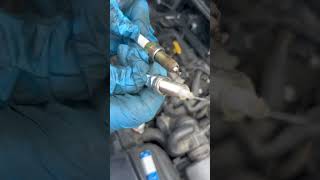
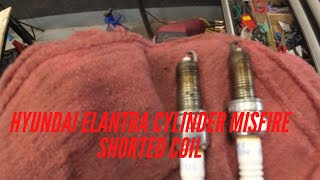
- Faulty Ignition Coil 🔴 High Probability The original equipment (OEM) coils on Nu engines are known to be vulnerable to thermal degradation 🎬 Watch: A mechanic explains why these ignition coils short out. from engine heat, causing internal components to break down. Aftermarket coils can also be problematic, with some owners reporting repeat failures until an OEM part is used.
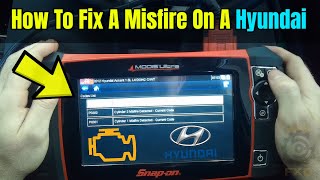
How to confirm: Swap the ignition coil from cylinder 2 with another cylinder (e.g., cylinder 3). Clear the codes and drive the vehicle. If the code changes to P0303, the coil is bad. 🎬 See this DIY walkthrough for diagnosing a Hyundai misfire.
Typical fix: Replace the faulty ignition coil. Many owners choose to replace all four at the same time as a preventative measure.
Est. part cost: $35 - $75 - Worn or Fouled Spark Plug 🟡 Medium Probability Spark plugs are a regular maintenance item with a service interval. As they wear, the gap widens, forcing the ignition coil to work harder, which can accelerate coil failure.
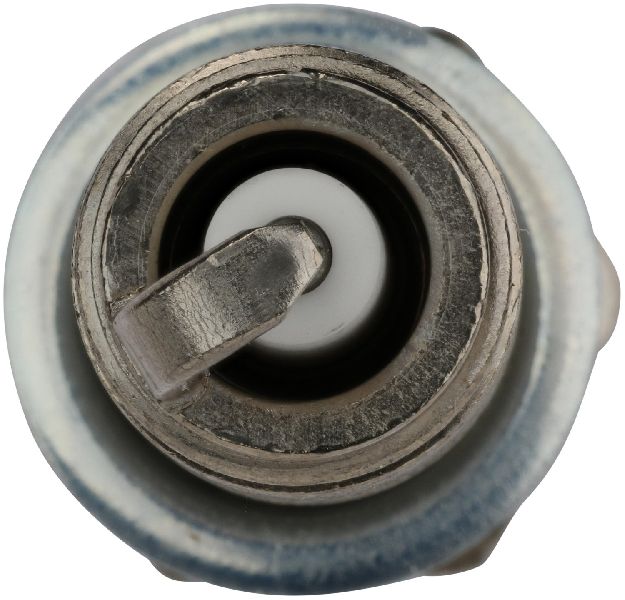
How to confirm: After ruling out the coil, remove the spark plug from cylinder 2. Inspect it for wear, carbon fouling, oil, or damage. A heavily worn or damaged plug is a clear indicator.
Typical fix: Replace the spark plug in cylinder 2. It is highly recommended to replace all four spark plugs at the same time to ensure consistent performance.
Est. part cost: $20 - $50 for a set of four Iridium plugs - Clogged or Faulty Fuel Injector ⚪ Low Probability
How to confirm: If the coil and plug are good, the fuel injector is the next suspect. A professional may need to perform a flow test. A DIY method involves listening to the injector with a mechanic's stethoscope to check for a consistent clicking sound.
Typical fix: Clean or replace the fuel injector for cylinder 2.
Est. part cost: $50 - $150
Rare But Worth Checking
- Low Engine Compression: While less common for a single-cylinder misfire, some Hyundai Nu 1.8L engines suffer from a chronic issue known as 'piston slap' which can cause scoring of the cylinder walls, leading to loss of compression and eventually misfires. If ignition and fuel systems check out, a compression test is necessary to rule out this more serious mechanical problem.
- Vacuum Leak: A leak in a vacuum hose or intake manifold gasket can introduce unmetered air and cause a misfire. This would typically cause multiple misfire codes (like P0300) but can sometimes manifest as a single cylinder misfire.
Diagnosis Steps
- Confirm the code is P0302 using an OBD-II scanner.
- Disconnect the battery. Remove the plastic engine cover by pulling it straight up.
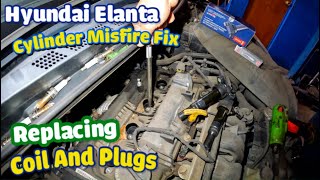
- Locate the ignition coils for cylinder 2 (second from the front) and cylinder 3 (third from the front). Disconnect their electrical connectors and unbolt them with a 10mm socket. 🎬 Watch: How to replace your spark plugs and ignition coils.
- Swap the positions of the cylinder 2 and cylinder 3 ignition coils. Reinstall the bolts and reconnect them.
- Reconnect the battery, clear the codes with the scanner, and start the engine. Let it run or drive it for a few minutes.
- Re-scan for codes. If the code is now P0303, the ignition coil you moved to cylinder 3 is faulty and needs to be replaced.
- If the code remains P0302, the problem is not the coil. The next most likely cause is the spark plug. Inspect and replace all four spark plugs if they are due for service.
- If the misfire persists after replacing the coil and plugs, the issue may be with the fuel injector, wiring, or a mechanical engine problem (like low compression), which may require professional diagnosis.
Parts You'll Likely Need
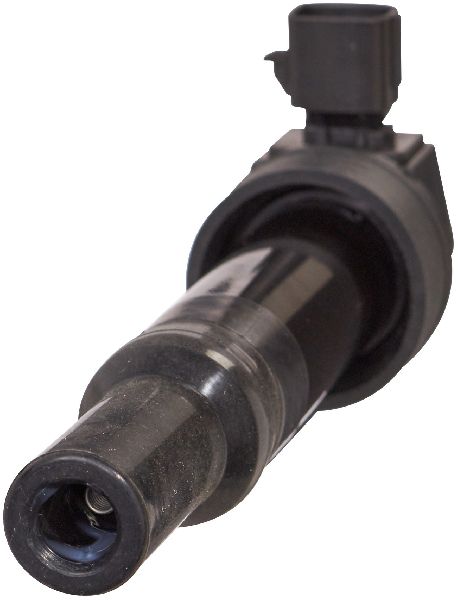
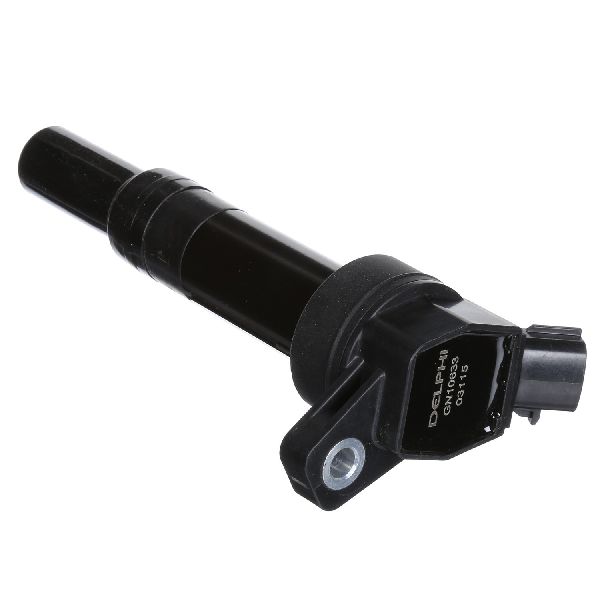
- Ignition Coil
(OEM #27301-2E000)— This is the most common failure item for a P0302 code on this engine due to susceptibility to heat damage.
Trusted brands: NGK, Denso, Delphi, Bosch
OEM price range: $90-$120
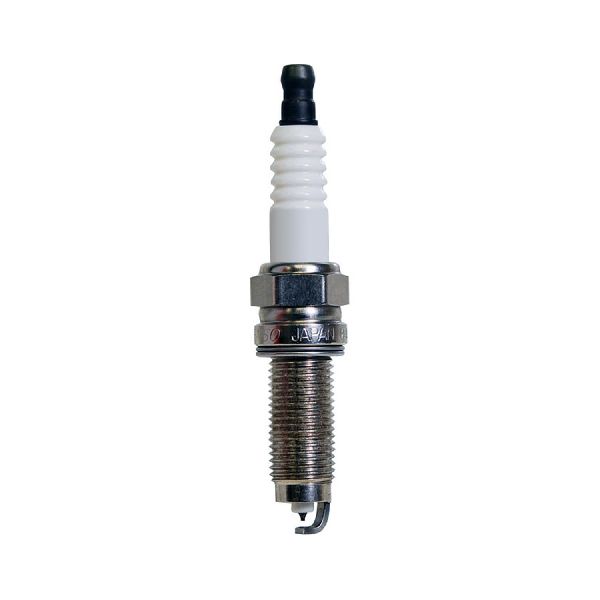
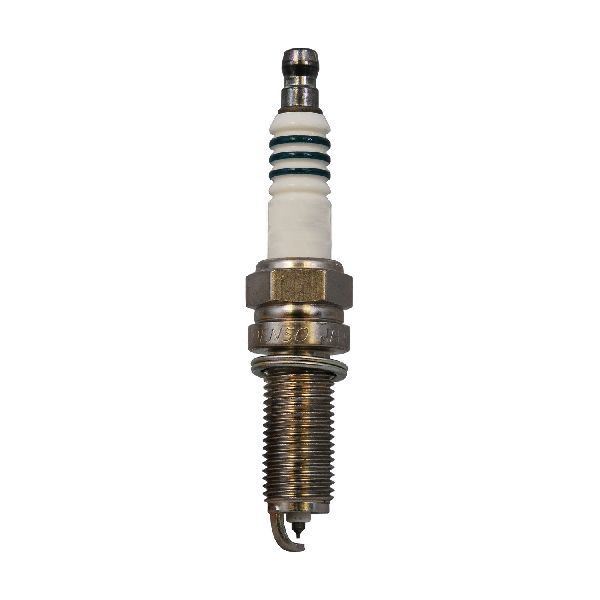
Aftermarket price range: $35-$75 - Iridium Spark Plug
(OEM #18846-11070)— Worn spark plugs are the second most likely cause and should be replaced as routine maintenance. A bad plug can also overwork and damage the ignition coil.
Trusted brands: NGK (OEM supplier), Denso
OEM price range: $15-$25 per plug
Aftermarket price range: $8-$15 per plug
Related Codes That Often Appear With This One
- P0300 — If the misfire is intermittent or affects other cylinders, a P0300 (Random/Multiple Cylinder Misfire) may be stored alongside the P0302.
- P0301, P0303, P0304 — If other ignition coils or plugs are also failing, you may see codes for other cylinders as well.
Technical Service Bulletins (TSBs) & Recalls
- Bulletin #20-01-008H: This manufacturer bulletin specifies a software update that includes cylinder imbalance learning logic optimization for vehicles displaying DTC P0300 through P0304.
- 20-FL-001H: ECM Software Update and Ignition Coil Inspection/Replacement for DTC P0300-P0304. While for a slightly newer model, it corroborates a history of ignition coil issues.
- Canadian TSB for Piston Slap: A TSB was issued in Canada to address the piston slap issue on the 1.8L Nu engine, instructing dealers to replace the short block.
- TXXK: This designation refers to the warranty extension resulting from the 'Brown v. Hyundai' class action lawsuit settlement for the Nu engine piston slap issue.
Platform-Specific Known Issues
- source — A user on Reddit with a 2016 Elantra GT (109k miles) reported a P0302 code. They first replaced the spark plug, which was visibly worn but did not fix the misfire. After replacing the ignition coil on cylinder 2, the issue was resolved and the car returned to normal operation. This is a classic example of the coil being the ultimate culprit.
- TSB for Related Model Confirms Ignition Issues: A Technical Service Bulletin (TSB 20-FL-001H) was issued for the 2017 Elantra 2.0L engine for misfire codes, involving an ECM update and inspection of ignition coils, indicating a known pattern of ignition issues in this model family.
Mechanic-Grade Diagnostic Values
- Ignition Coil Primary Resistance — expected: 0.75 Ω ± 15% at 20°C (68°F). Failure: A reading significantly outside this range indicates a faulty coil.
- Ignition Coil Secondary Resistance — expected: 5.9 kΩ ± 15% at 20°C (68°F). Failure: A reading significantly outside this range indicates a faulty coil.
- Fuel Pressure (In-tank pump) — expected: 45-55 psi. Failure: Pressure below this range could cause lean misfires, though it would typically affect multiple cylinders.
- Injector #2 Control Output Pin — expected: Pin 8 on ECM connector CGG-K. Failure: This pin can be checked for a signal with an oscilloscope or noid light to confirm the PCM is commanding the injector to fire.
Scan Tool Commands That Help
- Hyundai GDS (Global Diagnostic System): Actuation Test — Allows a technician to command individual components like the cylinder 2 fuel injector to operate, confirming if the component and its circuit are functional without the engine running.
- Hyundai GDS (Global Diagnostic System): Resetting Adaptive Values — After replacing a component like a fuel injector or cleaning intake valves, this function resets the engine's long-term fuel trims and other learned values to their defaults, which can help resolve idle or performance issues post-repair.
- Hyundai GDS (Global Diagnostic System): Flight Record — For intermittent misfires, this function captures sensor data leading up to, during, and after a fault event, helping to diagnose root causes that don't appear during normal live data monitoring.
Wiring & Ground Locations
- GE02 — Left front of the engine compartment.. This is a primary engine ground point. A loose or corroded connection here can cause erratic behavior in the ignition system or other sensors, potentially leading to misfire codes.
- Injector #2 Control — Pin 8 on ECM/PCM connector CGG-K.. This is the specific pin on the engine computer that sends the signal to fire the fuel injector for cylinder 2. It can be tested here to rule out a wiring or PCM driver issue.
- Ignition Coil Connector — 2-pin connector on top of the ignition coil for cylinder 2.. The connector itself or its wiring pigtail can become brittle from heat and fail, causing an intermittent connection to the coil. The terminals should be inspected for corrosion or damage.
Real Owner Repair Stories
- Reddit r/MechanicAdvice user (2013 Hyundai Elantra) — Misfires on adjacent cylinders 2 and 3 (P0302, P0303) along with a random misfire code (P0300).
❌ Tried (didn't work) Replacing all spark plugs, Replacing all ignition coils, Replacing all fuel injectors
✅ What actually fixed it The user was advised that the next logical step was a compression test, as a failed head gasket between cylinders 2 and 3 could cause this specific combination of codes after ignition and fuel components were ruled out. - NHTSA ODI #11701387 — An owner reported that even after changing spark plugs three times in six months and replacing all coils and the battery, the P0302 code continued to persist, especially when climbing uphill.
- NHTSA ODI #11505337 — One owner experienced recurring P0301 and P0302 codes while idling at stop lights and in heavy traffic, describing the situation as totally unsafe.
- NHTSA ODI #11675752 — A report describes a vehicle throwing P0302 and P0303 misfire codes simultaneously with timing-related faults like P0017 and P0014.
OEM Part Supersession History
27301-2E000→27300-2E000— Part number consolidation and potential minor internal revisions by the manufacturer.
Heads up: Both part numbers are generally interchangeable for this application, but it is always best to verify with a VIN. Some aftermarket suppliers reference both numbers for the same part.
Model Year Variations Within This Range
- 2014-2016: For the 2014 model year, the 1.8L Nu engine's power was slightly revised from 148 hp down to 145 hp. Additionally, models from 2014 onward received improvements to reduce Noise, Vibration, and Harshness (NVH), including a new hood insulator and thicker cowl padding, which could slightly alter the process of accessing engine components.
- 2011-2013 vs 2014-2016: The Elantra received a facelift for the 2014 model year which included revised styling and infotainment, but the primary 1.8L Nu engine and its common failure points for a P0302 code remained consistent across the entire 2011-2016 generation.
Diagnostic Flowchart
Other Known Issues on This Vehicle
Issues unrelated to this code that are worth knowing about as an owner of this generation:
- Piston Slap & Engine Knocking 🔴 High — Widespread issue, subject of a class-action lawsuit (Brown v. Hyundai). Noise is most prominent on cold starts and can lead to scored cylinder walls, high oil consumption, and eventual engine failure. (Ref: A class-action settlement extended the powertrain warranty for this specific issue for many owners, covering the engine short block.)
- ABS Module Fire Risk 🔴 High — A recall was issued (NHTSA #20V554000) for a potential electrical short in the ABS module, which could occur even when the car is off, creating a fire risk. (Ref: Recall 195)
- Ticking Noise from Fuel Feed Tube 🟡 Low — Some owners report a ticking noise from the engine bay caused by vibration of the fuel feed tube against the intake manifold. This is a noise issue and not mechanically harmful. (Ref: TSB 12-FL-005)
- Rodents Chewing Soy-Based Wiring 🟠 Medium — Like many modern cars, this Elantra uses soy-based wire coating which can attract rodents, leading to chewed wires and expensive, difficult-to-diagnose electrical problems.
Used vs. New Parts: Buying Guide for This Vehicle
When a used part is the smart pick: For this repair, buying a used part is generally not recommended. The primary causes, ignition coils and spark plugs, are wear items. A used ignition coil from a junkyard has unknown remaining life and is likely suffering from the same heat degradation as the part that failed. The cost savings are minimal compared to the risk of premature failure.
Donor-vehicle mileage cap: roughly under 40000 miles for the part to have meaningful remaining life.
What to inspect on the donor part:
- Check for cracks or discoloration on the coil's plastic housing.
- Inspect the rubber boot for tears, swelling, or brittleness.
- Look for any signs of oil contamination inside the boot, which indicates the donor car had a valve cover leak that may have damaged the coil.
OEM-only on this vehicle (don't cheap out):
- Ignition Coils (Recommended): While many aftermarket brands exist, forum discussions indicate that the Hyundai Nu engine can be sensitive to aftermarket coils, with some owners reporting repeat misfires until an OEM or high-quality OE-supplier part (like Denso, Delphi, or NGK) is installed.
Aftermarket brands forum-validated for this vehicle:
- NGK
- Denso
- Delphi
Brands owners have reported issues with on this vehicle:
- Unbranded, no-name ignition coils from online marketplaces are frequently cited as having high failure rates on Hyundai forums and should be avoided to prevent repeat repairs.
Real Owner Stories
Aggregated from forums and TSBs cited above. Mileages and costs reflect what owners reported in those sources.
2016 Hyundai Elantra GT 1.8L — 109000 miles
Symptoms: P0302 code triggered. The owner inspected the spark plug and found it visibly worn.
What fixed it: Replacing the ignition coil on cylinder 2 resolved the issue after a new spark plug failed to fix the misfire.
Source hint: Reddit r/MechanicAdvice - 2016 Hyundai Elantra GT P0302
2013 Hyundai Elantra GT 1.8L
Symptoms: Extensive discussion regarding engine knocking and potential piston slap, a well-known issue for the Nu 1.8L engine.
What fixed it: The article notes that for piston slap issues, the settlement covers a replacement of the engine short block.
Source hint: BobIsTheOilGuy.com - 2013 Hyundai Elantra GT 1.8L Piston slap?
2011 Hyundai Elantra 1.8L
Symptoms: Check Engine Light with code P0302 (Cylinder 2 Misfire).
What fixed it: Standard diagnostic steps including checking plugs, coils, and listening to the fuel injector for a consistent clicking sound.
Source hint: Hyundai-Forums.com - CEL Code P0302 - Cylinder 2 Misfire
Related OBD-II Codes
Frequently Asked Questions
Does TSB 20-FL-001H apply to my 2011-2016 Elantra 1.8L?
Is there a warranty extension for engine issues on the Nu 1.8L engine?
Can I use aftermarket ignition coils to fix my P0302 code?
What is the 'piston slap' issue mentioned in Canadian TSBs for the 1.8L Nu engine?
Is there a fire risk associated with the 2011-2016 Hyundai Elantra?
Why is my Elantra making a ticking noise near the intake manifold?
Helpful Videos
Used OEM Parts in Stock


New Aftermarket Parts Available


The information in this article is provided for general reference and educational purposes only. Vehicle specifications, procedures, and part compatibility can vary by production date, trim level, and region. Always consult your vehicle's factory service manual and verify part numbers before purchasing or performing repairs. Safety-critical components such as airbags, seat belts, and braking systems should be installed by a qualified professional.
- Hyundai Elantra:
- 🎬 Helpful Videos
- 🛍️ Shop This Part
- What's Unique About the 2011-2016 Hyundai Elantra
- Symptoms You May Notice
- Most Likely Causes
- Rare But Worth Checking
- Diagnosis Steps
- Parts You'll Likely Need
- Related Codes That Often Appear With This One
- Technical Service Bulletins (TSBs) & Recalls
- Platform-Specific Known Issues
- Mechanic-Grade Diagnostic Values
- Scan Tool Commands That Help
- Wiring & Ground Locations
- Real Owner Repair Stories
- OEM Part Supersession History
- Model Year Variations Within This Range
- Diagnostic Flowchart
- Other Known Issues on This Vehicle
- Used vs. New Parts: Buying Guide for This Vehicle
- Real Owner Stories
- 2016 Hyundai Elantra GT 1.8L — 109000 miles
- 2013 Hyundai Elantra GT 1.8L
- 2011 Hyundai Elantra 1.8L
- Related OBD-II Codes
- Frequently Asked Questions
- 🎟️ Get 5% Off