

P0302 on 2019-2025 Genesis G70 3.3L V6: Cylinder 2 Misfire Causes and Fixes
P0302 indicates a misfire on cylinder 2. On the Genesis G70 3.3T, this is most often caused by a faulty ignition coil or a worn spark plug. Swapping the cylinder 2 coil with another is a quick way to diagnose the problem. In some cases, a faulty fuel injector can be the culprit.
- P0302 on a G70 3.3T is a misfire on the front cylinder on the driver's side.
- The most common and easiest-to-fix causes are a bad ignition coil or a worn spark plug.
- A simple diagnostic step is to swap the cylinder 2 ignition coil with another cylinder to see if the misfire code follows it.
- Driving with a flashing check engine light can cause expensive damage to your catalytic converter.
- If new plugs and coils don't fix the issue, the next most likely cause is a faulty fuel injector.
What's Unique About the 2019-2025 Genesis G70
The 3.3L Twin-Turbo V6 (Lambda II GDi) is a high-performance, direct-injection engine where spark plugs and ignition coils are common failure points leading to misfires, especially on tuned vehicles or those driven aggressively. Some owners have also reported issues with faulty or leaking fuel injectors causing persistent misfires. While some Genesis models with different engines have had TSBs for misfires solved by an ECU update, no such specific TSB for the G70 3.3L V6 has been widely reported for P0302. There are confirmed updated OEM coil packs for 2022+ models, suggesting a known weakness in earlier versions which can be retrofitted.
Generation note: The 2019-2025 G70 is part of a single generation (IK) but received a facelift in 2022. Upgraded OEM ignition coils were used in the 2022+ models, which can be retrofitted to earlier 2019-2021 cars for improved reliability. The fundamental causes of a P0302 misfire remain the same across these years. The engine itself is the Lambda II T-GDi, shared with the Kia Stinger GT.
Symptoms You May Notice
- Check Engine Light is on or flashing
- Rough or shaky idle
- Engine hesitation or stumbling during acceleration, especially under boost
- Noticeable loss of power, sometimes described as 'limp mode'
- Reduced fuel economy
- Unusual smell of gasoline from the exhaust
- Popping or backfiring noises from the exhaust
- Replacing oxygen sensors when the issue is with the ignition system or a fuel injector.
- Assuming a major engine problem before checking simple items like spark plugs and ignition coils.
- Blaming 'bad gas' without proper diagnosis. While poor quality fuel can cause issues, it usually affects multiple cylinders.
Most Likely Causes
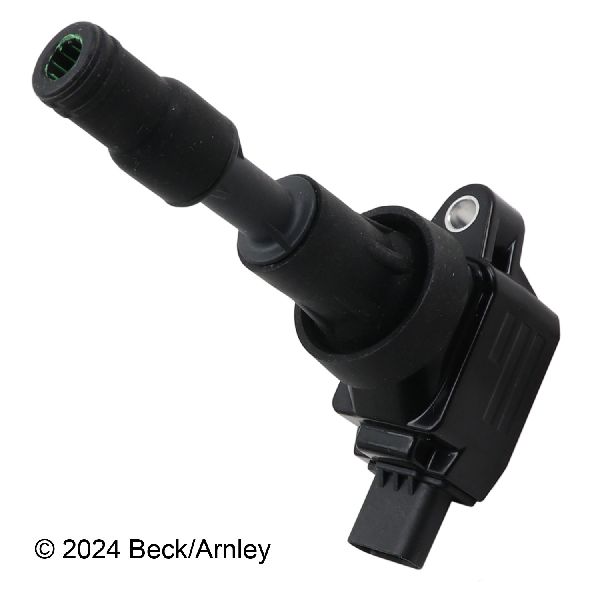
- Faulty Ignition Coil 🔴 High Probability Ignition coils are a known wear item on this platform, and updated versions for 2022+ models (part number 27301-3L100) suggest improvements were made over the original parts (27310-3L000).
How to confirm: Swap the ignition coil from cylinder 2 with another cylinder (e.g., cylinder 4, the middle cylinder on the driver's side). Clear the codes and drive. If the misfire code changes to the new cylinder (e.g., P0304), the coil is bad.
Typical fix: Replace the faulty ignition coil. It is often recommended to replace all coils on the same bank (Bank 2), or all six, at the same time for preventative maintenance.
Est. part cost: $45-$85 per coil - Worn or Fouled Spark Plug 🔴 High Probability The turbocharged nature of the engine puts high demand on spark plugs. The owner's manual recommends replacement at 42,000 miles. Incorrectly gapped, non-OEM, or old plugs are a frequent cause of misfires, especially under boost.
How to confirm: Remove the spark plug from cylinder 2. Inspect it for wear (worn electrode), carbon fouling, oil contamination, or incorrect gap. The stock gap is typically around 0.028-0.032 inches, but tuned cars often require a smaller gap (e.g., 0.022-0.024 inches).
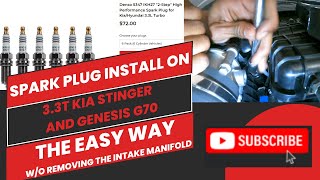
Typical fix: Replace the spark plug. It is best practice to replace all six spark plugs 🎬 Watch: How to replace spark plugs without removing the intake. at the same time with OEM-spec plugs (e.g., NGK SILZKR8E8G) gapped correctly. Do not use anti-seize on modern plugs with special coatings.
Est. part cost: $20-$40 per plug - Faulty or Leaking Fuel Injector 🟡 Medium Probability Leaking or clogged fuel injectors are a documented issue on Hyundai/Genesis GDI engines, sometimes leading to class action lawsuits on other models. Owners and technicians report this as a cause for persistent misfires when plugs and coils are confirmed good.
How to confirm: This is more difficult to diagnose. A professional can perform a fuel injector balance test or monitor fuel pressure drop after shutdown. A DIY method involves listening to the injector with a mechanic's stethoscope to ensure it's clicking. Swapping injectors is possible but is more labor-intensive than swapping coils.
Typical fix: Replace the faulty fuel injector. This is an involved job that requires removing the intake manifold and replacing single-use seals.
Est. part cost: $150-$250 per injector
Rare But Worth Checking
- Intake Valve Carbon Buildup: As a Gasoline Direct Injection (GDI) engine, the 3.3T is susceptible to carbon buildup on the intake valves over time, as fuel is not sprayed over them to keep them clean. Severe buildup can restrict airflow into the cylinder, causing misfires, especially on cold starts. This typically occurs at higher mileage (50k+ miles) and may require professional walnut blast cleaning.
- Loose or Damaged Wiring: Rodents can chew through wiring harnesses, causing a short in the ignition coil or injector wiring. A visual inspection under the engine cover can sometimes reveal nests or damaged wires, as found by one owner with a misfire.
- Low Cylinder Compression: While less common, internal engine issues like worn piston rings, a bad valve, or a leaking head gasket can cause a misfire. A compression test is the definitive diagnostic step for this.
- Vacuum Leak: A vacuum leak can introduce unmetered air and cause a lean condition, but this usually triggers multiple or random misfire codes (P0300) or lean codes (P0171/P0174) rather than a single cylinder code.
- Loose or Damaged Exhaust Manifold Bolt: One G70 owner reported a persistent misfire on cylinder 2 that was ultimately traced to a missing, threaded bolt on the exhaust manifold, which could affect exhaust gas flow and sensor readings.
Diagnosis Steps
- Read the code with an OBD-II scanner to confirm P0302 and check for any other pending or stored codes. Note freeze frame data if available.
- Visually inspect the wiring and connector for the ignition coil and fuel injector on cylinder 2 (front-most on the driver's side). Look for any signs of damage, corrosion, or rodent activity.
- Swap the cylinder 2 ignition coil with another cylinder on the same bank (e.g., cylinder 4). Clear the codes, start the engine, and go for a short drive. Re-scan for codes. If the code has moved to P0304, the ignition coil is faulty and needs replacement.
- If the misfire remains on cylinder 2, remove and inspect the spark plug. Look for wear, damage, carbon fouling, or oil. Verify the gap is correct for your application (stock or tuned). Replace if in doubt.
- If the coil and plug are good, the next likely culprit is the fuel injector. This is more complex to test and may require professional diagnosis or careful listening with a mechanic's stethoscope for a consistent 'clicking' sound.
- If ignition and fuel components for cylinder 2 check out, consider less common causes. A cylinder compression test can rule out mechanical engine problems. A smoke test can identify vacuum leaks.
Parts You'll Likely Need
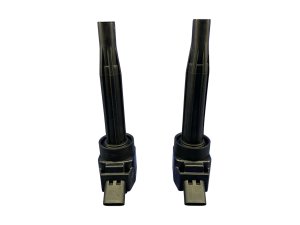
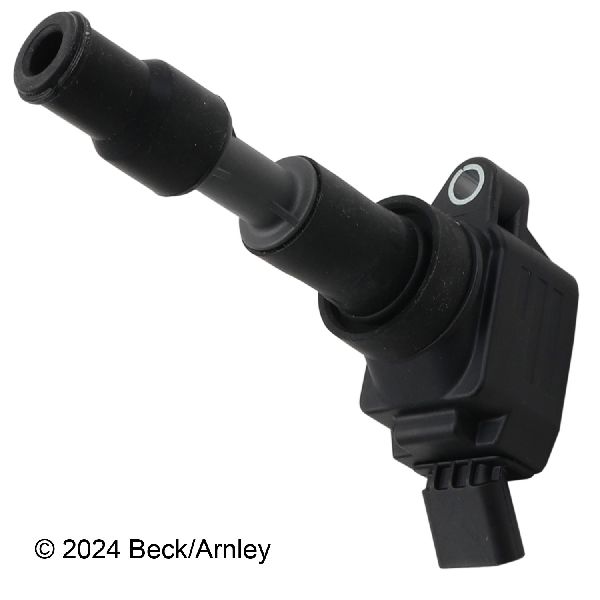
- Ignition Coil (Upgraded)
(OEM #27301-3L100 (Updated), 27310-3L000 (Original))— This is a very common failure point. The updated part used on 2022+ models is recommended as a more durable replacement for earlier cars.
Trusted brands: Hyundai/Genesis OE, NGK, Delphi
OEM price range: $65-$85
Aftermarket price range: $45-$70 - Spark Plug
(OEM #18852-09070 (NGK SILZKR8E8G))— Spark plugs are a primary wear item and a frequent cause of misfires. It's recommended to replace all six at once. Correct gap is critical.
Trusted brands: NGK, Denso
OEM price range: $30-$40
Aftermarket price range: $20-$30 - Fuel Injector
(OEM #35310-3L000)— If ignition components don't solve the misfire, a clogged or failed fuel injector is a likely cause reported by owners and technicians.
Trusted brands: Hyundai/Genesis OE
OEM price range: $180-$250
Aftermarket price range: $120-$180
Related Codes That Often Appear With This One
- P0300 — If the misfire is intermittent or begins to affect other cylinders, a P0300 (Random/Multiple Cylinder Misfire) may be stored alongside P0302.
- P0304, P0306 — Codes for other cylinders on the same bank (Bank 2, driver's side) may appear if the root cause, like a vacuum leak or fuel delivery issue on that bank, affects all of them.
- P0172, P0175 — If a fuel injector is stuck open or leaking, it can cause a rich condition on that bank, triggering a 'System Too Rich' code for Bank 2 (P0175) or Bank 1 (P0172).
Technical Service Bulletins (TSBs) & Recalls
- 25-01-051G: While not for the G70 3.3L, this TSB for the 2.5L engine in other Genesis models shows the manufacturer has addressed misfire codes (including P0302) via an ECM update, indicating a potential pattern of software-related fixes for misfires.
- Recall 262 / 023G (NHTSA Campaign 24V502000): Affects certain 2019-2023 G70s for a failing fuel pump which can cause loss of power and may present as misfires. The fix involves an ECM update and potential fuel pump replacement.
Platform-Specific Known Issues
- There are confirmed updated OEM ignition coils (part # 27301-3L100) for 2022+ models that are more reliable and can be installed on 2019-2021 vehicles as a direct-fit upgrade.
- Some owners on forums like genesisg70.com and Reddit's r/GenesisG70 report persistent misfire issues that were ultimately traced back to faulty fuel injectors, even after replacing plugs and coils.
- A Reddit user with a P0
Mechanic-Grade Diagnostic Values
- Cylinder Compression — expected: Standard is typically 170-200 PSI, with no more than 15 PSI variation between cylinders.. Failure: A reading significantly below the standard or with high variation from other cylinders indicates a mechanical engine issue (e.g., piston rings, valves, head gasket).
- High-Pressure Fuel System — expected: The GDI system relies on a high-pressure fuel pump (HPFP). While specific idle/load pressures are not published in general sources, the system pressure should be stable.. Failure: A known issue on some early 3.3T engines is a leak from the HPFP or its feed line, which can cause fuel pressure drops and misfires. A recall was issued for the left-hand turbo oil feed pipe, which could also be related to engine bay component failures.
Scan Tool Commands That Help
- Genesis GDS-Mobile / GDS SMART VCI3: Guided Diagnostics & DTC Analysis — The official dealer-level tool provides step-by-step troubleshooting procedures based on the specific DTC, accesses wiring diagrams, and can view freeze frame data to see engine conditions when the misfire occurred. This is critical for diagnosing intermittent or complex misfires that aren't solved by simple plug/coil swaps.
- Genesis GDS-Mobile / GDS SMART VCI3: Flight Record / VCI Record — For intermittent misfires that are hard to reproduce, the flight record function can be activated to capture data during a test drive. When the misfire occurs, the driver can press a trigger to mark the event, saving a snapshot of all sensor data for later analysis.
Wiring & Ground Locations
- Ignition Coil Connector — On top of the ignition coil for cylinder 2 (front-most cylinder, driver's side).. A loose connection, corrosion, or damaged wiring at this connector will prevent the ignition coil from firing correctly. The connector has a gray locking tab that must be pulled back before the tab is depressed to release the connector. Aftermarket connectors are available with 4-blade terminals specified for low contact resistance (<5mΩ).
- Engine Control Unit (ECU/ECM) — Located in the engine bay, on the driver's side, just ahead of the brake fluid reservoir and next to the strut tower.. This is the source of the signal to the ignition coil. While unlikely to be a point of failure for a single-cylinder misfire, its location is important for tracing wiring harnesses if damage is suspected.
Real Owner Repair Stories
- Reddit user on r/GenesisG70 (2019 G70 3.3T, 52k miles) — Heavy carbon buildup discovered on intake valves during an unrelated repair for an oil pressure sensor.
✅ What actually fixed it The user was advised by a mechanic and other forum members that a walnut shell blasting service was the correct procedure to clean the heavy carbon deposits, which are a known issue for GDI engines and can cause misfires. - Reddit user on r/GenesisG70 (Model year not specified, 3.3T) — Multiple random misfires despite using high-octane fuel.
❌ Tried (didn't work) Using only 93 octane fuel.
✅ What actually fixed it The owner reported that replacing all coil packs and spark plugs resolved the misfire issues.
OEM Part Supersession History
27310-3L000→27301-3L100— The original ignition coils were updated for the 2022+ model year refresh. The new part is considered more reliable and is a direct-fit upgrade for earlier 2019-2021 models.
Model Year Variations Within This Range
- 2019-2021: These models were equipped with the original ignition coils (27310-3L000). While functional, they are considered less reliable than the updated parts on 2022+ models. Some owners of early models also reported issues with paint quality and panel gaps that were improved after the 2022 facelift.
- 2022-2025: These facelifted models come with upgraded ignition coils (27301-3L100) from the factory. They also feature revised exterior and interior styling, but the core engine and causes of a P0302 misfire remain the same.
Diagnostic Flowchart
Other Known Issues on This Vehicle
Issues unrelated to this code that are worth knowing about as an owner of this generation:
- Failing High-Pressure Fuel Pump (HPFP) 🔴 High — Common enough to trigger a recall (NHTSA 24V502000) on 2019-2023 models. Can cause stalling and loss of power. (Ref: Recall 262 / 023G)
- ABS Module Fire Risk 🔴 High — A recall was issued for 2019-2021 models due to the potential for an electrical short in the ABS module, which could cause a fire while parked or driving. (Ref: Recall 207 / 007G)
- Peeling Clear Coat on Wheels 🟡 Low — Several owners, particularly of pre-facelift models, have reported the clear coat on the stock alloy wheels peeling or flaking prematurely. Often covered under warranty.
- Leaking Oil Pressure Switch 🟠 Medium — Some owners of higher-mileage (60k+ miles) 3.3T engines have experienced oil leaks from the oil pressure switch, which is located in a difficult-to-access area under the intake manifold.
- Jerky Downshifts (2019-2021 Models) 🟡 Low — Owners of early models sometimes report harsh or jerky downshifts from the 8-speed automatic, particularly from 3rd to 2nd gear when coming to a stop. Transmission logic was reportedly improved in 2022+ models.
Used vs. New Parts: Buying Guide for This Vehicle
When a used part is the smart pick: For this repair, used parts are generally not recommended. The primary causes are wear items like spark plugs and ignition coils, which should always be replaced with new parts for reliability. A used fuel injector carries a high risk of being clogged or failing shortly after installation.
Donor-vehicle mileage cap: roughly under 40000 miles for the part to have meaningful remaining life.
What to inspect on the donor part:
- If considering a used component like an engine cover or wiring harness pigtail, inspect for heat damage, brittleness, or signs of rodent damage.
- Verify the part number on the component matches the required part for your vehicle, especially for superseded parts like ignition coils.
OEM-only on this vehicle (don't cheap out):
- Fuel Injector: Given the precision nature of GDI injectors and the labor involved in replacement, using a new OEM part (35310-3L000) is strongly advised to prevent repeat failures.
- Ignition Coil: While aftermarket options exist, the updated OEM coil (27301-3L100) is a known improvement and the safest bet for long-term reliability.
Aftermarket brands forum-validated for this vehicle:
- Spark Plugs: NGK (OEM supplier) and Denso are highly recommended. HKS plugs are a popular upgrade for tuned vehicles.
- Exhaust: Borla and MagnaFlow are reputable brands with systems available for the G70.
- Intake: aFe, Takeda, and HPS are known brands for intake systems and filters.
Brands owners have reported issues with on this vehicle:
- Unbranded/Generic Ignition Coils: Avoid cheap, unbranded ignition coils from online marketplaces, as they have a high failure rate.
- Open-Filter 'Hot Air' Intakes: Some users recommend avoiding exposed, open-element air filters that don't have a proper heat shield, as they can increase intake air temperatures and hurt performance.
Real Owner Stories
Aggregated from forums and TSBs cited above. Mileages and costs reflect what owners reported in those sources.
2021 Genesis G70 3.3L
Symptoms: Owner reported a P0302 misfire and a ton of issues with a CPO vehicle.
What fixed it: The issues were traced back to aftermarket spark plugs and a missing exhaust manifold bolt.
Source hint: Reddit r/GenesisG70: CPO Genesis has misfire and a ton of issues
2018 Kia Stinger GT 3.3L
Symptoms: Misfiring specifically when the engine is under boost.
What fixed it: Ignition weakness (plugs or coils).
Source hint: Reddit r/MechanicAdvice: 2018 Kia Stinger GT misfiring under boost?
Related OBD-II Codes
Frequently Asked Questions
Is there a recall for my 2019-2023 Genesis G70 that could cause misfire-like symptoms?
Should I use the original ignition coils or the newer version for my 3.3L G70?
What is the recommended spark plug replacement interval to avoid P0302 codes?
Can I use anti-seize when replacing the spark plugs on my G70?
If I have a P0302 code, which cylinder should I check first?
Is there a software update for misfire codes on the G70?
Helpful Videos

Used OEM Parts in Stock




New Aftermarket Parts Available


The information in this article is provided for general reference and educational purposes only. Vehicle specifications, procedures, and part compatibility can vary by production date, trim level, and region. Always consult your vehicle's factory service manual and verify part numbers before purchasing or performing repairs. Safety-critical components such as airbags, seat belts, and braking systems should be installed by a qualified professional.
- Genesis G70:
- 🎬 Helpful Videos
- 🛍️ Shop This Part
- What's Unique About the 2019-2025 Genesis G70
- Symptoms You May Notice
- Most Likely Causes
- Rare But Worth Checking
- Diagnosis Steps
- Parts You'll Likely Need
- Related Codes That Often Appear With This One
- Technical Service Bulletins (TSBs) & Recalls
- Platform-Specific Known Issues
- Mechanic-Grade Diagnostic Values
- Scan Tool Commands That Help
- Wiring & Ground Locations
- Real Owner Repair Stories
- OEM Part Supersession History
- Model Year Variations Within This Range
- Diagnostic Flowchart
- Other Known Issues on This Vehicle
- Used vs. New Parts: Buying Guide for This Vehicle
- Real Owner Stories
- 2021 Genesis G70 3.3L
- 2018 Kia Stinger GT 3.3L
- Related OBD-II Codes
- Frequently Asked Questions
- 🎟️ Get 5% Off