

P0302 on 1995-2005 Dodge Neon 2.0L: Cylinder 2 Misfire Causes and Fixes
On a 1995-2005 Dodge Neon, P0302 is most often caused by a leaking valve cover gasket that floods the #2 spark plug tube with oil. If no oil is found, the next most likely causes are a worn spark plug, a bad spark plug wire, or a failed ignition coil pack. A valve cover gasket job costs around $25-$50 in parts and is a 2/5 DIY difficulty.
- Always check for oil in the #2 spark plug tube first; a leaking valve cover gasket is the most common cause of P0302 on a Neon.
- If the spark plug tube is dry, the most likely culprits are basic ignition components: spark plugs, wires, and the coil pack.
- The ignition system uses a single coil pack, not individual coils. This pack is a frequent failure point.
- Replace spark plugs and wires as a set for best results. Use dielectric grease inside the boots.
- Do not drive if the Check Engine Light is flashing, as this indicates a severe misfire that can quickly destroy the catalytic converter.
What's Unique About the 1995-2005 Dodge Neon
The 1995-2005 Dodge Neon is particularly known for its valve cover and spark plug tube seals becoming brittle and leaking oil directly into the spark plug wells. This issue is a very frequent cause of single-cylinder misfire codes like P0302 on this platform. Unlike many modern cars with individual coil-on-plug ignition, the Neon uses a single coil pack with four spark plug wires, making the coil pack itself a common point of failure that can cause a misfire. The waste-spark nature of this ignition system, where cylinders 2 and 3 are fired by the same coil, means a failure in that part of the coil pack specifically impacts cylinder 2.
Generation note: This guide covers both the first generation (1995-1999) and second generation (2000-2005) Dodge Neon. Both generations use a 2.0L SOHC engine (A588) with a single ignition coil pack and spark plug wires, so the causes and diagnostic steps for a P0302 code are virtually identical between them.
Symptoms You May Notice
- Rough or shaky idle
- Hesitation or stumbling during acceleration
- Noticeable loss of engine power
- Flashing or solid Check Engine Light
- Reduced fuel economy
- Difficulty starting the engine
- Smell of unburnt gasoline from the exhaust
- Vehicle jolting at low RPMs, which is a common symptom of a misfire (NHTSA ODI #11083462)
- Stalling and poor performance, especially when exceeding 45 MPH (NHTSA ODI #11510019, #11564750)
- Replacing only the spark plug when the spark plug tube is full of oil. The new plug will quickly be fouled by the oil, and the misfire will return.
- Replacing the fuel injector before thoroughly checking the ignition system (plugs, wires, coil), which is a far more common point of failure on this vehicle.
- Replacing the ignition coil pack when a spark plug wire is faulty. Swapping wires between cylinders is a crucial, free diagnostic step.
Most Likely Causes
- Leaking Valve Cover Gasket / Spark Plug Tube Seals 🔴 High Probability The rubber seals for the valve cover and spark plug tube seals are a well-documented failure point on Neons. Over time, they become hard and brittle, allowing engine oil to seep into the spark plug wells, shorting out the spark.
How to confirm: Remove the spark plug wire from cylinder #2. Visually inspect the inside of the spark plug tube for liquid oil. If oil is present, this is your problem. This is a very common owner-reported fix in forums.
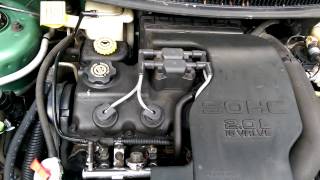
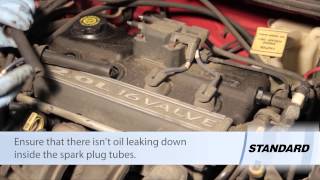
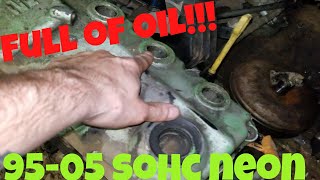
Typical fix: Replace the valve cover gasket and the integrated spark plug tube seals. 🎬 Watch this DIY fix for oil on your spark plugs. While the cover is off, clean all oil out of the spark plug tube and replace the oil-soaked spark plug.
Est. part cost: $20-$50 - Worn Spark Plugs or Faulty Spark Plug Wires 🔴 High Probability These are standard maintenance items. The Neon uses a waste-spark ignition system which fires the plugs more often than other systems, potentially leading to faster wear. Wires can also be damaged by the common oil leaks.
How to confirm: Inspect the spark plug from cylinder #2 for wear, fouling, or incorrect gap. Inspect the corresponding wire for cracks, corrosion, or damage. You can swap the #2 spark plug wire with the #3 wire (which is fired by the same coil) to see if the misfire code moves to P0303.
Typical fix: Replace all four spark plugs and the set of spark plug wires. It's best practice to replace these as a set. 🎬 See a walkthrough on replacing your spark plugs and wires.
Est. part cost: $30-$70 - Failed Ignition Coil Pack 🟡 Medium Probability The single coil pack is responsible for spark on all four cylinders. The coil that fires cylinders 2 and 3 can fail, causing a misfire on one or both. Heat and age are the primary causes of failure.
How to confirm: After ruling out plugs and wires, the coil pack is the next logical suspect. A definitive test involves checking for spark at the #2 wire terminal. Since the coil fires cylinders 2 and 3 simultaneously, a failure often presents as P0302 and/or P0303. Swapping wires is a good diagnostic step before replacing the coil.
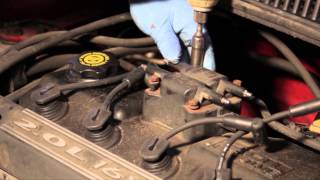
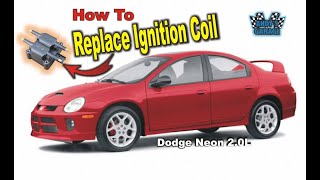
Typical fix: Replace the entire ignition coil pack. It is a single, non-serviceable unit. 🎬 Watch: How to replace the ignition coil pack.
Est. part cost: $40-$100 - Clogged or Defective Fuel Injector ⚪ Low Probability
How to confirm: Listen to the injector with a mechanic's stethoscope to ensure it's clicking. Use a 'noid light' to verify the electrical connector is receiving a pulse from the PCM. For a definitive test, swap the #2 fuel injector with another cylinder's injector (e.g., #3) and see if the misfire code changes to P0303.
Typical fix: Replace the faulty fuel injector. It's recommended to replace the O-rings on adjacent injectors if the fuel rail is removed.
Est. part cost: $30-$80
Rare But Worth Checking
- Low Engine Compression: If ignition and fuel systems are confirmed to be working correctly, a mechanical issue could be the cause. This can include a burnt valve, worn piston rings, or a leaking head gasket. A compression test is required to diagnose this. One owner reported a P0302 with compression at 75 PSI in cylinder #2, while others were at 125 PSI, indicating a burnt exhaust valve. NHTSA ODI #11465911 notes that misfires on multiple cylinders, including P0302, can be caused by a cylinder head needing replacement.
- Vacuum Leak: A vacuum leak near the cylinder #2 intake runner could lean out the air/fuel mixture enough to cause a misfire. This is less common for a single-cylinder misfire code but can be caused by a faulty intake manifold gasket. NHTSA ODI #11510019 mentions that a faulty PCV valve was replaced during the repair of a P0302 code.
- Faulty Powertrain Control Module (PCM): In very rare cases, the driver circuit within the PCM that controls the ignition coil or fuel injector for cylinder #2 can fail. This should only be considered after all other possibilities have been exhaustively ruled out.
Diagnosis Steps
- Read the trouble codes with an OBD-II scanner.
- Turn off the engine and remove the spark plug wire for cylinder #2 (second from the passenger side).
- Shine a light into the spark plug tube. If you see a pool of oil, the valve cover gasket and tube seals have failed and must be replaced. This is the most likely cause.
- If the tube is dry, remove the spark plug. Inspect it for excessive wear, carbon fouling, or oil deposits. A standard replacement plug is a Champion RC12LYC.
- Inspect the spark plug wire for any visible damage, corrosion on the contacts, or brittleness. Check resistance with a multimeter; it should be less than 20k ohms.
- If the plug and wire look old, replace them as a set. If they look okay, you can swap the #2 wire with the #3 wire to see if the misfire follows the wire (code changes to P0303).
- If new plugs and wires do not resolve the issue, the ignition coil pack is the next most probable cause. Replace the coil pack.
- If the misfire persists, the problem may be fuel-related. Check for a pulse at the #2 fuel injector connector using a noid light. You can also swap the #2 and #3 fuel injectors to see if the misfire code moves.
- If all of the above steps fail to find the issue, perform a compression test on all cylinders to check for mechanical engine problems. A healthy 2.0L SOHC should have around 125 PSI or more per cylinder, with minimal variation between them.
Parts You'll Likely Need
- Valve Cover Gasket Set (with Spark Plug Tube Seals)
(OEM #4671184AD)— This is the most common failure leading to a P0302 code on a Neon, as leaking seals allow oil to foul the spark plug.
Trusted brands: Mopar, Fel-Pro, Victor Reinz
OEM price range: $40-$55
Aftermarket price range: $20-$40 - Ignition Coil Pack
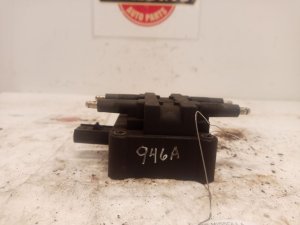
(OEM #5269670)— The single coil pack is a common failure point that causes misfires. It is the heart of the ignition system. The original part number 5269670 has been superseded by 4609103AC.
Trusted brands: Mopar, NGK, Standard Motor Products, Delphi
OEM price range: $80-$145
Aftermarket price range: $40-$80 - Spark Plug Wire Set
(OEM #5033234AB)— Wires are a routine maintenance item that directly cause misfires when they wear out or are damaged by oil leaks.
Trusted brands: Mopar, NGK, Denso
OEM price range: $40-$60
Aftermarket price range: $20-$40 - Spark Plug
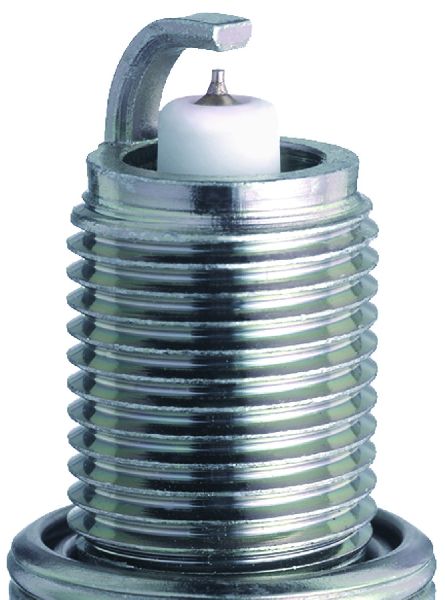
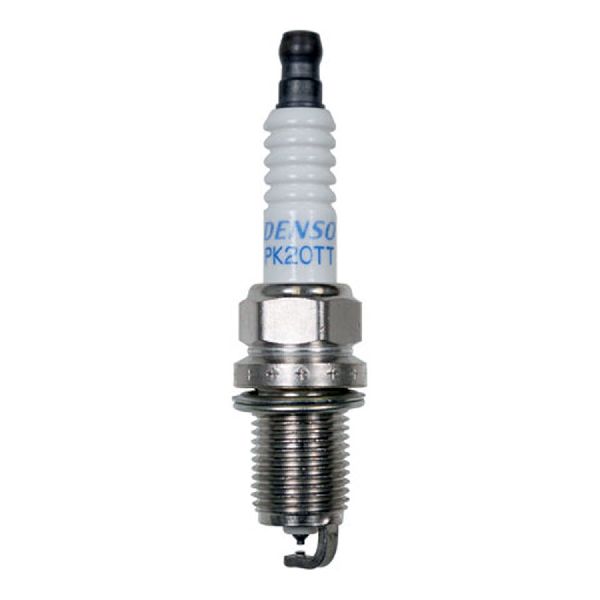
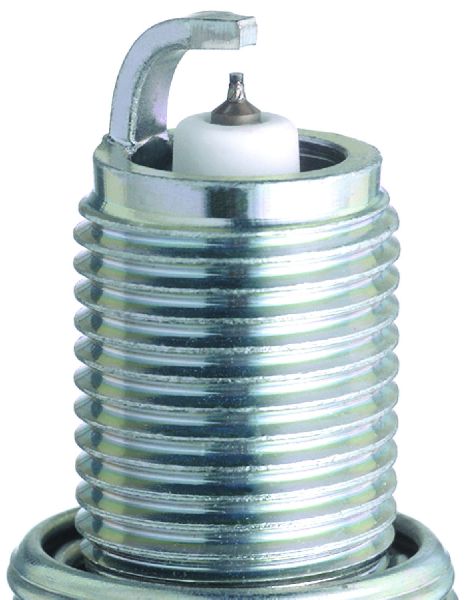
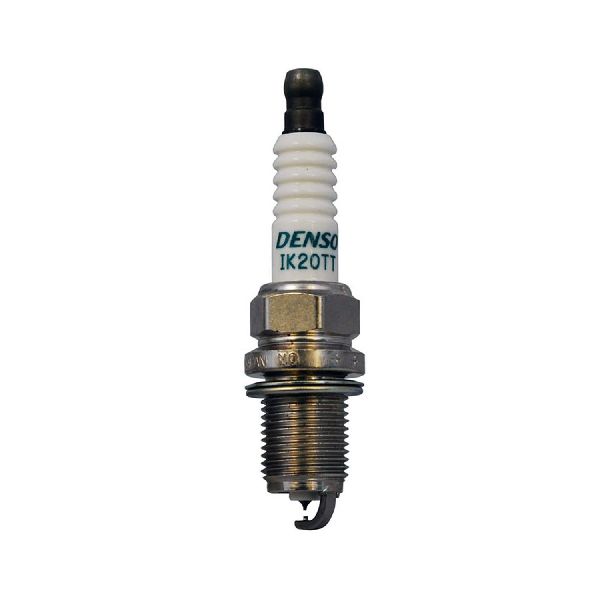
(OEM #RC12LYC)— A worn, fouled, or improperly gapped spark plug is a primary cause of a single cylinder misfire.
Trusted brands: Champion, NGK, Denso
OEM price range: $3-$8 per plug
Aftermarket price range: $2-$6 per plug
Related Codes That Often Appear With This One
- P0300 — If the misfire is intermittent or starting to affect other cylinders, a P0300 (Random/Multiple Cylinder Misfire) code may appear alongside P0302.
- P0303 — Because the Neon uses a waste spark system where one coil fires cylinders 2 and 3, a failing coil pack can sometimes cause misfires on both cylinders, potentially triggering P0302 and P0303.
Technical Service Bulletins (TSBs) & Recalls
- While not directly for P0302, this TSB addresses a light spark knock condition by allowing dealers to adjust timing via a PCM software update. It is relevant as it shows a history of Chrysler addressing combustion-related issues on this family of engines via software.
Platform-Specific Known Issues
- Owner Experience with Low Compression: A 2005 Neon owner with a P0302 code had the issue diagnosed as low compression in cylinder #2 (75 PSI vs. 125 PSI in others). A leak-down test confirmed the exhaust valve.
Documented NHTSA Reports
- NHTSA ODI #11472084 describes a situation where an engine tick, a strong smell of gasoline, and a rough idle were present alongside a P0302 code. Despite replacing many components, the owner reported the issue was difficult to resolve.
- NHTSA ODI #11564750 reports a case where the P0302 code returned even after the coil pack, spark plugs, and wires were replaced, suggesting deeper mechanical or fuel-related issues.
Mechanic-Grade Diagnostic Values
- Ignition Coil Primary Resistance — expected: Approximately 0.510 Ohms. Failure: A reading significantly different from the specification.
- Ignition Coil Secondary Resistance — expected: Approximately 12,000 Ohms (12k Ohms). Failure: A reading significantly different from the specification.
- Fuel Injector Resistance — expected: 11-18 Ohms (High Impedance). A common value is around 12.1-14 Ohms.. Failure: A reading outside of this range, or a reading that is significantly different from the other three injectors.
- Fuel Pressure (1995-2001 Models) — expected: 48 PSI. Failure: Pressure that drops significantly under load or at higher RPMs.
- Fuel Pressure (2002-2005 Models) — expected: 58 PSI. Failure: Pressure that drops significantly under load or at higher RPMs.
Hidden / Shadow Codes Worth Checking
- Mode $06, TID $A3: Misfire counter for cylinder #2. This is not a formal trouble code but raw monitor data accessible with an advanced scan tool. It can show misfires occurring even if they aren't frequent enough to set a P0302 code yet. (see via An OBD-II scan tool that supports Mode $06 data viewing.)
Scan Tool Commands That Help
- Chrysler DRB III or equivalent professional scanner: Injector Kill Test — To isolate a misfire cause. By disabling the cylinder #2 injector, you can observe the change in engine RPM and smoothness. If there is no change when the injector is disabled, it confirms that cylinder #2 was not contributing, pointing to a problem with that cylinder's fuel, spark, or compression.
- Chrysler DRB III or equivalent professional scanner: Misfire Monitor — To view live misfire counts per cylinder while the engine is running. This is useful for confirming the misfire is isolated to cylinder #2 and for checking if repairs have been successful.
Wiring & Ground Locations
- Ignition System Ground — On the back of the cylinder head on the right-hand (driver's) side. This ground has a square black transistor on it.. This is a primary ground for the entire ignition system. A poor connection here can cause weak or intermittent spark, leading to misfires.
- Engine to Chassis Ground Strap — There are several: one from the strut tower to the back of the cylinder head, one from the strut tower to the top of the engine mount, and one from the battery negative terminal to the engine block (often near the starter).. A missing or corroded main engine ground can cause a host of electrical issues, including a weak spark condition that can manifest as a misfire code.
- PCM Pin 3 (1996 Model) — Pin 3 of the black PCM connector.. This is the ignition coil control wire for cylinders #2 and #3. A continuity or voltage test at this pin can help diagnose a faulty PCM driver or a break in the wiring harness.
- PCM Pin 17 (1996 Model) — Pin 17 of the black PCM connector.. This is the driver wire for the #2 fuel injector. Testing this pin with a noid light or multimeter can determine if the PCM is commanding the injector to fire.
- Harness Chafe Point — The engine wiring harness can rub against the chassis or other components, particularly near the back of the engine bay.. A forum post noted that a common spot for the harness to rub through and ground out can cause erratic behavior, including no-spark or no-injector pulse conditions that could lead to a misfire.
Real Owner Repair Stories
- 2CarPros Forum user DIEGO1616 (2004 Dodge Neon, 101,900 miles) — Rough idle, Check Engine Light came on with P0302. Later, light started flashing and P0300 (multiple misfires) was also present. Flashing was worst at idle/stops.
❌ Tried (didn't work) Replaced spark plugs, Replaced spark plug wires (cables), Replaced ignition coil pack
✅ What actually fixed it Replacing the fuel injector for cylinder #2 resolved the misfire codes. - NHTSA ODI #11510019 — An owner reported that after experiencing worsening performance above 45 MPH, a mechanic diagnosed a #2 fuel cylinder misfire (P0302). The repair involved replacing the PCV valve, coil pack, all spark plugs, and the fuel injector.
OEM Part Supersession History
5269670→5269670AB, 4609103AB, 4609103AC— Standard part evolution and updates by the manufacturer over the years.
Heads up: The original part 5269670 is discontinued. The subsequent part numbers are direct replacements for the 1995-2005 Neon 2.0L application.
Model Year Variations Within This Range
- 1995-1999 (First Generation) vs. 2000-2005 (Second Generation): The second generation (2000+) featured a redesigned, more rigid body, revised engine with slightly more power (132 hp), and dropped the 2-door coupe option. While the core 2.0L SOHC engine and waste-spark ignition system are functionally similar for a P0302 diagnosis, fuel pressure specs changed in 2002 (48 PSI for '95-'01, 58 PSI for '02-'05). The second generation also lost the frameless windows of the first generation.
- 1995-2001 vs 2002-2005: The stock fuel pressure specification changed. 1995-2001 models use a 48 PSI system, while 2002-2005 models use a higher pressure 58 PSI system. This is critical to know when diagnosing a potential fuel delivery issue.
Diagnostic Flowchart
Other Known Issues on This Vehicle
Issues unrelated to this code that are worth knowing about as an owner of this generation:
- Premature Head Gasket Failure 🔴 High — Common on first-generation (1995-1999) models, often occurring between 30,000 and 60,000 miles. Less common but still present on second-gen models.
- Paint Delamination/Peeling 🟡 Low — Widespread across many 1990s Chrysler products, including the Neon. White, clear coat, and roof paint were particularly prone to peeling in large sheets. (Ref: Though no formal recall, Chrysler was known to repaint some vehicles under warranty if owners complained.)
- Faulty Power Window Regulators/Motors 🟠 Medium — A very common complaint where the window will get stuck, move slowly, or make a popping noise before failing. Affects both generations.
- Cooling Fan Relay Failure 🔴 High — The relay that controls the radiator cooling fan is a known failure point, which can lead to engine overheating, especially in traffic.
- Oil Leak at Camshaft Position Sensor O-Ring 🟡 Low — The O-ring for the camshaft position sensor can degrade, causing a minor but persistent oil leak.
Used vs. New Parts: Buying Guide for This Vehicle
When a used part is the smart pick: For expensive electronic components like the ignition coil pack or a fuel injector, a used part from a low-mileage, reputable junkyard can be a cost-effective option. These parts are generally reliable and not considered high-wear items. A used engine computer (PCM) is also a viable option, but ensure it's from an identical vehicle (year, engine, transmission) to avoid compatibility issues.
Donor-vehicle mileage cap: roughly under 80000 miles for the part to have meaningful remaining life.
What to inspect on the donor part:
- For an ignition coil, check the plastic housing for cracks or signs of melting.
- Inspect the electrical connector pins for corrosion or damage.
- Ask the salvage yard about the donor vehicle's mileage and reason for being salvaged (e.g., collision damage is better than engine failure).
- For fuel injectors, look for intact O-rings and clean nozzles, although internal condition is impossible to verify visually.
OEM-only on this vehicle (don't cheap out):
- Powertrain Control Module (PCM) - While a used OEM part is fine, avoid aftermarket 'rebuilt' PCMs as they can have a high failure rate. Stick with a used Mopar unit from a matching donor car.
Aftermarket brands forum-validated for this vehicle:
- Valve Cover Gasket: Fel-Pro is a highly respected brand known for quality seals.
- Ignition Coil: Delphi, NGK, and Standard Motor Products (SMP) are considered reliable OEM-quality alternatives.
- Spark Plugs / Wires: NGK and Denso are consistently recommended by enthusiasts for reliability and performance.
Brands owners have reported issues with on this vehicle:
- Unbranded, 'white-box' ignition coils and fuel injectors from online marketplaces. While cheap, they have a very high rate of premature failure and can cause persistent diagnostic headaches.
Real Owner Stories
Aggregated from forums and TSBs cited above. Mileages and costs reflect what owners reported in those sources.
2004 Dodge Neon SXT 2.0L
Symptoms: Misfire on cylinder #2 that only happens when idling and goes away as soon as throttle is applied.
What fixed it: The owner found heads on both intake valves on cylinder #2 were slightly bent; the fix required addressing the cylinder head as a wet compression test and teardown confirmed the issue was internal.
Source hint: DodgeForum.com
2005 Dodge Neon 2.0L
Symptoms: P0302 code with low compression in cylinder #2 (75 PSI compared to 125 PSI in other cylinders).
What fixed it: A leak-down test confirmed a faulty exhaust valve in cylinder #2.
Source hint: vehicle_specific_issues
NHTSA ODI #11083462
Symptoms: A Check Engine Light turned on with a misfire on cylinder 2 code (P0302). The vehicle would jolt at low RPMs.
What fixed it: This symptom is noted as a common indicator of a misfire or low compression in one or more cylinders.
Related OBD-II Codes
Frequently Asked Questions
I found oil inside the spark plug tube for cylinder #2; is this a common issue for the Dodge Neon?
Does TSB 18-24-98 specifically fix my P0302 misfire?
What is the recommended replacement spark plug for my 2.0L SOHC engine?
Why does my Neon seem to have more spark plug wear than other cars?
Can a bad ignition coil cause a misfire on both cylinder #2 and #3?
Is there a specific mechanical failure I should worry about if new plugs and wires don't fix my P0302?
Helpful Videos
Used OEM Parts in Stock

New Aftermarket Parts Available


The information in this article is provided for general reference and educational purposes only. Vehicle specifications, procedures, and part compatibility can vary by production date, trim level, and region. Always consult your vehicle's factory service manual and verify part numbers before purchasing or performing repairs. Safety-critical components such as airbags, seat belts, and braking systems should be installed by a qualified professional.
- Dodge Neon:
- 🎬 Helpful Videos
- 🛍️ Shop This Part
- What's Unique About the 1995-2005 Dodge Neon
- Symptoms You May Notice
- Most Likely Causes
- Rare But Worth Checking
- Diagnosis Steps
- Parts You'll Likely Need
- Related Codes That Often Appear With This One
- Technical Service Bulletins (TSBs) & Recalls
- Platform-Specific Known Issues
- Documented NHTSA Reports
- Mechanic-Grade Diagnostic Values
- Hidden / Shadow Codes Worth Checking
- Scan Tool Commands That Help
- Wiring & Ground Locations
- Real Owner Repair Stories
- OEM Part Supersession History
- Model Year Variations Within This Range
- Diagnostic Flowchart
- Other Known Issues on This Vehicle
- Used vs. New Parts: Buying Guide for This Vehicle
- Real Owner Stories
- 2004 Dodge Neon SXT 2.0L
- 2005 Dodge Neon 2.0L
- NHTSA ODI #11083462
- Related OBD-II Codes
- Frequently Asked Questions
- 🎟️ Get 5% Off