

P0302 on 2006-2013 BMW 3-Series N54: Cylinder 2 Misfire Causes and Fixes
P0302 on a BMW N54 engine most often means a bad ignition coil, spark plug, or fuel injector on cylinder 2. A new ignition coil costs about $30-$60, and swapping it is a simple 15-minute DIY job that often fixes the issue. If the coil and plug are good, the notoriously failure-prone fuel injectors are the next likely culprit.
- P0302 means cylinder 2 is misfiring. On the N54 engine, this is the second cylinder from the front.
- The most likely cause is a bad ignition coil. The easiest way to check is to swap the coil from cylinder 2 with another cylinder and see if the misfire code follows.
- If the coil is good, check the spark plug next. These are a frequent wear item on the N54.
- If both the coil and plug are good, a faulty fuel injector is highly probable. This is a known weak point on the N54 engine.
- Do not ignore a misfire. Driving with a flashing check engine light can quickly destroy your catalytic converter, a very expensive repair.
What's Unique About the 2006-2013 BMW 3-Series
The BMW N54 is a high-performance, twin-turbocharged, direct-injection engine. This design puts significant stress on the ignition and fuel systems, making them common failure points. Unlike simpler port-injected engines, the N54 is known for frequent failures of ignition coils, has a short spark plug service life, and uses piezoelectric fuel injectors that are notoriously unreliable, especially earlier versions (Index 10 or lower). Additionally, as a direct-injection engine, it's prone to heavy carbon buildup on the intake valves, which restricts airflow and can cause misfires, particularly on cold starts or at low RPM under load.
Generation note: The 2006-2013 year range covers the E90 (sedan), E91 (wagon), E92 (coupe), and E93 (convertible) generation of the BMW 3-Series. The N54 engine was used in 335i and 335is models across this entire generation, so the causes and fixes for P0302 are highly consistent.
Symptoms You May Notice
- Rough or vibrating idle
- Hesitation or stumbling during acceleration
- Reduced engine power and sluggish performance, sometimes triggering 'limp mode'
- Flashing or solid Check Engine Light
- Poor fuel economy
- Smell of unburnt gasoline from the exhaust
- Difficulty starting the engine or long crank times
- Replacing the oxygen (O2) sensors or mass air flow (MAF) sensor. A single-cylinder misfire like P0302 is almost always caused by a component specific to that cylinder (coil, plug, injector) rather than a sensor that monitors the whole engine or bank. The N54 does not use a MAF sensor, relying on MAP sensors instead, making that a particularly incorrect diagnosis.
Most Likely Causes
- Failed Ignition Coil 🔴 High Probability The N54 engine bay generates significant heat, which, combined with engine vibrations, leads to a high failure rate for ignition coils. Worn spark plugs can also overwork the coils, causing them to fail prematurely. Oil leaks from a failing valve cover gasket are also notorious for pooling in the spark plug wells and destroying the coils.
How to confirm: Swap the ignition coil from cylinder 2 with another cylinder (e.g., cylinder 1). Clear the codes and run the engine. If the code changes to P0301, the ignition coil is faulty. This is a common and effective diagnostic step shared by many owners. Ensure the coil connector is fully seated after swapping; an improper connection can cause new misfire codes.
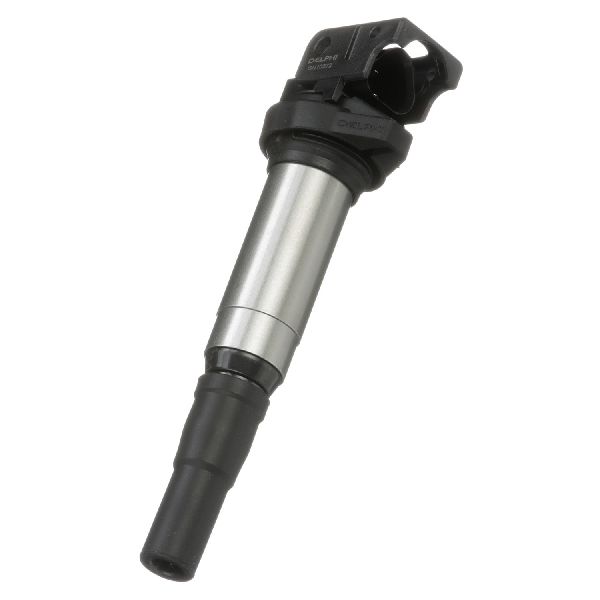
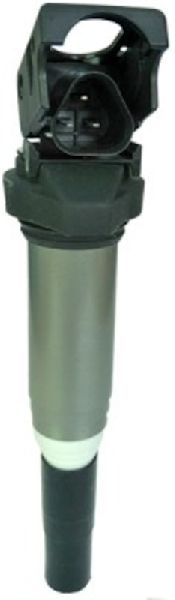
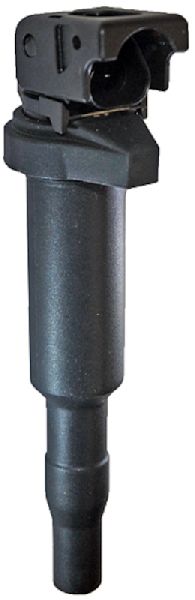
Typical fix: Replace the faulty ignition coil. It is often recommended to replace all six coils at the same time to prevent future misfires, especially if they are original or different brands. Many owners upgrade from the original Bosch coils to the more robust Eldor or Delphi versions for better reliability.
Est. part cost: $30 - $85 per coil - Worn or Fouled Spark Plug 🔴 High Probability The high-performance, high-cylinder-pressure nature of the N54 engine leads to a shorter service life for spark plugs. BMW recommends replacement every 45,000 miles, but on tuned vehicles, this interval can drop to 20,000-30,000 miles. Leaking injectors can also foul the plugs with fuel, or a leaking valve cover gasket can foul them with oil.
How to confirm: After confirming the coil is good, remove the spark plug from cylinder 2. This requires a special 12-point 14mm thin-wall spark plug socket. Inspect it for wear on the electrode, carbon or oil fouling, or cracks in the ceramic. A wet, fuel-smelling plug points to a leaky injector.
Typical fix: Replace the spark plug. It is best practice to replace all six spark plugs as a set to ensure consistent performance and prevent future misfires.
Est. part cost: $15 - $25 per plug - Failed Fuel Injector 🔴 High Probability Early versions of the N54's piezoelectric fuel injectors have a very high failure rate. Injectors are marked with an 'Index' number; versions prior to Index 11 are known to be particularly problematic. They can get stuck open (leaky), causing a rich misfire and smoking, or become clogged, causing a lean misfire.
How to confirm: If the coil and plug are good, the injector is the next suspect. A definitive test involves removing the injectors and having them professionally flow-tested. Swapping injectors between cylinders is another diagnostic step, but it is labor-intensive and requires new Teflon seals and coding the injectors to the DME.
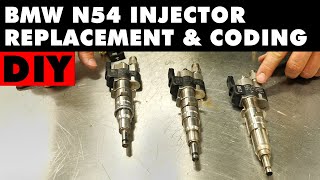
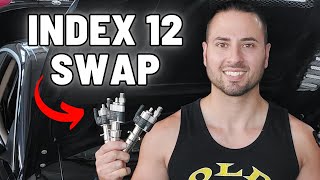
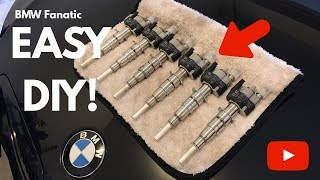
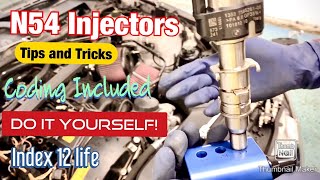
Typical fix: Replace the faulty fuel injector with the latest available version (Index 12 or newer is recommended). It is critical to code the new injector's calibration value to the DME using diagnostic software for proper engine operation. It's often recommended to replace all injectors in the same bank (cylinders 1-3 or 4-6) if they are an older index.
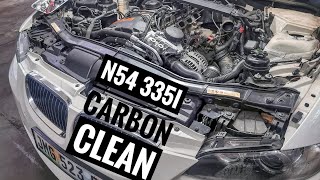
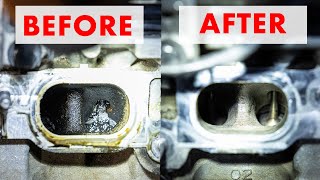
Est. part cost: $150 - $450 per injector - Carbon Buildup on Intake Valves 🟡 Medium Probability As a direct-injection engine, fuel is sprayed directly into the cylinder, so it never washes over the intake valves. Oil vapor from the crankcase ventilation (PCV) system bakes onto the hot valves, causing thick carbon deposits that restrict airflow. This is a universal issue for the N54, with cleaning recommended every 60,000-80,000 km.
How to confirm: This requires removing the intake manifold and visually inspecting the intake ports and valves with a borescope or by sight. Significant black buildup is a clear sign.
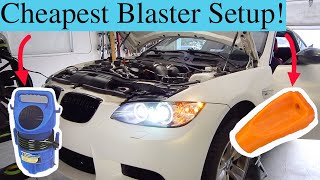
Typical fix: The intake valves must be cleaned through a process called walnut blasting, which uses crushed walnut shells to safely scrub the carbon away without damaging the metal surfaces. This is a common service offered by independent shops for $350-$600, though some dealers may charge over $1000.
Est. part cost: $30 - $50 (for walnut shells and gaskets if DIY)
Rare But Worth Checking
- Leaking Valve Cover Gasket: A very common oil leak on the N54 engine. The gasket around the spark plug tubes can fail, allowing oil to fill the tube, which then soaks and ruins the ignition coil and spark plug, causing a misfire. If you find oil when you pull the ignition coil, the valve cover and its gasket must be replaced.
- Low Cylinder Compression: While less common, a mechanical engine problem like a burnt valve, damaged piston, or worn piston rings could cause a loss of compression in cylinder 2, leading to a misfire. This is diagnosed with a compression test and a cylinder leak-down test after ruling out fuel and ignition issues.
- Failed MOSFET in DME: The DME (engine computer) uses MOSFET transistors to fire the ignition coils. A shorted or failing ignition coil can sometimes damage the corresponding MOSFET for that cylinder in the DME. Symptoms include a persistent misfire on one cylinder that doesn't move when swapping components. This requires specialized electronic repair of the DME board.
Diagnosis Steps
- Read the fault codes using an OBD-II scanner to confirm P0302 and check for any other codes, especially fuel pressure codes (e.g., 29DC, 29F2).
- Swap the ignition coil from cylinder 2 with the coil from cylinder 1. Clear the codes, start the engine, and see if the misfire moves to cylinder 1 (code P0301). If it does, the coil is bad. This is the most common first step.
- If the code remains P0302, inspect the spark plug in cylinder 2. You will need a thin-wall 12-point 14mm socket. Check for wear, damage, or fouling from oil or fuel. Replace if it appears worn or damaged.
- While the coil is out, inspect the spark plug tube for any oil. Oil in the tube indicates a leaking valve cover gasket which must be replaced.
- If the coil and plug are confirmed to be good, the fuel injector is the next most likely cause. This is a more advanced diagnosis. A leaky injector may foul the spark plug with fuel. Replacement requires coding the new injector to the DME.
- If all ignition and fuel components for cylinder 2 are good, investigate the possibility of carbon buildup on the intake valves by removing the intake manifold and inspecting them with a borescope.
- As a final step for persistent misfires, perform a compression and leak-down test to rule out any mechanical engine problems in cylinder 2.
- If the misfire remains on cylinder 2 after all component swaps, investigate a possible failed MOSFET driver for cylinder 2 in the DME.
Parts You'll Likely Need
- Ignition Coil
(OEM #12138657273)— This is the most common failure point for a single-cylinder misfire on the N54 engine due to high heat and electrical load. The latest Eldor-made coil (P/N 12138657273) is considered an upgrade over the earlier Bosch and Delphi versions.
Trusted brands: Eldor, Bosch, Delphi
OEM price range: $60-$85
Aftermarket price range: $30-$55 - Spark Plug
(OEM #12120037244)— Spark plugs are a regular maintenance item with a short life on the N54. A worn plug can't create a strong enough spark, causing a misfire. Tuned engines require more frequent changes.
Trusted brands: NGK, Bosch
OEM price range: $20-$25
Aftermarket price range: $15-$20 - Fuel Injector (Piezoelectric)
(OEM #13538616079)— A highly common failure point, especially older index versions. A single bad injector can cause persistent misfires, rough idle, and poor fuel economy. The latest part number (Index 12) is 13538616079, superseding many previous versions.
Trusted brands: VDO (OEM)
OEM price range: $300-$450
Aftermarket price range: $150-$250
Related Codes That Often Appear With This One
- P0300 — If the misfire is severe or intermittent, or if other cylinders begin to misfire, the DME may log a P0300 'Random/Multiple Cylinder Misfire' code in addition to P0302.
- P0301, P0303, P0304, etc. — If multiple components like coils or injectors are failing, or if a systemic issue like a failing High-Pressure Fuel Pump (HPFP) or severe carbon buildup exists, you may see misfire codes for other cylinders as well.
- 29DC, 29F1, 29F2 — These are BMW-specific codes indicating low fuel pressure. If seen alongside misfire codes, they strongly point towards a failing High-Pressure Fuel Pump (HPFP), a known weak point on the N54 that can cause misfires across multiple cylinders.
Technical Service Bulletins (TSBs) & Recalls
- SI B13 03 09: Acknowledges issues with the High-Pressure Fuel Pump (HDP) on N54 engines and extends the warranty to 10 years/120,000 miles. While not directly for P0302, a failing HPFP is a root cause of misfires.
- SI B13 07 12: Details procedures for diagnosing and replacing high-pressure fuel injectors due to internal failures causing rough running and misfire faults.
Platform-Specific Known Issues
- Fuel Injector Failures: Early index injectors (typically Index 10 and below) are prone to leaking and electronic failure, causing a wide range of issues from rough starts to persistent misfires. BMW extended the warranty on these parts for 10 years/120,000 miles, but most vehicles are now outside that window.
- Ignition Coil Lifespan: The coil-on-plug ignition system is stressed by the N54's high boost and heat, leading to a much shorter lifespan than on naturally aspirated engines.
- Intake Valve Carbon Buildup: A universal issue for direct-injected engines, the N54 requires intake valve cleaning (walnut blasting) every 40,000-60,000 miles to prevent power loss and misfires.
Mechanic-Grade Diagnostic Values
- High-Pressure Fuel Pump (HPFP) Rail Pressure at Idle — expected: ~700-720 psi (approx. 50 bar). Failure: Pressure that does not rise significantly under load or drops below 600 psi. Under load, it should be >1,500-2,000 psi.
- High-Pressure Fuel Pump (HPFP) Rail Pressure Under Load — expected: 1,500 - 2,900 psi (100 - 200 bar). Failure: Failure to reach or maintain pressure above 1,500 psi during a wide-open throttle pull in 3rd gear can indicate a failing HPFP.
- Low-Pressure Fuel Pump (LPFP) Pressure at Idle — expected: ~72 psi. Failure: Pressure dropping into the 40-60 psi range, especially under load or with an E85 mixture, indicates a failing LPFP.
- Piezoelectric Fuel Injector Internal Resistance — expected: Approximately 200k Ohms (± 40k Ohms). Failure: A reading of open circuit (infinite resistance) or a very low resistance often indicates a failed injector. However, some forum users report that injectors can test within spec and still be faulty, making this test inconclusive on its own.
Hidden / Shadow Codes Worth Checking
- 29CE: This is the BMW-specific hexadecimal code for 'Combustion Misfire, Cylinder 2'. It is the direct equivalent of the generic P0302 code. (see via BMW-specific diagnostic software like ISTA, INPA, or advanced handheld scanners (Foxwell, Autel).)
- 2AAF: 'Fuel Pump, Plausibility'. This code often appears as a shadow code and can indicate an issue with either the low-pressure or high-pressure fuel pump, which could be the root cause of the misfire. (see via BMW-specific diagnostic software. It may not always trigger a check engine light on its own.)
- 30BA / 30BB: 'Injector Circuit Failure' or 'DME Internal Fault'. These codes point directly to either the fuel injectors for a specific bank (30BA for bank 1, 30BB for bank 2) or a failure of the injector driver (MOSFET) inside the DME itself. (see via BMW-specific diagnostic software. These are critical codes for diagnosing a persistent misfire that doesn't resolve after swapping components.)
- 2A2C: 'Fuel Mixture Control 2'. This indicates a problem with the fuel mixture on Bank 2 (cylinders 4-6). While P0302 is on Bank 1, seeing this code could suggest a systemic fuel issue affecting both banks, such as a failing fuel pump or sensor. Some scanners may incorrectly associate it with Bank 2. (see via )
Scan Tool Commands That Help
- ISTA/D: Run vehicle test and follow guided troubleshooting. — When P0302 (or 29CE) is present, ISTA will generate a test plan that guides the technician through logical diagnostic steps, such as checking injector function and running smoothness tests.
- ISTA/D or INPA: Injector Calibration/Coding — This is a mandatory step after replacing any fuel injector. The new injector's flow rate value, printed on the injector body, must be programmed into the DME to ensure correct fuel delivery for that cylinder.
- ISTA/D or INPA: Reset Adaptations (specifically mixture and lambda) — After replacing a major fuel or air system component (like injectors, O2 sensors, or after a walnut blast), resetting adaptations forces the DME to relearn the baseline values for the new components, which can resolve rough running.
Wiring & Ground Locations
- Main Engine Ground Strap — On the driver's side of the engine (LHD models), connecting the engine mount arm to the chassis frame rail. It is located below the intake manifold and can be accessed from underneath the car after removing the splash shield.. The ignition coils and injectors rely on a solid engine ground. Over time, this braided strap corrodes and deteriorates, causing a poor ground connection. This can lead to weak spark, erratic injector behavior, and persistent, hard-to-diagnose misfires that may not follow a specific component swap. It can also cause slow cranking and other electrical gremlins.
Real Owner Repair Stories
- ZPOST forum user (2011 BMW Z4 35i (N54 engine), 60k miles) — Lumpy idle, juddering and gear confusion under hard acceleration, check engine light with code 29CE (Cylinder 2 Misfire).
❌ Tried (didn't work) Initially put in an injection cleaner additive.
✅ What actually fixed it The misfire was resolved by swapping the ignition coil from cylinder 2 to another cylinder. When the fault code moved with the coil, the bad coil was identified and replaced. - Bimmerpost forum user (N54 Engine (model year not specified)) — Persistent misfire on cylinder 3 (29CF) and a code for misfire at low tank fill level (29D9), even with a full tank. Misfire occurred at low RPM and low load.
❌ Tried (didn't work) Replacing all spark plugs (found oil on the old plug for cylinder 3)., Walnut blasting service for carbon buildup.
✅ What actually fixed it The user's narrative stopped before a final fix was confirmed, but the presence of oil on the spark plug strongly pointed to a leaking valve cover gasket or a failing fuel injector as the next logical step.
OEM Part Supersession History
Various (e.g., Bosch 12137594937)→Eldor 12138657273— The original Bosch coils had a high failure rate. BMW switched to Eldor as the OEM supplier for N54 applications due to better reliability and heat resistance. The Eldor coils feature a metal body which helps with durability.
Heads up: While it's generally recommended not to mix coil brands, many owners have successfully replaced failing Bosch or Delphi coils with the superior Eldor version. For best results, replace all six at once.Various, with Index numbers 1 through 10 (e.g., 13537537317)→Index 12 (PN 13538616079 or 13538648937)— Early index fuel injectors had extremely high failure rates due to internal design flaws, leading to leaks, clogging, and misfires. BMW released numerous revisions, with Index 12 being the most stable and reliable version.
Heads up: It is critical to not mix injectors with an index of 10 or lower with Index 11 or higher in the same engine bank (Cylinders 1-3 or 4-6). When replacing a failed injector with an index below 11, all injectors in that bank must be replaced with the new index. All new injectors must be coded to the DME.
Model Year Variations Within This Range
- 2006-~2008: Early N54 models were equipped with the MSD80 DME. Later models (~2008+) used the MSD81 DME. While functionally similar, they have different processors and internal hardware. A DME failure (like a fried MOSFET) requires sourcing the correct MSD80 or MSD81 unit for the specific vehicle.
- 2011-2013: The 335is models used a more powerful version of the N54 engine (240 kW) with some software and potentially cooling differences compared to the standard 335i (225 kW). However, the core ignition and fuel systems causing P0302 are the same.
Diagnostic Flowchart
Other Known Issues on This Vehicle
Issues unrelated to this code that are worth knowing about as an owner of this generation:
- High-Pressure Fuel Pump (HPFP) Failure 🔴 High — Extremely common, especially on pre-2010 models. Many fail between 50,000-80,000 miles. Symptoms include long cranks, limp mode, and misfires. (Ref: BMW extended the warranty to 10 years/120,000 miles under SIB 13 03 09.)
- Electric Water Pump & Thermostat Failure 🔴 High — Very common failure item, typically between 60,000-80,000 miles. Failure can cause rapid overheating and engine damage.
- Turbocharger Wastegate Rattle 🟠 Medium — Common on original turbos. A rattling noise is heard on deceleration or at idle. While initially just an annoyance, it can eventually lead to low boost fault codes. (Ref: BMW extended the warranty for this issue to 8 years/82,000 miles, but most vehicles are now outside this period.)
- Leaking Oil Filter Housing Gasket (OFHG) & Valve Cover Gasket (VCG) 🔴 High — Almost guaranteed to fail between 60,000-100,000 miles. An OFHG leak can cause oil to mix with coolant, leading to catastrophic failure. A VCG leak can destroy ignition coils.
- Failing Piezoelectric Fuel Injectors 🔴 High — Very common, especially injectors with an index number below 11. Can cause misfires, rough idle, and poor emissions. Often requires replacing a full bank of 3 or all 6. (Ref: SI B13 07 12 outlines diagnostic procedures for failing injectors.)
Used vs. New Parts: Buying Guide for This Vehicle
When a used part is the smart pick: For this repair, buying used parts is generally not recommended due to the high failure rate of the primary components. The only potential exception would be a larger assembly like an intake manifold if it were damaged, but this is not a common cause of P0302.
Donor-vehicle mileage cap: roughly under 40000 miles for the part to have meaningful remaining life.
What to inspect on the donor part:
- For any electronic component, verify the part number and, for injectors, the Index number.
- Avoid parts from vehicles with high mileage or visible signs of poor maintenance.
- Ask for a warranty or return period, even from a private seller or junkyard.
OEM-only on this vehicle (don't cheap out):
- Fuel Injectors: Only use new, genuine BMW or OEM (VDO/Vitesco) Index 12 injectors. Counterfeit injectors are widespread and cause significant problems. Used injectors are a major gamble and not worth the risk.
- DME/ECU: If the DME is faulty, a used unit can be an option, but it requires specialized services to clone the original unit's data (ISN, VIN, coding) to the replacement.
Aftermarket brands forum-validated for this vehicle:
- Ignition Coils: Eldor (OEM), Delphi (OEM), Bosch (OEM, but Eldor is preferred for N54).
- Spark Plugs: Bosch, NGK (use the specific part number recommended for the N54).
- High-Performance Ignition Kits: Precision Raceworks offers a popular high-output kit for tuned vehicles, but it's overkill for a stock engine.
Brands owners have reported issues with on this vehicle:
- Unbranded/no-name ignition coils and fuel injectors from online marketplaces. These are often low-quality, fail quickly, and can even cause damage to other components like the DME.
Real Owner Stories
Aggregated from forums and TSBs cited above. Mileages and costs reflect what owners reported in those sources.
2006-2013 BMW 3-Series N54
Symptoms: A user experienced a P0302 code and attempted to swap coils between cylinders 1 and 2. However, they then received multiple misfire codes (P0301, P0303, P0304, P0300) because the original codes were not cleared during the diagnostic process.
What fixed it: The story highlights the necessity of clearing codes after swapping components to correctly identify if the fault moved with the part.
Source hint: Bimmerpost (e90post) thread titled 'HELPPPP!!! Cylinder misfire!!!'
2006-2013 BMW 3-Series N54 — ~50000 miles
Symptoms: Power loss and misfires caused by thick carbon deposits on the intake valves that restricted airflow.
What fixed it: Walnut blasting service to scrub carbon away from the intake valves.
Cost: $300-$1000
Source hint: Bimmerpost (e90post) thread titled 'Fair price for a shop to walnut blast a N54'
2006-2013 BMW 3-Series N54
Symptoms: Long engine crank times and the vehicle entering 'limp mode' due to fuel system pressure issues.
What fixed it: Replacement of the High-Pressure Fuel Pump (HPFP), which saw several part revisions from Bosch to Continental.
Source hint: Bimmerpost (e90post) thread titled 'HPFP failure FAQ!'
Related OBD-II Codes
Frequently Asked Questions
Is there a warranty extension for the fuel injectors on my N54 3-Series?
Which ignition coils are recommended as an upgrade for the N54 engine?
How often should I perform walnut blasting on my 335i to prevent P0302 misfires?
Does TSB SI B13 03 09 apply to my misfire issue?
What specific tool do I need to check the spark plug in cylinder 2?
My N54 is tuned; should I change my spark plugs more often?
Helpful Videos
Used OEM Parts in Stock

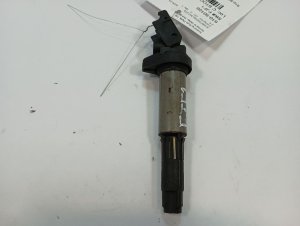


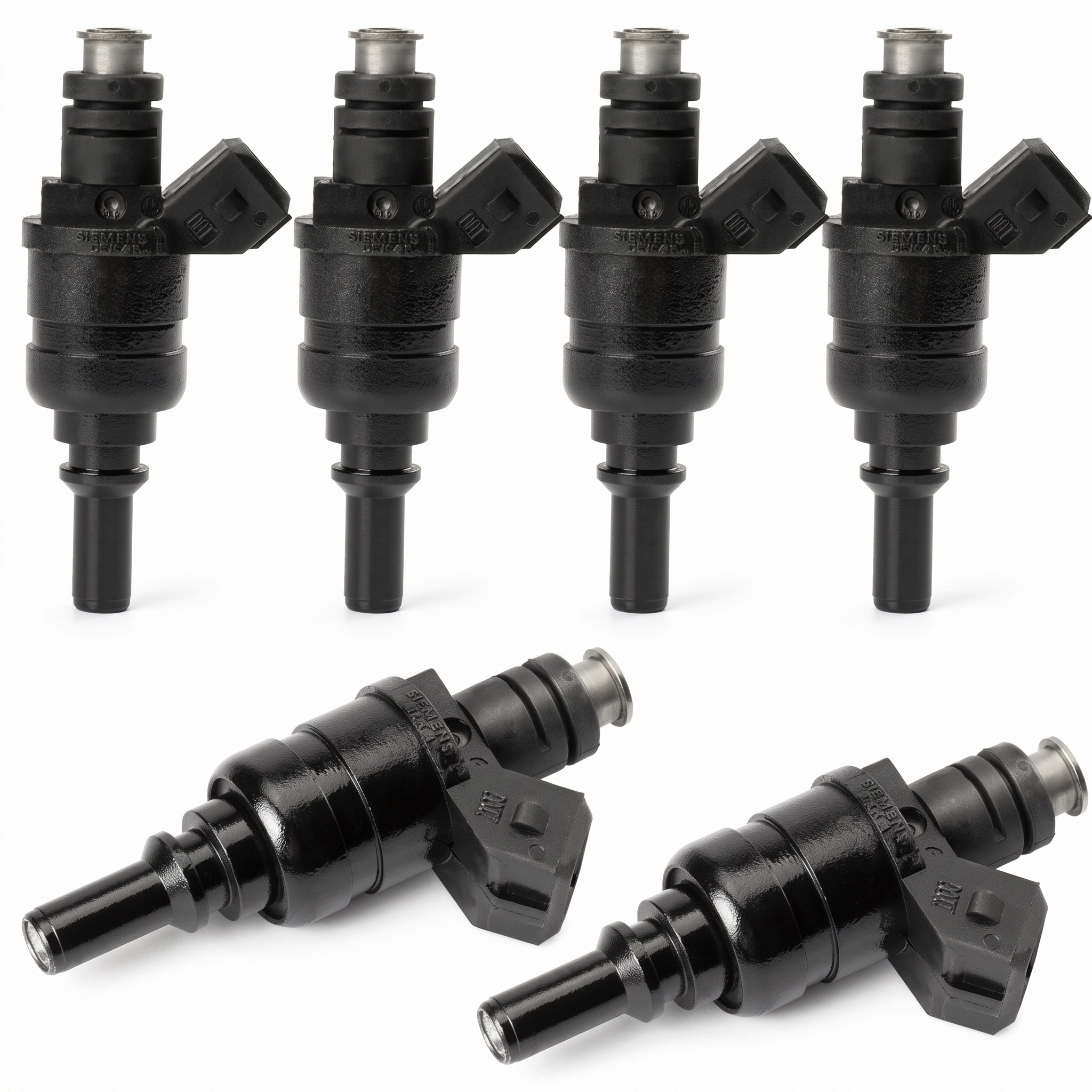

New Aftermarket Parts Available
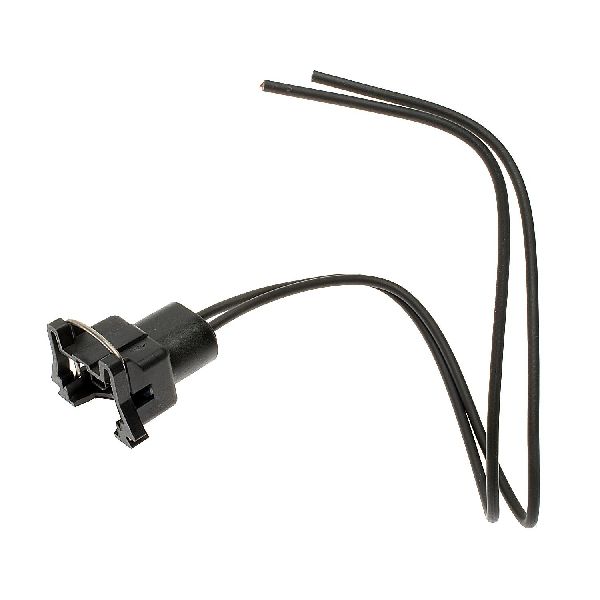

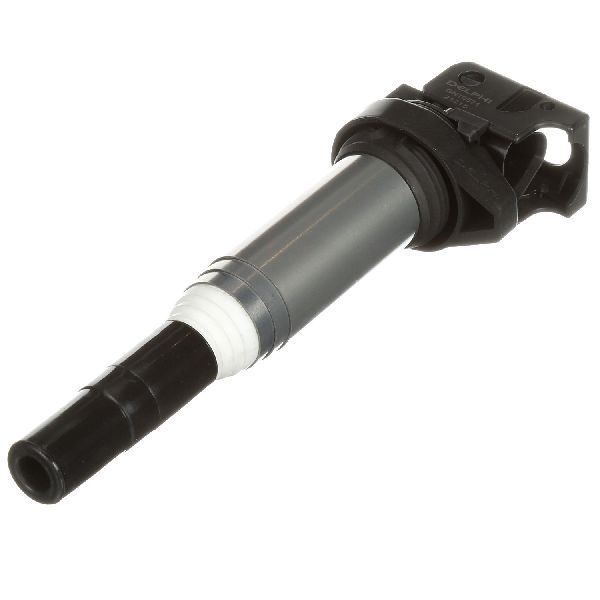

The information in this article is provided for general reference and educational purposes only. Vehicle specifications, procedures, and part compatibility can vary by production date, trim level, and region. Always consult your vehicle's factory service manual and verify part numbers before purchasing or performing repairs. Safety-critical components such as airbags, seat belts, and braking systems should be installed by a qualified professional.
- BMW 3-Series:
- 🎬 Helpful Videos
- 🛍️ Shop This Part
- What's Unique About the 2006-2013 BMW 3-Series
- Symptoms You May Notice
- Most Likely Causes
- Rare But Worth Checking
- Diagnosis Steps
- Parts You'll Likely Need
- Related Codes That Often Appear With This One
- Technical Service Bulletins (TSBs) & Recalls
- Platform-Specific Known Issues
- Mechanic-Grade Diagnostic Values
- Hidden / Shadow Codes Worth Checking
- Scan Tool Commands That Help
- Wiring & Ground Locations
- Real Owner Repair Stories
- OEM Part Supersession History
- Model Year Variations Within This Range
- Diagnostic Flowchart
- Other Known Issues on This Vehicle
- Used vs. New Parts: Buying Guide for This Vehicle
- Real Owner Stories
- 2006-2013 BMW 3-Series N54
- 2006-2013 BMW 3-Series N54 — ~50000 miles
- 2006-2013 BMW 3-Series N54
- Related OBD-II Codes
- Frequently Asked Questions
- 🎟️ Get 5% Off