

P0301 on 2009-2016 VW Jetta: Cylinder 1 Misfire Causes and Fixes
P0301 on a VW Jetta indicates a misfire in cylinder 1. The most common cause is a faulty ignition coil, followed by a worn spark plug. On some engines, a bad spark plug wire can also be the culprit. Replacing an ignition coil is a beginner-friendly DIY task costing between $30 and $75. If the Check Engine Light is flashing, you should not drive the vehicle as it indicates a severe misfire that can damage the catalytic converter.
- P0301 on a 2009-2016 Jetta is a misfire on cylinder 1, most often caused by a bad ignition coil.
- The first diagnostic step should always be to swap the cylinder 1 ignition coil with another cylinder's coil to see if the misfire follows.
- If the Check Engine Light is flashing, stop driving immediately to prevent costly damage to the catalytic converter.
- For direct-injection (TSI) engines, if coils and plugs are good, the next most likely cause is carbon buildup on the intake valves, a common issue for this platform.
- Always replace spark plugs in a full set, and consider replacing all ignition coils at once for peace of mind.
What's Unique About the 2009-2016 Volkswagen JETTA

On this generation of Volkswagen Jettas, P0301 is an extremely common code. The direct-injection TSI engines (1.4T, 1.8T, 2.0T) are known for significant carbon buildup on intake valves, which restricts airflow and causes misfires, particularly during cold starts. The earlier 2.5L 5-cylinder engine has its own quirks, including vacuum leaks from a failed PCV valve diaphragm integrated into the valve cover or a faulty engine-driven vacuum pump. However, across all engine types, ignition coil failure is a notoriously frequent issue, with many owners and technicians recommending replacement of all coils at once.
Diagnostic Flowchart

Tap your situation to follow the diagnostic path that matches what you're seeing on this vehicle.
Generation note: This range covers the late Volkswagen Jetta A5 (Mk5, 2009-2010) and the Jetta A6 (Mk6, 2011-2016). Engine options and common failure points differ. The 2.5L 5-cylinder was common in earlier models, while the 1.4T, 1.8T, and 2.0T TSI engines became standard in later years. The GLI model consistently used a 2.0T engine. Some base models used a naturally aspirated 2.0L engine which could suffer from bad spark plug wires, a component not present on the coil-on-plug 2.5L and TSI engines.
Symptoms You May Notice
- Rough or shaky idle
- Engine hesitation or stumbling during acceleration
- Noticeable loss of power
- Solid or flashing Check Engine Light
- Smell of unburnt gasoline from the exhaust
- Change in engine or exhaust sound
- Bucking or jerking under acceleration
- Replacing the mass airflow (MAF) sensor when only a single-cylinder misfire is present. A bad MAF sensor typically affects all cylinders and would likely trigger other codes.
- Replacing oxygen (O2) sensors. While a faulty O2 sensor can affect the air-fuel mixture, it's unlikely to cause a consistent misfire on only one cylinder.
Most Likely Causes


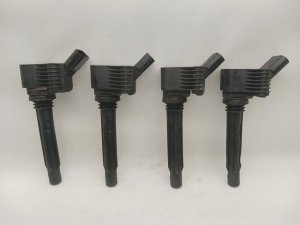
- Faulty Ignition Coil 🔴 High Probability Ignition coils are a very common failure item on this era of Volkswagen engines. Aftermarket brands are available, but many owners recommend sticking with OEM-branded coils like Bosch, NGK, Eldor, or Beru to ensure longevity.
How to confirm: The easiest way is to swap the ignition coil from cylinder 1 with the coil from another cylinder (e.g., cylinder 2). Clear the codes and drive the car. If the code changes to P0302 (Cylinder 2 Misfire), the coil is bad. This is a definitive diagnostic step.
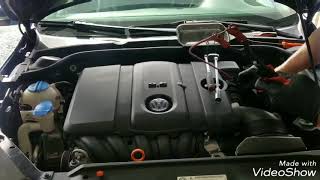
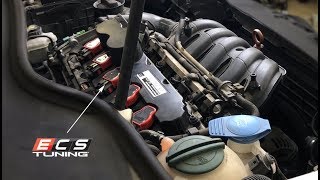
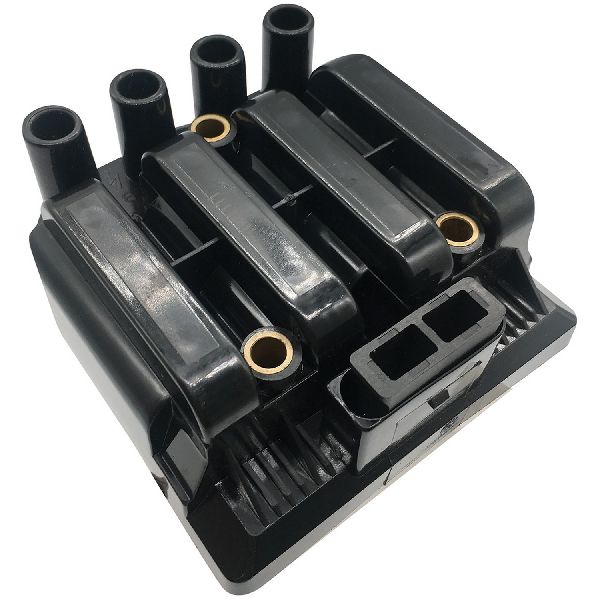
Typical fix: Replace the faulty ignition coil. It is often recommended to replace all coils at the same time 🎬 Watch: DIY walkthrough for replacing 2.5L coil packs and spark plugs to prevent future failures, as they tend to fail around the same time.
Est. part cost: $30-$75 per coil - Worn or Fouled Spark Plug 🔴 High Probability Spark plugs are a regular maintenance item with a finite lifespan. A worn, rounded center electrode or incorrect gap can cause a weak spark. Oil leaks from the valve cover gasket can also foul the plugs, causing a misfire.
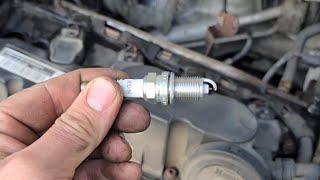
How to confirm: Remove the spark plug from cylinder 1 and inspect it. Look for a worn electrode, heavy carbon deposits, oil fouling, or cracks in the ceramic insulator. You can also swap it with another cylinder's spark plug to see if the misfire follows.
Typical fix: Replace the spark plug. It is best practice to replace all spark plugs as a set to maintain consistent performance.
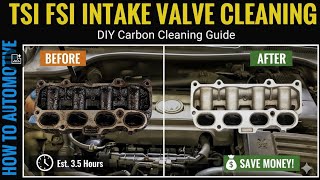
Est. part cost: $10-$25 per plug - Carbon Buildup on Intake Valves (TSI Engines) 🟡 Medium Probability Gasoline Direct Injection (GDI/TSI) engines spray fuel directly into the cylinder, so fuel detergents don't wash over the intake valves. Oil vapor from the PCV system bakes onto the hot valves, restricting airflow and causing misfires, especially on cold starts or at idle. This issue can become prominent at mileages as low as 37,000 miles but is very common by 60,000-80,000 miles.
How to confirm: This is difficult to confirm without a borescope to visually inspect the intake valves. A dealership or specialist shop can perform this inspection. In some cases, misfires will persist after replacing plugs and coils, making carbon buildup the next logical suspect.
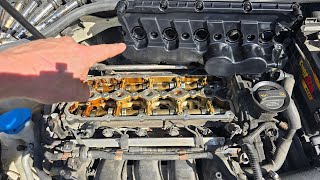
Typical fix: The intake manifold must be removed and the valves cleaned, typically through walnut shell blasting or manual scrubbing with picks and chemical solvents. 🎬 See how to clean carbon buildup on TSI intake valves
Est. part cost: $50 (walnut blasting media) - $800+ (professional service) - Faulty Fuel Injector ⚪ Low Probability Injectors can become clogged or fail electronically over time, leading to a lack of fuel in the cylinder. On TSI engines, injector failure is a known, though less common, issue.
How to confirm: You can swap the fuel injector from cylinder 1 with another cylinder to see if the misfire code follows. This is more labor-intensive than swapping a coil or plug. A mechanic can also use a stethoscope or long screwdriver to listen for the injector's 'clicking' sound during operation to see if it's actuating.
Typical fix: Replace the faulty fuel injector. It's often recommended to replace the seals for the other injectors at the same time.
Est. part cost: $50-$200 - Vacuum Leak ⚪ Low Probability On the 2.5L engine, the PCV valve diaphragm, which is integrated into the valve cover, can tear, creating a large vacuum leak often accompanied by a whistling or squealing noise. On all engines, aged plastic hoses and gaskets in the intake system can crack and leak unmetered air, leaning out the air/fuel mixture.
How to confirm: Perform a smoke test on the intake system to reveal leaks from hoses or gaskets. Listen for hissing or whistling sounds around the engine bay at idle. A torn PCV diaphragm on the 2.5L can sometimes be confirmed by trying to remove the oil cap while the engine is running; a strong vacuum will make it difficult to remove.
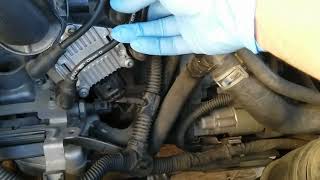
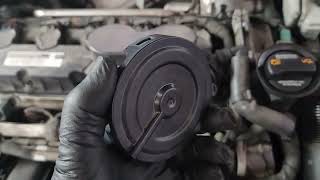
Typical fix: Replace the cracked hose or failed gasket. For the 2.5L, this often means replacing the entire valve cover assembly. 🎬 Watch: How to replace the 2.5L valve cover and PCV
Est. part cost: $20-$200
Rare But Worth Checking
- Low Engine Compression: Caused by more serious internal engine issues like worn piston rings, a burnt valve, or a failing head gasket. A compression test is needed to diagnose this. A healthy reading is typically above 140 PSI, with minimal variation between cylinders.
- Failed PCV Valve: A failed Positive Crankcase Ventilation (PCV) valve can create a large vacuum leak, leading to misfires. An owner complaint cited a P0301 code appearing after a PCV valve replacement, indicating the sensitivity of this system. [ODI #11412801] On the 2.0T TSI, a failed PCV can cause a loud whistling noise and lean codes.
- Low Fuel Pressure: A failing fuel pump or clogged filter can cause misfires, often across multiple cylinders. A TSB for the 2014 Jetta links misfire codes with a low fuel pressure code (P0087). [Bulletin #VIN4APIN20220118]
- Faulty Spark Plug Wire (2.0L Base Engine): On engines that use them, a spark plug wire can fail internally, causing a weak or intermittent spark. One owner found a brand new wire was bad out of the box. A video diagnosis of a 2012 Jetta with a 2.0L engine identified a faulty wire as the root cause.
- Crankshaft Position Sensor Adaptation: A VW Technical Service Bulletin (01-17-03TT) notes that after a misfire repair, the ECM may not automatically relearn the crankshaft position profile, leading to false misfire codes. The fix involves clearing the fault codes three consecutive times with the ignition on and engine off to force a relearn.
Diagnosis Steps
- Read the code with an OBD-II scanner to confirm P0301 and any other related codes.
- Note if the Check Engine Light is steady or flashing. A flashing light indicates a severe misfire that could damage the catalytic converter.
- Label and swap the ignition coil from cylinder 1 to cylinder 2. Clear the codes and run the engine. If the code returns as P0302, the ignition coil is faulty.
- If the code remains P0301, move the original coil back and swap the spark plug from cylinder 1 to cylinder 3. Clear codes and run the engine. If the code changes to P0303, the spark plug is the issue.
- If the misfire is still on cylinder 1, inspect the fuel injector wiring for damage or corrosion. If possible, swap the fuel injector with another cylinder to see if the code follows.
- Perform a compression test on cylinder 1 to rule out mechanical engine problems like a burnt valve or worn piston rings.
- With a VW-specific scan tool like VCDS, monitor the misfire counter in the measuring blocks for each cylinder in real-time to confirm the fault is isolated to cylinder 1.
- Inspect engine ground straps, particularly the main ground from the battery to the chassis and the engine-to-chassis ground, for corrosion or looseness.
Parts You'll Likely Need
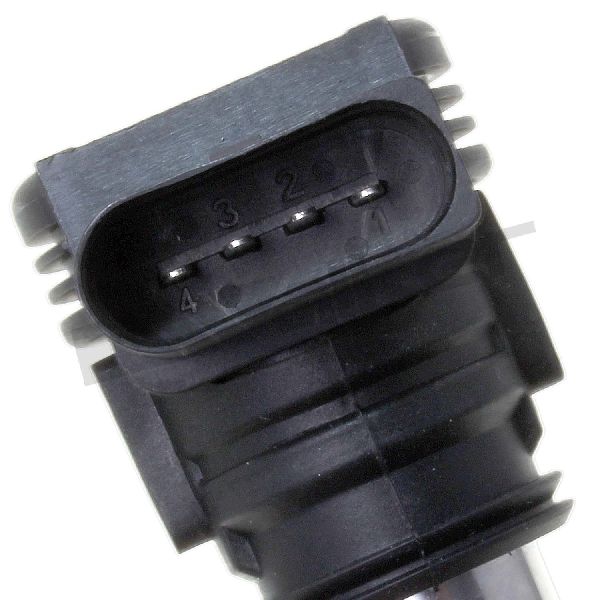
- Ignition Coil
(OEM #07K905715G (For 2.5L), 06H905115B (Common for 2.0T), 06L905110H (Common for 1.8T/2.0T Gen3))— This is the most frequent cause of a P0301 misfire on these Jetta models. Part numbers vary by engine and model year, so verifying with a VIN is crucial.
Trusted brands: Bosch, NGK, Eldor, Beru
OEM price range: $50-$75
Aftermarket price range: $30-$60 - Spark Plug
(OEM #06K905601K (Example, verify by VIN))— As a routine maintenance item, a worn spark plug is the second most likely cause of the misfire. Using the correct heat range and gap is critical for engine performance.
Trusted brands: NGK, Bosch
OEM price range: $20-$25
Aftermarket price range: $10-$18 - Valve Cover with PCV (2.5L Engine)
(OEM #07K103469L (Example, verify by VIN))— On the 2.5L 5-cylinder engine, the PCV diaphragm is integrated into the valve cover and is a common failure point causing vacuum leaks and misfires.
Trusted brands: Volkswagen (OEM), Vaico, URO Parts
OEM price range: $150-$250
Aftermarket price range: $80-$150
Related Codes That Often Appear With This One
- P0300 — If the misfire is intermittent or begins to affect other cylinders, a P0300 (Random/Multiple Cylinder Misfire) code may appear alongside P0301. This is common when the cause is carbon buildup or a vacuum leak.
- P0302, P0303, P0304 — These codes indicate misfires in other cylinders. Seeing them together can point to a common cause like a vacuum leak, fuel delivery issue, or widespread carbon buildup.
- P0087 — As noted in a VW Technical Service Bulletin, this code for 'Fuel Rail/System Pressure - Too Low' can appear with misfire codes, suggesting a fuel delivery problem as the root cause. [Bulletin #VIN4APIN20220118]
- P0351 — This code indicates a fault in the ignition coil primary/secondary circuit for cylinder 1. Seeing P0301 and P0351 together strongly points to a bad ignition coil or a problem with its wiring/connector.
Technical Service Bulletins (TSBs) & Recalls
- Links MIL-on with misfire codes (P0300-P0304) to low fuel pressure code P0087, indicating a potential fuel delivery issue as the root cause for misfires on the 2014 Jetta.
- A VW Technical Tip addressing 'false misfire indication' after a repair. It instructs technicians to clear fault codes three times consecutively to force the ECM to relearn the crankshaft sensor profile, which can resolve lingering false P0301 codes.
- A general GM bulletin (for context, not VW specific but relevant to GDI engines) that details how excessive carbon buildup on intake valves causes a range of symptoms including rough idle, extended crank, and misfire DTCs (P0300-P0308).
Platform-Specific Known Issues
- Carbon Buildup on TSI Engines: Direct injection engines like the 1.4T, 1.8T, and 2.0T are highly susceptible to carbon deposits on the intake valves. This restricts airflow into the cylinders and can cause misfires that are most noticeable at idle or on a cold start. Cleaning is recommended every 60k-80k miles.
- PCV Failure on 2.5L Engines: The 2.5L 5-cylinder engine features a PCV system where the main diaphragm is part of the valve cover. This diaphragm can tear, causing a significant vacuum leak, a high-pitched squeal or whistle, and random misfire codes. The entire valve cover must be replaced to fix it.
- Ignition Coil Revisions: Volkswagen has released multiple revisions of ignition coils for these engines to improve reliability. When replacing a coil, it is best to use the latest available OEM revision and replace all of them as a set to ensure consistent performance.
Mechanic-Grade Diagnostic Values
- Misfire Detection Method — expected: The ECM identifies misfires by measuring subtle crankshaft speed fluctuations. A properly firing cylinder will cause a slight acceleration of the crankshaft, while a misfire results in a deceleration.. Failure: When the rotational speed deviation for a cylinder exceeds a dynamically calculated threshold based on load and RPM, the ECM logs a misfire event.
- Low-Pressure Fuel System (Port Injected 2.5L/2.0L) — expected: Approximately 40.5-47 PSI with the engine at normal operating temperature and idling.. Failure: Significantly lower pressure indicates a weak fuel pump or clogged filter, which could cause lean misfires.
- High-Pressure Fuel System (TSI Engines) — expected: TSI engines use a high-pressure fuel pump (HPFP). Rail pressure should be monitored with a scan tool and can range from ~580 PSI (40 bar) at idle to over 2,000 PSI under load.. Failure: Actual pressure failing to meet the specified pressure requested by the ECM, especially under load, points to a failing HPFP or cam follower wear.
- Spark Plug Gap — expected: Though it varies by specific engine, a common range for VW spark plug gaps is 0.024 to 0.071 inches. Always verify with the manufacturer's spec for your exact engine.. Failure: An incorrect gap can cause a weak or inconsistent spark, leading to misfires.
Hidden / Shadow Codes Worth Checking
- Mode 6, Test ID $A2-$AB: Generic OBD-II Mode 6 provides access to non-continuous monitor test results. Test IDs $A2 through $AB typically correspond to misfire counters for cylinders 1 through 10. This allows a technician to see raw misfire counts for each cylinder, even if they haven't reached the threshold to set a P030x code. (see via An advanced OBD-II scanner capable of displaying Mode 6 data.)
Scan Tool Commands That Help
- VCDS (VAG-COM): Measuring Value Blocks (MVB) 015 & 016 — To view the live misfire counter for each individual cylinder. This is the most effective way to confirm that misfires are happening, how frequently, and if they are isolated to cylinder 1, especially if the misfire is intermittent. Block 015 shows misfire counts at idle, while 016 shows them under load.
- VCDS (VAG-COM): Clear All DTCs — After a repair (like swapping a coil), clearing the codes is necessary to see if the fault returns. For some VWs, clearing codes three consecutive times with the ignition on, engine off can force the ECM to relearn certain adaptations that may cause false misfires.
Wiring & Ground Locations
- Battery to Chassis Ground — Typically a thick strap from the negative battery terminal to a stud on the chassis/frame rail, often located below or next to the battery tray.. This is the primary ground for the entire electrical system. Corrosion or looseness here can create voltage drops and electrical noise, causing erratic behavior from the ECU, sensors, and ignition coils.
- Engine/Transmission to Chassis Ground — A braided strap connecting the engine block or transmission case to the vehicle's frame. On a Mk6 Jetta, this is often found near the engine or transmission mount.. The ignition coils and many critical sensors ground through the engine block. A poor connection here forces the electrical current to find alternate, higher-resistance paths, which can weaken spark energy and cause misfires.
- Cylinder Head Ground — A smaller ground wire often bolted directly to the cylinder head or valve cover, connecting to the main engine wiring harness.. This provides a direct ground reference for components mounted on the head, including ignition coils and camshaft position sensors. A faulty connection can directly impact spark and timing signals.
Real Owner Repair Stories
- Reddit user teslonelf in /r/MechanicAdvice (2000 VW Jetta GLS 2.0L I4 (Note: older than range, but demonstrates a key diagnostic principle)) — P0301 code, intermittent loss of power, steady or blinking CEL, vibration was fixed but code remained.
❌ Tried (didn't work) Replaced spark plugs and wires, Replaced ignition coil, Replaced mass airflow sensor
✅ What actually fixed it The brand new spark plug wire for cylinder 1 was faulty out of the box. Swapping the new wire with another cylinder's wire would have identified this. - JNB Tuning on YouTube (MK6 VW Jetta (year not specified)) — EPC light, limp mode, engine and EPC lights on, scanned and found P0301.
❌ Tried (didn't work) Initial diagnosis was uncertain due to multiple potential causes of EPC light.
✅ What actually fixed it After scanning the car and getting the P0301 code, the owner replaced the ignition coil on cylinder 1, which resolved the misfire and performance issues.
"I Checked Everything" — The Actual Cause
- In cases where a P0301 is present but a smoke test reveals no vacuum leaks, the cause is almost certainly not related to unmetered air. The fault will lie with the ignition system (spark plug, coil pack, wire), the fuel system (clogged injector), or a mechanical engine problem (low compression). A user on Reddit ultimately found their issue was a bad-out-of-the-box spark plug wire, a fault a smoke test would never find.
When the Usual Fixes Don't Work
- While swapping ignition coils and spark plugs is the standard first step, there are documented cases where this does not solve the P0301 code. In one instance involving a 2.0L engine, the owner replaced plugs, wires, and the coil pack, but the misfire persisted. The final solution was discovering that one of the brand new replacement spark plug wires was defective from the factory. This highlights the importance of verifying new parts and not assuming they are good.
OEM Part Supersession History
06H-103-495-A, 06H-103-495-E→06H-103-495-AC (and later revisions)— The PCV (Positive Crankcase Ventilation) valve on the 2.0T TSI engine is a known failure point. The original designs were prone to diaphragm rupture, causing massive vacuum leaks and multiple misfire/lean codes. Newer part numbers represent improved designs.
Model Year Variations Within This Range
- 2014-2016: For the 2014 model year, VW replaced the 2.5L 5-cylinder engine with a new 1.8T 4-cylinder turbocharged engine (EA888 Gen 3) in the popular SE and SEL trims. This new engine has different common failure points (e.g., more prone to carbon buildup, different PCV system) than the 2.5L it replaced. Additionally, all 2014+ Jetta models received a multi-link independent rear suspension, replacing the torsion-beam on lower trims.
Helpful Videos
Used OEM Parts in Stock



New Aftermarket Parts Available


The information in this article is provided for general reference and educational purposes only. Vehicle specifications, procedures, and part compatibility can vary by production date, trim level, and region. Always consult your vehicle's factory service manual and verify part numbers before purchasing or performing repairs. Safety-critical components such as airbags, seat belts, and braking systems should be installed by a qualified professional.
- Volkswagen JETTA:
- 🎬 Helpful Videos
- 🛍️ Shop This Part
- What's Unique About the 2009-2016 Volkswagen JETTA
- Diagnostic Flowchart
- Symptoms You May Notice
- Most Likely Causes
- Rare But Worth Checking
- Diagnosis Steps
- Parts You'll Likely Need
- Related Codes That Often Appear With This One
- Technical Service Bulletins (TSBs) & Recalls
- Platform-Specific Known Issues
- Mechanic-Grade Diagnostic Values
- Hidden / Shadow Codes Worth Checking
- Scan Tool Commands That Help
- Wiring & Ground Locations
- Real Owner Repair Stories
- "I Checked Everything" — The Actual Cause
- When the Usual Fixes Don't Work
- OEM Part Supersession History
- Model Year Variations Within This Range
- 🎟️ Get 5% Off