

P0301 on 2004-2011 Suzuki Swift+ 1.6L: Cylinder 1 Misfire Causes and Fixes
On a 2004-2011 Suzuki Swift+ 1.6L, code P0301 is most often caused by a leaking valve cover gasket that allows oil to foul the cylinder 1 spark plug and ignition coil. This is a well-documented issue on the identical Chevrolet Aveo. Replacing the valve cover gasket, spark plugs, and ignition coil is the most common and effective fix.
- P0301 on this vehicle means cylinder 1 is misfiring.
- The most probable cause by far is a leaking valve cover gasket that has allowed oil to contaminate the spark plug and ignition coil.
- Before buying any parts, pull the ignition coil for cylinder 1 and check for oil in the tube.
- If oil is present, you must replace the valve cover gasket set along with the spark plugs to achieve a lasting repair.
- Do not drive with a flashing check engine light, as you risk destroying your catalytic converter.
What's Unique About the 2004-2011 Suzuki Swift+
The Suzuki Swift+ sold in North America is a rebadged Chevrolet Aveo/Daewoo Kalos equipped with a 1.6L E-TEC II engine. This platform is notorious for valve cover gasket failures. The rubber gasket becomes hard and brittle, leaking oil directly into the spark plug tubes. This oil soaks the spark plugs and ignition coil boots, leading to misfires. This is such a common failure that checking for oil in the spark plug tube for cylinder 1 should be the very first diagnostic step. A significant number of owners upgrade the failure-prone plastic valve cover to a more durable aluminum one to prevent repeat failures due to warping.
Generation note: The 2004-2011 Suzuki Swift+ spans two generations of its underlying platform, the Chevrolet Aveo (T200 and T250). The 2004-2008 models are the T200 generation, while 2009-2011 models are the T250 generation. For the P0301 code, the causes and repair procedures are virtually identical as they share the same 1.6L E-TEC II engine and ignition system design.
Symptoms You May Notice
- Rough or shaking idle.
- Hesitation or stumbling during acceleration.
- Noticeable loss of engine power.
- Flashing or solid Check Engine Light.
- Smell of unburned gasoline from the exhaust.
- Decreased fuel economy.
- Difficulty starting.
- Replacing only the spark plug without addressing the oil leak from the valve cover gasket. The new plug will quickly become fouled with oil, and the P0301 code will return.
- Replacing the throttle position sensor (TPS) or entire throttle body when a simple vacuum leak, like a broken MAP sensor hose, is the actual problem.
Most Likely Causes
- Leaking Valve Cover Gasket & Oil-Fouled Ignition Components 🔴 High Probability The 1.6L E-TEC II engine is well-known for premature failure of the valve cover gasket and its integrated spark plug tube seals. The rubber hardens over time, losing its seal. This allows engine oil to fill the spark plug wells, shorting out the spark plug and ignition coil boot. The stock plastic valve cover can also warp with heat cycles, leading to repeat leaks even with a new gasket.
How to confirm: Remove the ignition coil for cylinder 1. Visually inspect the spark plug tube for the presence of liquid engine oil. If oil is found, this is the cause.
Typical fix: Replace the valve cover gasket set (which includes the tube seals), all four spark plugs, and the ignition coil pack if it was heavily contaminated with oil. It is critical to clean all liquid oil out of the spark plug tube before installing new parts. Many owners opt to install an aftermarket aluminum valve cover to prevent future leaks caused by a warped original plastic cover.
Est. part cost: $40-$120 - Worn or Defective Spark Plugs 🟡 Medium Probability Spark plugs are a regular maintenance item. If they are old, have an incorrect gap, or are fouled by oil, they can fail to produce a strong enough spark to ignite the air-fuel mixture, causing a misfire.
How to confirm: Remove the spark plug from cylinder 1. Inspect it for wear (rounded electrode), carbon fouling, oil fouling, or cracks in the porcelain. The OEM recommended plug is NGK BKR6E-11.
Typical fix: Replace all four spark plugs as a set. It is best practice to replace them all at once to ensure even performance.
Est. part cost: $15-$40 - Faulty Ignition Coil Pack 🟡 Medium Probability The factory coil packs on this platform are a common failure item, either from age or from being shorted out by oil from a leaking valve cover gasket. The coil pack is a single unit that provides spark to all four cylinders.
How to confirm: If there is no oil in the plug well and the spark plug is good, the coil is the next suspect. The easiest test is to use an inline spark tester to check for spark at cylinder 1. A weak or absent spark indicates a bad coil. Swapping with a known-good part is also a reliable test.
Typical fix: Replace the ignition coil pack. These engines use a single coil pack that provides spark for all four cylinders.
Est. part cost: $50-$150 - Clogged or Faulty Fuel Injector ⚪ Low Probability
How to confirm: Use a mechanic's stethoscope or a long screwdriver to listen to the injector; it should make a consistent clicking sound. A more definitive test is to swap the cylinder 1 injector with another cylinder's injector (e.g., cylinder 2) and see if the misfire code changes to P0302.
Typical fix: Replace the faulty fuel injector. It's also recommended to clean the other injectors at the same time.
Est. part cost: $30-$90
Rare But Worth Checking
- Low Engine Compression: If all ignition and fuel system components check out, a mechanical engine problem like a burnt valve, worn piston rings, or a leaking head gasket could be the cause. This is confirmed with a compression test. A jumped timing belt can also cause low/no compression and misfires.
- Vacuum Leak: A leak in a vacuum hose or the intake manifold gasket near cylinder 1 can lean out the air-fuel mixture and cause a misfire. This can be found using a smoke machine or by carefully spraying carburetor cleaner around the intake area while listening for a change in engine idle. A cracked or disconnected MAP sensor hose is a known issue on this platform.
- GM TSB #PIP3333C: A General Motors TSB notes a rare condition where fuel contaminants can temporarily clog an injector during turns, causing an intermittent misfire on cylinder 1 during a left turn or cylinder 4 during a right turn.
- GM Emission Recall #11290C: For 2009-2010 models, GM issued a recall for a degraded connection between the spark plug boots and the spark plugs, causing misfires. The fix involved installing new boots and plugs.
Diagnosis Steps
- Read the code with an OBD-II scanner and note any other codes present.
- Visually inspect the engine bay for any obvious issues like disconnected hoses or damaged wiring.
- Remove the ignition coil from cylinder 1 (the cylinder closest to the belts).
- Check the spark plug tube for engine oil. If oil is present, the valve cover gasket has failed and is the primary cause.
- If no oil is present, remove the spark plug. Inspect it for excessive wear, fouling, or damage. Replace if necessary.
- If the plug is good, test the ignition system. The easiest method is to swap the coil pack with a known good one or use an inline spark tester.
- If the ignition system is confirmed to be working, check the fuel injector for cylinder 1. Listen for a steady clicking sound. Consider swapping it with another cylinder's injector to see if the misfire follows.
- If the misfire persists, check for vacuum leaks around the intake manifold near cylinder 1, paying close attention to the MAP sensor hose.
- As a final step for persistent issues, perform a cylinder compression test to rule out mechanical engine problems.
Parts You'll Likely Need
- Valve Cover Gasket Set
(OEM #96353002)— This is the most common failure point on the 1.6L E-TEC II engine leading to oil-fouled plugs and misfires.
Trusted brands: ACDelco, Fel-Pro, Mahle
OEM price range: $30-$50
Aftermarket price range: $15-$30 - Ignition Coil Pack
(OEM #96253555)— A common failure item, either due to age or oil contamination from a leaking valve cover gasket. An alternate/updated OEM part number is 25182496.
Trusted brands: Delphi, NGK, ACDelco
OEM price range: $100-$150
Aftermarket price range: $50-$90 - Spark Plugs (Set of 4)
(OEM #NGK BKR6E-11)— These are a standard wear item and are often fouled by oil or simply worn out, causing the misfire. They should always be replaced when addressing a misfire code.
Trusted brands: NGK, Denso, Bosch
OEM price range: $20-$40
Aftermarket price range: $15-$30
Related Codes That Often Appear With This One
- P0300 — Indicates a random or multiple cylinder misfire. This often appears with P0301 if the root cause, like a failing ignition coil pack or widespread oil contamination, is affecting more than one cylinder.
- P0302, P0303, P0304 — These codes indicate misfires on other cylinders. Seeing them with P0301 strongly suggests a problem common to all cylinders, such as the ignition coil, low fuel pressure, or a large vacuum leak.
- P0131 — O2 Sensor Circuit Low Voltage. A misfire can send unburned oxygen into the exhaust, which the upstream O2 sensor may interpret as a lean condition, sometimes triggering this code. This was seen in a real-world example on a 2007 Swift+.
Technical Service Bulletins (TSBs) & Recalls
- GM TSB #PIP3333C: Notes a rare condition where fuel contaminants in the returnless fuel system can temporarily clog an injector.
Platform-Specific Known Issues
- The 1.6L E-TEC II engine has a well-documented history of valve cover gasket leaks causing oil to pool in the spark plug wells, leading to misfires.
- The plastic valve cover itself may warp over time due to heat cycles, contributing to repeat gasket failures even after replacement. Upgrading to an aftermarket aluminum valve cover is a popular and permanent fix.
- A detailed owner experience on a 2007 Suzuki Swift+ with P0301 was documented on the Chevrolet Aveo forum, confirming the common symptoms and diagnostic path. The owner experienced severe shaking at idle, a smell of gas, and poor fuel economy.
Mechanic-Grade Diagnostic Values
- Ignition Coil Secondary Resistance — expected: ~5.8 kOhms (5,800 Ohms). Failure: A reading significantly higher or lower than the specification, or an open circuit (infinite resistance), indicates a faulty coil winding.
- Fuel Injector Resistance — expected: 12 - 17 Ohms. Failure: A reading below 12 Ohms or an open circuit (infinite resistance) indicates a faulty injector coil.
- Fuel Pressure (Key On, Engine Off) — expected: 380-427 kPa (55-62 psi). Failure: Pressure below 380 kPa (55 psi) can indicate a weak fuel pump or clogged filter, potentially causing lean misfires.
- MAP Sensor Voltage (Key On, Engine Off) — expected: ~4.5 - 5.0 Volts. Failure: Voltage significantly lower than 4.5V suggests a sensor or wiring issue.
- MAP Sensor Voltage (Engine at Idle) — expected: 1.0 - 1.5 Volts. Failure: Voltage stuck high (near 4.5V) or not dropping after startup indicates a faulty sensor or a major vacuum leak.
- Engine Compression (Cranking) — expected: ~160-170 PSI per cylinder. Failure: Pressure below this range or a variation of more than 10-15% between cylinders indicates a mechanical engine problem like worn rings or a bad valve.
Hidden / Shadow Codes Worth Checking
- Mode 6 Misfire Counts: This is not a formal code but a function within an OBD-II scanner's 'Onboard Monitoring' or 'Mode 6' data. It allows a technician to see the raw misfire count for each cylinder, even before the count is high enough to trigger a P0301 or P0300 code. This is invaluable for diagnosing intermittent misfires. (see via A professional scan tool like a GM Tech2 or many modern, higher-end consumer OBD-II scanners can access Mode 6 data.)
Scan Tool Commands That Help
- GM Tech2 / Professional Scan Tool: Misfire Graphic Display / Misfire Data List — Use this to monitor real-time misfire counts per cylinder. It is extremely useful for confirming which cylinder is misfiring (verifying the P0301) and seeing if other cylinders have low-level misfires that haven't yet set a code.
- GM Tech2 / Professional Scan Tool: Crankshaft Position (CKP) System Variation Learn Procedure — This procedure should be performed after replacing the crankshaft position sensor, PCM, or making major engine repairs. It helps the PCM more accurately detect misfires by learning the subtle variations of the crankshaft reluctor wheel, reducing the chance of false misfire codes.
Wiring & Ground Locations
- G103 — On the engine block, below the Engine Control Module (ECM), typically on the driver's side of the engine bay.. This is a primary engine ground. A poor connection here can cause a variety of erratic sensor readings and module behavior, potentially leading to false misfire detection or poor ignition system performance.
- G104 — On the engine block, next to the starter motor.. This is another critical engine ground. Its proximity to the starter and crankshaft position sensor means a poor connection can interfere with the crank signal, which is essential for misfire detection.
- Ignition Coil Connector — Plugged into the top of the ignition coil pack, which sits on top of the valve cover.. This connector provides power and the trigger signal from the ECM to the coil. A loose connection, corrosion, or damaged wire here will directly cause a no-spark condition. A technician in a diagnostic video specifically highlighted checking the seven wires at this connector.
Real Owner Repair Stories
- Reddit user on r/Cartalk (2011 Chevy Aveo, 83,000 miles) — Hard misfire on cylinder 2 (P0302).
❌ Tried (didn't work) Replacing all spark plugs., Replacing the valve cover gasket after finding oil in the #2 and #3 spark plug wells.
✅ What actually fixed it The user was advised that the oil from the gasket leak likely damaged the ignition coil boot for cylinder 2, and the next step was to replace the entire ignition coil pack. The story implies this is the fix, as it's the direct consequence of the oil leak that wasn't yet addressed. - AveoForum.com user (Chevrolet Aveo (year not specified)) — P0301 misfire with a visually nasty-looking piston through the spark plug hole.
❌ Tried (didn't work) Initial diagnosis and request for advice.
✅ What actually fixed it A responding user referenced a previous, similar case on the forum where the issue was ultimately resolved by replacing the ignition coil pack after other diagnostics failed. The user tested the coil and found the output for one cylinder was dead. - Suzuki Owner via NHTSA ODI #10638464 — An owner reported that after pulling multiple misfire codes including P0300, P0301, P0305, and P0303, the diagnosis revealed that the timing chain and tensioner needed to be replaced.
OEM Part Supersession History
96253555→25182496— This is a common supersession for the ignition coil pack. The new part number often reflects a revised design or a change in manufacturer for GM's service parts inventory.
Heads up: The parts are interchangeable and the new number is the correct service replacement.
Model Year Variations Within This Range
- 2004-2008 (T200) vs 2009-2011 (T250): The underlying platform was facelifted for the 2009 model year (T250). While the 1.6L E-TEC II engine and its core issues (valve cover leak, coil failure) remained the same, there can be minor differences in wiring, connector styles, and part numbers for ancillary components. However, for diagnosing a P0301, the procedure is effectively identical across this entire year range.
Diagnostic Flowchart
Other Known Issues on This Vehicle
Issues unrelated to this code that are worth knowing about as an owner of this generation:
- Premature Timing Belt Failure 🔴 High — The 1.6L E-TEC II is an interference engine. The recommended replacement interval is only 60,000 miles, but many belts have been reported to fail even earlier, between 40,000-50,000 miles. A belt failure will cause catastrophic engine damage. (Ref: TSB 06-06-01-021 was issued offering a 'goodwill' replacement belt for some vehicles.)
- Faulty Electronic Throttle Body 🟠 Medium — The electronic throttle body can fail, causing codes like P2135, rough running, limp mode, and lack of throttle response. The throttle position sensor (TPS) is often integrated, requiring replacement of the entire unit.
- Failing Timing Belt Tensioner and Idler Pulleys 🔴 High — The original timing belt tensioner and idler pulleys were often made of plastic and are a known failure point. A seized pulley can shred the timing belt, leading to engine failure. Aftermarket kits with metal pulleys are a common upgrade.
- Leaking Water Pump 🟠 Medium — The water pump is driven by the timing belt. Leaks are common, and a failing pump can drip coolant onto the timing belt components, causing them to fail prematurely. It is critical to replace the water pump with every timing belt service.
Used vs. New Parts: Buying Guide for This Vehicle
When a used part is the smart pick: For this repair, using used parts is generally not recommended for the primary failure items. However, if cost is the absolute highest priority, a used fuel injector from a low-mileage donor vehicle could be considered, but it should be professionally cleaned and tested before installation.
Donor-vehicle mileage cap: roughly under 80000 miles for the part to have meaningful remaining life.
What to inspect on the donor part:
- For any part, check for obvious signs of damage, corrosion, or oil contamination.
- If considering a used ignition coil, inspect the boots for any cracks, swelling, or signs of oil saturation. Avoid if any are present.
- Ask for the mileage of the donor vehicle; lower is always better.
Aftermarket brands forum-validated for this vehicle:
- Valve Cover: Dorman, A-Premium, MITZONE (specifically look for aluminum versions which are considered an upgrade).
- Ignition Coil: Delphi, NGK, ACDelco (OEM supplier).
- Spark Plugs: NGK, Denso.
- Valve Cover Gasket: Fel-Pro, Mahle, ACDelco.
Brands owners have reported issues with on this vehicle:
- Unbranded, 'white-box' ignition coils and sensors from online marketplaces are a significant gamble. A Reddit user noted that aftermarket parts, especially coils, have a higher chance of being defective from the factory.
Real Owner Stories
Aggregated from forums and TSBs cited above. Mileages and costs reflect what owners reported in those sources.
2007 Suzuki Swift+ 1.6L
Symptoms: The owner experienced severe shaking at idle, a noticeable smell of gasoline, and poor fuel economy.
What fixed it: The owner replaced spark plugs, wires, the coil pack, and the O2 sensor; however, the misfire persisted, suggesting a deeper fuel or compression issue.
Source hint: https://www.aveoforum.com/threads/2007-suzuki-swift-p0301-shaking-at-idle.20739/
2007 Chevrolet Aveo 1.6L (Platform Mate)
Symptoms: Throttle-related issues and engine codes.
What fixed it: A simple, inexpensive repair of a snapped hose to the MAP sensor.
Source hint: https://www.reddit.com/r/Chevy/comments/206z1b/07_aveo_throttle_body_issues_video_and_engine/
Related OBD-II Codes
Frequently Asked Questions
Is there a TSB for the timing belt on my 1.6L E-TEC II engine?
Why does my Suzuki Swift+ keep blowing valve cover gaskets and causing misfires?
What is the recommended spark plug for the 2004-2011 Suzuki Swift+ 1.6L?
Can I upgrade any parts to prevent the common oil-fouled misfire on this engine?
My Swift+ has a P0301 and a rough idle; could it be the throttle body?
How often should I change the timing belt to avoid engine failure?
Helpful Videos
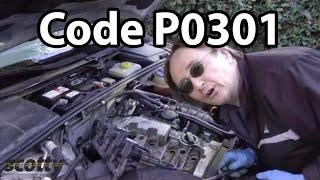
We Have This Part in Stock


The information in this article is provided for general reference and educational purposes only. Vehicle specifications, procedures, and part compatibility can vary by production date, trim level, and region. Always consult your vehicle's factory service manual and verify part numbers before purchasing or performing repairs. Safety-critical components such as airbags, seat belts, and braking systems should be installed by a qualified professional.
- Suzuki Swift+:
- 🎬 Helpful Videos
- 🛍️ Shop This Part
- What's Unique About the 2004-2011 Suzuki Swift+
- Symptoms You May Notice
- Most Likely Causes
- Rare But Worth Checking
- Diagnosis Steps
- Parts You'll Likely Need
- Related Codes That Often Appear With This One
- Technical Service Bulletins (TSBs) & Recalls
- Platform-Specific Known Issues
- Mechanic-Grade Diagnostic Values
- Hidden / Shadow Codes Worth Checking
- Scan Tool Commands That Help
- Wiring & Ground Locations
- Real Owner Repair Stories
- OEM Part Supersession History
- Model Year Variations Within This Range
- Diagnostic Flowchart
- Other Known Issues on This Vehicle
- Used vs. New Parts: Buying Guide for This Vehicle
- Real Owner Stories
- 2007 Suzuki Swift+ 1.6L
- 2007 Chevrolet Aveo 1.6L (Platform Mate)
- Related OBD-II Codes
- Frequently Asked Questions
- 🎟️ Get 5% Off