

P0301 on 2017-2025 Mazda CX-5 2.5L: Cylinder 1 Misfire Causes and Fixes
On a 2017-2025 Mazda CX-5 with the 2.5L non-turbo engine, code P0301 is almost always a failed ignition coil or a worn-out spark plug on cylinder 1. This is a common DIY fix, with parts costing between $80 and $150.
- P0301 on a 2.5L CX-5 points to a misfire in the cylinder closest to the passenger side.
- The most likely cause is a bad ignition coil, followed by a worn spark plug. Start your diagnosis by swapping the coil from cylinder 1 to cylinder 2.
- Do not drive for extended periods with a flashing check engine light, as you risk destroying your catalytic converter.
- If new plugs and coils don't solve the issue, the next most probable cause is carbon buildup on the intake valves, a known issue with direct-injection engines.
What's Unique About the 2017-2025 Mazda CX-5
The 2.5L Skyactiv-G engine is a direct-injection (GDI) design, which makes it inherently susceptible to carbon buildup on the intake valves over time, a known cause of misfires. While generally reliable, this engine is not immune to the most common misfire culprits: ignition coils and spark plugs. It is important to distinguish this naturally aspirated engine from its 2.5L Turbo counterpart, which has been subject to more serious Technical Service Bulletins (TSBs) for issues like internal coolant leaks and cracked cylinder heads that do not apply here. Some later models (approx. 2018+) feature cylinder deactivation on cylinders 1 and 4, which introduces a unique potential failure point, though misfires are more commonly associated with other causes.
Symptoms You May Notice
- Rough idle or engine shaking, especially when stopped
- Hesitation or stumbling during acceleration
- Noticeable loss of engine power
- Solid or flashing Check Engine Light
- In some cases, other warning lights such as for the traction control or smart brake system may illuminate. This is a known secondary effect, as the engine misfire causes erratic data that leads the PCM to disable these systems as a precaution.
- Replacing the MAF sensor or O2 sensors. These components will typically set their own specific trouble codes and are unlikely to cause a single-cylinder misfire.
- Repeatedly replacing ignition components when the actual cause is carbon buildup, especially when the misfire is primarily on cold starts.
Most Likely Causes
- Faulty Ignition Coil 🔴 High Probability Ignition coils are a common wear item. While a TSB for faulty coils (TSB 01-014/16) applied to pre-2017 models with a specific 'YUMEBISHI' brand supplier, coil failure remains the top cause of misfires on this engine family. Owners often report sequential coil failures, where one fails and another follows months later.
How to confirm: Swap the ignition coil from cylinder 1 with another cylinder (e.g., cylinder 2). Clear the codes and drive. If the code changes to P0302, the ignition coil is confirmed to be faulty. This is the standard, community-accepted first diagnostic step.
Typical fix: Replace the faulty ignition coil. It is often recommended to replace the corresponding spark plug at the same time. Some owners choose to replace all four coils as a preventative measure, especially on higher mileage vehicles.
Est. part cost: $50-$120 - Worn or Fouled Spark Plug 🔴 High Probability Spark plugs are a routine maintenance item that wear out over time. The service interval is typically around 75,000 miles, but they can fail earlier. A hairline crack in the porcelain insulator, invisible to the naked eye, can cause the spark to ground out before reaching the electrode, especially under load.
How to confirm: After confirming the ignition coil is good, remove the spark plug from cylinder 1. Inspect it for wear (worn electrode), carbon fouling, or oil contamination. You can also swap it to another cylinder to see if the misfire follows.
Typical fix: Replace the spark plug. It is best practice to replace all four spark plugs as a set 🎬 Watch: Step-by-step spark plug replacement for 2017-2025 models with OEM-spec Iridium plugs to ensure even performance.
Est. part cost: $60-$100 for a set of four OEM-quality plugs - Carbon Buildup on Intake Valves 🟡 Medium Probability As a Gasoline Direct Injection (GDI) engine, fuel is injected directly into the cylinder, so it does not wash over and clean the intake valves. Over time, oil vapor from the PCV system can bake onto the hot valves, restricting airflow and causing misfires, especially during cold starts. Mazda has acknowledged this with TSB 01-012/19 for Skyactiv-G engines.
How to confirm: This requires visual inspection of the intake valves using a borescope or by removing the intake manifold. Misfires that only occur during a cold start and disappear when the engine is warm are a strong indicator of this issue. A smoke test will not detect this, as it is an airflow restriction, not a vacuum leak.
Typical fix: The intake valves need to be cleaned. This is typically done via walnut shell blasting or a manual scraping procedure, which is a 🎬 See how to perform a deep carbon cleaning on Skyactiv valves labor-intensive job best left to a professional shop or experienced DIYer.
Est. part cost: $10-$30 for cleaning chemicals, but shop service is $400-$800 - Faulty Fuel Injector ⚪ Low Probability While less common than ignition issues, a fuel injector can become clogged or fail electronically, preventing the correct amount of fuel from being delivered to cylinder 1. Using Top Tier gasoline can help prevent clogging over the vehicle's life.
How to confirm: Listen for a steady clicking sound from the injector with a mechanic's stethoscope. Check the injector's resistance with a multimeter; it should be between 1.6 and 2.52 Ohms. A more advanced method is to swap injectors between cylinders, but this is more labor-intensive than swapping coils.
Typical fix: Replace the faulty fuel injector. It's sometimes recommended to replace them as a set on high-mileage vehicles.
Est. part cost: $100-$250
Rare But Worth Checking
- Intake Manifold Gasket Leak: A vacuum leak near the runner for cylinder 1 can lean out the air/fuel mixture and cause a misfire. This can be diagnosed with a smoke machine.
- Low Engine Compression: This indicates a more serious internal engine problem, such as worn piston rings, a burnt valve, or a head gasket issue. A compression test is required to diagnose this.
- Failed High-Pressure Fuel Pump: In one documented case on a Mazda forum, a persistent P0301 that was not resolved by plugs or coils was ultimately traced to a failing high-pressure fuel pump, which can affect fuel delivery to a single cylinder under certain conditions.
Diagnosis Steps
- Read the freeze frame data to understand the engine conditions (speed, load, temperature) when the code was set. This is crucial for diagnosing intermittent issues.
- Check for any other stored trouble codes that could point to a related issue.
- To test the ignition coil, swap the coil from cylinder 1 with the coil from cylinder 2. Clear the codes and run the engine. If the code changes to P0302, the ignition coil is faulty and must be replaced.
- If the P0301 code returns, the coil is likely good. Next, swap the spark plug from cylinder 1 with the plug from cylinder 3. If the code changes to P0303, the spark plug is faulty.
- If the P0301 code persists, inspect the wiring and connector for the cylinder 1 ignition coil and fuel injector for any damage, corrosion, or rodent damage.
- If ignition and wiring are good, the next likely causes are a clogged fuel injector or carbon buildup on the intake valves. Consider running a quality fuel injector cleaner like Chevron Techron or Berryman B-12 as a first step. For carbon, a borescope inspection is the best confirmation method.
- If all else fails, perform an engine compression test to rule out mechanical issues like a bad valve or worn piston rings. Then, consider a fuel pressure test to check the health of the fuel pumps.
Parts You'll Likely Need
- Ignition Coil
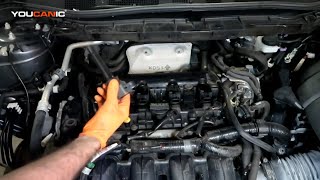
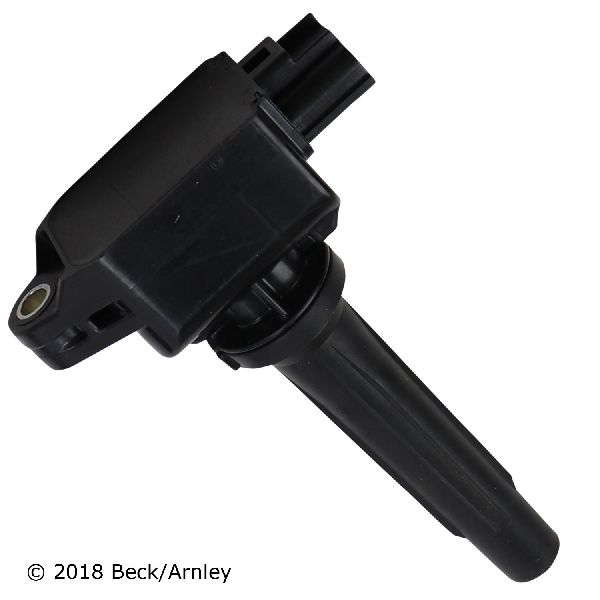
(OEM #PE20-18-100A)— This is the most common failure part for a P0301 code on this engine. This part number supersedes earlier versions. 🎬 Watch: How to quickly replace a faulty ignition coil
Trusted brands: Mazda OE, NGK (48943), Denso (673-6301), Bosch
OEM price range: $110-$150
Aftermarket price range: $50-$90 - Iridium Spark Plug
(OEM #PE5R-18-110A)— Spark plugs are a primary wear item and the second most likely cause of a single-cylinder misfire. They should be replaced as a set.
Trusted brands: NGK (ILKAR7L11 / 94124), Denso (ZC20HPR11)
OEM price range: $25-$35 per plug
Aftermarket price range: $15-$25 per plug
Related Codes That Often Appear With This One
- P0300 — If the misfire is intermittent or beginning to affect other cylinders (e.g., due to widespread carbon buildup or bad fuel), a P0300 (Random Misfire) code may appear as well.
- P0302, P0303, P0304 — These codes will appear during the diagnostic process if you swap a faulty ignition coil or spark plug from cylinder 1 to another cylinder and the misfire follows the part.
- P0171 — A 'System Too Lean' code can accompany a misfire if the root cause is a vacuum leak near cylinder 1 or a clogged fuel injector for that cylinder.
- P0506 — An owner reported that P0301 appeared alongside P0506 (Idle Air Control System RPM Lower Than Expected) in NHTSA ODI #11675874.
Technical Service Bulletins (TSBs) & Recalls
- TSB 01-012/19: Describes a procedure for cleaning carbon deposits from the intake valves to resolve misfire codes (P0300-P0304) on Skyactiv-G engines, particularly when the misfire occurs during the accelerated warm-up system (AWS) operation after a cold start.
- TSB 01-014/16: While for earlier models (pre-2017), this TSB identified internal failures in specific 'YUMEBISHI' brand
- Bulletin #01-007-19-3541: Notes that vehicles may exhibit a rough idle and/or the check engine light on with DTC P0301 stored in memory.
- Bulletin #01-001-23a: Specifically addresses customers complaining about poor acceleration and rough idling with DTC P0301:00, though it notes this applies specifically to turbo engines.
Platform-Specific Known Issues
- As a direct-injection engine, the 2.5L Skyactiv-G can suffer from carbon accumulation on the intake valves, which can cause cold-start misfires and rough idling that may not be present once the engine warms up. Mazda has issued service bulletins for cleaning procedures on this engine family (e.g., TSB 01-012/19).
Mechanic-Grade Diagnostic Values
- High-Pressure Fuel Pump Pressure (at idle) — expected: Approx. 3.0 MPa (435 psi). Failure: Pressure significantly below 3.0 MPa at idle may indicate a failing high-pressure fuel pump.
- Fuel Injector Resistance (cold) — expected: 1.6 - 2.52 Ohms. Failure: A reading of 0 ohms (short), OL/infinite (open), or a value far outside the specified range indicates a faulty injector. Note: Some sources incorrectly cite higher resistance values for older port-style injectors.
- Spark Plug Resistance — expected: 3.0 - 7.5 kOhms (kΩ). Failure: A reading outside this range can alter the voltage required for a spark, potentially causing misfires.
- Mode $06 Misfire Count (per driving cycle) — expected: Zero or a very low number.. Failure: A high or rapidly increasing count for cylinder 1 (Test ID $A2, Component ID $01) confirms a persistent misfire, even before the CEL is triggered.
Scan Tool Commands That Help
- Mazda M-MDS or FORScan: Misfire Count PID — To monitor live misfire counts for each cylinder. This is invaluable for confirming that the misfire is isolated to cylinder 1 and for verifying if a repair has been successful during a test drive.
- Mazda M-MDS or FORScan: Fuel Pressure (FUEL_PRES) PID — To monitor the high-pressure fuel system. The reading should be stable at idle (approx. 435 psi) and increase under load. Erratic readings could point to a failing high-pressure pump or sensor, a rare but possible cause of a P0301.
- Mazda M-MDS or FORScan: Keep Alive Memory (KAM) Reset — After replacing a major component like a fuel injector or performing carbon cleaning. This forces the PCM to relearn fuel trims and other adaptive strategies from a clean slate, which can resolve rough running conditions after a repair.
Wiring & Ground Locations
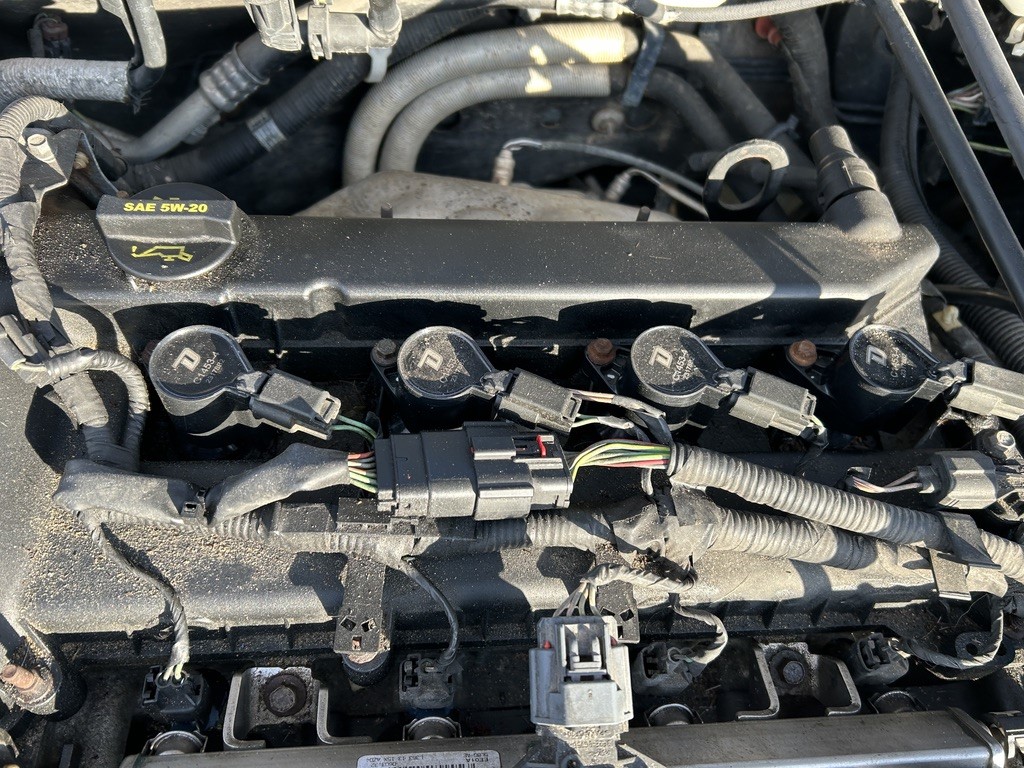
- Cylinder 1 Ignition Coil Connector — On top of the valve cover, far passenger side of the engine. It's a 3-pin connector.. This connector provides power, ground, and the trigger signal from the PCM to the ignition coil. Damage, corrosion, or a loose connection here will directly cause a P0301 by preventing the coil from firing.
- Main Engine Ground — Typically a heavy gauge wire bolted from the engine block or cylinder head to the chassis, often near the passenger side motor mount.. A poor engine ground can cause a weak spark across all cylinders, but it can sometimes manifest as an intermittent misfire on a single cylinder first due to voltage drop variations. It's a commonly overlooked cause of difficult-to-diagnose electrical issues.
Real Owner Repair Stories
- Reddit user in /r/mazda (2018 CX-5, 125k miles) — P0301 misfire, sputtering, Smart Brake and Front Radar Malfunction errors on dash.
❌ Tried (didn't work) Replaced spark plugs, Replaced ignition coil on a different cylinder (#2) for a previous P0302 code
✅ What actually fixed it The user was advised that the valve cover gasket was a likely culprit at that mileage, as it can fail and leak oil onto the spark plugs, causing a misfire. This was the next diagnostic step suggested by forum veterans. - Mazdas247 Forum user (2013 CX-5 (older but same engine family)) — Persistent P0301, car sputters and lacks power under throttle.
❌ Tried (didn't work) Swapping ignition coils, Replacing all spark plugs
✅ What actually fixed it Replacing the spark plug wires. The user noted that testing the old wire with a multimeter showed it was 'fine', but a new set of wires resolved the issue completely, highlighting that resistance tests don't always reveal high-voltage breakdown under load. - NHTSA ODI #11675874 — An owner reported scanning their vehicle and finding codes P0301 and P0506 after a belt and tensioner were replaced due to wear.
OEM Part Supersession History
PE01-18-100, PE01-18-100A, PE20-18-100→PE20-18-100A— Standard part evolution and consolidation. Earlier versions, particularly on pre-2017 models, were subject to TSBs for higher failure rates.
Heads up: While older numbers may fit, the latest 'PE20-18-100A' is the most current and reliable version for this vehicle range.
Model Year Variations Within This Range
- 2018-2025: Introduction of cylinder deactivation on the 2.5L non-turbo engine. This system shuts down cylinders 1 and 4 under light load. While intended to improve fuel economy, a malfunction in the system's oil control valves or rocker arms could theoretically lead to misfire issues on cylinder 1.
- 2021+: Some later models may be designated as 'e-Skyactiv G', incorporating a mild-hybrid system. While the core engine is the same, this adds a belt-driven integrated starter generator (ISG) and a small lithium-ion battery. This system is unlikely to be a direct cause of a single-cylinder misfire but represents a change in the overall powertrain architecture.
Diagnostic Flowchart
Other Known Issues on This Vehicle
Issues unrelated to this code that are worth knowing about as an owner of this generation:
- Cracked Cylinder Head (Cylinder Deactivation Models) 🔴 High — Relatively rare but catastrophic. Primarily reported on 2018-2021 models with cylinder deactivation (CD). Can occur without warning, leading to coolant loss and engine failure. (Ref: No specific recall for the non-turbo, but a known issue in the Mazda technician community. The 2.5T model had a related TSB (01-004/23) for a similar issue.)
- Fuel Pump Failure 🟠 Medium — Both the low-pressure (in-tank) and high-pressure (engine bay) fuel pumps can fail. A recall (NHTSA #20V712000) was issued for the low-pressure pump on some 2018-2019 models for a faulty impeller. (Ref: Recall 4620K / NHTSA 20V712000)
- Infotainment System Glitches ('Ghost Touch' / Delamination) 🟡 Low — Common across the generation, especially earlier years (2017-2020). Includes screen delamination, freezing, and 'ghost touch' where the system acts on its own. (Ref: Mazda has issued software updates and, in some cases, extended warranties for the screen.)
- Premature Brake Wear 🟡 Low — Frequently reported by owners of earlier second-generation models (2017-2019), requiring replacement of pads and rotors sooner than expected, sometimes under 25,000 miles.
- Poor Paint Quality (Soul Red Crystal) 🟡 Low — The signature 'Soul Red Crystal' and 'Machine Gray' paints are notoriously thin and prone to chipping and scratching easily from normal road debris. (Ref: Mazda has a special TSB for paint repairs but owner satisfaction with the process varies.)
Used vs. New Parts: Buying Guide for This Vehicle
When a used part is the smart pick: For this repair, using used parts is generally not recommended. The primary failure items (ignition coils, spark plugs) are wear-and-tear components. A used ignition coil has an unknown lifespan and could fail shortly after installation, leading to repeated labor. The cost savings are minimal compared to the risk of having to do the job twice.
Donor-vehicle mileage cap: roughly under 60000 miles for the part to have meaningful remaining life.
What to inspect on the donor part:
- If sourcing a used coil is absolutely necessary, look for one from a low-mileage, late-model year donor vehicle.
- Inspect the plastic housing for any cracks, melting, or signs of extreme heat.
- Ensure the electrical connector pins are clean and free of corrosion.
OEM-only on this vehicle (don't cheap out):
- Spark Plugs: While aftermarket is acceptable, using OEM-spec NGK or Denso Iridium plugs is critical for performance and longevity in the Skyactiv engine. Avoid cheap, unbranded plugs.
- Fuel Injectors: Due to the precision required for direct injection, using OEM or a reputable remanufactured injector from a trusted brand is highly recommended over a used or cheap aftermarket part.
Aftermarket brands forum-validated for this vehicle:
- Ignition Coils: NGK, Denso, Bosch
- Spark Plugs: NGK, Denso
Brands owners have reported issues with on this vehicle:
- Unbranded, no-name ignition coils and spark plugs from online marketplaces. These often have high failure rates and may not meet the specific resistance and performance requirements of the Skyactiv ignition system.
Real Owner Stories
Aggregated from forums and TSBs cited above. Mileages and costs reflect what owners reported in those sources.
2018 Mazda CX-5 2.5L
Symptoms: P0301 code, limp mode, and multiple other system warnings including Smart Brake and Front Radar malfunction.
What fixed it: Replacing the ignition coil. This occurred only two months after a P0302 was fixed by replacing coil #2 and all plugs, illustrating sequential failure.
Source hint: Reddit r/CX5 - P0301 Cylinder 1 Misfire- Smart Brake Malfunction
2014 Mazda CX-5 2.5L
Symptoms: P0301 code occurring only during cold warmup; swapping plugs and coils did not resolve the issue.
What fixed it: The community consensus pointed to carbon buildup on the intake valves, which is a common cause for cold-start-only misfires on this engine.
Source hint: Mazdas247.com - 2014 Mazda CX-5 Misfire
Mazda CX-5 2.5L
Symptoms: Persistent P0301 misfire on cylinder 1 that never goes away despite replacing spark plugs, ignition coils, and injectors.
What fixed it: Replacing the high-pressure fuel pump.
Source hint: MazdaForum.com - Cx5 misfire on cylinder 1 never goes away
Related OBD-II Codes
Frequently Asked Questions
Why did my Smart Brake and Traction Control lights come on along with the P0301 code?
Does TSB 01-012/19 apply to my 2.5L Skyactiv-G engine if I only have misfires when the engine is cold?
I replaced the coil for cylinder 2 recently, and now I have a P0301. Is this common?
Can I use a smoke test to find out if carbon buildup is causing my P0301?
What is the specific resistance range I should look for when testing a CX-5 fuel injector?
Is there a specific brand of ignition coil mentioned in Mazda service bulletins for failures?
Helpful Videos
Used OEM Parts in Stock


New Aftermarket Parts Available

The information in this article is provided for general reference and educational purposes only. Vehicle specifications, procedures, and part compatibility can vary by production date, trim level, and region. Always consult your vehicle's factory service manual and verify part numbers before purchasing or performing repairs. Safety-critical components such as airbags, seat belts, and braking systems should be installed by a qualified professional.
- Mazda CX-5:
- 🎬 Helpful Videos
- 🛍️ Shop This Part
- What's Unique About the 2017-2025 Mazda CX-5
- Symptoms You May Notice
- Most Likely Causes
- Rare But Worth Checking
- Diagnosis Steps
- Parts You'll Likely Need
- Related Codes That Often Appear With This One
- Technical Service Bulletins (TSBs) & Recalls
- Platform-Specific Known Issues
- Mechanic-Grade Diagnostic Values
- Scan Tool Commands That Help
- Wiring & Ground Locations
- Real Owner Repair Stories
- OEM Part Supersession History
- Model Year Variations Within This Range
- Diagnostic Flowchart
- Other Known Issues on This Vehicle
- Used vs. New Parts: Buying Guide for This Vehicle
- Real Owner Stories
- 2018 Mazda CX-5 2.5L
- 2014 Mazda CX-5 2.5L
- Mazda CX-5 2.5L
- Related OBD-II Codes
- Frequently Asked Questions
- 🎟️ Get 5% Off