

P0301 on 2013-2016 Mazda CX-5: Cylinder 1 Misfire Causes and Fixes
On a 2013-2016 Mazda CX-5, code P0301 is most often caused by a failing ignition coil on cylinder 1. A Technical Service Bulletin (TSB #01-014-16-3208A) was issued for failure-prone 'YUMEBISHI' brand coils on vehicles produced before April 7, 2016. Replacing the faulty coil (Part #PE20-18-100A) and the spark plug is the most common fix, costing around $60-$150 for DIY parts.
- P0301 means cylinder 1 (passenger side) is misfiring.
- The most likely cause on this specific vehicle is a bad ignition coil, a known issue covered by a Mazda TSB.
- The easiest and most effective first diagnostic step is to swap the cylinder 1 ignition coil with another cylinder's coil to see if the misfire code follows it.
- Do not drive with a flashing check engine light, as this can cause rapid and expensive damage to the catalytic converter.
What's Unique About the 2013-2016 Mazda CX-5
The Skyactiv-G engines in this CX-5 are generally reliable, but they are not immune to common ignition component wear. A well-documented issue for this specific year range is the failure of the original-equipment YUMEBISHI-brand ignition coils, which was significant enough for Mazda to issue a Technical Service Bulletin (TSB #01-014-16-3208A). This TSB applies to CX-5s with VINs lower than JM3KE**802960 (produced before April 7, 2016). Additionally, like many direct-injection engines, these are susceptible to carbon buildup on the intake valves over time, which can also lead to misfires as mileage increases. Manufacturer service bulletins such as TSB Bulletin #01-007-19-3541 and TSB Bulletin #01-002-17-3299a confirm that these vehicles may exhibit a rough idle accompanied by the check engine light and P0301 stored in memory.
Symptoms You May Notice
- Rough or shaking idle
- Engine hesitation or stumbling during acceleration
- Noticeable loss of power
- Solid or flashing Check Engine Light (CEL)
- Reduced fuel economy
- A smell of raw fuel from the exhaust
- Ancillary warning lights, such as 'Smart Brake Malfunction', may appear as the misfire can disrupt data for other vehicle systems.
- Replacing the catalytic converter. A misfire can damage the converter, but it is the cause, not the effect. The misfire must be fixed first.
- Replacing the O2 sensors. While a misfire can affect O2 sensor readings, the sensors are rarely the root cause of a single-cylinder misfire code.
- Assuming carbon buildup is the cause on a low-mileage vehicle without first checking the much more common ignition coil and spark plug failures.
Most Likely Causes
- Faulty Ignition Coil 🔴 High Probability Mazda issued TSB #01-014-16-3208A for failing YUMEBISHI-brand ignition coils on 2013-2016 models produced before April 7, 2016. These coils are prone to internal failure due to temperature fluctuations. The faulty coils can be identified by a 4-digit lot number, whereas the improved MITSUBISHI coils have a 5-digit lot number.
How to confirm: Swap the ignition coil from cylinder 1 with another cylinder (e.g., cylinder 2). Clear the codes and drive the vehicle. If the code returns as P0302, the coil is faulty. Another quick check is to unplug the electrical connector on the #1 coil while the engine is idling; if the idle does not change or worsen, that coil is likely dead.
Typical fix: Replace the faulty ignition coil with the updated part (Mazda P/N: PE20-18-100A). It is highly recommended to replace the corresponding spark plug at the same time. If other original YUMEBISHI coils are present, consider replacing them as a preventative measure.
Est. part cost: $40-$90 (aftermarket), $130-$180 (OEM) - Worn or Fouled Spark Plug 🟡 Medium Probability Spark plugs are a regular maintenance item with a service life of around 75,000 miles. If they are past their service life, have an incorrect gap, or have been contaminated by oil or excessive carbon, they can fail to produce a strong enough spark. In some cases, a plug can fail due to an invisible internal crack in the porcelain insulator.
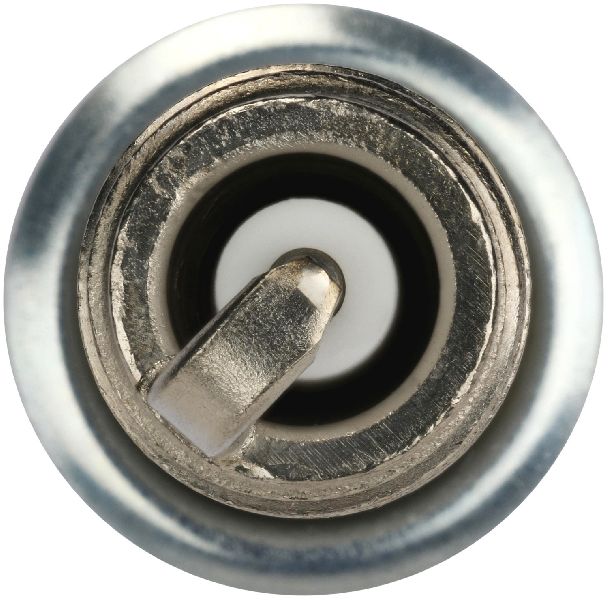
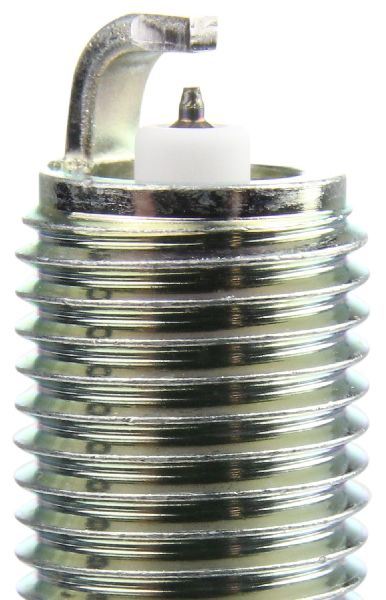
How to confirm: After confirming the ignition coil is good, remove the spark plug from cylinder 1 (requires a 14mm spark plug socket). Inspect it for wear (worn electrode), carbon fouling (black and sooty), or oil contamination. A definitive test is to swap the plug from cylinder 1 to cylinder 3. If the code changes to P0303, the spark plug is the culprit.
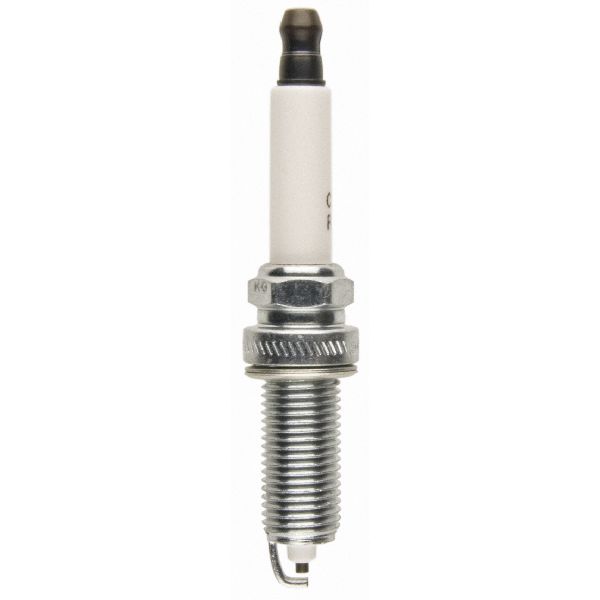
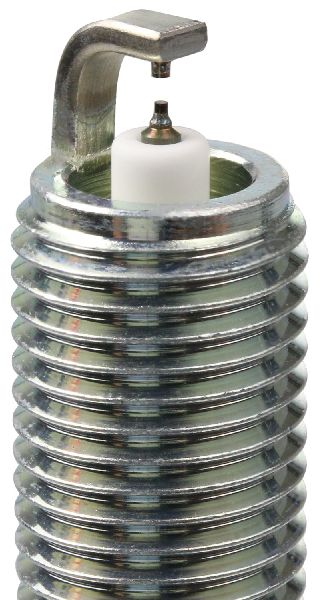
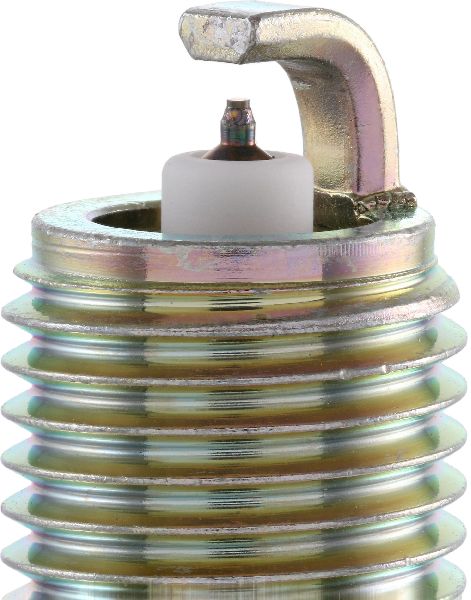
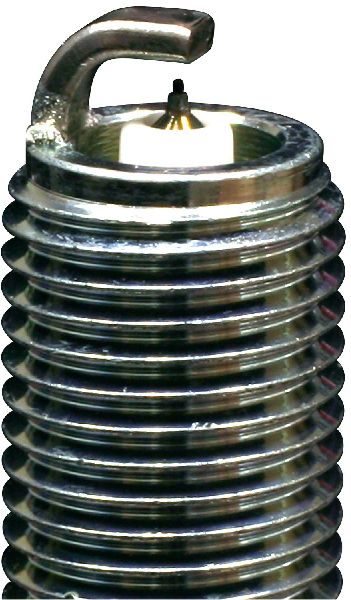
Typical fix: Replace the spark plug in cylinder 1. It is best practice to replace all four spark plugs at the same time with high-quality Iridium plugs (e.g., NGK ILKAR7L11) to ensure even performance.
Est. part cost: $15-$30 per plug - Carbon Buildup on Intake Valves 🟡 Medium Probability The Skyactiv-G is a direct-injection engine, meaning fuel is sprayed directly into the cylinder, not over the intake valves. This allows oil vapor and combustion byproducts from the PCV system to bake onto the back of the valves, restricting airflow and causing misfires, particularly on cold starts or at higher mileage (typically over 80,000 miles).
How to confirm: This requires a borescope to visually inspect the intake valves, which involves removing the intake manifold. It is typically diagnosed after ruling out all ignition and fuel injector issues.
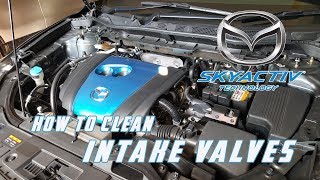
Typical fix: The intake valves need to be professionally cleaned. The most effective method is 'walnut blasting,' a process that uses crushed walnut shells as an abrasive media to scour the valves clean without damaging the engine. 🎬 Watch: How to clean carbon buildup from your intake valves.
Est. part cost: $0 (service cost is labor, typically $400-$800) - Faulty Fuel Injector ⚪ Low Probability While less common than ignition issues, fuel injectors can become clogged or fail electronically. TSB Bulletin #01-017-16-3242 and TSB Bulletin #01-004-17-3317a note that vehicles may experience a rough running engine and a check engine light with DTC P0201 (fuel injector circuit/open cylinder 1), and that misfire codes like P0301 are usually stored at the same time.
How to confirm: Listen for a consistent clicking sound from the injector with a mechanic's stethoscope. A more advanced method involves swapping injectors between cylinders (a more involved job) or having them professionally cleaned and flow-tested. Sometimes, a fuel system cleaner like Seafoam can help with a partially clogged injector.
Typical fix: Replace the faulty fuel injector. The OEM part number is PY01-13-250.
Est. part cost: $100-$250
Rare But Worth Checking
- Low Engine Compression: This indicates a more serious internal engine problem, such as worn piston rings, a leaking valve, or a head gasket failure. A compression test is required to diagnose this.
- Vacuum Leak: A leak in the intake manifold gasket or a vacuum hose near cylinder 1 can introduce unmetered air, leaning out the mixture and causing a misfire.
- Failing High-Pressure Fuel Pump (HPFP): In one documented case on a Mazda forum, a persistent P0301 that was not resolved by plugs or coils was ultimately traced to a failing high-pressure fuel pump, which can affect fuel delivery to all cylinders but may manifest as a single-cylinder misfire initially.
Diagnosis Steps
- Read the code with an OBD-II scanner and confirm P0301 is present. Note any other codes and freeze frame data.
- Swap the ignition coil from cylinder 1 (passenger side) with the coil from cylinder 2. The coil is held by a single 8mm bolt. 🎬 Watch: Step-by-step guide to replacing your ignition coils.
- Clear the codes, start the engine, and drive until the check engine light returns.
- Re-scan the codes. If P0302 appears, the ignition coil is bad and must be replaced. Inspect the coil for a 4-digit lot number, which identifies it as the failure-prone YUMEBISHI type.
- If P0301 returns, the coil is likely good. Proceed to inspect the spark plug in cylinder 1. This requires a 14mm spark plug socket. 🎬 See how to change spark plugs on the 2.5L engine. Replace it if it is worn, fouled, or past its service interval. Consider swapping the plug to another cylinder to confirm it's faulty.
- If the misfire persists, the next step is to investigate the fuel injector. Listen for its operation and check its wiring. A fuel system cleaner may be a simple first attempt at resolving a clog.
- If ignition and fuel seem okay, check for vacuum leaks around the intake manifold near cylinder 1.
- For persistent issues, especially on higher mileage vehicles (80k+ miles), consider a professional diagnosis for carbon buildup on the intake valves. A final step is to perform an engine compression test to rule out mechanical problems.
Parts You'll Likely Need
- Ignition Coil
(OEM #PE20-18-100A)— This is the most common failure part for a P0301 code on this vehicle, as documented by Mazda TSB #01-014-16-3208A. This part number supersedes older versions like PE20-18-100 and PE01-18-100.
Trusted brands: Mazda OE, NGK, Denso, Bosch
OEM price range: $130-$180
Aftermarket price range: $40-$90 - Spark Plug
(OEM #PE5R-18-110 (for NGK ILKAR7L11 / stock #94124))— It is a standard wear item and is best practice to replace with the ignition coil to ensure a complete repair. A faulty plug can cause a misfire even if it looks visually okay.
Trusted brands: NGK, Denso
OEM price range: $25-$35
Aftermarket price range: $15-$25
Related Codes That Often Appear With This One
- P0300 — If the misfire becomes more widespread or is intermittent between cylinders, a P0300 (Random Misfire) code may appear alongside P0301.
- P0302, P0303, P0304 — These indicate misfires in other cylinders. Seeing them can point to a shared problem like bad fuel or carbon buildup. They also appear during diagnosis when swapping a bad coil.
- P0201 — This code for 'Fuel Injector Circuit/Open Cylinder 1' can appear with P0301, strongly suggesting the issue is with the fuel injector or its wiring.
- U0401 — A 'Invalid Data Received from ECM/PCM' code can sometimes appear with a misfire code, as seen in a Reddit user's experience, indicating a communication disruption potentially caused by the engine running rough.
Technical Service Bulletins (TSBs) & Recalls
- TSB #01-014-16-3208A: Addresses concerns of rough idle and misfire codes (P0300-P0304) due to failing YUMEBISHI ignition coils on 2013-2016 CX-5, Mazda3, and Mazda6 models produced before April 7, 2016.
- TSB Bulletin #01-007-19-3541: Notes that vehicles may exhibit a rough idle and/or the check engine light with DTC P0301 stored in memory.
- TSB Bulletin #01-017-16-3242: Describes conditions where the engine runs rough and the check engine light is on with DTCs P0201 and P0301 stored simultaneously.
- TSB Bulletin #01-004-17-3317a: Confirms that engine misfire related DTCs like P0301 are usually stored at the same time as fuel injector circuit codes.
- TSB Bulletin #01-002-17-3299a: Documents that vehicles may exhibit rough idle and/or the check engine light with P0301 stored in memory.
Platform-Specific Known Issues
- Faulty YUMEBISHI Ignition Coils: A known issue with failing YUMEBISHI-brand ignition coils prompted Mazda to release TSB #01-014-16-3208A for 2013-2016 models with VINs lower than JM3KE**802960. The coils, identified by a 4-digit lot number, are prone to internal failure. The fix is to replace them with the improved MITSUBISHI-made coils (5-digit lot number) or an equivalent aftermarket part.
- Intake Valve Carbon Buildup: The Skyactiv direct-injection engines are known to develop carbon deposits on the intake valves over time (typically 80k-100k+ miles), which can impede airflow and cause misfires that are often more noticeable on cold starts. A YouTube video shows the cleaning process on a CX-5 with only 28,000km, demonstrating that buildup can start early.
- Frozen Water in Exhaust (Cold Climates): Though less common for a single-cylinder misfire, TSB #01-011/13 notes that in very cold climates, water can accumulate and freeze in the muffler, restricting exhaust flow and causing rough running and misfire codes on startup.
Mechanic-Grade Diagnostic Values
- Ignition Coil Primary Winding Resistance — expected: 0.49 - 0.57 ohms at 68°F (20°C). Failure: A reading outside this range indicates a faulty coil.
- Ignition Coil Secondary Winding Resistance — expected: 9.5 - 11.1 kOhms. Failure: A reading outside this range indicates a faulty coil.
- Fuel Injector Resistance (Gasoline Engine) — expected: ~12.3 - 12.9 ohms (cold). Failure: A reading of 0 ohms or infinite resistance indicates a failed injector. This value is based on a similar Mazda V6 engine and should be used as a reference.
- High-Pressure Fuel System Pressure — expected: Up to 200 bar (~2900 psi). Failure: Significantly lower pressure under load could indicate a failing High-Pressure Fuel Pump (HPFP).
Hidden / Shadow Codes Worth Checking
- Mode $06, TID $A2: Misfire count for Cylinder 1. This is not a DTC, but rather raw data from the PCM's self-tests. It shows the number of misfire events detected, even if not enough have occurred to set a P0301 code. (see via An advanced OBD-II scanner or software like FORScan that can display Mode $06 test results.)
Scan Tool Commands That Help
- FORScan / M-MDS: Cylinder Power Balance Test — This active test helps identify a weak cylinder by measuring the RPM drop as the scanner sequentially disables each cylinder's fuel injector. It can confirm a misfire on cylinder 1 if it shows a smaller RPM drop compared to healthy cylinders.
- FORScan / M-MDS: Misfire Counter PID — Use this to monitor the live misfire count for each cylinder (related to Mode $06 data) while driving or performing a power brake test to see which cylinder is actively misfiring under specific conditions.
Wiring & Ground Locations
- PCM Connector Pin (Cylinder 1 Injector) — At the Powertrain Control Module (PCM), located in the engine bay.. The signal to fire the #1 fuel injector is sent through this pin. A wiring issue here can cause a P0301 and/or a P0201. Depending on the specific PCM version, this may be a Purple wire. Another diagram shows it as a Light Green wire. Technicians can use this pin to test for the injector signal with an oscilloscope.
- PCM Connector Pin (Cylinder 1 Ignition Coil) — At the Powertrain Control Module (PCM).. The trigger signal for the #1 ignition coil is sent from this pin. A wiring fault between the PCM and the coil can cause a P0301. One diagram identifies this as a Yellow/Red wire. This allows for end-to-end circuit testing.
Real Owner Repair Stories
- Mazdas247.com user 'duker733' (2014 Mazda CX-5 2.5L with 187,000 km) — Audible misfire and P0301 code, but only during cold start warmup. The engine ran fine once it was warm.
❌ Tried (didn't work) Replacing all spark plugs, Swapping ignition coils between cylinders 1 and 2
✅ What actually fixed it A professional intake valve cleaning (walnut blasting) to remove significant carbon buildup. The misfire was caused by restricted airflow into cylinder 1 when the engine was cold. - YouTube channel 'NoNonsenseKnowHow' (2014 Mazda CX-5 2.0L with 140,000 miles) — Dead misfire, initially with no check engine light. Misfire was isolated to one cylinder using the unplug-the-coil method.
❌ Tried (didn't work) Swapping the ignition coil to another cylinder did not move the misfire.
✅ What actually fixed it Replacing the spark plug. The misfire moved when the spark plug was swapped to another cylinder. The mechanic concluded the original plug had an invisible hairline crack in the internal porcelain insulator, causing the spark to ground out under compression. - NHTSA ODI #10695229 — An owner reported that their vehicle experienced the engine light staying on with a P0301 code, identifying it as a cylinder 1 misfire issue. The vehicle was taken back to the dealer multiple times before they were finally able to diagnose the cause.
OEM Part Supersession History
PE01-18-100, PE20-18-100→PE20-18-100A— The original 'YUMEBISHI' brand coils were prone to internal failure. The superseding part is from a different manufacturer (MITSUBISHI) and features improved durability.
Model Year Variations Within This Range
- 2016: For the 2016 model year refresh, the 2.0L PE-VPS engine was restricted to the base Sport trim with a manual transmission. All automatic transmission models, including the Sport, came standard with the 2.5L PY-VPS engine.
- 2016.5: In the mid-year '2016.5' update, the 2.0L engine option was eliminated entirely for automatic transmission models in some markets (like Canada), making the 2.5L engine standard across more of the lineup. This update also made navigation standard on Touring and Grand Touring trims.
Diagnostic Flowchart
Real Owner Stories
Aggregated from forums and TSBs cited above. Mileages and costs reflect what owners reported in those sources.
2014 Mazda CX-5 2.0L — 140000 miles
Symptoms: Experienced a dead misfire. Swapping the ignition coil to another cylinder did not move the misfire, but swapping the spark plug did.
What fixed it: Replacing all four spark plugs. The root cause was a faulty spark plug with a suspected internal crack in the porcelain that was not visually apparent.
Source hint: YouTube 'NoNonsenseKnowHow' - 2014 Mazda CX-5 Misfire Fixed
2013 Mazda CX-5
Symptoms: Had a stubborn P0301 code that never went away, even after replacing the ignition coil, spark plug, air filter, and battery.
What fixed it: Replacing a bad high-pressure fuel pump.
Source hint: Mazda-Forum.com - Persistent P0301 Resolved
NHTSA ODI #10695229
Symptoms: An owner reported the engine light stayed on with a P0301 code, which is a cylinder 1 misfire issue. The problem occurred twice in a row.
What fixed it: The dealer kept the vehicle for almost three weeks to finally get the car to duplicate the issue and perform the repair.
Related OBD-II Codes
Frequently Asked Questions
Does TSB #01-014-16-3208A apply to my 2015 Mazda CX-5?
How can I tell if my CX-5 has the failure-prone ignition coils mentioned in the TSB?
Why did my 'Smart Brake Malfunction' light come on at the same time as the P0301 code?
My CX-5 has 90,000 miles and misfires mostly on cold starts. What is the likely cause?
I swapped the ignition coil from cylinder 1 to cylinder 2, but the P0301 code came back. What should I check next?
Can freezing weather cause a P0301 code on my CX-5?
Helpful Videos

Used OEM Parts in Stock

New Aftermarket Parts Available

The information in this article is provided for general reference and educational purposes only. Vehicle specifications, procedures, and part compatibility can vary by production date, trim level, and region. Always consult your vehicle's factory service manual and verify part numbers before purchasing or performing repairs. Safety-critical components such as airbags, seat belts, and braking systems should be installed by a qualified professional.
- Mazda CX-5:
- 🎬 Helpful Videos
- 🛍️ Shop This Part
- What's Unique About the 2013-2016 Mazda CX-5
- Symptoms You May Notice
- Most Likely Causes
- Rare But Worth Checking
- Diagnosis Steps
- Parts You'll Likely Need
- Related Codes That Often Appear With This One
- Technical Service Bulletins (TSBs) & Recalls
- Platform-Specific Known Issues
- Mechanic-Grade Diagnostic Values
- Hidden / Shadow Codes Worth Checking
- Scan Tool Commands That Help
- Wiring & Ground Locations
- Real Owner Repair Stories
- OEM Part Supersession History
- Model Year Variations Within This Range
- Diagnostic Flowchart
- Real Owner Stories
- 2014 Mazda CX-5 2.0L — 140000 miles
- 2013 Mazda CX-5
- NHTSA ODI #10695229
- Related OBD-II Codes
- Frequently Asked Questions
- 🎟️ Get 5% Off