

P0301 on 2011-2017 Honda Odyssey: Cylinder 1 Misfire Causes and VCM Fixes
On a 2011-2017 Honda Odyssey, code P0301 is almost always caused by an oil-fouled spark plug in cylinder 1. This is a symptom of a well-known engine design issue with the Variable Cylinder Management (VCM) system. The immediate fix is a new spark plug, but preventing it from happening again often involves installing a VCM disabling device for around $100-$150.
- P0301 on a 2011-2017 Odyssey is a strong indicator of the well-known VCM engine flaw.
- Your first diagnostic step should be to pull the spark plug from cylinder 1 and check for oil fouling.
- A new spark plug is a temporary fix. The misfire will likely return.
- For a permanent, cost-effective solution, most owners recommend installing an aftermarket VCM disabling device.
- The official fix is a piston ring replacement, which is extremely expensive now that the warranty extension has expired.
What's Unique About the 2011-2017 Honda Odyssey

For this specific generation of Honda Odyssey, P0301 is rarely a random component failure. It is a hallmark symptom of a systemic issue with the J35Z8 engine's Variable Cylinder Management (VCM) system. This system, designed to improve fuel economy by shutting down 2 or 3 cylinders during light-load cruising, creates a vacuum effect in the deactivated cylinders. This can cause oil to be sucked past the piston rings, particularly the oil control rings which become clogged with carbon and stick. This oil then fouls the spark plugs in the VCM-managed cylinders (1, 2, 3, and 4), causing misfires. Honda acknowledged this with TSB 13-081, which resulted from the *Soto v. American Honda Motor Co., Inc.* class-action lawsuit, but the associated warranty extension has expired for most of these vehicles.
Symptoms You May Notice
- Rough or shaking idle
- Hesitation or stumbling during acceleration
- Flashing or solid Check Engine Light
- Noticeable loss of engine power
- "FCW Failure" (Forward Collision Warning) message may appear, as the system can be disabled by erratic engine performance. This is a very common secondary warning light with this issue.
- Replacing only the ignition coil without checking the spark plug. The plug is the most likely culprit and its condition (oily or not) is the key diagnostic clue.
- Assuming a major engine failure without first trying the simple fixes (spark plug, coil swap) and considering the VCM issue. Many owners have fixed the issue for years with just a new plug and a VCM disabler.
- Replacing the fuel injector before confirming it's the cause. Fuel injector failures are not common on the J35Z8 engine.
Most Likely Causes

- Oil-Fouled Spark Plug in Cylinder 1 🔴 High Probability This is the direct result of the VCM system causing oil to enter the combustion chamber. Cylinders 1-4 are the VCM-managed cylinders and are prone to this issue.
How to confirm: Remove the ignition coil and then the spark plug from cylinder 1 (located on the rear cylinder bank, closest to the passenger side). The tip of the plug will be wet, black, and smell of burnt oil. Compare it to a plug from cylinder 5 or 6 (front bank) which should be dry and light brown/tan. NHTSA ODI #11654987 notes a case where three spark plugs in Bank 1 were found to be heavily fouled with oil during a diagnostic inspection.
Typical fix: Replace the single fouled spark plug or all six if they are due for service. This is a temporary fix; the new plug will eventually foul again if the root cause is not addressed.
Est. part cost: $15-$35 for a single high-quality NGK or Denso spark plug. - Stuck / Worn Piston Rings (Root Cause) 🔴 High Probability This is the underlying mechanical failure caused by the VCM system's operation. The oil control rings on the pistons in VCM cylinders get clogged with carbon and stick, allowing oil to bypass them.
How to confirm: Confirmed by persistent oil fouling of spark plugs in cylinders 1-4. A cylinder leak-down or compression test can also point to ring issues, though sometimes oil control rings can fail while compression rings still test okay. This was the subject of Honda TSB 13-081. NHTSA ODI #11503067 describes a situation where a flashing check engine light led to a diagnosis requiring the replacement of piston rings on the entire side of the head.
Typical fix: The official Honda repair involves a major engine teardown to replace the piston rings in the affected cylinders and, for 2011 models, a PCM software update. A widely accepted alternative among owners is to install a VCM disabling device ('VCM muzzler') to prevent the system from activating, which stops the problem from progressing and can sometimes allow stuck rings to free up over time.
Est. part cost: $100-$150 for a VCM disabling device. The piston ring repair can cost $3,000-$5,000 at a shop. - Failed Ignition Coil 🟡 Medium Probability Ignition coils are a common wear-and-tear item on any modern vehicle. While less likely than a fouled plug on this engine, it's a possible cause and an easy diagnostic step.
How to confirm: Swap the ignition coil from cylinder 1 with the coil from another cylinder (e.g., cylinder 4, which is on the front bank and easy to access). Clear the codes and drive the vehicle. If the code changes to P0304, the ignition coil is faulty.
Typical fix: Replace the faulty ignition coil. NHTSA ODI #11220688 reports a case where a mechanic replaced both the spark plugs and the ignition coil for cylinder 1 to address the P0301 code.
Est. part cost: $50-$100 for one OEM-quality coil.
Rare But Worth Checking
- Faulty Fuel Injector: While a clogged or failed fuel injector can cause a misfire on any car, it is not a common cause for P0301 on this specific Odyssey, which uses port injection. It should only be considered after ruling out spark plugs and ignition coils.
- Valve Adjustment Needed: Honda J-series engines require periodic valve clearance adjustments (typically around 100k miles). Tight valves, particularly on the exhaust side, can cause a loss of compression and lead to misfires. While this would likely affect multiple cylinders, it has been documented as a fix in some cases after plugs and coils were ruled out.
- Leaking Valve Cover Gasket / Spark Plug Tube Seals: The valve cover gaskets and integrated spark plug tube seals can become brittle and leak oil into the spark plug wells. This submerges the outside of the spark plug and ignition coil boot in oil, which can lead to a misfire. If you find oil on top of the spark plug when removing the coil, this is the likely cause.
Diagnosis Steps

- Read the code with an OBD-II scanner to confirm P0301 and check for any other codes.
- Locate cylinder 1. On the J35Z8, the cylinders are numbered 1-2-3 on the rear bank (firewall side) from passenger to driver side, and 4-5-6 on the front bank (radiator side). Cylinder 1 is on the rear bank, closest to the timing belt/passenger side.
- Swap the ignition coil from cylinder 1 with the coil from cylinder 4 (front bank, passenger side). This is easier than swapping with cylinder 5.
- Clear the codes and drive the vehicle until the check engine light returns.
- If the code is now P0304, the ignition coil is bad and needs replacement.
- If the code remains P0301, turn off the engine and remove the spark plug from cylinder 1. This requires a 5/8" spark plug socket.
- Inspect the spark plug tip. If it is black, wet, and oily, you have confirmed the common VCM-related oil fouling issue.
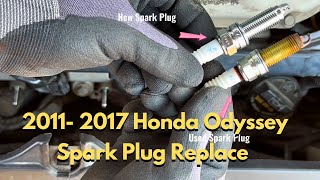
- Replace the spark plug in cylinder 1 (or all six if they are due). Use a torque wrench for proper installation. 🎬 See this walkthrough for replacing your Odyssey's spark plugs. This will temporarily fix the misfire.
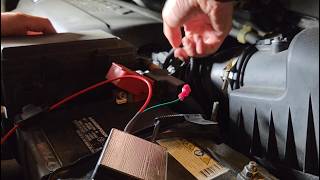
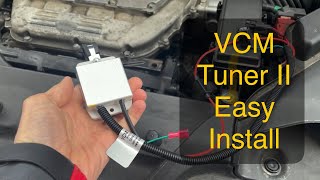
- To prevent recurrence, install a VCM disabling device. This is the most common and cost-effective long-term solution recommended by owners. 🎬 Watch: How to install a VCM Tuner II in 5 minutes.
- If the spark plug was not oil-fouled and the coil is good, the issue may be a rarer cause like a fuel injector, valve clearance issue, or leaking tube seal, which may require professional diagnosis.
Parts You'll Likely Need

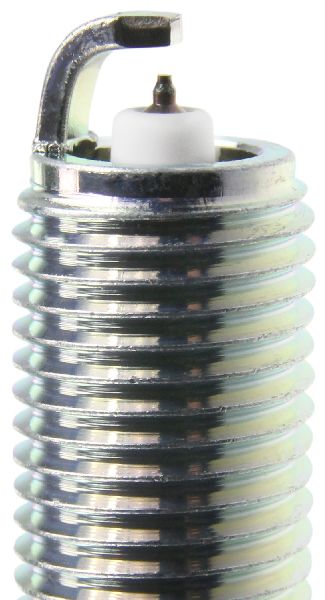
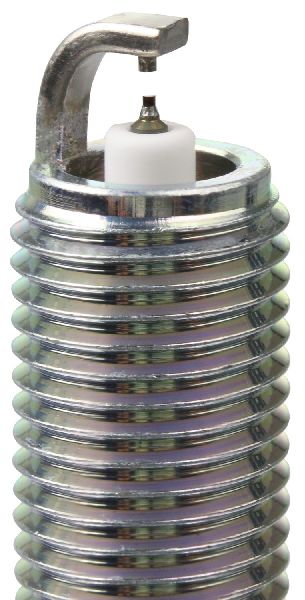
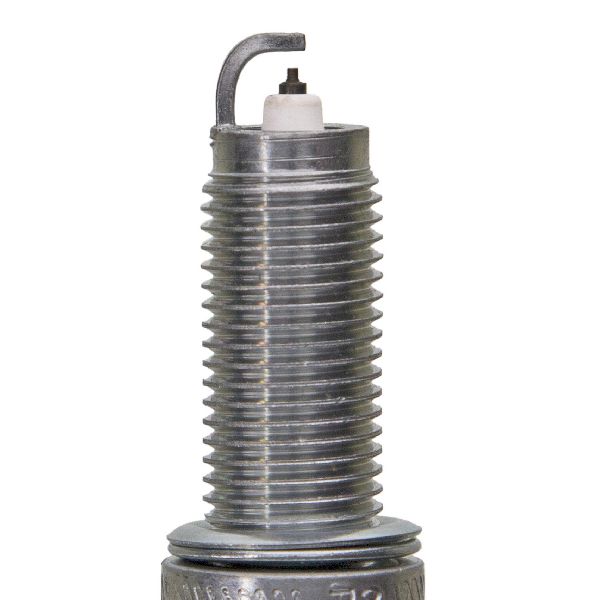
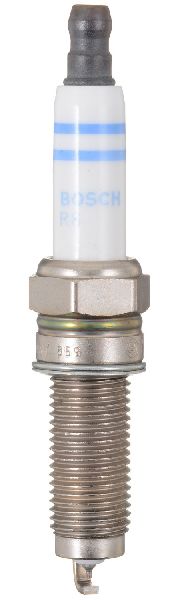
- Spark Plug
(OEM #NGK: DILZKR7A11G (92924) or Denso: FK20HBR11 (3483))— This is the component that directly fails (fouls) due to the VCM oil consumption issue, causing the misfire.
Trusted brands: NGK, Denso
OEM price range: $25-$35
Aftermarket price range: $15-$25 - Ignition Coil
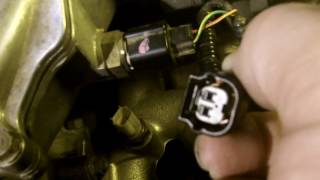
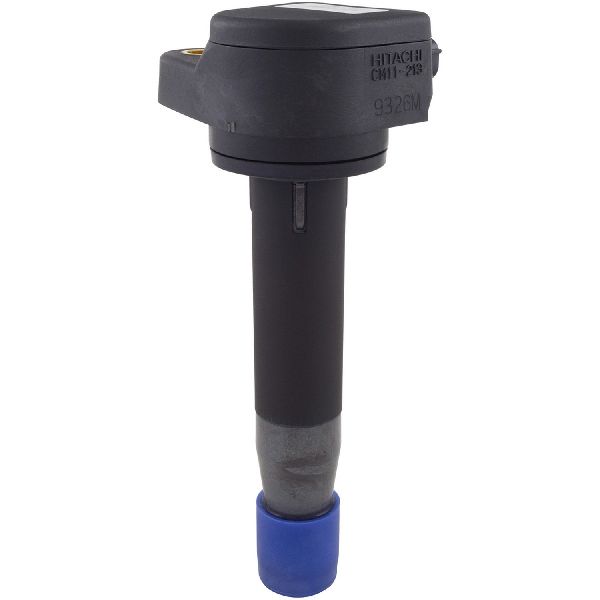
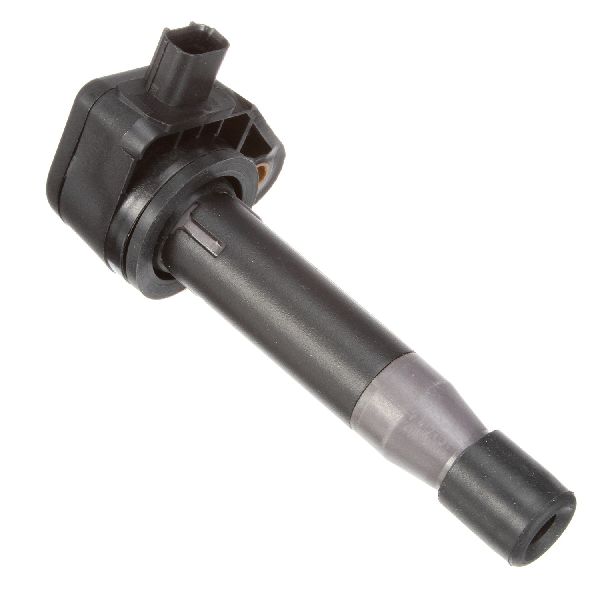
(OEM #30520-R70-S01 (supersedes 30520-R70-A01))— A standard failure point for misfires, though less common than a fouled plug on this vehicle. It should be ruled out via the swap test. 🎬 Watch: How to diagnose and solve P0301 and P0304 misfire codes.
Trusted brands: Hitachi (OEM supplier), Denso, NGK
OEM price range: $80-$110
Aftermarket price range: $40-$70 - VCM Disabling Device — This aftermarket part is the most common long-term fix to prevent the root cause (VCM operation) from causing repeat misfires. Active versions like the VCMTuner II are generally preferred over passive resistor-based 'muzzlers' as they are automatic and have overheat protection.
Trusted brands: VCMTuner II (Active), S-VCM Controller (Active), VCMuzzler II (Passive)
OEM price range: N/A
Aftermarket price range: $100-$150
Related Codes That Often Appear With This One
- P0300 — If the misfire is severe or intermittent, it may be logged as a random misfire (P0300) before being isolated to cylinder 1.
- P0302, P0303, P0304 — These codes indicate misfires in other VCM-affected cylinders. Seeing them together is a very strong confirmation that the root cause is the VCM/piston ring issue.
- P3400, P3497 — These codes are specific to the VCM system (Rocker Arm Oil Pressure Switch). An early TSB (11-033), later superseded by 13-081, addressed a software update for these codes related to oil consumption and VCM operation. NHTSA ODI #11503067 notes that after addressing a P0301 code, the vehicle subsequently displayed a P3400 VPS bank code.
Technical Service Bulletins (TSBs) & Recalls

- 13-081: Warranty Extension: MIL Comes On With DTCs P0301 Through P0304. Details the piston ring issue and the repair procedure.
- 11-033: Engine Oil Consumption; MIL May Be On With DTC P3400 and/or P3497. Details a software update to address VCM operation and oil consumption.
Platform-Specific Known Issues
- A class-action lawsuit (Soto v. American Honda Motor Co., Inc.) was settled regarding excessive oil consumption and misfires on cylinders 1-4 due to VCM operation.
- Honda TSB 13-081 was issued, extending the warranty to 8 years/unlimited miles for this specific issue. The fix involved inspecting plugs, cleaning pistons, replacing rings, and for 2011 models, a mandatory PCM software update to alter VCM engagement. This warranty has now expired for all vehicles.
Mechanic-Grade Diagnostic Values
- Fuel Pressure at Idle — expected: 390-440 kPa (57-64 psi) for 2012-2017 models. 380-430 kPa (55-63 psi) for 2011 models.. Failure: Pressure outside the specified range indicates a problem with the fuel pump or pressure regulator.
- Fuel Injector Resistance — expected: Between 5 to 7 Ohms (Ω).. Failure: A reading significantly outside this range, or an open circuit, indicates a failed injector coil. This test does not check for clogs.
- Rocker Arm Oil Pressure Switch Torque — expected: 16 ft. lbs. (22 Nm).. Failure: Improper torque can lead to leaks or damage to the switch. This is relevant when diagnosing VCM-related codes (P3400, P3497) that often accompany misfires.
Hidden / Shadow Codes Worth Checking
- Live Misfire Counts (Mode $06): Even if a P0301 code is not yet stored, many advanced scan tools can access Mode $06 data to view live misfire counters for each cylinder. This is invaluable for diagnosing intermittent misfires or confirming the affected cylinder before the Check Engine Light is on. (see via An advanced scan tool (like Autel, Launch, or Honda HDS) with the ability to display live data streams or Mode $06 test results.)
Scan Tool Commands That Help
- Honda HDS (or equivalent): Misfire Counter Data Stream — Use this to confirm which cylinder is misfiring in real-time, especially if the code is intermittent or if multiple misfire codes are present. Graphing the misfire counts while driving under load can help isolate the problematic cylinder.
- Honda HDS (or equivalent): CKP (Crankshaft Position) Pattern Clear/Learn — This procedure should be performed after major engine work or if you suspect 'ghost misfires' where the PCM incorrectly detects misfires due to variations in the CKP sensor signal. In some cases, electromagnetic interference can cause false misfire counts, and a CKP relearn can help resolve this after the interference source is fixed.
- Honda HDS (or equivalent): Throttle Relearn Procedure — In a documented case, a combination of a dirty/sticking EGR valve and a needed throttle relearn caused persistent misfires. After cleaning the EGR and performing a throttle relearn via the scan tool, the misfires were resolved. This is an edge case to consider if standard ignition/fuel fixes fail.
Wiring & Ground Locations
- G101 — Located under the throttle body.. This is a primary engine ground. A poor connection here can cause a host of seemingly unrelated issues, including erratic sensor readings and weak ignition spark, leading to misfires.
- G201 / G202 — Located in the engine compartment, G201 is under the right front and G202 is on the right side.. These grounds are part of the main engine and chassis grounding scheme. Corrosion or looseness can affect PCM and ignition component performance.
- Cylinder 1 Injector Connector — On the rear cylinder bank, passenger side. The control wire (pulse from PCM) is typically one of the two wires in the connector.. To test for a fuel injector pulse, a technician would use a noid light or oscilloscope on this connector. A constant 12V is supplied to one pin, and the PCM provides a pulsed ground to the other to fire the injector. A lack of pulse points to a wiring or PCM driver issue.
Real Owner Repair Stories
- YouTube channel 'TS MOBILE MECHANIC' (2012 Honda Odyssey with J35 engine) — Flashing check engine light, rough idle, multiple misfire codes including P0301, P0302, P0303.
❌ Tried (didn't work) Initial diagnosis pointed towards common VCM issues or valve adjustment, but the mechanic performed deeper diagnostics.
✅ What actually fixed it The final fix was cleaning a sticking/clogged EGR valve. The mechanic noted that after cleaning the two 10mm bolts holding the EGR valve and performing a throttle relearn procedure with a scan tool, the live misfire counts dropped to zero and the issue was resolved. - Odyclub.com forum user (2011-2013 Honda Odyssey) — Check engine light with P0301-P0304 codes.
❌ Tried (didn't work) Replacing spark plugs and ignition coils provided only a temporary fix.
✅ What actually fixed it The underlying cause was determined to be the VCM issue causing piston rings to stick and foul the plugs. The long-term solution for many owners, after the warranty extension expired, has been the installation of a VCM disabling device (e.g., VCMTuner II, S-VCM). This prevents the VCM system from activating, which stops the oil fouling cycle. - NHTSA ODI #11437861 — An owner reported that the engine would misfire and fail to accelerate typically, or shudder/jitter during acceleration. A diagnostic tool showed P0301 for cylinder 1 misfire and P0848 for a faulty transmission fluid pressure switch.
- NHTSA ODI #11678822 — One owner described the vehicle as nearly undriveable with dangerously poor acceleration before pulling a P0301 code. Their research suggested a poorly designed engine causes oil to burn inside the combustion chamber.
OEM Part Supersession History
30520-R70-A01→30520-R70-S01— Standard part revision and update by the manufacturer. The new part is a direct replacement.
Heads up: The parts are interchangeable. 30520-R70-S01 is the current OEM part number to use for this vehicle range.
Model Year Variations Within This Range
- 2011 only: Per Honda TSB 13-081, 2011 models required a mandatory PCM software update as part of the piston ring replacement procedure. 2012-2013 models already had the updated software from the factory.
- 2014-2017: The 2014 model year marked a mid-cycle refresh which included a new 6-speed automatic transmission across all trims (previously only on Touring). While the J35Z8 engine itself remained, the new transmission and associated software could result in slightly different VCM engagement patterns, though the underlying piston ring issue remains the same.
Diagnostic Flowchart
Real Owner Stories
Aggregated from forums and TSBs cited above. Mileages and costs reflect what owners reported in those sources.
2011 Honda Odyssey Touring
Symptoms: Cylinder misfire (P0301 code) and no compression on cylinder 1. Initially assumed it was a bad spark plug.
What fixed it: Technician found a burnt valve with a small pinhole in it and recommended replacing both valves, Vtech Solenoid Gasket, Cam Seal, Intake Gasket, Exhaust Manifold Gasket, and Head Gasket. Honda denied warranty coverage because the issue was a burnt valve, not the piston rings covered by the TSB.
Source hint: Reddit r/Cartalk
2014 Honda Odyssey
Symptoms: P0301 misfire code.
What fixed it: Owner was quoted for a major piston ring job, but other users recommended installing a VCM disabler and changing the spark plug as a first step.
Cost: $4233-$4233
Source hint: Reddit r/HondaOdyssey (thread: 2014_cost_of_repair_p0301)
Honda Odyssey J35Z8
Symptoms: P0301 misfire code accompanied by an 'FCW Failure' message.
What fixed it: Owner worked through diagnostics, including a coil swap that failed to move the code to another cylinder, pointing back to the spark plug or other mechanical issues.
Source hint: Reddit r/HondaOdyssey (thread: replaced_spark_plug_for_p0301_misfire_code_and)
Related OBD-II Codes
Frequently Asked Questions
Is the piston ring issue causing P0301 covered under warranty for my 2011-2017 Odyssey?
Why did my Forward Collision Warning (FCW) light come on with the check engine light?
What is a 'VCM muzzler' and will it fix my P0301 code?
How do I know if my ignition coil or spark plug is causing the misfire on cylinder 1?
Does the Soto v. American Honda class-action lawsuit apply to my Odyssey?
How much does it cost to fix the piston ring issue causing P0301?
Helpful Videos
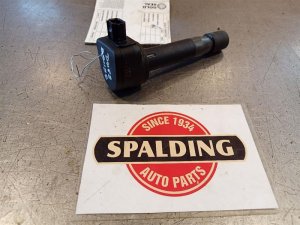
Used OEM Parts in Stock
New Aftermarket Parts Available

The information in this article is provided for general reference and educational purposes only. Vehicle specifications, procedures, and part compatibility can vary by production date, trim level, and region. Always consult your vehicle's factory service manual and verify part numbers before purchasing or performing repairs. Safety-critical components such as airbags, seat belts, and braking systems should be installed by a qualified professional.
- Honda Odyssey:
- 🎬 Helpful Videos
- 🛍️ Shop This Part
- What's Unique About the 2011-2017 Honda Odyssey
- Symptoms You May Notice
- Most Likely Causes
- Rare But Worth Checking
- Diagnosis Steps
- Parts You'll Likely Need
- Related Codes That Often Appear With This One
- Technical Service Bulletins (TSBs) & Recalls
- Platform-Specific Known Issues
- Mechanic-Grade Diagnostic Values
- Hidden / Shadow Codes Worth Checking
- Scan Tool Commands That Help
- Wiring & Ground Locations
- Real Owner Repair Stories
- OEM Part Supersession History
- Model Year Variations Within This Range
- Diagnostic Flowchart
- Real Owner Stories
- 2011 Honda Odyssey Touring
- 2014 Honda Odyssey
- Honda Odyssey J35Z8
- Related OBD-II Codes
- Frequently Asked Questions
- 🎟️ Get 5% Off