

P0301 on 2007-2016 GMC Acadia 3.6L: Cylinder 1 Misfire Causes and Fixes
P0301 means cylinder 1 is misfiring. On the GMC Acadia 3.6L, the most common fix is replacing a bad ignition coil and spark plug. If the misfire persists, especially on a cold start, it could be due to carbon buildup on the intake valves or a more serious timing chain issue. Accessing cylinder 1 requires removing the intake manifold.
- P0301 is a misfire on cylinder 1, which is on the difficult-to-access rear bank of the engine against the firewall.
- The most common cause is a bad ignition coil or spark plug. Due to the labor involved, it's wise to replace all three rear coils and all six spark plugs at once.
- If misfires happen mainly on cold starts on a 2009+ model, suspect carbon buildup on the intake valves before replacing parts.
- Always check for timing-related codes like P0008 or P0017, as a stretched timing chain is a known, serious issue on this engine that can cause misfires.
- Do not drive if the Check Engine Light is flashing, as this can quickly damage the catalytic converter.
What's Unique About the 2007-2016 GMC Acadia

The first-generation Acadia's 3.6L V6 engines (LLT/LFX) are known for a few specific issues that directly cause misfires like P0301. The direct injection system, introduced in 2009, makes these engines highly prone to carbon buildup on the intake valves, which disrupts airflow and often causes misfires when the engine is cold. Additionally, these engines have a well-documented history of premature timing chain stretching, which can alter engine timing and lead to misfires, often accompanied by codes like P0008 or P0017. GM issued special coverage programs for this issue on many affected vehicles.
Generation note: The 2007-2016 year range covers the entire first generation of the GMC Acadia. However, there is a key engine difference. The 2007-2008 models used the port-injected LY7 3.6L V6. The 2009-2016 models, specified in the prompt, use the direct-injected LLT or LFX 3.6L V6. This distinction is important because the direct-injected engines are susceptible to carbon buildup on intake valves, a common cause of misfires not typically seen on the earlier LY7 engine.
Symptoms You May Notice
- Check Engine Light is on or flashing
- Rough or shaky idle
- Engine hesitation or stumbling during acceleration
- Noticeable loss of power
- Reduced fuel economy
- Smell of unburnt gasoline from the exhaust 🎬 Watch: Common causes and fixes for the P0301 misfire code.
- Shuddering when going uphill
- Replacing only the spark plug when the ignition coil is the actual cause.
- Replacing ignition components when the root cause is carbon buildup on the intake valves, especially if the misfire is only present on cold starts.
- Ignoring companion codes like P0017, which strongly point towards a timing chain issue as the root cause of the misfire.
Most Likely Causes

- Failing Ignition Coil 🔴 High Probability Ignition coils are a common wear item. On the Acadia's V6, cylinder 1 is on the rear bank, under the intake manifold. The coils here are subjected to more heat and the labor to replace them is higher, so they are often neglected.
How to confirm: Swap the ignition coil from cylinder 1 with another cylinder (e.g., cylinder 3, also on the rear bank). Clear the codes and drive. If the code changes to P0303, the coil is faulty.
Typical fix: Replace the faulty ignition coil. It is highly recommended to replace all three rear coils (1, 3, 5) and all six spark plugs at the same time due to the labor involved in removing the intake manifold.
Est. part cost: $40-$90 per coil - Worn or Fouled Spark Plug 🔴 High Probability Spark plugs are a routine maintenance item. An old, worn, or oil-fouled spark plug can't produce a strong enough spark to ignite the fuel mixture properly.
How to confirm: After confirming the coil is good, inspect the spark plug for wear, carbon tracking, oil fouling, or an incorrect gap. Even if it looks okay, it's best to replace it if its age is unknown.
Typical fix: Replace the spark plug in cylinder 1. As with the coil, it's best practice to replace all six spark plugs if they are due for service, especially since the intake manifold must be removed to access the rear bank.
Est. part cost: $10-$25 per plug - Carbon Buildup on Intake Valves 🟡 Medium Probability This is a very common issue on the 2009+ direct-injected (LLT/LFX) engines. Fuel is sprayed directly into the cylinder, so it no longer washes over the intake valves, allowing oil vapor and deposits to bake onto them. This restricts airflow and causes misfires, especially during cold starts.
How to confirm: This is difficult to confirm without tools. The primary symptom is a misfire that is worst on a cold start and may improve as the engine warms up. Visual inspection with a borescope after removing the intake manifold is the definitive way to check.
Typical fix: The intake manifold must be removed and the valves must be physically cleaned. This is often done via walnut shell blasting. 🎬 See how to clean carbon buildup from the intake valves. Chemical induction cleaning services may provide a temporary fix but often don't remove heavy deposits.
Est. part cost: $20-$50 for gaskets and seals - Stretched Timing Chain ⚪ Low Probability The 3.6L V6 in this generation is notorious for premature timing chain stretch, which causes the camshaft and crankshaft timing to fall out of sync. GM issued Special Coverage Adjustment #10287 (later #11340A) extending the warranty to 10 years or 120,000 miles for this issue on many 2007-2009 models.
How to confirm: Check for companion codes like P0008, P0017, or P0019, which are strong indicators of a timing issue. A rattling noise from the engine on startup is another classic symptom. A mechanic can confirm by checking cam/crank correlation data with a professional scan tool.
Typical fix: This is a major and expensive repair that involves replacing all timing chains, tensioners, and guides. The engine often has to be partially dropped from the vehicle to perform the service.
Est. part cost: $400-$800 for a full kit - Faulty or Clogged Fuel Injector ⚪ Low Probability An injector can become clogged with deposits or fail electronically, preventing it from delivering the correct amount of fuel to cylinder 1. TSB PIP4964F points to leaking injectors as a cause for rich running conditions on this engine.
How to confirm: After ruling out spark, a technician can perform a fuel injector balance test with a scan tool. Another method is to swap the injector with one from another cylinder to see if the misfire code follows, though this is labor-intensive.
Typical fix: Replace the faulty fuel injector.
Est. part cost: $50-$120
Rare But Worth Checking
- Loose or Corroded Ignition Coil Ground: TSB PIP5038B points to poor ignition coil grounds (G112, G114 on the engine block) as a potential cause for misfires on 2009 models. A loose ground can cause an intermittent spark. The TSB specifies cleaning the ground surfaces and bolt, and torquing to 15 lb-ft (20 NM).
- Leaking Valve Cover or Spark Plug Tube Seal: A common issue where the valve cover gasket leaks oil into the spark plug tube. This oil can pool around the ignition coil boot and spark plug, causing the spark to short to ground and leading to a misfire. This is a frequent point of failure mentioned in owner forums.
- Low Engine Compression: Caused by internal engine issues like a worn piston ring, a leaking valve, or a blown head gasket. This is a serious mechanical failure and is confirmed with a compression test.
Diagnosis Steps

- Read all stored trouble codes with an OBD-II scanner. Note any codes besides P0301.
- If codes P0008 or P0017 are present, investigate timing chain stretch as the primary cause before proceeding. Check for eligibility under GM's Special Coverage Adjustment #11340A.
- To diagnose the P0301, begin with the ignition system. Since cylinder 1 is on the rear bank, accessing it requires removing the upper intake manifold. 🎬 Watch this walkthrough on accessing and replacing the rear spark plugs.
- Once the manifold is off, inspect the spark plug tubes for any oil. Oil presence indicates a leaking valve cover gasket that must be replaced to prevent future coil failure.
- Swap the ignition coil from cylinder 1 with the coil from cylinder 3. Reassemble, clear the codes, and run the engine.
- If the code returns as P0303, the ignition coil is bad and should be replaced. It's highly recommended to replace all three rear coils (1, 3, 5) and all six spark plugs at this time.
- If the code remains P0301, the coil is likely good. Next, inspect and replace the spark plug for cylinder 1 with an ACDelco 41-107 or equivalent.
- While the intake manifold is off, visually inspect the intake valves for heavy carbon buildup, a common issue on the direct-injected engines. If significant deposits are found, they must be cleaned (walnut blasting is the preferred method).
- If ignition components and carbon are ruled out, the next step is to investigate the fuel injector for cylinder 1. This may require an injector balance test or swapping the injector with another cylinder.
- As a final step for persistent misfires, check for mechanical engine health with a compression test.
Parts You'll Likely Need

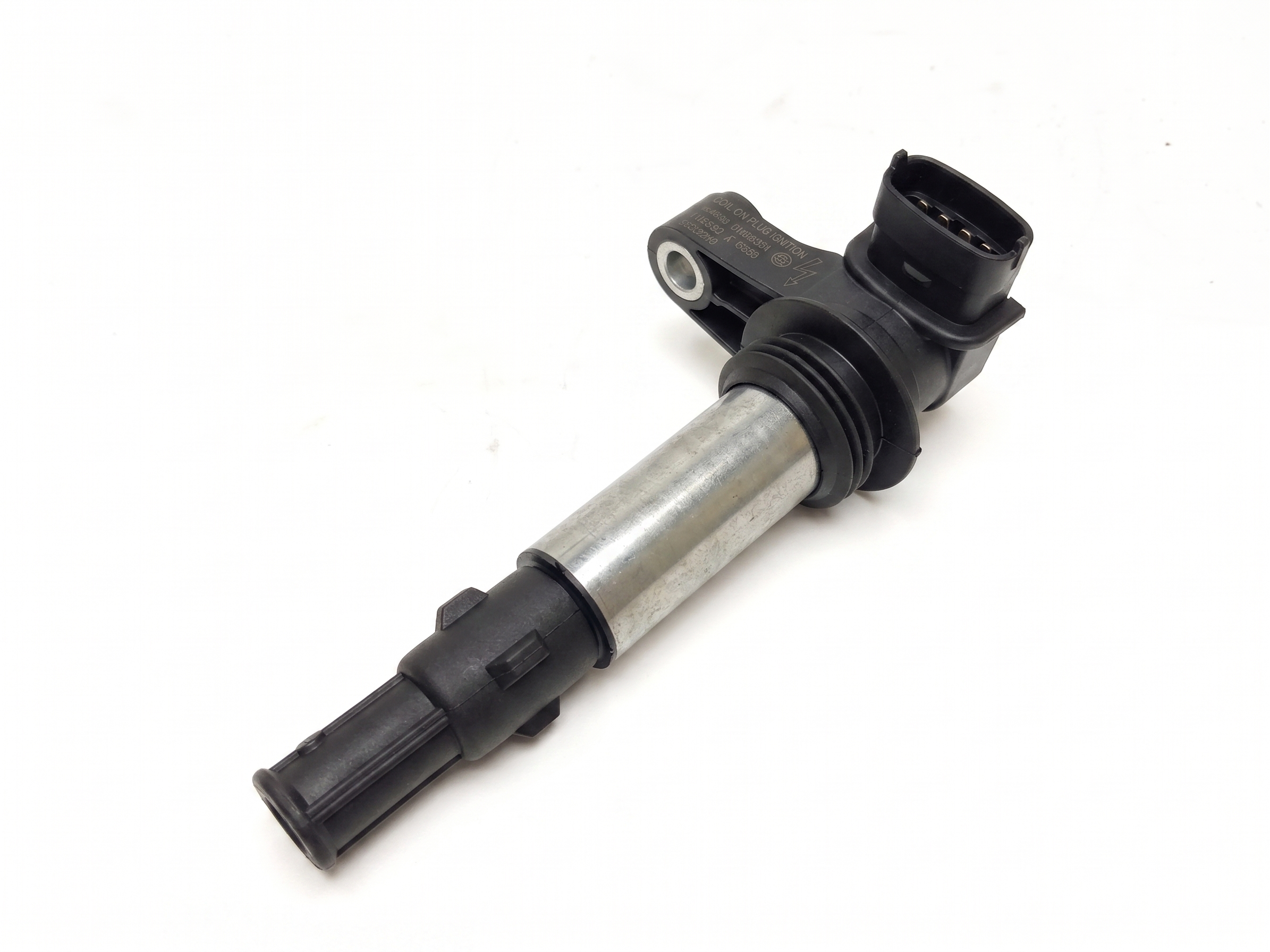
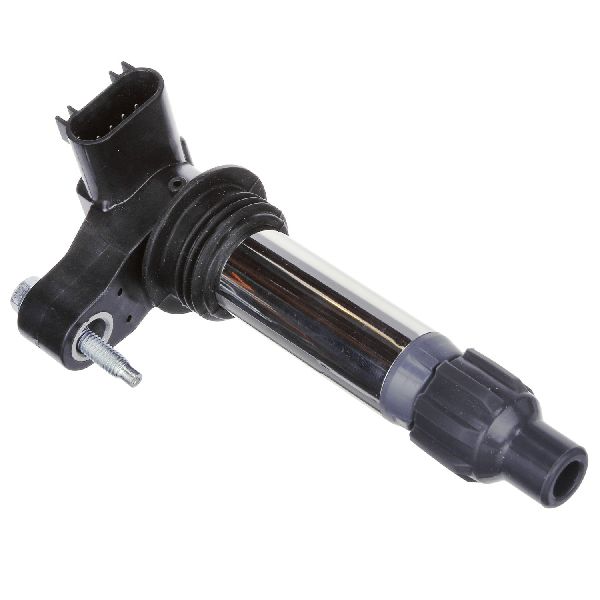
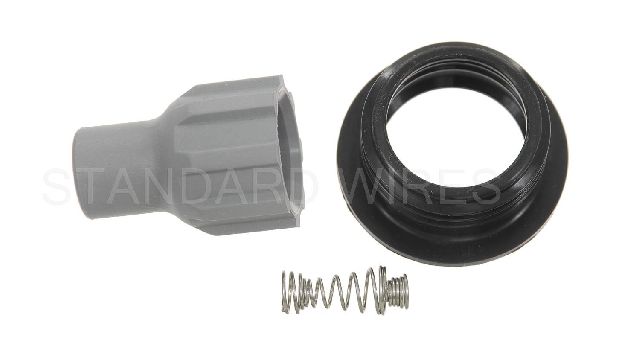
- Ignition Coil
(OEM #12632479)— This is the most frequent cause of a single-cylinder misfire. The coil for cylinder 1 is on the difficult-to-access rear bank.
Trusted brands: ACDelco, Delphi, NGK
OEM price range: $60-$90
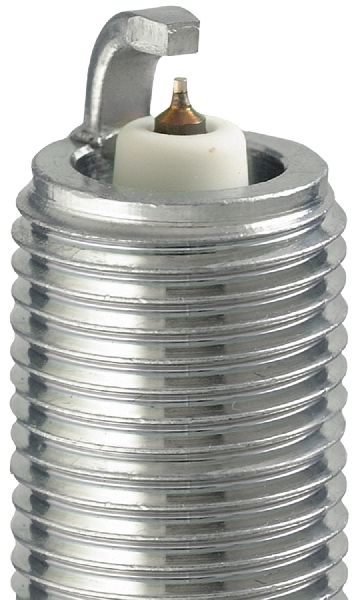
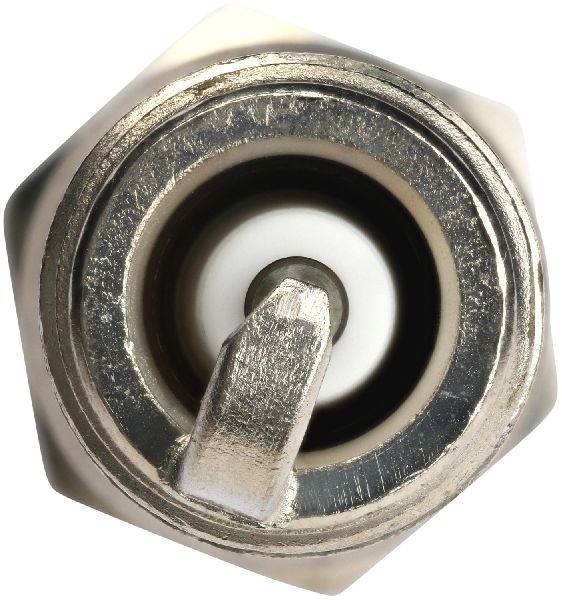
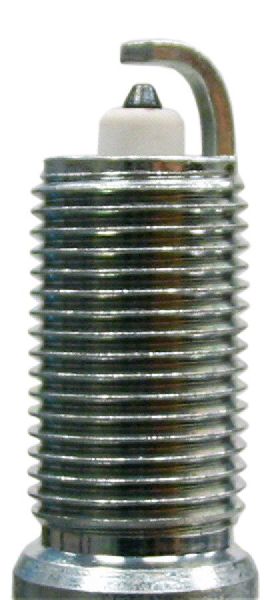
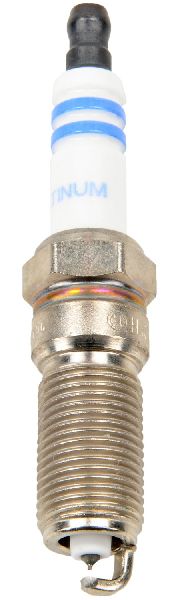
Aftermarket price range: $40-$70 - Iridium Spark Plug
(OEM #41-109)— A worn spark plug is a primary cause of misfires. It should always be replaced when an ignition coil is changed, especially on the rear bank where access is difficult.
Trusted brands: ACDelco, NGK, Bosch
OEM price range: $15-$25
Aftermarket price range: $10-$20 - Upper Intake Manifold Gasket Set — This is required for any job that involves accessing the rear bank of cylinders (1, 3, 5), including replacing ignition coils, spark plugs, or inspecting for carbon buildup.
Trusted brands: ACDelco, Fel-Pro
OEM price range: $40-$60
Aftermarket price range: $25-$40
Related Codes That Often Appear With This One
- P0300 — If the misfire is intermittent or starting to affect other cylinders, a P0300 (Random/Multiple Misfire) code may appear with P0301. This is common when timing chains are the cause.
- P0303, P0305 — Misfires on other cylinders in the same bank (Bank 1 is cylinders 1, 3, 5) can occur if there is a shared problem, like a vacuum leak on that side of the intake manifold or a clogged catalytic converter for that bank.
- P0008, P0017 — These codes indicate a crankshaft-to-camshaft correlation error. On the Acadia 3.6L, seeing these with a P0301 code is a very strong sign that the underlying problem is a stretched timing chain.
Technical Service Bulletins (TSBs) & Recalls
- PIP5038B: Addresses misfire codes (P0300-P0306) on 2009 models with the LLT engine. It instructs technicians to check for heat-stressed coils, open ignition coil fuses, and importantly, to inspect and clean ignition coil grounds G112 and G114 on the engine block, torquing them to 15 lb-ft. This bulletin also notes that technicians may find codes P0351 through P0356 alongside the misfire data.
- 11340A / 10287: Provides extended warranty coverage for premature timing chain wear on certain 2007-2009 models with the 3.6L V6. The coverage is for 10 years or 120,000 miles. The condition results in a Service Engine Soon light and codes like P0008 or P0017, which can also lead to misfire codes.
- PIP4964F: While for a different code (P2099), this TSB is relevant as it identifies leaking or imbalanced fuel injectors as a known issue on the 3.6L V6, which can also cause single-cylinder misfires like P0301. It directs technicians to perform an injector balance test early in the diagnosis.
Platform-Specific Known Issues
- Premature Timing Chain Stretch: A widely documented problem on the 3.6L V6, leading to timing correlation codes (P0008, P0017) and misfires. GM acknowledged this with Special Coverage #11340C for some 2009 models.
- Intake Valve Carbon Buildup: Specific to the 2009-2016 direct-injection (LLT/LFX) engines, this causes cold start misfires and rough idle. GM released TSB PIP5029C to address this.
Mechanic-Grade Diagnostic Values
- Ignition Coil Primary Resistance — expected: 0.4 to 2.0 Ohms. Failure: An open circuit (infinite resistance) or a reading significantly outside this range indicates a fault in the coil's primary winding.
- Ignition Coil Secondary Resistance — expected: 5,000 to 10,000 Ohms (5k-10k Ω). Failure: A reading significantly outside this range suggests the coil's secondary winding has failed.
- Fuel Injector Resistance (2009-2012 LLT Engine) — expected: 11 to 14 Ohms. Failure: A reading of 'OL' (open), near zero (short), or significantly outside this range indicates a failed injector.
- Fuel Injector Resistance (2013-2016 LFX Engine) — expected: 1.2 to 2.5 Ohms. Failure: A reading significantly outside this range indicates a failed injector. This is a much lower resistance than the earlier LLT engine.
- Low-Side Fuel Pressure (Key On, Engine Off) — expected: 50-100 PSI (345-690 kPa). Failure: Pressure below this range points to a weak in-tank fuel pump or a leak in the low-pressure system.
- Low-Side Fuel Pressure (at Idle) — expected: Approx. 58 PSI (400 kPa). Failure: Significantly lower pressure can starve the high-pressure fuel pump, leading to misfires, especially under load.
- Scan Tool Misfire Counter (Mode $06) — expected: Near zero for all cylinders.. Failure: A high and incrementing count for Test ID $A2, Component ID $01 (Cylinder 1) confirms the misfire is actively being detected by the ECM.
Scan Tool Commands That Help
- GDS2 / Tech2: Cylinder Power Balance — To graphically display the real-time contribution of each cylinder. This can help visualize the severity of the misfire on cylinder 1 compared to others and confirm if the issue is constant or intermittent.
- GDS2 / Tech2: Injector Balance Test — After ruling out ignition issues, this test can help identify a faulty fuel injector. The tool commands each injector to fire for a set duration while monitoring the fuel rail pressure drop. An injector that causes a significantly different pressure drop than the others is likely faulty.
- GDS2 / Tech2: Misfire Data / Misfire History — To view not just the current misfires, but also historical misfire counts at different engine RPMs and loads. This can help determine if the misfire happens only under specific conditions (e.g., only at idle, or only above 3000 RPM).
Wiring & Ground Locations

- G112, G114 — On the engine block, serving as the grounds for the ignition coils.. TSB PIP5038B specifically calls out these grounds as a potential cause for misfires. A loose or corroded connection at G112 or G114 can cause intermittent and weak spark, leading to a P0301. The TSB advises cleaning the ground surfaces and torquing the bolt to 20 NM (15 lb-ft).
- Injector and Coil Harness — Routed over the top of the engine and valve covers, underneath the intake manifold for the rear bank (Bank 1).. This harness is subject to extreme heat and vibration. TSB PIP4924D (related to injector circuits) notes that the harness can chafe against the engine or brackets, causing shorts or opens in the wiring to the coil or injector for cylinder 1.
Real Owner Repair Stories
- acadiaforum.net user (2010 GMC Acadia) — P0301, P0303, P0305 (misfires on all of Bank 1) and P0300. Engine ran rough.
❌ Tried (didn't work) Replaced all spark plugs and ignition coils., Swapped fuel injectors between banks.
✅ What actually fixed it The owner performed a compression test and found cylinder 1 had zero compression. Upon further teardown, they discovered a cracked piston in cylinder 1. The final fix was a complete engine replacement. - Reddit user AndyE2255 (2009 GMC Acadia AWD, 175k miles) — Persistent P0301 code. Shuddering when going uphill, but otherwise runs fine with no shaking or knocking.
❌ Tried (didn't work) Replaced all spark plugs., Replaced ignition coil on cylinder 1.
✅ What actually fixed it The user did not post a final resolution, but the next planned step was to investigate the fuel injector, with other forum members suggesting carbon buildup as a likely cause given the direct injection engine. - NHTSA ODI #10887969 — An owner reported receiving faults P0008, P0303, P0305, P0017, P0300, and P0301. After researching, they found these to be common faults for a timing chain issue, with repair estimates reaching $3,000 to $4,000.
"I Checked Everything" — The Actual Cause
- A common scenario for a P0301 that persists after ignition parts are replaced is a vacuum leak specific to the cylinder 1 intake runner. After removing the intake manifold to access the coils/plugs, if the intake manifold gasket is not replaced or is installed incorrectly, it can create a vacuum leak that only affects that single cylinder. A general smoke test at the throttle body may not reveal this isolated leak; the best practice is to always use new intake manifold gaskets and torque the manifold bolts to spec in the correct sequence.
OEM Part Supersession History
12611545, 12632255, 12638530→12669384— Standard part evolution for the LLT engine's fuel injector, likely for improved reliability or manufacturing consistency.
Heads up: 12669384 is the correct service replacement for all prior numbers on the LLT engine. However, it is NOT compatible with the LFX engine, which uses a different, low-impedance injector.
Model Year Variations Within This Range
- 2007-2008 (LY7 Engine): These models use a port fuel injection system. They are not prone to carbon buildup on the intake valves as a cause for misfires. The diagnosis for P0301 on these years should focus almost exclusively on ignition, fuel delivery, and mechanical issues.
- 2009-2012 (LLT Engine): Uses high-impedance direct fuel injectors (~11-14 Ohms). Highly susceptible to both timing chain stretch and intake valve carbon buildup. TSB PIP5038B regarding ignition coil stress is particularly relevant to 2009 models.
- 2013-2016 (LFX Engine): Uses low-impedance direct fuel injectors (~1.5-2.5 Ohms). Using a resistance spec from an LLT to test an LFX injector will lead to misdiagnosis. The LFX also features integrated exhaust manifolds in the cylinder heads and a different intake manifold design. While timing chain issues were improved over the LLT, they can still occur.
Diagnostic Flowchart
Real Owner Stories
Aggregated from forums and TSBs cited above. Mileages and costs reflect what owners reported in those sources.
2009 GMC Acadia — 175000 miles
Symptoms: Experienced a persistent P0301 misfire code.
What fixed it: Replaced all spark plugs and the cylinder 1 coil. The code persisted, leading the owner to suspect a faulty fuel injector as the next step in diagnosis.
Source hint: Reddit r/MechanicAdvice
GMC Acadia LLT/LFX Direct Injection
Symptoms: P0301 misfire code.
What fixed it: Identified heavy carbon buildup on the intake valves, a known issue on these direct injection engines that requires physical cleaning of the valves.
Source hint: Reddit r/MechanicAdvice
Related OBD-II Codes
Frequently Asked Questions
Is there a warranty extension for the timing chain issue on my 2008 GMC Acadia?
Why is it so expensive to replace the cylinder 1 ignition coil on the 3.6L V6?
Does TSB PIP5038B apply to my 2009 Acadia with a P0301 code?
Could carbon buildup be causing the cold start misfire on my 2011 Acadia?
What spark plugs should I use for my Acadia to fix a P0301, and do I need to gap them?
I have a P0301 and a P2099 code. Are they related?
Helpful Videos

Used OEM Parts in Stock



New Aftermarket Parts Available

The information in this article is provided for general reference and educational purposes only. Vehicle specifications, procedures, and part compatibility can vary by production date, trim level, and region. Always consult your vehicle's factory service manual and verify part numbers before purchasing or performing repairs. Safety-critical components such as airbags, seat belts, and braking systems should be installed by a qualified professional.
- GMC Acadia:
- 🎬 Helpful Videos
- 🛍️ Shop This Part
- What's Unique About the 2007-2016 GMC Acadia
- Symptoms You May Notice
- Most Likely Causes
- Rare But Worth Checking
- Diagnosis Steps
- Parts You'll Likely Need
- Related Codes That Often Appear With This One
- Technical Service Bulletins (TSBs) & Recalls
- Platform-Specific Known Issues
- Mechanic-Grade Diagnostic Values
- Scan Tool Commands That Help
- Wiring & Ground Locations
- Real Owner Repair Stories
- "I Checked Everything" — The Actual Cause
- OEM Part Supersession History
- Model Year Variations Within This Range
- Diagnostic Flowchart
- Real Owner Stories
- 2009 GMC Acadia — 175000 miles
- GMC Acadia LLT/LFX Direct Injection
- Related OBD-II Codes
- Frequently Asked Questions
- 🎟️ Get 5% Off