

P0301 on 2019-2025 Ford Ranger: Cylinder 1 Misfire Causes & Fixes
P0301 on a 2019-2025 Ford Ranger indicates a cylinder 1 misfire. This is most often caused by water leaking from the windshield cowl seam into the spark plug well, a known issue addressed by Ford TSB 23-2011. The fix typically involves replacing the ignition coil and spark plug for cylinder 1, thoroughly drying the well, and applying dielectric grease to the new coil boot to prevent future moisture damage. Installing a Ford engine appearance cover is the official long-term solution recommended b
- P0301 on a 2019-2025 Ranger is most likely an ignition issue in cylinder 1.
- Before buying any parts, inspect the front-most spark plug well for water, as this is a very common problem specific to this truck.
- The easiest way to test the ignition coil is to swap it with another cylinder and see if the misfire code follows it.
- When replacing the ignition coil or spark plug, use a small amount of dielectric grease in the coil boot to help prevent future moisture problems.
- This is a very DIY-friendly repair that can be done with basic hand tools in under an hour.
What's Unique About the 2019-2025 Ford RANGER

The 2019-2025 Ford Ranger with the 2.3L EcoBoost engine has a well-documented issue with water intrusion. A seam in the wiper cowl area can allow water to drip directly onto the engine and collect in the spark plug wells, especially on models sold without an engine appearance cover. This collected moisture directly causes corrosion and failure of the ignition coils and spark plugs, making P0301 and other misfire codes a particularly common complaint for this specific truck. Ford has issued multiple Technical Service Bulletins (TSBs), most notably TSB 23-2011, which outlines the official repair: replace damaged components and install an engine cover to divert the water.
Diagnostic Flowchart

Tap your situation to follow the diagnostic path that matches what you're seeing on this vehicle.
Generation note: The 2019-2023 models are the fourth generation Ranger in North America, while 2024+ marks the fifth. However, the 2.3L EcoBoost engine is carried over, and Ford's technical service bulletins address this misfire issue across these years, indicating a shared potential cause related to the engine design and the water intrusion problem.
Symptoms You May Notice
- Rough or shaking idle
- Hesitation or stumbling during acceleration
- Noticeable loss of engine power
- Flashing Check Engine Light (especially under load or high RPM)
- Reduced fuel economy
- Smell of unburned fuel from the exhaust
- Replacing only the spark plug when the ignition coil was also damaged by water.
- Replacing ignition parts without cleaning out water/corrosion from the spark plug well, leading to a repeat failure.
- Assuming the issue is a fuel injector before thoroughly testing the much more common ignition system components.
- A dealer refusing to cover the water intrusion fix under the powertrain warranty, claiming it's part of the shorter bumper-to-bumper warranty.
Most Likely Causes

- Water Intrusion in Spark Plug Well 🔴 High Probability A design flaw in the cowl allows water to drip onto the engine and into the spark plug wells, a problem documented by Ford in TSB #23-2011, #SSM 51239, and others. This is especially common on XL and XLT models that were not equipped with an engine appearance cover from the factory. Parking nose-downhill can worsen the issue.
How to confirm: Remove the ignition coil from cylinder 1 (the front-most cylinder). Visually inspect the well for standing water, rust, or a white, chalky residue on the coil boot and spark plug. The coil itself may have rust stains.
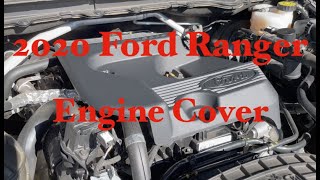
Typical fix: Thoroughly dry the spark plug well using compressed air or a vacuum. Replace the ignition coil and spark plug for cylinder 1. Apply a liberal amount of dielectric grease inside the new ignition coil boot to seal it against moisture. For a long-term solution, install the Ford engine appearance cover kit (Part No. KB3Z-6A949-A) as recommended by TSB 23-2011. 🎬 Watch: How to install the engine cover to prevent water damage.
Est. part cost: $50-$140 - Failed Ignition Coil 🔴 High Probability Ignition coils are a common failure point, often damaged by the aforementioned water intrusion or by the high heat of the turbocharged engine. TSB #SSM 53971 directly lists ignition coils as a primary cause for this code on 2025 models.
How to confirm: Swap the ignition coil from cylinder 1 with the coil from another cylinder (e.g., cylinder 2). Clear the codes and drive. If the code changes to P0302, the coil is confirmed to be faulty.
Typical fix: Replace the failed ignition coil. It's often recommended to replace all four coils and spark plugs at the same time for preventative maintenance, especially if the vehicle has higher mileage.
Est. part cost: $40-$120 - Worn or Fouled Spark Plug 🟡 Medium Probability Direct-injection turbocharged engines like the 2.3L EcoBoost are harder on spark plugs than naturally aspirated engines. A worn, cracked, or fouled plug is a common cause of a single-cylinder misfire. TSB #SSM 53971 also identifies spark plugs as a potential cause.
How to confirm: Remove the spark plug from cylinder 1. Inspect it for a worn electrode, heavy carbon deposits, oil fouling, or cracks in the porcelain insulator. Check that the gap is within the manufacturer's specification.
Typical fix: Replace the spark plug. It is best practice to replace all four spark plugs as a set to ensure consistent performance and prevent future misfires.
Est. part cost: $15-$25
Rare But Worth Checking
- Clogged or Leaking Fuel Injector: If ignition components are confirmed to be good, a fuel injector that is clogged or leaking internally can cause a misfire. This is a known, though less common, issue on the 2.3L EcoBoost platform.
- Low Engine Compression: This is a more serious mechanical issue related to piston rings, valves, or the head gasket. A compression test is needed to diagnose this after ruling out ignition and fuel issues.
- Coolant Intrusion into Cylinder: While more common on earlier 2.0L and 1.5L EcoBoosts, the 2.3L engine is not entirely immune to head gasket or cylinder head issues that allow coolant into the combustion chamber, fouling the spark plug and causing a misfire. This often presents with white exhaust smoke and unexplained coolant loss.
Diagnosis Steps
- Read the trouble codes with an OBD-II scanner to confirm P0301 is present.
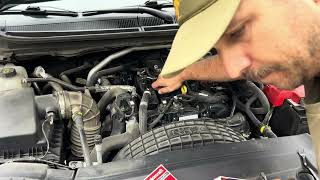
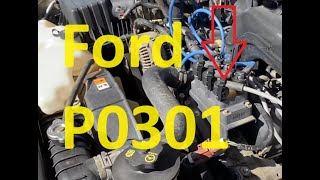
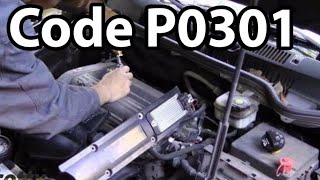
- Identify cylinder 1, which is the cylinder at the very front 🎬 See this DIY walkthrough for diagnosing and resetting a P0301 code. of the engine, closest to the radiator.
- Turn off the engine and remove the 8mm bolt holding the ignition coil in place for cylinder 1.
- Pull the ignition coil out and carefully inspect the spark plug well for any signs of water, oil, or a white/green chalky corrosion. Also inspect the coil boot for swelling, rust stains, or damage.
- If water or corrosion is present, this is the likely culprit. Dry the well completely with compressed air or a shop towel.
- To definitively test the ignition coil, swap it with the coil from cylinder 2. Reinstall the bolts and connectors.
- Clear the codes with the scanner, start the engine, and go for a short drive to see if the Check Engine Light returns.
- If the code P0302 appears, the ignition coil you moved is bad and must be replaced.
- If the code P0301 returns, the coil is likely good. The next step is to inspect the spark plug. Remove it using a 5/8" spark plug socket and check for wear, fouling, or an incorrect gap.
- If the spark plug is worn or fouled, replace it. It is highly recommended to replace all four at once with the correct OEM-spec iridium plugs.
- If ignition components are good and no water was found, the problem may be with the fuel injector or, in rare cases, engine compression, which may require professional diagnosis.
Parts You'll Likely Need

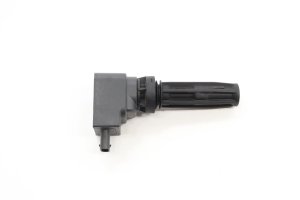
- Ignition Coil
(OEM #DG-576)— This is the most common failure part for P0301, often damaged by water intrusion as noted in Ford TSBs.
Trusted brands: Motorcraft, NGK, Denso, Delphi
OEM price range: $80-$120
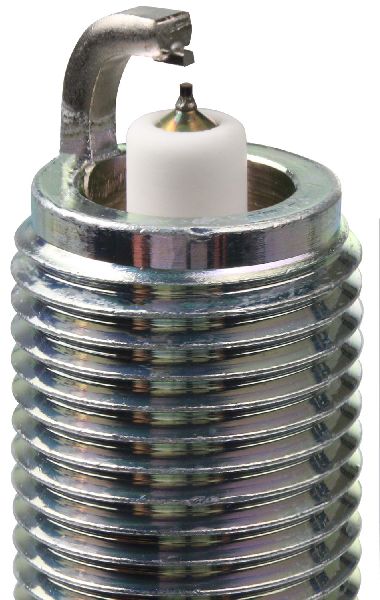
Aftermarket price range: $40-$80 - Iridium Spark Plug
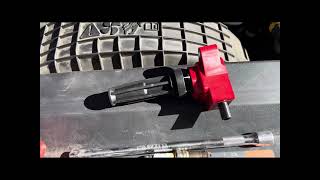
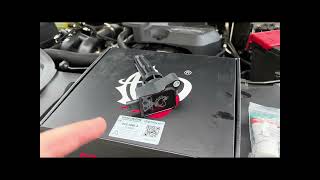
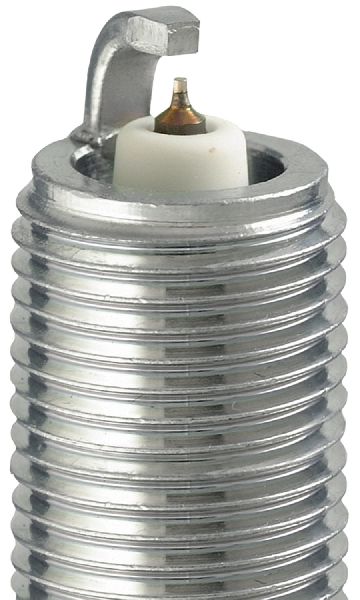
(OEM #SP-594 (supersedes SP-578))— A worn or fouled spark plug is the second most likely cause. The 2.3L EcoBoost requires high-quality iridium plugs. 🎬 Watch: Step-by-step guide to replacing spark plugs and ignition coils. SP-594 is the current recommended Motorcraft part.
Trusted brands: Motorcraft, NGK, Bosch
OEM price range: $15-$25
Aftermarket price range: $10-$20 - Engine Appearance Cover Kit
(OEM #KB3Z-6A949-A (Kit includes cover, bolts, nuts))— This is Ford's official long-term fix per TSB 23-2011 to prevent water from dripping into the spark plug wells. It was omitted on many lower-trim trucks.
Trusted brands: Ford (OEM)
OEM price range: $50-$80 - Dielectric Grease — Essential for preventing future moisture-related failures. It should be applied inside the ignition coil boot to seal out water.
Trusted brands: Permatex, CRC
OEM price range: $5-$10
Aftermarket price range: $5-$10
Related Codes That Often Appear With This One
- P0300 — If the misfire is intermittent or affects multiple cylinders, a P0300 (Random Misfire) code may be stored alongside P0301.
- P0302, P0303, P0304 — If the cause, like water intrusion, affects more than one cylinder, you will see corresponding misfire codes for those cylinders. TSB 23-2011 explicitly lists all these codes together.
- P0316 — This code means 'Misfire Detected on Startup (First 1000 Revolutions)' and is frequently cited in the same TSBs as the cylinder-specific misfire codes for this vehicle, indicating the misfire is present immediately on a cold start.
Technical Service Bulletins (TSBs) & Recalls
- TSB 23-2011: This is the key TSB. It addresses P0300-P0304 and P0316 codes on 2019-2022 Rangers caused by water in the spark plug wells. The official fix is to resolve the misfire (replace plug/coil as needed) and install an engine appearance cover.
- SSM 53971: Notes that misfire codes P0301-P0304 on 2025 models may be due to spark plugs and/or ignition coils.
- SSM 51239 / SSM 51051: Earlier communications that also point to water buildup in spark plug wells on trucks without an engine cover as the cause for misfire codes.
- TSB 21-2147: An earlier version of the TSB that was eventually superseded by 23-2011, addressing the same water intrusion issue.
Platform-Specific Known Issues
- A primary issue is water leaking from a cowl seam onto the engine, which is documented in Ford TSB 23-2011. This is often caused by the design of the windshield drainage and is especially problematic on models that
Mechanic-Grade Diagnostic Values
- High-Pressure Fuel System (Direct Injection) — expected: Up to 2,150 psi (148 bar) under normal operation. Aftermarket performance pumps can operate up to 3,626 psi (250 bar).. Failure: Significantly lower pressure than specified can cause lean misfires, though this would likely affect multiple cylinders.
- Spark Plug Gap — expected: 0.027 - 0.031 inches (0.70 - 0.80 mm).. Failure: An incorrect gap can lead to a weak or inconsistent spark, causing a misfire.
- Ignition Coil Primary Resistance — expected: Approximately 0.4 to 2.0 ohms.. Failure: A reading of OL (open loop) or significantly outside the expected range indicates a faulty coil. Note: Resistance tests are not always conclusive for modern coils.
- Ignition Coil Secondary Resistance — expected: Approximately 5,000 to 15,000 ohms (5k-15k Ω).. Failure: A reading of OL (open loop) or far outside the typical range suggests an internal failure in the coil's secondary winding.
Hidden / Shadow Codes Worth Checking
- Mode $06, TID $A2-$AB, CID $01-$0C: This is not a hidden code, but rather a data stream accessible with many advanced OBD-II scanners. It provides raw data from the PCM's onboard monitoring, including misfire counts for each cylinder for the current and last 10 driving cycles. For P0301, you would specifically look at the counter for cylinder 1. (see via Use an OBD-II scanner with Mode $06 capability, such as FORScan for Fords, or other professional-grade scan tools.)
Scan Tool Commands That Help
- FORScan / Ford IDS: Power Balance Test — This bidirectional test allows the user to shut off fuel to each cylinder one by one while the engine is running. When you disable a healthy cylinder, the RPMs will drop noticeably. If you disable cylinder 1 and there is little to no change in RPM, it confirms that cylinder 1 was not contributing power, pinpointing the misfire location without swapping parts.
Wiring & Ground Locations
- Ignition System Ground — A key ground strap for the engine and its sensors, including the PCM which controls ignition, runs from the engine block/head to the firewall (dash panel).. A corroded or loose ground at this location can cause erratic behavior in the ignition system, leading to intermittent misfires that are difficult to diagnose. Cleaning and securing this ground is a crucial step if ignition components test good but the problem persists.
- Ignition Coil Connector (C1E303 for Coil 1) — Directly on top of the ignition coil for cylinder 1.. The connector has two pins. On a 2011+ international model diagram (similar architecture), Pin 1 is the control signal from the PCM (White/Violet wire) and Pin 2 is the power feed (White/Orange wire). Verifying voltage at Pin 2 and a signal at Pin 1 with a multimeter or scope can confirm the wiring and PCM driver are functional.
Real Owner Repair Stories
- Ranger5G.com forum user (2019 Ford Ranger XLT 2.3L EcoBoost) — Check engine light came on, code P0301. Truck was running rough.
❌ Tried (didn't work) Initially took it to the dealer who found the code.
✅ What actually fixed it The dealer found water in the #1 spark plug well, which shorted the ignition coil. They replaced the coil and spark plug for cylinder 1, dried the well, and applied dielectric grease. The repair was covered under Ford's TSB for the water intrusion issue.
OEM Part Supersession History
SP-578 (CYFS-12Y-PT)→SP-594 (CYFS-12Y-PT)— Ford updated the spark plug design for the EcoBoost engine family around 2019. The new design features a revised, narrower insulator tip intended to improve cold start performance and reduce carbon fouling.
Heads up: SP-594 is the correct and current service part for all 2019-2025 Rangers. While older stock of SP-578 would work, SP-594 is the preferred replacement.
Model Year Variations Within This Range
- 2019-2025: The base 2.3L EcoBoost engine and 10-speed transmission are carried over from the 4th generation (2019-2023) to the 5th generation (2024+). This means the underlying causes for P0301, particularly the ignition components and potential for water intrusion, remain consistent across the entire model year range specified.
Helpful Videos
Used OEM Parts in Stock


New Aftermarket Parts Available

The information in this article is provided for general reference and educational purposes only. Vehicle specifications, procedures, and part compatibility can vary by production date, trim level, and region. Always consult your vehicle's factory service manual and verify part numbers before purchasing or performing repairs. Safety-critical components such as airbags, seat belts, and braking systems should be installed by a qualified professional.
- Ford RANGER:
- 🎬 Helpful Videos
- 🛍️ Shop This Part
- What's Unique About the 2019-2025 Ford RANGER
- Diagnostic Flowchart
- Symptoms You May Notice
- Most Likely Causes
- Rare But Worth Checking
- Diagnosis Steps
- Parts You'll Likely Need
- Related Codes That Often Appear With This One
- Technical Service Bulletins (TSBs) & Recalls
- Platform-Specific Known Issues
- Mechanic-Grade Diagnostic Values
- Hidden / Shadow Codes Worth Checking
- Scan Tool Commands That Help
- Wiring & Ground Locations
- Real Owner Repair Stories
- OEM Part Supersession History
- Model Year Variations Within This Range
- 🎟️ Get 5% Off