

P0301 on 2019 Ford Fusion Energi: Cylinder 1 Misfire Causes and Fixes
On a 2019 Ford Fusion Energi, P0301 is often caused by a faulty ignition coil or spark plug. However, it can also be a symptom of a serious engine issue involving coolant leaking into the cylinder, which is covered by Ford's Technical Service Bulletins (TSBs). This known design flaw is the most critical issue to rule out.
- P0301 on a 2019 Fusion Energi is a serious code that requires immediate attention.
- While the cause could be a simple ignition coil or spark plug, you must first rule out the well-documented coolant intrusion engine flaw.
- Look for key symptoms of coolant intrusion: white, sweet-smelling exhaust smoke and unexplained coolant loss.
- Do not continue driving the vehicle, as you risk severe damage to the catalytic converter and the engine itself.
- If you suspect coolant intrusion, reference Ford TSBs 22-2322 and 22-2229 when speaking with a qualified mechanic.
What's Unique About the 2019-2019 Ford FUSION ENERGI
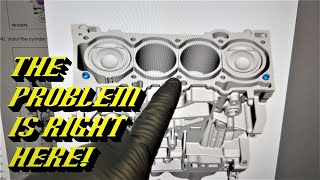
For the 2.0L engine in the 2019 Fusion Energi, a P0301 code must be treated with extra caution. While it can be a simple ignition issue, the engine family is subject to a known design defect where coolant can leak into the cylinders, causing a misfire. This is due to a flaw in the open-deck engine block design that can allow a crack or porosity to form between the coolant passages and the cylinder wall. Ford has issued multiple Technical Service Bulletins (TSBs), including TSB 22-2322 and TSB 22-2229, 🎬 Watch: Understanding the Ford TSB for coolant intrusion issues. that directly link misfire codes like P0301 to this coolant intrusion problem. This makes it critical to rule out this severe issue before assuming it's just a bad spark plug.
Diagnostic Flowchart
Tap your situation to follow the diagnostic path that matches what you're seeing on this vehicle.
Symptoms You May Notice
- Check Engine Light is on or flashing
- Rough or shaky idle
- Noticeable loss of power and poor acceleration
- Hesitation or stumbling during acceleration
- Sweet smell from the exhaust (indicative of burning coolant)
- White smoke from the exhaust, especially on cold startup
- Unexplained loss of engine coolant with no visible external leaks
- Engine temperature gauge reading higher than normal or at maximum
- Replacing only the spark plug and ignition coil without checking for coolant intrusion. If coolant is the root cause, it will quickly foul the new parts and the P0301 code will return.
- Mistaking the issue for a simple head gasket failure when it is actually a crack in the engine block, which requires a more extensive repair.
Most Likely Causes
- Engine Coolant Intrusion into Cylinder 🔴 High Probability The 2.0L engine family has a documented design issue where the engine block can develop a crack or porosity, allowing coolant to leak into the combustion chamber. This is acknowledged by Ford in TSBs #TSB 22-2322 and #TSB 22-2229. The issue is prevalent enough to have resulted in class-action lawsuits.
How to confirm: Perform a cooling system pressure test; pressurize the cold system to ~20 psi and let it sit for several hours. A pressure drop of more than 4 psi without external leaks indicates an internal leak. 🎬 Watch: How to perform a pressure test for coolant intrusion. Use a borescope to visually inspect the inside of cylinder 1 for coolant or a 'steam-cleaned' appearance on the piston top. A wet, sweet-smelling, or exceptionally clean spark plug also points to coolant.
Typical fix: The official fix is a long block or short block engine replacement with an updated design that corrects the flaw. This is a major and expensive repair.
Est. part cost: $4000-$7000 - Faulty Ignition Coil 🟡 Medium Probability Ignition coils are a common wear item on most modern engines. Oil leaks from the valve cover gasket can also pool in the spark plug wells and damage the coil boot, leading to failure.
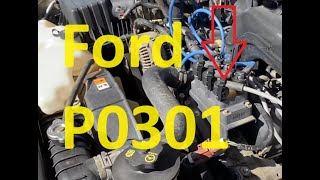
How to confirm: Swap the ignition coil from cylinder 1 with another cylinder (e.g., cylinder 2). Clear the codes and drive the vehicle. If the code changes to P0302, the ignition coil is faulty. 🎬 See this guide on diagnosing common P0301 misfire causes.
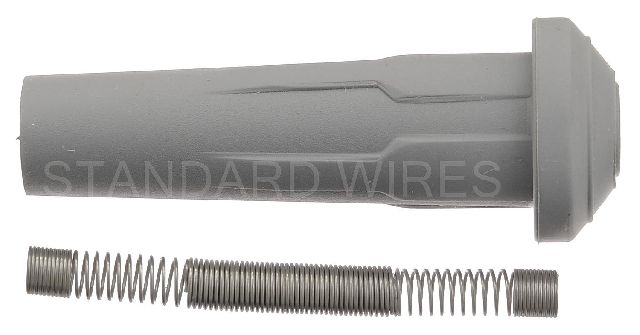
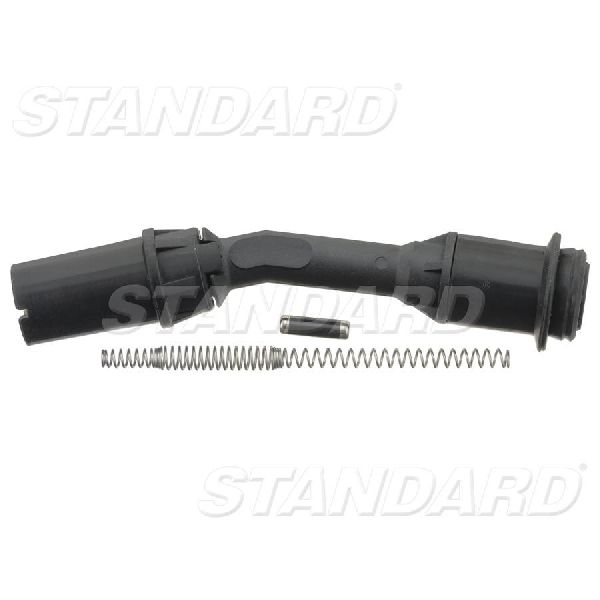
Typical fix: Replace the failed ignition coil. It is often recommended to replace the spark plug at the same time.
Est. part cost: $40-$80 - Worn or Fouled Spark Plug 🟡 Medium Probability
How to confirm: Remove the spark plug from cylinder 1 and inspect it. Look for wear, damage, or fouling from oil or coolant. A wet, sweet-smelling plug indicates coolant intrusion. A plug with heavy carbon buildup or a worn electrode can also cause a misfire.
Typical fix: Replace the spark plug. Note that if the plug is fouled by coolant, this is a temporary fix and the misfire will return until the root cause is addressed.
Est. part cost: $15-$30 - Faulty Fuel Injector ⚪ Low Probability
How to confirm: Swap the fuel injector from cylinder 1 with another cylinder. If the misfire code follows the injector (e.g., changes to P0302 after swapping with cylinder 2), the injector is bad. This is more labor-intensive than swapping a coil.
Typical fix: Replace the faulty fuel injector.
Est. part cost: $70-$150
Rare But Worth Checking
- Leaking valve cover gasket causing oil to foul the spark plug and coil.
- Vacuum leak near cylinder 1.
- Low engine compression due to a burnt valve or worn piston rings.
- Faulty Powertrain Control Module (PCM) driver circuit.
Diagnosis Steps
- Read all trouble codes with an OBD-II scanner and note any other codes present, especially P0316, P0217, P1285, or P1299.
- Immediately check the coolant level in the reservoir. If it is low, this is a major red flag for coolant intrusion.
- Observe the exhaust on a cold start. Look for white, sweet-smelling smoke, which indicates burning coolant.
- If coolant intrusion is not suspected, proceed with basic ignition diagnosis. Swap the ignition coil from cylinder 1 to cylinder 2. Clear codes and see if the misfire code changes to P0302. If it does, the coil is the problem.
- If the misfire remains on cylinder 1, inspect the spark plug. Check for wear, damage, or fouling. A 'steam-cleaned' or wet plug is a definitive sign of coolant. Replace if necessary.
- If signs of coolant are present or the problem persists, a professional diagnosis is required. This includes a cooling system pressure test to confirm an internal leak and a borescope inspection to look for coolant inside cylinder 1.
- If no coolant intrusion is found, the fuel injector should be tested, potentially by swapping it to another cylinder.
- If all else fails, a mechanical compression test and cylinder leak-down test may be needed to check for issues with valves or piston rings.
Parts You'll Likely Need
- Engine Long Block
(OEM #DS7Z-6006-U (Part numbers are often superseded; verify with dealer via VIN))— This is the definitive, though most expensive, fix for the common coolant intrusion issue, as recommended by Ford's TSBs. It replaces the faulty engine block with a redesigned part.
Trusted brands: Motorcraft
OEM price range: $6000-$7000
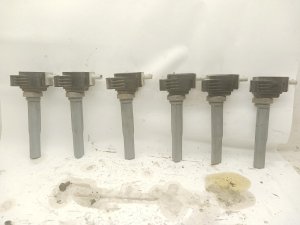
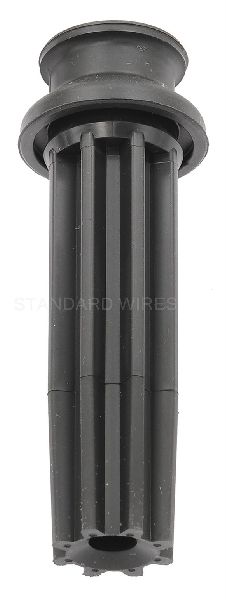
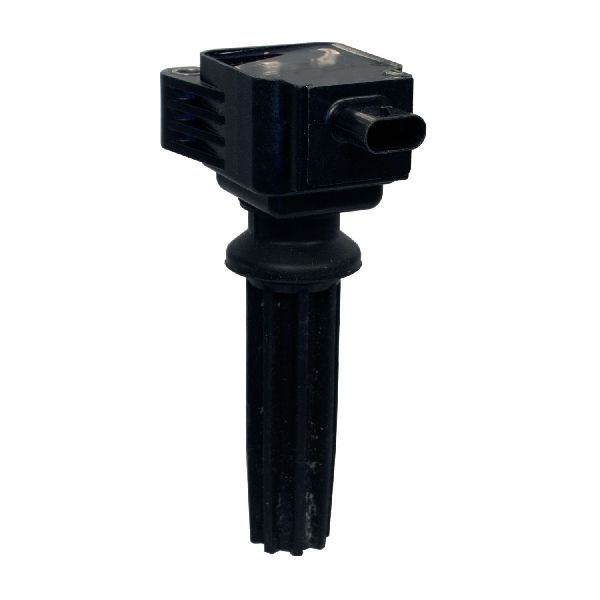
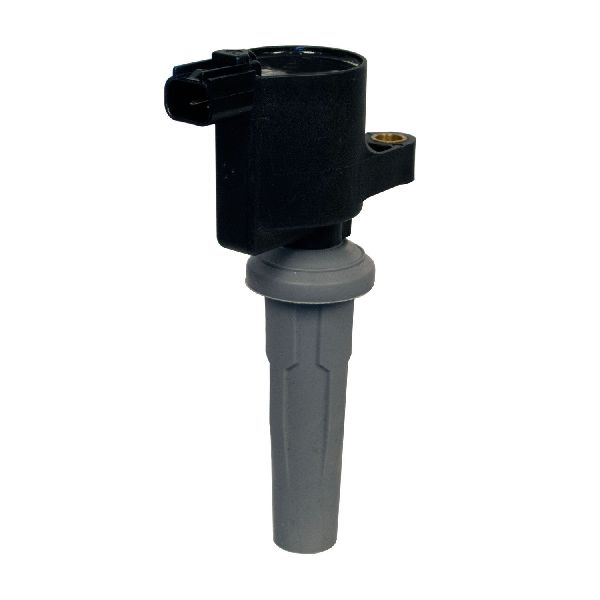
Aftermarket price range: $4000-$5500 - Ignition Coil
(OEM #DG-522 (Motorcraft))— A common failure point for ignition systems and a likely cause of a single-cylinder misfire if coolant intrusion is not present.
Trusted brands: Motorcraft, NGK, Denso, Delphi
OEM price range: $60-$90
Aftermarket price range: $40-$80 - Spark Plug
(OEM #SP-530 / CYFS-12Y-T (Motorcraft))— Spark plugs are a routine maintenance item and can wear out or be fouled by engine issues, causing a misfire. A coolant-fouled plug is a key diagnostic symptom.
Trusted brands: Motorcraft, NGK
OEM price range: $20-$40
Aftermarket price range: $15-$30
Related Codes That Often Appear With This One
- P0300 — P0300 indicates random or multiple misfires. It can appear with P0301 if the misfire issue is intermittent or beginning to affect other cylinders, which is common with the coolant intrusion problem.
- P0316 — This code means 'Misfire Detected on Startup (First 1000 Revolutions)'. It often accompanies P0301 when coolant has leaked into the cylinder overnight, causing a misfire immediately upon starting the engine. It is specifically mentioned in Ford's TSBs for this issue.
- P0217 — This code indicates an 'Engine Overheat Condition'. A significant coolant leak into the cylinder can lead to a loss of coolant in the system, causing the engine to overheat. This is also mentioned in the TSBs.
- P1285 — A Ford-specific code for 'Cylinder Head Over Temperature Sensed'. This is an early warning of overheating and is often triggered by coolant loss from an internal leak before a full overheat (P0217) occurs.
- P1299 — A Ford-specific code for 'Cylinder Head Overtemperature Protection Active'. This is the next stage after P1285, where the PCM will actively shut down fuel injectors to prevent catastrophic damage. Seeing this code strongly suggests a severe coolant loss issue.
Technical Service Bulletins (TSBs) & Recalls
- TSB 22-2322: Addresses rough running conditions and white smoke with DTCs including P0301, P0316, P0217, and P1299, due to coolant intrusion into the cylinder. Recommends short block replacement.
- TSB 22-2229: Similar to the above, addresses rough running and/or smoke with misfire DTCs caused by coolant intrusion. This TSB is frequently cited for the 2.0L EcoBoost engine family, which shares the block design flaw.
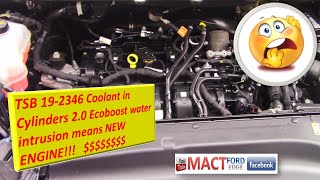
- TSB 19-2346: An earlier bulletin that also addresses coolant intrusion on related 2.0L engines, listing P0316 as a primary diagnostic code for the condition.
Platform-Specific Known Issues
- Coolant Intrusion Due to Engine Block Defect: The 2.0L engine in the 2019 Fusion Energi is susceptible to a known design flaw where coolant can leak into the cylinders, causing misfires. This is documented in Ford TSBs #TSB 22-2322 and #TSB 22-2229. Symptoms include white exhaust smoke, coolant loss, and misfire codes like P0301, often accompanied by P0316 on startup. The recommended repair is often a complete engine replacement with a redesigned block.
Mechanic-Grade Diagnostic Values
- High Pressure Fuel System (GDI) — expected: 290 - 3,626 PSI. Failure: Pressure that is significantly lower than the specified range can indicate a failing high-pressure fuel pump or a leak in the system.
- Spark Plug Gap — expected: 0.034 - 0.036 in (0.85 - 0.95 mm). Failure: An incorrect gap can lead to a weak spark and incomplete combustion, causing a misfire.
Hidden / Shadow Codes Worth Checking
- Mode $06 Misfire Counts: While not a 'hidden code' in the traditional sense, Mode $06 data on a capable OBD-II scanner can show misfire counts for each individual cylinder before they reach the threshold to trigger a P0301 code. This can be invaluable for diagnosing intermittent misfires. (see via An advanced OBD-II scan tool with Mode $06 functionality. Look for Test ID $A2 through $AB, which typically correspond to cylinder misfire data.)
Scan Tool Commands That Help
- Ford IDS (or advanced aftermarket scanners like Autel): Power Balance Test — This is a critical diagnostic step to confirm a misfire on a specific cylinder. The test graphically displays the power contribution of each cylinder, and a significant negative dip for cylinder 1 confirms it is not firing correctly. This test helps verify the code is accurate before swapping parts.
Wiring & Ground Locations
- G105 / G106 — Located on the right side of the engine compartment (passenger side on US vehicles).. These are primary engine grounds. A loose or corroded connection at these points can cause erratic behavior in the ignition system and PCM, potentially leading to misfire codes.
- G100 / G101 / G102 — Located on the left front of the engine compartment (driver side on US vehicles).. These grounds are also critical for the engine and PCM. Poor grounding can lead to incorrect sensor readings and weak ignition coil performance.
- Underhood Fuse Box - Fuse #11 — In the power distribution box in the engine compartment.. This 20A fuse supplies power to the ignition coils. A faulty or loose fuse would affect all cylinders, but it's a quick check for any ignition-related issues.
- Underhood Fuse Box - Fuses #8, #9, #12 — In the power distribution box in the engine compartment.. These fuses provide power to the Powertrain Control Module (PCM). An issue with PCM power can cause a wide range of codes, including misfires.
Real Owner Repair Stories
- YouTube channel 'Jose's Auto Repair' (2015 Ford Fusion 1.5L EcoBoost (engine family shares similar electronics and issues)) — Rough idle, significant loss of power, Check Engine Light with codes P0301 and P0351 (Ignition Coil 'A' Primary/Secondary Circuit).
❌ Tried (didn't work) Replacing the spark plug, Replacing the ignition coil, Replacing the fuel injector
✅ What actually fixed it The Powertrain Control Module (PCM) was faulty. A test revealed the ground pulse for the cylinder 1 injector was missing. Replacing and reprogramming the PCM resolved the misfire.
OEM Part Supersession History
DS7Z-6006-C→DS7Z-6006-U— This supersession is for the 2.0L Hybrid long block engine assembly. While not explicitly stated, part number updates on this engine family are often related to design revisions to address known issues like the coolant intrusion problem.
Helpful Videos
Used OEM Parts in Stock



New Aftermarket Parts Available


The information in this article is provided for general reference and educational purposes only. Vehicle specifications, procedures, and part compatibility can vary by production date, trim level, and region. Always consult your vehicle's factory service manual and verify part numbers before purchasing or performing repairs. Safety-critical components such as airbags, seat belts, and braking systems should be installed by a qualified professional.
- Ford FUSION ENERGI:
- 🎬 Helpful Videos
- 🛍️ Shop This Part
- What's Unique About the 2019-2019 Ford FUSION ENERGI
- Diagnostic Flowchart
- Symptoms You May Notice
- Most Likely Causes
- Rare But Worth Checking
- Diagnosis Steps
- Parts You'll Likely Need
- Related Codes That Often Appear With This One
- Technical Service Bulletins (TSBs) & Recalls
- Platform-Specific Known Issues
- Mechanic-Grade Diagnostic Values
- Hidden / Shadow Codes Worth Checking
- Scan Tool Commands That Help
- Wiring & Ground Locations
- Real Owner Repair Stories
- OEM Part Supersession History
- 🎟️ Get 5% Off