

P0301 on 2013-2019 Ford Escape 2.0L EcoBoost: Cylinder 1 Misfire Causes and Fixes
P0301 on a 2013-2019 Ford Escape 2.0L EcoBoost is a cylinder 1 misfire. On 2017-2019 models, this is very often caused by a serious engine design flaw allowing coolant to leak into the cylinder, requiring an engine replacement. For all years, it can also be a bad spark plug or ignition coil, which is a much cheaper fix.
- For a 2017-2019 Ford Escape 2.0L with code P0301, the first step is to check for coolant loss.
- Unexplained coolant loss combined with white exhaust smoke strongly points to a known engine defect that requires engine replacement.
- Do not drive the vehicle if a misfire is present, especially if the Check Engine Light is flashing, to avoid severe engine and catalytic converter damage.
- If coolant intrusion is ruled out, the cause is likely a standard ignition system component like a spark plug or ignition coil.
- Referencing Ford TSB 19-2346 is crucial when discussing the issue with a repair shop or dealership.
What's Unique About the 2013-2019 Ford Escape

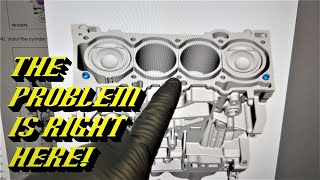
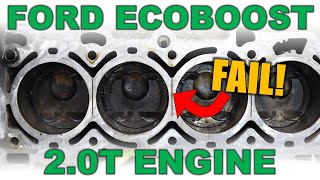
For the 2017-2019 model years specifically, the P0301 code is frequently a symptom of a catastrophic engine defect. A design flaw in the 'open-deck' 2.0L EcoBoost engine block features a narrow slit for coolant to pass between the cylinders, which provides inadequate surface area for the head gasket to properly seal. This can lead to a crack forming in the block, allowing coolant to leak directly into the cylinders. This issue is well-documented by Ford in Technical Service Bulletins (TSB) 19-2346 and its successor TSB 22-2229, and is the subject of multiple class-action lawsuits, such as *Miller, et al. v. Ford Motor Company*. Unlike a typical misfire, this problem is not fixed with a simple tune-up and often requires a complete engine replacement with a revised block design that uses small drilled holes instead of a slot between the cylinders.
🎬 See this engine teardown to understand why these blocks fail.Symptoms You May Notice
- Flashing or solid Check Engine Light
- Rough idle, especially on cold start
- Engine stumbling or hesitation during acceleration
- Noticeable loss of power
- Unexplained coolant loss (reservoir level drops with no visible external leaks)
- White, sweet-smelling smoke from the exhaust, particularly after starting the engine
- Smell of unburned fuel from the exhaust
- Gurgling sound from the engine area after shutting off the vehicle
- Replacing only the spark plug and ignition coil without first checking for coolant loss. If coolant intrusion is the root cause, the new parts will quickly be fouled and the misfire will return, wasting time and money.
- Attributing the issue to a bad head gasket. While the symptoms are similar, the root cause is a crack in the engine block itself, so simply replacing the head gasket will not solve the problem.
Most Likely Causes

- Engine Coolant Intrusion 🔴 High Probability A design flaw in the engine block between the cylinders can lead to cracks, allowing coolant to leak into the combustion chamber. This is a widely recognized issue for 2017-2019 2.0L EcoBoost engines built before mid-2019.
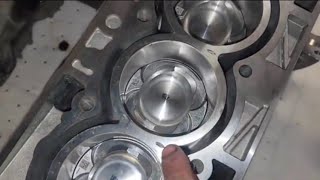
How to confirm: First, check for steady coolant loss. A technician will perform a cooling system pressure test; per Ford's TSB, the system is pressurized to 20 psi and should not drop more than 4 psi over 5 hours. Final confirmation is made using a borescope to visually inspect for coolant inside cylinder 1. A tell-tale sign is an abnormally clean, steam-cleaned piston top where carbon buildup has been washed away by the coolant. 🎬 Watch: How to diagnose and fix EcoBoost coolant consumption issues.
Typical fix: The only permanent fix is to replace the engine with a revised long block assembly as specified in Ford TSB 19-2346 or TSB 22-2229. The new engine has a modified block design to prevent reoccurrence.
Est. part cost: $4000-$7000+ - Faulty Ignition Coil 🟡 Medium Probability
How to confirm: Swap the ignition coil from cylinder 1 with another cylinder (e.g., cylinder 2). Clear the codes and run the engine. If the code changes to P0302, the coil is faulty.
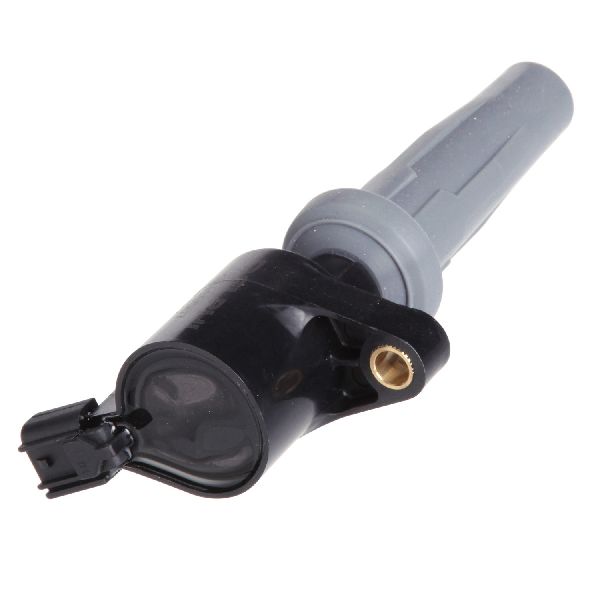
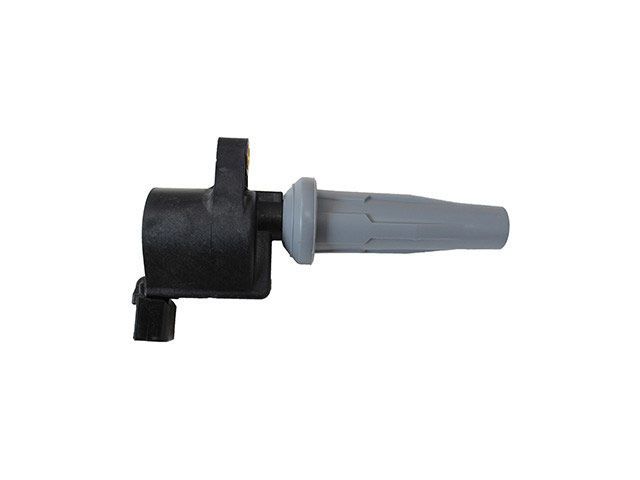
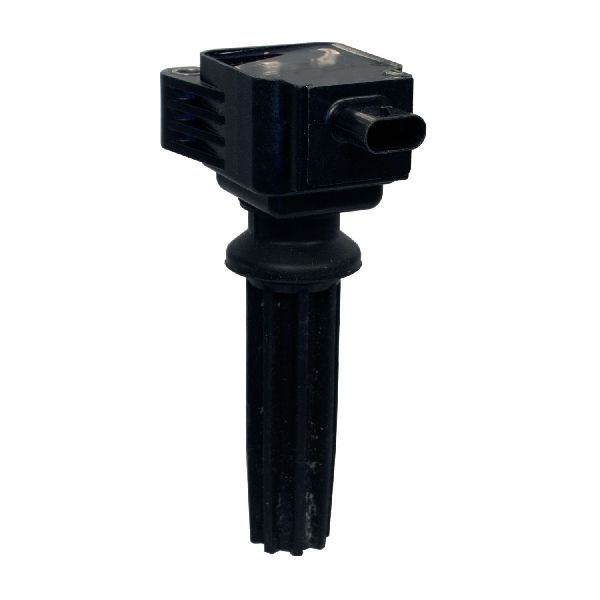
Typical fix: Replace the faulty ignition coil. It is often recommended to replace all four coils at the same time.
Est. part cost: $40-$90 per coil - Worn or Fouled Spark Plug 🟡 Medium Probability Turbocharged direct-injection engines like the EcoBoost are harder on spark plugs. Coolant or oil fouling can also ruin a plug.
How to confirm: Remove the spark plug from cylinder 1. Inspect for wear (worn electrode), carbon buildup, or fouling from oil or coolant. A coolant-fouled plug will appear steam-cleaned or have white/greenish deposits and may be wet.
Typical fix: Replace the spark plug. It is best practice to replace all four spark plugs as a set.
Est. part cost: $10-$25 per plug - Clogged or Faulty Fuel Injector ⚪ Low Probability
How to confirm: This is more complex to diagnose. It involves checking injector electrical signals and may require swapping injectors between cylinders to see if the misfire follows. This is best left to a professional after ruling out spark, coil, and coolant issues.
Typical fix: Replace the faulty fuel injector.
Est. part cost: $70-$150
Rare But Worth Checking
- Low Engine Compression: While this can be a standalone issue (e.g., a burnt valve), on this engine it is often a direct result of the coolant intrusion problem causing damage to the piston, rings, or cylinder head.
- Leaking Valve Cover Gasket: Oil can leak from the valve cover gasket into the spark plug tube, soaking the ignition coil boot and spark plug, which causes a misfire. This is a common issue on many engines and should be checked when inspecting the spark plugs.
- Overheating and Cylinder Head Issues: NHTSA ODI #11222290 describes an instance where the check engine light flashed and the vehicle stored codes P1299 (engine over-temperature) alongside P0301.
Diagnosis Steps

- Read the code with an OBD-II scanner to confirm P0301 and any other stored codes.
- CRITICAL (for 2017-2019 models): Check the coolant reservoir level. If it is low, and there are no visible external leaks, suspect coolant intrusion. Note any white exhaust smoke on startup.
- If coolant loss is suspected, proceed with a cooling system pressure test (pressurize to 20 psi, hold for 5 hours, look for >4 psi drop) and borescope inspection as the highest priority. Look for coolant pooling on the piston or an unusually clean piston surface.
- If coolant level is stable and no other symptoms of intrusion are present, proceed with standard misfire diagnosis.
- Locate cylinder 1 (it is the cylinder closest to the drive belts on the passenger side of the engine).
- Swap the ignition coil from cylinder 1 to cylinder 2. Clear the codes, run the engine, and re-scan. If the code is now P0302, the ignition coil is bad.
- If the code remains P0301, inspect the spark plug well for oil from a leaking valve cover gasket. Then, swap the spark plug from cylinder 1 to cylinder 3. Clear codes and re-scan. If the code is now P0303, the spark plug was the issue.
- If the misfire remains on cylinder 1, the issue is likely with the fuel injector or engine mechanical components (compression), requiring more advanced diagnostics like a leak-down test.
Parts You'll Likely Need

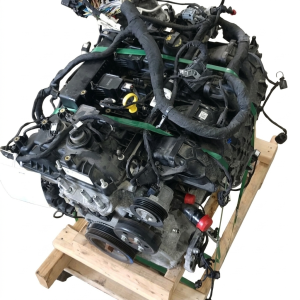
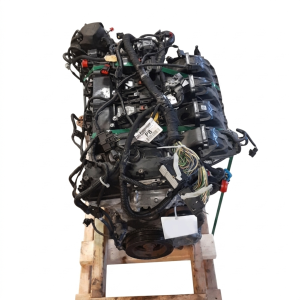
- Long Block Engine Assembly
(OEM #GJ7Z-6006-A (Verify with VIN))— This is the official Ford-recommended repair for the common coolant intrusion issue. The replacement engine has a revised block design to prevent the failure from reoccurring.
Trusted brands: Motorcraft (OEM)
OEM price range: $4000-$7000+
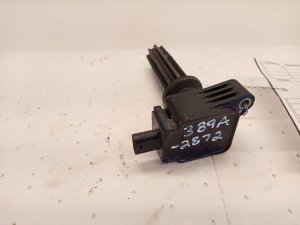
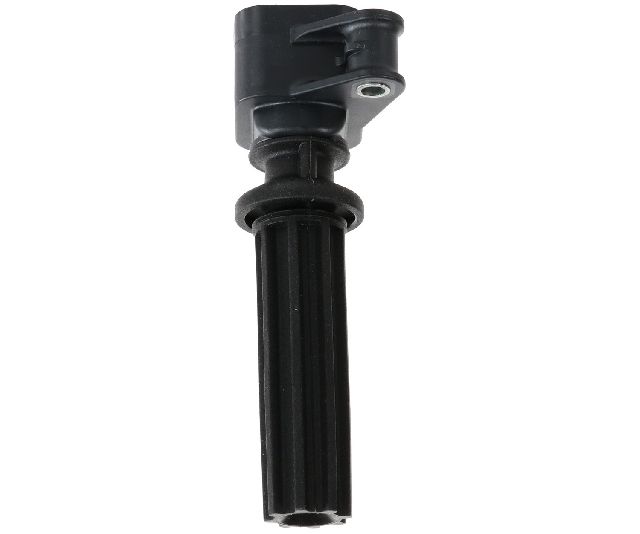
Aftermarket price range: $3500-$6000+ - Ignition Coil
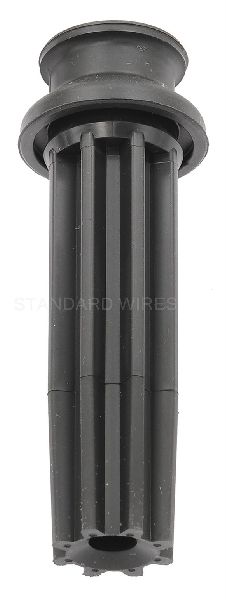
(OEM #DG-522 (Motorcraft))— Ignition coils are a common failure point that can cause a misfire. This is a likely cause if coolant intrusion is ruled out. Part number should be verified by VIN.
Trusted brands: Motorcraft, NGK, Bosch, Delphi
OEM price range: $60-$90
Aftermarket price range: $40-$70 - Spark Plug
(OEM #SP-537 (Motorcraft, also CYFS-12Y-2))— Spark plugs are a regular maintenance item and can wear out or become fouled, leading to a misfire.
Trusted brands: Motorcraft, NGK
OEM price range: $15-$25
Aftermarket price range: $10-$20
Related Codes That Often Appear With This One
- P0300 — Stands for 'Random/Multiple Cylinder Misfire Detected.' If the coolant leak affects more than one cylinder, or if another systemic issue is present, this code may appear alongside P0301.
- P0302, P0303, P0304 — These codes indicate misfires in cylinders 2, 3, or 4. The engine block flaw often occurs between cylinders, so it's common for adjacent cylinders (especially 2 and 3) to misfire as well.
- P0316 — Indicates 'Misfire Detected on Startup (First 1000 Revolutions).' This is often triggered along with a specific cylinder misfire code when the issue is present on a cold start, which is common with coolant intrusion. NHTSA ODI #11645189 and #11720701 both report P0316 appearing alongside P0301.
- P0217 — Indicates 'Engine Overheat Condition.' This code may be present if the coolant loss from the internal leak is significant enough to cause the engine to overheat.
Technical Service Bulletins (TSBs) & Recalls
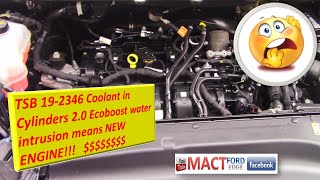
- TSB 19-2346: Supersedes previous versions. For 2.0L EcoBoost engines, it addresses symptoms like low coolant, white smoke, and rough running with DTCs P0301-P0304. It identifies coolant intrusion as the cause and instructs technicians to replace the long block engine assembly.
- TSB 22-2229: A later bulletin that supersedes TSB 19-2346, confirming the same issue and repair procedure for affected vehicles, including the Lincoln MKC.
- TSB 19-2208: An earlier, superseded version of the bulletin that first detailed the diagnostic criteria, including the 5-hour, 20-psi cooling system pressure test.
Platform-Specific Known Issues
- A widespread, documented design flaw in the 2.0L EcoBoost engine block used in 2017-2019 models allows coolant to leak into the cylinders, causing misfires and eventual engine failure.
Mechanic-Grade Diagnostic Values
- Low-Side Fuel Pressure (Live Data) — expected: Approximately 90 PSI with engine running.. Failure: A reading of 0 PSI or a value that does not change indicates a failed low-pressure fuel sensor.
- Engine Compression — expected: Above 125 PSI, with no more than a 10% variation between any two cylinders.. Failure: A cylinder reading significantly lower than others indicates a mechanical engine problem (e.g., piston rings, valves).
- Spark Plug Gap — expected: 0.027 - 0.031 inches (0.7 - 0.8 mm).. Failure: An incorrect gap can lead to a weak spark and misfires.
Scan Tool Commands That Help
- Ford IDS (or capable aftermarket scanner like Autel): Power Balance Test — This live data graph shows the rotational speed contribution of each cylinder in real-time. A cylinder that is misfiring will show a consistent negative dip on the graph, confirming which cylinder is at fault without having to swap components immediately.
Wiring & Ground Locations
- PCM (Powertrain Control Module) — Left side of the engine compartment.. The PCM controls the ignition coil and fuel injector for cylinder 1. All related wiring terminates here.
- G105 — Left rear of the engine compartment.. This is a primary engine compartment ground point. A poor connection here can cause erratic behavior in sensors and actuators, including the ignition system.
- G103 — Right side of the engine compartment.. This is another main engine ground. Verifying it is clean and tight is a crucial step in diagnosing any electrical fault.
- 12C508 — Engine wiring harness for the 2.0L engine.. This harness contains the wiring for the ignition coils and fuel injectors. It should be inspected for chafing or damage, particularly where it routes around the engine.
Real Owner Repair Stories
- Reddit user J0SH_P0INT_0H on r/fordescape (2014 Ford Escape) — P0301 misfire code appeared about 6 months after replacing spark plugs and timing belt.
❌ Tried (didn't work) Swapping the ignition coil caused the misfire to move to another cylinder, but then it moved again on a subsequent restart, indicating an intermittent or systemic issue rather than a simple bad coil.
✅ What actually fixed it The user noted a slow coolant loss of about 0.4 liters over 10,000+ miles and concluded it was the beginning stages of the known coolant intrusion problem, which was causing the intermittent misfire. The final repair would be engine replacement. - YouTube user working on a Ford Focus ST (2013 Ford Focus ST 2.0L EcoBoost with 177,000 miles) — Persistent idle issues and an occasional cold misfire on cylinder 3.
❌ Tried (didn't work) Replacing all four spark plugs and ignition coils., Replacing the PCV valve assembly., Checking the purge valve and all vacuum lines.
✅ What actually fixed it The owner determined the next logical step was to address heavy carbon buildup on the intake valves, a common problem in high-mileage GDI engines that disrupts airflow and causes misfires, especially when cold. The fix is a manual valve cleaning (walnut blasting). - NHTSA ODI #11449136 — An owner reported that coolant was leaking into the cylinder, causing a misfire and P0301 code. Despite replacing the cylinder and spark plugs, the error persisted and the coolant level continued to drop daily.
- NHTSA ODI #11553567 — A dealership verified a P0301 Cylinder 1 misfire and found the coolant tank empty, accompanied by white smoke on start-up and a burnt coolant smell from the exhaust.
- NHTSA ODI #11645189 — After a 100,000-mile tune-up, an owner experienced a P0301 and P0316 misfire on start-up; a mechanic subsequently pressurized the cooling system to diagnose the fault.
OEM Part Supersession History
EJ7Z-6006-A→HJ7Z-6006-A, which was later superseded by part numbers like LJ7Z-6006-A.— This part number progression is for the complete engine assembly (long block). The changes reflect the updated engine block design implemented by Ford to correct the coolant intrusion flaw. TSBs for this issue specify using the latest available part.
Heads up: Using an older, non-revised engine block will lead to a repeat failure of the coolant intrusion issue.
Model Year Variations Within This Range
- 2013-2016: The 2.0L EcoBoost engine used in these earlier models is a Ford variant of the Mazda L-series engine block. While not immune to problems, it is NOT the engine primarily associated with the widespread coolant intrusion issue.
- 2017-2019: These models use a newer, Ford-designed 'twin-scroll' 2.0L EcoBoost engine. This is the specific engine generation that features the 'open-deck' block design with a slot between the cylinders, which is the root cause of the well-documented coolant intrusion failures leading to P0301 and other misfire codes.
Diagnostic Flowchart
Real Owner Stories
Aggregated from forums and TSBs cited above. Mileages and costs reflect what owners reported in those sources.
2018 Ford Escape 2.0L — 94000 miles
Symptoms: Triggered a P0301 cylinder 1 misfire as the primary warning sign.
What fixed it: Replaced the entire engine.
Source hint: Reddit r/fordescape
2017 Ford Edge 2.0L EcoBoost
Symptoms: Experienced a rough idle when cold, coolant loss, and P0301/P0302 misfire codes.
What fixed it: Addressed via engine replacement procedures outlined in TSB 22-2229.
Source hint: fordedgeforum.com: Rough Idle When Cold - P0301/2 Code - coolant intrusion
2017 Ford Edge 2.0L EcoBoost
Symptoms: Vehicle was running rough with an empty coolant reservoir. A borescope inspection revealed a steam-cleaned piston.
What fixed it: Long block engine replacement.
Source hint: YouTube: Dealer Tech Diag - 2017 Ford Edge 2.0L Ecoboost Coolant Loss and Running Rough
2017 Ford Escape 2.0L — NHTSA ODI #11720701
Symptoms: Owner reported a "Transmission Fault Service Now" message alongside codes P0301-00 (Cylinder 1 Misfire Detected) and P0316-00 (Misfire Detected on Startup).
What fixed it: Diagnosed by an independent service center.
Source hint: NHTSA ODI #11720701
Related OBD-II Codes
Frequently Asked Questions
Why is my 2017-2019 Ford Escape 2.0L losing coolant with no visible leaks and showing a P0301 code?
How does a dealership confirm coolant intrusion on my 2.0L EcoBoost?
Can I just replace the spark plug or ignition coil to fix P0301 on my Escape?
What is the permanent fix for the coolant intrusion issue mentioned in TSB 19-2346?
Does the P0301 coolant intrusion issue affect other Ford vehicles besides the Escape?
How much does it cost to fix the coolant intrusion issue on the 2.0L EcoBoost?
Helpful Videos
Used OEM Parts in Stock


New Aftermarket Parts Available

The information in this article is provided for general reference and educational purposes only. Vehicle specifications, procedures, and part compatibility can vary by production date, trim level, and region. Always consult your vehicle's factory service manual and verify part numbers before purchasing or performing repairs. Safety-critical components such as airbags, seat belts, and braking systems should be installed by a qualified professional.
- Ford Escape:
- 🎬 Helpful Videos
- 🛍️ Shop This Part
- What's Unique About the 2013-2019 Ford Escape
- Symptoms You May Notice
- Most Likely Causes
- Rare But Worth Checking
- Diagnosis Steps
- Parts You'll Likely Need
- Related Codes That Often Appear With This One
- Technical Service Bulletins (TSBs) & Recalls
- Platform-Specific Known Issues
- Mechanic-Grade Diagnostic Values
- Scan Tool Commands That Help
- Wiring & Ground Locations
- Real Owner Repair Stories
- OEM Part Supersession History
- Model Year Variations Within This Range
- Diagnostic Flowchart
- Real Owner Stories
- 2018 Ford Escape 2.0L — 94000 miles
- 2017 Ford Edge 2.0L EcoBoost
- 2017 Ford Edge 2.0L EcoBoost
- 2017 Ford Escape 2.0L — NHTSA ODI #11720701
- Related OBD-II Codes
- Frequently Asked Questions
- 🎟️ Get 5% Off