

P0301 on 2013-2020 Audi A6: Cylinder 1 Misfire Causes and Fixes
P0301 on a 2013-2020 Audi A6 most often means a failed ignition coil or a worn spark plug on cylinder 1. For V6 engines, cylinder 1 is the front-most cylinder on the passenger side. Swapping the coil from cylinder 1 to another cylinder is a quick, no-cost diagnostic step. Expect to pay $40-$90 for a single OEM-quality coil and $15-$30 for a spark plug.
- P0301 on your Audi A6 means cylinder 1 is misfiring, most likely due to a bad ignition coil or spark plug.
- A flashing check engine light signals a severe misfire; pull over and shut off the engine to prevent catalytic converter damage.
- The easiest and cheapest first step is to swap the ignition coil from cylinder 1 to another cylinder to see if the fault code 'moves' with the coil.
- If coils and plugs don't fix the issue, the next likely causes are a faulty fuel injector or carbon buildup on the intake valves, which may require professional service.
- Always replace spark plugs in a full set to ensure even wear and performance.
What's Unique About the 2013-2020 Audi A6

The 2013-2020 Audi A6, spanning the C7 and C8 generations, primarily uses Turbocharged Fuel Stratified Injection (TFSI) engines. While these direct-injection engines are efficient, they are known for two common issues that lead to misfires: ignition coil packs have a notable failure rate, and carbon buildup on the intake valves can restrict airflow, especially on cold starts. Additionally, as noted in NHTSA TSB #01138920337681, a misfire code like P0301 can appear alongside P130A, which on Audis indicates the ECU has intentionally disabled the cylinder to prevent damage from excessive misfires. Multiple TSBs, including A0124212069038_5, have been issued for misfire detection, sometimes pointing to a required software update.
Diagnostic Flowchart

Tap your situation to follow the diagnostic path that matches what you're seeing on this vehicle.
Generation note: The 2013-2020 range covers two Audi A6 generations: the C7 (2012-2018) and the C8 (2019-2024). The C7 used a supercharged 3.0L V6 or a turbocharged 2.0L I4. The C8 switched to a turbocharged 3.0L V6 with a mild-hybrid system or an updated 2.0L I4. While the fundamental causes of P0301 (coils, plugs, injectors) are the same, part numbers for ignition and fuel components will differ between these generations and engines. For example, the popular 'red top' R8 ignition coils are a common upgrade for the C7 models but may not be applicable to the C8. The C7.5 refresh (2016+) introduced the CREC 3.0T engine, which some sources suggest has a less reliable PCV design compared to earlier versions, potentially leading to oil consumption and misfires.
Symptoms You May Notice
- Rough or shaking idle.
- Hesitation or stumbling during acceleration.
- Noticeable loss of engine power.
- Flashing or solid Check Engine Light.
- Smell of unburnt fuel from the exhaust.
- Reduced fuel economy.
- Engine may make a chugging sound.
- Misfire is worse on cold starts, then improves as the engine warms (classic carbon buildup symptom).
- Replacing only the spark plug without testing the ignition coil. The coil is a more frequent failure point, and a bad coil can quickly foul a new spark plug.
- Assuming a cold-start misfire is an ignition problem when it is a classic symptom of carbon buildup on the intake valves.
- Purchasing counterfeit spark plugs or ignition coils from non-reputable online sources, which often fail quickly and cause recurring misfires.
Most Likely Causes

- Faulty Ignition Coil 🔴 High Probability Ignition coils are a very common failure point on modern Audi engines, often failing without warning due to heat and age. Oil leaks from the valve cover gasket can also seep into the spark plug wells and damage the coil.
How to confirm: Swap the ignition coil from cylinder 1 with another cylinder (e.g., cylinder 2). Clear the codes and drive the car. If the code changes to P0302, the coil is bad. 🎬 Watch: How to find and diagnose engine misfires on Audis
Typical fix: Replace the faulty ignition coil. Many owners choose to replace all coils at the same time as a preventative measure, sometimes upgrading to more robust 'R8 red top' coils (e.g., part number 06E905115G for the 3.0T).
Est. part cost: $40-$90 per coil - Worn or Fouled Spark Plug 🔴 High Probability Turbocharged and supercharged engines have shorter spark plug service intervals, typically every 35,000-40,000 miles. Using incorrect or counterfeit plugs can also cause immediate issues.
How to confirm: After confirming the coil is good, remove the spark plug from cylinder 1. Inspect it for wear (worn electrode), carbon fouling (black, sooty), or oil fouling (wet, black). Compare it to a plug from another cylinder.
Typical fix: Replace the spark plug. It is best practice to replace all spark plugs at the same time to maintain consistent performance. Use only OEM-spec plugs from a reputable source.
Est. part cost: $15-$30 per plug - Clogged or Faulty Fuel Injector 🟡 Medium Probability Direct injection (FSI/TFSI) fuel injectors operate under high pressure and can become clogged or fail electronically over time. This is a known, though less common, cause of persistent single-cylinder misfires after ignition components are ruled out.
How to confirm: This is more difficult to diagnose. A professional can perform a fuel injector flow test. A DIY method involves swapping injectors between cylinders, but this is labor-intensive as it requires removing the fuel rail. An advanced scan tool may show fuel trim anomalies on Bank 1.
Typical fix: Replace the faulty fuel injector. Sometimes a professional fuel system cleaning can resolve minor clogging.
Est. part cost: $100-$250 per injector - Carbon Buildup on Intake Valves 🟡 Medium Probability Direct injection engines spray fuel directly into the cylinder, so gasoline detergents don't wash over the intake valves. Oil vapor from the PCV system bakes onto the hot valves, restricting airflow and causing misfires, especially on cold starts.
How to confirm: Diagnosis typically requires a borescope inspection of the intake ports with the intake manifold removed. Misfires that occur primarily on cold starts and disappear when the engine is warm are a strong indicator. This issue often appears on cars with 60,000+ miles.
Typical fix: The intake valves must be manually cleaned, most commonly through walnut shell blasting. 🎬 Watch: How to scrape and walnut blast your intake valves This is a labor-intensive service.
Est. part cost: $0 (service cost is labor, typically $600-$1200)
Rare But Worth Checking
- Vacuum Leak / Failed PCV Valve: A leak in a vacuum hose or a failed PCV (Positive Crankcase Ventilation) valve can create a lean air-fuel mixture, causing misfires. A failed PCV is a known issue on these engines and can cause a whistling noise, oil leaks, or smoke from the exhaust. This would typically be accompanied by other lean codes (P0171) or a random misfire code (P0300).
- Low Engine Compression: This is a serious mechanical issue, such as a worn piston ring, a bad valve, or a damaged cylinder head. A compression test is needed to confirm. This is the least likely cause and should be investigated last after all other possibilities are exhausted.
- Faulty Camshaft Position Sensor: A failing sensor can sometimes cause misfires, although it usually presents with other specific sensor codes. One owner reported fixing a P0301 by replacing this sensor.
Diagnosis Steps
- Read the fault codes with an OBD-II scanner to confirm P0301 and check for any other codes. Note the freeze frame data, especially engine temperature, to see if the misfire happens when cold or hot.
- For 3.0T V6, locate cylinder 1 (front-most on the passenger side). For 2.0T I4, it is the front-most cylinder.
- Mark and swap the ignition coil from cylinder 1 with the coil from cylinder 2.
- Clear the codes and test drive the vehicle until the check engine light returns.
- Re-scan the codes. If the code is now P0302, the ignition coil is faulty and needs replacement.
- If the code remains P0301, remove the spark plug from cylinder 1. Inspect for wear, damage, or fouling. Replace if necessary, preferably as a full set. 🎬 See this DIY walkthrough for replacing spark plugs on the 3.0T
- If the coil and plug are good, the next likely causes are a faulty fuel injector or carbon buildup.
- Listen for the clicking sound of the fuel injector with a mechanic's stethoscope to ensure it's activating. For further diagnosis, consider a professional fuel system test.
- If misfires are most prominent on cold starts, suspect carbon buildup. This requires professional diagnosis with a borescope.
- Check for vacuum leaks by inspecting all hoses connected to the intake manifold and listening for a hissing sound. A faulty PCV valve is a common source of vacuum leaks on these engines.
- If all else fails, perform an engine compression test to rule out mechanical engine problems.
Parts You'll Likely Need

- Ignition Coil
(OEM #06E905115E / F / G (3.0T), 07K905715F (2.0T))— This is the most common cause of a single-cylinder misfire on Audi TFSI engines.
Trusted brands: Bosch, NGK, Eldor
OEM price range: $60-$90
Aftermarket price range: $30-$50 - Spark Plug
(OEM #NGK PFR8S8EG (3.0T))— A worn or fouled spark plug is the second most common cause and is a routine maintenance item with a 35-40k mile interval.
Trusted brands: NGK
Related Codes That Often Appear With This One
- P0300 — If the misfire is intermittent or affects multiple cylinders, a P0300 (Random/Multiple Cylinder Misfire Detected) may be stored alongside P0301.
- P0302, P0303, P0304, etc. — If other cylinders are also misfiring, their respective codes will be stored. This points towards a common problem like carbon buildup, a vacuum leak, or a fuel delivery issue.
- P130A — As documented in TSB #01138920337681, this Audi-specific code means the ECU has detected excessive misfiring and has shut down the cylinder to protect the engine and catalytic converter. Fixing the root cause of P0301 will resolve this code.
- P0171 — System Too Lean (Bank 1). This code may appear with a misfire if the cause is a vacuum leak or a faulty PCV valve introducing unmetered air.
Technical Service Bulletins (TSBs) & Recalls

- A0124212069038_5: General TSB for MIL illumination with cylinder misfire codes P0300-P0306.
- 01138920337681: Specific TSB detailing that a misfire code (P0301-P0306) can be stored with P130A, which indicates the ECU has shut down the cylinder to prevent damage.
- A0122312069038_1: Mentions a software update is available for instances where the MIL is on with misfire DTCs P0300-P0306.
Platform-Specific Known Issues
- Cylinder 1 Location: For the V6 3.0T engine, Cylinder 1 is located at the front of the engine on the passenger side (Bank 1). This makes it one of the easiest cylinders to access for swapping an ignition coil or spark plug during diagnosis.
- Carbon Buildup on Cold Starts: A very common complaint on forums for the 2.0T and 3.0T engines is a rough idle and misfire codes (P0301, etc.) that only appear during the first few minutes after a cold start and then disappear once the engine is warm. This is a hallmark symptom of significant carbon buildup on the intake valves.
- PCV Valve Failure: The PCV valve (oil separator) is a known weak point. When it fails, it can create a significant vacuum leak, leading to a lean condition and misfires across one or multiple cylinders. Symptoms often include a high-pitched whistling noise at idle.
Mechanic-Grade Diagnostic Values
- Low-Pressure Fuel Pump (LPFP) Pressure — expected: Approximately 65 PSI. Failure: Significantly lower pressure indicates a failing in-tank pump, which can starve the HPFP.
- High-Pressure Fuel Pump (HPFP) Pressure — expected: Over 2,000 PSI under load for stock pumps, with upgraded pumps reaching over 3,480 PSI.. Failure: A P0087 code (low fuel pressure) along with misfires points to a failing HPFP, especially under acceleration.
- VCDS Misfire Counter (Measuring Blocks 015 & 016) — expected: Counter should be at or very near 0 for all cylinders at idle and under load.. Failure: A rapidly increasing number in the field corresponding to cylinder 1 confirms a live misfire, even before the ECU stores a P0301 code.
- Oxygen (O2) Sensor Voltage — expected: Upstream sensor should fluctuate rapidly between 0.1 and 0.9 volts.. Failure: Consistently low or high readings can indicate an air-fuel mixture problem (lean/rich) that could cause a misfire.
Scan Tool Commands That Help
- VCDS (VAG-COM) or equivalent: Misfire Counter Monitoring — Use Measuring Blocks 015 and 016 to watch real-time misfire counts for each cylinder. This is invaluable for confirming an intermittent misfire on a test drive or seeing if a fix was successful without waiting for the Check Engine Light.
- VCDS (VAG-COM) or equivalent: Fuel Pressure Monitoring — Log both specified and actual fuel rail pressure. If actual pressure drops significantly below specified pressure under load, it points to a fuel delivery issue (LPFP or HPFP) as the cause of the misfire.
Wiring & Ground Locations
- Engine Compartment Ground Points — Key grounds are located on the left and right side of the engine compartment, often near the strut towers or frame rails. A critical ground strap connects the engine block to the chassis, often near the alternator on the right side.. A corroded or loose engine ground can cause unstable voltage to the ignition coils and ECU, leading to erratic behavior and phantom misfires that are difficult to diagnose. Ensuring these connections are clean and tight is a crucial step in diagnosing electrical-related misfires.
- Ignition Coil Connector — 4-pin connector on top of each ignition coil.. The pins provide power and ground to the coil, as well as the trigger signal from the ECU. A damaged connector or wiring can cause a misfire on a single cylinder. Pin 4 is typically the ground, which can be checked for continuity. A user on a forum traced a persistent misfire to a wiring rub-through between the ECU and the coil pack connector.
Real Owner Repair Stories
- Ross-Tech Forums user (2009 Audi A6 3.0T (CCAA engine)) — Persistent misfire on cylinder #2, sometimes switching to cylinder #1. The misfire would occur after 2-3 miles of driving, triggering EPC and traction control lights. The issue was intermittent.
❌ Tried (didn't work) Replaced spark plug and coil on cylinder 2., Replaced fuel injector on cylinder 2., Replaced injectors on cylinders 1 and 2., Replaced HPFP and both fuel pressure sensors., Replaced all 6 spark plugs., Cleaned fuel rail., Performed a leak-down test (which was good)., Checked wiring and applied dielectric grease to connectors.
✅ What actually fixed it The user suspected a wiring issue, specifically a potential rub-through on the harness between the ECU and the coil pack. The final resolution was not posted in the thread, but the extensive list of failed fixes highlights how a wiring fault can mimic multiple component failures.
"I Checked Everything" — The Actual Cause
- A failed PCV valve (crankcase ventilation) can create an internal vacuum leak that a smoke test on the intake manifold might not reveal. Symptoms include a whistling noise, abnormally high vacuum at the oil cap when running, and lean codes (P0171) alongside the misfire. A simple test involves blowing into the PCV hose; if air passes through freely, the internal check valve has failed.
OEM Part Supersession History
06E905115, 06E905115A, B, C, D→06E905115E, 06E905115F, 06E905115G— Improved reliability and performance. Later revisions, particularly the 'F' and 'G' versions (often with a red top, known as 'R8 coils'), are considered more robust against heat-related failure.
Heads up: While physically interchangeable on many 3.0T engines, it is best practice to replace all coils with the same part number and revision to ensure consistent performance.
Model Year Variations Within This Range
- 2016-2018 (C7.5): The mid-generation refresh introduced the CREC engine code for the 3.0T. While it added port injection to help with carbon buildup, some technicians report its PCV system design is less robust and more prone to failure, leading to oil consumption and misfires. HPFP upgrade kits may also be specific to the CREC engine.
- 2019-2020 (C8): The C8 generation switched from a supercharged 3.0L V6 to a turbocharged 3.0L V6 (engine code DLZA). While the P0301 code's meaning is the same, the physical components (coils, injectors, HPFP, PCV system) and their locations are entirely different from the C7 generation's supercharged engine.
Helpful Videos
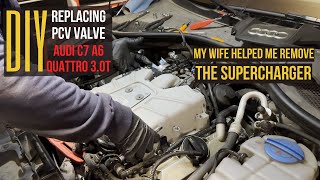
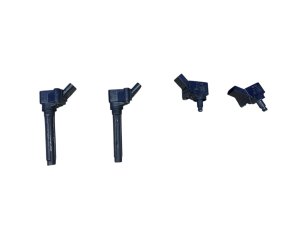
We Have This Part in Stock





The information in this article is provided for general reference and educational purposes only. Vehicle specifications, procedures, and part compatibility can vary by production date, trim level, and region. Always consult your vehicle's factory service manual and verify part numbers before purchasing or performing repairs. Safety-critical components such as airbags, seat belts, and braking systems should be installed by a qualified professional.
- Audi A6:
- 🎬 Helpful Videos
- 🛍️ Shop This Part
- What's Unique About the 2013-2020 Audi A6
- Diagnostic Flowchart
- Symptoms You May Notice
- Most Likely Causes
- Rare But Worth Checking
- Diagnosis Steps
- Parts You'll Likely Need
- Related Codes That Often Appear With This One
- Technical Service Bulletins (TSBs) & Recalls
- Platform-Specific Known Issues
- Mechanic-Grade Diagnostic Values
- Scan Tool Commands That Help
- Wiring & Ground Locations
- Real Owner Repair Stories
- "I Checked Everything" — The Actual Cause
- OEM Part Supersession History
- Model Year Variations Within This Range
- 🎟️ Get 5% Off