

P0300 on 2009-2016 VW Jetta: Random Misfire Causes and Fixes
For a 2009-2016 VW Jetta, a P0300 code is most often caused by failing ignition coils and/or worn spark plugs. On direct-injection TSI engines (common after 2011), carbon buildup on intake valves is another very frequent cause. A failed PCV valve is also a common culprit across all engine types, creating a vacuum leak. Start by inspecting ignition components, which is a low-cost DIY fix.
- P0300 means multiple cylinders are misfiring, and it's a serious issue that requires prompt attention.
- Always start with the basics: inspect and replace worn spark plugs and faulty ignition coils. This is the most likely fix and relatively inexpensive.
- If you have a TSI engine (common in 2011+ models), carbon buildup on the intake valves is a very strong possibility and requires professional cleaning.
- A failed PCV valve is another common VW issue that creates a vacuum leak, leading to P0300. Listen for a whistling sound at idle.
- Do not continue driving if the check engine light is flashing, as you risk destroying your catalytic converter, a very expensive repair.
What's Unique About the 2009-2016 Volkswagen JETTA

The 2009-2016 Jetta spans two generations, the Mk5 and Mk6, with different primary engines. Early models (2009-2010) often used the reliable 2.5L 5-cylinder port-injected engine (CBUA/CBTA), where P0300 is typically from basic ignition or vacuum issues. Later models (2011-2016) heavily feature direct-injection turbocharged (TSI) engines like the 1.4T, 1.8T, and 2.0T (EA888 family). These TSI engines are known for developing significant carbon buildup on the intake valves, which is a very common cause of random misfires that is less of a concern on the older 2.5L engine. A failing PCV valve is also a frequent culprit across all engine types in this range, creating a significant vacuum leak that leads to misfires and often a lean condition code (P0171).
Diagnostic Flowchart

Tap your situation to follow the diagnostic path that matches what you're seeing on this vehicle.
Generation note: This range covers the end of the Jetta Mk5 (2009-2010) and the majority of the Mk6 (2011-2016). The Mk5 primarily used the 2.5L 5-cylinder and 2.0T TSI engines. The Mk6 introduced the 1.4T, 1.8T, and a revised 2.0T TSI engine, alongside a base 2.0L naturally aspirated engine (CKJA). Causes for P0300 can differ, with carbon buildup being a major issue for the Mk6's TSI engines, while the 2.5L is more prone to vacuum leaks from the PCV system or intake manifold. For the 1.4T engine (CZTA), VW released a TSB for an ECM software update to address overly sensitive misfire detection.
Symptoms You May Notice

- Rough or shaking engine idle.
- Hesitation or stumbling during acceleration.
- Noticeable loss of engine power.
- Solid or flashing Check Engine Light.
- Reduced fuel economy.
- Engine may be hard to start.
- Loud whistling or sucking noise from the engine bay (indicative of PCV failure).
- Smell of raw fuel from the exhaust.
- Replacing only one spark plug or coil when others are near the end of their service life.
- Replacing oxygen sensors when the root cause is actually a vacuum leak or carbon buildup causing a lean condition.
- Assuming a fuel issue when the problem is ignition-related, which is more common on these models.
- Mistaking carbon buildup symptoms for failing spark plugs or coils, leading to unnecessary replacement of ignition components.
Most Likely Causes

- Worn Spark Plugs or Faulty Ignition Coils 🔴 High Probability Ignition coils are a very common failure item on many Volkswagen engines of this era. Worn spark plugs increase the electrical load on the coils, causing them to fail prematurely. It is best practice to replace them as a set.
How to confirm: Inspect spark plugs for wear, fouling, or incorrect gap. Swap ignition coils between a known good cylinder and a suspected misfiring one (if you also have a P030x code). If the misfire code follows the coil, the coil is bad. Oil in the spark plug wells is a sign of a leaking valve cover gasket, which can also cause coil failure.
Typical fix: Replace all spark plugs and any faulty ignition coils. Using OEM or high-quality replacements is recommended. 🎬 Watch: Step-by-step spark plug and ignition coil replacement guide.
Est. part cost: $80-$250 - Carbon Buildup on Intake Valves 🔴 High Probability This is extremely common on the direct-injection (TSI/TFSI) engines. The PCV system routes oil vapor over the intake valves, but because fuel is injected directly into the cylinder, there's no gasoline to wash the valves clean. Over time, this vapor bakes into hard carbon deposits that disrupt airflow and can cause the valves to not seat properly.
How to confirm: Use a borescope to visually inspect the intake valves with the intake manifold removed. This is the only definitive way to check. Symptoms often include rough cold starts that improve as the engine warms up.
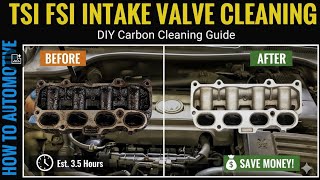
Typical fix: The intake manifold must be removed and the valves must be manually cleaned, typically through walnut blasting or chemical soaking and scrubbing. 🎬 See how to manually clean carbon from your intake valves.
Est. part cost: $20-$50 (for gaskets and seals) - Failed PCV Valve / Oil Separator 🟡 Medium Probability The diaphragm inside the PCV (Positive Crankcase Ventilation) valve is made of rubber and is known to tear, creating a significant unmetered vacuum leak. This is a high-failure-rate item on both 2.5L and TSI engines.
How to confirm: A loud whistling or sucking noise from the engine bay at idle is a strong indicator. Another test is to try to remove the oil cap while the engine is running; if there is extreme suction and the engine stumbles or stalls, the PCV has likely failed. A failed PCV often triggers lean codes (P0171, P2187) alongside P0300. 🎬 Watch: Diagnosing common PCV and vacuum leak issues on VW engines.
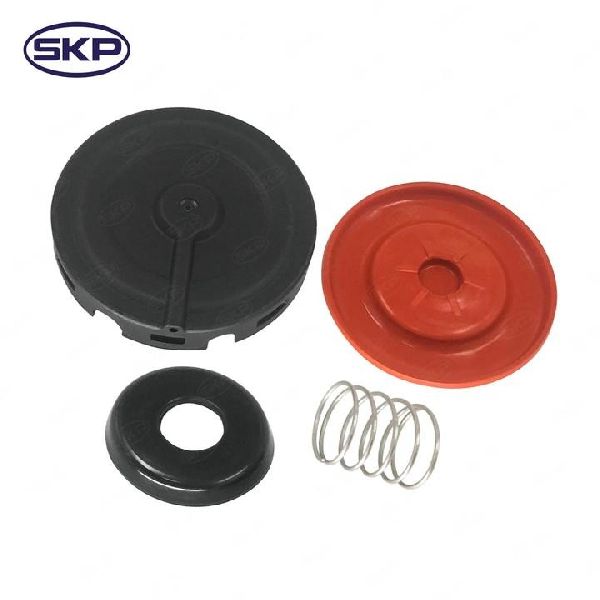
Typical fix: Replace the entire PCV valve assembly. On some models, just the diaphragm can be replaced with an aftermarket kit.
Est. part cost: $40-$160 - Vacuum Leak 🟡 Medium Probability Beyond the PCV valve, plastic and rubber vacuum lines can become brittle and crack with age and heat cycles, allowing unmetered air to enter the engine and disrupt the air-fuel ratio, causing lean conditions and misfires.
How to confirm: Perform a smoke test. This involves feeding pressurized smoke into the intake system after the mass airflow sensor and watching for where it escapes. This is the most effective method for finding small leaks.
Typical fix: Replace the cracked or broken hose or gasket that is causing the leak.
Est. part cost: $10-$100 - Faulty Fuel Injectors ⚪ Low Probability While less common than ignition or carbon issues, fuel injectors can become clogged or fail electronically. On TSI engines, an injector can get stuck open, flooding a cylinder with fuel and causing low rail pressure for the other cylinders.
How to confirm: This requires more advanced diagnostics. A stuck-open injector may be identified by pulling the spark plugs; the plug from the affected cylinder will be wet with fuel. A scan tool can monitor fuel trims, and a fuel injector balance test can be performed.
Typical fix: Replace the faulty fuel injector(s). If one has failed, it's often wise to consider replacing them as a set.
Est. part cost: $50-$200 per injector
Rare But Worth Checking
- Timing Chain Issues: The timing chain tensioner on early EA888 TSI engines was a known failure point. If the chain has stretched or the tensioner fails, it can cause camshaft/crankshaft correlation issues (P0016) and lead to misfires. Symptoms include a rattling noise on startup. An inspection port allows a technician to identify if the older, failure-prone tensioner is installed.
- Low Fuel Pressure: A weak in-tank fuel pump or a failing high-pressure fuel pump (HPFP) on TSI engines can starve the engine for fuel, causing random misfires under load. An owner complaint cited the HPFP as a suspected cause alongside P0300. [ODI #10545705]
- Low Engine Compression: A mechanical issue like a burnt valve, damaged piston rings, or even a damaged camshaft lobe can cause a loss of compression, resulting in a persistent misfire. A compression test is required to diagnose this. A user on a forum reported a damaged camshaft lobe on a 1.8TSI causing a persistent misfire on one cylinder.
- ECM Software: For 2016-2017 Jettas with the 1.4L (CZTA) engine, VW issued TSB V011620, stating the original ECM software was too sensitive for misfire detection and could set P0300 falsely. The fix is a software update.
Diagnosis Steps
- Read all fault codes with an OBD-II scanner. Note any codes accompanying P0300, such as specific cylinder misfires (P030x), lean codes (P0171), or fuel pressure codes.
- Inspect the ignition system. Remove and check the spark plugs for wear, damage, or carbon/oil fouling. Check ignition coils for cracks or signs of arcing. Ensure there is no oil in the spark plug tubes.
- If a specific cylinder misfire code (e.g., P0302) is present, swap the ignition co
Parts You'll Likely Need
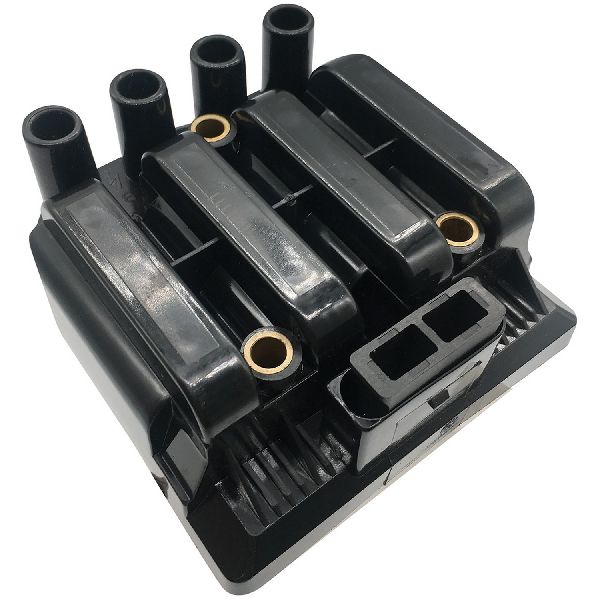
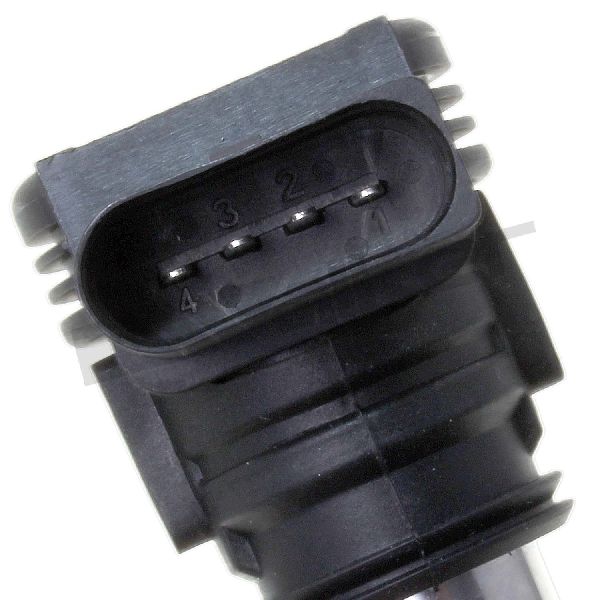
- Ignition Coil
(OEM #07K905715G (for 2.5L), 06L905110K (for TSI)) - Spark Plugs
- PCV Valve / Oil Separator
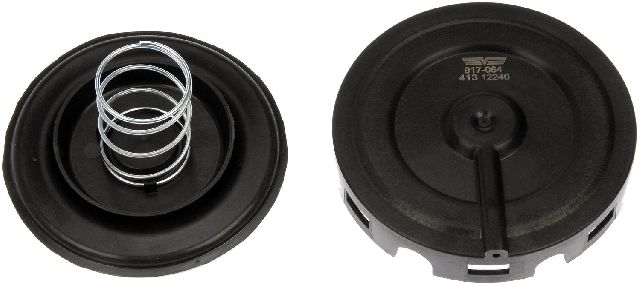
(OEM #06H103495AH (for 2.0T TSI)) - PCV Diaphragm Repair Kit
(OEM #Dorman 917-064)
Related Codes That Often Appear With This One
- P0301, P0302, P0303, P0304, P0305 — These are cylinder-specific misfire codes. They often appear with P0300 when the misfire is frequent enough in certain cylinders for the ECM to identify them.
- P0171 — This code means 'System Too Lean (Bank 1)'. It is commonly caused by a vacuum leak from a failed PCV valve or other cracked hoses, which allows too much unmetered air into the engine, leading to misfires.
- P0087 — This code means 'Fuel Rail/System Pressure - Too Low'. It can appear with P0300 if a failing fuel pump or a stuck-open injector is unable to supply enough fuel, causing misfires. This combination is also mentioned in a VW Technical Service Bulletin. [⭐ Bulletin #VIN4APIN20220118]
- P2279 — 'Intake Air System Leak'. This code is a direct indicator of a vacuum leak and is frequently seen with a failed PCV valve, often accompanying P0171 and P0300.
Technical Service Bulletins (TSBs) & Recalls
- VIN4APIN20220118: Mentions P0300 in combination with fuel pressure codes like P0087.
- V011620 (NHTSA ID: 10100351): For 2016-2017 Jetta 1.4L (CZTA), addresses overly sensitive misfire detection software that can cause false P0300 codes. The solution is an ECM update.
Platform-Specific Known Issues
- PCV Failure on 2.5L Engine: A common owner experience on the 2.5L engine involves a rough idle and multiple lean/misfire codes (P0171, P2279, P0300). The cause is frequently a torn diaphragm in the PCV system, which is part of the valve cover. One owner noted, 'Also found the valve cover/crankcase vent system had failed causing engine oil to build up inside the intake manifold. Replaced the engine valve cover.' Another repair video confirmed the fix by replacing just the diaphragm, stating 'after replacing that diaphragm it's a cold idle... but no more surge no more rough running. i think we fixed it.'
- Timing Chain Tensioner Failure on TSI Engines: Early EA888 2.0TSI engines used a timing chain tensioner prone to failure. When it fails, the ratchet mechanism no longer holds tension when the engine is off, allowing the chain to go slack. This can cause the chain to jump time on the next startup, leading to catastrophic engine damage. A key symptom is a 'rattling noise from your engine' on startup. Technicians can visually check for the updated tensioner through an inspection port.
Mechanic-Grade Diagnostic Values
- Misfire Counters per Cylinder (VCDS) — expected: 0 at idle and under normal load.. Failure: Any count that consistently increments on one or more cylinders indicates a misfire. This helps isolate a random P0300 to specific cylinders.
- Low-Side Fuel Pressure (2.5L Port-Injected Engine) — expected: ~43 PSI (3 Bar).. Failure: Significant drop in pressure under load or inability to hold pressure indicates a weak in-tank fuel pump.
- High-Side Fuel Rail Pressure (TSI Direct-Injection Engines) — expected: Can range from ~40 bar (~580 PSI) at idle to over 130 bar (~1900 PSI) under load.. Failure: Actual pressure failing to meet specified pressure in VCDS measuring blocks, especially under acceleration, points to a failing HPFP or sensor issue. Often triggers P0087.
Hidden / Shadow Codes Worth Checking
- Measuring Blocks 015 & 016: These are not fault codes but live data fields that show a running counter of misfire events for each individual cylinder (Cyl 1-4 in Block 015, Cyl 5+ in Block 016). (see via A VW-specific scan tool like VCDS (VAG-COM) is required. This allows a technician to see which cylinders are misfiring even if only a general P0300 code is stored.)
Scan Tool Commands That Help
- VCDS (VAG-COM): Reset Misfire Adaptions — On 2.0L TFSI (EA888) engines, after an engine repair or replacement, the ECU may retain old misfire adaptation values. Clearing engine fault codes three times in a row within 29 seconds forces these values to reset, which can resolve a persistent false P0300 code as per TSB 2033223.
- VCDS (VAG-COM): Output Tests (Sequential or Selective) — This function allows a technician to individually activate components like fuel injectors to test their electrical function without the engine running. This can help determine if an injector is electronically faulty.
Wiring & Ground Locations
- G13 — On top of the cylinder head.. This is a primary ground point for multiple engine sensors and components. Corrosion or a loose connection here can cause erratic sensor readings and contribute to misfire detection issues.
- Main Engine Ground Strap — Typically runs from the transmission bellhousing or engine block to the chassis frame rail, often below the battery tray.. This is the main ground path for the entire engine electrical system, including the ignition coils' power stages. A corroded or broken strap can cause a weak spark across all cylinders, leading to random misfires.
- Ignition Coil Connector — Directly on top of each ignition coil.. The pins within these connectors can corrode, especially if water intrudes, leading to a poor connection and misfires on specific cylinders. A visual inspection for rust or green/white corrosion is critical.
Real Owner Repair Stories
- YouTube channel 'Eli TheOBDTech' (VW Jetta 2.5L) — P0300, P0301, P0302, P0303, P0304, P0305 (misfire on all cylinders).
❌ Tried (didn't work) Assuming it was spark plugs or ignition coils.
✅ What actually fixed it The PCV valve diaphragm was torn. This was confirmed by a loud hissing sound from the valve and strong suction from a small hole in the PCV housing. Replacing the PCV diaphragm and cover resolved all misfire codes. - YouTube channel 'JL's Auto Solution' (2012 Volkswagen Jetta 2.0L (non-turbo)) — Hesitation, no-start condition, codes P0351 (Ignition Coil A), P0300, P0301, P0304.
✅ What actually fixed it The ignition coil pack was found to be extremely corroded and rusted inside where it connects to the wiring harness. The fix was to replace the entire coil pack, spark plug wires, and all spark plugs, which had excessively large gaps from wear.
"I Checked Everything" — The Actual Cause
- A cracked automatic transmission flexplate can cause the crankshaft position sensor to get an erratic reading, which the ECU interprets as a misfire, logging P0300. This mechanical issue will not be found with a smoke test, compression test, or by inspecting fuel and ignition components. It is often accompanied by a rhythmic knocking or ticking sound.
- A torn diaphragm inside the PCV valve assembly may not always be found with a smoke test, as the leak is internal to the crankcase ventilation system. The definitive symptom is often a loud whistle or extreme suction at the oil filler cap when the engine is running, which points directly to the PCV failure.
When the Usual Fixes Don't Work
- In cases where P0300 persists after replacing spark plugs, ignition coils, and even cleaning intake valves for carbon buildup, the root cause may not be related to the combustion system at all. A well-documented but rare cause is a cracked flexplate on automatic transmission models. The crack causes the crankshaft's rotation to be inconsistent, which the crankshaft position sensor reports to the ECU as a misfire. This will not be fixed by any standard ignition or fuel system repairs and is often misdiagnosed as a major internal engine failure due to the associated knocking noise.
OEM Part Supersession History
06H905115A / 06H905115B→06E905115E, 06E905115F, 06L905110H (and others)— The original black-top ignition coils for 2.0T TSI engines were prone to internal failure from heat, causing misfires. They were superseded by more robust designs, including the popular red-top coils (06E series) from higher-performance Audi models.06H103495A / 06H103495E→06H103495AH (and later revisions like AK)— The diaphragm in the PCV oil separator assembly for TSI engines was prone to tearing, causing a massive vacuum leak. Later revisions use improved materials for better durability.
Heads up: It is always recommended to use the latest available revision for longevity, even if older versions physically fit.
Model Year Variations Within This Range
- 2009-2012: Early EA888 Gen 1 2.0T TSI engines in this range are more susceptible to timing chain tensioner failure and high-pressure fuel pump (HPFP) cam follower wear compared to the revised Gen 2 engines that followed.
- 2009-2013: TSI vehicles manufactured before 2014 are more likely to be equipped with an older, less reliable revision of the ignition coils, making coil failure a higher probability cause for P0300 on these earlier models.
Helpful Videos
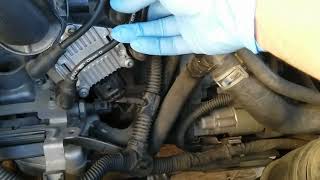
Used OEM Parts in Stock


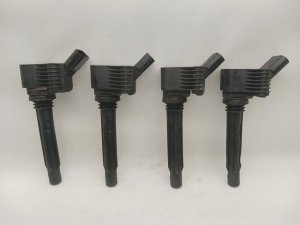
New Aftermarket Parts Available


The information in this article is provided for general reference and educational purposes only. Vehicle specifications, procedures, and part compatibility can vary by production date, trim level, and region. Always consult your vehicle's factory service manual and verify part numbers before purchasing or performing repairs. Safety-critical components such as airbags, seat belts, and braking systems should be installed by a qualified professional.
- Volkswagen JETTA:
- 🎬 Helpful Videos
- 🛍️ Shop This Part
- What's Unique About the 2009-2016 Volkswagen JETTA
- Diagnostic Flowchart
- Symptoms You May Notice
- Most Likely Causes
- Rare But Worth Checking
- Diagnosis Steps
- Parts You'll Likely Need
- Related Codes That Often Appear With This One
- Technical Service Bulletins (TSBs) & Recalls
- Platform-Specific Known Issues
- Mechanic-Grade Diagnostic Values
- Hidden / Shadow Codes Worth Checking
- Scan Tool Commands That Help
- Wiring & Ground Locations
- Real Owner Repair Stories
- "I Checked Everything" — The Actual Cause
- When the Usual Fixes Don't Work
- OEM Part Supersession History
- Model Year Variations Within This Range
- 🎟️ Get 5% Off