

P0300 on 2010-2017 Volkswagen Golf: Random Misfire Causes and Fixes
P0300 on a VW Golf most often points to failing ignition coils and worn spark plugs. On models with TSI engines (1.8T, 2.0T), severe carbon buildup on the intake valves is also a very common cause. Expect to spend $150-$400 for plugs and coils, or over $600 for professional carbon cleaning.
- P0300 means multiple cylinders are misfiring, pointing to a shared engine problem.
- For all 2010-2017 Golfs, start by inspecting ignition coils and spark plugs; they are the most common culprits.
- If your Golf has a 1.8T or 2.0T TSI engine, severe carbon buildup on the intake valves is a very high-probability cause that should be investigated.
- A failed PCV valve is another common cause of P0300 on TSI engines, often accompanied by a whistling noise and lean code P0171.
- Do not drive if the Check Engine Light is flashing, as this can quickly damage your catalytic converter.
What's Unique About the 2010-2017 Volkswagen GOLF

The 2010-2017 Golf spans two generations, the Mk6 and Mk7, with different primary engines. The Mk6 base model's 2.5L port-injected engine primarily suffers from ignition coil failures and, to a lesser extent, vacuum leaks from a failed PCV diaphragm. The Mk7's 1.8T and the GTI's 2.0T TSI (Turbocharged Stratified Injection) engines are direct-injection, making them highly susceptible to heavy carbon buildup on the intake valves, which is a leading cause of misfires on those platforms. A faulty PCV valve assembly is also a very common culprit for vacuum leaks that cause this code on TSI engines.
Diagnostic Flowchart

Tap your situation to follow the diagnostic path that matches what you're seeing on this vehicle.
Generation note: This range covers the VW Golf Mk6 (2010-2014) and the first part of the Mk7 (2015-2017). The primary cause of P0300 can differ by engine. The Mk6 often used a 2.5L 5-cylinder engine, where ignition components are the main suspect. The Mk7 introduced a 1.8T TSI engine as the base model, which, along with the 2.0T TSI in the GTI, is prone to significant carbon buildup on intake valves as a primary cause of misfires, often noticeable by a rough cold start that smooths out as the engine warms.
Symptoms You May Notice

- Rough or unstable idle, sometimes feeling like the engine is shaking
- Hesitation or stumbling during acceleration
- Flashing Check Engine Light (indicates a severe, catalyst-damaging misfire)
- Reduced engine power and performance
- Poor fuel economy
- Engine stalling
- Loud whistling or 'honking' noise from the engine bay (classic sign of PCV failure)
- Engine running noticeably rougher on cold starts, then improving when warm (symptom of carbon buildup)
- Replacing only one ignition coil or spark plug when the others are of the same age and likely to fail soon.
- Replacing oxygen sensors, as misfires can cause lean or rich readings, making the O2 sensor appear faulty when it is merely reporting the condition caused by the misfire.
- On a TSI engine, repeatedly replacing ignition components without inspecting for carbon buildup, which is a primary cause of misfires that ignition parts won't fix.
- Assuming a coil pack is good just because the misfire doesn't follow it during a swap test. A weak coil can sometimes cause intermittent misfires that don't consistently set a code for a specific cylinder.
Most Likely Causes

- Failing Ignition Coils 🔴 High Probability Ignition coils are a well-documented high-failure item on many VW engines from this era, including the 2.5L and TSI variants. They can fail without warning, causing misfires. Visual inspection may reveal white marks from electrical arcing or oil contamination from a leaking valve cover gasket.
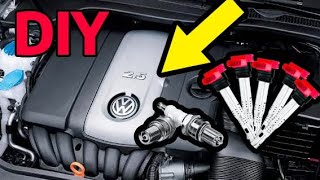
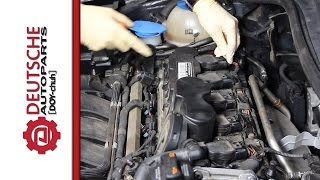
How to confirm: Scan for cylinder-specific misfire codes (P0301-P0305). Swap the ignition coil from a misfiring cylinder to a known good cylinder. Clear the codes and run the engine. If the misfire code follows the coil (e.g., P0301 becomes P0302 after swapping coils from cylinder 1 to 2), the coil is bad. 🎬 Watch: How to easily replace ignition coils on a VW 5-cylinder.
Typical fix: Replace all ignition coils and spark plugs at the same time. If one has failed, others of the same age are likely to fail soon.
Est. part cost: $120-$250 for a set of 4 or 5 coils - Worn Spark Plugs 🔴 High Probability Spark plugs are a standard maintenance item. As the electrodes wear, the gap increases, requiring more voltage to create a spark, which can lead to misfires. Incorrectly gapped or fouled plugs are a primary cause.
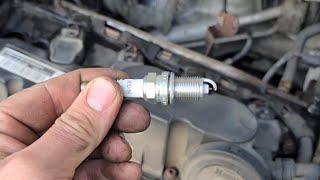
How to confirm: Remove and inspect the spark plugs for wear (rounded electrodes), fouling (black, oily, or white deposits), or an incorrect gap. They should be replaced at manufacturer-specified intervals.
Typical fix: Replace all spark plugs. Use high-quality plugs specified by the manufacturer (e.g., Bosch, NGK) and ensure they are gapped correctly.
Est. part cost: $40-$100 for a set of 4 or 5 plugs - Carbon Buildup on Intake Valves (TSI Engines) 🔴 High Probability The 1.8T and 2.0T TSI engines use direct injection, which sprays fuel directly into the cylinder. This means fuel and its detergents do not wash over the intake valves. Oil vapor from the PCV system bakes onto the hot valves, forming hard carbon deposits that restrict airflow and cause misfires, especially during cold starts.
How to confirm: Visually inspect the intake valves using a borescope after removing the intake manifold. Significant black, crusty buildup confirms the issue. This is often suspected after ignition components have been replaced with no improvement.
Typical fix: The intake valves must be manually cleaned. The most effective method is media blasting (often called 'walnut blasting') with the intake manifold removed. Chemical soaks and manual scraping are also possible but are extremely labor-intensive.
Est. part cost: $50-$100 for gaskets if doing DIY. Professional cleaning costs range from $600 to over $1200. - Failed PCV Valve / Vacuum Leak 🟡 Medium Probability The Positive Crankcase Ventilation (PCV) valve is a very common failure point on TSI engines. A tear in its internal rubber diaphragm allows unmetered air to be sucked into the engine, creating a large vacuum leak that leans out the air-fuel mixture and causes random misfires.
How to confirm: A loud whistling, sucking, or 'honking' noise from the engine bay at idle is a strong indicator. Another test is to try removing the oil filler cap while the engine is running; if the diaphragm is torn, there will be extreme vacuum making the cap difficult to remove, and the engine may stumble or stall. A smoke test is the definitive way to confirm a vacuum leak.
Typical fix: Replace the entire PCV valve assembly. VW has released multiple revisions of this part; it is crucial to use the latest version available.
Est. part cost: $40-$180 for an OEM revised part - Low Fuel Pressure ⚪ Low Probability A failing in-tank low-pressure fuel pump (LPFP), a clogged fuel filter, or a failing high-pressure fuel pump (HPFP) on TSI engines can starve the engine for fuel, causing misfires across all cylinders. A VW Technical Service Bulletin also links P0300 with low fuel pressure codes (P0087, P053F).
How to confirm: Connect a fuel pressure gauge to the fuel system and check if the pressure is within the manufacturer's specified range for both low and high-pressure sides (if applicable).
Typical fix: Replace the faulty fuel pump or clogged fuel filter.
Est. part cost: $50-$400 depending on which pump has failed
Rare But Worth Checking
- Clogged Fuel Injectors: While less common than ignition issues, dirty or failing injectors can cause lean misfires. This was noted by owners who had already replaced ignition parts and addressed carbon buildup.
- Mechanical Engine Failure: In rare cases, a random misfire can be caused by a stretched timing chain, jumped timing, or internal engine damage like a worn camshaft lobe or poor compression, leading to incorrect valve timing or sealing.
- Faulty Mass Airflow (MAF) Sensor: A dirty or failing MAF sensor can send incorrect airflow readings to the ECM, causing an improper air-fuel mixture and random misfires. This is less common than PCV-related vacuum leaks.
Diagnosis Steps
- Read all fault codes using an OBD-II scanner. Note any codes accompanying P0300, such as specific cylinder misfires (P030x) or lean/idle codes (P0171, P0507).
- Inspect all spark plugs for wear, damage, or fouling. Replace as a set if they are old or in poor condition. Ensure correct part and gap.
- Inspect ignition coils for cracks or damage. Perform a swap test: move a coil from a cylinder that is logging misfires to one that is not. Clear codes and see if the misfire follows the coil.
- Check for vacuum leaks, especially on TSI engines. Listen for a loud whistling or sucking noise at idle. With the engine running, carefully try to remove the oil cap. If strong vacuum holds it down or the engine idle changes drastically, the PCV valve is likely bad. Confirm with a smoke test.
- If you have a TSI engine (1.8T or 2.0T) and the above steps don't solve the issue, strongly suspect carbon buildup. The next step is to inspect the intake valves with a borescope, which requires removing the intake manifold.
- Test fuel pressure using a fuel pressure gauge to ensure the fuel pump and filter are functioning correctly. Check for pressure values within the manufacturer's specified range.
Parts You'll Likely Need
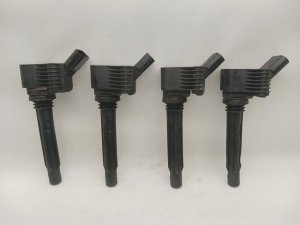
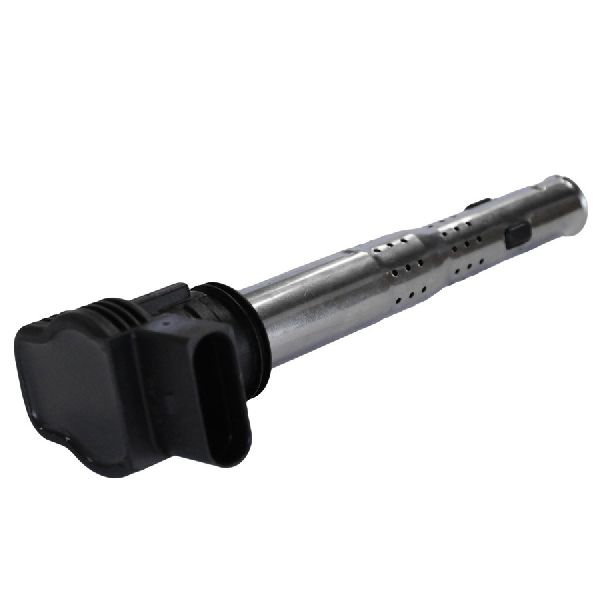
- Ignition Coil Pack
(OEM #07K905715G (2.5L, supersedes F), 06H905115B (TSI, common but has revisions), 06E905115G (TSI, red top upgrade))— This is one of the most frequent failure points causing misfires on VWs of this era.
Trusted brands: Bosch, NGK, Eldor
OEM price range: $40-$60 per coil
Aftermarket price range: $25-$45 per coil - PCV Valve Assembly (TSI Engines)
(OEM #06H103495AH (or latest revision like AJ, AK))— The diaphragm inside this assembly is a known weak point that tears, causing a massive vacuum leak and misfires. Always buy the latest OEM revision.
Trusted brands: Genuine VW/Audi, Hengst
OEM price range: $140-$180
Aftermarket price range: $40-$80 (Quality can be questionable) - Spark Plugs — A fundamental part of the ignition system and a common cause of misfires when worn or incorrectly gapped.
Trusted brands: NGK, Bosch
OEM price range: $15-$25 per plug
Aftermarket price range: $8-$15 per plug - Intake Manifold Gasket — Required when removing the intake manifold for carbon cleaning service on TSI engines.
Trusted brands: Victor Reinz, Elring, Genuine VW
OEM price range: $20-$40
Aftermarket price range: $10-$25
Related Codes That Often Appear With This One
- P0301, P0302, P0303, P0304, P0305 — These codes indicate a misfire on a specific cylinder. The ECM will often throw one of these along with P0300 as it attempts to identify the source of the problem, even if the root cause affects all cylinders.
- P0171 - System Too Lean — This code often appears with P0300 when the cause is a vacuum leak, such as a failed PCV valve, which allows unmetered air into the engine and disrupts the air-fuel ratio.
- P0087 - Fuel Rail/System Pressure - Too Low — A VW TSB specifically links P0300 with this code, indicating that insufficient fuel pressure from a weak pump or clogged filter can be the root cause of the misfire.
- P0507 - Idle Control System RPM Higher Than Expected — This code is another common companion to a failed PCV valve, as the vacuum leak causes the engine's idle speed to be higher than the target set by the ECM.
Technical Service Bulletins (TSBs) & Recalls
- TSB 01-16-15: Gasoline Quality: VW notes that poor quality gasoline can cause deposit accumulation on intake valves and injectors, leading to rough running, hesitation, and misfire codes like P0300 and lean codes like P0171. It suggests advising the customer to change their gasoline source.
- TSB #VIN4APIN20220118: MIL-on with P0087: This bulletin links random misfire codes (P0300) with low fuel pressure codes (P0087, P053F), indicating a potential fuel delivery issue as the root cause. The summary also mentions other unrelated issues like rattling heat shields.
Platform-Specific Known Issues
- Carbon Buildup on TSI Engines: Direct injection engines like the 1.8T and 2.0T are highly prone to carbon deposits on intake valves, which is a primary cause of P0300 as the vehicle ages. This requires a labor-intensive cleaning process known as walnut blasting.
- High Rate of Ignition Coil Failure: Both the 2.5L and TSI engines are known for premature ignition coil failure. It is highly recommended to replace all coils at once, even if only one has failed.
- PCV Valve Diaphragm Failure: The diaphragm inside the PCV valve on TSI engines is known to tear, creating a significant unmetered air leak that the ECM cannot compensate for, resulting in P0300 and lean codes.
Mechanic-Grade Diagnostic Values
- Ignition Coil Primary Resistance — expected: 0.4 to 2.0 ohms. Failure: A reading of 0 ohms indicates a short, while a significantly higher reading indicates an open circuit.
- Ignition Coil Secondary Resistance (Pencil Coils) — expected: 6,000 to 8,000 ohms (for newer segmented core types). Failure: A reading significantly outside this range suggests a faulty coil.
- Misfire Counter (per cylinder) — expected: 0 at idle and under normal load.. Failure: Any count that is actively increasing indicates a current misfire in that specific cylinder.
- Low-Pressure Fuel Pump (LPFP) — expected: ~4.0-6.0 bar (58-87 PSI), dropping slightly under load.. Failure: Pressure that is significantly below spec or drops off heavily under acceleration points to a weak LPFP or clogged filter.
- High-Pressure Fuel Pump (HPFP) (TSI Engines) — expected: Can range from 40 bar (580 PSI) at idle to over 150 bar (2175 PSI) under full load.. Failure: Actual pressure failing to meet the requested pressure value in VCDS measuring blocks indicates a failing HPFP or cam follower.
Scan Tool Commands That Help
- VCDS (VAG-COM): Measuring Blocks, Groups 014, 015, 016 — Use these groups to view live misfire counters for each individual cylinder. This is extremely useful for identifying which cylinder(s) are contributing to a P0300 code, even if no cylinder-specific codes (P0301-P0304) are present.
- VCDS (VAG-COM): Advanced Measuring Blocks — Allows for simultaneous logging of multiple parameters such as misfire counts, fuel trims, injector timing, and engine load. This helps correlate misfire events with specific engine operating conditions (e.g., only misfiring at high load or on cold start).
Wiring & Ground Locations
- Engine Block Ground — On the Mk6, there is a key ground connection on the engine block.. A poor engine ground can cause erratic behavior in sensors and actuators, including the ignition coils, potentially leading to random misfires.
- G131 / G132 — Main engine grounds located on the chassis frame horn, near the battery or airbox.. These are the primary ground paths for the engine control unit and many engine components. Corrosion or looseness at these points can cause a host of electrical issues, including misfires.
- Ignition Coil Connector — Directly on top of each ignition coil.. The plastic locking tabs on these connectors become brittle with age and can break, leading to a poor connection that can cause intermittent misfires on a specific cylinder, which may contribute to a P0300 code.
Real Owner Repair Stories
- Reddit user in r/Volkswagen (Unspecified VW, likely TSI engine) — P0300, P0303, P0304 codes.
❌ Tried (didn't work) Replacing spark plugs, Replacing ignition coils
✅ What actually fixed it The user reported that a carbon cleaning (walnut blasting) of the intake valves ultimately resolved the misfire codes. They also replaced the PCV valve as a preventative measure while the intake manifold was off. - Reddit user in r/GolfGTI (2008 Golf Mk5 GTI (185,000 KM)) — Shaking at idle and hiccups/shaking when letting off the gas, without any check engine light or fault codes.
❌ Tried (didn't work) PCV valve replaced, Timing chain and tensioner replaced, Intake valves walnut blasted, Cam follower replaced, Spark plugs were fairly new
✅ What actually fixed it The symptoms described are classic signs of a failing dual-mass flywheel (DMF). While the user was still diagnosing, another user confirmed that misfire-like symptoms without codes can point to a failing DMF, which is difficult to diagnose without visual inspection.
OEM Part Supersession History
06H-103-495-A, 06H-103-495-E→06H-103-495-AC, 06H-103-495-AH, 06H-103-495-AJ— The original PCV valve for the 2.0TSI engine had a diaphragm prone to tearing, causing major vacuum leaks. VW released multiple updated versions to improve durability.
Heads up: It is critical to use the latest available revision for your specific engine code (e.g., CBFA, CCTA) as earlier versions are known to fail.035-103-245-G→N/A— This is a PCV valve part number for specific earlier Mk6 models, identified by VIN range.
Heads up: This part is VIN-specific and not interchangeable with the more common TSI PCV assemblies.
Model Year Variations Within This Range
- 2008-2014 (Mk5/Mk6 GTI): The 2.0TSI engine came in two main variants, CCTA and CBFA. The CBFA engine includes an additional downstream air pressure sensor and associated wiring for its SULEV emissions rating, which can be another potential point of failure not present on CCTA engines.
- 2015-2017 (Mk7): The Mk7 generation introduced the new MQB platform and the EA888 Gen 3 engine (1.8T and 2.0T). While still direct-injection and prone to carbon buildup, some components like the PCV system and fuel pumps were redesigned and use different part numbers than the Mk6 generation.
Helpful Videos
Used OEM Parts in Stock




New Aftermarket Parts Available

The information in this article is provided for general reference and educational purposes only. Vehicle specifications, procedures, and part compatibility can vary by production date, trim level, and region. Always consult your vehicle's factory service manual and verify part numbers before purchasing or performing repairs. Safety-critical components such as airbags, seat belts, and braking systems should be installed by a qualified professional.
- Volkswagen GOLF:
- 🎬 Helpful Videos
- 🛍️ Shop This Part
- What's Unique About the 2010-2017 Volkswagen GOLF
- Diagnostic Flowchart
- Symptoms You May Notice
- Most Likely Causes
- Rare But Worth Checking
- Diagnosis Steps
- Parts You'll Likely Need
- Related Codes That Often Appear With This One
- Technical Service Bulletins (TSBs) & Recalls
- Platform-Specific Known Issues
- Mechanic-Grade Diagnostic Values
- Scan Tool Commands That Help
- Wiring & Ground Locations
- Real Owner Repair Stories
- OEM Part Supersession History
- Model Year Variations Within This Range
- 🎟️ Get 5% Off