

P0300 on 2012-2018 Volkswagen Beetle: Random Misfire Causes & Fixes
P0300 on a 2012-2018 VW Beetle indicates random cylinder misfires. The most common fixes are replacing worn spark plugs and faulty ignition coils. For models with TSI engines, a failed PCV valve or carbon buildup on the intake valves are also frequent culprits. For the 2.5L 5-cylinder, vacuum leaks and ignition components are primary suspects.
- P0300 means multiple cylinders are misfiring. Do not ignore it, especially if the check engine light is flashing.
- Always start diagnosis with the basics: inspect and replace worn spark plugs and faulty ignition coils.
- If you have a TSI engine (1.8T or 2.0T), the PCV valve is a very common failure point that causes P0300. Check it if plugs and coils are good.
- Carbon buildup on the intake valves is a significant, known issue on TSI engines and a likely cause of P0300 on cars with over 60,000 miles.
- A flashing check engine light signals a severe misfire that can destroy your catalytic converter, leading to a much more expensive repair.
What's Unique About the 2012-2018 Volkswagen BEETLE

The 2012-2018 Beetle (A5 generation) was offered with different engines, primarily the port-injected 2.5L 5-cylinder and the direct-injected 1.8T/2.0T TSI engines (like the CCTA/CBFA). While basic ignition issues affect all, the TSI engines are uniquely prone to two major issues causing P0300: failure of the Positive Crankcase Ventilation (PCV) valve, which creates a large vacuum leak, and significant carbon buildup on the intake valves. This carbon issue is a direct result of the direct injection design, which doesn't wash the valves with fuel. The 2.5L engine, while not immune to carbon, more commonly sees P0300 from vacuum leaks (including its own style of PCV issue), faulty ignition coils, and worn spark plugs.
Diagnostic Flowchart

Tap your situation to follow the diagnostic path that matches what you're seeing on this vehicle.
Symptoms You May Notice

- Rough or unstable idle
- Engine hesitation or stumbling during acceleration
- Noticeable loss of engine power
- Reduced fuel economy
- Solid or flashing Check Engine Light
- Engine vibrations felt in the cabin
- Fuel smell from the exhaust
- Difficulty starting the engine
- Replacing only one spark plug or ignition coil when others are near the end of their service life.
- Replacing oxygen sensors, assuming a fuel mixture problem, when the root cause is an ignition misfire or vacuum leak.
- Using fuel additives to try and clean severe carbon buildup on TSI engines; this is ineffective once symptoms appear.
- Replacing ignition coils and spark plugs when the actual cause is a torn PCV valve diaphragm, which presents with similar symptoms.
Most Likely Causes

- Worn or Fouled Spark Plugs 🔴 High Probability Spark plugs are a standard wear item with a service interval of 40,000-60,000 miles. They are a primary and frequent cause of misfires on any engine as they age.
How to confirm: Inspect the spark plugs for wear (eroded electrode), corrosion, or fouling with oil or carbon. Check that the gap is correct, typically between 0.024 to 0.071 inches, though OEM spec is best.
Typical fix: Replace all spark plugs as a set. It's recommended to use OEM-spec plugs from brands like NGK or Bosch and torque them to specification.
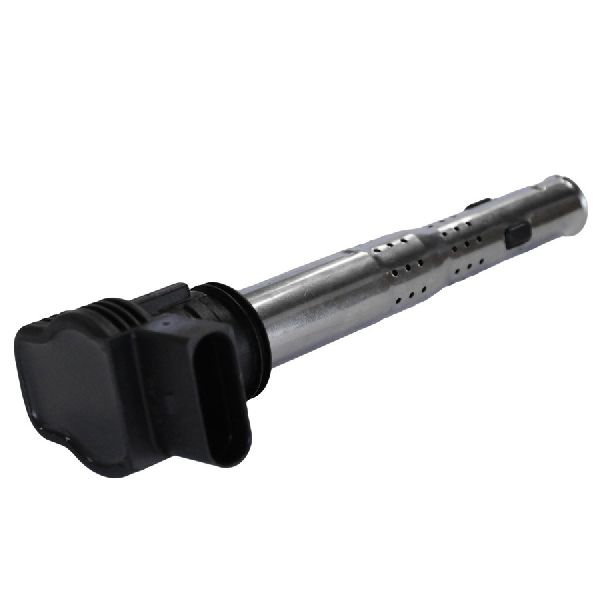
Est. part cost: $40-$100 - Faulty Ignition Coils 🔴 High Probability Ignition coils on this era of Volkswagen are a known common failure item across all engine types. They can develop cracks in the housing or internal shorts, causing weak or no spark.
How to confirm: If a cylinder-specific code (e.g., P0302) is also present, swap the coil from the misfiring cylinder to a working one. Clear the codes and run the engine. If the code follows the coil (e.g., changes to P0304), the coil is bad. Visual inspection may reveal cracks or burn marks.
Typical fix: Replace the faulty ignition coil. Many owners choose to replace all coils at once as a preventative measure, as they tend to fail around the same time.
Est. part cost: $30-$60 per coil - PCV Valve Failure (TSI & 2.5L Engines) 🟡 Medium Probability The diaphragm inside the PCV (Positive Crankcase Ventilation) valve on both TSI and 2.5L engines is prone to tearing, creating a significant unmetered air leak (vacuum leak) that affects all cylinders. This is a very common failure point.
How to confirm: Listen for a loud whistling or hissing noise from the engine bay at idle. A definitive test is to try removing the oil cap while the engine is running; if there is extreme suction making it hard to remove, and the engine stumbles or stalls, the PCV diaphragm is likely torn. This often throws a P0171 lean code as well.
Typical fix: Replace the entire PCV valve assembly, also known as the oil separator. OEM parts are strongly recommended over cheaper aftermarket versions which are known to fail quickly.
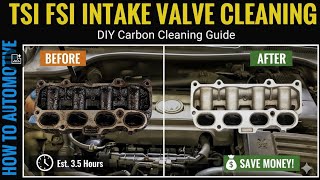
Est. part cost: $150-$250 - Carbon Buildup on Intake Valves (TSI Engines) 🟡 Medium Probability Direct injection (TSI) engines spray fuel directly into the cylinder, so gasoline detergents don't clean the intake valves. Over time, oil vapor and combustion byproducts bake onto the valves, restricting airflow and causing misfires, especially on cold starts. This issue typically becomes noticeable after 60,000-80,000 miles.
How to confirm: This requires a visual inspection using a borescope inserted into the intake ports after removing the intake manifold. Misfires that are worse on a cold engine and improve as it warms up are a strong indicator.
Typical fix: The intake manifold must be removed, and the valves must be manually cleaned. This is often done by media blasting with walnut shells or using specialized picks and solvents. 🎬 See how to manually clean carbon from your intake valves. This is a labor-intensive job.
Est. part cost: $20-$50 in cleaning supplies; professional service is $500-$1000+
Rare But Worth Checking
- Clogged or Faulty Fuel Injectors: An injector can become clogged or fail electronically, preventing a cylinder from getting the correct amount of fuel. This is more common on higher mileage vehicles and can sometimes be resolved with a professional cleaning service, but may require replacement.
- Vacuum Leak (other than PCV): A cracked hose (like the small plastic breather hoses), a failed intake manifold gasket, or a loose air duct can introduce unmetered air and cause a lean condition, leading to random misfires. A smoke test is the most effective way to find these leaks.
- Low Fuel Pressure: A weak fuel pump, a clogged fuel filter, or a failing fuel pressure regulator can starve the engine of fuel, causing misfires across all cylinders, especially under load. On TSI engines, the high-pressure fuel pump (HPFP) can also be a point of failure.
- Faulty Mass Airflow (MAF) Sensor: A dirty or failing MAF sensor can send incorrect airflow readings to the ECM, causing an improper air/fuel mixture and leading to misfires. Cleaning the sensor with a dedicated MAF cleaner can sometimes resolve the issue.
Diagnosis Steps

- Read all fault codes using an OBD-II scanner (like VCDS or OBDeleven for VW-specific data). Note if P0300 is present with any cylinder-specific (P030x) or lean-condition (P0171) codes. Check misfire counters for each cylinder in live data.
- Inspect the service history. If spark plugs haven't been replaced in over 40,000-60,000 miles, start there.
- Inspect ignition coils and their connectors for damage, corrosion, or cracks. If a specific cylinder is misfiring (e.g., P0302), swap that coil with a known good cylinder (e.g., cylinder 1) to see if the fault code follows (becomes P0301).
- Check the PCV valve. With the engine running, listen for a whistle and carefully try to remove the oil filler cap. Strong vacuum resistance and a change in engine idle point to a failed PCV diaphragm.
- Perform a smoke test to check for any vacuum leaks from cracked hoses or bad gaskets, especially if fuel trims are high (indicating a lean condition).
- Check fuel pressure (both low and high pressure systems on TSI engines) to ensure the fuel pump(s) and filter are functioning correctly.
- For higher-mileage TSI engines (over 60,000 miles) with persistent misfires, especially on cold starts, inspect intake valves for carbon buildup using a borescope.
- As a final step if all else fails, perform a compression test and a cylinder leak-down test to rule out internal mechanical engine problems like bad valves or piston rings. 🎬 Watch: Diagnosing multiple misfire codes on the 2.5L engine.
Parts You'll Likely Need
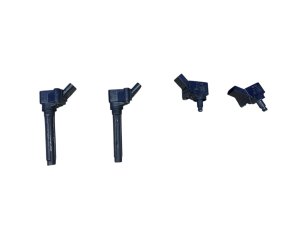
- Ignition Coil
(OEM #06H905115B (2.0T TSI), 07K905715F (2.5L))— A very common failure point on this platform causing misfires.
Trusted brands: Bosch, NGK, Eldor, APR
OEM price range: $45-$65
Aftermarket price range: $25-$50 - Spark Plug
(OEM #06K905601B (2.0T TSI), 101905617C (2.5L))— A fundamental maintenance item required for proper combustion. Worn plugs are a primary cause of misfires.
Trusted brands: NGK, Bosch
OEM price range: $15-$25 per plug
Aftermarket price range: $10-$18 per plug
Related Codes That Often Appear With This One
- P0301, P0302, P0303, P0304, P0305 — These are cylinder-specific misfire codes that often accompany P0300, helping to narrow down the location of the fault.
- P0171 - System Too Lean — This code often appears with P0300 when the cause is a vacuum leak, such as a failed PCV valve, which allows too much unmetered air into the engine.
- P1D74, P1D75 — As noted in VW Technical Service Bulletins, these manufacturer-specific codes related to fuel shutoff can appear alongside misfire codes, indicating a known fault pattern that VW has acknowledged. [Bulletin #VIN4APIN20211026, Bulletin #VIN4APIN20220118]
Technical Service Bulletins (TSBs) & Recalls
- VIN-4-A-PIN-2018: MIL-on with P0300-P0304 in the ECM AFTER software level 0003.
- VIN4APIN20211026: Customer states MIL-on with any combination of P0300, P0301, P0302, P0303, P0304, P1D74 and/or P1D75 in the ECM.
- VIN4APIN20220118: Customer states MIL-on with any combination of P0300, P0301, P0302, P0303, P0304, P1D74 and/or P1D75 in the ECM.
Platform-Specific Known Issues
- TSB #VIN-4-A-PIN-2018: Notes that on some 2018 models, misfire codes P0300-P0304 can appear specifically after an ECM software update to level 0003.
- TSB #VIN4APIN20211026 & #VIN4APIN20220118: Volkswagen acknowledges a pattern where misfire codes (P0300-P0304) can appear in combination with P1D74 and/or P1D75 (fuel shutoff codes), indicating a known software or component fault pattern.
- 2.5L Engine Specific: Owners have noted that vacuum leaks are a very common cause of P0300. In some cases, the rubber insulators inside the coil packs can degrade and crack, causing spark to arc to the cylinder head instead of the plug.
Mechanic-Grade Diagnostic Values
- Ignition Coil Primary Resistance — expected: 0.3 to 5.0 ohms, depending on coil type (Bosch vs others).. Failure: A reading of zero or significantly higher than the specified range indicates a faulty coil.
- Ignition Coil Secondary Resistance — expected: 5,000 to 20,000 ohms (5k-20k Ω). Some sources cite ranges of 8k-14k Ω or 9.5k-10k Ω.. Failure: A reading of zero, infinity, or significantly outside the expected range points to a bad coil.
- Fuel Pressure (2.5L Engine at idle) — expected: Approximately 40-43 PSI.. Failure: Significantly high pressure (e.g., 80 PSI) can indicate a clogged fuel rail or return line, while low pressure points to a weak pump or clogged filter.
- Fuel Trim (Short-Term and Long-Term) via OBD-II — expected: Between -5% and +5% at idle.. Failure: High positive values (e.g., > +10%) indicate the engine is compensating for a lean condition, often caused by a vacuum leak.
- Battery/Charging System Voltage (Engine Running) — expected: 13.7 to 14.7 volts.. Failure: Voltage below 13.7V while running may indicate an alternator issue, which can cause insufficient power for the ignition system, leading to misfires.
Hidden / Shadow Codes Worth Checking
- Misfire Counter (per cylinder): This is not a fault code but a live data parameter that shows the exact number of misfire events the ECM has detected for each individual cylinder. It is invaluable for diagnosis when a P0300 is present without a specific P030x code. (see via A VW-specific scan tool like VCDS or OBDeleven is required. It can be found in the Advanced Measuring Values of the Engine Control Unit (01-Engine).)
- Mode $06 Data: Mode $06 provides access to the results of the ECU's non-continuous self-tests. For misfires, it contains counters (Test ID $53) for each cylinder that can reveal misfires that haven't yet reached the threshold to set a formal fault code. (see via Most advanced generic OBD-II scanners can access Mode $06 data. The data is presented in hexadecimal and requires interpretation based on manufacturer definitions.)
Scan Tool Commands That Help
- VCDS (VAG-COM) or OBDeleven: Advanced Measuring Values / Live Data — Use this to monitor the misfire counter for each cylinder in real-time. This helps identify which cylinder(s) are contributing to the P0300 code, even if no cylinder-specific code is set.
- VCDS (VAG-COM) or OBDeleven: Output Tests — This function allows the user to command specific components to activate, such as the fuel pump relay or individual fuel injectors. This can be used to verify the electrical circuit and basic function of a component without having to remove it.
Wiring & Ground Locations
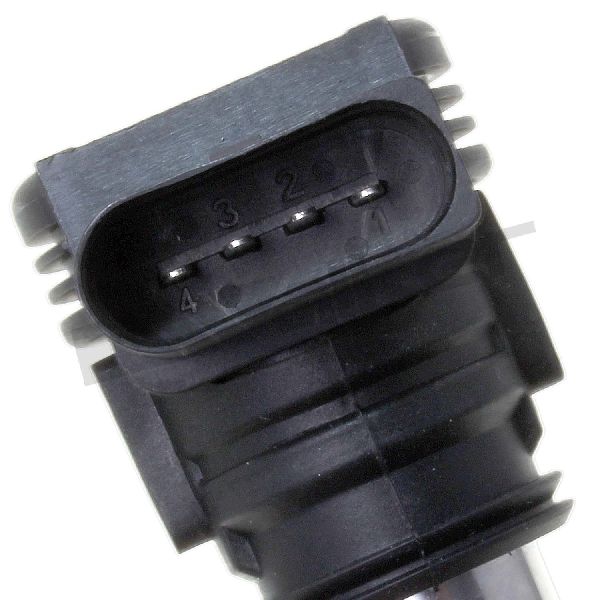
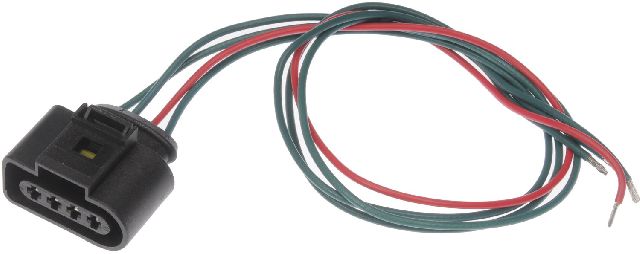
- Ignition Coil Connector (3-pin or 4-pin) — Directly on top of each ignition coil, which is inserted into the valve cover above each spark plug.. The connector provides power, ground, and the trigger signal from the ECU. A loose, corroded, or damaged connector or wiring at this point will cause a misfire. One pin should have +12V with the key on, one is a ground, and the other(s) are signal wires from the ECU.
- Engine Block Ground Strap — Typically a braided cable connecting the engine block to the vehicle's chassis/frame rail in the engine bay.. A corroded or loose main engine ground can cause a variety of electrical issues, including weak spark and random misfires, as the ignition coils may not have a reliable path to ground.
Real Owner Repair Stories
- YouTube user 'carlsgarage' (1999 Volkswagen Beetle (similar fuel system design to 2.5L)) — Random stalling, rough running, and extremely high fuel pressure (80 PSI).
❌ Tried (didn't work) Replacing the fuel pressure regulator did not solve the high pressure issue.
✅ What actually fixed it The fuel rail itself was clogged with debris. After removing the rail and blowing it out with compressed air, reinstalling the new regulator resulted in the correct fuel pressure (40-43 PSI) and resolved the running issues. - Reddit user in /r/Justrolledintotheshop (Volkswagen with 2.0 TSI engine) — Severe misfire and throttle shutdown only at full throttle. Idled and drove fine under normal load.
❌ Tried (didn't work) Initial diagnosis was difficult as the issue only occurred under heavy stress.
✅ What actually fixed it A cracked flexplate. Under severe torque, the plate would twist slightly on the crankshaft, throwing off timing information to the ECU and causing severe misfires. The transmission had to be removed to replace the flexplate.
"I Checked Everything" — The Actual Cause
- In some TSI engines, a smoke test of the intake system may come back clean, but the engine still has a P0171 lean code and P0300 misfires. The cause can be a failed rear main seal, often triggered by excessive crankcase pressure from a bad PCV valve. Smoke introduced into the crankcase (e.g., via the oil filler neck) will exit the bellhousing area where the engine and transmission meet, confirming the leak.
OEM Part Supersession History
07K905715C, 07K905715D→07K905715F, 07K905715G— Revisions to improve reliability and prevent premature failure, a common issue on many VW/Audi engines.
Heads up: The part number 07K905715F is a widely used coil that also supersedes other numbers like 06H905115B and 06F905115F on various engines, indicating broad compatibility for these red-top or black-top coils.
Model Year Variations Within This Range
- 2012-2018: The 2.0T TSI engine came in two main variants: CCTA (49-state emissions) and CBFA (California emissions). The CBFA includes a secondary air injection system for cleaner cold starts, which adds an extra hose to the airbox and potential failure points (pump, valves) not present on the CCTA.
- 2011-2014: The 2.5L 5-cylinder engine also had variants, primarily CBTA and CBUA. The CBUA was a California emissions (PZEV) version with different oxygen sensor configurations (two vs one on the CBTA) and minor accessory differences. Swapping between them may require ECU and wiring harness modifications.
- 2012-2013: Early models of the A5 Beetle were available with the 2.5L port-injected engine, which was later phased out in favor of the 1.8T TSI engine in the lineup. Diagnostic focus for P0300 shifts from potential carbon buildup on the 1.8T/2.0T to vacuum leaks and ignition on the 2.5L.
Helpful Videos
Used OEM Parts in Stock



New Aftermarket Parts Available


The information in this article is provided for general reference and educational purposes only. Vehicle specifications, procedures, and part compatibility can vary by production date, trim level, and region. Always consult your vehicle's factory service manual and verify part numbers before purchasing or performing repairs. Safety-critical components such as airbags, seat belts, and braking systems should be installed by a qualified professional.
- Volkswagen BEETLE:
- 🎬 Helpful Videos
- 🛍️ Shop This Part
- What's Unique About the 2012-2018 Volkswagen BEETLE
- Diagnostic Flowchart
- Symptoms You May Notice
- Most Likely Causes
- Rare But Worth Checking
- Diagnosis Steps
- Parts You'll Likely Need
- Related Codes That Often Appear With This One
- Technical Service Bulletins (TSBs) & Recalls
- Platform-Specific Known Issues
- Mechanic-Grade Diagnostic Values
- Hidden / Shadow Codes Worth Checking
- Scan Tool Commands That Help
- Wiring & Ground Locations
- Real Owner Repair Stories
- "I Checked Everything" — The Actual Cause
- OEM Part Supersession History
- Model Year Variations Within This Range
- 🎟️ Get 5% Off