

P0300 on 2010-2017 GMC Terrain 2.4L: Random Misfire Causes and Fixes
On a 2010-2017 GMC Terrain with the 2.4L engine, a P0300 code is most often a symptom of excessive oil consumption fouling the spark plugs, or a stretched timing chain. Before buying parts, check your oil level and inspect the spark plugs for heavy oil or carbon deposits. These issues were so prevalent that GM issued special coverage programs to address them.
- P0300 on a 2.4L Terrain is not a simple tune-up issue; it's a strong warning sign of a deeper mechanical problem.
- Always check the oil level first. Low oil or a history of high consumption points directly to the most common cause: worn piston rings fouling the spark plugs.
- Listen for a brief rattling sound on cold starts. This is a classic symptom of a stretched timing chain, the second most common cause.
- Do not ignore a flashing check engine light. Pull over safely and shut off the engine to prevent catastrophic damage to your catalytic converter.
- If you also have codes P0014, P0016, or P0017, the problem is almost certainly the timing chain.
What's Unique About the 2010-2017 GMC Terrain

The 2.4L Ecotec engine in this generation of GMC Terrain is notorious for two major issues that directly cause a P0300 code: excessive oil consumption and timing chain failure. Defective piston rings can cause oil to enter the combustion chamber, fouling spark plugs and leading to misfires. GM acknowledged this with Special Coverage Adjustment #15285 for some 2011 models, extending the warranty for piston ring wear. Additionally, the timing chains are known to stretch, often due to running with low oil pressure, which throws off the critical synchronization between the crankshaft and camshafts, also resulting in random misfires. These two issues are so common that they should be the primary suspects in any P0300 diagnosis for this vehicle.
Symptoms You May Notice
- Rough or shaking idle
- Hesitation or stumbling during acceleration
- Flashing check engine light (indicates a severe, catalyst-damaging misfire)
- Reduced engine power
- Poor fuel economy
- Engine stalling
- Rattling noise from engine on cold startup
- Replacing only one ignition coil or spark plug when the root cause is oil consumption that has fouled all of them.
- Replacing camshaft or crankshaft sensors when timing codes (P0016/P0017) are present, as the actual fault is almost always a stretched timing chain.
- Replacing the catalytic converter for a P0420 code that appears with P0300. The P0420 is a symptom of the misfire dumping unburned fuel into the exhaust, not the cause.
Most Likely Causes


- Excessive Oil Consumption Fouling Spark Plugs 🔴 High Probability The original piston rings on the 2.4L Ecotec engine are known to wear prematurely, allowing oil to bypass them and enter the combustion chamber. This was a known defect acknowledged by GM through class-action lawsuits and Special Coverage Adjustments (e.g., #14159, #15285C) which covered piston replacement for some models exhibiting consumption greater than 1 quart per 2,000 miles. The burned oil creates heavy carbon deposits on the spark plugs, preventing them from firing correctly.
How to confirm: Check the engine oil level; if it's low, this is a major red flag. Remove the spark plugs and inspect them. Plugs that are black, wet with oil, or covered in thick carbon deposits confirm this issue.
Typical fix: The short-term fix is to replace the fouled spark plugs (OEM part is ACDelco Iridium 41-109). The long-term, correct repair is to replace the pistons and piston rings with updated parts, which is a major engine-out service covered for some vehicles under warranty extensions.
Est. part cost: $20-$50 for spark plugs; $500-$1200+ for piston/ring kits. - Stretched Timing Chain 🔴 High Probability The timing chains and guides in these engines are a known weak point. They can be starved of oil pressure due to the excessive oil consumption issue, leading to accelerated wear and stretching. This desynchronizes the camshafts and crankshaft, leading to incorrect valve timing and random misfires.
How to confirm: A common symptom is a rattling noise from the passenger side of the engine on a cold start that lasts for a few seconds. A scan tool will show camshaft/crankshaft correlation codes like P0016 and P0017 alongside P0300.
Typical fix: Replacement of the timing chain, tensioners, and guides. This is a labor-intensive job. Using an OEM or high-quality aftermarket kit is strongly recommended.
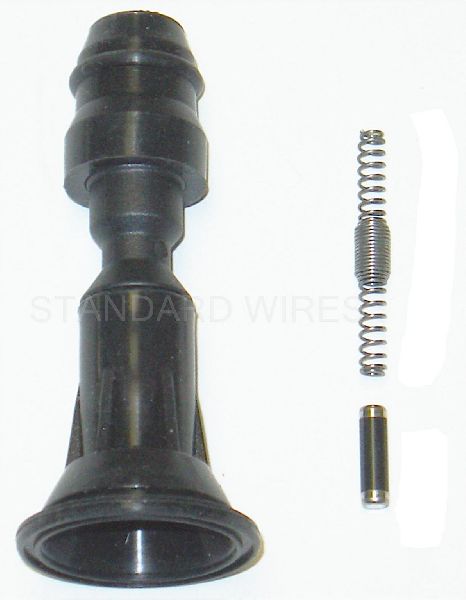
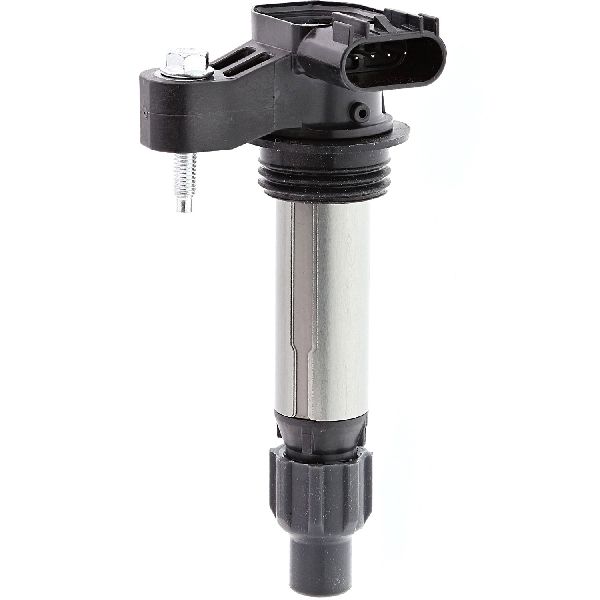
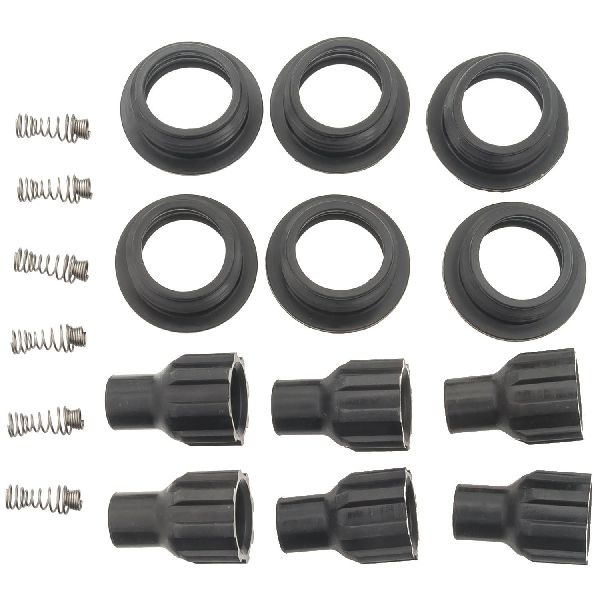
Est. part cost: $150-$400 for a complete timing kit. - Worn Spark Plugs or Failed Ignition Coils 🟡 Medium Probability While a standard maintenance item, worn plugs or a failing coil can cause misfires. Often, this is a secondary failure caused by the primary issue of oil consumption fouling the plugs. In some cases, the insulation on the coil boot can break down from oil exposure, causing the spark to arc to the cylinder head instead of the plug.
How to confirm: Inspect spark plugs for wear, incorrect gap, or damage. The recommended ACDelco Iridium plugs are pre-gapped and should not be adjusted. To test a coil, swap it with a coil from a non-misfiring cylinder (if a specific cylinder can be identified via scan tool data) and see if the misfire follows the coil.
Typical fix: Replace all four spark plugs (ACDelco 41-109) and/or the faulty ignition coil(s). It is recommended to replace all coils at once.
Est. part cost: $20-$50 for spark plugs; $30-$80 per ignition coil. - Clogged/Frozen PCV System 🟡 Medium Probability The PCV (Positive Crankcase Ventilation) system, specifically a small fixed orifice in the intake manifold, is known to get clogged with sludge or freeze in cold weather. This increases crankcase pressure, which forces oil past the poorly-designed piston rings and can cause the rear main seal to leak. GM issued Special Coverage Adjustment #14882 covering this exact issue for 10 years/120,000 miles.
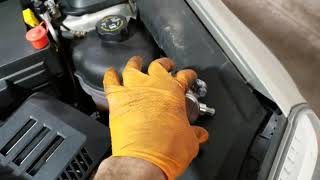
How to confirm: With the engine running, remove the oil cap. A strong suction holding the cap down or excessive pressure pushing it off indicates a PCV system problem. A dealership can perform a formal crankcase pressure test as outlined in TSB 14882. Some owners have drilled a small access hole in the intake manifold to periodically clean the orifice. 🎬 Watch: A quick way to clear the PCV orifice without removal.
Typical fix: The intake manifold must be removed to drill out and clean the clogged PCV orifice. In some cases, the internal passages are blocked and the entire manifold needs replacement.
Est. part cost: $150-$300 for an intake manifold if it needs replacement. - Leaking High-Pressure Fuel Pump ⚪ Low Probability The seal on the high-pressure fuel pump (HPFP), which is driven by the camshaft, can fail. This allows gasoline to leak directly into the crankcase, diluting the engine oil. This thinned, gas-contaminated oil can cause a variety of issues, including poor lubrication, timing chain wear, and misfires. GM issued Emission Recall #43180 for the 2010-2011 LAF engine to replace faulty HPFPs (Part No. 12641847).
How to confirm: Check the engine oil dipstick. If the oil level is overfull and smells strongly of gasoline, this is the likely cause. This condition often sets a P0172 (System Too Rich) code.
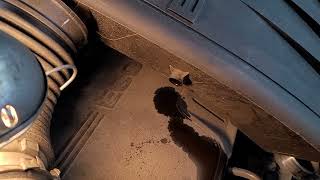
Typical fix: Replace the high-pressure fuel pump and change the oil and filter. The OEM part number for the pump is 12641847. 🎬 See how a failing high-pressure fuel pump causes multiple codes. The cam follower bucket should also be inspected and likely replaced at the same time.
Est. part cost: $150-$350 for a fuel pump.
Rare But Worth Checking
- Faulty Camshaft Position Actuator Solenoids: These solenoids (VVT solenoids) control variable valve timing. They get clogged with dirty/sludgy oil or fail electrically, causing timing issues and misfires, sometimes with codes P0010/P0011 (intake) or P0013/P0014 (exhaust). They are relatively easy to replace. OEM Part Numbers: Intake 12655420, Exhaust 12655421.
- Clogged Fuel Injectors: As these are direct injection engines, carbon can build up on the injector tips, disrupting the spray pattern and causing incomplete combustion. This is less common than the other major issues but can still be a factor. GM Preliminary Information bulletin PIP5029 discusses this issue.
- Engine Block Porosity: A rare but documented issue in TSB 18-NA-115 where microscopic pores in the engine block casting allow coolant to seep into a cylinder when the engine is cold, causing a misfire on startup that may disappear as the engine warms. The only fix is engine replacement.
Diagnosis Steps
- Check the engine oil level immediately. If it is low, suspect oil consumption as the root cause.
- Scan for any other trouble codes. Codes related to timing (P001x) or fuel mixture (P017x) provide critical clues.
- Inspect all four spark plugs. Look for signs of oil fouling (wet, black deposits), carbon tracking, or excessive wear. The condition of the plugs is a key diagnostic indicator for this engine.
- If plugs are fouled, the vehicle has an oil consumption problem likely requiring piston ring replacement. If plugs are just worn, replace them with ACDelco 41-125 plugs.
- Check for a rattling noise on a cold startup, which indicates a stretched timing chain.
- Test the PCV system. Check for excessive vacuum or pressure at the oil fill cap when the engine is running. Reference TSB 14882 for official test procedures.
- Inspect the VVT solenoids. Remove them and check the screens for metallic debris, which indicates timing chain guide wear.
- If the oil smells like gasoline and is overfull, suspect a leaking high-pressure fuel pump.
Parts You'll Likely Need

- Spark Plugs
(OEM #12622561)— Often fouled by excessive oil consumption or simply at the end of their service life. This is the most common first part to replace.
Trusted brands: ACDelco, NGK
OEM price range: $40-$60
Aftermarket price range: $20-$40 - Engine Timing Chain Kit
(OEM #12685021)— The original chains are prone to stretching, causing timing correlation codes and random misfires. A very common major repair on this engine.
Trusted brands: ACDelco, Cloyes
OEM price range: $250-$400
Aftermarket price range: $150-$250 - Piston & Ring Set — The definitive fix for the excessive oil consumption issue that fouls spark plugs and causes P0300. This is a major engine rebuild.
Trusted brands: ACDelco, Mahle
OEM price range: $800-$1200
Aftermarket price range: $500-$800 - Ignition Coil
(OEM #12632479)— Can fail from age or be damaged by oil leaking from the valve cover gasket. Often replaced with spark plugs.
Trusted brands: ACDelco, Delphi
OEM price range: $50-$80
Aftermarket price range: $30-$60
Related Codes That Often Appear With This One
- P0301, P0302, P0303, P0304 — These are cylinder-specific misfire codes. They may appear alongside P0300 if the computer can sometimes isolate the misfire to a particular cylinder, as shown in a diagnostic video where a P0300 was eventually traced to cylinders 3 and 4.
- P0016, P0017 — These camshaft/crankshaft position correlation codes are a strong indicator that the misfire is being caused by a stretched timing chain.
- P0172 — This 'System Too Rich' code often points to a leaking high-pressure fuel pump diluting the engine oil with gasoline, which can lead to misfires.
- P0011, P0014 — These codes point to issues with the camshaft position timing, often caused by faulty or clogged VVT solenoids, which can also cause a P0300 misfire.
Technical Service Bulletins (TSBs) & Recalls
- 14882 - Special Coverage Adjustment – Plugged PCV Orifice in Intake Manifold: Covers cleaning or replacing the intake manifold due to a clogged PCV orifice that causes high crankcase pressure and oil leaks. Applies to 2010-2013 Terrains for 10 years/120,000 miles.
- 15285 - Special Coverage Adjustment – Excessive Engine Oil Consumption: For some 2011 models, this extended coverage to 7.5 years/120,000 miles for replacing piston and ring assemblies if oil consumption was verified to be worse than 1 quart in 2,000 miles.
- 18-NA-115 - Cold Start Misfire/Rough Idle with P0300: Addresses a rare issue of engine block porosity allowing coolant into cylinders when cold. Manufacturer TSB Bulletin #18NA115 provides specific inspection and diagnosis for this cold start misfire condition.
- 43180 - Voluntary Emission Recall – High Pressure Fuel Pump: Recall for 2010-2011 Terrains to replace the HPFP (Part No. 12641847) due to a faulty seal that could leak fuel into the crankcase.
- 01-06-01-011M - Information on Engine Oil Consumption Guidelines: General GM bulletin stating that oil consumption up to 1 quart per 2,000 miles is considered acceptable under warranty for non-aggressively driven vehicles.
- PIP5628G - Misfire and DTC Codes: This bulletin provides information to aid in diagnosing vehicles that come in with misfires and DTC codes P0300 through P0308.
Platform-Specific Known Issues
- Excessive Oil Consumption: GM issued several Special Coverage Adjustments (e.g., 14159, 15285C, N192291100) for piston ring wear on 2010-2013 models, extending the warranty for this specific repair. However, these programs have expired for most vehicles due to age and mileage.
- Stretched Timing and Balance Chains: Special Coverage Adjustment 12313 addressed premature wear on the balance chain and a related fuel pump issue for 2010-2011 models.
- Plugged PCV Orifice: Special Coverage Adjustment 14882 was issued for a plugged PCV orifice in the intake manifold, which could cause high crankcase pressure and oil leaks, particularly in cold weather.
Mechanic-Grade Diagnostic Values
- Camshaft Position Actuator Solenoid (VVT) Resistance — expected: 8 to 13 Ohms. Failure: A reading that is significantly higher (e.g., in the kilo-ohm or mega-ohm range) or an open circuit indicates a failed solenoid. Readings that fluctuate wildly when wiggling the connector pins suggest an intermittent internal connection failure.
- Long-Term Fuel Trim (LTFT) — expected: -10% to +10%. Failure: Consistently negative values (e.g., -20% or more) suggest a rich condition, often linked to a leaking high-pressure fuel pump. This data is viewed with a scan tool.
- High-Pressure Fuel System Pressure — expected: Approximately 1,000-1,200 PSI. Failure: Pressure that is significantly below specification or drops off rapidly can indicate a failing high-pressure fuel pump. This test requires a specialized fuel pressure gauge.
- Crankshaft RPM during Cranking — expected: 100-500 RPM. Failure: A reading of 0 RPM on a scan tool while the engine is cranking indicates a failed crankshaft position sensor or a wiring circuit issue.
Scan Tool Commands That Help
- GDS2 / Tech2 (or equivalent professional scanner): Misfire Data / Misfire Graphic — This is the primary function to use for a P0300. It displays current and historical misfire counts for each individual cylinder, allowing the technician to see which cylinders are misfiring the most, even if no cylinder-specific codes are set.
- GDS2 / Tech2 (or equivalent professional scanner): Cylinder Power Balance — This bidirectional test deactivates one fuel injector at a time to measure the RPM drop of each cylinder. A cylinder that shows little or no RPM drop when its injector is disabled is not contributing power, helping to isolate a mechanical, fuel, or ignition issue to that specific cylinder.
- GDS2 / Tech2 (or equivalent professional scanner): Crankshaft Position (CKP) System Variation Learn — This procedure MUST be performed after replacing the crankshaft sensor, engine, ECM, or performing any repair that disturbs the crankshaft-to-sensor relationship (e.g., replacing the harmonic balancer). Failure to perform the relearn can cause the ECM to inaccurately detect misfires and set a false P0300 code because it has not learned the new 'fingerprint' of the rotating assembly's minor imbalances.
Wiring & Ground Locations
- G102 — Located at the left rear of the engine.. This is the specific ground for the ignition coils. A loose or corroded connection at G102 can cause insufficient ground for the coils, leading to weak spark and random misfires.
- G105 / G106 — G105 is at the left front of the engine compartment; G106 is on the front center of the frame cross rail under the crank pulley. The main ECM ground (G101) jumpers to G106.. These are critical grounds for the Engine Control Module (ECM) and multiple sensors. A poor connection, especially at G106, can cause erratic ECM behavior, incorrect sensor readings, and false misfire detection.
Real Owner Repair Stories
- YouTube video from 'Chris Lott' (Chevy Equinox 2.4L Ecotec (sister vehicle)) — Mysterious engine miss or rough idle, P0300 code.
❌ Tried (didn't work) New spark plugs, New ignition coils, New timing chain, New fuel injectors, New VVT solenoids
✅ What actually fixed it The flexplate was found to be cracked. The crack caused a slight wobble in the crankshaft's rotation, which was picked up by the crankshaft position sensor as an erratic signal. The ECM interpreted this signal variation as a random misfire. Replacing the cracked flexplate resolved the P0300 code. - NHTSA ODI #11203242 — An owner reported excessive oil consumption alongside repetitive codes including P0089, P0300, P0366, P228D, and P0014. The vehicle was described as jerking back and forth when at a stop light and making a tapping noise.
- NHTSA ODI #11375295 — A computerized engine analysis for an owner revealed code P0014 for camshaft position timing over-advanced and P0300 for random/multiple cylinder misfire.
OEM Part Supersession History
12639694→12641847 (and potentially others since)— The original high-pressure fuel pump (HPFP) was prone to internal seal failure, leading to fuel-in-oil contamination. The updated part addressed this design flaw.
Model Year Variations Within This Range
- 2010-2011 (LAF) vs 2012-2017 (LEA): The primary difference is that the LEA engine is E85 FlexFuel capable, while the LAF is not. This involves changes to components like valve seats to better withstand the corrosive effects of ethanol. Mechanically, the engines are very similar, sharing the same direct injection, compression ratio (11.2:1), and core architecture, and are prone to the same oil consumption and timing chain issues. Many core mechanical parts, like head gaskets, are often interchangeable.
Diagnostic Flowchart
Real Owner Stories
Aggregated from forums and TSBs cited above. Mileages and costs reflect what owners reported in those sources.
2015 GMC Terrain 2.4L
Symptoms: Reported a P0300 random misfire code accompanied by a full slate of timing codes.
What fixed it: Diagnosis of the timing system (specific repair not detailed in the thread snippet, but context indicates timing chain issues).
Source hint: Reddit - r/AskMechanics - '2015 gmc terrain 2.4L'
2010-2011 GMC Terrain 2.4L (LAF)
Symptoms: Engine oil level overfull and smelling strongly of gasoline, leading to misfires, poor lubrication, and timing chain wear.
What fixed it: Replaced the high-pressure fuel pump (HPFP) with updated Part No. 12641847 and changed the oil and filter.
Source hint: 43180 - Voluntary Emission Recall – High Pressure Fuel Pump
2010-2013 GMC Terrain
Symptoms: High crankcase pressure and oil leaks, particularly in cold weather, caused by a plugged PCV orifice.
What fixed it: Cleaned or replaced the intake manifold to clear the clogged PCV orifice.
Source hint: 14882 - Special Coverage Adjustment – Plugged PCV Orifice in Intake Manifold
2011 GMC Terrain 2.4L
Symptoms: Excessive engine oil consumption (worse than 1 quart per 2,000 miles) leading to heavy carbon deposits and fouled spark plugs.
What fixed it: Replaced piston and ring assemblies under extended warranty.
Source hint: 15285 - Special Coverage Adjustment – Excessive Engine Oil Consumption
Related OBD-II Codes
Frequently Asked Questions
Is the excessive oil consumption causing my P0300 code covered under warranty?
Does TSB 14882 apply to my GMC Terrain?
Why does my engine oil smell like gas and trigger a P0300 code?
What spark plugs should I use to fix a misfire on my 2.4L Ecotec?
What does a rattling noise on cold startup mean alongside a P0300 code?
Does TSB 18-NA-115 apply to my P0300 code?
Helpful Videos

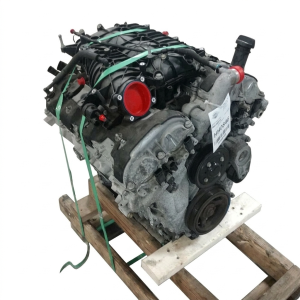
Used OEM Parts in Stock


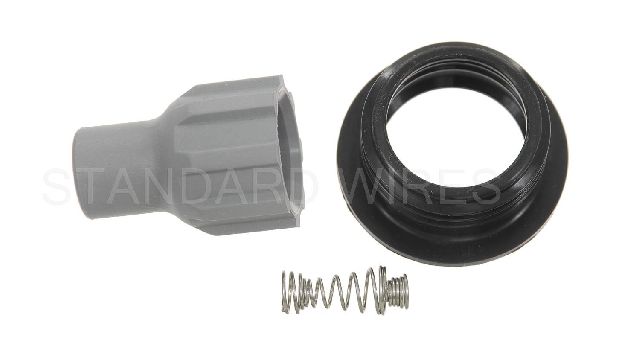
New Aftermarket Parts Available



The information in this article is provided for general reference and educational purposes only. Vehicle specifications, procedures, and part compatibility can vary by production date, trim level, and region. Always consult your vehicle's factory service manual and verify part numbers before purchasing or performing repairs. Safety-critical components such as airbags, seat belts, and braking systems should be installed by a qualified professional.
- GMC Terrain:
- 🎬 Helpful Videos
- 🛍️ Shop This Part
- What's Unique About the 2010-2017 GMC Terrain
- Symptoms You May Notice
- Most Likely Causes
- Rare But Worth Checking
- Diagnosis Steps
- Parts You'll Likely Need
- Related Codes That Often Appear With This One
- Technical Service Bulletins (TSBs) & Recalls
- Platform-Specific Known Issues
- Mechanic-Grade Diagnostic Values
- Scan Tool Commands That Help
- Wiring & Ground Locations
- Real Owner Repair Stories
- OEM Part Supersession History
- Model Year Variations Within This Range
- Diagnostic Flowchart
- Real Owner Stories
- 2015 GMC Terrain 2.4L
- 2010-2011 GMC Terrain 2.4L (LAF)
- 2010-2013 GMC Terrain
- 2011 GMC Terrain 2.4L
- Related OBD-II Codes
- Frequently Asked Questions
- 🎟️ Get 5% Off