

P0300 on 2006-2013 Chevrolet Impala: Random Misfire Causes and Fixes
On a 2006-2013 Impala, P0300 most often means it's time for new spark plugs and ignition coils. For V6 models, a failed intake manifold gasket is also a very common cause. For the 5.3L V8, a failed Active Fuel Management (AFM) lifter is a frequent and well-documented issue.
- P0300 indicates misfires on multiple cylinders, not just one.
- Start your diagnosis with the basics: inspect spark plugs and ignition coils, as they are the most common and affordable fixes.
- If you have a V6 engine (3.5L/3.9L), a vacuum leak from the intake manifold gaskets is a highly probable cause and should be checked with a smoke test.
- If you have the 5.3L V8, be aware that a failed Active Fuel Management (AFM) lifter is a very common and well-documented cause of this code.
- Do not drive if the check engine light is flashing. This signals a severe misfire that can quickly cause expensive damage to your catalytic converter.
What's Unique About the 2006-2013 Chevrolet Impala

The 2006-2013 Impala uses engines with distinct and well-known failure points that lead to a P0300 code. The 3.5L and 3.9L V6 engines are prone to intake manifold gasket leaks, which create a vacuum leak that the computer cannot correct. The 5.3L LS4 V8 and some 3.9L V6 engines (LZ8, not LZ9) feature Active Fuel Management (AFM), also called Displacement on Demand (DOD). This system uses special lifters that are a notorious failure point, often getting stuck and causing persistent misfires. A failed solenoid in the Valve Lifter Oil Manifold (VLOM) can also cause this issue, even if the lifters themselves are functional.
Symptoms You May Notice
- Rough or shaky idle
- Hesitation or stumbling during acceleration
- Flashing or solid Check Engine Light
- Noticeable loss of engine power
- Reduced fuel economy
- Difficulty starting the engine
- Engine vibrating noticeably
- Ticking or tapping noise from the top of the engine (common with AFM lifter failure)
- Replacing only one spark plug or coil when others are near the end of their service life.
- Replacing oxygen sensors when they are correctly reporting a problem caused by the misfire, not causing it.
- Assuming a major engine failure on a V8 model without first investigating the common AFM/DOD lifter and VLOM issues.
Most Likely Causes


- Worn Spark Plugs or Faulty Ignition Coils 🔴 High Probability These are standard maintenance items that wear out over time. The rear bank of spark plugs on the V6 engines is difficult to access and is often neglected, leading to misfires as they age. 🎬 Watch: How to access and change those difficult rear spark plugs. Forum users often recommend using OEM ACDelco coils to resolve persistent issues that cheaper aftermarket parts do not fix.
How to confirm: Visually inspect spark plugs for wear, fouling, or cracked porcelain. Test coils by swapping a suspected bad coil to a different cylinder and see if the misfire follows (if you have a cylinder-specific code). Check resistance across coil terminals; a significant deviation from others indicates a bad coil.
Typical fix: Replace all spark plugs and any faulty ignition coils. It is recommended to replace plugs as a full set. ACDelco 41-109 Iridium plugs are a common OEM replacement.
Est. part cost: $50-$250 - Leaking Intake Manifold Gaskets (3.5L & 3.9L V6) 🔴 High Probability The 3.5L V6 uses a 'wet' intake design where coolant flows through it, and the original plastic-framed gaskets degrade from heat and coolant exposure, causing both vacuum and coolant leaks. The 3.9L has a 'dry' intake, but its gaskets can still fail and cause a significant vacuum leak.
How to confirm: Perform a smoke test to check for vacuum leaks around the intake manifold. On the 3.5L, look for external coolant leaks or milky, contaminated oil. A visual inspection may reveal coolant residue near the gasket mating surfaces.
Typical fix: Replace the upper and lower intake manifold gaskets with an updated metal-frame design, such as the Fel-Pro MS 98014 T.
Est. part cost: $50-$150 - Failed Active Fuel Management (AFM/DOD) Lifter (5.3L LS4 V8 & some 3.9L V6) 🔴 High Probability The special lifters used by the AFM system (on cylinders 1, 4, 6, and 7 for the V8) are a common failure point. They can become stuck or collapse, preventing the valve from opening and causing a persistent misfire on an AFM cylinder that can escalate to a P0300. This is a widely documented issue across all vehicles with the LS4 engine. NHTSA ODI #10821888 notes that if an AFM lifter unlocks as soon as the engine is started, a P0300 will be experienced with misfires on cylinders 1, 4, 6, or 7, though noise may not always be present.
How to confirm: Listen for a distinct ticking or tapping noise from the top of the engine. Use a scan tool to monitor misfire data (Mode $06); if misfires are concentrated on AFM cylinders, a failed lifter is likely. A compression test may show very low or no compression on the affected cylinder. Also investigate the Valve Lifter Oil Manifold (VLOM), as a failed solenoid in this assembly can cause the same symptoms.
Typical fix: This is an advanced repair that involves removing the cylinder head to replace the failed lifter(s). Many owners opt to install an AFM/DOD delete kit at this time. The VLOM (ACDelco 12571609) may also need replacement. This repair is often best left to a professional.
Est. part cost: $200-$800 - Clogged or Faulty Fuel Injectors 🟡 Medium Probability
How to confirm: Use a scan tool to perform an injector balance test. You can also swap injectors between cylinders to see if a misfire follows the injector. Listening to each injector with a mechanic's stethoscope should reveal a consistent clicking sound.
Typical fix: Replace the faulty fuel injector(s). Sometimes a professional fuel system cleaning can resolve minor clogs.
Est. part cost: $40-$100 per injector - Low Fuel Pressure ⚪ Low Probability
How to confirm: Connect a fuel pressure gauge to the fuel rail's schrader valve and verify the pressure is within the manufacturer's specified range (typically 50-60 PSI for these models).
Typical fix: Replace the failing fuel pump or clogged fuel filter. The fuel filter is located inside the fuel tank as part of the pump module and is not serviced separately.
Est. part cost: $200-$500
Rare But Worth Checking
- Failing Crankshaft Position Sensor: A faulty CKP sensor can send erratic signals to the ECM, causing it to lose track of the engine's rotational position and trigger random misfire codes.
- Clogged Catalytic Converter: If the catalytic converter becomes clogged, it creates excessive exhaust backpressure, which can choke the engine and cause misfires, especially under load. This is often a secondary failure caused by a long-term misfire dumping raw fuel into the exhaust.
- Internal Coolant Leak / Engine Block Porosity: A GM Technical Service Bulletin (18-NA-115) notes that a P0300 on a cold start that disappears when warm can be caused by coolant seeping into a cylinder due to engine block porosity. Diagnosis requires adding UV dye to the coolant and inspecting the cylinder with a borescope.
Diagnosis Steps

- Read all codes with an OBD-II scanner and check freeze-frame data to understand the conditions when the misfire occurred (e.g., cold start, under load).
- Use a scan tool with live data to monitor misfire counts for each cylinder (Mode $06). This can reveal if the 'random' misfire is actually favoring specific cylinders, even without a specific P030x code. TSB Bulletin #PIP5628G notes that this data is critical for diagnosing vehicles with P0300 through P0308 and/or P050D.
- Inspect the ignition system. Pull the spark plugs and check for wear, fouling, or damage. Look for carbon tracking on ignition coil boots. For V6 models, pay close attention to the rear bank, which is often neglected.
- If a specific cylinder shows high misfire counts, swap its ignition coil with a known good cylinder's coil. Clear codes and drive to see if the misfire code follows the coil. If it does, the coil is bad.
- Perform a smoke test to check for vacuum leaks, focusing on the intake manifold gaskets and all vacuum hoses.
- Check fuel pressure using a gauge to rule out a weak fuel pump or clogged filter.
- For 5.3L V8 and 3.9L V6 engines with AFM, listen for a ticking noise. If misfires are primarily on cylinders 1, 4, 6, or 7 (for the V8), suspect a failed AFM lifter or a faulty Valve Lifter Oil Manifold (VLOM).
- If a cold-start-only misfire is present, consider the possibility of a coolant leak into the cylinder as described in TSB 18-NA-115 and perform a diagnostic with UV dye.
- If all else fails, perform a compression test to check for mechanical engine problems like worn piston rings or valve issues.
Parts You'll Likely Need

- Spark Plugs
(OEM #ACDelco 41-109 (Iridium))— This is the most common cause and a routine maintenance item. Worn plugs are a primary source of weak spark and misfires.
Trusted brands: ACDelco, NGK
OEM price range: $8-$15 per plug
Aftermarket price range: $5-$12 per plug - Ignition Coil
(OEM #ACDelco D510C)— Coils fail from heat and age, leading to a lack of spark. This is the second most common cause after spark plugs.
Trusted brands: ACDelco, Delphi
OEM price range: $50-$90 per coil
Aftermarket price range: $30-$60 per coil - Intake Manifold Gasket Set (V6)
(OEM #Fel-Pro MS 98014 T (Updated metal design))— The original plastic-framed gaskets are a common failure point, leading to vacuum and/or coolant leaks that cause misfires.
Trusted brands: Fel-Pro, ACDelco
OEM price range: $70-$120
Aftermarket price range: $50-$90 - Valve Lifter Oil Manifold (VLOM) / AFM Solenoid Assembly
(OEM #ACDelco 12571609)— On AFM-equipped engines (5.3L V8, some 3.9L V6), the solenoids in this assembly can fail, causing AFM lifters to malfunction and trigger misfires.
Trusted brands: ACDelco (GM Genuine)
OEM price range: $250-$400
Aftermarket price range: $150-$250
Related Codes That Often Appear With This One
- P0301-P0308 — If the random misfire becomes more consistent on one or more specific cylinders, the ECM will set codes like P0301, P0302, etc., alongside P0300.
- P0171 / P0174 — These 'System Too Lean' codes often accompany P0300 if the root cause is a significant vacuum leak, such as from a failed intake manifold gasket.
- P050D — This 'Cold Start Rough Idle' code is specifically mentioned in GM bulletins alongside P0300, often pointing toward issues like coolant intrusion or other cold-start specific problems as described in TSB 18-NA-115.
Technical Service Bulletins (TSBs) & Recalls
- 18-NA-115 — Cold Start Misfire and/or Rough Idle – DTC P0300 May Be Set — This bulletin (which replaces PIP4959G) addresses a P0300 code that occurs on a cold start and disappears once the engine warms up. The cause is identified as potential engine cylinder block porosity, which allows a small amount of coolant to seep into a cylinder overnight. Diagnosis involves adding dye to the coolant and using a borescope with a blacklight to inspect the cylinder for traces of coolant after a cold soak. A similar update was provided in TSB Bulletin #18NA115 regarding engine cooling and cold start misfires.
- PIP4568 — Engine Misfire May Be Due To A Sticking/Collapsed AFM Lifter — This bulletin directly addresses engine misfires (including P0300) caused by faulty Active Fuel Management (AFM) lifters. It guides technicians in diagnosing a collapsed or stuck lifter, which is a very common issue on the 5.3L LS4 and some 3.9L V6 engines.
- PIP5628G — Misfire and DTC Codes P0300 - P0308 and/or P050D — This manufacturer bulletin communicates information needed to aid in diagnosing vehicles that present with these specific misfire codes.
Platform-Specific Known Issues
- The Active Fuel Management (AFM) system on the 5.3L LS4 V8 and some 3.9L V6 engines is a significant source of P0300 codes due to lifter failure. The system deactivates cylinders 1, 4, 6, and 7 under light loads, and the specialized lifters for these cylinders are prone to collapsing or getting stuck.
- The 3.5L LZE V6 engine uses a 'wet' intake manifold design where the original plastic-framed gaskets are known to degrade from exposure to Dex-Cool antifreeze, leading to vacuum leaks, coolant leaks, and eventually a P0300 code.
Mechanic-Grade Diagnostic Values
- Fuel Pressure (Key On, Engine Off) — expected: 50-60 PSI. Failure: Pressure below 50 PSI indicates a weak fuel pump or clogged filter.
- Fuel Injector Balance Test (via Tech 2/GDS2) — expected: Pressure drop for each injector should be within 20 kPa (3 PSI) of the average pressure drop.. Failure: An injector with a pressure drop significantly different from the others is likely clogged or faulty.
- AFM/DOD Solenoid Resistance (VLOM) — expected: Approximately 10-15 Ohms (Varies slightly by manufacturer, but should be consistent across all 4 solenoids).. Failure: A reading of 0 Ohms (short) or infinite/OL (open) indicates a failed solenoid.
Hidden / Shadow Codes Worth Checking
- Mode $06, Test ID $A2-$A9: Provides raw misfire counts for each cylinder (Cylinder 1 is $A2, Cylinder 2 is $A3, etc.). This allows a technician to see which cylinders are contributing to the P0300 count, even if they haven't misfired enough to set a specific P030x code. (see via A professional scan tool with Mode $06 data capability.)
Scan Tool Commands That Help
- GM Tech 2 / GDS2: Fuel Injector Balance Test — To identify a clogged or weak fuel injector. The tool individually pulses each injector and measures the corresponding drop in fuel rail pressure. It is more precise than a simple resistance test.
- GM Tech 2 / GDS2: Cylinder Power Balance — To identify which cylinder is weak in real-time. The tool disables one cylinder at a time and measures the RPM drop. A cylinder that causes little or no RPM drop when disabled is the one not contributing power.
- GM Tech 2 / GDS2: Crankshaft Position System Variation Learn — This is a mandatory procedure after replacing the crankshaft position sensor or flexplate. Failure to perform the 'crank relearn' can cause the ECM to inaccurately detect misfires and set a P0300.
Wiring & Ground Locations
- G102 — Located at the left rear of the engine.. This is the ground point for all ignition coils. Corrosion or a loose connection here can cause weak or intermittent spark across multiple cylinders, directly leading to a P0300 code.
- G111 — On the transmission-to-engine bolt. On V6 models, it's above the starter; on the 5.3L V8, it's below the starter.. This is a primary engine ground. A poor connection here can cause a host of electrical issues, including erratic sensor readings and problems with the ECM, which can manifest as a random misfire code.
- Ignition Coil Harness — Runs across the top of the engine to each ignition coil.. The wiring, especially the pigtail connectors to the coils and cam sensor, can become brittle and fail from heat cycling, causing intermittent connections that lead to misfires.
Real Owner Repair Stories
- Reddit user, r/MechanicAdvice (2012 Chevy Impala, 122,000 miles) — Started with a slight vibration and a P0302 code (Cylinder 2 Misfire). After replacing spark plugs, the car began running very rough and threw a P0300 code.
❌ Tried (didn't work) Replacing all spark plugs (this made the problem worse), Replacing all ignition coils
✅ What actually fixed it The user did not post a final resolution, but other mechanics in the thread suggested they double-check their work, specifically looking for accidentally swapped ignition coil harnesses, incorrect spark plug gaps, or a damaged spring inside an ignition coil boot during the initial repair. This highlights how an incorrect repair for a single-cylinder misfire can create a random/multiple misfire situation. - YouTube video by 'CharlesAndCars' (2003 Chevrolet Impala 3.4L (demonstrates a common issue applicable to the 2006-2013 models)) — Flashing check engine light, severe misfire, P0300 code.
❌ Tried (didn't work) Initial visual inspection showed nothing obvious.
✅ What actually fixed it The cause was worn spark plug wires with over 100,000 miles on them. Carbon tracking was found inside the spark plug boots on both a front and a rear wire, causing the spark to arc to the cylinder head instead of the plug. Replacing the spark plug wires resolved the P0300 code. - NHTSA ODI #10638231 — An owner reported that the vehicle would not move, the steering wheel was hard to turn, and the engine tried to die while idling. Diagnostics revealed code P0300 and the fuel system was reported as being in an open loop (OL).
"I Checked Everything" — The Actual Cause
- In some cases, a P0300 that appears only under load can be caused by a clogged catalytic converter. A smoke test for vacuum leaks will come back clean, and the ignition and fuel systems may test fine at idle. The misfire is caused by excessive exhaust backpressure choking the engine, preventing cylinders from evacuating exhaust gas properly.
OEM Part Supersession History
12571609→12698755— This is the Valve Lifter Oil Manifold (VLOM) for AFM-equipped engines. The part was likely updated by GM to improve the reliability of the internal solenoids which were a common failure point.
Heads up: The new part number is a direct replacement for the old one.
Model Year Variations Within This Range
- 2007-2008: The 3.9L V6 had two versions. The LZ9 did not have Active Fuel Management (AFM). The LZ8 (2007) and its flex-fuel replacement, the LZG (2008), were equipped with AFM and are therefore susceptible to the same lifter and VLOM failures as the 5.3L V8.
- 2012-2013: While the prompt focuses on the LZE/LZ9/LS4, it's important to note that in 2012, the 3.5L and 3.9L engines were replaced by the 3.6L LFX V6. This engine has entirely different common causes for P0300, such as timing chain issues, and does not use the same parts as the earlier V6s. This article does not apply to the LFX engine.
Diagnostic Flowchart
Other Known Issues on This Vehicle
Issues unrelated to this code that are worth knowing about as an owner of this generation:
- Transmission Pressure Control (EPC) Solenoid Failure 🔴 High — Very common across the 9th generation, particularly in 2006-2011 models with the 4T65-E transmission. Can cause harsh shifting, slipping, or failure to shift.
- HVAC Blend Door Actuator Failure 🟠 Medium — Extremely common. Owners report a loud clicking or ticking noise from the dashboard when changing temperature or airflow settings. The plastic gears inside the actuator strip, requiring replacement.
- Intermediate Steering Shaft Clunk 🟡 Low — A widespread issue causing a clunking or popping noise in the steering column, most noticeable at low speeds. It is caused by poor lubrication in the splines of the intermediate shaft.
- Reduced Engine Power (Accelerator Pedal Position Sensor) 🔴 High — Can occur on various GM vehicles of this era. The 'Reduced Engine Power' message appears, and the car loses acceleration. Often caused by water intrusion into a specific harness connector in the driver's kick panel, not the pedal itself. (Ref: TSB 07-06-04-019G)
- Excessive Oil Consumption 🟠 Medium — Reported on both V6 and V8 engines, but particularly noted on the 5.3L LS4 with AFM. Can be caused by stuck piston rings or valve seal issues, sometimes exacerbated by the AFM system.
Used vs. New Parts: Buying Guide for This Vehicle
When a used part is the smart pick: Used parts can be a cost-effective option for non-wear items like ignition coils, especially if sourced from a low-mileage donor vehicle. A single used OEM coil to fix a misfire is often a better choice than a cheap, new, no-name aftermarket coil.
Donor-vehicle mileage cap: roughly under 80000 miles for the part to have meaningful remaining life.
What to inspect on the donor part:
- For ignition coils, check for cracks in the plastic housing and ensure the boot is pliable with no carbon tracking inside.
- For a VLOM, inspect the screen underneath for any metal shavings or sludge, which would indicate the donor engine had internal problems.
- Check for excessive rust or corrosion, especially on electrical connectors.
OEM-only on this vehicle (don't cheap out):
- Valve Lifter Oil Manifold (VLOM): Aftermarket versions have a poor reputation for reliability. Given the labor involved to replace it, using a genuine ACDelco part is strongly recommended.
- AFM Lifters: This is a critical internal engine component. Using OEM or high-quality, well-known aftermarket delete kits is essential for a lasting repair.
Aftermarket brands forum-validated for this vehicle:
- Intake Manifold Gaskets: Fel-Pro, specifically the metal-framed MS 98014 T, is widely regarded as a superior, permanent fix compared to the original OEM plastic design.
- Ignition Coils: Delphi, Denso, and NGK are considered OEM-equivalent and are reliable alternatives to ACDelco.
Brands owners have reported issues with on this vehicle:
- Unbranded/No-Name Ignition Coils: Cheap ignition coil sets sold on sites like eBay or Amazon are frequently cited on forums as being unreliable, sometimes failing within weeks or months, or being dead on arrival.
Real Owner Stories
Aggregated from forums and TSBs cited above. Mileages and costs reflect what owners reported in those sources.
2008 Chevrolet Impala SS 5.3L V8
Symptoms: P0300 code and a noticeable ticking noise from the engine.
What fixed it: Replacing the entire Valve Lifter Oil Manifold (VLOM) after replacing AFM lifters did not solve the problem.
Source hint: ImpalaForums: 'P0300 random misfire solved'
2006-2013 Chevrolet Impala (Former Police Unit)
Symptoms: Random misfire code P0300.
What fixed it: Diagnosed a bad ignition coil by testing resistance across the terminals and replaced it with an OEM ACDelco part.
Source hint: GM Forum: 'Impala Misfire P0300... more inside'
Related OBD-II Codes
Frequently Asked Questions
My 2008 Impala SS with the 5.3L V8 has a ticking noise and a P0300 code. Is it just the lifters?
I have a P0300 that only happens on cold starts and then goes away. What should I check?
Why is the P0300 code so common on the 3.5L V6 engine's intake?
Are there specific spark plugs recommended for the 2006-2013 Impala to prevent misfires?
Which cylinders should I monitor for misfires if I suspect an AFM failure on my 5.3L V8?
Is the intake manifold gasket issue the same on the 3.9L V6 as the 3.5L?
Helpful Videos

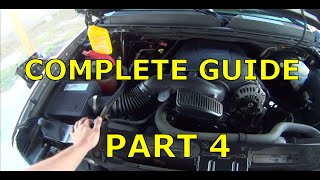
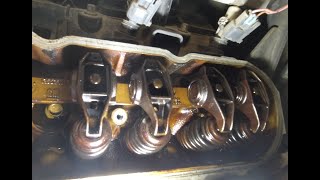
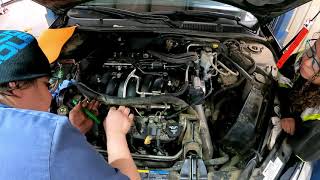
Used OEM Parts in Stock
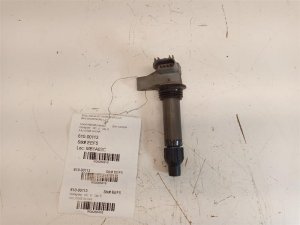
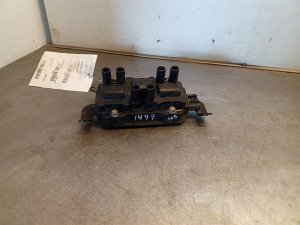

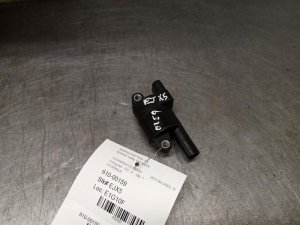


New Aftermarket Parts Available

The information in this article is provided for general reference and educational purposes only. Vehicle specifications, procedures, and part compatibility can vary by production date, trim level, and region. Always consult your vehicle's factory service manual and verify part numbers before purchasing or performing repairs. Safety-critical components such as airbags, seat belts, and braking systems should be installed by a qualified professional.
- Chevrolet Impala:
- 🎬 Helpful Videos
- 🛍️ Shop This Part
- What's Unique About the 2006-2013 Chevrolet Impala
- Symptoms You May Notice
- Most Likely Causes
- Rare But Worth Checking
- Diagnosis Steps
- Parts You'll Likely Need
- Related Codes That Often Appear With This One
- Technical Service Bulletins (TSBs) & Recalls
- Platform-Specific Known Issues
- Mechanic-Grade Diagnostic Values
- Hidden / Shadow Codes Worth Checking
- Scan Tool Commands That Help
- Wiring & Ground Locations
- Real Owner Repair Stories
- "I Checked Everything" — The Actual Cause
- OEM Part Supersession History
- Model Year Variations Within This Range
- Diagnostic Flowchart
- Other Known Issues on This Vehicle
- Used vs. New Parts: Buying Guide for This Vehicle
- Real Owner Stories
- 2008 Chevrolet Impala SS 5.3L V8
- 2006-2013 Chevrolet Impala (Former Police Unit)
- Related OBD-II Codes
- Frequently Asked Questions
- 🎟️ Get 5% Off