

P0299 on 2021-2023 Kia Sorento 2.5T: Turbo Underboost Causes and Fixes
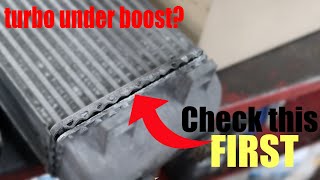
P0299 on a 2021-2023 Sorento 2.5T usually indicates a boost leak from the charge air cooler (intercooler) or its piping, or a problem with the electronic wastegate actuator. A thorough visual inspection and a smoke test are the first steps before replacing any expensive parts. A cracked intercooler is a primary suspect for this code on the 2.5T platform.
- P0299 means the turbo is not making enough boost.
- Before buying any parts, perform a smoke test to check for boost leaks. The most likely leak source is the intercooler (charge air cooler).
- Do not automatically assume the turbocharger has failed. It is more often a less expensive, related component (like a hose or the intercooler) that is the root cause.
- If no leaks are found, the electronic wastegate actuator is the next most likely suspect. On this vehicle, this may require replacing the entire turbo assembly.
What's Unique About the 2021-2023 Kia Sorento
The Smartstream 2.5T GDI is a modern turbocharged engine that, while generally reliable, places significant stress on its forced induction components. Unlike older turbo systems that used vacuum-controlled wastegates, this engine uses a sophisticated electronic wastegate actuator. While this provides precise control, the actuator itself can be a point of failure. Additionally, boost leaks from the intercooler or charge pipes are common culprits for P0299 across many modern Kia/Hyundai turbo platforms. A Hyundai TSB (21-EM-012H) for other 2.5T models notes that a faulty PCV check valve can cause oil to flood the intake system, potentially contaminating sensors and the intercooler, which could contribute to underboost issues.
Symptoms You May Notice
- Significant loss of engine power and sluggish acceleration
- Check Engine Light is on
- Audible hissing or whistling sound from the engine bay during acceleration (indicates a boost leak)
- Reduced fuel economy
- Vehicle may enter 'limp mode,' with restricted RPM and speed
- Blue or gray exhaust smoke if the turbo's internal seals have failed and are leaking oil.
- High-pitched whining or 'siren' noise if the turbocharger has internal bearing or wheel damage.
- Immediately replacing the turbocharger without performing a smoke test. A boost leak from a cracked intercooler or hose is a very common and much cheaper fix.
Most Likely Causes
- Leaking or Cracked Charge Air Cooler (Intercooler) 🔴 High Probability Intercoolers on modern vehicles often use plastic end tanks that can crack from heat and pressure cycles. This is a known issue and a primary suspect for P0299 on related Hyundai/Kia 2.5T platforms like the Santa Fe and K5 GT.
How to confirm: Perform a smoke test on the entire charge air system. Leaks will be visible as smoke escapes from cracks in the intercooler body or end tanks. A visual inspection may reveal separation of the core from the end tanks.
Typical fix: Replace the intercooler assembly. The part number for the 2.5T models is confirmed to be 28271-2S310.
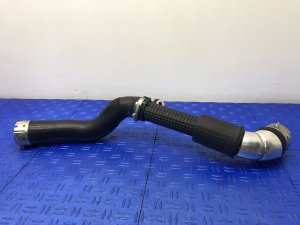
Est. part cost: $250-$450 - Boost Leak (Cracked or Loose Hoses/Clamps) 🟡 Medium Probability The charge pipes that connect the turbo, intercooler, and throttle body can become loose or crack over time. High-pressure clamps can fail, or hoses can become brittle.
How to confirm: Visually inspect all charge piping for obvious cracks or disconnections. A smoke test is the most definitive way to find smaller leaks.
Typical fix: Tighten loose clamps or replace the damaged hose section.
Est. part cost: $50-$200 - Faulty Electronic Wastegate Actuator (EWGA) 🟡 Medium Probability The electronic actuator that controls the turbo's wastegate is a known failure point on many modern Kia/Hyundai engines. The motor or position sensor inside can fail, preventing the wastegate from closing properly to build boost. This can also cause an overboost code (P0234) if it gets stuck closed.
How to confirm: Use an advanced scan tool to monitor the wastegate actuator's commanded position vs. actual position. A specific code for the actuator, like P2562, may also be present.
Typical fix: On many Kia models, the electronic actuator is integrated into the turbocharger and is not sold as a separate part by Kia, requiring replacement of the entire turbocharger assembly. Aftermarket or specialized repair options may exist.
Est. part cost: $1500-$2500 (for full turbo assembly) - Dirty or Faulty Boost Pressure Sensor (MAP Sensor) ⚪ Low Probability
How to confirm: Remove and inspect the MAP sensor. Oil contamination is common in boosted engines and can cause incorrect readings. A related TSB for the 2.5T engine (21-EM-012H) points to a PCV valve issue that can push oil into the intake, potentially fouling this sensor. The sensor's output can be checked against atmospheric pressure with the engine off using a scan tool.
Typical fix: Clean the sensor with a dedicated MAP/MAF sensor cleaner. If cleaning doesn't resolve the issue, replace the sensor.
Est. part cost: $60-$120
Rare But Worth Checking
- Failed Turbocharger: While less common than leaks or actuator issues, internal failure of the turbocharger (e.g., worn bearings, damaged turbine/compressor wheels) can cause underboost. This is often a last resort after all other possibilities have been ruled out. A key check for a bad turbo is excessive in-and-out (axial) shaft play.
- Restricted Catalytic Converter: A clogged catalytic converter can prevent exhaust gases from spinning the turbo effectively. This would typically be accompanied by other symptoms like a sulfur smell from the exhaust and extremely poor engine performance. Some Smartstream engines have had issues with catalytic converter debris being ingested back into the engine.
- Faulty PCV System: Hyundai TSB 21-EM-012H was issued for some 2.5T engines due to a misassembled PCV check valve. This can force engine oil into the intake system, contaminating the intercooler and sensors, which could lead to incorrect boost pressure readings or blockages.
Diagnosis Steps
- Scan the ECM for any other stored trouble codes to see if they provide more specific clues (e.g., P2562 for the wastegate actuator).
- With the engine running, listen for audible hissing or whistling noises that would indicate a large boost leak.
- Perform a thorough visual inspection of the entire air intake tract, from the air filter to the throttle body. Look for loose clamps, disconnected hoses, or obvious cracks in plastic components, especially the intercooler end tanks.
- Perform a smoke test on the charge air system. This is the most effective way to find leaks in the intercooler and all associated piping.
- If no leaks are found, use a scan tool to monitor live data. Compare the 'commanded' boost pressure with the 'actual' boost pressure while driving. A large discrepancy confirms the underboost condition.
- Inspect the electronic wastegate actuator. Check its movement during an actuator test with a bi-directional scan tool. Check the actuator rod for proper connection and adjustment.
- Inspect the boost pressure (MAP) sensor for oil contamination, which can be caused by PCV issues, and clean or replace as needed.
- If all other components check out, the turbocharger itself may be faulty. Inspect for excessive axial (in-and-out) shaft play or signs of oil leaking past the seals.
Parts You'll Likely Need
- Charge Air Cooler (Intercooler)
(OEM #28271-2S310)— This is a common failure point that directly causes a boost leak and the P0299 code on the 2.5T engine.
Trusted brands: Kia (OEM)
OEM price range: $350-$450
Aftermarket price range: $200-$350 - Turbocharger Assembly
(OEM #28231-2S300)— Required if the integrated electronic wastegate actuator has failed, as it is often not sold separately by the manufacturer. Also required for internal turbo failure (bearings, wheels).
Trusted brands: Kia (OEM), BorgWarner (OEM Manufacturer)
OEM price range: $900-$1800
Aftermarket price range: $500-$1000 - Electronic Throttle Body
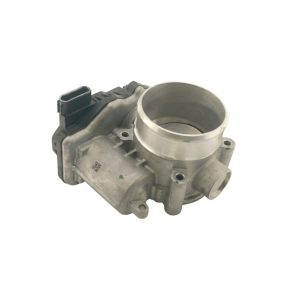
(OEM #35100-2T000)— While not a direct cause of underboost, a faulty throttle body can cause similar limp-mode symptoms and can be damaged by oil contamination from PCV issues that also affect the turbo system.
Trusted brands: Kia (OEM)
OEM price range: $150-$250
Aftermarket price range: $75-$175
Related Codes That Often Appear With This One
- P2562 — This code, 'Turbocharger Boost Control Position Sensor 'A' Circuit,' directly points to a fault with the electronic wastegate actuator, which is a primary cause of P0299.
- P0172 — A 'System Too Rich' code can sometimes appear with P0299 if a boost leak causes incorrect readings from the air metering sensors, leading the ECU to inject too much fuel.
- P0234 — An 'Overboost Condition' code can be related if the electronic wastegate actuator is sticking or malfunctioning intermittently, causing both overboost and underboost conditions at different times.
Technical Service Bulletins (TSBs) & Recalls
- SC250 / NHTSA 22V-760: Recall for 8-speed DCT electric oil pump failure, which can cause a complete loss of power. The fix involves inspection, a software update, and potential transmission replacement.
- ELE235: Software update to run the DCT's electric oil pump more aggressively at idle to prevent overheating in traffic.
- Hyundai TSB 21-EM-012H: Addresses a misassembled PCV check valve on 2.5T engines that can cause oil to be forced into the intake system, contaminating the intercooler and sensors, which could lead to underboost or incorrect sensor readings.
Scan Tool Commands That Help
- Kia GDS (Global Diagnostic System): Actuator Test -> EWGA (Electronic Waste Gate Actuator) — This bidirectional command is essential for confirming if the electronic wastegate actuator is physically stuck, moving slowly, or has failed. It allows a technician to command the actuator through its full range of motion (e.g., from 5% to 95% duty cycle) and observe if its actual position matches the commanded position. A mismatch indicates a faulty actuator, a primary cause of P0299.
"I Checked Everything" — The Actual Cause
- In cases where a low-pressure smoke test of the intake system comes back clean, the P0299 code is often caused by a component that fails only under high boost pressure. The most common culprits are a faulty electronic wastegate actuator (EWGA) that isn't closing fully under load, or a faulty diverter/bypass valve that is being forced open by high pressure. These issues will not be revealed by a typical smoke test.
OEM Part Supersession History
28271-2S310→Unknown— Part number is specified for Sorento models built up 'To 12/07/2023'. This implies a potential part change or new part number for vehicles built after this date.
Heads up: A different intercooler part may be required for Sorento models manufactured after December 7th, 2023. VIN verification is critical when ordering.
Model Year Variations Within This Range
- 2024+: The intercooler part number (28271-2S310) is listed with a production cutoff date of December 7, 2023. Vehicles produced after this date may use a different part number, indicating a possible design change in the charge air cooling system for the 2024 model year or later.
Diagnostic Flowchart
Other Known Issues on This Vehicle
Issues unrelated to this code that are worth knowing about as an owner of this generation:
- 8-Speed DCT Electric Oil Pump Failure 🔴 High — Common enough to trigger a major safety recall (SC250 / NHTSA 22V-760) for 2021-2022 models. Can cause a sudden and complete loss of motive power. (Ref: Recall SC250 (NHTSA 22V-760))
- 8-Speed DCT Overheating/Jerky Operation 🟠 Medium — Frequently reported by owners, especially in stop-and-go traffic. Often related to driving style (creeping) but can also be due to software or a failing oil pump. (Ref: TSB ELE235 (Software Update))
- Cracked Turbocharger Oil Feed Pipe 🔴 High — A recall was issued for some 2022 Hyundai models with the 2.5T engine for an oil pipe that could crack, leak oil onto hot components, and cause a fire. While the recall was for Hyundai, it highlights a potential weak point in the shared engine design. (Ref: Hyundai Recall 228 (NHTSA 22V-197))
- Excessive Oil Consumption 🟠 Medium — Some owners of the broader Smartstream 2.5L engine family (both turbo and non-turbo) have reported excessive oil consumption, potentially linked to piston ring design.
- Faulty Electronic Throttle Body 🟠 Medium — Can cause sudden power loss ('limp mode'), stalling, and rough idle. A known PCV issue (TSB 21-EM-012H) can cause oil contamination that ruins the throttle body. (Ref: Related to TSB 21-EM-012H)
Used vs. New Parts: Buying Guide for This Vehicle
When a used part is the smart pick: For the intercooler, a used OEM part can be a smart choice as it has no moving parts. However, for the turbocharger assembly, a new OEM or OEM-manufacturer (BorgWarner) part is strongly recommended due to the high failure risk of used turbos with unknown history.
Donor-vehicle mileage cap: roughly under 40000 miles for the part to have meaningful remaining life.
What to inspect on the donor part:
- For Intercoolers: Look inside the inlet/outlet ports with a flashlight. A light oil film is normal, but reject any part with pooled oil, thick sludge, or metallic debris, as this indicates it came from a vehicle with a blown turbo or severe engine failure.
- For Intercoolers: Inspect the plastic end tanks for any hairline cracks, especially around the seams where they are crimped to the aluminum core.
- For Turbochargers: Check for in-and-out (axial) shaft play. Any noticeable movement is a sign of worn internal bearings and the part should be rejected.
- For Turbochargers: Inspect the compressor and turbine wheel fins for any signs of chipping, bending, or contact with the housing. The wheel should spin freely without noise.
OEM-only on this vehicle (don't cheap out):
- Turbocharger Assembly: While BorgWarner is the OEM, avoid no-name aftermarket turbos. The integrated electronic wastegate requires precise calibration that cheap copies often fail to replicate, leading to persistent codes.
Aftermarket brands forum-validated for this vehicle:
- BorgWarner (OEM for Turbocharger)
- aFe Power (Intercooler Piping)
- Sxth Element Engineering (Intercooler)
Brands owners have reported issues with on this vehicle:
- Unbranded 'eBay special' turbochargers or intercoolers. Fitment and performance are often poor, and they typically have a very high failure rate.
Real Owner Stories
Aggregated from forums and TSBs cited above. Mileages and costs reflect what owners reported in those sources.
2024 Genesis GV70 2.5T
Symptoms: Check engine light illuminated and a loss of sport mode functionality.
What fixed it: The issue was identified as a P0299 underboost code, confirming shared failure points across the 2.5T platform.
Source hint: Reddit (r/GenesisMotors) thread titled 'Brand new 2024 GV70 with check engine light'
2021-2023 Kia Sorento 2.5T
Symptoms: Technicians observed a P0299 code and initially suspected the turbocharger itself.
What fixed it: The actual cause was a leaking intercooler, which is often misdiagnosed as a turbo failure.
Source hint: Reddit (r/Justrolledintotheshop)
Related OBD-II Codes
Frequently Asked Questions
My 2021 Sorento 2.5T has a P0299 code and a whistling sound. Is there a specific part I should check first?
Could a PCV system issue be causing my underboost code?
Is the P0299 code related to the major Kia recall SC250 for the 8-speed DCT?
Can I just replace the electronic wastegate actuator (EWGA) on my 2.5T Sorento?
Why is my Sorento entering 'limp mode' with this code?
Helpful Videos
We Have This Part in Stock




The information in this article is provided for general reference and educational purposes only. Vehicle specifications, procedures, and part compatibility can vary by production date, trim level, and region. Always consult your vehicle's factory service manual and verify part numbers before purchasing or performing repairs. Safety-critical components such as airbags, seat belts, and braking systems should be installed by a qualified professional.
- Kia Sorento:
- 🎬 Helpful Videos
- 🛍️ Shop This Part
- What's Unique About the 2021-2023 Kia Sorento
- Symptoms You May Notice
- Most Likely Causes
- Rare But Worth Checking
- Diagnosis Steps
- Parts You'll Likely Need
- Related Codes That Often Appear With This One
- Technical Service Bulletins (TSBs) & Recalls
- Scan Tool Commands That Help
- "I Checked Everything" — The Actual Cause
- OEM Part Supersession History
- Model Year Variations Within This Range
- Diagnostic Flowchart
- Other Known Issues on This Vehicle
- Used vs. New Parts: Buying Guide for This Vehicle
- Real Owner Stories
- 2024 Genesis GV70 2.5T
- 2021-2023 Kia Sorento 2.5T
- Related OBD-II Codes
- Frequently Asked Questions
- 🎟️ Get 5% Off