

P0299 on 2012-2019 Chevrolet Sonic 1.4L Turbo: Underboost Causes and Fixes
On a 2012-2019 Sonic 1.4L Turbo, P0299 is most often caused by a failed PCV system component (intake manifold check valve or valve cover diaphragm) or a faulty turbocharger bypass valve. These are much more common and cheaper to fix than a bad turbocharger. This issue is systemic to the GM 1.4L LUV engine found in the Cruze, Trax, and Buick Encore.
- P0299 on the Sonic 1.4L Turbo is almost always a boost leak, not a bad turbo.
- The most likely culprits are part of the PCV system: the check valve inside the intake manifold and the diaphragm in the valve cover.
- Always check for accompanying codes like P0171 or P1101, which strongly indicate a vacuum/boost leak.
- A thorough visual inspection and a smoke test are critical diagnostic steps that can save you from buying an expensive, unneeded turbocharger.
- Do not replace the turbocharger unless all other, more common, causes have been definitively ruled out.
What's Unique About the 2012-2019 Chevrolet Sonic

The GM 1.4L (LUV/LUJ) engine used in the Sonic, Cruze, Trax, and Buick Encore is notorious for setting the P0299 code due to systemic weaknesses in its Positive Crankcase Ventilation (PCV) system, not necessarily turbo failure. A common 'domino effect' occurs where a small, orange check valve inside the plastic intake manifold fails or gets ingested, which then allows boost pressure to enter the crankcase. This over-pressurizes the crankcase and ruptures a rubber diaphragm in the valve cover, creating a significant vacuum and boost leak. GM issued multiple versions of Technical Service Bulletin (TSB) #PIP5495, with the latest being PIP5495L, warning technicians against misdiagnosing P0299 and replacing turbos that are found to have no trouble.
Symptoms You May Notice
- Significant loss of engine power and sluggish acceleration.
- Check Engine Light is on.
- Difficulty reaching high speeds or climbing hills.
- Whistling, hissing, or high-pitched squealing noises from the engine bay, especially at idle.
- Poor fuel economy.
- Rough or surging idle.
- Increased oil consumption.
- High-pitched chirping from the front of the engine at idle, indicating a failed front crankshaft seal.
- Replacing the turbocharger without first diagnosing the PCV system (intake manifold and valve cover) and performing a boost leak (smoke) test. This is a very common and expensive mistake.
Most Likely Causes

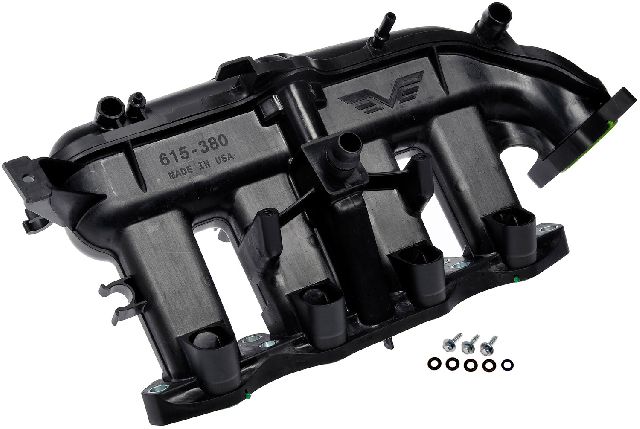
- Failed PCV Check Valve in Intake Manifold 🔴 High Probability The small, orange check valve inside the plastic intake manifold is known to degrade, break, or get sucked into the engine, creating a major internal boost leak where boost pressure is looped back to the turbo inlet. This is a well-documented, widespread issue on the 1.4L LUV engine and is the most common root cause.
How to confirm: Remove the PCV hose from the port on the driver's side of the intake manifold. Look inside the port with a flashlight. If the orange check valve is missing, damaged, or you can see straight through, it has failed.
Typical fix: Replace the entire intake manifold assembly. A popular and more permanent alternative is installing an aftermarket external check valve kit (e.g., from CruzeKits.com or ZZPerformance) which relocates the check valve outside the manifold for easy service.
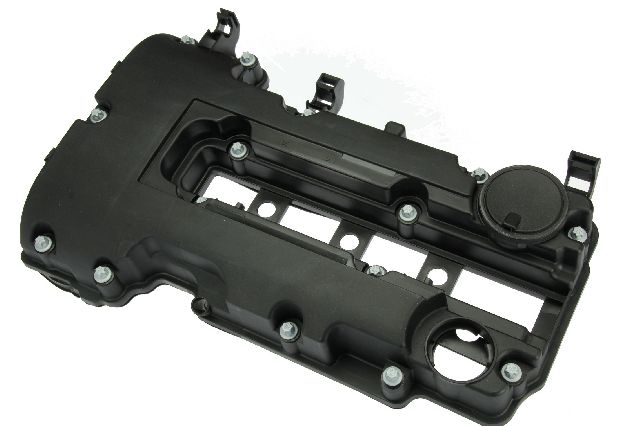
Est. part cost: $75 (Kit) - $300 (Manifold) - Ruptured PCV Diaphragm in Valve Cover 🔴 High Probability This is often a direct result of the failed intake manifold check valve. Boost pressure enters the crankcase, over-pressurizes it, and ruptures the rubber diaphragm housed within the valve cover, creating a large vacuum leak. GM issued a special coverage adjustment (e.g., N192282200 for 2015 models) for this specific failure on some model years.
How to confirm: With the engine running, listen for a distinct hissing or squealing sound from the top of the engine. Try to remove the oil fill cap; if a very strong vacuum holds it down, the diaphragm is almost certainly torn.
Typical fix: Replace the entire valve cover assembly. The diaphragm is not sold separately by GM, but some aftermarket repair kits are available.
Est. part cost: $50-$150 - Faulty Turbocharger Bypass Valve (Diverter Valve) 🟡 Medium Probability The solenoid or diaphragm on this valve can fail, tear, or get stuck, causing it to leak boost pressure instead of holding it. The original part was superseded by an updated design.
How to confirm: The valve is located on the turbocharger assembly. It can be removed and inspected for tears in the rubber diaphragm. A boost leak test can also pinpoint a leaking valve.
Typical fix: Replace the turbocharger bypass valve solenoid. Many owners upgrade to more robust aftermarket piston-style valves.
Est. part cost: $40-$80 - Boost/Vacuum Leak 🟡 Medium Probability Cracked or loose charge pipes (intercooler hoses), a broken PCV tube, or loose connections at the throttle body are common sources of boost leaks on any turbocharged vehicle.
How to confirm: Perform a visual inspection of all hoses connected to the turbo, intercooler, and intake manifold. A smoke test is the most effective way to find small or hard-to-see leaks.
Typical fix: Replace the cracked hose or tighten the loose clamp.
Est. part cost: $20-$100 - Wastegate Actuator or Linkage Issue ⚪ Low Probability The small E-clip holding the actuator rod to the wastegate arm can rust and fall off, leaving the wastegate open and preventing boost from building. The actuator arm pivot point can also wear out internally, causing play.
How to confirm: Visually inspect the turbocharger's wastegate arm and actuator rod to ensure they are connected and move freely. 🎬 See this quick fix for a disconnected wastegate actuator. Check for a missing E-clip. A rattling noise from the turbo area can indicate a loose wastegate.
Typical fix: Replace the missing clip (e.g., VW/Audi part 06J145220B is a known compatible clip) or the faulty wastegate actuator.
Est. part cost: $5-$150
Rare But Worth Checking
- Failed Turbocharger: While often suspected first, complete turbocharger failure is less common than the PCV and boost leak issues listed above. GM TSB #PIP5495L specifically warns against this misdiagnosis. Only condemn the turbo after all other possibilities are exhausted, including internal wear on the wastegate linkage pin which is not visible externally.
- Cracked Turbocharger Housing: Small hairline cracks around the wastegate port are considered normal by GM and usually do not cause P0299 on their own. However, a large crack or a seized wastegate valve can be the cause and would require turbocharger replacement.
- Clogged Catalytic Converter: A severe restriction in the exhaust system can prevent the turbo from spooling up effectively, leading to an underboost condition.
- Faulty Boost Pressure (MAP) Sensor: While less common, the sensor that reads the boost pressure can fail or provide inaccurate readings to the ECM, causing a false P0299 code.
Diagnosis Steps

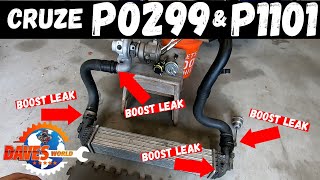
- Scan for any other stored trouble codes. Codes like P0171 or P1101 strongly point towards a vacuum/boost leak 🎬 Watch: Troubleshooting common P0299 and P1101 fault codes. in the PCV system.
- With the engine running at idle, listen for hissing or squealing sounds from the engine bay, especially around the valve cover.
- Check for strong vacuum at the oil fill cap while the engine is running. If the cap is difficult to remove, the valve cover diaphragm is likely ruptured.
- Visually inspect the intake manifold PCV port. Remove the corrugated PCV hose and look inside the port with a flashlight for the presence of the orange check valve. If it's missing or damaged, the intake manifold has failed.
- Inspect all charge pipes and vacuum hoses between the turbo, intercooler, and intake manifold for cracks, damage, or loose connections.
- Perform a boost leak test (smoke test) to pressurize the intake system and identify any leaks that are not visually apparent. 🎬 Watch: How to perform a professional boost leak test. This is a critical step before condemning expensive parts.
- Inspect the turbocharger wastegate actuator rod and ensure it is connected to the wastegate arm with its retaining clip. Check for excessive play in the linkage.
- If PCV and boost leaks are ruled out, inspect the turbocharger bypass (diverter) valve for a torn diaphragm.
- If all other tests fail to find a cause, the issue may be with the turbocharger itself, such as a seized wastegate or worn internal linkage.
Parts You'll Likely Need

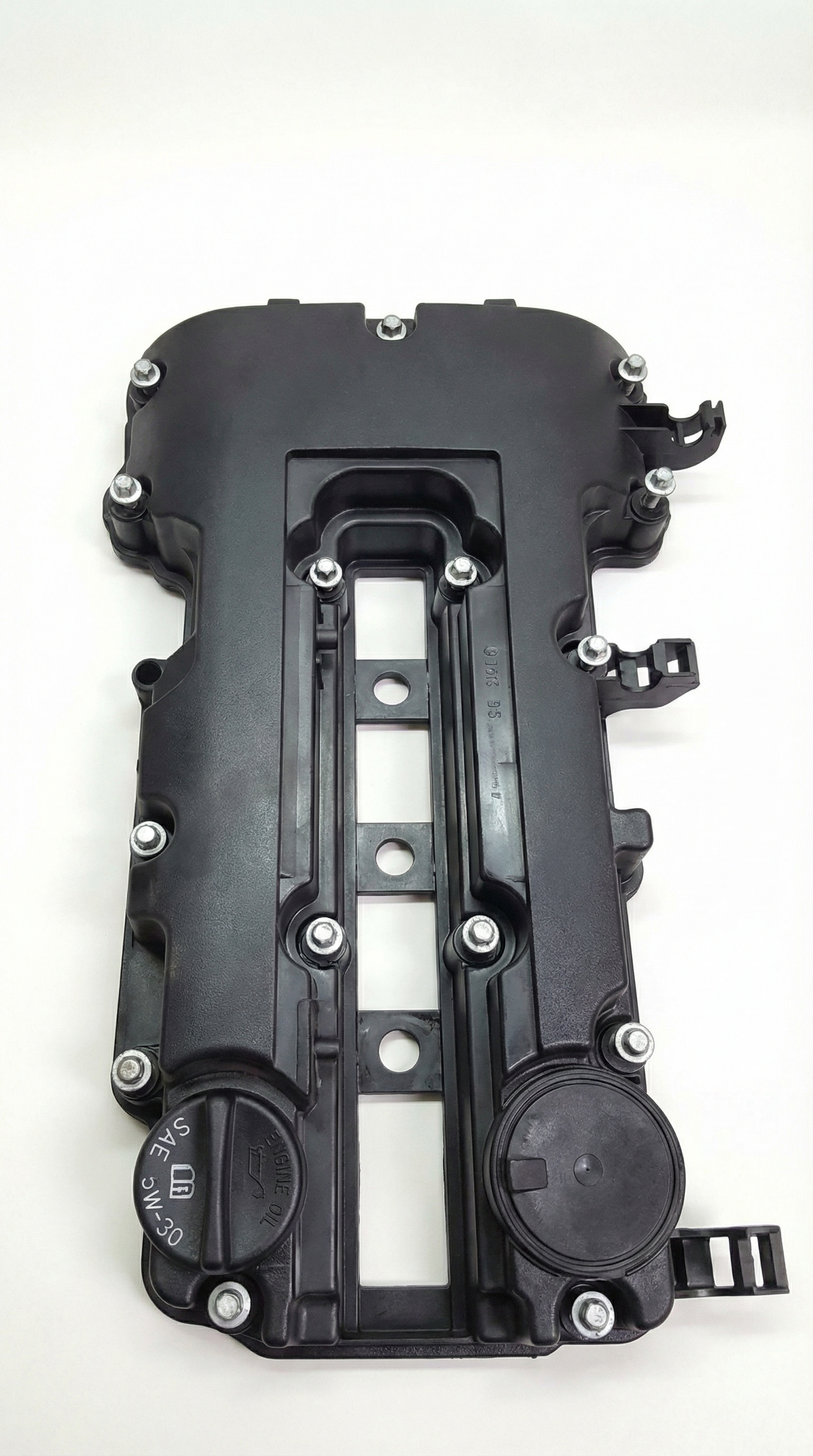
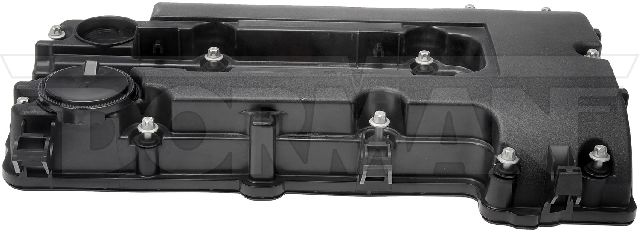
- Valve Cover
(OEM #25198874 (superseded by 25209141))— The integrated PCV diaphragm frequently ruptures due to crankcase pressure from a failed intake manifold check valve, causing a major vacuum leak. GM issued special coverage N192282200 for this part on some models.
Trusted brands: ACDelco, Dorman
OEM price range: $90-$140
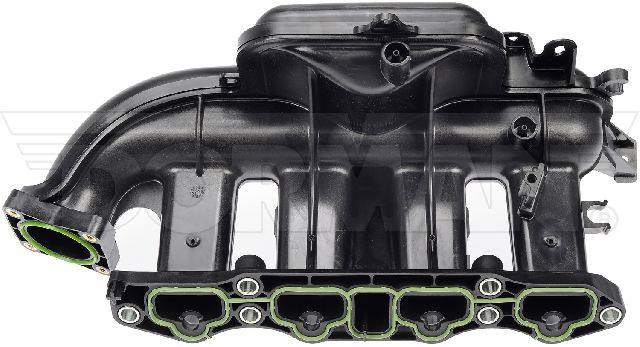
Aftermarket price range: $50-$90 - Intake Manifold
(OEM #55573248 (superseded by 25200449, 28289977))— The internal PCV check valve fails or gets ingested by the engine, creating a permanent boost leak path back to the turbo inlet, which is a primary cause of P0299.
Trusted brands: ACDelco, GM Genuine
OEM price range: $200-$300
Aftermarket price range: $150-$220
Related Codes That Often Appear With This One
- P0171 — System Too Lean. A ruptured valve cover diaphragm or other major vacuum leak will cause this code to appear alongside P0299 because unmetered air enters the engine.
- P1101 — Intake Air Flow System Performance. This code is often triggered by the same vacuum/boost leaks that cause P0299, particularly a failed PCV system, as the MAF sensor readings don't match expectations.
Technical Service Bulletins (TSBs) & Recalls

- TSB #PIP5495L (Feb 2020): The latest version of a long-running bulletin warning technicians not to replace turbochargers for P0299 without first ruling out simpler causes like boost leaks, PCV issues, or a missing wastegate clip. It explicitly states that small cracks near the wastegate port are normal.
- TSB #N192210230 (July 2019): A 'Special Coverage' adjustment from GM extending the warranty on the camshaft cover (valve cover) for some 2015-2016 Cruze and 2015 Sonic models due to the high failure rate of the internal PCV diaphragm.
Platform-Specific Known Issues
- GM has issued multiple versions of Technical Service Bulletin #PIP5495 (e.g., PIP5495B, PIP5495L, PIP5495M) specifically for P0299 and P0234 on the 1.4L engine, warning technicians to check for PCV issues, boost leaks, and missing wastegate clips before replacing the turbocharger.
- An extended warranty was offered by GM for some model years to cover the replacement of the valve cover and intake manifold due to these known PCV system failures.
Mechanic-Grade Diagnostic Values
- Manifold Absolute Pressure (MAP) Sensor Voltage, Key On, Engine Off (KOEO) — expected: ~4.0-4.9 Volts. Failure: Voltage is stuck low or does not read near atmospheric pressure.
- Manifold Absolute Pressure (MAP) Sensor Voltage, Engine at Idle — expected: ~1.0-2.0 Volts. Failure: Voltage is stuck high or does not reflect high engine vacuum.
- Short/Long-Term Fuel Trims at warm idle — expected: -5% to +5%. Failure: High positive fuel trims (> +10%) indicate the ECM is compensating for a vacuum leak, a common root cause of P0299.
- Fuel Pressure (Low Side), Key On, Pump Commanded On — expected: 50-94 PSI. Failure: Pressure below 50 PSI indicates a fuel delivery issue, which can cause lack of power but is not a direct cause of P0299.
- Desired Boost vs. Actual Boost on Scan Tool — expected: Actual boost should closely track desired boost under acceleration.. Failure: A large, consistent gap between desired and actual boost (e.g., desired 31 PSI, actual 18 PSI) confirms the underboost condition.
Scan Tool Commands That Help
- GDS2 (GM Global Diagnostic System 2): Turbocharger Boost Control Test — This is a guided diagnostic routine that graphs 'Desired Boost Pressure' vs. 'Actual Boost Pressure' during a wide-open throttle pull to quantitatively confirm the underboost condition.
- GDS2 (or high-end bidirectional scanner): Turbocharger Boost Control Solenoid Valve Test — This command cycles the wastegate solenoid's duty cycle (e.g., from 5% to 95%) to verify it is mechanically functioning (an audible click should be heard). This helps isolate a faulty solenoid from a wiring or ECM issue.
- GDS2 (or high-end bidirectional scanner): Wastegate Learn / Turbocharger Relearn — After replacing the turbocharger assembly, this function is required to allow the ECM to learn the new wastegate actuator's electronic start and stop positions. Failure to perform this can result in incorrect boost control.
Wiring & Ground Locations
- G105 / G106 — G105 is on the left front of the engine compartment; G106 is on the left rear of the engine block. Another key ground point is on the chassis frame rail beneath the battery tray.. These are primary grounds for the engine block, ECM, and attached sensors like the MAP sensor. A corroded or loose ground can cause erratic sensor readings, leading the ECM to receive incorrect data and potentially misdiagnose a boost issue.
- MAP Sensor Connector — On the 1.4L Turbo, the MAP sensor is on the top left (driver's side) of the plastic intake manifold, held by a single Torx bolt.. This is the primary sensor for measuring boost. Technicians will test for a 5V reference, ground, and a variable signal voltage at this connector's pins to validate sensor and wiring integrity.
Real Owner Repair Stories
- Reddit user ColJake on r/ChevySonic (2014 Chevrolet Sonic 1.4T) — Oil leaks and other symptoms consistent with PCV failure.
❌ Tried (didn't work) Replacing the intake manifold (due to the missing internal check valve) did not fully resolve the issues.
✅ What actually fixed it The final fix required replacing three components: 1) The intake manifold, 2) the valve cover (due to a ruptured diaphragm), and 3) a bad check valve located in the PCV tube that runs to the turbo inlet. After replacing all three, the codes were cleared. A front crankshaft seal was also replaced to stop a persistent oil leak caused by the crankcase pressure.
"I Checked Everything" — The Actual Cause
- In some cases, a full intake smoke test will pass with no leaks found, yet the P0299 code persists. The cause was found to be internal mechanical wear on the wastegate linkage pin inside the turbocharger assembly. This allows exhaust gas to bypass the turbine wheel, preventing boost from building, but it is not an intake-side leak that a smoke test can detect. The only fix is turbocharger replacement.
OEM Part Supersession History
55573248, 55581014→25200449, then 28289977— The original intake manifold design contained an integrated PCV check valve that was prone to failure. The updated part numbers are for a revised manifold that reportedly fixes this issue.25198874→25209141— The original valve cover assembly was prone to diaphragm rupture. The superseding part is the current replacement.
Model Year Variations Within This Range
- 2011-2016 (varies by model): GM issued several Special Coverage Adjustments (essentially extended warranties) for the failed valve cover diaphragm (e.g., N192282200, N202299080). These cover specific model years for the Sonic, Cruze, and Encore. For example, N192282200 covers certain 2015 Sonics for 10 years/120,000 miles. Owners should check their VIN for eligibility.
Diagnostic Flowchart
Real Owner Stories
Aggregated from forums and TSBs cited above. Mileages and costs reflect what owners reported in those sources.
Chevrolet Sonic 1.4L Turbo
Symptoms: Experienced a P0299 underboost code and suspected a failed turbocharger.
What fixed it: Discovered the retaining clip for the wastegate actuator rod had fallen off. Replacing the clip resolved the P0299 code and completely avoided a turbo replacement.
Source hint: SonicOwnersForum.com - Real Owner Repair Story
Chevrolet Cruze 1.4L Turbo (Platform Mate)
Symptoms: Triggered a P0299 code and found a visibly cracked intake manifold.
What fixed it: Diagnosed the cracked intake manifold as part of the well-documented PCV failure cascade that causes boost leaks.
Source hint: Reddit r/cruze - "Does this look normal? Diagnosing code P0299"
Chevrolet Sonic 1.4L Turbo
Symptoms: Diagnosing a P0299 Turbo Underboost code.
What fixed it: Checked the wastegate linkage and MAP sensor on the charge pipe as starting points to rule out simpler issues before condemning the turbocharger.
Source hint: Reddit r/ChevySonic - "P0299 Turbo Underboost"
Related OBD-II Codes
Frequently Asked Questions
Is there a specific TSB for the P0299 code on my 1.4L Chevy Sonic?
Will my warranty cover the valve cover replacement on my 2015 Sonic?
I have a P0299 code and hear a high-pitched chirping noise at idle. What does this mean?
Can I just replace the orange PCV check valve inside the Sonic's intake manifold?
My mechanic says I need a new turbo because the wastegate clip is missing. Is this true?
Why is my oil cap so hard to remove while the engine is running?
Helpful Videos
Used OEM Parts in Stock
New Aftermarket Parts Available



The information in this article is provided for general reference and educational purposes only. Vehicle specifications, procedures, and part compatibility can vary by production date, trim level, and region. Always consult your vehicle's factory service manual and verify part numbers before purchasing or performing repairs. Safety-critical components such as airbags, seat belts, and braking systems should be installed by a qualified professional.
- Chevrolet Sonic:
- 🎬 Helpful Videos
- 🛍️ Shop This Part
- What's Unique About the 2012-2019 Chevrolet Sonic
- Symptoms You May Notice
- Most Likely Causes
- Rare But Worth Checking
- Diagnosis Steps
- Parts You'll Likely Need
- Related Codes That Often Appear With This One
- Technical Service Bulletins (TSBs) & Recalls
- Platform-Specific Known Issues
- Mechanic-Grade Diagnostic Values
- Scan Tool Commands That Help
- Wiring & Ground Locations
- Real Owner Repair Stories
- "I Checked Everything" — The Actual Cause
- OEM Part Supersession History
- Model Year Variations Within This Range
- Diagnostic Flowchart
- Real Owner Stories
- Chevrolet Sonic 1.4L Turbo
- Chevrolet Cruze 1.4L Turbo (Platform Mate)
- Chevrolet Sonic 1.4L Turbo
- Related OBD-II Codes
- Frequently Asked Questions
- 🎟️ Get 5% Off