

P0299 on 2009-2016 Audi A4 2.0T: Turbo Underboost Causes and Fixes
On the 2009-2016 Audi A4 2.0T, code P0299 is most often caused by a failed diverter valve (a ~$100 DIY fix), a bad PCV valve, or a worn turbocharger wastegate. The diverter valve and PCV valve are the most common and cheapest fixes. If those are confirmed good, the issue is likely a worn turbocharger wastegate linkage, which is a more complex and expensive repair often requiring turbo replacement.
- For code P0299 on a 2009-2016 Audi A4 2.0T, always check the diverter valve (DV) and PCV valve first. They are the most common and cheapest parts to fail.
- The original diaphragm-style diverter valve is a known weak point. Upgrade to the revised piston-style valve (part # 06H145710J or later) for a permanent fix.
- A loud whistle at idle or extreme suction on the oil cap are classic signs of a failed PCV valve, which can cause this code.
- A rattling noise when the engine decelerates points towards a worn turbo wastegate, a more serious and expensive repair.
- Do not replace the turbocharger until you have definitively ruled out the diverter valve, PCV valve, and any boost leaks with a smoke test.
What's Unique About the 2009-2016 Audi A4

The EA888 Gen 2 engine in the B8/B8.5 Audi A4 is notorious for a few specific weaknesses that directly lead to code P0299. Unlike a generic underboost issue, the diagnostic path for this car is well-traveled. The original factory diverter valve used a rubber diaphragm that frequently tore, causing a major boost leak; this part was later updated to a more robust piston-style design (Revision 'D' or later). Similarly, the PCV valve (oil separator) is another common failure point whose internal diaphragm can rupture, creating a massive vacuum leak that the system interprets as underboost. Finally, the turbo's wastegate linkage pivot point is known to wear out, causing the wastegate flap to not seal properly, which lets exhaust gas bypass the turbine. This wear is so common it produces an audible rattle and is a primary cause for turbo replacement on this platform.
Generation note: This range covers the Audi A4 B8 (2009-2012) and the facelifted B8.5 (2013-2016) generations. Both use the 2.0T EA888 engine (primarily CAEB engine code in North America). Early B8 models are more likely to have the original, failure-prone diaphragm-style diverter valve (e.g., part number ending in 'G'). Audi later revised this part to a more durable piston-style design (Revision 'D' or later, part number 06H145710D), which is a common and recommended upgrade. The PCV valve assembly also went through several revisions to improve reliability, with the latest known version being 06H103495AK.
Symptoms You May Notice
- Significant loss of engine power and acceleration.
- Vehicle enters reduced-power 'limp mode'.
- Check Engine Light (CEL) and/or Electronic Power Control (EPC) light is on.
- Audible 'whooshing' or hissing sound from the engine bay during acceleration, indicating a boost leak.
- Loud whistling or 'tea kettle' sound at idle, often a sign of a failed PCV valve.
- Rattling noise from the engine bay, especially when letting off the throttle or at idle, which points to a worn wastegate linkage.
- Hesitation or stuttering during acceleration.
- Replacing the entire turbocharger without first thoroughly inspecting the diverter valve, PCV valve, and performing a smoke test for boost leaks. These simpler components are far more common failure points and much less expensive to fix.
- Replacing the Diverter Valve when the car is a later model (2013+) that already has the revised piston-style part. While it can still fail, it is much less likely than on earlier models with the diaphragm valve.
Most Likely Causes

- Failed Turbocharger Diverter Valve (DV) 🔴 High Probability Early models used a diaphragm-style valve that is notorious for tearing. The updated OEM part is a more durable piston design. A torn diaphragm creates an internal boost leak that a smoke test will not find.
How to confirm: Remove the diverter valve from the turbocharger (3 bolts, located underneath the engine). Inspect the rubber diaphragm for tears or splits. On later piston-style valves, check for smooth movement and ensure it hasn't come apart. Often, the old diaphragm-style valve will fall apart upon removal if it has failed.
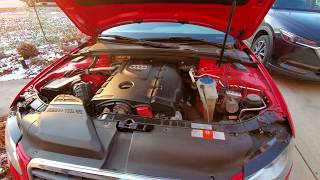
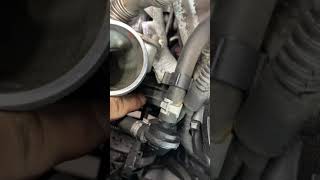
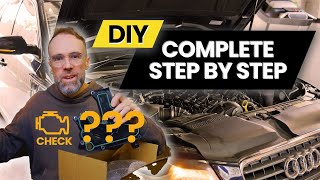
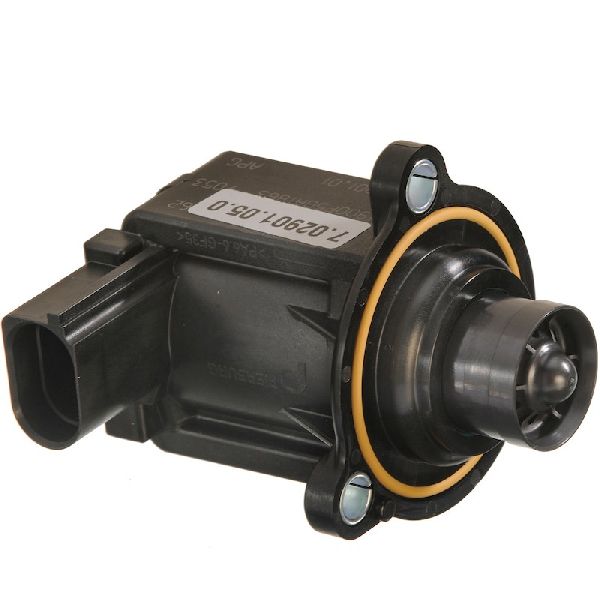
Typical fix: Replace the diverter valve with the latest revised OEM piston-style version (Part # 06H145710D or newer) or a quality aftermarket equivalent. This is a common DIY job. 🎬 Watch: Step-by-step guide to replacing your diverter valve.
Est. part cost: $80-$150 - Failed PCV Valve / Oil Separator 🔴 High Probability The diaphragm inside the PCV valve assembly is made of rubber and can tear over time, creating a significant unmetered air leak (vacuum leak) which the ECU can interpret as an underboost condition.
How to confirm: With the engine running, try to remove the oil filler cap. If there is extremely strong suction holding the cap down, making it difficult to remove, the diaphragm has likely failed. You may also hear a loud whistling or honking noise from the PCV valve itself.
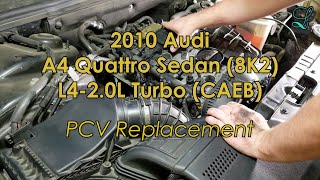
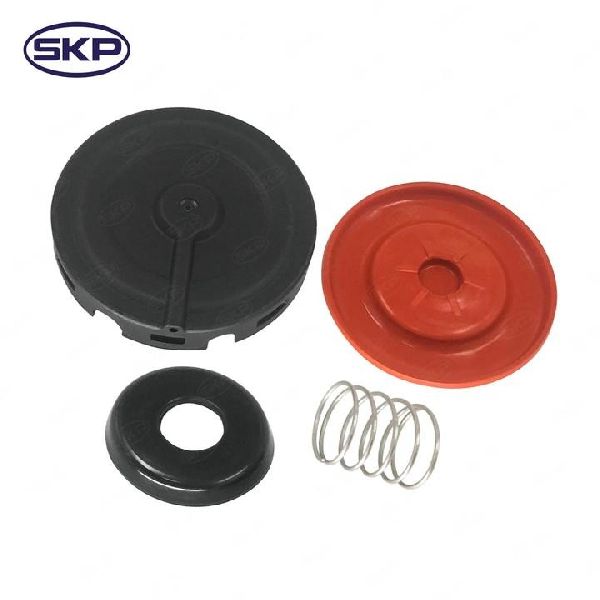
Typical fix: Replace the entire PCV valve assembly. It is located on top of the valve cover. Use an OEM or high-quality OEM supplier part, as aftermarket quality can be inconsistent. The latest revision is recommended 🎬 See how to replace the PCV valve and fix idle issues. (e.g., 06H103495AK).
Est. part cost: $120-$200 - Worn Turbocharger Wastegate 🟡 Medium Probability The pivot point for the wastegate flap arm wears out, creating excessive play ('slop'). This prevents the flap from sealing properly, allowing exhaust gases to bypass the turbine, thus preventing the turbo from building sufficient boost, especially at lower RPMs.
How to confirm: Visually inspect the wastegate actuator rod where it connects to the turbo. Check for excessive up-and-down play. A metallic rattling sound when revving the engine and letting the RPMs fall is a strong indicator. The definitive test involves removing the downpipe to physically check if the wastegate flap is loose and fails to seal the port.
Typical fix: This is a complex issue. Short-term fixes include installing a wastegate rattle clip (OEM part 06J145220B) to add tension. However, Audi's official TSB states the clip should only be installed on a new turbo, not a worn one. Some have attempted bending the actuator arm to restore preload. The long-term, correct fix is replacing the entire turbocharger assembly.
Est. part cost: $20 (clip) to $1500+ (new turbo) - Boost or Vacuum Leak 🟡 Medium Probability Plastic and rubber components in the engine bay become brittle over time with heat cycles. Cracked charge pipes, intercooler end tanks, or loose hose clamps are common sources of leaks.
How to confirm: Perform a smoke test on the intake and charge pipe system. Smoke will be visible escaping from the location of the leak. Pay close attention to the intercooler end tanks, which are known to crack.
Typical fix: Replace the cracked pipe, hose, or faulty clamp that is causing the leak.
Est. part cost: $50-$400
Rare But Worth Checking
- Faulty N75 Valve (Wastegate Frequency Control Valve): This solenoid controls the vacuum sent to the wastegate actuator. If it fails, it cannot properly command the wastegate, leading to underboost. It can be tested with a vacuum gauge and multimeter; resistance should be around 25-35 Ohms. It's a possible cause if the DV, PCV, and wastegate linkage seem fine.
- Faulty Boost Pressure Sensor (MAP Sensor): While uncommon, the sensor that measures boost pressure can fail and send incorrect readings to the ECU, falsely triggering P0299. It's a relatively inexpensive part to replace as a diagnostic step if other causes are ruled out.
- Clogged Catalytic Converter: A severe restriction in the exhaust can create backpressure that prevents the turbo from spooling up correctly. This can be diagnosed by measuring backpressure at the pre-catalyst oxygen sensor port.
Diagnosis Steps

- Read the fault codes with an OBD-II scanner (like VCDS for VW/Audi) to confirm P0299 and log requested vs. actual boost pressure under load to verify the underboost condition.
- Test the PCV system: With the engine idling, listen for a loud whistling sound from the PCV. Carefully try to remove the oil cap; extreme suction indicates a failed PCV diaphragm.
- Inspect the Diverter Valve (DV): Remove the DV from the turbocharger. If it's the old diaphragm style, check for tears. If it's the piston style, ensure it moves freely and is intact.
- Inspect the Turbo Wastegate: Safely get under the vehicle and locate the wastegate actuator rod on the turbo. Try to move the linkage arm up and down. More than a few millimeters of play or a rattling sound indicates wear.
- Perform a Smoke Test: If no obvious issues are found, perform a smoke test on the entire intake tract to identify any hard-to-see leaks in pipes, hoses, or the intercooler.
- Test the N75 Valve: Use a vacuum pump to test the N75 solenoid and the wastegate actuator diaphragm to ensure they hold vacuum and function correctly. Check the N75 electrical resistance.
- If all other tests pass, consider testing or replacing the boost pressure sensor. As a last resort, check for a clogged catalytic converter.
Parts You'll Likely Need
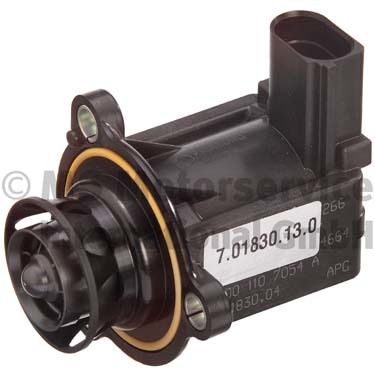
- Turbocharger Diverter Valve (Piston Style)
(OEM #06H145710D (latest revision))— This is the most common failure point, especially on pre-2013 models. The original diaphragm valve tears, and this updated piston-style part is the permanent fix.
Trusted brands: Audi (OEM), Pierburg, GFB (Go Fast Bits)
OEM price range: $100-$150
Aftermarket price range: $80-$200 - PCV Valve / Crankcase Breather / Oil Separator
(OEM #06H103495AK (latest revision))— The internal diaphragm is a very common failure item, causing a massive vacuum leak that the ECU interprets as underboost. Using the latest OEM revision is highly recommended as aftermarket quality is inconsistent.
Trusted brands: Audi (OEM), Vaico, Febi
OEM price range: $150-$200
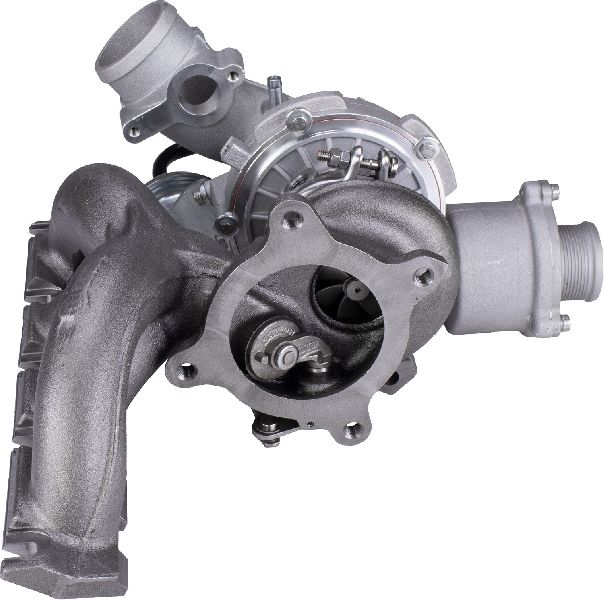
Aftermarket price range: $80-$160 - Turbocharger Assembly — Required if the internal wastegate linkage or flapper is excessively worn, which is a common cause of P0299 on higher-mileage cars. This is the final step after ruling out the DV, PCV, and boost leaks.
Trusted brands: IHI (OEM supplier), BorgWarner
OEM price range: $1200-$1800
Aftermarket price range: $800-$1500
Related Codes That Often Appear With This One
- P2279 — Intake Air System Leak. This code is often triggered alongside P0299 when the root cause is a failed PCV valve, as it creates a large unmetered air leak.
- P0171 — System Too Lean (Bank 1). A massive vacuum leak from a failed PCV can cause the engine to run lean, triggering this code in conjunction with P0299.
Technical Service Bulletins (TSBs) & Recalls
- Audi TSB 21-13-16 (2031245/6): Addresses P0299 caused by excessive wastegate play. It introduces the wastegate clip (06J145220B) but specifies it should only be installed on a NEW replacement turbocharger, not a used or worn one, as the improvement will not be achieved.
- Audi TSB 21-13-11 (2031245/2): An earlier version of the TSB also describing the wastegate play issue and the use of the clip on a replacement turbo.
- Manufacturer TSB Bulletin #131420312455: Notes that the turbocharger actuation can encounter excessive wear which leads to play at the waste gate flap. This leads to boost escaping through a loose flap, which sets DTC P0299 (Negative Pressure Deviation).
Platform-Specific Known Issues

- Wastegate Rattle & Clip Fix: The wear on the wastegate pivot is so common that it has a distinct sound—a metallic rattle on throttle lift-off. While Audi dealers will recommend a full turbo replacement, the enthusiast community has developed several 'hacks'. The most common is installing a tensioning clip (Part # 06J145220B). Another method involves using a special tool (like 'TurboBend') to slightly bend the actuator rod, increasing tension on the wastegate arm to force a better seal. These are considered temporary fixes, with turbo replacement being the only permanent solution.
- Diverter Valve Revisions: The evolution of the diverter valve is a key part of the B8/B8.5 story. Early cars came with a diaphragm version (often ending in 'G') that was prone to tearing. Audi released an updated piston-style valve (part number ending in 'D') that is far more robust. When diagnosing P0299, identifying which version of the DV is on the car is a critical first step. If it's the original diaphragm style, it is the number one suspect.
Mechanic-Grade Diagnostic Values
- N75 Valve (Charge Pressure Control Solenoid) Resistance — expected: 25-35 Ohms when at room temperature.. Failure: A reading significantly outside the 25-35 Ohm range, or a reading that climbs out of spec when the valve is heated (e.g., to over 40 Ohms), indicates a faulty coil.
- Vacuum Supply to N75 Valve at Idle — expected: Approximately 24-25 inHg (inches of Mercury).. Failure: Low or no vacuum indicates a leak in the supply lines from the vacuum pump.
- Wastegate Actuator Diaphragm Vacuum Test — expected: The actuator should hold a vacuum when tested directly with a hand pump.. Failure: If the applied vacuum drops, the diaphragm inside the actuator is torn and the actuator must be replaced.
- ECU Boost Request vs. Actual Boost (VCDS Log) — expected: Actual boost pressure should closely track specified (requested) boost pressure under load.. Failure: A sustained difference of more than 2 PSI (approx. 140 mbar) between specified and actual boost for 5-6 seconds will trigger the P0299 code.
Scan Tool Commands That Help
- VCDS (VAG-COM): Engine -> Output Tests -> Charge Pressure Control Solenoid (N75) — This test will cycle the N75 valve on and off, allowing you to audibly hear it clicking. If no clicking is heard, it suggests an electrical failure of the valve or its wiring.
- VCDS (VAG-COM): Basic Settings - "Initial adaptation of charge pressure actuator" — CRITICAL NOTE: This function is for later generation EA888 engines (Gen 3, found in Mk7 GTI, B9 A4, etc.) with an electronic wastegate actuator. The 2009-2016 B8/B8.5 A4 uses a vacuum-operated actuator, so this function is NOT APPLICABLE and will not be available or will fail if attempted. Do not attempt to perform an electronic adaptation on this vehicle's turbo.
Wiring & Ground Locations
- N75 Valve Fuse — Fuse 6 in Fuse Holder B (SB), typically located in the fuse box in the engine compartment plenum chamber. It is often a 10A or 15A fuse.. If the N75 valve is not receiving power, it cannot control the wastegate, leading to an underboost condition. A blown fuse is a simple but critical check before replacing parts.
- G12 Ground Point — Located on the firewall in the left rear of the engine compartment.. This is a primary ground point for the Engine Control Module (ECM) and the ignition coils. A poor connection here can cause a wide range of erratic engine management issues, potentially including incorrect sensor readings or solenoid control related to the turbo system.
Real Owner Repair Stories
- YouTube user 'JD' (2012 Audi A4) — P0299 Turbo Underboost code.
❌ Tried (didn't work) Replaced the diverter valve.
✅ What actually fixed it The turbocharger wastegate flapper had excessive mechanical play, visible after removing the catalytic converter. The definitive fix was replacing the entire turbocharger assembly. - YouTube user 'Audi P0299 Fix' (Audi A4 2.0T) — P0299 code, loose wastegate valve that could be spun by hand.
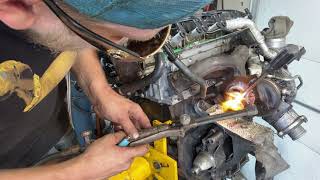
✅ What actually fixed it An unorthodox repair was performed without removing the turbo. The catalytic converter was removed for access, air was applied to the actuator to open the wastegate, and the actuator arm was heated cherry red and bent with a hammer and extension to restore tension on the wastegate flapper, successfully sealing it. - Reddit user on r/Audi (2014 Audi Q5 2.0T with 115k miles (same EA888 engine)) — P0299 code appeared in warm weather with no noticeable loss of power.
❌ Tried (didn't work) Considered replacing the turbo due to likely minor wastegate wear.
✅ What actually fixed it The owner theorized a minor efficiency loss from carbon on the wastegate seal was causing boost to be just under the ECU's threshold. Instead of a mechanical repair, they used a tuning device to increase the requested boost pressure by 1%, which was enough to compensate for the minor loss and prevent the P0299 code from recurring.
"I Checked Everything" — The Actual Cause
- A very common scenario for P0299 on this engine is for a smoke test to come back clean, showing no boost leaks. In these cases, the cause is almost always one of two things: 1) A torn diaphragm in the diverter valve, which creates an internal leak that a smoke test cannot detect, or 2) Mechanical wear of the turbocharger's wastegate linkage and flapper, which is not a pressure leak in the intake tract but a failure to properly route exhaust gas.
OEM Part Supersession History
06J145220A→06J145220B— This is the 'Wastegate Rattle Clip' designed to add spring tension to the actuator rod to combat rattling from a worn linkage.
Heads up: According to Audi Technical Service Bulletin (TSB) 2031245, this clip is intended for installation on a NEW replacement turbocharger only. The TSB explicitly states: 'Do not install clip on a used or pre-damaged turbocharger, as the same level of improvement as on a new part is not achieved.' This contradicts the common practice of using it as a standalone fix for a worn, rattling turbo.
Model Year Variations Within This Range
- 2009-2016 (All B8/B8.5): This platform uses a vacuum-operated wastegate actuator controlled by the N75 solenoid. This is distinct from the later EA888 Gen 3 engine (found in the B9 A4, Mk7 GTI, etc.) which uses an electronic wastegate actuator. Therefore, diagnostic procedures involving VCDS to perform a 'wastegate adaptation' or check actuator voltage are not applicable to this vehicle.
- 2009-2012 (Early B8): These earlier models were factory-equipped with a diaphragm-style diverter valve (DV) that is a very common failure point. Later B8.5 models (2013-2016) typically came with the more reliable piston-style 'Revision D' valve from the factory, making it a less likely, though still possible, cause of P0299 on those model years.
Diagnostic Flowchart
Real Owner Stories
Aggregated from forums and TSBs cited above. Mileages and costs reflect what owners reported in those sources.
Audi A4 B8 2.0T
Symptoms: Experienced a P0299 underboost code and went through a full diagnostic process, including replacing the diverter valve, pressure testing the system, and checking the N75 valve.
What fixed it: Replaced the entire turbocharger assembly because the wastegate was loose.
Source hint: AudiWorld.com thread titled 'p0299-turbo-underboost-problem-2929280'
Audi Q5
Symptoms: Received a P0299 engine code and took the vehicle to a dealer for diagnosis.
What fixed it: Dealer recommended a full turbo replacement without checking the diverter valve or other components first.
Cost: $3600
Source hint: AudiWorld.com thread titled 'turbo-p0299-engine-code-issue-2972033'
2009 Audi A4 2.0T
Symptoms: Triggered a P0299 code and attempted to fix it by replacing the diverter valve, which had no effect.
What fixed it: Prompted further diagnosis into wastegate play and MAP sensors after the DV replacement failed to resolve the issue.
Source hint: AudiWorld.com thread titled 'p0299-code-2009-a4-2-0t-2834233'
Related OBD-II Codes
Frequently Asked Questions
Does the wastegate rattle clip fix the P0299 code permanently on my B8 A4?
How can I tell if my 2.0T has the updated diverter valve?
My engine makes a loud whistling or 'tea kettle' sound at idle. Is this related to my underboost code?
Can a boost leak cause P0299 without triggering other codes?
What is the 'TurboBend' tool mentioned for the A4 wastegate?
Should I replace the N75 valve if I have a P0299 code?
Helpful Videos

Used OEM Parts in Stock


New Aftermarket Parts Available


The information in this article is provided for general reference and educational purposes only. Vehicle specifications, procedures, and part compatibility can vary by production date, trim level, and region. Always consult your vehicle's factory service manual and verify part numbers before purchasing or performing repairs. Safety-critical components such as airbags, seat belts, and braking systems should be installed by a qualified professional.
- Audi A4:
- 🎬 Helpful Videos
- 🛍️ Shop This Part
- What's Unique About the 2009-2016 Audi A4
- Symptoms You May Notice
- Most Likely Causes
- Rare But Worth Checking
- Diagnosis Steps
- Parts You'll Likely Need
- Related Codes That Often Appear With This One
- Technical Service Bulletins (TSBs) & Recalls
- Platform-Specific Known Issues
- Mechanic-Grade Diagnostic Values
- Scan Tool Commands That Help
- Wiring & Ground Locations
- Real Owner Repair Stories
- "I Checked Everything" — The Actual Cause
- OEM Part Supersession History
- Model Year Variations Within This Range
- Diagnostic Flowchart
- Real Owner Stories
- Audi A4 B8 2.0T
- Audi Q5
- 2009 Audi A4 2.0T
- Related OBD-II Codes
- Frequently Asked Questions
- 🎟️ Get 5% Off