

P0272 on 2004-2010 Ford E-350 6.0L Power Stroke: Cylinder 4 Contribution Fault Causes and Fixes
On a 6.0L Power Stroke, P0272 almost always points to a problem with the #4 fuel injector, its wiring, or the Fuel Injector Control Module (FICM). The most likely cause is 'stiction' (sticking internal injector parts due to degraded oil), a failing FICM power supply, or a bad injector. A full injector replacement can cost over $300 for the part plus several hours of labor.
- P0272 on a 6.0L Power Stroke is a cylinder #4 contribution fault, most often caused by injector stiction, a failing FICM, or a bad injector.
- ALWAYS test the FICM voltage first. It must be above 45V at all times. This is a simple test and a very common point of failure.
- If the engine runs rough when cold but improves when warm, the issue is likely injector stiction. Try a quality oil additive before replacing expensive parts.
- The most reliable way to confirm a bad injector is to swap it with another cylinder and see if the fault code follows the injector.
- This is not a beginner-friendly repair due to the complexity of the fuel and high-pressure oil systems.
What's Unique About the 2004-2010 Ford E-350
The 6.0L Power Stroke uses a unique HEUI (Hydraulically-actuated Electronically-controlled Unit Injector) system. This system uses high-pressure engine oil (up to 4,000 PSI), pressurized by a High-Pressure Oil Pump (HPOP), to fire the fuel injectors. These commands are sent by the Fuel Injector Control Module (FICM), which supplies a 48-volt signal to activate the injector solenoids. This design makes the engine highly susceptible to issues from oil quality and FICM health. 'Stiction'—where sticky, varnish-like residue from degraded oil causes the injector's internal spool valve to malfunction, especially when cold—is a hallmark problem for this engine and a primary cause of contribution codes like P0272.
Symptoms You May Notice
- Rough or uneven idle, especially when the engine is cold. The engine may smooth out as it warms up.
- Engine misfire or 'lope', sometimes accompanied by a rhythmic puff of smoke.
- Noticeable loss of power and slower acceleration.
- Excessive white or blue-grey smoke from the exhaust, particularly on a cold start or under load. This is unburnt fuel.
- Hard starting, especially in cold weather, or long crank times.
- Reduced fuel economy.
- Audible 'miss' in the engine note at idle.
- A fuel knock type noise at idle, as noted in manufacturer service records regarding contribution codes.
- Replacing the EGR valve. While EGR issues are common on the 6.0L, they typically cause codes for the EGR system itself, general performance issues, or random misfires, not a consistent contribution fault on a single cylinder.
- Assuming any rough running is due to glow plugs. Glow plug issues will cause hard starting and white smoke but will set their own specific codes (e.g., P0674 for cylinder 4) and won't cause a contribution fault once the engine is running.
Most Likely Causes
- Fuel Injector 'Stiction' 🔴 High Probability The 6.0L's HEUI injectors use engine oil to operate. Over time, oil breaks down from high heat and pressure, creating a varnish-like residue on the injector's spool valve. This causes the valve to stick, especially when the oil is cold and thick, preventing proper injector function.
How to confirm: Symptoms are the biggest clue: the engine runs very rough when cold and smooths out as it reaches operating temperature. A power balance test on a scan tool will show cylinder #4 underperforming when cold. An injector buzz test may sound weak or dull on cylinder #4 when cold, but normal when hot.
Typical fix: First, try a high-quality oil additive specifically designed to clean HEUI injectors. Popular and often-cited effective products include Archoil AR9100 and Hot Shot's Secret Stiction Eliminator. These additives can dissolve the varnish causing the stiction. Using a high-quality 5W-40 or 15W-40 synthetic diesel engine oil can also help prevent future stiction. If additives do not work, the injector requires replacement.
Est. part cost: $40-$80 for oil additive - Failing Fuel Injector Control Module (FICM) 🔴 High Probability The FICM is mounted on the driver's side valve cover and is subject to intense heat and vibration, leading to a high failure rate of its internal electronics, particularly the power supply that should generate 48 volts to fire the injectors.
How to confirm: Use a scan tool or multimeter to monitor FICM Main Power (FICM_MPWR). Test during three phases: Key On Engine Off (KOEO), cranking, and Key On Engine Running (KOER). The voltage must remain stable at 47-49 volts. If it drops below 45 volts at any point, especially during cranking or cold starts, the FICM is failing. This is a very common cause for single or multiple injector codes.
Typical fix: The FICM must be repaired or replaced. Many specialists (like FICMRepair.com) offer repair services or sell remanufactured units with upgraded components, which is often more cost-effective than a new OEM part. Ensure the replacement is programmed for your vehicle's VIN.
Est. part cost: $200-$600 for a repaired or remanufactured FICM - Failed #4 Fuel Injector 🟡 Medium Probability Beyond stiction, the injector can fail electrically (bad coil) or mechanically (internal seals, broken pintle, eroded nozzle). These injectors operate under extreme pressure and are a known wear item. Low fuel pressure is a common killer of injectors. Manufacturer records, such as TSB Bulletin #TSB18-2015, suggest that contribution codes like P0272 can also be due to incorrect learning of the injector timing in the PCM.
How to confirm: Perform an injector 'buzz test' with a capable scan tool; a weak or silent buzz from injector #4 indicates an electrical issue. A contribution test should confirm cylinder #4 is underperforming. The definitive test is to swap the #4 injector with another cylinder (like #2 or #6). If the trouble code moves to the new cylinder (e.g., P0266 for cylinder 2), the injector is bad.
Typical fix: Replace the fuel injector and all associated O-rings and copper crush washer. It is critical to use high-quality parts (Motorcraft is highly recommended). For 2004.5+ models, it is best practice to also replace the high-pressure oil standpipes and dummy plugs at the same time to prevent future oil leaks.
Est. part cost: $250-$450 for one Motorcraft injector - Injector Wiring Harness/Connector Issue ⚪ Low Probability The engine harness, especially in the tight E-Series engine bay, 🎬 Watch this walkthrough for replacing injectors on an Econoline can rub against brackets or studs, eventually chafing through the insulation and causing a short or open circuit for a specific injector wire. The connector at the injector can also become brittle or damaged from heat cycles.
How to confirm: Visually inspect the wiring harness leading to the #4 injector, paying close attention to known chafe points like valve cover bolts and sensor brackets. Unplug the connector and check for damage or corrosion. Test for continuity between the FICM connector and the injector connector with a multimeter. A 'wiggle test' (moving the harness while the engine is running) may induce a stumble.
Typical fix: Repair the damaged section of wire with a solder and heat-shrink connection. If the connector itself is damaged, replace the pigtail. In severe cases, the entire injector harness may need to be replaced.
Est. part cost: $20-$250 depending on repair scope
Rare But Worth Checking
- Low Compression in Cylinder #4: If all fuel and electrical system checks pass, a mechanical engine problem (e.g., bad piston, rings, or valve train issue) could be the cause. This is rare but would prevent the cylinder from making power even with a perfect injector.
- High-Pressure Oil System Leak (Branch Tube/Nipple Seals): A leak specific to the oil rail supplying the #4 injector, such as a bad seal on the rail nipple where it enters the injector, could starve that injector of the pressure needed to fire correctly. This is less common than a general HPOP system leak but can cause a single-cylinder fault.
- PTO Operation Interference: According to TSB Bulletin #16-0056, the MIL may illuminate with code P0272 specifically during PTO operation or split-shaft PTO mode.
Diagnosis Steps
- Connect a 6.0L-capable scan tool (e.g., ForScan with a compatible OBD-II adapter). Check for any other codes besides P0272, especially P0611 (FICM Performance) or other injector circuit codes.
- FICM Voltage Test (Critical First Step): Monitor the 'FICM Main Power' (FICM_MPWR) PID. With the key on, engine off, it should be 47-49 volts. Have a helper crank the engine and watch the voltage. If it drops below 45V at any time, the FICM is faulty and is the most likely cause. If you don't have a scan tool, you can test this manually at the FICM's 4-pin or 7-pin connector with a multimeter. 🎬 Watch: How to test and remove your FICM
- Injector Buzz Test: If FICM voltage is good, perform an injector 'buzz test' with the engine off. All eight injectors should produce a sharp, distinct 'buzz'. A weak or silent buzz on cylinder #4 points to a wiring or injector coil issue.
- Power Balance Test: Start the engine and run a power balance test. This graph will show the contribution of each cylinder. A significant drop or negative value for cylinder #4 confirms it is the source of the fault.
- Inspect Wiring: If the buzz test fails or the fault is intermittent, perform a 'wiggle test' on the injector harness over the driver's side valve cover while the engine is idling. If the idle stumble changes, you have a wiring issue. Visually inspect the harness for chafe points, especially near valve cover bolts and brackets.
- Injector Resistance Test: If wiring appears okay, unplug the FICM's X-1 connector (the one closest to the firewall) and the injector #4 connector. Using a multimeter, check the resistance of the injector's open and close coils. Each coil should measure between 0.4 and 0.6 ohms. A reading outside this range indicates a failed injector coil.
- Swap Injectors: If all electrical tests pass, the final confirmation is to swap the #4 injector with another cylinder (e.g., #2). If the code follows the injector (now showing P0266 for cylinder 2), the injector is faulty. If the code stays on cylinder #4 (P0272), the problem is mechanical (compression) or a very specific high-pressure oil leak to that cylinder.
Parts You'll Likely Need
- Fuel Injector
(OEM #4C3Z-9E527-BRM)— This is the most common repair if stiction additives and FICM replacement do not solve the issue. The injector itself may have failed electrically or mechanically.
Trusted brands: Motorcraft, Bosch
OEM price range: $300-$400
Aftermarket price range: $180-$300 - Fuel Injector Control Module (FICM)
(OEM #4C3Z-12B599-AARM)— A failing FICM is a very common cause of all injector-related codes on the 6.0L Power Stroke. Low voltage from the FICM prevents the injector from firing correctly.
Trusted brands: Motorcraft, Dorman, Specialty repair services like Bullet Proof Diesel or Circuit Board Medics
OEM price range: $700-$1000
Aftermarket price range: $250-$600 (Remanufactured) - Injector Seal Kit
(OEM #3C3Z-9229-AA)— Whenever an injector is removed or replaced, the O-rings and copper crush washer must be replaced to prevent compression and oil leaks.
Trusted brands: Motorcraft, Alliant Power
OEM price range: $15-$25
Aftermarket price range: $10-$20
Related Codes That Often Appear With This One
- P0304 — P0304 is 'Cylinder 4 Misfire Detected'. A contribution fault (P0272) is often the precursor to a complete misfire. If the cylinder is weak enough, the PCM will also flag it as misfiring.
- P0611 — P0611 is 'FICM Performance'. This code often appears when the FICM's power supply is failing and dropping below 45 volts, which directly causes injector contribution codes like P0272.
- P0270 — 'Injector Circuit Low - Cylinder 4'. This indicates an electrical problem in the injector circuit, such as an open coil in the injector or a broken wire, which would prevent the injector from firing and cause a contribution fault.
- P0271 — 'Injector Circuit High - Cylinder 4'. This indicates a short to ground in the injector circuit, which could be a bad injector coil or chafed wiring. This will also cause a contribution fault.
Platform-Specific Known Issues
- Injector Harness Chafing in E-Series Vans: Due to the tighter engine bay of the E-Series vans compared to F-Series trucks, the injector wiring harness is especially prone to chafing. Common chafe points include the upper valve cover studs near the FICM, the idler pulley bracket, and various valve cover hold-down bolts. A visual inspection and wiggle test are critical.
- Stiction Additive Success Story: On a Ford Truck Enthusiasts forum, a user with a 6.0L experiencing stiction symptoms noted that after trying other solutions, using Archoil AR9100 additive cleared up the injector issues. Another user on YouTube with 227,000 miles on original injectors noted that Rev-X fixed failing injectors years prior and plans to use it again to address current smoke and power loss issues.
Technical Service Bulletins (TSBs) & Recalls
- TSB Bulletin #16-0064: Notes that vehicles may exhibit a fuel knock type noise at idle and an illuminated MIL with DTC P0272 or other contribution codes.
- TSB Bulletin #TSB18-2015: Indicates that P0272 and similar codes may be stored in the PCM memory due to incorrect learning of the injector timing, often accompanied by a fuel knock noise at idle.
- TSB Bulletin #16-0056: Reports that the MIL may illuminate with code P0272 during PTO operation or split-shaft PTO mode.
Mechanic-Grade Diagnostic Values
- Fuel Injector Coil Resistance — expected: 0.4 - 0.6 Ohms for each of the two coils (open and close) at ambient temperature.. Failure: A reading of 0 ohms indicates a short, while an infinite (OL) reading indicates an open coil. A reading slightly out of spec (e.g., 0.7 ohms) can also indicate a problem when accounting for harness resistance.
- FICM Main Power (FICM_MPWR) — expected: 47-49 Volts (Key On, Engine Off and Running).. Failure: Dropping below 45V at any point, especially during cranking or when cold, indicates a failing FICM power supply.
- Injection Control Pressure (ICP) Voltage — expected: Approximately 0.16 - 0.28 Volts KOEO (Key On, Engine Off).. Failure: Incorrect KOEO voltage can indicate a biased sensor or wiring issue.
- Injection Control Pressure (ICP) Cranking — expected: Minimum of 500 PSI to start.. Failure: Failure to reach 500 PSI while cranking, combined with an IPR duty cycle of 85%, strongly suggests a high-pressure oil leak or a failed HPOP.
- Injection Pressure Regulator (IPR) Duty Cycle — expected: ~21-24% at hot idle; should not exceed 85% while cranking.. Failure: An IPR duty cycle that hits 85% while cranking indicates the PCM is commanding maximum pressure, but the system cannot build it, pointing to a large high-pressure oil leak or failed HPOP.
Scan Tool Commands That Help
- Ford IDS, ForScan, or equivalent high-level scanner: Injector Electrical Self-Test (Buzz Test) — Used with Key On, Engine Off to command the FICM to cycle each injector's solenoids. A weak or missing buzz from cylinder #4 points to an electrical fault in the harness or the injector coil itself.
- Ford IDS, ForScan, or equivalent high-level scanner: Power Balance Test — Used with the engine running to graphically display the power contribution of each cylinder. This is the primary tool for confirming that cylinder #4 is underperforming compared to the others, validating the P0272 code.
- Ford IDS or equivalent: VGT Learn Procedure — While not directly for P0272, this must be performed after any major engine work or PCM reflash on 2003 and early 2004 models to ensure the variable geometry turbo operates correctly, preventing other performance issues.
Wiring & Ground Locations
- FICM X-1 Connector (C1388A) — The rearmost connector on the FICM, closest to the firewall. It controls injectors for cylinders 1, 4, 6, and 7.. This is the main connector for the cylinder #4 injector circuit. Checking for pushed-out pins, corrosion, or testing continuity from this connector is a key diagnostic step.
- Injector Harness Ground Strap — A ground strap on the injector harness that attaches to a stud on the back of the intake manifold.. A loose or corroded ground can cause erratic electrical behavior for all injectors controlled by that harness, potentially leading to contribution codes.
- Injector Harness Chafe Point — The main engine harness often rubs on a stud near the driver's side valve cover. In E-Series vans, the harness can also be smashed against the external oil cooler line by the air filter housing.. This is a well-documented failure point where the insulation for the #4 injector wire can wear through, causing a short to ground and triggering P0271 (circuit high) or P0272.
- FICM Manual Test Pin (4-pin FICM) — On the 4-pin FICM (common on 2004.5+ models), it is the pin closest to the driver's side fender.. This specific pin is used to manually test the FICM's main power output with a multimeter if a capable scan tool is not available.
- FICM Manual Test Pin (7-pin FICM) — On the 7-pin FICM (common on 2003-2004 models), it is the pin in the 4-pin row that is closest to the center of the engine.. This specific pin is used to manually test the FICM's main power output with a multimeter if a capable scan tool is not available.
Real Owner Repair Stories
- Ford Truck Enthusiasts Forum User (2003 Ford F-250 6.0L) — Rough idle, occasional stalling at stoplights, code P0272.
❌ Tried (didn't work) Replaced EGR valve and reflashed PCM., Used stiction-reducing oil additives.
✅ What actually fixed it The dealer replaced the #4 fuel injector, which resolved the contribution/balance fault. - Ford Truck Enthusiasts Forum User (6.0L Power Stroke (year not specified)) — Repeated P0272 code, rough idle (loping), poor MPG after replacing all 8 injectors with rebuilt units.
❌ Tried (didn't work) Replacing the #4 injector a second time., Swapping in a known-good FICM from FICMRepair.com., Driving the truck to purge potential air in the oil system.
✅ What actually fixed it The user ultimately replaced the injector with another rebuilt unit from the same supplier, which finally fixed the issue, indicating multiple faulty rebuilt injectors were received.
OEM Part Supersession History
3C3Z-9E527-EARM (and others)→Varies by production date. Motorcraft is the recommended source.— Revisions to address reliability issues.
Heads up: Injectors for early models (2003-early 2004, with 'waved' oil rails) are physically different and not interchangeable with injectors for late models (2004.5-2010, with 'log' style rails). Installing the wrong injector will result in a no-fit or massive oil leak.Original 'square drive' dummy plugs and two-piece standpipes.→Updated one-piece standpipes and dummy plugs with improved seals (e.g., 6E7Z-9A332-B for a kit).— The original O-rings were prone to hardening and leaking, causing hot no-start conditions.
Heads up: When replacing injectors on a 2004.5+ engine, it is considered mandatory preventative maintenance to install the updated standpipes and dummy plugs to prevent near-certain future leaks.
Model Year Variations Within This Range
- 2003 - Early 2004: These engines use a 'log' style high-pressure oil rail and corresponding injectors. The ICP sensor is located at the rear of the engine in the HPOP cover, making it difficult to access. The HPOP itself is also a different design.
- Late 2004 - 2010: These engines use a 'wavy' style high-pressure oil rail with different injectors, standpipes, and dummy plugs. The ICP sensor was moved to the passenger side valve cover for much easier access. These models use the problematic Snap-to-Connect (STC) fitting on the HPOP that is prone to failure.
- 2003 - Early 2004 vs. Late 2004+: Early models used a 7-pin FICM, while later models used a 4-pin FICM. The manual voltage test procedure is different for each type.
Diagnostic Flowchart
Other Known Issues on This Vehicle
Issues unrelated to this code that are worth knowing about as an owner of this generation:
- EGR Cooler Failure 🔴 High — Very common. The original EGR cooler design is prone to rupturing, which can leak coolant into the intake, causing white smoke, coolant loss, and potentially catastrophic engine damage (hydro-lock). Often caused by a clogged oil cooler.
- Engine Oil Cooler Clogging 🔴 High — Extremely common. The oil cooler's small coolant passages act like a filter, trapping casting sand and other debris from the cooling system. This restricts coolant flow, leading to high engine oil temperatures (EOT) and subsequent failure of the EGR cooler and head gaskets. (Ref: TSB 09-24-03 introduced a PCM calibration to monitor the EOT/ECT delta and set a code if the cooler is likely clogged.)
- Head Gasket Failure / Stretching Head Bolts 🔴 High — Common, especially on tuned or hard-worked engines. The factory Torque-to-Yield (TTY) head bolts can stretch under high cylinder pressures (often caused by overheating from cooler issues), leading to blown head gaskets. The fix involves installing stronger ARP head studs.
- High-Pressure Oil Pump (HPOP) Failure 🟠 Medium — Common, particularly on early (2003-2004.5) models with the less reliable HPOP. Failure of the pump or related components like the STC fitting (on later models) will cause a no-start condition.
- Fuel Injection Control Module (FICM) Failure 🔴 High — Very common. The FICM's internal power supply fails due to heat and vibration, causing a wide range of drivability issues including no-starts, misfires, and injector codes. (Ref: TSB 08-26-03 provides diagnostic guidance for FICM-related issues.)
- Variable Geometry Turbo (VGT) Sticking 🟠 Medium — Common. Soot and carbon buildup can cause the variable vanes in the turbocharger to stick, leading to poor performance, lack of boost, or over-boost conditions. (Ref: TSB 09-24-03 includes a calibration update with a 'vane sweep' strategy to help keep the turbo vanes clean.)
Used vs. New Parts: Buying Guide for This Vehicle
When a used part is the smart pick: A used wiring harness from a low-mileage donor can be a good value if the original is damaged beyond simple repair. A used FICM can be an option, but a professionally remanufactured unit with an upgraded power supply and warranty is a much safer investment.
Donor-vehicle mileage cap: roughly under 150000 miles for the part to have meaningful remaining life.
What to inspect on the donor part:
- For a wiring harness, ensure there are no signs of prior repairs (excessive electrical tape), brittleness, or chafing on the loom.
- Check the connectors for cracked tabs, corrosion, or pushed-out pins.
- Avoid parts from vehicles that show signs of sitting for long periods (heavy rust, water lines in the engine bay) as this can degrade electronics and wiring.
OEM-only on this vehicle (don't cheap out):
- Fuel Injectors: The overwhelming consensus in the 6.0L community is to use only Motorcraft (OEM) new or remanufactured injectors. Aftermarket remans have a very high failure rate, often right out of the box, due to reused internal components like the spool valve.
- High-Pressure Oil Pump (HPOP): While not a direct cause of a single-cylinder code, if replacement is needed, OEM is strongly recommended to ensure longevity.
Aftermarket brands forum-validated for this vehicle:
- Additives: Archoil (AR9100) and Hot Shot's Secret (Stiction Eliminator) are widely trusted for cleaning stiction.
- FICM Repair/Upgrade: FICMRepair.com and Bullet Proof Diesel are well-regarded sources for more robust, repaired FICM units.
- Injectors (Performance): Warren Diesel and Holder's Diesel are mentioned for performance applications, but often require custom tuning and are not recommended for stock replacement.
Brands owners have reported issues with on this vehicle:
- Unnamed/generic 'Internet' or eBay injectors. Many forum posts warn that cheap, no-name remanufactured injectors are a false economy, leading to repeat failures and wasted labor.
Real Owner Stories
Aggregated from forums and TSBs cited above. Mileages and costs reflect what owners reported in those sources.
Ford 6.0L Power Stroke — 227000 miles
Symptoms: smoke and power loss issues
What fixed it: The owner noted that Rev-X additive had fixed failing injectors years prior and planned to use it again to address the current symptoms.
Source hint: Stiction Additive Success Story
Ford 6.0L Power Stroke
Symptoms: a stiction issue
What fixed it: After Hot Shot's Secret additive showed no improvement, the owner used Archoil oil and fuel additives, which resolved the issue within 250 miles.
Source hint: Reddit r/Diesel: Best Fuel/ Oil additives for 6.0 powerstroke?
Related OBD-II Codes
Frequently Asked Questions
My 2005 E-350 6.0L runs very rough when cold but seems to get better as it warms up. Is this the 'stiction' I've heard about?
I have a P0272 code. Should I replace the #4 injector or check the FICM first?
Are there any specific wiring issues on the E-350 van that could cause a P0272 code?
What kind of engine oil is best to prevent injector problems on my 6.0L Power Stroke?
Do oil additives like Archoil or Hot Shot's Secret actually work for stiction-related P0272?
If I have to replace the #4 fuel injector on my 2006 E-350, is there anything else I should replace at the same time?
Helpful Videos
Used OEM Parts in Stock
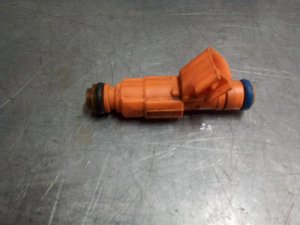
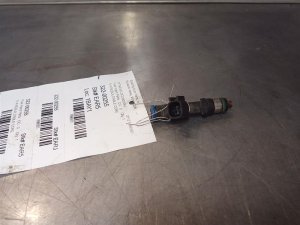
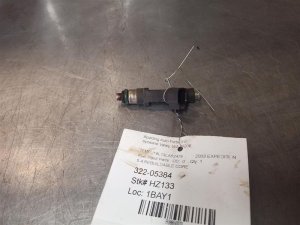


New Aftermarket Parts Available
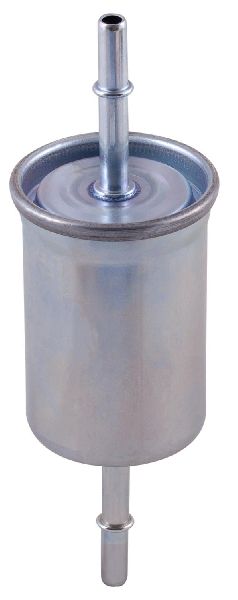




The information in this article is provided for general reference and educational purposes only. Vehicle specifications, procedures, and part compatibility can vary by production date, trim level, and region. Always consult your vehicle's factory service manual and verify part numbers before purchasing or performing repairs. Safety-critical components such as airbags, seat belts, and braking systems should be installed by a qualified professional.
- Ford E-350:
- 🎬 Helpful Videos
- 🛍️ Shop This Part
- What's Unique About the 2004-2010 Ford E-350
- Symptoms You May Notice
- Most Likely Causes
- Rare But Worth Checking
- Diagnosis Steps
- Parts You'll Likely Need
- Related Codes That Often Appear With This One
- Platform-Specific Known Issues
- Technical Service Bulletins (TSBs) & Recalls
- Mechanic-Grade Diagnostic Values
- Scan Tool Commands That Help
- Wiring & Ground Locations
- Real Owner Repair Stories
- OEM Part Supersession History
- Model Year Variations Within This Range
- Diagnostic Flowchart
- Other Known Issues on This Vehicle
- Used vs. New Parts: Buying Guide for This Vehicle
- Real Owner Stories
- Ford 6.0L Power Stroke — 227000 miles
- Ford 6.0L Power Stroke
- Related OBD-II Codes
- Frequently Asked Questions
- 🎟️ Get 5% Off