

P0270 on 2003-2005 Ford Excursion 6.0L: Cylinder 4 Injector Circuit Low Causes and Fixes
P0270 on a 6.0L Power Stroke most often points to a failing #4 fuel injector, a weak Fuel Injection Control Module (FICM), or a chafed wiring harness. A failing FICM is a very common issue on this engine and may set multiple injector codes. Always test FICM voltage first; it should be 48V KOEO (Key On Engine Off) and not drop below 46V during cranking. Expect to pay $200-$400 for a quality remanufactured injector or $350-$700 for an upgraded FICM.
- P0270 on a 6.0L Power Stroke is very frequently caused by either a failing #4 injector or a weak Fuel Injection Control Module (FICM).
- Before replacing any parts, test the FICM voltage. It must maintain 46-48 volts while cranking; if it drops, the FICM is the likely problem.
- Injector 'stiction' is a common mechanical issue caused by oil deposits. Using a quality oil additive and proper oil can sometimes resolve it without replacing the injector.
- Always check the health of your batteries and alternator, as low system voltage is a primary cause of FICM failure.
- Inspect the injector wiring harness for chafing, especially over the driver's side valve cover, before condemning expensive components.
What's Unique About the 2003-2005 Ford Excursion
The 6.0L Power Stroke engine is notorious for issues with its Fuel Injection Control Module (FICM) and injectors. The FICM is prone to failure of its internal power supply due to heat and vibration, leading to low voltage for all injectors. Additionally, the HEUI (Hydraulic Electronic Unit Injector) injectors are susceptible to a problem called 'stiction,' where sticky oil deposits from degraded engine oil prevent internal parts from moving freely, especially when cold. These two issues, along with a tendency for the main injector wiring harness to chafe on various engine components, are the most common culprits for injector-related codes on this specific engine.
Symptoms You May Notice
- Rough idle or engine shaking
- Noticeable loss of power and acceleration
- Engine misfire, sometimes described as a 'miss'
- Hard starting, especially when the engine is cold
- Black or white smoke from the exhaust
- Poor fuel economy
- Check Engine Light is on
- Audible injector 'tick' becomes louder or more erratic.
- Replacing the fuel injector when the FICM is the actual cause of the low voltage.
- Replacing the FICM when the injector itself has an internal short or open circuit.
- Replacing an injector or FICM when the true fault is a simple chafed wire in the harness that could be repaired for a fraction of the cost.
Most Likely Causes
- Failing Fuel Injection Control Module (FICM) 🔴 High Probability The FICM is mounted on the engine and is subject to intense heat and vibration, causing its internal power supply to fail frequently. Weak batteries or a failing alternator can accelerate this failure by forcing the FICM to work harder to step up voltage.
How to confirm: Using a multimeter or capable scan tool, check the FICM voltage with the key on. It should read 48 volts (FICM_MPWR PID). Then, crank the engine and monitor the voltage. If it drops below 46 volts, the FICM power supply is failing. A complete failure of the power supply or logic board can also cause a no-start condition.
Typical fix: Replace the FICM power supply board or the entire FICM unit. Many companies, such as Bullet Proof Diesel, offer repaired or upgraded units with more robust components and better heat dissipation. Some services offer to upgrade the output to 53 or 58 volts, which can improve starting and response.
Est. part cost: $350-$700 - Failed #4 Fuel Injector 🔴 High Probability Injectors on the 6.0L can fail electrically (bad coil) or mechanically. A common mechanical failure is 'stiction,' where varnish from degraded oil causes the injector's spool valve to stick. This is more common with extended oil change intervals or in cold weather. An internal open in the injector's coil will also cause a 'circuit low' code.
How to confirm: Perform a scan tool "buzz test" to listen for an audible click from each injector. A cylinder contribution test can also pinpoint a weak cylinder. To definitively confirm a bad injector, swap the #4 injector with another (e.g., #2, which is the front-most on the driver's side); if the code changes to P0264 (Cylinder 2 Injector Circuit Low), the injector is faulty.
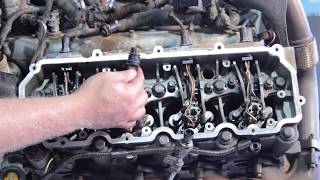
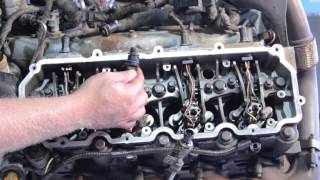
Typical fix: Replace the fuel injector. If stiction is suspected, some owners have success using a high-quality oil additive designed to clean HEUI injectors, such as Archoil AR9100 or Rev-X. If the injector has failed electrically, it must be replaced. 🎬 Watch this step-by-step guide for installing a new fuel injector.
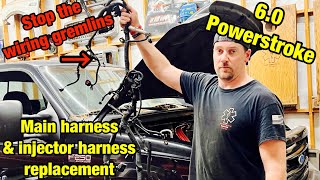
Est. part cost: $200-$400 - Injector Wiring Harness Damage 🟡 Medium Probability The wiring harness that passes over the valve covers can become brittle and chafe against engine components, causing a short or open circuit. Common chafe points include the corner of the driver-side valve cover, the alternator bracket, the idler pulley bracket, and the exhaust pressure sensor bracket, as noted in Ford TSB 04-18-6.
How to confirm: Visually inspect the wiring harness leading to the #4 injector, paying close attention to any areas where it might rub against the valve cover, brackets, or other parts. Perform a continuity or load test on the specific wires for the #4 injector between the FICM connector (X1 or C1388A) and the injector connector. Wiggling the harness while the engine is running can sometimes expose an intermittent fault.
Typical fix: Repair the damaged section of the wire with a solder and heat-shrink connection or replace the entire injector harness.
Est. part cost: $50-$250
Rare But Worth Checking
- Low System Voltage: Weak batteries or a failing alternator can cause the FICM to receive insufficient voltage, which in turn prevents it from supplying the required 48 volts to the injectors. This can trigger low circuit codes and will eventually damage the FICM itself.
- Faulty Powertrain Control Module (PCM): While very rare, the driver circuit within the PCM that sends the command signal to the FICM could fail. This should be considered only after all other possibilities have been exhausted.
- Loose or Corroded Connector Pins: The pins in the large FICM connectors or the individual injector connector can back out or become corroded, causing a poor connection and an open or high-resistance circuit. Burnt pins on the FICM's C1388A or C1388B connectors are a known failure point.
Diagnosis Steps
- Check for other DTCs. If multiple injector low codes and a P0611 are present, suspect the FICM immediately.
- Check Battery Health: Ensure both batteries are fully charged (12.6V+) and pass a load test. Low system voltage is a primary cause of FICM failure and related codes.
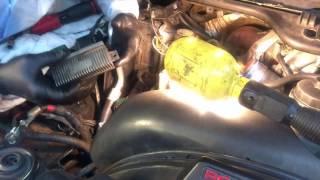
- Test FICM Voltage: With a scan tool (PID: FICM_MPWR) or multimeter, verify the FICM output voltage. It must be 48V with the key on, and not drop below 46V while cranking. 🎬 Watch: How to test and remove your FICM safely. If voltage is low, the FICM is faulty.
- Perform an Injector Buzz Test: Use a capable scan tool to command an injector buzz test. All injectors should produce a sharp, audible clicking sound. 🎬 See how to perform a proper injector buzz test. A weak or absent buzz from cylinder #4 points to a wiring or injector issue.
- Inspect the Wiring: Carefully inspect the injector wiring harness for any signs of chafing, melting, or corrosion, especially where it runs over the driver's side valve cover near the FICM and around the alternator and various brackets.
- Test the Injector Circuit: Disconnect the harness from the injector and FICM. Check for continuity on both wires for the #4 injector circuit between the corresponding pins for the #4 injector circuit. Check the injector coil resistance by measuring between the two pins on the injector itself. A reading between 0.5 and 1.5 ohms is typical; an infinite reading indicates an open coil.
- Isolate the Injector: If wiring and FICM voltage are good, the injector is the most likely culprit. To confirm, swap the #4 injector with another cylinder (like #2) and see if the fault code follows the injector (e.g., changes to P0264).
Parts You'll Likely Need
- Fuel Injector
(OEM #Motorcraft CN-5019-RM (Replaces 3C3Z-9E527-EARM, 9C3Z-9E527-A))— The injector itself may have an internal electrical open/short or mechanical failure ('stiction'). This is a primary cause for a single-cylinder injector code.
Trusted brands: Motorcraft, Bosch, Alliant Power
OEM price range: $300-$450
Aftermarket price range: $200-$350 - Fuel Injection Control Module (FICM)
(OEM #4C3Z12B599ABRM)— The FICM's internal power supply is a very common failure point on the 6.0L Power Stroke, causing low voltage to one or more injectors.
Trusted brands: Motorcraft, Dorman, Bullet Proof Diesel, Alliant Power
OEM price range: $600-$800
Aftermarket price range: $350-$700 - Injector Wiring Harness
(OEM #4C3Z-9D930-AA (For 2004 models) or 5C3Z-9D930-A (For 2005 models))— Chafing of the harness against the engine can cause an open or short to ground, resulting in a low voltage reading by the PCM.
Related Codes That Often Appear With This One
- P0611 — This code means 'FICM Performance' and is commonly set alongside multiple injector circuit low codes (P0261, P0264, P0267, P0270, etc.) when the FICM's power supply is failing.
- P0304 — This is a generic code for 'Cylinder 4 Misfire,' which is the direct result of the injector not firing correctly due to the low circuit voltage.
- P0261, P0264, P0267, P0273, P0276, P0279, P0282 — If all eight injector circuit low codes appear at once, it is almost certainly a complete failure of the FICM power supply or its main fuse/relay.
- U0306 — This code, 'Software Incompatibility with FICM', can sometimes appear with injector codes. It may indicate a programming issue or can be triggered if a FICM from another vehicle is swapped in for testing.
Technical Service Bulletins (TSBs) & Recalls
- TSB 09-24-03: This technical service bulletin involves a calibration update for the PCM to improve various running issues, including hard starts and lack of power, by refining injector performance strategies and diagnostics.
Platform-Specific Known Issues
- Injector Stiction: Caused by oil breakdown, this makes the injector's internal spool valve sticky, leading to misfires and rough running, especially when cold. Using quality diesel-rated oil (like 5W-40 synthetic in cold climates) and additives like Archoil AR9100 can help prevent and sometimes reverse minor stiction.
- FICM Power Supply Failure: The most common cause of injector codes on the 6.0L. The power board inside the module fails from heat and vibration, unable to maintain the necessary 48 volts. Upgraded aftermarket units from companies like Bullet Proof Diesel are a popular, more durable solution.
- Wiring Harness Chafing: The harness is known to rub on the driver's side valve cover, alternator bracket, and various other sharp edges on the engine, leading to intermittent open or short circuits that can be difficult to diagnose.
Mechanic-Grade Diagnostic Values
- Injector Coil Resistance — expected: 0.5 - 1.5 Ohms. Failure: Infinite resistance (open circuit) or near zero (short circuit).
- Injection Control Pressure (ICP) Sensor Voltage — expected: Approx. 0.2V KOEO; must rise above 0.8V during cranking for the PCM to enable injectors.. Failure: Voltage near 0V or stuck at 5V indicates a sensor or wiring fault. Voltage not rising during crank points to a high-pressure oil system problem.
- Injection Control Pressure (ICP) — expected: Minimum 500 PSI required to start. 500-700 PSI at normal hot idle.. Failure: Failure to reach 500 PSI during cranking will result in a no-start.
- Injector Pressure Regulator (IPR) Duty Cycle — expected: 21-30% at hot idle.. Failure: Duty cycle at 85% during cranking while ICP remains low confirms a high-pressure oil leak or a weak HPOP.
- FICM SYNC PID — expected: Should read 'Yes' or '1' on a scan tool before and during cranking.. Failure: A 'No' or '0' value indicates the FICM is not synchronized with the crankshaft and camshaft position sensors, often due to a FICM logic board failure or wiring issue.
Scan Tool Commands That Help
- Ford IDS, FORScan, high-end scan tools: Power Balance / Cylinder Contribution Test — Use this after a buzz test passes. This test measures the rotational speed drop of the crankshaft as each cylinder fires. A cylinder with a small drop is not contributing as much power as the others, pointing to a weak (but not necessarily electrically failed) injector, low compression, or a high-pressure oil issue on that bank.
Wiring & Ground Locations
- C1388A (X1) — The 32-pin FICM connector closest to the front of the vehicle.. This connector carries the signals for cylinders 1, 4, 6, and 7. A loose connection, corrosion, or burnt pins in this specific connector can cause P0270.
- C1388A, Pin 21 — Pin 21 on the C1388A (X1) FICM connector.. This is the 'close coil' control wire for the #4 injector. The wire color is typically Yellow with a Light Blue stripe (YL/LB). This pin should be tested for continuity to the injector.
- C1388A, Pin 22 — Pin 22 on the C1388A (X1) FICM connector.. This is the 'open coil' control wire for the #4 injector. The wire color is typically Light Blue with an Orange stripe (LB/OG). This pin should be tested for continuity to the injector.
- Injector Harness Chafe Points — Most commonly found where the harness passes over the driver's side valve cover, contacting valve cover bolts, intake manifold bolts, and the alternator bracket.. Vibrations cause the harness to rub through on these sharp metal edges, creating an open or short in the injector circuit. Ford issued TSB 04-18-6 regarding this exact issue.
Real Owner Repair Stories
- Ford Truck Enthusiasts Forum user (2003 Ford F-250 6.0L) — Rough running, Check Engine Light with code P0270.
❌ Tried (didn't work) Replaced the #4 fuel injector., Tested FICM voltage, which was a solid 48V., Performed a buzz test, which was inconclusive.
✅ What actually fixed it After removing the injector harness for a closer look, a chafed section was found on the #4 injector wire where it had been rubbing against a valve cover bolt head. The wire would lose connection intermittently when the engine vibrated. Repairing the wire with solder and heat shrink and securing it away from the bolt resolved the code permanently.
OEM Part Supersession History
3C3Z-9E527-EARM (or -AE, -EBRM)→Motorcraft CN-5019-RM (which also replaces 4C3Z-9E527-AA)— The original injectors for 2003-early 2004 models were updated for the mid-2004 refresh. Later designs featured improvements like DLC (Diamond-Like Carbon) coated spool valves to reduce stiction. Remanufactured injectors are typically built to the latest specification.
Heads up: While early and late injectors are physically interchangeable and will function, it is best practice to use injectors from the same revision, especially when replacing multiple units. The FICM can adapt, but performance may not be optimal if mixing very early and very late designs.
Model Year Variations Within This Range
- 2003 - Early 2004: These models have 'straight' high-pressure oil rails and are more prone to failures of the early HPOP (High-Pressure Oil Pump). The ICP sensor is located in a difficult-to-access position under the turbocharger. The FICM on these early trucks has individual drivers for each injector, meaning a single-cylinder fault like P0270 is more likely to be isolated to that specific circuit within the FICM.
- Late 2004 - 2005: These models feature updated 'wavy' high-pressure oil rails and are known for leaks at the standpipes and dummy plugs, causing hot no-start issues. The ICP sensor was moved to the passenger-side valve cover for much easier access. The FICM was updated to use a shared low-side driver for four injectors, meaning a short on one injector circuit could potentially cause codes for other cylinders in that group.
Diagnostic Flowchart
Other Known Issues on This Vehicle
Issues unrelated to this code that are worth knowing about as an owner of this generation:
- EGR Cooler Failure 🔴 High — Extremely common. Clogging from soot can cause it to rupture internally, leaking coolant into the intake manifold, which can lead to white smoke and catastrophic engine damage. (Ref: TSB 09-8-3 discusses testing procedures for a leaking EGR cooler.)
- Engine Oil Cooler Clogging 🔴 High — Very common. The internal passages get clogged with casting sand and other debris, which restricts coolant flow to the EGR cooler, causing it to overheat and fail. This is a root cause of many EGR and head gasket failures. (Ref: TSB 09-8-3 outlines the procedure to service the oil cooler.)
- Stretching/Failing Head Bolts (Leading to Head Gasket Failure) 🔴 High — Common, especially on tuned engines or those that have overheated. The factory Torque-to-Yield (TTY) head bolts can stretch, allowing combustion pressure to breach the head gaskets. The common fix is to install stronger aftermarket head studs (e.g., from ARP).
- High Pressure Oil Pump (HPOP) Failure 🔴 High — Common, particularly on early (2003-2004.5) models. The HPOP can fail, often due to a faulty ball tube or fitting, leading to a loss of high-pressure oil required to fire the injectors, resulting in a no-start condition.
- Variable Geometry Turbo (VGT) Sticking 🟠 Medium — Common. Soot and carbon buildup can cause the variable vanes inside the turbocharger to stick, leading to poor performance, lack of boost, or over-boost conditions. Ford later introduced a calibration update with a 'turbo sweep' strategy to help mitigate this. (Ref: TSB 09-24-03 includes a strategy to help clean the turbo vanes.)
Used vs. New Parts: Buying Guide for This Vehicle
When a used part is the smart pick: A used wiring harness from a low-mileage, non-wrecked truck can be a cost-effective alternative to a new harness if the damage to the original is extensive. Most other key components in this system are not recommended for purchase as used.
Donor-vehicle mileage cap: roughly under 80000 miles for the part to have meaningful remaining life.
What to inspect on the donor part:
- For a wiring harness, inspect for any signs of previous repairs, brittleness in the loom, or corrosion on connector pins.
- Ensure the donor vehicle was not in a front-end collision or engine fire.
- Verify the part came from the correct model year range (early vs. late 6.0L) to ensure proper fitment.
OEM-only on this vehicle (don't cheap out):
- Head Gaskets: Aftermarket head gaskets for the 6.0L are widely considered unreliable. Always use Ford OEM gaskets when performing head gasket replacement.
Aftermarket brands forum-validated for this vehicle:
- FICM: Bullet Proof Diesel, Alliant Power, FICMRepair.com
- Injectors: Bosch (OEM supplier), Alliant Power, Full Force Diesel, Motorcraft (remanufactured)
- Head Studs: ARP (This is considered a mandatory upgrade if the cylinder heads are removed)
Brands owners have reported issues with on this vehicle:
- Unbranded, no-name fuel injectors from online marketplaces like Amazon or eBay. These often fail prematurely and can cause engine damage.
- Some forum users report mixed reliability with Warren Diesel injectors, though they are a popular brand.
Real Owner Stories
Aggregated from forums and TSBs cited above. Mileages and costs reflect what owners reported in those sources.
Ford 6.0L Power Stroke
Symptoms: Owner was getting a P0270 code along with a U0306 code.
What fixed it: The problem was identified as a bad #4 fuel injector, which was replaced at a dealership.
Source hint: ford-trucks.com forum thread titled 'getting code p0270'
Ford 6.0L Power Stroke
Symptoms: A 'head scratcher' P0270 code that persisted after replacing the injector, FICM, and harness.
What fixed it: The final suspected cause, after extensive parts replacement, was a high-resistance cable from the alternator, highlighting the importance of checking the entire electrical system.
Source hint: ford-trucks.com forum thread titled 'head scratcher p0270'
Documented NHTSA Reports
Ford Manufacturer Reference
Symptoms: An owner reported that while traveling at about 50 MPH, the vehicle jerked, locked up the rear tires, and went into limp mode with a P0270 code.
What fixed it: NHTSA ODI #11170882 notes the code was associated with the output speed sensor, with symptoms similar to those described in Ford recall #16S19.
Ford Manufacturer Reference
Symptoms: A report describes the speedometer dropping to zero and the truck entering failsafe mode.
What fixed it: Identifying code P0270 confirmed the symptoms, as documented in NHTSA ODI #11128251.
Ford Manufacturer Reference
Symptoms: An owner noted the check engine light and wrench light came on, with a scan pulling code P0270.
What fixed it: NHTSA ODI #11084000 mentions this occurred in the context of Ford expanding recalls due to increasing complaints.
Ford Manufacturer Reference
Symptoms: A thorough inspection by a transmission shop found a faulty OSS sensor after pulling a P0270 code.
What fixed it: The shop advised the owner that this was a warranty and safety issue, as recorded in NHTSA ODI #11280803.
Ford Manufacturer Reference
Symptoms: An owner reported recurring issues that worsened over time, specifically citing error code P0270.
What fixed it: NHTSA ODI #11315459 details the owner's continued experience with this error code despite dealer consultations.
Related OBD-II Codes
Frequently Asked Questions
My 6.0L Excursion is hard to start when cold and has a P0270. Is this more likely the injector or the FICM?
I suspect 'stiction' is causing my P0270. Can I fix this without replacing the injector on my Excursion?
How can I definitively confirm my #4 injector is bad before buying a new one for my 6.0L?
Should I be concerned about the wiring harness causing a P0270 code on my 2004 Excursion?
My FICM voltage is low. What is a recommended replacement option for my 6.0L Power Stroke?
Is there a Ford TSB that might help with the running issues associated with a P0270 code?
Helpful Videos
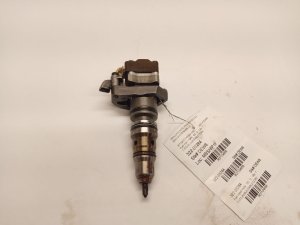
Used OEM Parts in Stock


New Aftermarket Parts Available


The information in this article is provided for general reference and educational purposes only. Vehicle specifications, procedures, and part compatibility can vary by production date, trim level, and region. Always consult your vehicle's factory service manual and verify part numbers before purchasing or performing repairs. Safety-critical components such as airbags, seat belts, and braking systems should be installed by a qualified professional.
- Ford Excursion:
- 🎬 Helpful Videos
- 🛍️ Shop This Part
- What's Unique About the 2003-2005 Ford Excursion
- Symptoms You May Notice
- Most Likely Causes
- Rare But Worth Checking
- Diagnosis Steps
- Parts You'll Likely Need
- Related Codes That Often Appear With This One
- Technical Service Bulletins (TSBs) & Recalls
- Platform-Specific Known Issues
- Mechanic-Grade Diagnostic Values
- Scan Tool Commands That Help
- Wiring & Ground Locations
- Real Owner Repair Stories
- OEM Part Supersession History
- Model Year Variations Within This Range
- Diagnostic Flowchart
- Other Known Issues on This Vehicle
- Used vs. New Parts: Buying Guide for This Vehicle
- Real Owner Stories
- Ford 6.0L Power Stroke
- Ford 6.0L Power Stroke
- Documented NHTSA Reports
- Ford Manufacturer Reference
- Ford Manufacturer Reference
- Ford Manufacturer Reference
- Ford Manufacturer Reference
- Ford Manufacturer Reference
- Related OBD-II Codes
- Frequently Asked Questions
- 🎟️ Get 5% Off