

OBD-II Code P0264: Cylinder 2 Injector Circuit Low
What P0264 means, why it triggers, and how to fix it
- P0264 indicates low voltage in the cylinder #2 fuel injector circuit, almost always caused by a chafed wire shorting to ground or an internally shorted injector.
- Do not replace the fuel injector without first testing the circuit; use a $20 noid light to confirm if the PCM is sending the correct electrical pulse.
- Inspect the wiring harness for friction damage first, especially on 2009-2017 GM V6 engines where TSB #PIP4924D identifies chafing against intake brackets as the primary culprit.
- Stop driving within 50 miles of this code appearing, as the resulting cylinder misfire dumps raw fuel into the exhaust and will destroy a $1,500 catalytic converter.
What Does P0264 Mean?
P0264 means the Powertrain Control Module (PCM) detects lower-than-normal voltage in the cylinder #2 fuel injector control circuit. The PCM activates the injector by supplying power and rapidly switching the ground connection. This code triggers when a voltage drop or short prevents the PCM from controlling the injector, causing engine misfires.
Technical definition: The SAE/OBD-II definition for P0264 is "Cylinder 2 Injector Circuit Low". The PCM detects the voltage signal from the cylinder #2 fuel injector is below the specified range during operation. The PCM uses transistor 'drivers' to ground the circuit; if the driver cannot control the injector due to a short to ground, excessive current draw, or an internal fault, it sets this code.
Can I Drive With P0264?
Yes, But With Caution. You can drive, but do not exceed 50 miles. Continuous misfires dump unburned fuel into the exhaust, rapidly overheating and destroying the catalytic converter. This turns a moderate injector issue into a $1,500+ repair. Driving is also unsafe due to rough idle, reduced power, and potential stalling.
Common Causes
- Wiring or Connector Issues (Very Common) — The wiring harness is the leading cause. Wires chafe against engine brackets, causing a short to ground. The electrical connector also suffers from loose pins, corrosion, or moisture intrusion, creating high resistance or a short.
- Faulty or Shorted Fuel Injector (Common) — An internal short in the injector's coil windings causes it to draw excessive current. This forces the PCM's injector driver into a protective low-voltage state, triggering the code.
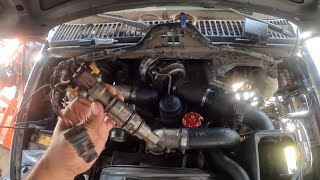
- Fuel Injection Control Module (FICM) Failure (Less Common) — On diesel engines like the Ford Power Stroke, a separate 🎬 See how to diagnose injector circuit low codes on Powerstroke engines. FICM controls the injectors. Internal FICM failures or loose connections drop the voltage supplied to the cylinder #2 circuit.
- Powertrain Control Module (PCM) Failure (Rare) — The internal PCM driver circuit controlling the #2 injector fails due to moisture, cracked solder joints, or age. This is a last-resort diagnosis after ruling out wiring and the injector.
- Low System Voltage (Rare) — A weak battery (below 12.0V) or failing alternator drops overall system voltage. The PCM sometimes misinterprets this system-wide drop as a specific circuit fault.
Symptoms
- Check Engine Light is On — An illuminated Check Engine Light (CEL) on your dashboard. The light flashes if the misfire is severe enough to damage the catalytic converter.
- Rough Idle and Engine Misfire — The engine shakes, runs unevenly, or has a distinct 'miss' when stopped. Cylinder #2 is not getting fuel to fire correctly.
- Decreased Fuel Economy — Gas mileage drops significantly. The PCM compensates for the dead cylinder by enriching the fuel mixture to others, wasting fuel.
- Hard Starting or Stalling — The engine is difficult to start or stalls shortly after starting when the fault is persistent.
- Fuel Smell or Black Smoke — If the circuit fault sticks the injector open, you smell raw fuel or see black smoke from the exhaust.
- Hesitation or Loss of Power — The car stumbles, hesitates, or feels sluggish during acceleration because one cylinder is dead.
Diagnostic Flowchart
Tap your situation to follow the diagnostic path that matches what you're seeing on this code.
Common Fixes & Costs
- Repair Wiring Harness
— Parts: $10-$50, Labor: $150-$300, ~1.5 hr book time
(Intermediate)
: OEM - Replace Fuel Injector #2
— Parts: $50-$250, Labor: $150-$450 (higher if intake removal is needed), ~2 hr book time
(Intermediate)
: OEM
: OEM - Clean or Replace Injector Connector
— Parts: $15-$40, Labor: $100-$200, ~1.0 hr book time
(DIY)
: OEM - Replace Fuel Injection Control Module (FICM) — Parts: $400-$900, Labor: $100-$200, ~1.5 hr book time (Intermediate)
- Replace Powertrain Control Module (PCM) — Parts: $800-$1200, Labor: $150-$300 (plus programming fees), ~2.5 hr book time (Professional)
Used vs. New Parts: Buying Guide
When a used part is worth it: For a common part like a fuel injector, a used OEM part from a reputable auto recycler is viable for out-of-warranty vehicles, provided the donor vehicle has low mileage.
Donor-vehicle mileage cap: roughly under 80000 miles for the part to have meaningful remaining life.
Donor quality checklist:
- Verify the donor vehicle's mileage and reason for being scrapped (accident damage is preferable to engine failure).
- Match the part number exactly; injectors are precisely calibrated.
- Buy from a supplier offering a 30-90 day warranty.
Decision logic:
- If Vehicle is still under factory warranty → Use a new OEM part to avoid voiding the warranty.
- If Vehicle is out of warranty and budget is a key concern → A quality remanufactured or low-mileage used OEM injector offers the best value.
- If The part is a cheap, unbranded injector from an online marketplace → Avoid it. These have inconsistent quality and fail quickly.
Warranty tradeoff: Used parts typically have a 30-90 day warranty. Aftermarket new parts range from 1 year to a lifetime warranty. New OEM parts usually carry a 12-month warranty.
Worst-case if a used part fails: $200-$600 if a used or cheap aftermarket injector fails shortly after installation, requiring repeat labor costs.
What Happens If You Wait — Timeline
- 0-1 month: Check Engine Light illuminates. Slight, intermittent roughness is felt at idle. The driver notices minimal performance change. (MPG impact: 3-8%% · Added cost: $0-$50 in wasted fuel)
- 1-3 months: Misfires become consistent, causing noticeable engine shake and hesitation. Fuel economy drops. The catalytic converter experiences periodic overheating from unburned fuel. (MPG impact: 10-15%% · Added cost: $50-$150 in wasted fuel)
- 3-6 months: Sustained misfiring superheats the catalytic converter, melting the internal ceramic honeycomb. A rattling noise or sulfur smell emits from the exhaust. (MPG impact: 15-25%% · Added cost: $1,000-$3,000 (Catalytic converter replacement is now required).)
- 6+ months: The catalytic converter completely clogs. Severe exhaust backpressure causes frequent stalling or a no-start condition. Risk of internal engine damage increases. (MPG impact: 25-40%% · Added cost: $1,500-$4,000+ (Includes catalytic converter, O2 sensors, and extensive diagnostics).)
Cost of Not Fixing It
- Immediate: Failed emissions test, noticeable drop in fuel economy (5-15%), rough idle, and poor acceleration. (Added cost: Negligible)
- 1-3 months: Risk of overheating and destroying the catalytic converter due to unburned fuel dumping into the exhaust. This is the most significant financial risk. (Added cost: $950-$2,800)
- 6+ months: Secondary engine damage, such as fouled spark plugs, damaged oxygen sensors, or cylinder washdown leading to internal engine wear. (Added cost: $300-$3000+)
Diagnosis Steps
- Read Codes and Freeze Frame Data
Use an OBD-II scanner to confirm P0264 is active. Document related codes like P0302 (Cylinder 2 Misfire). Analyze freeze-frame data to see engine conditions when the code set. Clear codes and test drive to see if it returns immediately.
Tools: OBD-II Scanner (Beginner) - Visually Inspect Wiring and Connector
Locate the cylinder #2 fuel injector. Inspect the electrical connector for looseness, corrosion, or pushed-out pins. Follow the wiring harness, looking for chafing, melting, or breaks. Pay close attention to areas where the harness touches metal brackets.
Tools: Flashlight, Inspection Mirror (Beginner) - Test the Injector Pulse with a 'Noid' Light
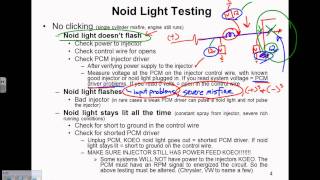
Disconnect the wiring from the #2 injector and plug in a 'noid' light. Start the engine. The light should flash steadily. If it flashes brightly, the PCM and wiring are good, pointing to a bad injector. If it stays solid, is dim, or does not flash, the fault is in the wiring or PCM.
Tools: Noid Light Set (Intermediate) - Check Injector Resistance
Disconnect the injector and set a multimeter to Ohms (Ω). Touch the probes to the two electrical pins on the injector. Most high-impedance injectors read 10-16 Ohms. A reading near zero indicates a shorted injector. Infinite resistance (O.L.) means an open internal coil.
Tools: Multimeter (Intermediate) - Perform an Injector 'Swap' Test
If access allows, swap the cylinder #2 injector with an adjacent one (e.g., cylinder #4). Clear codes and run the engine. If the code changes to P0266 (Cylinder 4), the injector is faulty. If P0264 returns, the problem is the wiring or PCM.
Tools: Basic hand tools (Intermediate) - Check for Voltage and Ground at the Connector
With the key on (engine off), use a multimeter to check for power at the injector connector. One wire should have battery voltage (12.6V). With the connector unplugged, check the control wire for a short to ground (it should have infinite resistance). If shorted, the harness is damaged.
Tools: Multimeter, Vehicle-specific wiring diagram (Advanced) - Pro Tip: Perform a Voltage Drop Test
Connect one multimeter lead to the injector control pin at the PCM and the other to the control pin at the injector (back-probing both). With the engine running, voltage should be under 0.2V. A reading above 0.5V indicates excessive resistance in the wire.
Tools: Multimeter with back-probe pins, Wiring diagram (Advanced) - Advanced: Analyze Fuel Trim Data
Using a scan tool, observe Short-Term Fuel Trim (STFT) for the bank with cylinder #2. If the injector fails to deliver fuel, the PCM compensates by adding fuel, resulting in high positive fuel trims (e.g., +25%). This confirms a fueling issue.
Tools: OBD-II Scan Tool with Live Data (Advanced) - Pro Tip: Analyze the Injector Waveform
Connect an oscilloscope to the injector's control wire. A good waveform shows a sharp drop from 14V to near zero, followed by an inductive spike (60-80V) when ground is released. For P0264, you often see a signal stuck at 0V (short to ground) or a weak inductive spike.
Tools: Automotive Oscilloscope (Professional)
When This Code Triggers (Freeze-Frame Conditions)
- Engine Coolant Temp: 180-205°F (Engine at full operating temperature.)
- RPM: 700-2500 (Code sets at idle or during steady cruise/light acceleration.)
- Engine Load: 20-60% (Fault is detected under light to moderate engine load.)
- Vehicle Speed: 0-55 mph (Triggers when stationary (rough idle) or at city/highway speeds.)
Related Codes
- P0302 — 'Cylinder 2 Misfire Detected' is a direct result of P0264. The faulty injector circuit prevents proper fueling, causing the cylinder to misfire. Diagnosing P0264 solves P0302.
- P0202 — 'Injector Circuit/Open - Cylinder 2'. P0202 points to an open circuit, like a broken wire. P0264 points to a 'low' voltage condition, caused by a short to ground. P0202 suggests a complete loss of signal, whereas P0264 suggests a signal is present but incorrect.
- P0300 — 'Random/Multiple Cylinder Misfire'. A severe misfire in cylinder 2 throws off engine balance, causing the computer to mistakenly log misfires on other cylinders. Focus on cylinder 2 first.
- P0261, P0267, P0270 — These are 'Injector Circuit Low' codes for other cylinders. Seeing these alongside P0264 suggests a widespread problem, such as a damaged main harness, a failing PCM/FICM, or a main power supply issue.
Climate & Environmental Factors
- High Humidity and Road Salt (Salt Belt Regions): Moisture and salt create a corrosive electrolyte that accelerates wiring degradation and connector pin corrosion. This salty mixture seeps into cracked insulation, causing shorts to ground.
- Extreme Cold: In very cold temperatures, wiring harnesses become brittle and susceptible to cracking if disturbed. A cold engine also demands precise fueling, making injector faults more noticeable as hard starts.
- Engine Bay Heat Cycles: Constant heating and cooling makes plastic connectors and wire insulation brittle. This leads to cracks, loose connectors, and an increased chance of the wiring chafing through its protective loom.
How to Talk to a Mechanic About This Code
Say this: "I have a P0264 code for the cylinder 2 injector circuit. Please check for common wiring harness chafing issues and perform a noid light test before recommending an injector replacement."
This signals you know P0264 is an electrical code and that a wiring fault is a common cause. It directs the technician to perform a thorough diagnosis instead of jumping to the most expensive conclusion.
Avoid saying:
- 'My check engine light is on, can you look at it?' (Too vague, invites a broad diagnostic process.)
- 'I think I need a new fuel injector.' (Leads the shop to replace the part without diagnosing the true electrical fault.)
- 'Just fix whatever is wrong.' (Gives the shop a blank check to replace parts without approval.)
Questions to ask before authorizing the repair:
- Did you perform an injector swap test or use a noid light to confirm the injector is the problem?
- Did you find a short in the wiring harness or a bad connector? If so, where was the damage?
- If you are recommending a new injector, what was the resistance (Ohm) reading of the old one?
- What is the warranty on the parts and labor for this specific repair?
Where to Take It: Dealer vs Independent vs Chain
- Dealer:
Recommended if the vehicle is under warranty or has a known manufacturer-specific quirk that independent shops might miss.
Best for: Vehicles still under powertrain or emissions warranty., Vehicles with known, complex TSBs (like GM harness issues) where the dealer has specific experience., Complex PCM/FICM failure requiring manufacturer-specific programming tools.
Downsides: Highest labor rates, often 1.5-2x more than independent shops., May recommend replacing an entire harness when a simpler wire repair would suffice. (Typical cost: +50% vs. baseline) - Independent Shop:
Best fit for most cases. A reputable independent shop with good electrical diagnostic skills effectively diagnoses and repairs P0264 for significantly less than a dealer.
Best for: Out-of-warranty vehicles where cost is a major factor., Diagnosing common electrical faults like chafed wires or bad injectors.
Downsides: Shop quality and diagnostic skill vary widely. Vet shops based on reviews and ASE certifications in electrical systems. (Typical cost: +0% vs. baseline) - Chain Shop:
AVOID for P0264 diagnosis. The risk of misdiagnosis is high. This code requires specific electrical testing, not just reading the code and replacing a part.
Best for: Simple, unrelated maintenance like oil changes or tire rotations.
Downsides: Technician skill varies dramatically and is not suited for complex electrical diagnosis., High pressure to meet sales targets leads to misdiagnosis and upselling unnecessary parts like fuel system cleanings. (Typical cost: -10% vs. baseline)
When to Walk Away From the Repair
If the estimated repair cost exceeds 40% of the car's private-party value, consider selling the vehicle.
- Car worth $4000, fix is $450: Fix it. A wiring or accessible injector repair is well below the threshold.
- Car worth $4000, fix is $1800: Walk away. A PCM replacement costs nearly half the car's value. The risk of other age-related repairs is too high.
- Car worth $12000, fix is $900: Fix it. Even a complex injector replacement requiring intake removal is a reasonable investment for a vehicle of this value.
What Scan Tool You Need for This Code
Minimum: A basic OBD-II code reader that reads and clears engine codes and shows freeze-frame data.
A basic reader only confirms the P0264 code. It cannot distinguish between a wiring, injector, or PCM fault. A multimeter and a noid light are more important diagnostic tools than a basic scanner.
Budget: BlueDriver Pro (~$90) — Reads and clears the code, provides freeze-frame data, and allows you to view live data streams (like fuel trims) on your smartphone to confirm a fueling issue.
Mid-range: Foxwell NT510 Elite (~$180) — Offers deeper, manufacturer-specific diagnostics and includes bidirectional controls to command components, which is useful for testing the injector circuit.
Professional: Autel MaxiCOM MK808S (~$450) — Provides extensive bidirectional controls to actively test the injector driver and command the injector, making diagnosis much faster. Includes service functions like injector coding.
How to Clear the Code After You Fix It
- Fix the underlying mechanical or electrical fault.
- Use an OBD-II scan tool to erase the Diagnostic Trouble Codes (DTCs).
- Perform a complete drive cycle to allow readiness monitors to run.
Drive cycle (~20 minutes): A generic drive cycle includes a cold start (engine temp below 122°F), a 2-3 minute idle, 10 minutes of steady driving at 55 mph, and a 5-minute period of stop-and-go city driving.
Readiness monitors affected: Catalyst Monitor, Oxygen (O2) Sensor Monitor, Misfire Monitor
Before emissions retest: drive at least 50 miles to fully set monitors.
Watch out for:
- Clearing the code without performing a drive cycle leaves readiness monitors 'Not Ready', causing an automatic emissions test failure.
- If the root cause is not repaired, the code returns within the first 20-50 miles.
Will This Fail Emissions / State Inspection?
Yes — this code typically fails an OBD-II emissions inspection.
- California: An illuminated Check Engine Light is an automatic failure. For most 2000+ gasoline vehicles, only the EVAP monitor can be 'Not Ready'.
- New York: A vehicle automatically fails the emissions inspection if the Check Engine Light is on. Clearing codes right before the test results in a failure due to 'Not Ready' monitors.
- Texas: In counties requiring emissions testing, an illuminated Check Engine Light is an automatic fail. For 2001+ vehicles, only one readiness monitor is allowed to be 'Not Ready'.
Most Commonly Affected Vehicles
- Chevrolet / GMC Traverse, Acadia, Equinox, Malibu (2009-2017) — GM TSB #PIP4924D documents the fuel injector wiring harness chafing against engine components (intake plenum, valve cover bolts), leading to a short circuit. This is extremely common on 2.4L and 3.6L engines.
- Chevrolet Camaro (2010-2015) — On V6 models (LLT and LFX engines), GM TSB #PIP5386A points to the #2 fuel injector wiring harness rubbing against the water outlet bolt.
- Hyundai / Kia Elantra, Santa Fe, Genesis Coupe, Sorento (2004-2014) — Diagnosis often involves checking the injector coil resistance (spec is often 11.4-12.6 Ohms) and verifying the signal from the ECM.
- BMW 3 Series, 5 Series, X3, X5 (2001-2015) — P0264 points to either a failed fuel injector or a wiring issue within the engine harness. Repair costs are higher due to brand-specific parts.
- Ford F-150, Focus, F-250 (2003-2015) — Commonly traced to a failed injector or wiring issue. On Power Stroke diesel engines (6.0L, 6.4L), this points to a failing FICM.
- Dodge / Ram 2500, 3500 with Cummins Diesel (2003-2018) — Points to issues with the injector, the wiring harness passing through the valve cover gasket (a common failure point), or the Fuel Injection Control Module (FICM).
- Subaru Legacy, Outback, Forester (1996-2005) — Older models have intermittent faults in the fuel injectors or issues with the chassis-to-manifold harness connectors. Corrosion at these connection points is common.
- Honda Accord, Civic, CR-V (2003-2012) — Typically caused by a failed fuel injector or a wiring issue. A 2008 Accord with this code was traced to a faulty ECM.
Manufacturer-Specific Notes
- General Motors (Chevrolet/GMC/Cadillac): GM issued TSBs #PIP4924D and #PIT5424 regarding injector wiring harnesses chafing against intake plenums, brackets, or the thermostat housing, causing a short to ground. This is the first place to look on affected models.
- Ford (Power Stroke Diesel): On 6.0L engines, the Fuel Injection Control Module (FICM) is a common failure point. Low FICM voltage (dropping below 45V) causes multiple injector codes, including P0264.
- Dodge (Cummins Diesel): The main engine harness connector and the pass-through connector at the valve cover are weak points. Vibration causes poor connections, leading to intermittent injector circuit codes.
- Subaru: On older models, the large, blocky connectors on the main engine wiring harness where it meets the manifold harness fail frequently. Corrosion and loose pins lead to intermittent codes.
Real Owner Stories
2011 Chevrolet Traverse with P0264 & rough idle
Owner experienced a P0264 code with a noticeable rough running engine. Initial suspicion was a bad fuel injector.
What they tried:
- Initially suspected a failed fuel injector, which requires removing the intake manifold.
Outcome: Upon removing the intake manifold, the owner found a wire rubbed through on a metal bracket near the back of the engine. Repairing the chafed wire and securing the harness with zip ties permanently solved the issue.
Lesson: On GM V6 vehicles, always inspect the wiring harness for chafing (per TSB PIP4924D) before replacing the injector. This is a highly common misdiagnosis.
2008 Chrysler 300 3.5L with P0204 (similar circuit fault)
Check Engine Light came on with a rough idle. Scan tool showed P0204 'Fuel Injector 4 Circuit Open'.
What they tried:
- Tested resistance on a good injector (#2), which read 12.6 ohms.
- Tested resistance on the faulty injector (#4), which gave erratic readings before settling at 12.6 ohms.
- Used a noid light on the #4 injector connector, which flashed correctly, indicating the wiring and computer were sending the signal.
Outcome: Because the noid light flashed, confirming the circuit worked, the owner correctly concluded the fuel injector itself failed internally.
Lesson: A flashing noid light proves the wiring and PCM function correctly, isolating the problem to the injector itself.
Dodge Ram with Cummins Diesel and multiple injector codes
Owner experienced P0264 along with other injector circuit codes, pointing to a widespread issue.
What they tried:
- Checked individual injector wiring with no obvious faults found.
Outcome: The problem traced to a failing Fuel Injection Control Module (FICM). The FICM provides high voltage to operate the injectors; its failure causes codes across multiple cylinders. Replacing the FICM resolved all codes.
Lesson: On diesel engines, if you see multiple injector circuit codes (e.g., P0261, P0264, P0267), the FICM is the primary suspect.
How to Prevent This Code From Triggering
- Protect Wiring Harnesses in Vulnerable Areas (During any under-hood maintenance) — Visually inspect harnesses for contact with sharp metal edges. Use split-loom tubing or zip ties to secure wires and prevent chafing, the primary cause of short circuits leading to P0264.
- Apply Dielectric Grease to Connector Seals (When replacing an injector or servicing a connector) — Applying dielectric grease to the rubber weather-pack seal prevents moisture and oil intrusion. This stops corrosion and ensures a weather-tight connection.
- Use Top-Tier Certified Gasoline (Every fill-up) — Top-Tier gas contains detergent additives that prevent carbon deposits. While P0264 is electrical, a clean injector prevents mechanical issues that rarely lead to electrical symptoms.
- Change Fuel Filters at Recommended Intervals (Per manufacturer's schedule (e.g., every 30,000 miles)) — A clean fuel filter prevents debris from reaching the injectors, ensuring the injector doesn't overwork and contribute to premature coil wear.
Frequently Asked Questions
Can I fix P0264 myself?
Yes, if the issue is a visible wire break or loose connector. Testing and replacing an injector is an intermediate job. On modern V6 engines, removing the intake manifold makes it a complex, 3-hour task.
What is a common misdiagnosis for P0264?
Replacing the fuel injector without testing the wiring is the most common mistake. Chafed wiring harnesses cause this code more often than failed injectors, especially on GM vehicles. Always use a noid light and multimeter first.
How much does it cost to fix P0264?
A shop diagnostic costs $100-$165. Wiring repairs run $150-$300, while replacing a single injector costs $200-$700 depending on intake manifold removal. PCM replacement exceeds $1,000.
Will a fuel injector cleaner fix code P0264?
No. P0264 is an electrical circuit code indicating a voltage problem, not a fuel flow restriction. Additives cannot fix shorted wires, failed coils, or bad PCM drivers.
Where is cylinder #2?
On an inline 4-cylinder, it is the second cylinder from the front engine belts. On V6 or V8 engines, numbering varies by manufacturer. Consult a vehicle-specific diagram to locate it accurately.
What's the difference between P0264 and P0265?
P0264 is 'Circuit Low', indicating a short to ground or low resistance. P0265 is 'Circuit High', indicating an open circuit, high resistance, or a short to voltage. Both point to the same circuit but different electrical faults.
Is P0264 a serious code?
Yes. A persistent misfire dumps raw fuel into the exhaust. This destroys the catalytic converter within a few hundred miles, adding thousands to your repair bill.
Can a bad battery cause a P0264 code?
Yes. A weak battery or failing alternator drops system voltage below 12.0V. The PCM sometimes misinterprets this low voltage as a specific injector circuit fault.
Key Takeaways
- P0264 indicates low voltage in the cylinder #2 fuel injector circuit, almost always caused by a chafed wire shorting to ground or an internally shorted injector.
- Do not replace the fuel injector without first testing the circuit; use a $20 noid light to confirm if the PCM is sending the correct electrical pulse.
- Inspect the wiring harness for friction damage first, especially on 2009-2017 GM V6 engines where TSB #PIP4924D identifies chafing against intake brackets as the primary culprit.
- Stop driving within 50 miles of this code appearing, as the resulting cylinder misfire dumps raw fuel into the exhaust and will destroy a $1,500 catalytic converter.
Helpful Videos
![What is P0264 Engine Code [Quick Guide]](https://img.youtube.com/vi/56_QJXv2_Mw/mqdefault.jpg)

The information in this article is provided for general reference and educational purposes only. Vehicle specifications, procedures, and part compatibility can vary by production date, trim level, and region. Always consult your vehicle's factory service manual and verify part numbers before purchasing or performing repairs. Safety-critical components such as airbags, seat belts, and braking systems should be installed by a qualified professional.
- 🎬 Helpful Videos
- What Does P0264 Mean?
- Can I Drive With P0264?
- Common Causes
- Symptoms
- Diagnostic Flowchart
- Common Fixes & Costs
- Used vs. New Parts: Buying Guide
- What Happens If You Wait — Timeline
- Cost of Not Fixing It
- Diagnosis Steps
- When This Code Triggers (Freeze-Frame Conditions)
- Related Codes
- Climate & Environmental Factors
- How to Talk to a Mechanic About This Code
- Where to Take It: Dealer vs Independent vs Chain
- When to Walk Away From the Repair
- What Scan Tool You Need for This Code
- How to Clear the Code After You Fix It
- Will This Fail Emissions / State Inspection?
- Most Commonly Affected Vehicles
- Manufacturer-Specific Notes
- Real Owner Stories
- 2011 Chevrolet Traverse with P0264 & rough idle
- 2008 Chrysler 300 3.5L with P0204 (similar circuit fault)
- Dodge Ram with Cummins Diesel and multiple injector codes
- How to Prevent This Code From Triggering
- Frequently Asked Questions
- Can I fix P0264 myself?
- What is a common misdiagnosis for P0264?
- How much does it cost to fix P0264?
- Will a fuel injector cleaner fix code P0264?
- Where is cylinder #2?
- What's the difference between P0264 and P0265?
- Is P0264 a serious code?
- Can a bad battery cause a P0264 code?
- Key Takeaways
- 🎟️ Get 5% Off