

P0245 on 2015-2017 Ford Expedition 3.5L EcoBoost: Wastegate Solenoid 'A' Low Causes and Fixes
On a 2015-2017 Expedition with the 3.5L EcoBoost, P0245 almost always means the turbocharger wastegate control solenoid (Ford Part No. BL3Z-9K378-A) has failed or its wiring is damaged. A new solenoid is the most common fix, costing around $40-$100 for the part, and is a manageable DIY repair. Always check for wiring harness chafing near the driver's side cylinder head before replacing parts.
- P0245 on your Expedition means the turbo wastegate solenoid circuit has low voltage, which will cause a major loss of power.
- The most likely cause is a failed wastegate solenoid itself, which is a relatively inexpensive part ($40-$100) and can be replaced by a DIYer with basic tools.
- Before replacing the solenoid, always check the fuse and carefully inspect the wiring harness for any signs of chafing or damage, especially where it runs near the engine.
- While you can drive the vehicle, it will be in a reduced power 'limp mode'. Avoid towing or heavy acceleration until the repair is complete.
What's Unique About the 2015-2017 Ford Expedition
The 3.5L EcoBoost engine, used in both the Expedition and the F-150, relies heavily on precise turbocharger control. The P0245 code is common across this engine family due to the placement and heat exposure of the wastegate control solenoid and its wiring. While some smaller EcoBoost engines in other Ford models have specific TSBs for blown fuses causing this code, the 3.5L in the Expedition is most known for either the solenoid itself failing from heat and vibration or the engine wiring harness chafing on a corner of the driver's side cylinder head, causing a direct short to ground.
Symptoms You May Notice
- Check Engine Light is on.
- Significant loss of engine power and sluggish acceleration (often called 'limp mode').
- A/C compressor may not engage when the code is active. The PCM often disables non-essential systems like the A/C clutch when a powertrain fault is present.
- Poor fuel economy.
- Erratic or no boost from the turbochargers.
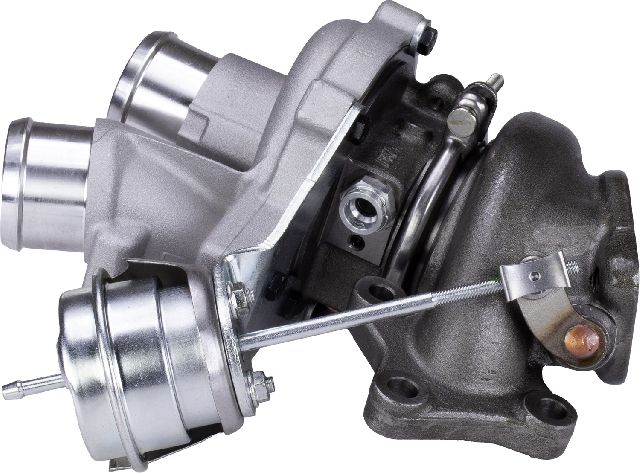
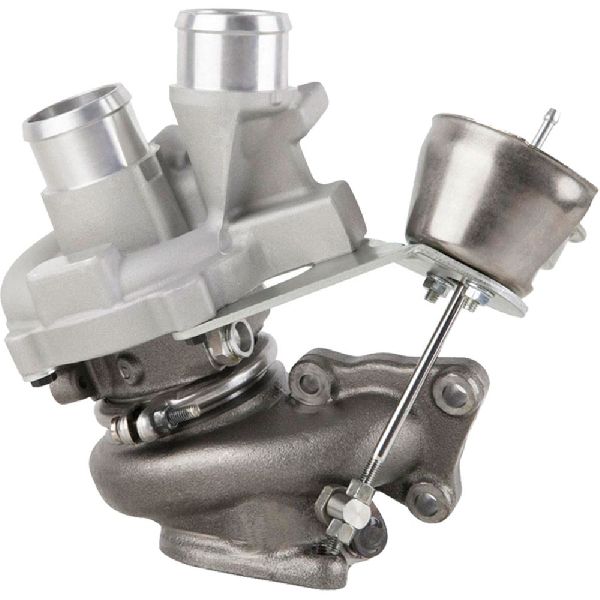
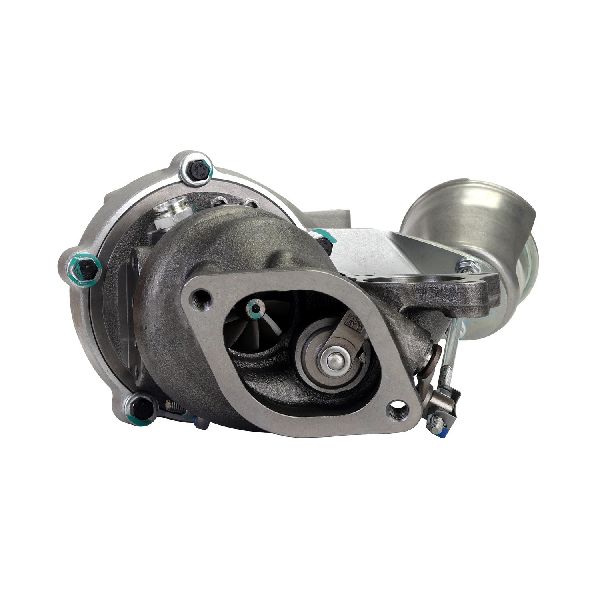
- Replacing the entire turbocharger assembly. The P0245 code points specifically to an electrical control circuit issue, not a mechanical failure of the turbo itself.
- Replacing the boost pressure sensors. While boost issues can be related to sensors, P0245 is very specific to the wastegate solenoid circuit.
Most Likely Causes
- Faulty Turbocharger Wastegate Solenoid 🔴 High Probability The solenoid is exposed to significant heat and vibration in the engine bay, leading to internal electrical failure (short circuit) over time. This is a very common failure point on the EcoBoost platform.
How to confirm: After checking wiring, test the solenoid's resistance with a multimeter; it should be between 10-40 Ohms. An open circuit (infinite resistance) or a short (near zero resistance) confirms failure. A scan tool with bidirectional control can also be used to command the solenoid on/off while listening for a click.
Typical fix: Replace the turbocharger wastegate control solenoid and its associated vacuum lines. The OEM part is often cited as Ford Part No. BL3Z-9K378-A or Motorcraft SOL-2.
Est. part cost: $40-$100 - Damaged or Chafed Wiring Harness 🟡 Medium Probability There is a known issue on 3.5L EcoBoost engines where the engine wiring harness can rub against the corner of the driver's side cylinder head, the drive belt idler pulley bracket, or the oil dipstick bracket. This eventually wears through the insulation and causes the solenoid control wire to short to ground.
How to confirm: Perform a thorough visual inspection of the wiring harness leading to the wastegate solenoid, paying close attention to the front corner of the left-hand (driver's side) cylinder head. Check for continuity to ground on the signal wire with a multimeter. A voltage test at the connector with key-on-engine-off should show battery voltage (~12V); a very low reading (like the 0.71V found by one owner) points to a wiring fault.
Typical fix: Repair the damaged section of the wire and re-route or protect the harness with loom to prevent future chafing.
Est. part cost: $5-$25 - Corroded or Loose Connector ⚪ Low Probability The solenoid connector is located in the engine bay and is susceptible to moisture and heat, which can lead to corrosion or a poor connection over time.
How to confirm: Visually inspect the electrical connector at the solenoid for any signs of green or white corrosion, bent pins, or a loose fit. Check for voltage at the connector with the key on, engine off; you should see approximately 12V.
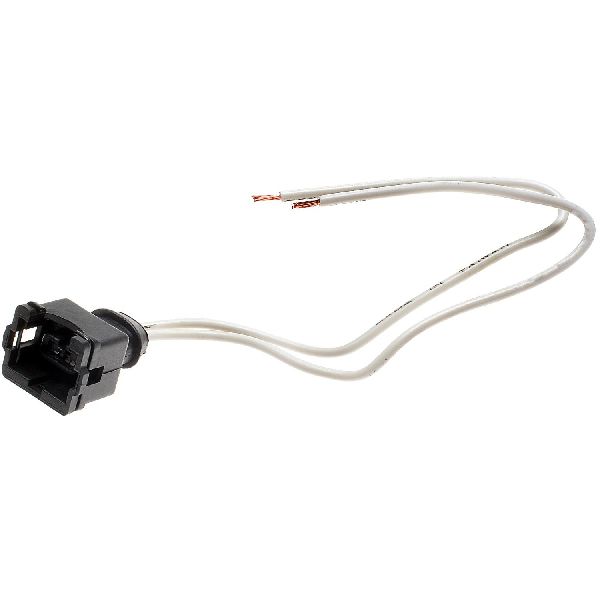
Typical fix: Clean the connector terminals with electrical contact cleaner or replace the connector pigtail if it is damaged. The Motorcraft pigtail is often listed as WPT-1054.
Est. part cost: $15-$40
Rare But Worth Checking
- Faulty Powertrain Control Module (PCM): This is extremely rare. The PCM should only be considered after all other possibilities, including wiring, fuses, and the solenoid itself, have been definitively ruled out.
- Blown Fuse: A user with a 2015 3.5L EcoBoost (in a Navigator) found that fuse #79 in the under-hood fuse box was intermittently failing a continuity test despite looking visually okay. Replacing this fuse resolved the P0245 code after a solenoid replacement did not.
Diagnosis Steps
- Retrieve the trouble code with an OBD-II scanner and check for any other stored codes.
- Check the fuse for the wastegate solenoid circuit in the under-hood fuse box. Consult the owner's manual for the specific fuse, but on related platforms, it can be a 10A fuse for the PCM or related actuators. A 2015 Lincoln Navigator with the same engine had this issue resolved by replacing fuse #79.
- Locate the wastegate solenoid. On the Expedition/F-150, it is often mounted on the intake manifold or on the frame rail accessible from the passenger side wheel well.
- Visually inspect the solenoid's electrical connector and wiring harness for any signs of damage, corrosion, or chafing. Pay special attention to the harness routing near the driver's side cylinder head.
- With the key on and engine off, use a multimeter to check for battery voltage (approx. 12V) at the power pin of the solenoid connector. A low reading (like the 0.71V found by one owner) indicates a problem in the power supply circuit.
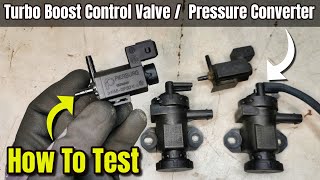
- Test the solenoid itself. Unplug it and measure the resistance between its pins. It should be between 10-40 Ohms. An out-of-spec reading confirms a faulty solenoid. 🎬 See this step-by-step guide on how to test solenoid valves.
- If wiring and the solenoid test good, the final step would be to test the PCM driver circuit, which may require a professional.
- It is also highly recommended to inspect and replace the small vacuum lines attached to the solenoid, as they can become brittle and crack.
Parts You'll Likely Need
- Turbocharger Wastegate Control Solenoid
(OEM #BL3Z-9K378-A (Supersedes BL3E-9K378-BA))— This is the most common failure point for this code due to its function and exposure to engine heat and vibration.
Trusted brands: Motorcraft (SOL-2), Bosch, Standard Motor Products (WGS2)
OEM price range: $70-$100
Aftermarket price range: $40-$70 - Solenoid Connector Pigtail
(OEM #WPT-1054 (Motorcraft))— Needed if the original connector is corroded, melted, or the locking tab is broken.
Trusted brands: Motorcraft, Dorman
OEM price range: $25-$40
Aftermarket price range: $15-$25
Related Codes That Often Appear With This One
- P0246 — This code for 'Turbocharger Wastegate Solenoid 'A' Circuit High' is the direct counterpart to P0245. Seeing them together or intermittently could point to an erratic wiring short or a failing solenoid.
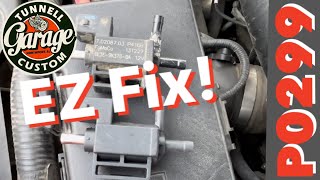
- P0299 — This code for 'Turbocharger Underboost Condition' can occur if the solenoid fails in a way that leaves the wastegate partially open, preventing the turbos from building sufficient pressure. 🎬 Watch: Troubleshooting underboost issues on the 3.5L EcoBoost engine.
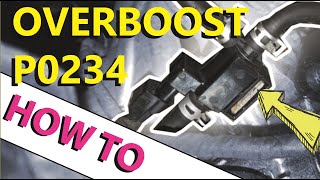
- P0234 — This code for 'Turbocharger Overboost Condition' can be triggered if the solenoid fails in a way that prevents the wastegate from opening, causing boost pressure to exceed safe limits. 🎬 Watch: How to fix overboost codes and wastegate solenoid issues.
Technical Service Bulletins (TSBs) & Recalls
- TSB 15-0162: While written for the 1.6L GTDI engine, it addresses P0245 caused by a failed turbocharger wastegate regulating valve solenoid, showing a pattern of this part failing across the Ford EcoBoost family.
- Bulletin #SSM 48895: Notes that some Ford vehicles may exhibit an open fuse F34 along with DTC P0245 and an illuminated MIL.
- Bulletin #SSM 47575: Reports that vehicles may exhibit an open fuse F34 and an illuminated MIL with diagnostic trouble codes including P0245 in the powertrain control module.
- Bulletin #SSM 47086: Describes a condition where vehicles built on or before 24-Jan-2018 may exhibit fuse F34 open and an illuminated MIL with DTC P0245.
Platform-Specific Known Issues
- A known issue on the 3.5L EcoBoost platform is the engine wiring harness chafing on the corner of the driver's side cylinder head, idler pulley bracket, or dipstick tube bracket, which can cause a short to ground and trigger a P0245 code.
Mechanic-Grade Diagnostic Values
- Wastegate Solenoid Resistance — expected: 10 - 40 Ohms. Failure: A reading of 'OL' (Over Limit/infinite) indicates an open circuit, while a reading near 0 Ohms indicates a shorted coil. Either requires solenoid replacement.
- Solenoid Connector Power Pin Voltage (Key On, Engine Off) — expected: ~12 Volts (Battery Voltage). Failure: A reading significantly below 11V, such as the 0.71V found by one owner, points to a fault in the power supply circuit (wiring chafe, bad fuse, corroded connection).
- Wastegate Solenoid Duty Cycle (Live Data PID: WGDC, WGS) — expected: Low percentage at idle, fluctuates with engine load.. Failure: For a P0245 'Circuit Low' fault, the PCM may command a high duty cycle but the circuit voltage remains low, indicating the PCM cannot control the solenoid.
Scan Tool Commands That Help
- Ford IDS, FORScan, or equivalent high-end scanner: Wastegate Solenoid Output State Control / Duty Cycle Command — This bidirectional control allows a technician to command the solenoid on and off to verify its mechanical operation (listening for a click) and to check the circuit's electrical response without removing the part. It's a key step to isolate a bad solenoid from a wiring problem after power and ground have been verified at the connector.
Wiring & Ground Locations
- Engine Wiring Harness Chafe Point — Commonly rubs on the front corner of the left-hand (driver's side) cylinder head, the drive belt idler pulley bracket, or the oil dipstick bracket.. This is a well-documented failure point where the harness insulation wears through, causing the solenoid control wire to short directly to the engine block (ground), which is the primary trigger for a P0245 'Circuit Low' fault.
- Ground Eyelet GD200 — On the back side of the left (driver's side) cylinder head.. This is a primary ground point for the engine control harness. A loose or corroded connection here can cause intermittent and difficult-to-diagnose low voltage faults for multiple sensors and actuators, including the wastegate solenoid.
- Solenoid Connector (C1617F on some diagrams) — The electrical connector on the wastegate solenoid itself.. This is the point where all voltage and resistance tests are performed. The pins can corrode or become contaminated with oil, leading to a P0245 code even if the solenoid and wiring harness are otherwise intact.
Real Owner Repair Stories
- f150forum.com Thread 'P0245 code and no AC compressor after remote start' (2015 Lincoln Navigator (platform mate) with 3.5L EcoBoost) — P0245 code, A/C compressor not engaging, check engine light.
❌ Tried (didn't work) Replacing the turbo wastegate control solenoid., Visually inspecting the wiring harness, which appeared to be in perfect order.
✅ What actually fixed it The owner discovered that Fuse #79 in the under-hood fuse box was intermittently failing a continuity test, despite appearing visually intact. Replacing the faulty fuse resolved the P0245 code and restored A/C function. - NHTSA Bulletin #TSB150162 — Reports a lack of power with MIL illuminated and DTCs P0234, P0245, P0246 and/or P0299 on vehicles equipped with the 1.6L GTDI engine.
OEM Part Supersession History
AA5Z-9K378-A→BL3Z-9K378-A— Standard part revision and update by Ford.BL3E-9K378-BA→BL3Z-9K378-A— Standard part revision. The 'BL3E' prefix indicates it was originally designed for the 2011+ Explorer line, while 'BL3Z' is the service part number.
Model Year Variations Within This Range
- 2015-2017: These models use a vacuum-actuated wastegate system controlled by a remote solenoid. This differs from the 2018 and newer Expedition models, which use electronic stepper-motor wastegates integrated directly onto the turbocharger housing. The diagnostic process for the 2018+ models is different and focuses on scan tool commands to check actuator range of motion rather than vacuum tests.
Diagnostic Flowchart
Other Known Issues on This Vehicle
Issues unrelated to this code that are worth knowing about as an owner of this generation:
- Timing Chain Rattle / Cam Phaser Knock 🔴 High — Common, especially on cold starts. Can occur as early as 60,000 miles but more prevalent on higher mileage (100k+) vehicles or those with extended oil change intervals. The issue was widespread enough to prompt Ford's Customer Satisfaction Program 21N03 for some model years. (Ref: 21N03 (Customer Satisfaction Program))
- Leaking Turbo Coolant Line Fittings 🟠 Medium — A very common leak point. The OEM 'jiffy' fittings use O-rings that degrade from heat cycling, causing coolant to leak at the turbocharger connection. Often occurs after 80,000 miles.
- Accelerated Spark Plug Wear / Carbon Buildup 🟡 Low — While the official service interval is 100,000 miles, owners and mechanics strongly recommend replacement every 40,000-60,000 miles. The high-pressure direct injection system is hard on plugs, leading to widened gaps that can cause misfires, shuddering, and poor performance long before the 100k mark.
Used vs. New Parts: Buying Guide for This Vehicle
When a used part is the smart pick: A used wiring harness pigtail (WPT-1054) from a junkyard can be a cost-effective solution if your original connector is melted or damaged, provided the donor wires are in good condition. A used solenoid is generally not recommended due to the high failure rate of this part from heat and vibration.
Donor-vehicle mileage cap: roughly under 80000 miles for the part to have meaningful remaining life.
What to inspect on the donor part:
- For a pigtail, inspect for any signs of melting, brittleness, or corrosion on the pins.
- Ensure the locking tab on the connector is intact and clicks securely.
- Check that the donor vehicle shows no signs of front-end collision or engine fire.
OEM-only on this vehicle (don't cheap out):
- While aftermarket solenoids exist, the Motorcraft (OEM) part is highly recommended for longevity and reliability, as it is a known high-failure item where quality matters.
Aftermarket brands forum-validated for this vehicle:
- Standard Motor Products (SMP)
- Bosch
Brands owners have reported issues with on this vehicle:
- No-name, unbranded solenoids from online marketplaces are frequently reported to fail prematurely.
Real Owner Stories
Aggregated from forums and TSBs cited above. Mileages and costs reflect what owners reported in those sources.
2015 Lincoln Navigator 3.5L EcoBoost
Symptoms: After using remote start, the blower motor cut out then back on but blew hot air. The check engine light threw a P0245 code and the AC compressor quit coming on.
What fixed it: Diagnosed a wiring fault after finding only 0.71V at the solenoid plug instead of the required 12V battery voltage.
Source hint: f150forum.com - Thread 'P0245 code and no AC compressor after remote start'
Related OBD-II Codes
Frequently Asked Questions
Why is my A/C compressor not turning on while the P0245 code is active on my Expedition?
Does TSB 15-0162 apply to my 3.5L EcoBoost engine?
Where is the wastegate solenoid located on a 2015-2017 Ford Expedition?
What is the specific Ford part number for the wastegate control solenoid replacement?
Is there a specific fuse I should check for the wastegate solenoid circuit?
What are the common wiring failure points for the P0245 code on the 3.5L EcoBoost?
What resistance should I look for when testing the wastegate solenoid with a multimeter?
Helpful Videos
Used OEM Parts in Stock

New Aftermarket Parts Available


The information in this article is provided for general reference and educational purposes only. Vehicle specifications, procedures, and part compatibility can vary by production date, trim level, and region. Always consult your vehicle's factory service manual and verify part numbers before purchasing or performing repairs. Safety-critical components such as airbags, seat belts, and braking systems should be installed by a qualified professional.
- Ford Expedition:
- 🎬 Helpful Videos
- 🛍️ Shop This Part
- What's Unique About the 2015-2017 Ford Expedition
- Symptoms You May Notice
- Most Likely Causes
- Rare But Worth Checking
- Diagnosis Steps
- Parts You'll Likely Need
- Related Codes That Often Appear With This One
- Technical Service Bulletins (TSBs) & Recalls
- Platform-Specific Known Issues
- Mechanic-Grade Diagnostic Values
- Scan Tool Commands That Help
- Wiring & Ground Locations
- Real Owner Repair Stories
- OEM Part Supersession History
- Model Year Variations Within This Range
- Diagnostic Flowchart
- Other Known Issues on This Vehicle
- Used vs. New Parts: Buying Guide for This Vehicle
- Real Owner Stories
- 2015 Lincoln Navigator 3.5L EcoBoost
- Related OBD-II Codes
- Frequently Asked Questions
- 🎟️ Get 5% Off