

P0245 on 2011-2019 Chevrolet Cruze 1.4L: Turbo Wastegate Solenoid 'A' Low Circuit Fixes
P0245 on a Chevy Cruze 1.4L Turbo most often means the turbocharger wastegate solenoid has failed or its wiring is damaged. This is an electrical fault, not a mechanical one. Replacing the solenoid is a common, DIY-friendly fix, with the part costing around $30-$80. Before replacing, always check the wiring and connector for damage, as engine bay heat is a major factor in failures.
- P0245 on your Cruze 1.4L Turbo is an electrical fault code pointing to the turbo's wastegate control solenoid circuit, not a mechanical turbo failure.
- The most likely cause is a failed solenoid due to heat exposure, followed by damaged wiring or a bad connector.
- Diagnosis is straightforward with a multimeter: check for 12V power at the connector and then check the solenoid's internal resistance.
- The repair is generally inexpensive and can be performed by a DIYer with basic tools in under an hour.
What's Unique About the 2011-2019 Chevrolet Cruze
On the 1.4L turbo engine (LUJ/LUV/LE2) used in the Cruze and its platform mates, the wastegate control solenoid is a common failure point due to constant exposure to high engine bay temperatures which can degrade the wiring or the solenoid itself. For the second-generation models (2016-2019), there is a specific service bulletin (N222372590) that addresses issues with the solenoid and related systems in extremely cold climates (-18°C / 0°F or less), where ice or sludge can accumulate in the Charge Air Cooler (CAC) or crankcase ventilation system, affecting solenoid operation. It's also critical to perform a visual inspection of the mechanical wastegate actuator arm 🎬 Watch: How to replace the wastegate actuator, as a broken or disconnected retaining clip can prevent proper control and mimic the symptoms of an electrical fault.
Generation note: This guide covers two generations of the Chevrolet Cruze with the 1.4L Turbo engine. - First Generation (2011-2016, including the 2016 'Limited' model): Uses the LUJ/LUV engine. The wastegate solenoid is a distinct part, mounted near the turbocharger. - Second Generation (2016.5-2019): Uses the LE2 engine. The turbocharger assembly and associated parts, including the wastegate solenoid, are different from the first generation. A specific service bulletin (N222372590) for cold-weather issues applies to this generation and other vehicles with this engine.
Symptoms You May Notice
- Check Engine Light is on
- Significantly reduced engine power (limp mode)
- Poor or sluggish acceleration
- Noticeable lack of turbo boost
- Possible hissing or whining noises from the turbo area
- Decreased fuel economy
- Replacing the entire turbocharger assembly when only the inexpensive external solenoid has failed.
- Replacing the boost pressure sensor (MAP sensor), which can cause similar performance issues but typically sets different codes like P0106 or P0107. 🎬 Watch: Quick tip on the boost sensor connector
- Replacing the solenoid without first testing the wiring harness, leading to the code returning.
Most Likely Causes
- Failed Turbocharger Wastegate Solenoid 🔴 High Probability The solenoid is exposed to high heat in the engine bay, which can lead to internal electrical failure (open or short circuit in the coil) over time. It is the most common reason for this code.
How to confirm: With the engine off, unplug the solenoid and measure its internal resistance with a multimeter. Compare the reading to the manufacturer's specification (typically 10-40 Ω). A reading of infinite resistance (open) or near-zero resistance (short) indicates a bad solenoid. You can also command the solenoid on and off with a capable scan tool to check for an audible click.
Typical fix: Replace the turbocharger wastegate solenoid.
Est. part cost: $30-$80 - Damaged Wiring or Connector 🟡 Medium Probability The wiring harness to the solenoid is routed in a hot, tight area, making it susceptible to chafing, melting, or corrosion, especially at the connector. Vibration can also cause wires to break internally near the connector.
How to confirm: Visually inspect the entire length of the wiring harness from the solenoid back for any signs of damage. Check the electrical connector for corrosion, bent/broken pins, or a loose fit. With the key on and engine off, use a multimeter to verify there is battery voltage (typically 12V) on the power-supply pin of the connector. Perform a 'wiggle test' on the harness while monitoring voltage to see if the reading fluctuates, which would indicate an intermittent break.
Typical fix: Repair the damaged section of wire or replace the connector pigtail.
Est. part cost: $10-$30 - Blown Fuse ⚪ Low Probability A short circuit in the solenoid or its wiring can cause the related fuse to blow, cutting power to the circuit. This is often a secondary symptom of a larger electrical problem.
How to confirm: Locate the fuse for the turbocharger control circuit in the under-hood fuse box (refer to the owner's manual). Visually inspect the fuse to see if it is blown. Use a multimeter to test for continuity across the fuse's terminals.
Typical fix: Replace the blown fuse after diagnosing and fixing the underlying short circuit. Simply replacing the fuse without finding the cause will likely result in it blowing again.
Est. part cost: $1-$5
Rare But Worth Checking
- Faulty Powertrain Control Module (PCM): This is very rare. The PCM's internal driver for the solenoid circuit can fail. This should only be considered after all other possibilities (solenoid, wiring, fuses) have been exhaustively ruled out through testing.
- Broken Wastegate Actuator Arm Retaining Clip: A purely mechanical failure of the clip holding the actuator arm to the wastegate lever can prevent the wastegate from being controlled properly. While this typically sets underboost/overboost codes, its symptoms can be confused with an electrical fault. A visual inspection of the turbo's mechanical linkages is recommended.
Diagnosis Steps
- Read the trouble codes with an OBD-II scanner and confirm P0245 is present. Note any other codes, as they can provide valuable diagnostic clues.
- Perform a thorough visual inspection of the turbocharger area. Look closely at the wastegate solenoid's electrical connector and wiring harness for any obvious signs of melting, chafing, corrosion, or loose connections.
- Inspect the mechanical linkage of the wastegate actuator arm. Ensure it is connected securely to the wastegate lever and that the retaining clip is intact and functional.
- With the ignition ON and engine OFF, unplug the solenoid connector. Use a multimeter set to DC Volts to check for battery voltage at the power supply pin in the connector. A reading below 11V suggests a problem with the power supply circuit or a blown fuse.
- If voltage is present, turn the ignition OFF. Set the multimeter to measure resistance (Ohms) and test the two pins on the solenoid itself. A healthy solenoid will have a specific resistance value (check service manual, but often 10-40 Ohms). An open circuit (infinite resistance) or a short circuit (near-zero resistance) confirms the solenoid has failed and must be replaced.
- If the solenoid tests good and power is present at the connector, the issue is likely in the ground-side control wire leading back to the PCM. Check this wire for continuity. If the wire is good, the fault may be within the PCM, but this is extremely rare.
Parts You'll Likely Need
- Turbocharger Wastegate Solenoid (Gen 1)
(OEM #55587751)— This is the most common failure part for P0245 on 2011-2016 Cruze models.
Trusted brands: ACDelco, Dorman, Standard Motor Products
OEM price range: $60-$80
Aftermarket price range: $30-$50 - Turbocharger Wastegate Solenoid (Gen 2)
(OEM #55573259)— This is the most common failure part for P0245 on 2016.5-2019 Cruze models. Note that part number 55574902 is often listed as an interchangeable equivalent.
Trusted brands: ACDelco
OEM price range: $40-$70
Aftermarket price range: $25-$45
Related Codes That Often Appear With This One
- P0299 — This code indicates a 'Turbocharger Underboost' condition. If the wastegate solenoid fails in a way that leaves the wastegate open (or the PCM defaults it to open due to the circuit fault), the turbo cannot build sufficient pressure, leading to both a P0245 (circuit fault) and a P0299 (performance fault).
- P0234 — This code indicates a 'Turbocharger Overboost' condition. If the solenoid or wiring fails in a way that prevents the wastegate from opening, boost pressure can exceed the target, triggering P0234. The P0245 circuit fault is often the root cause.
Technical Service Bulletins (TSBs) & Recalls
- N222372590: Service Update - Charge Air Cooler Icing. Affects 2016-2019 Chevrolet Cruze models and involves potential issues with the Turbocharger Wastegate Regulator Solenoid Valve in extreme cold.
Platform-Specific Known Issues
- TSB N222372590: Cold Weather Performance: For 2016-2019 models (and other GM 1.4L/1.5L vehicles), this service update addresses a condition where ice or sludge can build up in the charge air cooler (CAC) or crankcase ventilation system during extreme cold weather (-18°C / 0°F or less). This can affect the wastegate solenoid's operation. The fix involves installing a TCV (Turbocharger Control Valve) thermal wrap and, in some cases, reprogramming the Engine Control Module (ECM). The bulletin notes that only about 1% of vehicles are expected to require actual solenoid replacement under this campaign.
Mechanic-Grade Diagnostic Values
- Turbocharger Wastegate Regulator Solenoid Resistance — expected: 29-31 Ω. Failure: A reading significantly outside this range, or OL (open circuit), indicates a failed solenoid coil.
- Voltage at Solenoid Connector (Power Pin) — expected: 11V - 12.5V with key on, engine off. Failure: A reading below 11V points to a problem in the power supply circuit, such as a blown fuse or a wiring issue.
Scan Tool Commands That Help
- GM GDS2 (or equivalent professional scanner): Boost Solenoid Test / Wastegate Solenoid Command — This bidirectional control allows a technician to command the solenoid on and off to verify its mechanical operation (an audible click should be heard) and to monitor the circuit's response on live data, helping to isolate the fault between the solenoid, wiring, and PCM.
Wiring & Ground Locations
- Turbocharger Wastegate Solenoid Valve — Located on the left side of the engine, near the turbocharger assembly.. This is the component controlled by the circuit that has faulted. Its location in a high-heat area makes its wiring and connector susceptible to damage.
- Engine Ground Connection — A key ground point is located on the cylinder head, above the thermostat housing, where a harness ground is secured with a bolt.. Poor ground connections on the 1.4L engine are a known cause of multiple, intermittent electrical and sensor-related fault codes. A compromised ground can cause voltage drops that may trigger a P0245 code even if the solenoid and its power wire are good.
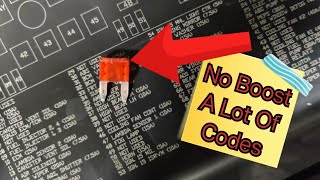
- Fuse F47 (Underhood Fuse Block) — In the underhood fuse block, typically a 15A fuse.. This fuse often supplies power to multiple components, including the wastegate solenoid, bypass solenoid, and O2 sensor heaters. A short in any of these components can blow the fuse, causing a P0245 and other low-voltage codes simultaneously.
Real Owner Repair Stories
- YouTube channel "Just a Dude" (2013 Chevrolet Cruze 1.4L Turbo) — No turbo boost and a large number of low-voltage circuit codes, including P0245 (Wastegate Solenoid), P0034 (Bypass Solenoid), P0031/P0037 (O2 Sensor Heaters), and P0443 (EVAP Purge Solenoid).
❌ Tried (didn't work) Initial visual inspection showed broken connector clips, but fixing them did not resolve the issue.
✅ What actually fixed it The technician found no 12V power at the bypass solenoid. Tracing the wiring diagram revealed that all the faulting components were powered by the same fuse (F47 in the underhood block). The fuse was blown. Replacing the fuse restored power to all components and fixed the lack of boost. The root cause of the blown fuse was not definitively identified but was suspected to be an intermittent short in one of the related circuits. - YouTube channel "BUSHNELL" (2012 Chevrolet Cruze 1.4L Turbo) — Intermittent stalling, high cooling fan operation, underboost problems, and up to 20 different trouble codes appearing randomly, including sensor and stability track issues.
❌ Tried (didn't work) Replacing parts based on codes., Tightening the existing ground wire on the cylinder head, which paradoxically made the stalling worse.
✅ What actually fixed it The owner discovered the main engine harness ground wire, which bolts to the cylinder head, was internally compromised. Cutting the old terminal off and running a new, separate 16-gauge ground wire from the harness to a secure point on the engine block solved all the intermittent electrical issues, including the underboost problem.
OEM Part Supersession History
55559239→55574902, 55573259— Standard part evolution and supplier changes by GM.
Heads up: Part numbers 55573259 and 55574902 are generally considered interchangeable for the Gen 2 (2016.5-2019) Cruze. However, always verify the correct part number using the vehicle's VIN.
Model Year Variations Within This Range
- 2011-2016 (Gen 1): Uses wastegate solenoid part number 55587751. The electrical and PCV systems have unique vulnerabilities compared to the second generation.
- 2016.5-2019 (Gen 2): Uses wastegate solenoid part number 55573259 (or its equivalent 55574902). This generation is specifically covered by TSBs related to charge air cooler icing in cold climates affecting this system.
Diagnostic Flowchart
Other Known Issues on This Vehicle
Issues unrelated to this code that are worth knowing about as an owner of this generation:
- PCV System Failure (Valve Cover & Intake Manifold) 🔴 High — Extremely common, often occurs between 60,000 and 120,000 miles. A check valve in the intake manifold fails and gets ingested, which then causes a diaphragm in the valve cover to rupture, creating a large vacuum leak. (Ref: GM Special Coverage Adjustment N202299080; TSB PIP5197)
- Leaking Water Pump 🔴 High — Very common failure, often before 100,000 miles, leading to coolant loss and potential overheating. (Ref: Special Coverage Program 14371B (extends warranty to 10 years/150,000 miles for 2011-2014 models))
- Cracked/Leaking Plastic Thermostat Housing & Water Outlet 🟠 Medium — The plastic components become brittle with heat cycles and crack, causing coolant leaks. A very frequent repair item.
- Oil Leaks from Valve Cover Gasket 🟠 Medium — Commonly occurs as the gasket ages and becomes brittle, allowing oil to leak onto the hot exhaust manifold, causing a burning smell. Often related to the PCV failure increasing crankcase pressure.
- Negative Battery Cable Connection Issues 🟡 Low — A known issue where a poor connection at the battery terminal can cause a no-start condition or various electrical glitches. GM issued a recall for this. (Ref: Recall #14V522000)
Used vs. New Parts: Buying Guide for This Vehicle
When a used part is the smart pick: A used wastegate solenoid from a low-mileage donor vehicle can be a cost-effective option, as it is a simple, external, bolt-on electrical component. It is a low-risk part to buy used.
Donor-vehicle mileage cap: roughly under 70000 miles for the part to have meaningful remaining life.
What to inspect on the donor part:
- Inspect the plastic electrical connector for cracks, brittleness, or a broken locking tab.
- Check the metal body and vacuum ports for significant rust or corrosion.
- Ensure the wiring pigtail (if included) is not cut too short and the insulation is not frayed or melted.
- If possible, test the resistance with a multimeter before purchase; it should be within the 29-31 Ω range.
OEM-only on this vehicle (don't cheap out):
- Powertrain Control Module (PCM)
Aftermarket brands forum-validated for this vehicle:
- ACDelco (OEM)
- Standard Motor Products (SMP)
- Dorman
Brands owners have reported issues with on this vehicle:
- No-name, unbranded solenoids from online marketplaces have a higher reported failure rate according to forum discussions.
Real Owner Stories
Aggregated from forums and TSBs cited above. Mileages and costs reflect what owners reported in those sources.
2013 Chevrolet Cruze 1.4L Turbo
Symptoms: The vehicle does not build boost and has multiple codes including P0245, P0031, P0443, and P0598. Previous shops replaced the turbo, intake manifold, and valve cover with no change.
What fixed it: Replaced a single blown 10A fuse in position F47 of the under-hood fuse block.
Source hint: Pine Hollow Auto Diagnostics YouTube report
2011-2015 Chevrolet Cruze 1.4L Turbo (Gen 1)
Symptoms: P0245 code present, loss of boost, and sluggish acceleration. Consensus on forums points to heat-related electrical failure of the solenoid.
What fixed it: DIY replacement of the turbocharger wastegate solenoid (part #55587751).
Source hint: cruzetalk.com forum threads
Related OBD-II Codes
Frequently Asked Questions
Is there a service update for my 2016-2019 Chevrolet Cruze regarding the wastegate solenoid in cold weather?
What is the typical resistance for a healthy wastegate solenoid on the 1.4L Turbo engine?
Can a blown fuse cause the P0245 code on my Cruze?
Are there other GM vehicles that share this specific P0245 issue?
Is the P0245 code related to the common PCV system failures on the 1.4L engine?
What part number do I need to fix P0245 on a Gen 1 Cruze?
Helpful Videos
We Have This Part in Stock
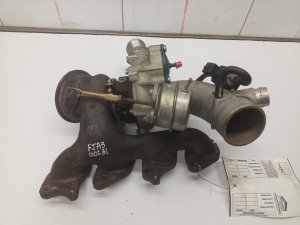
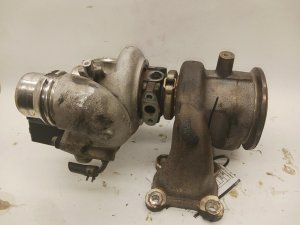
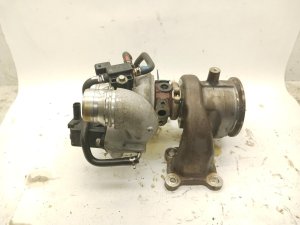

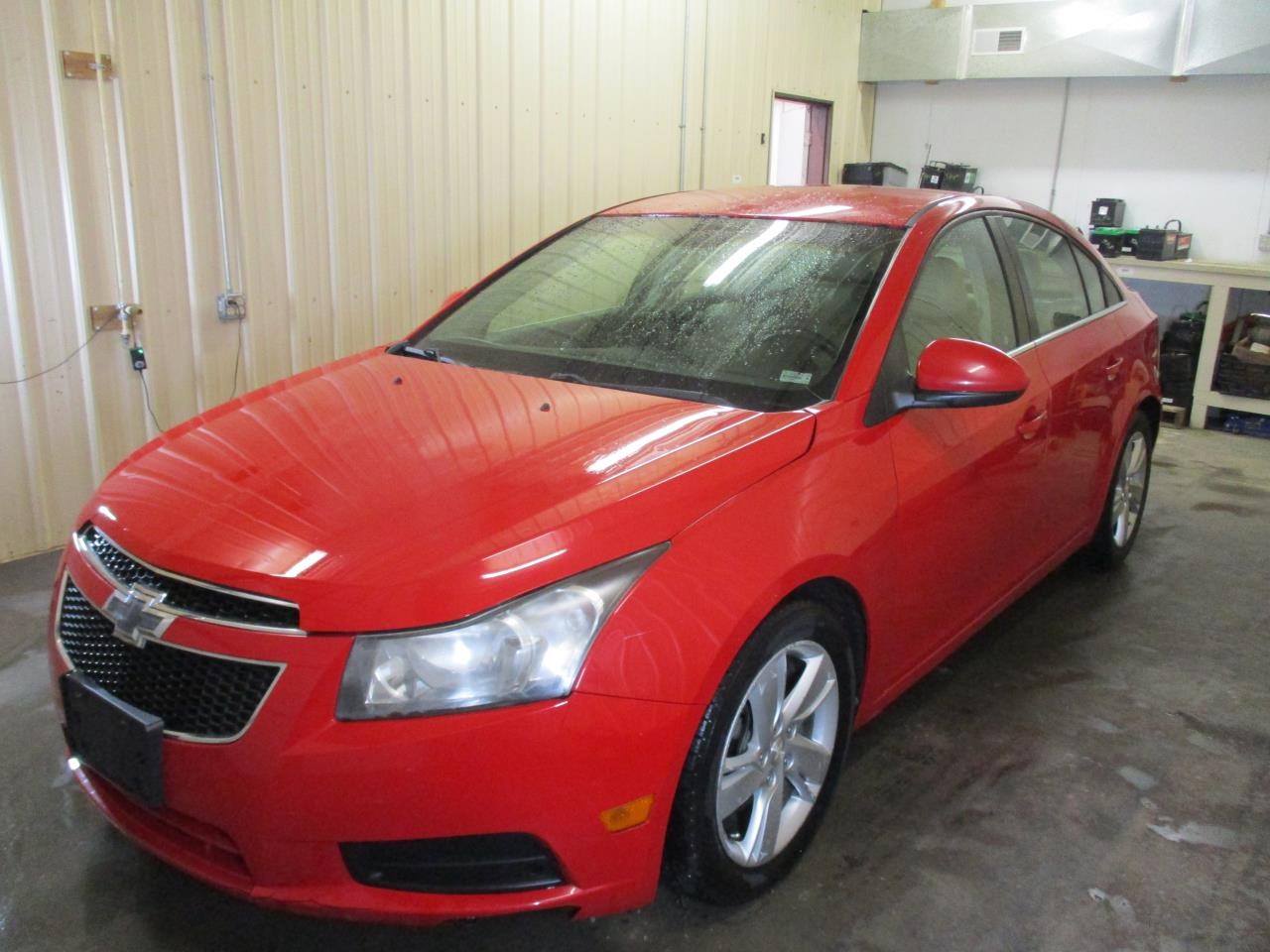

The information in this article is provided for general reference and educational purposes only. Vehicle specifications, procedures, and part compatibility can vary by production date, trim level, and region. Always consult your vehicle's factory service manual and verify part numbers before purchasing or performing repairs. Safety-critical components such as airbags, seat belts, and braking systems should be installed by a qualified professional.
- Chevrolet Cruze:
- 🎬 Helpful Videos
- 🛍️ Shop This Part
- What's Unique About the 2011-2019 Chevrolet Cruze
- Symptoms You May Notice
- Most Likely Causes
- Rare But Worth Checking
- Diagnosis Steps
- Parts You'll Likely Need
- Related Codes That Often Appear With This One
- Technical Service Bulletins (TSBs) & Recalls
- Platform-Specific Known Issues
- Mechanic-Grade Diagnostic Values
- Scan Tool Commands That Help
- Wiring & Ground Locations
- Real Owner Repair Stories
- OEM Part Supersession History
- Model Year Variations Within This Range
- Diagnostic Flowchart
- Other Known Issues on This Vehicle
- Used vs. New Parts: Buying Guide for This Vehicle
- Real Owner Stories
- 2013 Chevrolet Cruze 1.4L Turbo
- 2011-2015 Chevrolet Cruze 1.4L Turbo (Gen 1)
- Related OBD-II Codes
- Frequently Asked Questions
- 🎟️ Get 5% Off