

P0244 on 2015-2023 Ford Mustang EcoBoost: Turbo Wastegate 'A' Performance Causes and Fixes
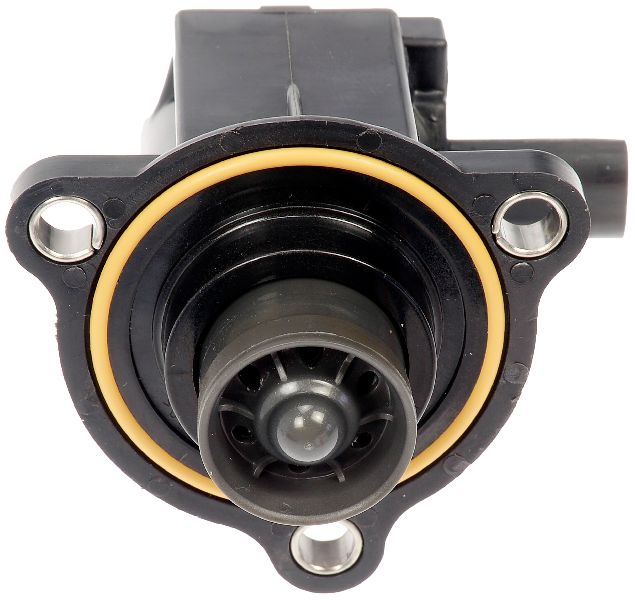
This code almost always points to a problem with the turbocharger's electronic wastegate actuator. The most common fix is replacing the actuator itself, which fails electrically or mechanically. Ford dealers may require replacing the entire turbo, but aftermarket actuators like the Dorman 667-211 or Turbosmart IWG-75 are available for $150-$300 and are a direct-fit replacement.
- P0244 on your EcoBoost Mustang means there's a problem with the turbo's wastegate control, almost always leading to a severe loss of power.
- The most likely culprit is the electronic wastegate actuator mounted on the turbocharger.
- Before buying parts, check the wiring to the actuator for heat damage and manually check that the wastegate arm on the turbo isn't seized.
- You can replace just the actuator; you do not need to replace the entire turbocharger if the actuator is the only part that has failed.
- This is a manageable DIY repair for someone with moderate mechanical skill, but it requires working in a tight space near the hot side of the engine.
What's Unique About the 2015-2023 Ford Mustang
The 2.3L EcoBoost engine in the S550 Mustang uses a sophisticated electronic wastegate actuator rather than a simpler vacuum-operated one. While this allows for precise boost control, the actuator itself is a known failure point. The issue is common enough across Ford's EcoBoost engine family that a Technical Service Bulletin (TSB SSM 46452) was issued for a similar problem on the F-150, pointing to an out-of-adjustment wastegate actuator. Owners often find this actuator fails, leading to P0244 and a significant loss of power. A common frustration is that Ford dealerships have often required a full turbocharger replacement, as the actuator was not sold separately as an OEM part, though it appears to be available now under part number P2GZ-9G488-A.
Symptoms You May Notice
- Check Engine Light is on
- Drastic loss of engine power and acceleration
- Vehicle enters 'limp mode' with limited performance
- Sluggish or delayed throttle response
- Erratic or no boost pressure visible on the gauge
- Unusual whistling or hissing noises from the engine bay
- Hesitation or stuttering under load
- Replacing the entire turbocharger when only the external electronic actuator has failed. The actuator is often available as a separate part and is much cheaper and easier to replace.
Most Likely Causes
- Faulty Electronic Wastegate Actuator 🔴 High Probability The electronic actuator is the most common failure point for P0244. Its internal motor can burn out or the plastic gears can strip, preventing it from moving the wastegate arm correctly. This is a well-documented issue in owner forums.
How to confirm: With the engine off, attempt to move the wastegate actuator arm by hand. It should move smoothly. A capable scan tool can command the actuator and observe its response and position sensor voltage. If it fails to move, makes grinding noises, or its position reading is incorrect, it's faulty. Some owners report a correct calibration involves setting the rod length to achieve a specific voltage (e.g., ~0.8V-1.4V closed, ~4.1V open), which can be checked with a scan tool.
Typical fix: Replace the wastegate actuator. This part is mounted on the turbocharger and can be replaced without removing the entire turbo. While dealers historically pushed for a full turbo replacement, aftermarket parts from Dorman (p/n 667-211) or performance upgrades from Turbosmart (IWG-75 series) are popular and effective DIY fixes.
Est. part cost: $150-$300 - Sticking Wastegate Arm/Flap 🟡 Medium Probability Carbon buildup or corrosion on the turbocharger's hot side can cause the mechanical wastegate arm or internal flap to bind, preventing the actuator from moving it correctly.
How to confirm: Disconnect the actuator rod from the wastegate arm. Attempt to move the arm by hand through its full range of motion. It should pivot freely without binding or catching. If it's stuck, the turbocharger needs service or replacement.
Typical fix: In some cases, the linkage can be cleaned and lubricated with high-temp penetrating oil. More often, if the internal flap is seized, the turbocharger assembly must be replaced.
Est. part cost: $600-$1200+ - Damaged Wiring or Connector ⚪ Low Probability The wiring harness to the actuator is close to the hot turbocharger and exhaust manifold, making it susceptible to heat damage, melting, or corrosion over time.
How to confirm: Visually inspect the wiring harness and connector going to the wastegate actuator for any signs of melting, chafing, or corrosion on the pins. Use a multimeter to check for proper voltage and ground at the connector with the key on. Check the dedicated fuse for the actuator in the under-hood fuse box.
Typical fix: Repair the damaged section of the wiring harness or replace the connector pigtail.
Est. part cost: $20-$50
Rare But Worth Checking
- Faulty Powertrain Control Module (PCM): This is extremely rare. The PCM should only be considered after all other possibilities, including the actuator, mechanical linkage, and wiring, have been thoroughly tested and ruled out.
Diagnosis Steps
- Scan for Codes: Read all DTCs stored in the PCM. Note any other turbo-related codes like P0299 or P0234.
- Visual Inspection: Carefully inspect the wiring and connector at the electronic wastegate actuator for any signs of heat damage, melting, corrosion, or loose connections.
- Check Mechanical Linkage: With the engine cool, disconnect the actuator rod from the wastegate arm on the turbo. Manually move the arm back and forth. It should pivot smoothly without any binding. If it's stuck, the turbocharger itself is the problem.
- Test the Actuator with a Scan Tool: The most effective test. Use a capable scan tool (like Ford's IDS or FORScan) to command the actuator through its range of motion (e.g., 0% to 100%). Monitor the actuator's position sensor PID (e.g., 'W gate B V' or 'A volt'). If the actuator makes grinding noises, doesn't move, or the position reading doesn't change as commanded, the actuator has failed.
- Check Wiring and Fuse: If the actuator doesn't respond, check the wastegate actuator fuse in the under-hood fuse box. If the fuse is good, use a multimeter to verify the actuator is receiving power and ground at the connector with the ignition on.
- Check Actuator Adjustment & Calibration: The length of the actuator rod is critical. TSB SSM 46452 for the F-150 indicates adjustment can be a cause. The goal is to set the rod length so the actuator's voltage reads within a specific range when closed (approx. 1.2V - 1.4V) with the key on, engine off. Incorrect adjustment can prevent the wastegate from seating or opening properly, triggering the code.
- Replace the Faulty Component: Based on your findings, replace the electronic wastegate actuator or repair the wiring. If the wastegate arm itself was seized, the turbocharger will need to be replaced.
Parts You'll Likely Need
- Turbocharger Wastegate Actuator
(OEM #P2GZ-9G488-A)— This electronic component is the most common failure point for code P0244 on the EcoBoost Mustang. It fails both electrically and mechanically, causing it to stop controlling the wastegate properly.
Trusted brands: Ford/Motorcraft, Dorman (p/n 667-211), Turbosmart (IWG-75 series)
OEM price range: $75-$100 (if available separately)
Aftermarket price range: $150-$300
Related Codes That Often Appear With This One
- P0299 — P0299 (Turbocharger Underboost) can occur if the wastegate is stuck open due to a failed actuator, preventing the turbo from building sufficient pressure.
- P0234 — P0234 (Turbocharger Overboost) can occur if the wastegate is stuck closed, causing the turbo to generate excessive pressure.
Technical Service Bulletins (TSBs) & Recalls
- SSM 46452: While for the 3.5L F-150, this TSB mentions P0244 being caused by a wastegate control actuator that is out of adjustment, highlighting a known issue with this component design across Ford's EcoBoost lineup. It instructs technicians to refer to the Workshop Manual for an adjustment procedure before replacing parts.
Platform-Specific Known Issues
- The electronic wastegate actuator on the 2.3L EcoBoost turbo is known to fail, causing a P0244 code and putting the car into a low-power limp mode. Aftermarket companies like Turbosmart offer direct-replacement and upgraded actuators (IWG-75) that are popular for their durability and improved boost control.
Mechanic-Grade Diagnostic Values
- Wastegate Actuator Position Sensor Voltage (Key On, Engine Off) — expected: 1.2V to 1.43V (Wastegate fully closed). Failure: Voltage outside this range indicates incorrect rod length adjustment or a faulty sensor.
- Wastegate Actuator Position Sensor Voltage (Operating Range) — expected: Approximately 1.2V to 4.1V. Failure: Voltage hitting a hard limit or not sweeping smoothly indicates a mechanical or electrical fault.
- Wastegate Actuator Motor Coil Resistance — expected: Approximately 1.44 - 1.96 Ω. Failure: An open loop (infinite resistance) or zero ohms indicates a failed motor coil. High resistance at any point while moving the arm indicates a break in the winding.
- Voltage Drop Test on Actuator Circuit — expected: Less than 0.2V. Failure: A voltage difference greater than 0.2V between the PCM connector and the actuator connector indicates excessive resistance in the wiring.
Hidden / Shadow Codes Worth Checking
- WGATE_PRES_F (MODE): A Ford-specific PID (Parameter ID) that shows the wastegate pressure reading. (see via Ford IDS (dealer scan tool) or equivalent advanced scan tool.)
- TWGATE_STAT (MODE): A Ford-specific PID that shows the status of the turbocharger wastegate. (see via Ford IDS (dealer scan tool) or equivalent advanced scan tool.)
- W gate A/B V: A PID showing the real-time voltage of the wastegate position sensor. (see via FORScan software, a powerful tool for Ford vehicles.)
- Wgate A/B DC mess: A PID showing the commanded duty cycle percentage for the wastegate actuator. (see via FORScan software.)
Scan Tool Commands That Help
- Ford IDS / FORScan / Advanced Snap-on: Actuator Output Control / Active Test — Use this to command the wastegate actuator to open and close while monitoring its position sensor voltage or PID. This directly tests the actuator's motor, gears, and sensor response without having to remove it.
- Manual Hand Pump: Pressurize Actuator — A low-tech method shown by some mechanics. By applying pressure with a hand pump to the actuator's port (if applicable, more common on vacuum-style but can be used to move electronic ones), you can manually check for smooth movement of the rod and linkage when setting preload, without needing a scan tool at that exact moment.
Wiring & Ground Locations
- Wastegate Actuator Fuse — In the under-hood fuse box, it is the third fuse from the top in the right-side row of fuses.. A blown fuse will cut power to the actuator, causing it to be unresponsive and immediately trigger a performance code. This should be checked before condemning the actuator itself.
- ECU Connector A, Pins 5 & 6 — The ECU (PCM) is located in the passenger side kick panel area. Connector A is the one closest to the front of the vehicle. Pins 5 & 6 are on the female (harness) side of this connector.. Testing resistance across these two pins allows you to check the integrity of the entire circuit through the wiring harness and the actuator's internal motor coil without having to access the actuator directly.
OEM Part Supersession History
Unknown→P2GZ-9G488-A— This is the current OEM part number for the electronic wastegate actuator.
Heads up: While this part is available separately from Ford, it is often listed in catalogs as 'Included with turbocharger', which is why dealerships frequently opt to replace the entire turbo assembly.
Model Year Variations Within This Range
- 2018-2023: The 2018 model year refresh included an engine tune that increased torque from 320 to 350 lb-ft. However, the fundamental turbocharger hardware, including the electronic wastegate actuator, remained consistent. The causes and fixes for P0244 are the same across the 2015-2023 range.
Diagnostic Flowchart
Other Known Issues on This Vehicle
Issues unrelated to this code that are worth knowing about as an owner of this generation:
- A/C Evaporator Leak 🔴 High — Very common issue, especially on 2015-2017 models. Leads to loss of A/C performance over time. (Ref: TSB 19-2332 (supersedes 18-2256, 18-2166). Repair is labor-intensive, requiring full dashboard removal.)
- Low-Pressure Fuel Sensor (LPFS) Failure 🔴 High — Common failure, particularly on earlier models, that can cause stumbling, stalling, and lean conditions which may lead to engine damage ('Ecoboom'). (Ref: Ford issued an updated part (BU5Z-9F972-B). Many owners replace it proactively as 'cheap insurance'.)
- Canister Purge Valve (CPV) Failure 🟠 Medium — A common failure causing rough idle or stalling immediately after refueling, along with EVAP-related codes like P1450 or P0456. (Ref: TSB 17-0047. The part is relatively inexpensive and easy to replace.)
- Catastrophic Engine Failure ('Ecoboom') 🔴 High — More prevalent in 2015-2017 models, often linked to Low-Speed Pre-Ignition (LSPI). Can be mitigated by using high-quality fuel and API SN PLUS/SP certified oil. (Ref: Some early engines had incorrect head gaskets installed.)
Used vs. New Parts: Buying Guide for This Vehicle
When a used part is the smart pick: For this specific failure, buying a used electronic wastegate actuator is NOT recommended. It is a high-failure component, and a used part has an unknown history and high likelihood of premature failure. A used complete turbocharger assembly from a very low-mileage, verified donor vehicle could be a cost-effective option if the cause is a seized internal wastegate flap, but the actuator itself should still be considered suspect.
Donor-vehicle mileage cap: roughly under 30000 miles for the part to have meaningful remaining life.
What to inspect on the donor part:
- Verify the donor vehicle's mileage and accident history (avoid front-end collisions).
- Manually check that the wastegate arm on the turbo housing moves freely without binding.
- Inspect the actuator's wiring connector for any signs of melting, corrosion, or damage.
Aftermarket brands forum-validated for this vehicle:
- Dorman (p/n 667-211): A direct OEM-style replacement.
- Turbosmart (IWG-75 series): A popular performance upgrade known for durability and improved boost control.
Brands owners have reported issues with on this vehicle:
- Unbranded, no-name actuators from online marketplaces should be avoided due to questionable quality control and material durability.
Real Owner Stories
Aggregated from forums and TSBs cited above. Mileages and costs reflect what owners reported in those sources.
2020 Ford Mustang EcoBoost 2.3L
Symptoms: The car experienced a failed actuator and the owner was told the part was on backorder for several weeks. The dealer initially required waiting for the specific actuator part rather than replacing the entire turbocharger.
What fixed it: Replacement of the electronic wastegate actuator.
Source hint: Mustang6g.com: 'Car needs replacement wastegate actuator - can be 'several weeks''
Ford Mustang EcoBoost 2.3L
Symptoms: Owner sought better boost response and smoother power delivery after stock actuator issues.
What fixed it: Installed a 7-psi Turbosmart IWG75 wastegate unit.
Cost: $137-$137
Source hint: Mustang6g.com: 'IWG75 Turbosmart wastegate Initial observation'
2016-2018 Ford Focus RS 2.3L EcoBoost
Symptoms: Turbocharger Wastegate Solenoid 'A' Range/Performance issues (P0244).
What fixed it: Replacement of the actuator and verification of specific voltage readings for calibration.
Source hint: FocusRS.org: 'P0244 - Turbocharger Wastegate Solenoid 'A' Range/Performance'
Related OBD-II Codes
Frequently Asked Questions
Can I replace just the wastegate actuator on my 2.3L Mustang, or do I need a whole new turbo?
Does TSB SSM 46452 apply to my Mustang EcoBoost?
What are the specific voltage settings for calibrating a new wastegate actuator on this engine?
Is there a specific fuse I should check for the P0244 code on a Mustang?
Are there any performance upgrades that fix the P0244 issue permanently?
Used OEM Parts in Stock

New Aftermarket Parts Available

The information in this article is provided for general reference and educational purposes only. Vehicle specifications, procedures, and part compatibility can vary by production date, trim level, and region. Always consult your vehicle's factory service manual and verify part numbers before purchasing or performing repairs. Safety-critical components such as airbags, seat belts, and braking systems should be installed by a qualified professional.
- Ford Mustang:
- 🛍️ Shop This Part
- What's Unique About the 2015-2023 Ford Mustang
- Symptoms You May Notice
- Most Likely Causes
- Rare But Worth Checking
- Diagnosis Steps
- Parts You'll Likely Need
- Related Codes That Often Appear With This One
- Technical Service Bulletins (TSBs) & Recalls
- Platform-Specific Known Issues
- Mechanic-Grade Diagnostic Values
- Hidden / Shadow Codes Worth Checking
- Scan Tool Commands That Help
- Wiring & Ground Locations
- OEM Part Supersession History
- Model Year Variations Within This Range
- Diagnostic Flowchart
- Other Known Issues on This Vehicle
- Used vs. New Parts: Buying Guide for This Vehicle
- Real Owner Stories
- 2020 Ford Mustang EcoBoost 2.3L
- Ford Mustang EcoBoost 2.3L
- 2016-2018 Ford Focus RS 2.3L EcoBoost
- Related OBD-II Codes
- Frequently Asked Questions
- 🎟️ Get 5% Off