

P0244 on 2011-2020 Ford F-150 EcoBoost: Turbo Wastegate Performance Causes and Fixes
P0244 on an F-150 EcoBoost usually means a problem with the turbocharger wastegate control system, causing low power. For 2011-2014 models, this is often a bad vacuum-controlled actuator or a faulty boost control solenoid (Part No. BL3Z-9K378-A). On 2015-2020 models with electronic actuators, it's typically a sticking actuator or linkage, which may require turbocharger replacement as the actuator is often not sold separately by Ford.
- P0244 on an F-150 EcoBoost points to a loss of turbo boost control, resulting in serious power loss.
- The most likely cause depends on your engine generation: check vacuum lines and the control solenoid on 2011-2014 models, and suspect the electronic actuator on 2015-2020 models.
- Diagnosis should start with a thorough visual inspection of all vacuum lines and electrical connectors around the turbos.
- Be aware that on many newer models, a failed electronic actuator may require a complete (and expensive) turbocharger replacement.
What's Unique About the 2011-2020 Ford F-150

The Ford F-150 EcoBoost engines rely heavily on precise turbocharger control for their power and efficiency. The key difference across this year range is the wastegate control method. Early 3.5L engines (approx. 2011-2014) use vacuum-operated wastegate actuators controlled by a remote electronic solenoid. Later 3.5L (Gen 2, 2017+) and all 2.7L engines (2015+) transitioned to electronic actuators mounted directly to the turbochargers. This design change means the common failure points are different depending on your truck's model year, with early models prone to vacuum system failures and later models prone to electronic actuator issues.
Generation note: Yes, this range covers two F-150 generations. The 12th Gen (2011-2014) typically uses a vacuum-based wastegate actuation system on the 3.5L EcoBoost. The 13th Gen (2015-2020) uses electronic wastegate actuators on the 2.7L (from 2015) and Gen 2 3.5L EcoBoost (starting 2017). TSB 20-2016 specifically addresses a wastegate linkage rattle on 2017 3.5L models by installing a spring kit.
Symptoms You May Notice
- Significant loss of engine power, sometimes called 'limp mode'.
- Check Engine Light is on.
- Wrench light may be illuminated on the dash.
- Sluggish or delayed acceleration (turbo lag).
- Poor fuel economy.
- Whistling, hissing, or rattling noises from the engine bay, especially under acceleration or deceleration.
- Unusual engine or exhaust sounds due to the wastegate being stuck open or closed.
- Replacing the MAP sensor first without testing it. While it can be a cause, it's less common than actuator or vacuum line failures.
- Assuming the entire turbocharger has failed on an early model (2011-2014) when only the inexpensive boost control solenoid or a vacuum line is bad.
- On 2017-2019 3.5L models, replacing the turbo or actuator before attempting the linkage adjustment procedure 🎬 Watch: How to perform the electronic wastegate adjustment outlined in TSB SSM 46619.
Most Likely Causes

- Faulty or Sticking Wastegate Actuator 🔴 High Probability On 2015+ models, the electronic actuators are integrated with the turbo and are a known failure point; they can stick from heat, vibration, and wear. On 2011-2014 models, the vacuum diaphragms in the actuators can rupture or the linkage can seize from corrosion.
How to confirm: Use a vacuum pump to test the actuators on 2011-2014 models; they should show smooth movement between 3-14 PSI and hold pressure. For 2015+ models, a high-end scan tool can run an actuator self-test. Visually inspect for smooth movement of the actuator rod. Listen for rattling, which could indicate excessive play in the linkage on 2017+ models (see TSB 20-2016).
Typical fix: Replace the faulty wastegate actuator. For many 2015+ models, Ford does not sell the actuator separately, requiring a full turbocharger replacement. Aftermarket companies like CR Performance offer actuator replacements for some models. For 2011-2014 models, the individual vacuum actuator can be replaced.
Est. part cost: $150-$400 for an actuator, $800-$2000+ for a full turbocharger assembly. - Faulty Boost Control Solenoid (Wastegate Solenoid) 🟡 Medium Probability This applies mainly to 2011-2016 models with vacuum actuators. This solenoid, located near the passenger side upper control arm, modulates the vacuum sent to the actuators and can fail from heat and age, causing incorrect commands.
How to confirm: Inspect the solenoid (Part No. BL3Z-9K378-A) and its vacuum lines for cracks or damage. Test the solenoid's resistance with a multimeter; a reading of zero ohms or infinite (open loop) indicates failure. Verify it clicks when voltage is applied using a scan tool's bidirectional command.
Typical fix: Replace the boost control solenoid. It's a plug-and-play part accessible from the passenger side wheel well.
Est. part cost: $50-$100 - Vacuum Leaks 🟡 Medium Probability On 2011-2016 models, the system uses numerous vacuum lines which can become brittle and crack over time, especially the fittings. The engine-driven vacuum pump itself can also fail or leak oil, affecting the entire vacuum system.
How to confirm: Visually inspect all vacuum lines running from the solenoid to the turbo wastegate actuators for cracks, especially at the fittings. A smoke test is the most effective way to identify hard-to-see leaks. A cracked line was the confirmed fix in at least one owner's case.
Typical fix: Replace the cracked or broken vacuum line section or the entire vacuum harness.
Est. part cost: $20-$80 - Sticking Wastegate Valve or Linkage ⚪ Low Probability Carbon can build up inside the turbo's exhaust housing, causing the wastegate valve to bind. TSB 20-2016 also notes that excessive play in the linkage on 2017 models can cause a rattle, which may affect performance and require a spring kit to fix.
How to confirm: Disconnect the actuator rod from the wastegate arm. Attempt to move the arm by hand; it should move freely with minimal resistance. If it's stuck or gritty, the problem is internal to the turbo. Penetrating oil and patience can sometimes free a stuck valve.
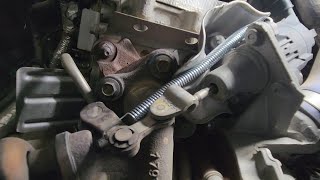
Typical fix: Sometimes, the linkage can be cleaned and lubricated with penetrating oil. If the valve is seized internally, the turbocharger assembly must be replaced. For the linkage rattle on 2017 models, install the spring kit from TSB 20-2016. 🎬 See this quick fix for common wastegate linkage rattle
Est. part cost: $20 (spring kit) to $2000+ (turbo replacement)
Rare But Worth Checking
- Faulty Boost Pressure Sensor (MAP Sensor): The PCM may set a P0244 if the MAP sensor is providing an inaccurate reading, fooling the computer into thinking the wastegate is malfunctioning when it's actually the sensor that's bad. Always check for other sensor-related codes first.
- PCM Software/Calibration Error: In some cases, particularly on 2015-2018 models, an outdated PCM software version may be too sensitive and trigger the code. A dealer may need to reflash the PCM with an updated calibration. TSB SSM 46619 mentions that P0244 on 2017 models may be due to linkage adjustment, not necessarily a faulty part.
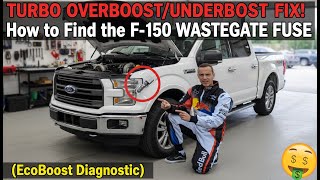
- Blown Fuse (2015-2017 models): For models with electronic wastegates, a blown fuse for the actuator circuit can cause a complete loss of control and trigger this code. Checking fuse F3 (10A) in the under-hood panel is a simple first step. 🎬 Watch: How to find and check the wastegate fuse
Diagnosis Steps

- Scan the PCM for any other related trouble codes. Address codes for boost sensors (MAP) or other turbo components first.
- Visually inspect the entire turbocharger system. Look for disconnected hoses, cracked vacuum lines (2011-2016), and damaged wiring or connectors at the wastegate actuators/solenoid.
- For 2015-2017 models: Check fuse F3 (a 10A fuse) in the under-hood fuse box before proceeding.
- For 2011-2016 models: Locate the boost control solenoid (Part No. BL3Z-9K378-A) in the passenger wheel well. Test its vacuum lines for leaks using a hand-held vacuum pump. Test the solenoid itself for function (clicks) and resistance (should not be 0 or infinite ohms).
- For all models: Disconnect the actuator rod from the wastegate arm. Manually check if the wastegate arm on the turbo moves freely without binding. A seized arm requires turbo replacement or extensive cleaning.
- For 2011-2014 models: With the rod still disconnected, apply 5-15 PSI of pressure/vacuum to the actuator with a hand pump. The rod should retract smoothly and hold pressure/vacuum. If it doesn't, the actuator diaphragm is ruptured and must be replaced.
- For 2015+ models: Use a capable scan tool (like FORScan or IDS) to command the electronic actuator through its range of motion via a bidirectional test. If it fails the test or doesn't move, the actuator is faulty.
- If all components test good, the issue may be a faulty boost pressure sensor providing incorrect data. Monitor live data from the MAP/boost sensors to ensure they read correctly and match the BARO sensor with the key on and engine off.
Parts You'll Likely Need

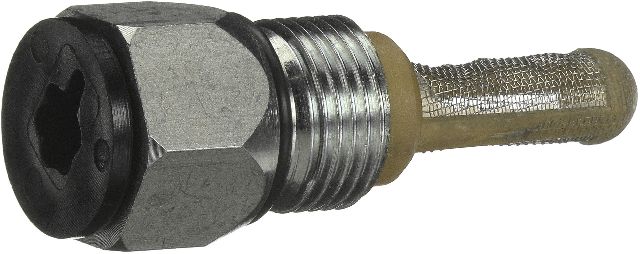
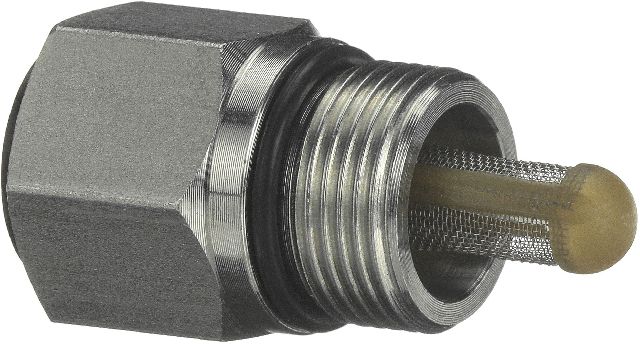
- Turbocharger Boost Control Solenoid
(OEM #BL3Z-9K378-A)— A very common failure on 2011-2016 models that use vacuum-controlled wastegates. This part regulates the vacuum signal and is exposed to the elements.
Trusted brands: Motorcraft, Dorman, Standard Motor Products
OEM price range: $60-$80
Aftermarket price range: $40-$60 - Turbocharger Wastegate Actuator — This is the most common failure, either due to a ruptured vacuum diaphragm on early models or a seized electronic motor on later models. Ford often does not service the electronic actuator separately from the turbocharger.
Trusted brands: Motorcraft (as part of turbo assembly), CR Performance (aftermarket electronic actuator)
OEM price range: $800-$2000+ (full turbo assembly)
Aftermarket price range: $150-$400 (actuator only)
Related Codes That Often Appear With This One
- P0299 — Turbocharger/Supercharger Underboost Condition. This code often appears with P0244 when the wastegate is stuck open, preventing the turbo from building sufficient boost.
- P0234 — Turbocharger/Supercharger Overboost Condition. This may be logged if the wastegate is stuck closed, causing boost pressure to exceed the specified limits.
- P25B4 — Turbocharger/Supercharger Wastegate 'B' Control Circuit Low. Often seen with P0244 on 2017+ models with electronic actuators, indicating a problem with the second turbo's wastegate control.
Technical Service Bulletins (TSBs) & Recalls

- TSB 20-2016 — 3.5L EcoBoost - Rattle Type Noise from Engine Compartment Under Various Operating Conditions — For 2017 F-150s with the 3.5L EcoBoost, this TSB addresses a rattle from the turbo wastegate linkage due to excessive play. The fix is to install a wastegate linkage spring kit on both turbo actuators.
- TSB 18-2305 / 15-0131 — 3.5L EcoBoost - Cold Start - Ticking/Tapping Or Rattle Type Noise — Applies to 2011-2015 F-150s. Addresses a cold start rattle caused by a stretched primary timing chain and/or faulty VCT phasers. While not a direct cause of P0244, it's a critical related engine issue.
- TSB 23-2121 (supersedes 22-2200) — 3.5L EcoBoost - Cold Start Ticking/Tapping/Rattle With Possible No Restart — For 2017-2020 F-150s, this addresses a cold start rattle (2-5 seconds) due to worn VCT units. Can also cause a no-restart condition during auto start-stop.
- SSM 46619 — Lack Of Power - Illuminated MIL - DTCs P0244, P25B4, etc. — For 2017 F-150/Raptor 3.5L, this service message suggests that a loss of power with codes P0244/P25B4 may be due to wastegate linkage being out of adjustment, and advises performing an adjustment procedure before replacing parts.
Platform-Specific Known Issues
- On many 2015 and newer models, Ford's service procedure requires replacing the entire turbocharger assembly, as the electronic wastegate actuator is not sold as a separate service part from the dealer.
- The mechanical vacuum pump on 2011-2016 models is a frequent source of oil leaks, which can drip onto the exhaust and cause a burning smell. While not a direct cause of P0244, it's a related system to be aware of during diagnosis.
Mechanic-Grade Diagnostic Values
- Electronic Wastegate Actuator Voltage (Gen 2 3.5L) — expected: 1.26V - 1.43V. Failure: Voltage outside this range when measured between Pin 3 (Ground) and Pin 4 (Signal) with key on, engine off, and wastegate confirmed closed.
- Vacuum Wastegate Actuator Test (Gen 1 3.5L) — expected: Smooth rod actuation and holds pressure/vacuum.. Failure: No movement or fails to hold pressure, indicating a ruptured diaphragm.
- Boost Control Solenoid Resistance (Vacuum models) — expected: A specific ohm value per the service manual (typically not published freely).. Failure: A reading of 0 ohms (short circuit) or infinite/OL (open circuit) indicates a failed solenoid coil.
- MAP Sensor Voltage vs. Vacuum — expected: Voltage should decrease as vacuum increases.. Failure: No change or erratic voltage when vacuum is applied.
- Actuator/Solenoid Circuit Voltage Drop — expected: Less than 0.2V. Failure: A voltage difference greater than 0.2V between the PCM connector and the component connector indicates excessive resistance in the wiring.
Scan Tool Commands That Help
- Ford IDS, FORScan, or other professional bidirectional scanner: Wastegate Control Solenoid (WCS) Output State Control / Actuator Self-Test — This command allows the technician to manually cycle the solenoid or electronic actuator to verify its mechanical movement and check for corresponding voltage changes, confirming if the component is responding to PCM commands.
- Any capable scan tool: Live Data Monitoring for PIDs: TC_WG_DC (Wastegate Duty Cycle), BOOST_P, MAP, BARO — Used to compare the PCM's commanded wastegate duty cycle against the actual boost pressure (MAP) being produced. A high duty cycle command with low actual boost can indicate a leak or stuck open wastegate, while a low/zero command with high boost can indicate it's stuck closed.
Wiring & Ground Locations
- Fuse F3 (Under-hood Fuse Box) — In the under-hood fuse box (behind the battery), it is the third 10-amp fuse from the bottom in the right-most row.. This fuse provides power to the electronic wastegate actuators on 2015-2017 F-150 EcoBoost models. A blown fuse will cause a complete loss of actuator function and trigger a performance code like P0244. It is a simple, crucial first check.
- Electronic Wastegate Actuator Connector (WPT-1054 pigtail) — Directly on the electronic wastegate actuator on the side of each turbocharger (2015+ 2.7L, 2017+ 3.5L).. This 2-pin connector is where voltage and ground are supplied. Pin 3 (Black wire) is the ground, and Pin 4 (Yellow/Blue wire) is the voltage signal for actuator position. Testing for voltage and ground here is critical for diagnosing a faulty actuator vs. a wiring problem.
Real Owner Repair Stories
- iCarsoft user story compilation (2015 Ford EcoBoost) — Sluggish performance during commute, P0244 code stored.
❌ Tried (didn't work) Initial diagnosis pointed towards a potential solenoid or actuator failure.
✅ What actually fixed it A visual inspection revealed a cracked vacuum line going to the wastegate actuator. Replacing the inexpensive vacuum line resolved the code and restored performance.
OEM Part Supersession History
AA5Z-9K378-A→BL3Z-9K378-A— Part was updated by Ford for improved reliability or manufacturing changes.
Heads up: The new part number (BL3Z-9K378-A) is the correct and direct replacement for the old one.
Model Year Variations Within This Range
- 2011-2014 (3.5L only): Uses the Gen 1 3.5L EcoBoost with vacuum-operated wastegate actuators. Failures are typically ruptured actuator diaphragms, a bad remote boost control solenoid (BL3Z-9K378-A), or cracked vacuum lines.
- 2015-2020 (2.7L) & 2017-2020 (3.5L): Uses the 2.7L or Gen 2 3.5L EcoBoost with electronic wastegate actuators mounted directly to the turbos. Failures are typically the electronic actuator motor itself seizing or its linkage binding. Ford often does not sell the actuator separately from the turbocharger assembly.
- 2015-2016 (3.5L only): These years continued to use the Gen 1 3.5L EcoBoost with the vacuum-operated wastegate system, even though the 2.7L introduced in 2015 used electronic wastegates. Therefore, diagnosis for a 2015-2016 3.5L follows the earlier model procedure.
Diagnostic Flowchart
Other Known Issues on This Vehicle
Issues unrelated to this code that are worth knowing about as an owner of this generation:
- Timing Chain Stretch & VCT Phaser Rattle 🔴 High — Very common on Gen 1 (2011-2016) and Gen 2 (2017-2020) engines, typically manifesting as a 2-5 second rattle on cold starts. Often appears after 60,000 miles. (Ref: TSB 18-2305 (for 2011-2015), TSB 23-2121 (for 2017-2020).)
- Intercooler Condensation (Shudder) 🟠 Medium — Primarily affects 2011-2012 models, especially in humid climates. Causes engine stumbling or misfiring under hard acceleration as collected water/oil mix is ingested. (Ref: TSB 13-8-1 was an early attempt at a fix. Many owners resort to drilling a 1/16" 'weep hole' in the intercooler.)
- 10R80 10-Speed Transmission Harsh Shifting & Failures 🔴 High — Affects 2017-2020 models with the 10R80 transmission. Symptoms include harsh/erratic shifting, clunking noises, and premature internal failures like the CDF drum. Subject of multiple class-action lawsuits. (Ref: Various software updates have been released, but many owners report issues persist.)
- Coolant Leaks 🟠 Medium — Common across all years. Leaks can occur from turbo coolant lines, the water pump, or various plastic fittings and hoses in the cooling system.
- Leaking Oil Pan Gasket 🟡 Low — Particularly common on 2017 and early 2018 models that used a two-piece (metal and plastic) oil pan design which was prone to leaking. Later models and replacements use a more reliable one-piece aluminum pan.
- Intake Valve Carbon Buildup 🟠 Medium — More prevalent on the Gen 1 (2011-2016) 3.5L engine due to its direct-injection-only design. The Gen 2 engine (2017+) added port injection, which helps keep the intake valves clean. Can cause power loss and misfires over time.
Used vs. New Parts: Buying Guide for This Vehicle
When a used part is the smart pick: For this specific code, buying used parts is generally not recommended. The primary failure components (solenoid, actuators) fail due to heat, vibration, and wear, so a used part has an unknown and likely limited remaining lifespan. The cost savings are minimal compared to the risk and labor of a repeat repair.
Donor-vehicle mileage cap: roughly under 30000 miles for the part to have meaningful remaining life.
What to inspect on the donor part:
- For a vacuum actuator, ensure the rubber diaphragm is pliable and not brittle.
- For an electronic actuator, check for zero corrosion on the connector pins and smooth, non-binding movement of the linkage arm.
- For a solenoid, inspect the plastic housing for heat-related cracking or brittleness.
OEM-only on this vehicle (don't cheap out):
- Turbocharger Assembly: Due to the high precision and extreme operating conditions, a new OEM (Motorcraft) or high-quality remanufactured unit is strongly advised over a junkyard part. A used turbo carries a high risk of hidden damage or bearing wear.
Aftermarket brands forum-validated for this vehicle:
- Motorcraft (OEM for all parts)
- CR Performance (for standalone electronic wastegate actuators, which Ford does not sell separately)
- Standard Motor Products (often considered a reliable alternative for sensors and solenoids)
Brands owners have reported issues with on this vehicle:
- Unbranded, 'white-box' parts from online marketplaces. While tempting due to low cost, failure rates for these critical turbo components are reportedly high, leading to repeat repairs.
Real Owner Stories
Aggregated from forums and TSBs cited above. Mileages and costs reflect what owners reported in those sources.
2017 F-150 3.5L EcoBoost
Symptoms: Owner was experiencing codes P0244 and P25B4 along with a loss of power.
What fixed it: After dealer diagnosis and reference to service message SSM 46619, the eventual fix was replacing the faulty wastegate actuator.
Source hint: f150forum.com: '2017 F-150 3.5L EB wastegate problems'
2017 F-150 3.5L EcoBoost
Symptoms: A rattle-type noise was heard from the engine compartment under various operating conditions due to excessive play in the wastegate linkage.
What fixed it: The issue was resolved by installing a wastegate linkage spring kit on both turbo actuators, as per the TSB.
Source hint: TSB 20-2016
2017 F-150/Raptor 3.5L
Symptoms: Vehicle experienced a lack of power with an illuminated Check Engine Light, storing codes P0244 and P25B4.
What fixed it: The service message advised performing a wastegate linkage adjustment procedure before replacing any parts, which could resolve the fault.
Source hint: SSM 46619
Related OBD-II Codes
Frequently Asked Questions
My 2017 F-150 is making a rattling noise from the engine bay. Is this related to the P0244 code?
For my 2015 F-150, do I have to replace the entire turbocharger to fix a bad wastegate actuator?
What's the very first thing I should check on my 2016 F-150 for a P0244 code?
Where is the boost control solenoid located on a 2011-2016 F-150 EcoBoost?
Could a vacuum leak on my 2013 F-150 cause code P0244?
My truck has a loud rattle on a cold start. Is this the same as the P0244 wastegate issue?
Helpful Videos
Used OEM Parts in Stock

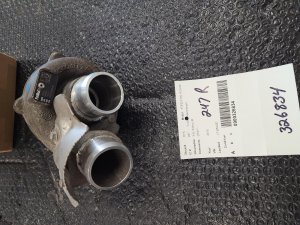

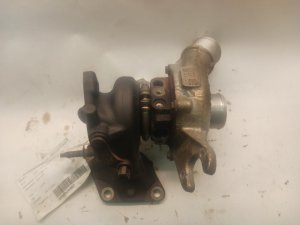
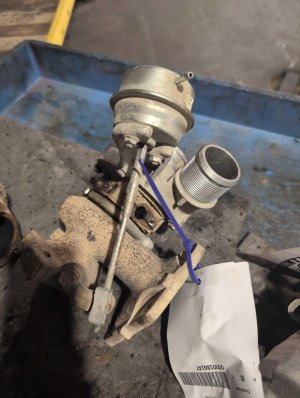
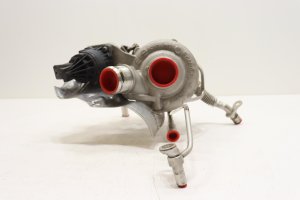
New Aftermarket Parts Available


The information in this article is provided for general reference and educational purposes only. Vehicle specifications, procedures, and part compatibility can vary by production date, trim level, and region. Always consult your vehicle's factory service manual and verify part numbers before purchasing or performing repairs. Safety-critical components such as airbags, seat belts, and braking systems should be installed by a qualified professional.
- Ford F-150:
- 🎬 Helpful Videos
- 🛍️ Shop This Part
- What's Unique About the 2011-2020 Ford F-150
- Symptoms You May Notice
- Most Likely Causes
- Rare But Worth Checking
- Diagnosis Steps
- Parts You'll Likely Need
- Related Codes That Often Appear With This One
- Technical Service Bulletins (TSBs) & Recalls
- Platform-Specific Known Issues
- Mechanic-Grade Diagnostic Values
- Scan Tool Commands That Help
- Wiring & Ground Locations
- Real Owner Repair Stories
- OEM Part Supersession History
- Model Year Variations Within This Range
- Diagnostic Flowchart
- Other Known Issues on This Vehicle
- Used vs. New Parts: Buying Guide for This Vehicle
- Real Owner Stories
- 2017 F-150 3.5L EcoBoost
- 2017 F-150 3.5L EcoBoost
- 2017 F-150/Raptor 3.5L
- Related OBD-II Codes
- Frequently Asked Questions
- 🎟️ Get 5% Off