

P0236 on 2011-2014 Hyundai Sonata 2.0T: Boost Sensor & Wastegate Actuator Fixes
For the 2011-2014 Sonata 2.0T, P0236 is most often caused by a faulty electronic wastegate actuator (EWGA) or a bad boost pressure sensor. Before replacing the whole turbo, check these two components first, as a simple sensor or actuator replacement usually fixes the issue. The EWGA is a known high-failure part with a specific TSB (22-EM-004H) outlining its diagnosis and replacement.
- Do not automatically assume the turbocharger has failed. The P0236 code on this Sonata is most likely due to a faulty Electronic Wastegate Actuator (EWGA) or a bad boost pressure sensor.
- Reference Hyundai TSB 22-EM-004H. It provides the correct procedure for diagnosing and replacing the EWGA, which is a separate, serviceable part.
- A key diagnostic step is to check the boost sensor and EWGA voltages with the key on and engine off.
- Replacing the entire turbocharger is a common but expensive misdiagnosis for this code on this specific vehicle.
What's Unique About the 2011-2014 Hyundai Sonata
The 2.0T Theta II engine in the YF-generation Sonata uses an Electronic Wastegate Actuator (EWGA), which is a known high-failure part. Many P0236 and related boost codes (like P0299, P2562, P2563) on this platform are traced back to a faulty or misadjusted EWGA rather than the turbocharger itself. Hyundai has issued a Technical Service Bulletin (TSB 22-EM-004H) specifically instructing technicians to diagnose and replace the actuator independently, warning against unnecessarily replacing the entire turbocharger assembly for this common fault.
Symptoms You May Notice
- Check Engine Light is on
- Drastic reduction in engine power (limp mode)
- Poor or sluggish acceleration
- Hesitation during acceleration
- Abnormal noise from the turbocharger area
- Engine pinging or knocking sounds.
- Replacing the entire turbocharger assembly. Hyundai TSB 22-EM-004H specifically warns against this, as the electronic wastegate actuator is a separate, serviceable part and the most common point of failure.
Most Likely Causes
- Faulty or Misadjusted Electronic Wastegate Actuator (EWGA) 🔴 High Probability The EWGA on the Theta II engine is a well-documented, high-failure component due to heat and vibration causing internal electronic or motor failure. It is the subject of a specific TSB from Hyundai.
How to confirm: Use a Hyundai-specific scan tool (GDS) or a multimeter to check the 'EWAG adaptation value' or position sensor voltage. Per TSB 22-EM-004H, a voltage reading outside the specified range (target is ~4.0V-4.2V with key on, engine off) indicates a fault or need for adjustment. This is checked by back-probing the yellow wire on the actuator's harness.
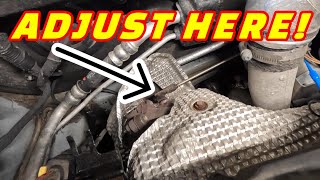
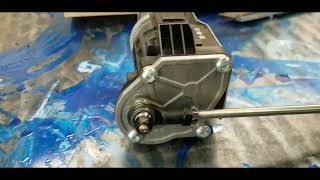
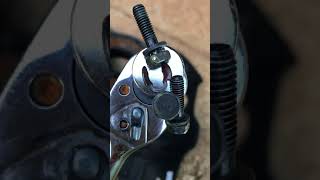
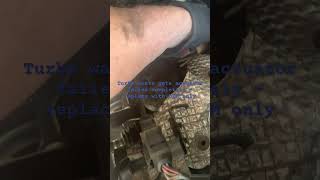
Typical fix: Adjust or replace the electronic wastegate actuator. The actuator rod length can be adjusted to bring the voltage into spec. 🎬 Watch: How to adjust the wastegate rod to clear codes If adjustment fails or the motor is bad, replace the actuator. The actuator can be replaced without removing the turbocharger. 🎬 See this step-by-step wastegate actuator replacement walkthrough
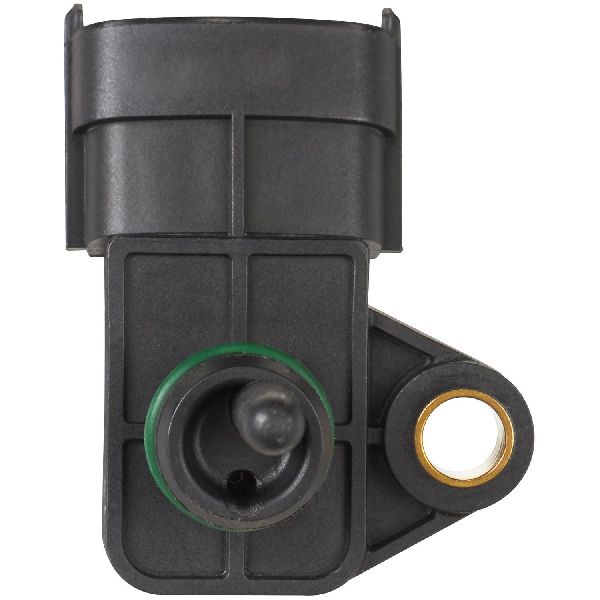
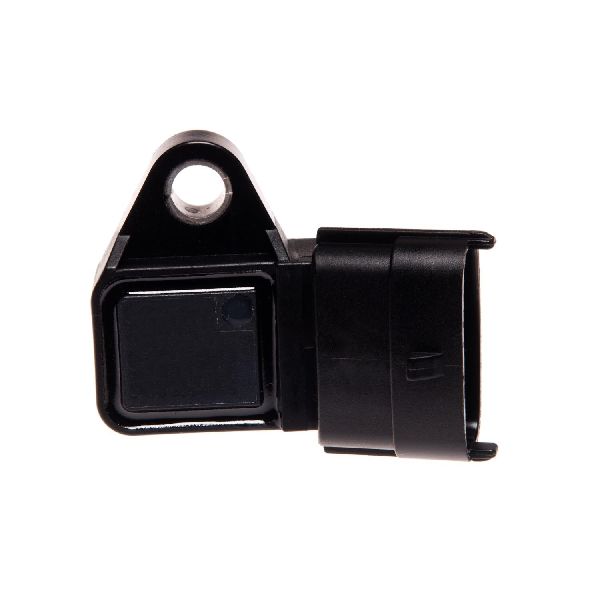
Est. part cost: $120-$250 - Faulty Turbocharger Boost Pressure Sensor 🔴 High Probability This is a known issue on 2011-2020 Sonata Turbos. The sensor, located on the cold-side intercooler pipe, can fail from heat cycles and contamination.
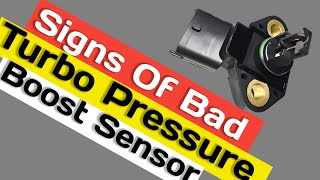
How to confirm: With the key on and engine off, use a scan tool to compare the boost pressure sensor reading to the BARO and MAP sensor readings. They should all be within 0.5 PSI of each other. If the boost sensor reading is an outlier, it has likely failed. 🎬 Watch: Symptoms of a bad turbo boost pressure sensor
Typical fix: Replace the boost pressure sensor. It is typically held in by one or two bolts and is easily accessible.
Est. part cost: $40-$100 - Boost Leak in Intake System 🟡 Medium Probability Plastic and rubber components in the intake system, such as charge pipes and intercooler connections, can crack or become brittle over time with heat and age.
How to confirm: Perform a visual inspection of all intake hoses and the intercooler for cracks or loose connections. A smoke test can be performed to pressurize the intake system and reveal the source of any leaks.
Typical fix: Repair or replace the leaking component, such as a cracked charge pipe, intercooler, or hose.
Est. part cost: $50-$300 - Wiring or Connector Issue ⚪ Low Probability
How to confirm: Visually inspect the wiring harness and connector for the boost pressure sensor and wastegate actuator for any signs of damage, corrosion, or loose pins. Check for continuity and proper voltage at the connectors, paying close attention to the harness near hot exhaust components.
Typical fix: Repair the damaged wiring or clean/replace the faulty connector.
Est. part cost: $10-$50
Diagnosis Steps
- Read all fault codes with an OBD-II scanner. Note any other codes present, especially P0299, P2562, P2563, or P2565.
- With the Key On, Engine Off (KOEO), use the scanner to view live data. Compare the readings for the Boost Pressure Sensor, MAP sensor, and BARO sensor. They should all read very close to atmospheric pressure (within 0.5 PSI). If the Boost Sensor reading is significantly different, it is likely faulty.
- If sensor readings are plausible, inspect the Electronic Wastegate Actuator (EWGA). Following the procedure in TSB 22-EM-004H, check the actuator's position voltage using a multimeter. Back-probe the yellow wire in the EWGA connector and connect the other lead to a ground. With KOEO, the voltage should be 4.0V-4.2V. If the voltage is out of spec, the actuator rod needs adjustment or the actuator is faulty.
- To adjust the EWGA, loosen the 10mm locknut on the actuator rod and turn the end to lengthen or shorten it until the target voltage is achieved. Small, half-turn adjustments are recommended.
- Visually inspect all intake piping between the turbo, intercooler, and throttle body. Look for cracks, loose clamps, or signs of oil residue that might indicate a leak.
- If no visual leaks are found, perform a boost leak test (smoke test) to pressurize the system and identify any hidden leaks.
- Inspect the wiring and connectors for both the boost pressure sensor and the EWGA for any signs of damage, corrosion, or loose connections.
- If all other components check out, the issue could be a mechanical failure within the turbocharger itself, such as a stuck wastegate flap, but this is less common than an EWGA or sensor failure.
Parts You'll Likely Need
- Electronic Wastegate Actuator
(OEM #39400-2G700)— This is the most common point of failure on the 2.0T engine leading to boost-related codes. TSB 22-EM-004H identifies this as a serviceable part.
Trusted brands: Hyundai/Kia (OEM)
OEM price range: $150-$250
Aftermarket price range: $120-$180 - Turbocharger Boost Pressure Sensor
(OEM #39300-84400)— This sensor provides the direct reading that triggers the code. It's a common failure point and relatively inexpensive to replace. The original part number was 39300-2G000, which has been superseded by 39300-84400.
Trusted brands: Hyundai/Kia (OEM), Bosch, Standard Motor Products (SMP)
OEM price range: $60-$100
Aftermarket price range: $30-$70
Related Codes That Often Appear With This One
- P0299 — This code indicates a turbo underboost condition, which is a direct mechanical symptom of a malfunctioning wastegate actuator or a large boost leak that could also cause the P0236 sensor performance code.
- P2562 — This code directly relates to the Turbocharger Boost Control Position Sensor circuit, often appearing alongside P0236 when the electronic wastegate actuator's position sensor is failing.
- P2563 — Indicates a range/performance problem with the boost control position sensor, also pointing directly to a faulty or miscalibrated electronic wastegate actuator.
- P2565 — Indicates the Turbocharger Boost Control Position Sensor Circuit is reading 'High', often triggered by the same EWGA adjustment or failure issues as P0236.
Technical Service Bulletins (TSBs) & Recalls
- TSB 22-EM-004H: THETA-II 2.0T TURBOCHARGER EWGA DIAGNOSIS AND SERVICE PART REPLACEMENT GUIDELINES. This TSB is critical for diagnosing a faulty wastegate actuator and explicitly states not to replace the entire turbocharger for an actuator fault. It provides part numbers, diagnostic voltage specs, and adjustment procedures.
- TSB 22-EM-002H-1: ENGINE WARRANTY EXTENSION (TXXC). This document outlines the extended warranty coverage (10 years/120,000 miles) for engine long block replacement due to connecting rod bearing wear for the Sonata and other models.
- TSB 21-EM-004H: ENGINE CONNECTING ROD BEARING CLEARANCE TEST. This TSB provides the specific procedure dealers must follow to test for bearing wear to determine if an engine qualifies for warranty replacement under the extended campaign.
- TSB Bulletin #23-EE-002H: Notes that P0236 and P0299 can occur due to EGR condensate freezing, which requires a change in cleaning logic.
- TSB Bulletin #23-FL-001H: Identifies P0236 as a "Turbocharger boost sensor range abnormal" condition and links it to potential ITM motor or ETC target position failures.
Platform-Specific Known Issues
- The Theta II 2.0T engine is subject to Hyundai TSB 22-EM-004H, which provides specific diagnostic and repair procedures for the Electronic Wastegate Actuator (EWGA), a common failure point.
- Owners on forums like hyundai-forums.com and Reddit frequently discuss the EWGA adjustment procedure, sharing tips on achieving the correct 4.0V-4.2V reading to resolve codes P0236, P2562, and P2563 without replacing parts.
- Due to the widespread and severe Theta II engine bearing failures, Hyundai and Kia are under a consent order from NHTSA and have extended warranties for engine long blocks on affected vehicles, including the 2011-2014 Sonata.
- NHTSA ODI #11073222 describes an instance where P0236 appeared and disappeared, and a dealership noted there was no software update or firmware request available for that specific vehicle's symptoms.
Mechanic-Grade Diagnostic Values
- Electronic Wastegate Actuator (EWGA) Position Sensor Voltage — expected: 3.9V - 4.2V (Key On, Engine Off, engine cold). Failure: A reading above 4.3V, or a voltage that jumps erratically when the actuator rod is wiggled by hand, indicates a fault, misadjustment, or internal wear.
- Electronic Wastegate Actuator (EWGA) Motor Coil Resistance — expected: 1.44 - 1.96 Ω. Failure: An open circuit (OL), short circuit (near 0 Ω), or a reading that jumps to a high resistance (kΩ-MΩ) when moving the actuator rod indicates a dead spot or internal motor failure.
- Boost Pressure Sensor (BPS) Voltage vs. Pressure — expected: Approx. 0.5V at 25 kPa, 0.95V at 50 kPa, 4.1V at 220 kPa.. Failure: Voltage does not correlate with pressure applied via a hand pump, or does not match MAP/BARO sensors at KOEO.
Scan Tool Commands That Help
- Hyundai GDS (Global Diagnostic System): EWAG Adaptation Value Reset / Actuator Test — After replacing the EWGA or adjusting the rod, this function should be used to learn the new end-stop positions. The GDS allows you to cycle the ignition 5 times to reset adaptation and then read the 'EWAG adaptation value' in Current Data to verify the adjustment. It can also command an actuator sweep to visually check for smooth movement.
Wiring & Ground Locations
- EWGA Connector — On the Electronic Wastegate Actuator, mounted to the turbocharger assembly, under a heat shield.. The yellow wire in this connector is the position sensor signal wire used for voltage checks. High heat in this area can make the connector and wiring brittle, leading to intermittent connections.
- Boost Pressure Sensor Connector — On the cold-side intercooler pipe, between the intercooler and the throttle body.. This is the primary sensor for code P0236. The connector and wiring are susceptible to damage from heat, vibration, and oil contamination.
- ECM Connector 'A' — At the Engine Control Module (ECM), typically in the engine bay.. A technician found a 'dead spot' in the EWGA motor by checking resistance between pins 5 and 6 on the harness side of this connector while moving the actuator rod, which is an advanced diagnostic step to confirm an internal motor fault without being at the actuator itself.
Real Owner Repair Stories
- YouTube channel 'Tucson's Mobile Mechanic' (2014 Hyundai Sonata 2.0T) — Check engine light with boost-related codes (P0234/P256x implied).
❌ Tried (didn't work) Initial voltage check showed a reading close to the specified range.
✅ What actually fixed it The mechanic discovered that physically wiggling the actuator shaft caused the voltage reading to jump erratically between 3.9V and 4.3V. This indicated significant internal wear in the position sensor that a static test missed. Replacing the EWGA resolved the issue. - Reddit user post (Hyundai with 2.0T engine) — Codes P004E00 or P004500 (related to wastegate control).
✅ What actually fixed it The user diagnosed a faulty EWGA motor from the ECU connector. By measuring resistance between pins 5 and 6 of the harness-side ECU connector 'A' while an assistant moved the actuator rod, they found a 'dead spot' where resistance jumped into the MΩ range. This confirmed an internal motor winding failure without having to access the turbo directly for initial testing. Replacing the EWGA was the fix. - NHTSA ODI #11617071 — An owner reported that after a repair, the vehicle presented low voltage and codes P0234-P0236. The unit was verified to have broken cables from one tail of the MAP sensor.
Model Year Variations Within This Range
- 2014: The 2014 model year received a minor facelift with revised front and rear styling. While the core engine and turbo components remained the same as the 2011-2013 models, some wiring harnesses or mounting brackets may have slight differences. However, the P0236 diagnosis procedure remains identical.
Diagnostic Flowchart
Other Known Issues on This Vehicle
Issues unrelated to this code that are worth knowing about as an owner of this generation:
- Connecting Rod Bearing Failure 🔴 High — Widespread across 2011-2014 2.0T and 2.4L Theta II engines, often leading to engine seizure. Can occur at various mileages, sometimes as low as 30,000 miles. (Ref: Multiple recalls (e.g., NHTSA 15V-568) and a class-action lawsuit settlement led to extended engine warranties (up to 15 years/150,000 miles for some) and a Knock Sensor Detection System (KSDS) software update.)
- Excessive Oil Consumption 🟠 Medium — Common issue, often a precursor to more serious engine problems. Owners report needing to add oil between changes. Can be caused by worn piston rings or clogged oil passages from sludge. (Ref: No specific recall, but often addressed as part of the broader engine failure warranty extensions. Shorter oil change intervals (3,000-5,000 miles) with quality synthetic oil are recommended for prevention.)
- Carbon Buildup on Intake Valves 🟠 Medium — Inherent to Gasoline Direct Injection (GDI) engines like the Theta II. Becomes noticeable after 60,000-100,000 miles, causing rough idle, hesitation, and power loss. (Ref: No recall; this is a maintenance issue. Walnut blast cleaning of the intake valves is the standard service procedure.)
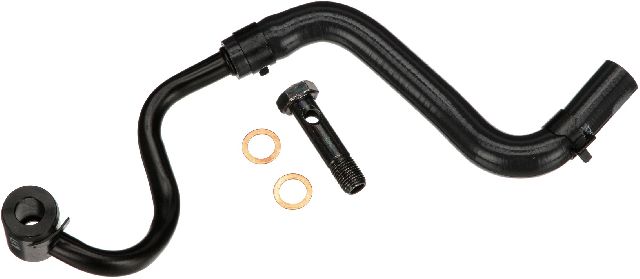
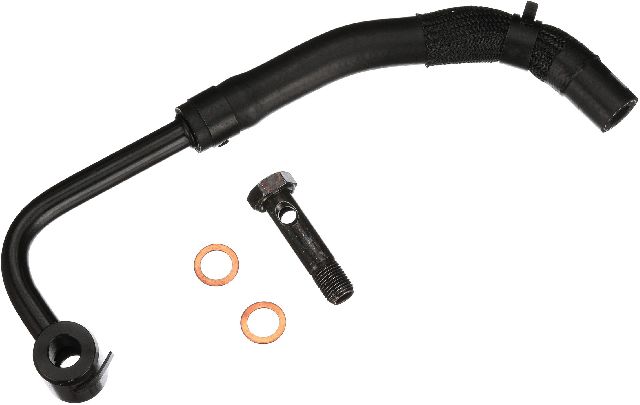
- Turbocharger Oil Feed Line Leak 🟠 Medium — The original oil feed line to the turbo was prone to leaking. (Ref: A recall was issued for this part, and the updated replacement part is considered an effective fix.)
Used vs. New Parts: Buying Guide for This Vehicle
When a used part is the smart pick: A used Electronic Wastegate Actuator (EWGA) can be a cost-effective option, but only if sourced from a low-mileage donor and thoroughly inspected. Given this is a high-failure part, a new OEM or reputable aftermarket part is generally safer. A used boost pressure sensor is generally not recommended due to its low cost when new and the difficulty in verifying its condition.
Donor-vehicle mileage cap: roughly under 75000 miles for the part to have meaningful remaining life.
What to inspect on the donor part:
- For a used EWGA, physically wiggle the actuator arm; there should be minimal side-to-side play.
- If possible, connect the used EWGA to the vehicle harness (KOEO) and verify the position sensor voltage is stable and within the 3.9V-4.1V range.
- Tap the body of the used actuator while monitoring voltage; any erratic jumps indicate internal sensor wear.
OEM-only on this vehicle (don't cheap out):
- Electronic Wastegate Actuator (EWGA) - While aftermarket options exist, the OEM part (39400-2G700) is the most reliable choice due to the precise calibration required.
Aftermarket brands forum-validated for this vehicle:
- Bosch (for Boost Pressure Sensor)
Brands owners have reported issues with on this vehicle:
- Unbranded, no-name electronic wastegate actuators from online marketplaces are a significant gamble due to the precise voltage calibration required for proper function.
Real Owner Stories
Aggregated from forums and TSBs cited above. Mileages and costs reflect what owners reported in those sources.
2014 Sonata 2.0T
Symptoms: The owner had EWGA-related codes and was quoted for a full turbo replacement by multiple shops.
What fixed it: The owner showed the shops the specific TSB (22-EM-004H) and had only the actuator replaced instead of the entire turbocharger.
Source hint: Reddit (r/Hyundai)
2011-2014 Sonata 2.0T
Symptoms: Owners reported codes P2562, P2563, and P2565 along with boost issues.
What fixed it: Performing the EWGA voltage check and rod adjustment to reach the 4.0V-4.2V spec.
Source hint: YouTube channels 'The Enthusiast Mechanic' and 'Car-Addiction'
Related OBD-II Codes
Frequently Asked Questions
Does TSB 22-EM-004H apply to my 2011-2014 Hyundai Sonata 2.0T?
My dealer says I need a whole new turbocharger for my 2014 Sonata 2.0T. Is this necessary?
What is the correct voltage for the EWGA on a Sonata 2.0T when performing an adjustment?
Is the P0236 code related to the engine bearing failures and the TXXC warranty extension?
Can I adjust the wastegate actuator myself to fix P0236?
Where is the boost pressure sensor located on the 2011-2014 Sonata Turbo?
Helpful Videos
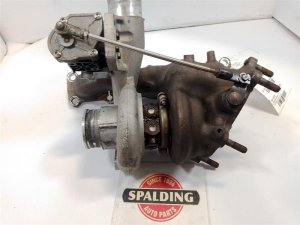
Used OEM Parts in Stock
New Aftermarket Parts Available


The information in this article is provided for general reference and educational purposes only. Vehicle specifications, procedures, and part compatibility can vary by production date, trim level, and region. Always consult your vehicle's factory service manual and verify part numbers before purchasing or performing repairs. Safety-critical components such as airbags, seat belts, and braking systems should be installed by a qualified professional.
- Hyundai Sonata:
- 🎬 Helpful Videos
- 🛍️ Shop This Part
- What's Unique About the 2011-2014 Hyundai Sonata
- Symptoms You May Notice
- Most Likely Causes
- Diagnosis Steps
- Parts You'll Likely Need
- Related Codes That Often Appear With This One
- Technical Service Bulletins (TSBs) & Recalls
- Platform-Specific Known Issues
- Mechanic-Grade Diagnostic Values
- Scan Tool Commands That Help
- Wiring & Ground Locations
- Real Owner Repair Stories
- Model Year Variations Within This Range
- Diagnostic Flowchart
- Other Known Issues on This Vehicle
- Used vs. New Parts: Buying Guide for This Vehicle
- Real Owner Stories
- 2014 Sonata 2.0T
- 2011-2014 Sonata 2.0T
- Related OBD-II Codes
- Frequently Asked Questions
- 🎟️ Get 5% Off