

P0236 on 2014-2019 Ford Fiesta ST: Turbo Boost Sensor 'A' Circuit Range/Performance Causes and Fixes
On a 2014-2019 Ford Fiesta ST, code P0236 is most often caused by a faulty wiring splice (S129) in the sensor's 5-volt reference circuit or a failed MAP/boost pressure sensor. The wiring fix is complex and requires soldering, while a sensor replacement costs around $60-$95 for a genuine OEM part, which is highly recommended over aftermarket alternatives.
- P0236 on a Fiesta ST indicates a disagreement between pressure sensor readings.
- Do not just replace the sensor immediately. The most likely cause is a known wiring splice issue (VREF circuit) common to this engine family.
- A thorough diagnosis should check for a stable 5-volt reference at the sensor before condemning the sensor itself.
- If a sensor replacement is necessary, use a high-quality OEM (Motorcraft) or OE-equivalent (Bosch) part for best results.
- This repair can be complex; professional diagnosis is recommended if you are not comfortable with advanced electrical troubleshooting.
What's Unique About the 2013-2019 Ford Fiesta
The 1.6L EcoBoost (GTDI) engine used in the Fiesta ST shares its core electrical architecture with other Ford models from the same era, like the Escape and Fusion. A well-documented issue on these engines is a poorly constructed factory wiring splice for the 5-volt reference circuit (VREF). A Ford Technical Service Bulletin (TSB 16-0161) for the Escape with the same engine points to this exact splice, designated S129, as the cause for P0236, leading to erratic sensor behavior. This 'ghost in the machine' wiring problem is often the root cause when multiple sensor-related codes appear or when replacing the sensor doesn't fix the issue. Furthermore, other TSBs point to similar factory splice issues on the signal return (ground) circuits, specifically splices S178 and S123, as another potential hidden cause.
Generation note: The 1.6L EcoBoost Turbo engine was available in the Ford Fiesta ST model in North America from 2014-2019. This guide applies to the entire run of this model, which is part of the sixth generation Fiesta platform. The underlying VREF splice issue is also documented on other Ford 1.6L GTDI engines.
Symptoms You May Notice
- Check Engine Light is on
- Wrench light may illuminate on the dash.
- Noticeable loss of engine power and sluggish acceleration.
- Vehicle may enter 'limp mode'.
- Hesitation, surging, or bucking during acceleration.
- Rough running engine or rough idle.
- Stalling, especially after starting.
- Poor fuel economy
- Replacing the MAP sensor without checking the wiring first. If the P0236 code returns, the underlying cause is very likely the VREF splice issue.
- Replacing the wrong MAP sensor. The Fiesta ST has two primary pressure sensors; diagnosis is needed to identify which one is providing the irrational signal.
- Using a cheap aftermarket MAP sensor. Many forum users and repair videos report that only OEM/OES sensors from Ford or Bosch will permanently fix the issue.
Most Likely Causes
- Faulty VREF Wiring Splice (S129) 🔴 High Probability A known issue on Ford's 1.6L GTDI engines. TSB 16-0161 was issued for the Ford Escape with the same engine and code, identifying a problematic factory crimped splice in the 5-volt reference (VREF) circuit that supplies the boost sensors. This splice can corrode or fail, causing intermittent voltage.
How to confirm: Requires locating splice S129 in the engine wiring harness, which is often found near the transmission after removing the air cleaner assembly. A technician can back-probe the sensor connector to check for a stable 5-volt reference signal; fluctuations point to this splice. A 'wiggle test' of the harness in that area while monitoring sensor data with a tool like Ford IDS can also reveal the fault.
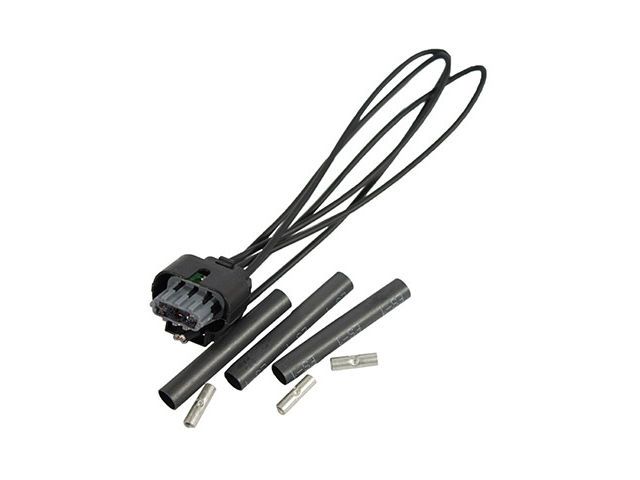
Typical fix: The faulty crimped splice must be cut out. The wires are then properly soldered together and sealed with dual-wall heat-shrink tubing to ensure a permanent, reliable connection. This procedure is detailed in TSB 16-0161.
Est. part cost: $5-$15 for solder and heat shrink tubing. - Failed MAP/Boost Pressure Sensor 🟡 Medium Probability The Fiesta ST has multiple pressure sensors (one on the intake manifold, one on the charge pipe) exposed to heat, vibration, and oil vapor. Over time, they can fail, become contaminated, or respond too slowly to pressure changes. Using non-OEM sensors is a frequent cause of repeat failures.
How to confirm: After confirming the wiring and reference voltage are good, the sensor is the next suspect. A technician can use a scan tool to monitor the sensor's output (e.g., TIP Actual PID) with the key on, engine off. If its reading is illogical compared to the other pressure sensors, it has likely failed. Swapping with a known-good OEM sensor is a practical diagnostic step.
Typical fix: Replace the faulty Manifold Absolute Pressure (MAP) sensor. The Fiesta ST has two: one on the intake manifold (MAP) and one on the charge pipe (often called TMAP or TCBP). Using a high-quality OEM (Motorcraft) or OE-spec (e.g., Bosch) part is critical, as many owners report aftermarket sensors do not resolve the code.
Est. part cost: $60-$95 for one OEM sensor. - Boost or Vacuum Leak ⚪ Low Probability Charge pipes, couplers, and vacuum lines can crack, loosen, or split over time, especially on a turbocharged engine. This is less likely to cause a range/performance code than a wiring or sensor issue, but it is still possible.
How to confirm: A visual inspection of all intake and vacuum plumbing is the first step. The most effective method is to perform a smoke test, which forces low-pressure smoke into the intake system to reveal any hard-to-see leaks.
Typical fix: Tighten loose clamps or replace the cracked hose, coupler, or gasket that is causing the leak.
Est. part cost: $10-$100 depending on the leaking component.
Rare But Worth Checking
- Faulty Powertrain Control Module (PCM): This is extremely rare. The PCM should only be considered after all other possibilities, including sensors, wiring (especially the S129 splice), and leaks, have been exhaustively ruled out by a qualified technician.
- Damaged Sensor Connector or Pigtail: Water intrusion or physical damage can cause corrosion on the sensor connector pins, leading to a poor signal. In some cases, the pigtail harness for the sensor may need to be replaced.
- Faulty Signal Return Wiring Splice (S178 or S123): Similar to the VREF splice, Ford has identified issues with factory splices on the signal return (ground) circuit. TSB 13-7-5 points to splice S178 (for the TCBP/boost sensor) and S123 (for the MAP sensor) as potential failure points that can cause P0236 and other codes. This is often missed if technicians only verify the 5V power supply.
Diagnosis Steps
- Read all stored DTCs with a capable scan tool. Note if any other sensor-related codes (like P0106, P0238, P2227) are present, as this points towards a shared VREF circuit problem.
- Using the scan tool, observe live data from all pressure sensors (MAP, TIP/Boost, BARO) with the Key On, Engine Off (KOEO). They should all read very close to each other (atmospheric pressure). If one is significantly different, it is the primary suspect.
- Visually inspect the engine wiring harness, especially where it runs near the transmission and around the engine. Look for any signs of rubbing, chafing, or damage.
- With a multimeter, check for a stable 5-volt reference signal at the suspect MAP sensor connector (typically a Gray/Brown wire). If the voltage is erratic, incorrect, or drops out when wiggling the harness near the transmission, it strongly suggests a problem with the VREF S129 splice.
- If the 5V reference is stable, inspect the MAP sensors for contamination (oil) or physical damage. Clean them carefully with electronics or MAF sensor cleaner.
- If a specific sensor is confirmed to be providing an illogical reading and its wiring/voltage is confirmed to be good, replace that sensor with a new OEM part.
- If sensors and wiring appear to be good, perform a smoke test on the entire intake and charge pipe system to check for hard-to-see leaks.
- If the issue persists, the problem may lie in the signal return splice (S178 for the TCBP sensor on the 1.6L GTDI) as noted in TSB 13-7-5.
Parts You'll Likely Need
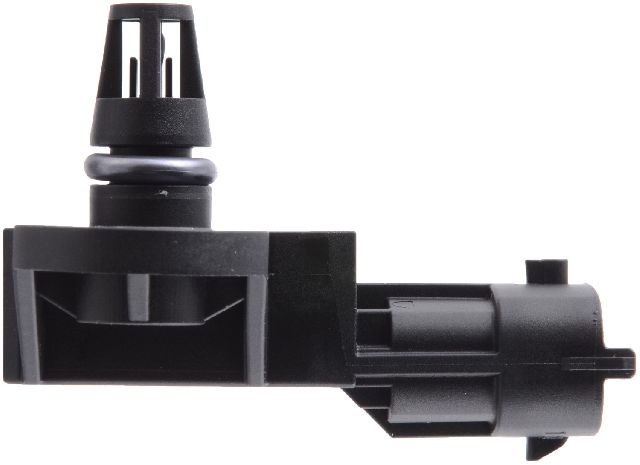
- Manifold Absolute Pressure (MAP) Sensor (On Intake Manifold)
(OEM #CV2Z-9F479-A)— This sensor measures the pressure inside the intake manifold. It can fail internally or become contaminated, leading to the irrational signal that triggers P0236.
Trusted brands: Motorcraft, Bosch
OEM price range: $60-$95
Aftermarket price range: $35-$70 - Turbocharger Boost Pressure (TCBP) / TMAP Sensor (On Charge Pipe)
(OEM #CJ5Z-9F479-A)— This sensor, located on the charge pipe before the throttle body, measures pre-throttle boost pressure and temperature. It is also a common failure point and can trigger P0236.
Trusted brands: Motorcraft, Bosch
OEM price range: $50-$80
Aftermarket price range: $30-$60
Related Codes That Often Appear With This One
- P0106 — Manifold Absolute Pressure/Barometric Pressure Circuit Range/Performance. This code is often seen with P0236 because the MAP sensor and boost sensor share the same VREF circuit. A fault in the VREF splice can cause both codes to appear. [7, 28, ODI #10787972, ODI #11181564]
- P0238 — Turbocharger/Supercharger Boost Sensor 'A' Circuit High. This indicates a specific high-voltage condition, which can also be caused by the same wiring or sensor faults that trigger P0236. [27, ODI #11620504]
- P2227 — Barometric Pressure Circuit Range/Performance. This code can appear alongside P0236 when the PCM sees an implausible difference between the BARO reading and the other pressure sensors, often stemming from the same root electrical fault.
Technical Service Bulletins (TSBs) & Recalls
- TSB 16-0161: While officially for the Ford Escape, it details the primary cause of P0236 on the shared 1.6L GTDI engine—a faulty VREF splice (S129).
- TSB 13-7-5: Also for the Escape 1.6L/2.0L GTDI, this bulletin identifies faulty signal return splices (S178 and S123) as another cause for P0236 and related codes, providing a critical secondary diagnostic path.
Platform-Specific Known Issues
- The most significant issue is the faulty VREF circuit splice (S129) described in TSB 16-0161 for the 1.6L GTDI engine. This factory crimp can fail, causing intermittent and fluctuating voltage to the MAP and boost sensors, leading directly to a P0236 code that is difficult to diagnose without knowledge of this specific TSB. Owners on forums frequently chase this issue by replacing sensors, only to find the wiring is the true culprit.
Mechanic-Grade Diagnostic Values
- Sensor 5V Reference (VREF) at sensor connector — expected: 4.8V - 5.2V DC, stable. Failure: Voltage is low, absent, or fluctuates when wiggling the harness. A short to ground can pull VREF down across multiple sensors.
- Sensor Signal Voltage (Key On, Engine Off) — expected: ~4.5V - 4.7V DC. Failure: Voltage is significantly different from other pressure sensors (MAP, BARO) at KOEO, or is stuck high/low.
- Sensor Signal Voltage (Engine at Idle) — expected: ~1.0V - 2.1V DC. Failure: Voltage does not drop from the KOEO reading, or is erratic. This indicates the sensor is not reading engine vacuum.
- Sensor Ground Circuit Voltage Drop — expected: Less than 100mV (0.1V) DC. Failure: Voltage is higher than 100mV, indicating high resistance in the ground circuit, possibly due to a faulty signal return splice (S178/S123).
Scan Tool Commands That Help
- Ford IDS (or FORScan): Datalogger - Harness Wiggle Test — When a wiring fault is suspected. Monitor the PIDs for MAP, TCBP (TIP Actual), and VREF while physically wiggling the engine harness, especially near the transmission where splices S129, S178, and S123 are located. A sudden drop or spike in the readings confirms a wiring integrity issue, as detailed in TSB 13-7-5.
Wiring & Ground Locations
- Splice S129 — In the engine wiring harness (12A581), typically located near the transmission after removing the air cleaner assembly.. This is a factory-crimped splice for the 5V reference (VREF) circuit shared by multiple sensors. It is a known high-failure point that causes fluctuating voltage, directly triggering P0236. Documented in TSB 16-0161.
- Splice S178 — In the engine wiring harness, near the take-out for the boost pressure sensor (TCBP).. This is the factory splice for the signal return (ground) circuit for the TCBP sensor. A failure here creates a bad ground, causing erratic sensor readings. Documented in TSB 13-7-5.
- Splice S123 — In the engine wiring harness, location can vary by model year but is in the main harness branch.. This is the factory splice for the signal return (ground) circuit for the MAP sensor. A failure here can cause P0106 and contribute to the P0236 fault logic. Documented in TSB 13-7-5.
- Main Engine/Chassis Grounds — Key locations include a ground strap under the driver-side headlight and main grounding points on the engine block and chassis near the battery.. A corroded or loose main ground can cause widespread, intermittent electrical issues, including erratic sensor readings that can trigger a P0236 code.
Real Owner Repair Stories
- YouTube channel 'Republica De Autos' (Ford Escape 1.6L Turbo (same engine and common issue)) — P0236 and P1299 codes, poor performance.
❌ Tried (didn't work) Replacing the boost pressure sensor with an aftermarket part from an auto parts store.
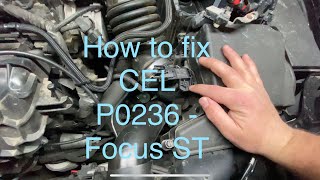
✅ What actually fixed it The aftermarket sensor gave the same incorrect readings as the failed original. The problem was only resolved by purchasing and installing a genuine OEM sensor from the Ford dealership. - YouTube channel 'Casual Car Talk' (2013 Ford Focus ST (similar platform, uses multiple MAP sensors)) — Check Engine Light with P0236.
❌ Tried (didn't work) Inspecting wiring and connections., Replacing the intercooler MAP sensor with a Bosch sensor from Autozone.
✅ What actually fixed it The issue was immediately fixed after replacing the faulty sensor with a genuine part from Ford. The video explicitly states the aftermarket sensor did not work.
OEM Part Supersession History
BV61-9F479-AA→BV6Z-9F479-A, CV2Z-9F479-A— Part number consolidation and potential minor revisions.
Heads up: The landscape for these sensors is confusing. CV2Z-9F479-A is typically the intake manifold MAP sensor, while CJ5Z-9F479-A or BV6Z-9F479-A is often the charge pipe TMAP/Boost sensor. Aftermarket versions, even from OEM suppliers like Bosch, are reported to fail. Always confirm the correct Motorcraft part number with a dealer using your VIN for the specific sensor location you are replacing.
Model Year Variations Within This Range
- 2015-2016 (and likely earlier): TSB 16-0161, which addresses the VREF splice S129, specifically applies to vehicles built on or before September 30, 2015, suggesting a potential production change to the wiring harness after this date.
- 2013 vs 2014: TSB 13-7-5 (for the related Escape 1.6L) notes that the signal return splice S123 has a different number of circuits in 2013 models versus 2014 models, highlighting that wiring configurations can differ even within the generation.
Diagnostic Flowchart
Other Known Issues on This Vehicle
Issues unrelated to this code that are worth knowing about as an owner of this generation:
- Cooling System Weakness / Overheating 🔴 High — Common, especially on 2014-2015 models and in warmer climates or under track use. The stock radiator is considered undersized. Leaks from the reservoir or overflow hose are also frequent. (Ref: A recall was issued for some early models related to cooling, but many owners opt for an aftermarket radiator for a permanent solution.)
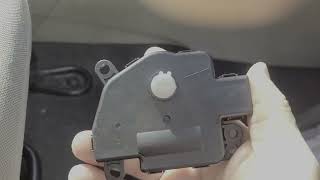
- Clicking Blend Door Actuators 🟡 Low — Very common across all model years. A repetitive clicking sound is heard from the dash upon startup or when changing HVAC settings. There are three separate actuators, with varying difficulty to replace.
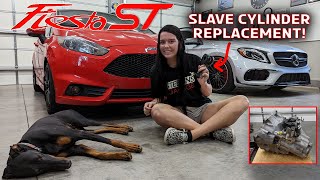
- Clutch Slave Cylinder Failure 🟠 Medium — A notable number of owners report failure, causing the clutch pedal to stick to the floor. Since the slave cylinder is internal to the transmission bellhousing, replacement is labor-intensive and often done along with a full clutch job.
Used vs. New Parts: Buying Guide for This Vehicle
When a used part is the smart pick: A used part is almost never a smart choice for this repair. The only exception might be a complete engine wiring harness, but only if the known faulty splices (S129, S178, S123) are proactively located and professionally re-soldered before installation.
Donor-vehicle mileage cap: roughly under 30000 miles for the part to have meaningful remaining life.
What to inspect on the donor part:
- For a wiring harness, inspect for any signs of prior repair, abrasion, or heat damage.
- Ensure all connectors are intact with no broken locking tabs or corrosion.
OEM-only on this vehicle (don't cheap out):
- Manifold Absolute Pressure (MAP) Sensor
- Turbocharger Boost Pressure (TCBP/TMAP) Sensor
Aftermarket brands forum-validated for this vehicle:
- None. Multiple owner and technician reports confirm that even reputable aftermarket brands often fail to resolve this specific code. Only genuine Motorcraft parts sourced from a Ford dealer are consistently successful.
Brands owners have reported issues with on this vehicle:
- All aftermarket brands, including store brands (e.g., from Autozone) and even some OEM-supplier brands not in a Motorcraft box.
Real Owner Stories
Aggregated from forums and TSBs cited above. Mileages and costs reflect what owners reported in those sources.
Ford Fiesta ST 1.6L EcoBoost
Symptoms: The owner replaced both MAP sensors multiple times, but the P0236 code and misfires persisted.
What fixed it: The context suggests these cases often point back to the underlying wiring harness splice problems (S129 or S178) rather than the sensors themselves.
Source hint: fiestastforum.com thread titled 'P0236 misfires'
Ford Fiesta ST 1.6L EcoBoost
Symptoms: Experienced P0236 and P2227 codes after water damage to the TMAP sensor and pigtail.
What fixed it: Repairing the vulnerable TMAP sensor and pigtail connector.
Source hint: fiestastforum.com thread titled 'P0236 & P2227 Code Trouble'
Ford Fiesta ST 1.6L EcoBoost
Symptoms: Having a hard time diagnosing P0236; discovered the complexity of the circuit involving shared VREF and Signal Return splices while tracing the harness.
What fixed it: Tracing the wiring harness to identify shared VREF and Signal Return splice failures.
Source hint: fiestastforum.com thread titled 'P0236 having a hard time. Please help'
Related OBD-II Codes
Frequently Asked Questions
Does TSB 16-0161 apply to my Ford Fiesta ST even though it mentions the Ford Escape?
I've replaced my MAP sensor twice and the P0236 code keeps coming back. What is the likely issue?
Which specific sensors should I check on my Fiesta 1.6L EcoBoost for a P0236 code?
Can I use an aftermarket sensor to fix the P0236 code on my Fiesta ST?
Where is the problematic S129 wiring splice located on the Fiesta?
What should the voltage be for the reference signal at the MAP sensor?
Helpful Videos
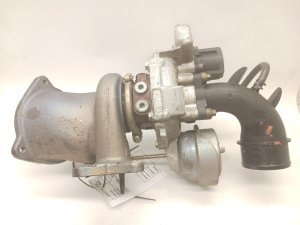
Used OEM Parts in Stock


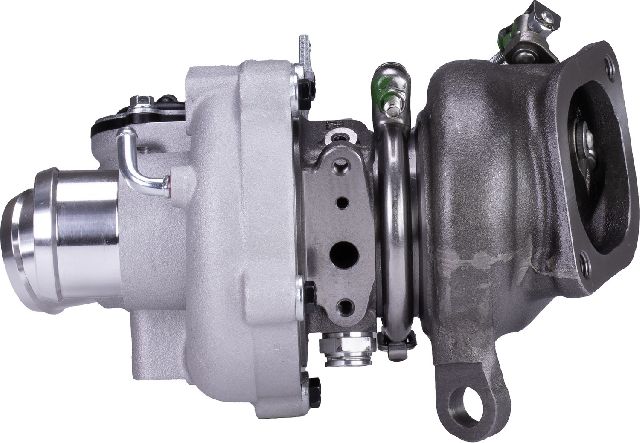
New Aftermarket Parts Available



The information in this article is provided for general reference and educational purposes only. Vehicle specifications, procedures, and part compatibility can vary by production date, trim level, and region. Always consult your vehicle's factory service manual and verify part numbers before purchasing or performing repairs. Safety-critical components such as airbags, seat belts, and braking systems should be installed by a qualified professional.
- Ford Fiesta:
- 🎬 Helpful Videos
- 🛍️ Shop This Part
- What's Unique About the 2013-2019 Ford Fiesta
- Symptoms You May Notice
- Most Likely Causes
- Rare But Worth Checking
- Diagnosis Steps
- Parts You'll Likely Need
- Related Codes That Often Appear With This One
- Technical Service Bulletins (TSBs) & Recalls
- Platform-Specific Known Issues
- Mechanic-Grade Diagnostic Values
- Scan Tool Commands That Help
- Wiring & Ground Locations
- Real Owner Repair Stories
- OEM Part Supersession History
- Model Year Variations Within This Range
- Diagnostic Flowchart
- Other Known Issues on This Vehicle
- Used vs. New Parts: Buying Guide for This Vehicle
- Real Owner Stories
- Ford Fiesta ST 1.6L EcoBoost
- Ford Fiesta ST 1.6L EcoBoost
- Ford Fiesta ST 1.6L EcoBoost
- Related OBD-II Codes
- Frequently Asked Questions
- 🎟️ Get 5% Off