

P0236 on 2011-2014 Ford F-150 3.5L EcoBoost: Boost Sensor Causes and Fixes
On a 2011-2014 F-150 EcoBoost, P0236 is almost always a faulty Turbocharger Boost Pressure (TCBP) sensor on the charge pipe or its wiring connector. The sensor gets contaminated by oil from the PCV system. Expect to pay $30-$120 for a new sensor (Motorcraft BU5Z-9F479-A) and check for cracked wiring per TSB 13-6-12 before replacing. The connector pigtail is Motorcraft WPT-1055.
- P0236 on this truck points to the boost sensor on the charge pipe, NOT the one on the intake manifold.
- The most likely fix is replacing the Turbocharger Boost Pressure (TCBP) sensor (part BU5Z-9F479-A).
- Before replacing the sensor, always inspect the wiring and connector for cracks, as this is a common failure point covered by a TSB.
- A scan tool that can read live data is essential for diagnosis, allowing you to compare the TCBP, MAP, and BARO sensor readings with the key on and engine off.
- Ignoring this code can lead to poor performance, bad fuel economy, and potential for more serious engine damage due to uncontrolled boost levels.
What's Unique About the 2011-2014 Ford F-150

The 3.5L EcoBoost engine uses multiple pressure sensors to manage its twin-turbo system. Code P0236 specifically points to a problem with the Turbocharger Boost Pressure (TCBP) sensor, also known as the Throttle Intake Pressure (TIP) sensor, which is located on the charge air pipe just before the throttle body. This is often confused with the MAP sensor located on the intake manifold itself. This TCBP sensor is highly prone to contamination from oil and fuel vapors from the PCV system, which degrades its performance over time and is a very common failure point on this engine. The intercooler on early EcoBoost models is also known to accumulate condensation, which can be ingested by the engine and contribute to sensor contamination.
Symptoms You May Notice
- Check Engine Light or Malfunction Indicator Lamp (MIL) illuminated
- Wrench light appearing on the instrument panel, sometimes intermittently
- Noticeable loss of engine power and acceleration (limp mode)
- No boost from the turbochargers
- Rough or unstable idle
- Sluggish acceleration, especially above 2,000 RPM
- Replacing the MAP sensor on the intake manifold instead of the TCBP sensor on the charge pipe. The P0236 code specifically relates to the TCBP sensor ('A' circuit) on this engine.
Most Likely Causes

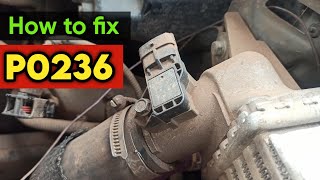
- Faulty Turbocharger Boost Pressure (TCBP) Sensor 🔴 High Probability The sensor is located on the charge pipe where it is exposed to oil and fuel vapor from the PCV system. This contamination coats the sensor element, causing it to respond slowly or send inaccurate readings. This is the most common failure point for P0236 on this platform. 🎬 Watch: Understanding the P0236 code and how to diagnose it
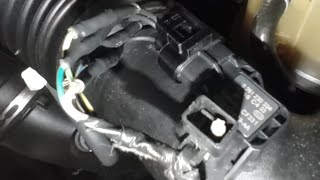
How to confirm: With a scan tool, compare the TCBP (may be listed as TIP_PRS_BOOST), MAP, and BARO pressure readings with the Key On, Engine Off. All three should be nearly identical (within 0.5 PSI of each other at the same altitude). If the TCBP reading is the outlier, the sensor is bad. The sensor is located on the driver's side of the charge pipe leading to the throttle body.
Typical fix: Replace the TCBP sensor. It is held in by one T-20 Torx bolt. Carefully clean the port before installing the new sensor.
Est. part cost: $70-$120 for OEM (Motorcraft), $30-$70 for aftermarket (Bosch, NTK, SMP) - Damaged Wiring or Connector at TCBP Sensor 🟡 Medium Probability The wiring insulation near the sensor connector can become brittle and crack from engine heat cycles and vibration. Ford issued TSB 13-6-12 for this exact issue on the 2013 F-150, indicating it's a known weak point that also affects other model years. Manufacturer TSB #16-0161 notes that P0236 can be caused by a wiring concern in the reference voltage circuit (VREF) splice, leading to rough running, lack of power, or hesitation.
How to confirm: Visually inspect the three wires going into the TCBP sensor connector for any signs of cracking, brittleness, exposed copper, or corrosion on the connector pins. Gently wiggle the harness while monitoring live sensor data on a scan tool to see if the reading fluctuates wildly.
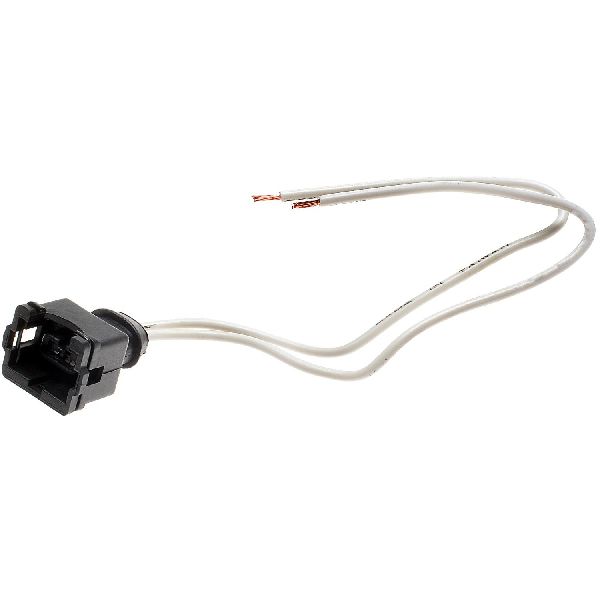
Typical fix: If the wiring is damaged, replace the connector with a new pigtail (Motorcraft WPT-1055). This involves cutting the old connector off, splicing the new one in using butt connectors and heat shrink tubing for a weather-proof seal, and wrapping the repair in electrical tape.
Est. part cost: $25-$40 - Boost Leak in the Intake System ⚪ Low Probability The stock intercooler uses plastic end tanks which can crack. Charge pipe clamps can loosen over time, or the rubber/silicone couplers can split, letting pressurized air escape. This causes a mismatch between expected and actual boost levels that can sometimes trigger a P0236 performance code.
How to confirm: Perform a visual inspection of all intake piping between the turbos, intercooler, and throttle body. Check for cracks, loose connections, or signs of oily residue which can indicate a leak. A smoke test is the most effective way to find hidden leaks.
Typical fix: Tighten loose clamps or replace the cracked intercooler or damaged hose section.
Est. part cost: $50-$400 depending on the leaking component
Rare But Worth Checking
- Faulty Powertrain Control Module (PCM): This is extremely rare. The PCM should only be considered after all other possibilities, including sensors, wiring, and boost leaks, have been definitively ruled out with 100% certainty.
Diagnosis Steps

- Connect a scan tool and verify that P0236 is the active code. Note any other codes present, such as P0238, P0299, or P0106.
- With the Key On and Engine Off (KOEO), view the live data for the Barometric Pressure (BARO), Manifold Absolute Pressure (MAP), and Turbocharger Boost Pressure (TCBP/TIP_PRS_BOOST) sensors.
- Compare the readings. At sea level, they should all read approximately 14.7 PSI (or 29.9 inHg) and be within 0.5 PSI of each other. If the TCBP reading is significantly different, the sensor is the primary suspect.
- If the sensor readings are plausible, start the engine and monitor the TCBP reading as you build boost (lightly revving in park or a cautious test drive). It should rise smoothly with RPM and load. If it's erratic, slow to respond, or doesn't change, the sensor is suspect.
- Thoroughly inspect the wiring and electrical connector at the TCBP sensor, located on the charge pipe near the throttle body. Look for cracked insulation, corrosion, or loose pins. Refer to TSB 13-6-12 for specific guidance on this known issue. Wiggle the harness while monitoring the sensor data to see if it causes a change.
- If the sensor and wiring appear good, inspect the entire charge air system for leaks. Check all pipes, hoses, and the intercooler (especially the plastic end tanks) for cracks, loose clamps, or signs of oil mist. A smoke test is the most reliable method to find leaks.
- If no leaks are found and the wiring is intact, the most likely culprit is the TCBP sensor itself. It may be internally contaminated or failing intermittently.
Parts You'll Likely Need
- Turbocharger Boost Pressure (TCBP) Sensor
(OEM #BU5Z-9F479-A)— This is the most frequent cause of P0236 on the 3.5L EcoBoost due to its susceptibility to contamination and electronic failure. The original part number may have been AA5Z-9F479-A, which has been superseded.
Trusted brands: Motorcraft, Bosch (often the OEM supplier, PN: 0261230244), NTK, Standard Motor Products (SMP)
OEM price range: $70-$120
Aftermarket price range: $30-$70 - TCBP Sensor Connector Pigtail
(OEM #WPT-1055)— The wiring at the sensor is a known weak point that cracks from heat exposure, as documented in Ford TSB 13-6-12. This part is needed to repair the damaged connector.
Trusted brands: Motorcraft, Dorman
OEM price range: $25-$40
Aftermarket price range: $15-$30
Related Codes That Often Appear With This One
- P0238 — This code for 'Turbocharger Boost Sensor A Circuit High' can appear if the wiring issue involves a short to power or the sensor fails in a high-voltage state. TSB 13-6-12 also lists this code. NHTSA ODI #11620504 describes a vehicle experiencing P0236, P0238, and P007D simultaneously, indicating a "charged air sensor A fault."
- P0299 — This code for 'Turbocharger Underboost' can be triggered if the root cause of P0236 is a significant boost leak, as the PCM is not seeing the boost levels it commands.
- P0106 — This is another sensor performance code ('Manifold Absolute Pressure/Barometric Pressure Sensor Range/Performance'). It can appear alongside P0236 because the PCM compares the readings from both the MAP and TCBP sensors to check for plausibility. NHTSA ODI #10787972 notes that codes P0106 and P0236 may cause hesitation, loss of idle RPM, and difficulty starting.
- P06A7 — An owner reported in NHTSA ODI #11181564 that P0236 appeared alongside P06A7 and P0106 as "permanent codes" that were difficult to resolve.
Technical Service Bulletins (TSBs) & Recalls
- TSB 13-6-12: Addresses P0236, P0238, P025E, and/or P007D on the 2013 F-150 3.5L (built on or before 2/15/2013) caused by damaged wiring insulation at the Turbocharger Boost Sensor connector, advising inspection and replacement with a pigtail (WPT-1055) if cracks are found.
- TSB 16-0161: Notes that vehicles may exhibit lack of power, surge, buck/jerk, or loss of RPM with DTC P0236 stored, often caused by a wiring concern in the reference voltage circuit (VREF) splice.
Platform-Specific Known Issues
- The 3.5L EcoBoost is known for PCV-related oil vapor contaminating the intake and charge air sensors, leading to premature failure of the TCBP sensor.
- Wiring insulation for the TCBP sensor harness is prone to cracking due to engine bay heat, causing shorts or open circuits that trigger P0236, as documented in TSB 13-6-12.
- Early (2011-2012) models were particularly prone to intercooler condensation buildup, which could cause a stumble or misfire and potentially contribute to sensor contamination. Some owners drill a small 'weep hole' in the intercooler to allow moisture to drain.
Mechanic-Grade Diagnostic Values
- TCBP Sensor Signal Wire Voltage — expected: Approximately 1.5V - 2.5V at Key On, Engine Off (KOEO) at sea level. Voltage should rise with boost.. Failure: Voltage that is stuck, does not change with boost, or is outside the expected 0.5V to 4.5V operational range.
- TCBP Sensor 5V Reference Wire Voltage — expected: 5.0 Volts (± 0.5V) with key on.. Failure: Voltage below 4.5V or above 5.5V indicates a problem with the PCM or a short in the VREF circuit.
- TCBP Sensor Ground Wire Resistance — expected: Less than 0.1 Ohms to chassis ground.. Failure: High resistance indicates a poor ground connection, which can cause erratic sensor readings.
Scan Tool Commands That Help
- Ford IDS / FORScan: Live Data Monitoring (PIDs: TIP_PRS_BOOST, MAP, BARO) — This is the primary diagnostic step. Use during Key On, Engine Off to check for correlation between the three pressure sensors. A discrepancy points directly to the faulty sensor.
- Ford IDS / FORScan: Clear Continuous DTCs — After replacing a component, this function should be used to clear the fault code from the PCM's memory. A test drive is then required to confirm the fix and allow readiness monitors to run.
Wiring & Ground Locations

- C1588 — The electrical connector for the TCBP sensor itself, located on the charge air pipe just before the throttle body.. This is the connector where wiring insulation is known to crack, as per TSB 13-6-12. It is the primary point of inspection for wiring damage.
- G104 — Rear of LH (driver's side) fender apron in the engine bay.. This is a major engine bay ground point. While not directly for the sensor (which is grounded through the PCM), a poor G104 connection can cause various electrical issues and noise that could potentially affect PCM operation and sensor readings.
- G100 — Located on the left-hand side of the radiator support.. This is another critical engine compartment ground. On some Ford trucks, this ground is used by the fuel pump and sender, demonstrating its importance for core systems. A fault here can cause widespread, difficult-to-diagnose electrical problems.
Real Owner Repair Stories
- f150forum.com user 'Barry_Vee' (2011 F-150 3.5L EcoBoost) — Wrench light on startup, which would disappear on restart. Scanner showed P0236, but the dealer initially found no stored code ('soft code').
❌ Tried (didn't work) Initial dealer visit found no stored code, so no repair was made.
✅ What actually fixed it 4,000 miles after the initial intermittent issue, the problem became permanent. The dealer replaced both the turbo boost sensor and the wiring harness pigtail, which solved the problem long-term (truck reported running well up to 121k miles). - f150forum.com user 'Kenferg1' (2011 F-150 3.5L EcoBoost) — Wrench light at startup, P0236 code, noisy blow-off valves, noisy turbo spool on startup, and a drop in fuel economy.
❌ Tried (didn't work) A dealer was unable to locate/repair the problem when it was a 'soft code' at 57k miles.
✅ What actually fixed it At 60,037 miles, the boost sensor and wire harness plug were replaced. This fixed the code and returned the engine sound and fuel economy to normal. - NHTSA ODI #11667579 — An owner reported that the P0236 error message would not go away even after turning off the car, requiring a dealership appointment for a permanent repair.
OEM Part Supersession History
AA5Z-9F479-A→BU5Z-9F479-A, CM5226— Part revision and improvement by the manufacturer.
Heads up: The new part numbers are direct replacements and are fully compatible with the 2011-2014 model years.
Model Year Variations Within This Range
- 2011-2013 vs 2014: The 2014 models received some minor mechanical and electronic updates. Forum discussions mention a different lower coilover mount and a quieter windshield. More significantly, 2014 models use the MyFordTouch infotainment system, indicating different electronic modules, though the core engine management for the TCBP sensor remained the same. Some users believe later model years had EcoBoost issues 'largely resolved'.
Diagnostic Flowchart
Other Known Issues on This Vehicle
Issues unrelated to this code that are worth knowing about as an owner of this generation:
- Timing Chain Stretch and Cam Phaser Rattle 🔴 High — Very common, especially on higher mileage (60k+ miles) engines. Presents as a loud rattle or grinding noise for 2-5 seconds on a cold start. (Ref: Multiple TSBs exist, including 14-0194, 15-0131, and 18-2305, which superseded previous versions and call for replacing the primary timing chain and all four VCT phasers.)
- Intercooler Condensation Buildup ('Eco-stumble') 🟠 Medium — Most prevalent on 2011-2012 models, especially in humid climates. Causes a stumble, shudder, or misfire during hard acceleration after a long highway cruise. (Ref: TSB 13-8-1 was issued to address this by installing a new air deflector and reprogramming the PCM. Many owners perform a 'weep hole' modification as a more permanent fix.)
- Carbon Buildup on Intake Valves 🟠 Medium — Inherent to all direct-injection engines. Becomes noticeable after 70,000-100,000 miles, causing rough idle, loss of power, and reduced fuel economy.
- Cracked Spark Plug Porcelain 🟡 Low — Can occur during spark plug changes if not done carefully. The recommended change interval is shorter than on naturally aspirated engines. Using non-OEM plugs can exacerbate the issue.
- Leaking Turbo Coolant or Oil Lines 🟠 Medium — The fittings and lines for coolant and oil that feed the turbochargers can develop leaks over time due to heat and vibration, leading to fluid loss and potential turbo damage if ignored.
Used vs. New Parts: Buying Guide for This Vehicle
When a used part is the smart pick: For this specific P0236 repair, using used parts is generally not recommended. The only potential exception is if a large, expensive component like the intercooler or a section of charge piping is physically cracked and a used OEM replacement can be sourced from a low-mileage, non-wrecked donor vehicle.
Donor-vehicle mileage cap: roughly under 50000 miles for the part to have meaningful remaining life.
What to inspect on the donor part:
- For charge pipes/intercooler: Check for any hairline cracks, especially around welds and plastic end tanks.
- Ensure all mounting tabs are intact.
- Look for signs of heavy oil residue inside, which could indicate excessive blow-by in the donor vehicle.
OEM-only on this vehicle (don't cheap out):
- Turbocharger Boost Pressure (TCBP) Sensor: Aftermarket sensors are notoriously unreliable and can fail quickly or provide inaccurate readings, leading to a repeat of the P0236 code. It is strongly recommended to use an OEM Motorcraft or a direct OEM supplier like Bosch.
Aftermarket brands forum-validated for this vehicle:
- Bosch (often the OEM supplier for the sensor)
- NTK (for sensors)
- Standard Motor Products (SMP) (a generally reputable aftermarket supplier)
Brands owners have reported issues with on this vehicle:
- No-name, ultra-low-cost brands from online marketplaces (e.g., Amazon, eBay). These often use lower quality components and lack the calibration and durability of OEM or premium aftermarket parts.
Real Owner Stories
Aggregated from forums and TSBs cited above. Mileages and costs reflect what owners reported in those sources.
2013 Ford F-150 3.5L EcoBoost
Symptoms: Wrench light appearing on the instrument panel, noticeable loss of engine power and acceleration (limp mode), and no boost from the turbochargers.
What fixed it: Inspected the TCBP sensor connector and found cracked wiring insulation as described in TSB 13-6-12; replaced the connector with a new pigtail (Motorcraft WPT-1055).
Source hint: TSB 13-6-12 and f150forum.com thread 'What is a Code P0236 (Ecoboost)?'
2011 Ford F-150 3.5L EcoBoost — ~65000 miles
Symptoms: Engine stumble and shudder during hard acceleration, especially in humid conditions; eventually triggered a P0236 performance code.
What fixed it: Drilled a 1/16" weep hole in the driver's side end tank of the intercooler to drain accumulated condensation and oil.
Source hint: f150forum.com thread 'ecoboost weep hole' and vehicle_specific_issues
2014 Ford F-150 3.5L EcoBoost
Symptoms: Check Engine Light illuminated with code P0236; sluggish acceleration and rough idle.
What fixed it: Replaced the Turbocharger Boost Pressure (TCBP) sensor located on the charge pipe after finding it coated in oil vapor from the PCV system.
Source hint: f150forum.com thread 'What is a Code P0236 (Ecoboost)?'
Related OBD-II Codes
Frequently Asked Questions
Does TSB 13-6-12 apply to my 2013 F-150 with the P0236 code?
Where is the TCBP sensor located on my 3.5L EcoBoost engine?
Why does my F-150 show a wrench light and lose power above 2,000 RPM?
How can I tell if my boost sensor is actually bad before buying a new one?
What is the 'weep hole' I see mentioned in F-150 forums regarding boost issues?
What part number do I need if my boost sensor connector wiring is cracked?
Helpful Videos
Used OEM Parts in Stock



New Aftermarket Parts Available


The information in this article is provided for general reference and educational purposes only. Vehicle specifications, procedures, and part compatibility can vary by production date, trim level, and region. Always consult your vehicle's factory service manual and verify part numbers before purchasing or performing repairs. Safety-critical components such as airbags, seat belts, and braking systems should be installed by a qualified professional.
- Ford F-150:
- 🎬 Helpful Videos
- 🛍️ Shop This Part
- What's Unique About the 2011-2014 Ford F-150
- Symptoms You May Notice
- Most Likely Causes
- Rare But Worth Checking
- Diagnosis Steps
- Parts You'll Likely Need
- Related Codes That Often Appear With This One
- Technical Service Bulletins (TSBs) & Recalls
- Platform-Specific Known Issues
- Mechanic-Grade Diagnostic Values
- Scan Tool Commands That Help
- Wiring & Ground Locations
- Real Owner Repair Stories
- OEM Part Supersession History
- Model Year Variations Within This Range
- Diagnostic Flowchart
- Other Known Issues on This Vehicle
- Used vs. New Parts: Buying Guide for This Vehicle
- Real Owner Stories
- 2013 Ford F-150 3.5L EcoBoost
- 2011 Ford F-150 3.5L EcoBoost — ~65000 miles
- 2014 Ford F-150 3.5L EcoBoost
- Related OBD-II Codes
- Frequently Asked Questions
- 🎟️ Get 5% Off