

P0234 on 2014-2019 Ford Fiesta ST: Turbo Overboost Causes and Fixes
On a 2014-2019 Fiesta ST, code P0234 is almost always caused by a faulty turbocharger wastegate regulating solenoid. This is a well-documented issue covered by Ford TSB 15-0162. Replacing the solenoid (OEM Part #CJ5Z-9K378-B) is a common, low-cost DIY fix, with the part costing around $40-$90.
- For a 2014-2019 Fiesta ST, P0234 is most likely a bad turbo wastegate regulating solenoid (Part No. CJ5Z-9K378-B).
- Consult Ford TSB 15-0162, which provides a direct diagnostic path for this exact problem.
- Do not immediately assume the expensive turbocharger has failed; the solenoid is a much more common and cheaper fix.
- Driving with an active P0234 code is risky and can lead to serious engine damage; avoid heavy acceleration until the issue is resolved.
What's Unique About the 2014-2019 Ford Fiesta ST
The 1.6L EcoBoost engine in the Fiesta ST is well-known for this specific issue. Unlike many other vehicles where P0234 could have numerous ambiguous causes, on the Fiesta ST the problem is very frequently a failed wastegate regulating valve solenoid. Ford acknowledged this pattern by issuing Technical Service Bulletin (TSB) 15-0162, which directly points to this solenoid as the primary culprit for P0234 on 2014-2016 models, making diagnosis much more straightforward. This issue is also common on platform-mates like the Ford Escape and Fusion with the same 1.6L engine.
Symptoms You May Notice
- Check Engine Light is on
- Significant loss of engine power as the vehicle enters 'limp mode'
- Sudden boost spikes followed by power loss during acceleration; some owners describe it as feeling like the turbo is completely gone after the code triggers.
- Unusual sounds from the engine or turbocharger, such as hissing or a fluttering noise as the system struggles to control boost.
- Erratic acceleration or spurts of power.
- Replacing the entire turbocharger before testing the inexpensive wastegate control solenoid and vacuum lines. The TSB for this engine specifically identifies the solenoid as the primary fix.
- Replacing the wrong solenoid. Ensure you are replacing the wastegate regulating solenoid (boost control solenoid), not another nearby valve.
Most Likely Causes
- Faulty Turbocharger Wastegate Regulating Valve Solenoid 🔴 High Probability This is a widely documented failure point on the 1.6L EcoBoost engine, as identified in Ford TSB 15-0162. The solenoid, often made by Pierburg, can fail electrically or mechanically, preventing it from correctly bleeding off vacuum to control the wastegate. It is the same part that fails on the Ford Escape and Fusion with the same engine.
How to confirm: Check for related codes like P0245 or P0246. If none, this part is the most likely cause and is often replaced first. A DIY-friendly video for a Ford Escape with the same 1.6L engine shows the replacement process, which is very similar for the Fiesta ST. The solenoid is located near the turbo, accessible from the passenger side wheel well.
Typical fix: Replace the wastegate regulating valve solenoid. The updated OEM part number is CJ5Z-9K378-B, which supersedes the older CJ5Z-9K378-A.
Est. part cost: $40-$90 - Sticking or Seized Wastegate Actuator Arm 🟡 Medium Probability The wastegate arm on the turbocharger is exposed to extreme heat and can seize due to corrosion or carbon buildup, preventing it from opening to release excess boost.
How to confirm: With the engine off and cool, manually try to move the actuator arm. It should move smoothly. A hand vacuum pump can also be used to test its range of motion and confirm it holds vacuum. If the arm is stuck, it will not move when vacuum is applied.
Typical fix: Attempt to free the stuck arm with penetrating oil and gentle manipulation. If it cannot be freed or is damaged, the entire turbocharger assembly may need to be replaced as the actuator is often integrated.
Est. part cost: $0 if freed, $800-$1500 for a new turbocharger - Leaking, Clogged, or Disconnected Vacuum Hoses ⚪ Low Probability The rubber vacuum lines connected to the wastegate solenoid can become brittle and crack over time due to engine heat, causing vacuum leaks that prevent proper wastegate control.
How to confirm: Visually inspect all small vacuum lines running to and from the wastegate solenoid and the wastegate actuator for cracks, brittleness, or loose connections. TSB 15-0162 specifically calls for this inspection before replacing the solenoid.
Typical fix: Replace the damaged vacuum line section. Some owners on forums recommend replacing clamps that have come loose.
Est. part cost: $5-$25
Rare But Worth Checking
- Faulty Turbocharger Boost Pressure (TCBP) Sensor: This sensor (also related to the MAP sensor) reports boost levels to the PCM. If it sends inaccurate, low readings, the PCM may command more boost than necessary, causing an overboost condition. This is less common than the solenoid failure.
- Failing Turbocharger: While less common than control system issues, internal mechanical failure of the turbocharger itself can cause boost control problems. This is usually accompanied by other symptoms like whining noises or smoke from the exhaust.
Diagnosis Steps
- Scan for any other DTCs. Codes like P0245 or P0246 immediately point to the wastegate solenoid.
- Per Ford TSB 15-0162, the primary suspect is the turbocharger wastegate regulating valve solenoid. Given its high failure rate and low cost, many owners and shops replace this part first.
- Visually inspect all vacuum lines connected to the solenoid and wastegate actuator for any cracks, disconnections, or blockages.
- With the engine cool, check that the wastegate actuator arm on the turbocharger can move freely without binding. Use a hand vacuum pump to verify its movement.
- If the solenoid has been replaced and lines are good, use a scan tool to monitor the Turbocharger Boost Pressure (MAP) sensor for correct readings while driving.
- If all control components test good, the issue may be a mechanical fault within the turbocharger itself.
Parts You'll Likely Need
- Turbocharger Wastegate Regulating Valve Solenoid
(OEM #CJ5Z-9K378-B)— This is the most common failure point for P0234 on the 1.6L EcoBoost, as documented by Ford in TSB 15-0162. The part number CJ5Z-9K378-B supersedes the original part CJ5Z-9K378-A.
Trusted brands: Motorcraft, Pierburg, Dorman
OEM price range: $60-$90
Aftermarket price range: $40-$70 - Turbocharger Assembly
(OEM #CJ5Z-6K682-D)— Needed if the wastegate actuator arm is seized and cannot be freed, or if there is an internal mechanical failure of the turbo. Verify part number with VIN before ordering.
Trusted brands: Motorcraft, Garrett
OEM price range: $1000-$1500
Aftermarket price range: $600-$900
Related Codes That Often Appear With This One
- P0299 — An underboost code can appear with P0234 if the wastegate control system is failing erratically, sometimes sticking closed (overboost) and sometimes sticking open (underboost). Both codes are mentioned in TSB 15-0162.
- P0245 — This code for 'Turbocharger Wastegate Solenoid 'A' Low' points to an electrical fault in the same solenoid that causes P0234. Its presence strongly confirms the solenoid is the problem and is also cited in TSB 15-0162.
- P0246 — This code for 'Turbocharger Wastegate Solenoid 'A' High' also indicates an electrical fault in the control solenoid, making it the prime suspect. It is also mentioned in TSB 15-0162.
Technical Service Bulletins (TSBs) & Recalls
- TSB 15-0162: Addresses lack of power with DTCs P0234, P0245, P0246, and/or P0299 on 2014-2016 Fiesta ST, 2013-2016 Escape, and 2013-2014 Fusion models with the 1.6L GTDI engine. It recommends inspecting vacuum lines and then replacing the turbocharger wastegate regulating valve solenoid.
Platform-Specific Known Issues
- Ford Technical Service Bulletin TSB 15-0162 was issued for 2014-2016 Fiesta ST models for code P0234 (and others), identifying a faulty wastegate regulating solenoid as the primary cause.
Mechanic-Grade Diagnostic Values
- Wastegate Solenoid Internal Resistance — expected: 10-30 Ohms (general specification). Failure: A reading near 0 Ohms (short circuit) or infinite resistance (open circuit) indicates a failed solenoid.
- Wastegate Solenoid Connector Power Pin Voltage (Key On, Engine Off) — expected: ~12V (Battery Voltage). Failure: A reading below 11V suggests a problem in the power supply circuit, such as a blown fuse or wiring issue.
- MAP Sensor Voltage at Rest (Key On, Engine Off) — expected: Approximately 0.5V. Failure: Values significantly outside the 0.4-2.0V range can indicate a faulty sensor or wiring.
Scan Tool Commands That Help
- FORScan / Professional Scan Tool: Wastegate Solenoid Actuator Test / Bidirectional Control — Use this to command the solenoid to activate while listening for an audible click or observing movement. This can quickly confirm if the solenoid is electrically functional and not seized. You can also monitor live data PIDs like 'WGDC Actual' (Wastegate Duty Cycle) and 'WG Canister Pressure' to see if the PCM's commands are having the expected effect on the system.
Wiring & Ground Locations
- Wastegate Solenoid Connector — On the wastegate regulating solenoid itself, which is located on the front passenger side of the engine, accessible from the wheel well.. This 2-pin connector provides power and control to the solenoid. A loose connection, corrosion, or damaged wiring here will prevent the solenoid from functioning, leading to boost control issues. The pigtail connector part number is WPT-1275.
- Fuse F11 (Fusion) — In the under-hood fuse box (location may vary slightly for Fiesta ST, check owner's manual).. On the related Ford Fusion platform, a 15A fuse (feeding fuses 11 and 12) provides power to the wastegate solenoid circuit. A blown fuse will cause the solenoid to fail and can trigger P0234. This is a rare but important electrical check before replacing parts.
Real Owner Repair Stories
- Reddit user on r/fordfusion (2015 Ford Fusion 1.5L EcoBoost) — P0234 code present, OBD2 reader suggested replacing wastegate solenoid.
❌ Tried (didn't work) Initial diagnosis pointed to replacing the solenoid.
✅ What actually fixed it The problem was a blown 15A double fuse that powered the wastegate solenoid circuit (fuse 11 in this case). Flipping the fuse around made the P0234 code disappear and a new code appear, confirming the fuse was the issue.
When the Usual Fixes Don't Work
- While the wastegate solenoid is the most frequent cause, some owners have found the issue to be electrical. One owner of a related 1.5L EcoBoost fixed the code by replacing a blown 15A fuse that powered the solenoid circuit, after initially suspecting the solenoid itself. This highlights the importance of checking fuses and verifying 12V power at the solenoid connector before replacing the part.
OEM Part Supersession History
CJ5Z-9K378-A→CJ5Z-9K378-B— Updated design to improve reliability and prevent premature failure.
Diagnostic Flowchart
Other Known Issues on This Vehicle
Issues unrelated to this code that are worth knowing about as an owner of this generation:
- Blend Door Actuator Failure 🟡 Low — Extremely common across all model years. Often fails multiple times. Characterized by a loud clicking/popping sound from the dash on startup.
- Cooling System Vulnerabilities (Cracked Cylinder Head Risk) 🔴 High — Affects 2014-2015 models with the 1.6L GTDI engine. A coolant leak can lead to overheating, a cracked cylinder head, and risk of fire. (Ref: Ford Safety Recall 17S09)
- Overheating from Failed Nylon Coolant Pipes 🟠 Medium — Primarily affected earlier models. The original nylon coolant pipes were prone to failure at high temperatures, leading to overheating. Many were addressed by a recall. (Ref: Recall issued)
- Shuddering/Grinding from Driveshaft or Spark Plugs 🟡 Low — Some owners report shuddering on acceleration, which can be due to a worn driveshaft or simply spark plugs needing replacement.
Used vs. New Parts: Buying Guide for This Vehicle
When a used part is the smart pick: A used OEM turbocharger assembly from a low-mileage, rear-ended donor vehicle can be a cost-effective alternative to a new unit if the wastegate actuator arm is seized on your original turbo. However, for the solenoid itself, buying new is strongly recommended.
Donor-vehicle mileage cap: roughly under 50000 miles for the part to have meaningful remaining life.
What to inspect on the donor part:
- For a turbo assembly, check for minimal shaft play (both in-and-out and side-to-side).
- Ensure the wastegate actuator arm on the donor turbo moves freely without binding.
- Look for a clean, dry turbo with no signs of oil leaks from the seals.
- Verify the donor vehicle's VIN to confirm it wasn't part of a flood or fire sale.
OEM-only on this vehicle (don't cheap out):
- Turbocharger Wastegate Regulating Valve Solenoid
Aftermarket brands forum-validated for this vehicle:
- Pierburg (often the original OEM supplier for the solenoid)
Brands owners have reported issues with on this vehicle:
- Dorman: Multiple owner reports on forums for Ford Escapes with the same 1.6L engine state that Dorman-branded wastegate solenoids (part #667-111) have a high rate of premature failure, sometimes lasting only a few weeks before the P0234 code returns.
Real Owner Stories
Aggregated from forums and TSBs cited above. Mileages and costs reflect what owners reported in those sources.
2016 Fiesta ST 1.6L EcoBoost — 95000 miles
Symptoms: When accelerating, the boost seems to fluctuate - it rapidly builds boost and drops and build and drops. You can feel the power fluctuate when accelerating. You can hear the fluctuation in the exhaust note. Also, intermittent loss of power, no boost, and turbo flutters.
What fixed it: Replacement of the failed boost solenoid.
Source hint: reddit.com/r/FiestaST
2013-2016 Ford Escape 1.6L EcoBoost — ~100000 miles
Symptoms: The owner described getting an overboost code followed by the car entering limp mode.
What fixed it: Replacement of the wastegate regulating valve solenoid (Pierburg part), accessed by removing the passenger wheel and splash guard.
Source hint: youtube.com video titled 'Ford Escape P0234 - Overboost Condition DIY - Fixed!'
Related OBD-II Codes
Frequently Asked Questions
Does TSB 15-0162 apply to my 2014-2016 Fiesta ST?
What is the specific Ford part number for the updated wastegate solenoid?
Where is the wastegate solenoid located on the 1.6L EcoBoost Fiesta ST?
Can a cooling system issue be related to my engine codes on this vehicle?
Is it possible to fix a P0234 without replacing the entire turbocharger?
Are there other Ford vehicles that share this specific P0234 failure mode?
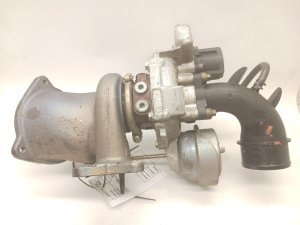
Used OEM Parts in Stock

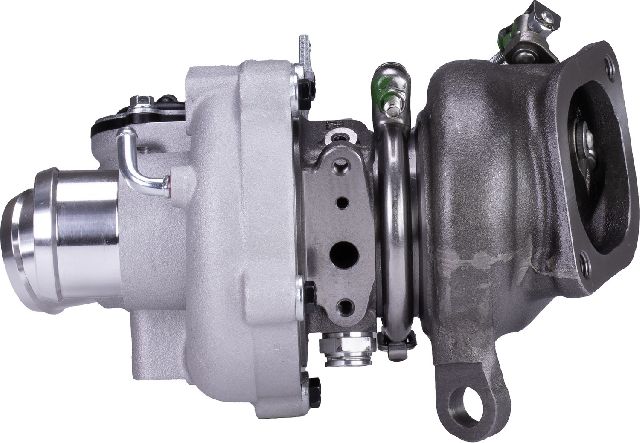
New Aftermarket Parts Available

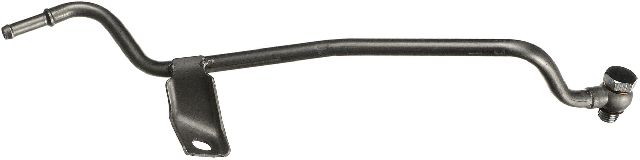
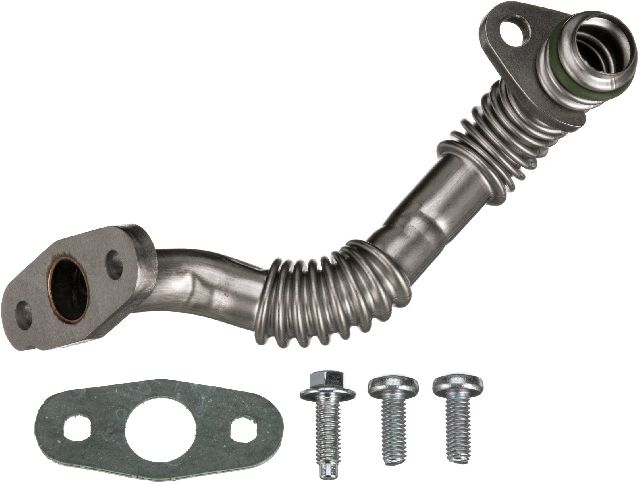

The information in this article is provided for general reference and educational purposes only. Vehicle specifications, procedures, and part compatibility can vary by production date, trim level, and region. Always consult your vehicle's factory service manual and verify part numbers before purchasing or performing repairs. Safety-critical components such as airbags, seat belts, and braking systems should be installed by a qualified professional.
- Ford Fiesta ST:
- 🛍️ Shop This Part
- What's Unique About the 2014-2019 Ford Fiesta ST
- Symptoms You May Notice
- Most Likely Causes
- Rare But Worth Checking
- Diagnosis Steps
- Parts You'll Likely Need
- Related Codes That Often Appear With This One
- Technical Service Bulletins (TSBs) & Recalls
- Platform-Specific Known Issues
- Mechanic-Grade Diagnostic Values
- Scan Tool Commands That Help
- Wiring & Ground Locations
- Real Owner Repair Stories
- When the Usual Fixes Don't Work
- OEM Part Supersession History
- Diagnostic Flowchart
- Other Known Issues on This Vehicle
- Used vs. New Parts: Buying Guide for This Vehicle
- Real Owner Stories
- 2016 Fiesta ST 1.6L EcoBoost — 95000 miles
- 2013-2016 Ford Escape 1.6L EcoBoost — ~100000 miles
- Related OBD-II Codes
- Frequently Asked Questions
- 🎟️ Get 5% Off