

P0223 on 2017-2025 Jeep Compass 2.4L: Causes and Fixes for Throttle Position Sensor Fault
P0223 on a 2017-2025 Jeep Compass almost always means the electronic throttle body has failed. The sensor is built-in and can't be replaced separately. Expect to pay $150-$350 for a new throttle body assembly, with DIY replacement being a common and cost-effective fix. A throttle relearn procedure is mandatory after replacement.
- P0223 on this Jeep Compass almost always points to a faulty electronic throttle body.
- Do not drive the vehicle; it is unsafe due to the risk of stalling and severe power loss.
- The throttle position sensor is integrated into the throttle body; you must replace the entire assembly.
- Before buying a new part, always check the wiring and connector at the throttle body for obvious damage.
- After replacement, a throttle relearn procedure is required, which can often be done without special tools.
What's Unique About the 2017-2025 Jeep Compass
On the 2.4L MultiAir 'Tigershark' engine used in the second-generation Jeep Compass (2017-2025), the dual throttle position sensors are integrated directly into the electronic throttle body assembly and are not available as separate parts. This design means that a failure of either internal sensor requires the replacement of the entire throttle body unit. While wiring issues can occur, a complete throttle body failure is the most common reason for a P0223 code on this specific platform, a fact corroborated by numerous owner experiences and mechanic reports.
Symptoms You May Notice
- Check Engine Light is illuminated
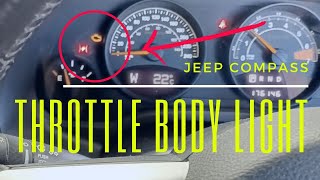
- Flashing red 'lightning bolt' Electronic Throttle Control (ETC) warning light on the dashboard.
- Vehicle enters 'limp mode' with significantly reduced engine power and poor or no acceleration.
- Unresponsive or delayed accelerator pedal.
- Engine may run rough, idle poorly, or stall, sometimes with significant vibration.
- The Electronic Stability Control (ESC) or traction control light may also turn on, as the throttle control system is linked to traction management.
- Audible clicking or gear-slipping sound from the throttle body area upon startup or with the key in the 'ON' position.
- Replacing the accelerator pedal position sensor (APP). This code specifically points to a fault in the sensor circuit at the throttle body ('B' circuit), not the pedal sensor.
- Ignoring a bad battery. The 2.4L MultiAir system is sensitive to voltage. A failing battery can cause a host of seemingly unrelated electronic issues, including throttle body errors. Some owners on forums have reported limp mode issues being resolved by replacing an old battery. 🎬 Watch: 5 ways to reset your Jeep and fix electronic issues.
Most Likely Causes
- Failed Electronic Throttle Body Assembly 🔴 High Probability The internal electronic sensors and plastic gears are a common failure point. Jeep issued a Technical Service Bulletin (TSB 09-003-20 Rev. C) for certain 2020 models, indicating a known issue with a batch of faulty throttle bodies from a supplier that could cause a P2100 code, which is closely related to sensor circuit faults.
How to confirm: After confirming the wiring is intact, use a scan tool to monitor throttle position sensor voltages. If TPS 'B' voltage is stuck high (e.g., >4.5V) regardless of pedal input, the throttle body has failed. A clicking or grinding sound from the throttle body with the key on (engine off) is another strong indicator of internal failure.
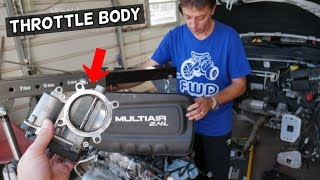
Typical fix: Replace the entire electronic throttle body assembly. 🎬 Watch: Step-by-step guide to removing and replacing the throttle body. After replacement, a throttle relearn procedure is required, which can sometimes be done without a scan tool but often requires a bi-directional scanner for best results.
Est. part cost: $150-$350 - Wiring Harness or Connector Issue 🟡 Medium Probability Vibrations and heat in the engine bay can lead to chafed wires or loose/corroded pins in the connector that attaches to the throttle body. Corrosion at the connector pins can distort voltage signals, causing a high reading.
How to confirm: Visually inspect the wiring harness leading to the throttle body for any signs of damage, chafing, or melting. Unplug the connector and check for corrosion, bent pins, or moisture. Ensure the red locking tab on the connector is secure. Use a multimeter to check for a stable 5V reference and good ground at the connector.
Typical fix: Repair the damaged section of the wiring harness or clean/replace the connector pigtail. Ensure a secure connection upon reassembly.
Est. part cost: $10-$50 - Dirty or Sticking Throttle Body ⚪ Low Probability While less likely to cause a 'circuit high' code than a mechanical performance code, heavy carbon and oil residue from the PCV system can build up, causing the throttle plate to stick. This could potentially cause the sensor to report an out-of-range value if the plate doesn't return to its expected closed position.
How to confirm: Remove the air intake hose from the throttle body and inspect the throttle plate and bore for significant carbon buildup.
Typical fix: Clean the throttle body bore and plate thoroughly with a dedicated throttle body cleaner and a soft cloth or brush. Do not force the plate open manually on an electronic throttle body; have a helper turn the key to 'ON' to actuate it if necessary.
Est. part cost: $5-$15
Rare But Worth Checking
- Faulty Powertrain Control Module (PCM): While rare, a PCM failure can cause this code. Notably, safety recall U87 / NHTSA 18V-524 was issued for some 2018 Compass models with the 2.4L engine due to a faulty voltage regulator chip in the PCM that could cause stalling or a no-start condition. This should be considered only after all other possibilities, especially the throttle body and wiring, are exhausted.
Diagnosis Steps
- Scan for Codes: Use an OBD-II scanner to confirm P0223 is the primary code. Note any other codes present, such as P0222, P0123, or P2101, as they can help pinpoint the issue.
- Inspect the Wiring: Carefully inspect the wiring harness and electrical connector at the throttle body. Look for any signs of damage, corrosion, or loose connections. Unplug the connector, check for bent or corroded pins, and ensure the red locking tab is engaged upon reconnection.
- Check Live Data: With a capable scan tool, observe the live data for Throttle Position Sensor 1 and Throttle Position Sensor 2. With the key on and engine off, the voltages should be inverse and change smoothly as the accelerator is slowly pressed. If TPS 2 voltage is stuck high (e.g., >4.5V) and doesn't change, the throttle body is the primary suspect.
- Verify Power and Ground: Use a multimeter to check the throttle body connector. You should find a pin with a 5-volt reference and a ground pin that reads less than 0.1 volts (or has low resistance to the chassis ground). A missing reference voltage or bad ground points to a wiring or PCM issue.
- Inspect and Clean Throttle Body: Remove the air intake duct and visually inspect the throttle body for heavy carbon buildup. If dirty, clean it thoroughly with throttle body cleaner. Re-test to see if the code returns.
- Replace Throttle Body: If the wiring, power, and ground are good and cleaning does not resolve the issue, replace the electronic throttle body assembly.
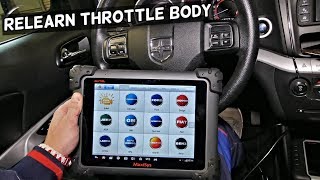
- Perform Throttle Relearn: After installing the new part, a throttle relearn procedure is necessary for the PCM to calibrate to the new sensor's positions. This can sometimes be done manually (key on for 10-15 seconds, then slowly press and release the accelerator pedal), but a bi-directional scan tool is the most reliable method to initiate the relearn process. 🎬 See how to perform a throttle body calibration and relearn.
Parts You'll Likely Need
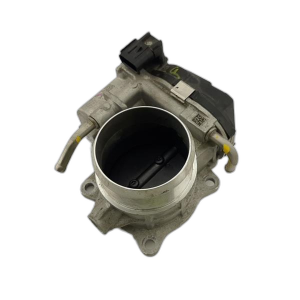
- Electronic Throttle Body Assembly
(OEM #4891735AD)— This is the most common failure for code P0223, as the internal throttle position sensors are not serviceable separately. The OEM part number 4891735AD supersedes part number 4891735AC.
Trusted brands: Mopar, Dorman, Hitachi, Standard Motor Products
OEM price range: $250-$350
Aftermarket price range: $150-$250
Related Codes That Often Appear With This One
- P0222 — This code is for 'Throttle Position Sensor 'B' Circuit Low'. It can appear alongside P0223 if the sensor's signal is erratic, fluctuating between too high and too low, indicating a complete failure of the sensor circuit.
- P2101 — This code means 'Electronic Throttle Control Motor Performance'. A problem with the sensor signals (like P0223) can cause the PCM to lose confidence in the throttle motor's operation, triggering this related code.
- P0123 — This is for 'Throttle Position Sensor 'A' Circuit High'. Seeing this with P0223 strongly suggests a problem affecting the entire throttle body assembly, such as a power, ground, or connector issue.
Technical Service Bulletins (TSBs) & Recalls
- TSB 09-003-20 Rev. C: Pertains to inspecting and possibly replacing the throttle body on certain 2020 Jeep Compass 2.4L vehicles.
- Bulletin #18-098-16: A manufacturer service bulletin for related models that identifies P0223 (Throttle Position Sensor 2 Circuit High) as a diagnostic code associated with electrical system faults alongside P0123 and P0222.
- Bulletin #18-113-15: Notes that P0223 indicates Throttle Position Sensor 2 Circuit High, specifically referencing the electronic throttle system architecture used across the manufacturer's lineup.
Platform-Specific Known Issues
- TSB 09-003-20 Rev. C was issued for some 2020 Jeep Compass models with the 2.4L engine, requiring an inspection of the throttle body's manufacturing date and potential replacement due to a known defect causing related ETC codes.
- Recall U87 / NHTSA 18V-524 affects some 2018 models for a potential PCM failure due to a faulty voltage regulator, which can cause stalling and various electronic issues. This should be investigated if the throttle body and wiring are confirmed to be good.
- Owners on forums like Reddit frequently report that the combination of the Check Engine Light, flashing ETC 'lightning bolt', and ESC light almost always points to a failed throttle body requiring replacement.
Mechanic-Grade Diagnostic Values
- TPS 'B' (Sensor 2) Signal Voltage — expected: Should be a high voltage at closed throttle and decrease as the throttle opens. This is inverse to TPS 'A'.. Failure: A voltage signal stuck high (typically above 4.5V) regardless of throttle plate position.
- TPS 'A' (Sensor 1) Signal Voltage — expected: Should increase smoothly from approximately 0.5V at closed throttle to around 4.0-4.5V at wide-open throttle.. Failure: While the code is for sensor 'B', comparing it to sensor 'A' is crucial. A large discrepancy between the two signals indicates a fault.
- 5V Reference Voltage at Throttle Body Connector — expected: A steady 5 volts.. Failure: A reading below 4.7V or no voltage indicates a wiring or PCM issue, not a faulty throttle body.
- Ground Circuit at Throttle Body Connector — expected: Close to 0 volts, with low resistance to chassis ground.. Failure: High resistance or any significant voltage reading indicates a bad ground, which can cause incorrect sensor readings.
Scan Tool Commands That Help
- wiTECH (OEM FCA Tool): Learn ETC (Electronic Throttle Control) — This function is mandatory after replacing the throttle body assembly to calibrate the new sensor positions with the Powertrain Control Module (PCM).
- High-End Aftermarket (e.g., Autel, Launch): Throttle Body Relearn / Throttle Actuator Test — Used to command the throttle plate to open and close, verifying if the motor and sensors are responding. This helps distinguish between a sensor circuit fault and a mechanical failure of the throttle body.
Wiring & Ground Locations
- Throttle Body Connector — Plugged directly into the electronic throttle body, located between the air intake hose and the intake manifold.. This 6-pin connector is the single point of failure for all signals to and from the throttle body. Corrosion or damage to pins for the 5V reference, ground, or TPS 2 signal wire can directly cause a P0223 code.
- Throttle Body Connector Pinout (Typical 2.4L) — At the throttle body.. Knowing the pin functions allows for precise testing. A typical pinout includes: Pin 1: TPS 2 Signal, Pin 2: Sensor Ground, Pin 3: 5V Reference, Pin 4: Motor Control (-), Pin 5: TPS 1 Signal, Pin 6: Motor Control (+). A high voltage reading on Pin 1 would confirm the P0223 fault condition.
Real Owner Repair Stories
- YouTube channel 'Jeep Compass throttle body fault and replacement' (2014 Jeep Compass (similar 2.4L engine and throttle body design)) — Flashing throttle warning light (lightning bolt), check engine light, traction control light, clicking noise from throttle body, no throttle response (limp mode), and significant engine vibration.
❌ Tried (didn't work) Scan tool data confirmed the accelerator pedal position sensor was working correctly, but the throttle position sensors were not changing, and the throttle blade was not moving as commanded.
✅ What actually fixed it The entire electronic throttle body assembly was replaced. After replacement and clearing codes, the issue was resolved. A throttle relearn was also performed.
OEM Part Supersession History
4891735AC→4891735AD— Part revision and improvement by the manufacturer.
Heads up: 4891735AD is the correct and current replacement for 4891735AC. Using the older part number is not recommended.
Model Year Variations Within This Range
- 2017-2025: While the core 2.4L Tigershark engine and throttle body design are consistent, there have been no major mechanical changes noted that would alter the diagnosis for this code. However, software updates for the PCM may have occurred over the years, and a TSB was issued for specific 2020 models regarding a batch of faulty throttle bodies.
Diagnostic Flowchart
Used vs. New Parts: Buying Guide for This Vehicle
When a used part is the smart pick: Given that the failure is electronic and internal wear-related (gears, sensor tracks), buying a used throttle body is a significant gamble. It is generally not recommended unless the donor vehicle has extremely low mileage and the part comes with a warranty from the seller (e.g., a reputable auto recycler).
Donor-vehicle mileage cap: roughly under 30000 miles for the part to have meaningful remaining life.
What to inspect on the donor part:
- Verify the part number (4891735AD) matches exactly.
- Inspect the electrical connector pins for any signs of corrosion, moisture, or damage.
- Check the throttle plate for excessive carbon buildup, which might indicate a high-mileage or poorly maintained engine.
- Ask for the VIN of the donor vehicle to check its history and mileage if possible.
Aftermarket brands forum-validated for this vehicle:
- Mopar (OEM)
- Dorman
- Hitachi
- Standard Motor Products (SMP)
Brands owners have reported issues with on this vehicle:
- Unbranded, no-name parts from online marketplaces should be avoided, as their quality control and sensor calibration can be unreliable, leading to the code returning or other performance issues.
Real Owner Stories
Aggregated from forums and TSBs cited above. Mileages and costs reflect what owners reported in those sources.
2018 Jeep Compass 2.4L MultiAir
Symptoms: Vehicle entered limp mode and the check engine light came on.
What fixed it: Replacement of the electronic throttle body.
Source hint: Reddit r/JeepCompass thread titled '2018 limp mode and check engine light'
2018 Jeep Compass 2.4L MultiAir
Symptoms: A combination of ABS, traction control, and 4WD! lights illuminated, accompanied by jerky acceleration.
What fixed it: The issue was identified as a faulty throttle body.
Source hint: Reddit r/JeepCompass thread titled '2018 Compass'
2016 Jeep Compass — 29000 miles
Symptoms: Owner experienced an issue that led to a diagnosis of a failed throttle body, highlighting that the part can fail prematurely.
What fixed it: The owner was told they needed a new throttle body.
Source hint: Car Talk Community
Related OBD-II Codes
Frequently Asked Questions
My 2020 Jeep Compass has a P0223 code. Is there a known issue or recall for this?
What does the flashing red 'lightning bolt' light mean on my Jeep Compass dashboard?
My 2018 Compass is stalling and has electronic issues, but the throttle body seems okay. Could it be something else?
Besides the Check Engine Light, what other warning lights might come on with a P0223 code?
I'm replacing the throttle body on my Jeep Compass. Is there a special procedure I need to follow afterward?
I hear a clicking sound from the engine area when I turn the key on. Is this related to P0223?
Does this throttle body issue affect other Jeep models besides the Compass?
Helpful Videos
We Have This Part in Stock



The information in this article is provided for general reference and educational purposes only. Vehicle specifications, procedures, and part compatibility can vary by production date, trim level, and region. Always consult your vehicle's factory service manual and verify part numbers before purchasing or performing repairs. Safety-critical components such as airbags, seat belts, and braking systems should be installed by a qualified professional.
- Jeep Compass:
- 🎬 Helpful Videos
- 🛍️ Shop This Part
- What's Unique About the 2017-2025 Jeep Compass
- Symptoms You May Notice
- Most Likely Causes
- Rare But Worth Checking
- Diagnosis Steps
- Parts You'll Likely Need
- Related Codes That Often Appear With This One
- Technical Service Bulletins (TSBs) & Recalls
- Platform-Specific Known Issues
- Mechanic-Grade Diagnostic Values
- Scan Tool Commands That Help
- Wiring & Ground Locations
- Real Owner Repair Stories
- OEM Part Supersession History
- Model Year Variations Within This Range
- Diagnostic Flowchart
- Used vs. New Parts: Buying Guide for This Vehicle
- Real Owner Stories
- 2018 Jeep Compass 2.4L MultiAir
- 2018 Jeep Compass 2.4L MultiAir
- 2016 Jeep Compass — 29000 miles
- Related OBD-II Codes
- Frequently Asked Questions
- 🎟️ Get 5% Off