

P0223 on 2005-2010 Chrysler 300 6.1L: Throttle Position Sensor 'B' Circuit High Fixes
This code almost always points to a failed electronic throttle body assembly. On these Chrysler models, the throttle position sensor (TPS) is integrated into the throttle body and is not sold separately. Expect to pay $200-$400 for a new throttle body, which is a DIY-friendly repair for many.
- P0223 on a 6.1L Hemi Chrysler 300 is most often caused by a failed electronic throttle body.
- The throttle position sensor (TPS) is built into the throttle body and cannot be replaced separately.
- Symptoms are serious and usually include the vehicle entering a low-power 'limp mode'.
- Diagnosis is straightforward with a scan tool that can read live data; check if the TPS 'B' voltage is stuck high.
- Replacing the throttle body is a manageable DIY job that typically takes less than an hour.
What's Unique About the 2005-2010 Chrysler 300
The first-generation Chrysler 300, especially with the 6.1L Hemi engine, uses an electronic throttle control (ETC) system where the dual throttle position sensors are integral to the throttle body itself. This design means that if one of the sensors fails, the entire throttle body assembly must be replaced. This is a very common failure point on this platform and its Dodge counterparts (Charger, Magnum, Challenger), making the throttle body the primary suspect for any TPS-related codes.
Symptoms You May Notice
- Check Engine Light is on
- Electronic Throttle Control (ETC) or 'lightning bolt' warning light is illuminated
- Vehicle enters 'limp mode' with severely reduced engine power and acceleration
- Poor, hesitant, or jerky acceleration
- Unresponsive accelerator pedal
- Engine may be hard to start or may stall
- Cruise control is inoperative
- Replacing the accelerator pedal assembly. While the pedal also has position sensors, P0223 specifically points to the sensor circuit located on the throttle body, not the pedal. The codes for the pedal assembly are different (e.g., P0226-P0228).
Most Likely Causes
- Faulty Electronic Throttle Body Assembly 🔴 High Probability The Throttle Position Sensors (TPS) are integrated into the throttle body assembly on this platform. The internal electronics of these sensors are a common failure point over time, requiring the replacement of the entire unit.
How to confirm: Using a scan tool, observe the live data for TPS Voltage 'B' (or TPS 2). If the voltage is stuck high (typically near 5.0V) regardless of accelerator pedal position, the throttle body is almost certainly the cause. Disconnecting the throttle body's electrical connector should cause the voltage to drop to zero on the scan tool; if it does, this confirms the fault is within the throttle body.
Typical fix: Replace the entire throttle body assembly. After replacement, a throttle relearn procedure may be necessary, which can often be initiated with a scan tool or may occur automatically after a few drive cycles.
Est. part cost: $200 - $450 - Wiring Harness or Connector Issue ⚪ Low Probability
How to confirm: Visually inspect the wiring harness and connector going to the throttle body for any signs of damage, corrosion, pushed-out pins, or chafing. With the connector unplugged from the throttle body and the key on, check the signal wire in the harness. If it shows high voltage (a short to power), the wiring is the problem. If the voltage remains high on the scan tool even with the throttle body disconnected, this also points to a wiring short.
Typical fix: Repair the damaged section of the wiring harness or clean/replace the connector.
Est. part cost: $10 - $100
Rare But Worth Checking
- Powertrain Control Module (PCM) Fault: This is very rare. Before condemning the PCM, all other possibilities, especially the throttle body and its wiring, must be exhaustively ruled out. A PCM failure can sometimes be caused by shorts in other components. Wiggle testing the PCM connector while observing live data can sometimes reveal an internal fault.
Diagnosis Steps
- Connect an OBD-II scanner and confirm P0223 is present. Check for any other related codes like P0123, P0222, or P2111.
- Using the scanner's live data function, monitor the voltage for TPS 1 and TPS 2 (or 'A' and 'B').
- Observe the TPS 'B' voltage. With the key on and engine off, it should be at a low, steady value. As you slowly press the accelerator, the voltage should rise smoothly. If it is stuck high (e.g., 4.5V-5.0V), this indicates a problem.
- Turn the ignition off and disconnect the electrical connector at the throttle body. Inspect the connector and pins for corrosion, moisture, or damage.
- With the throttle body still disconnected, turn the key back on. Check the live data again. If the TPS 'B' voltage has dropped to 0V (or below 0.5V), the throttle body assembly is faulty and needs replacement.
- If the voltage remains high even with the sensor disconnected, there is a short to power in the signal wire of the harness that needs to be traced and repaired.
- If the wiring is confirmed to be good, replace the throttle body assembly.
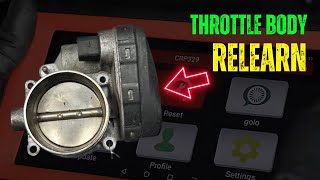
- After replacement, clear all codes. Start the engine and let it idle to allow the PCM to perform a throttle relearn procedure. A short drive may be required for the system to fully calibrate. Some scan tools have a specific ETC RELEARN function that should be performed. 🎬 Watch: How to perform a throttle relearn with a scanner
Parts You'll Likely Need
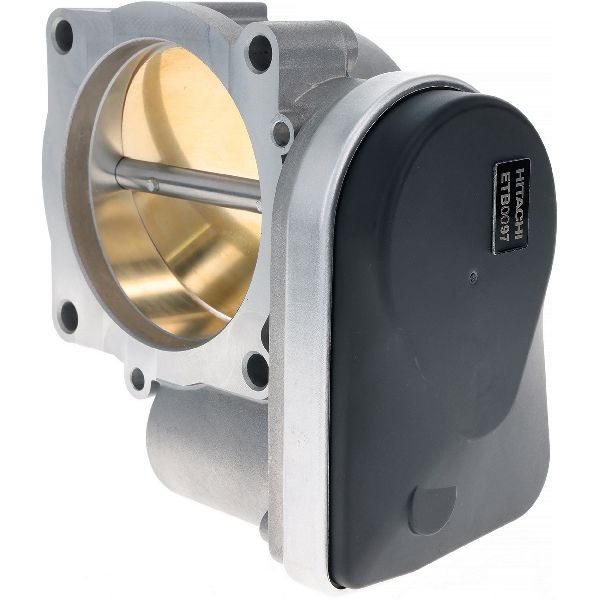
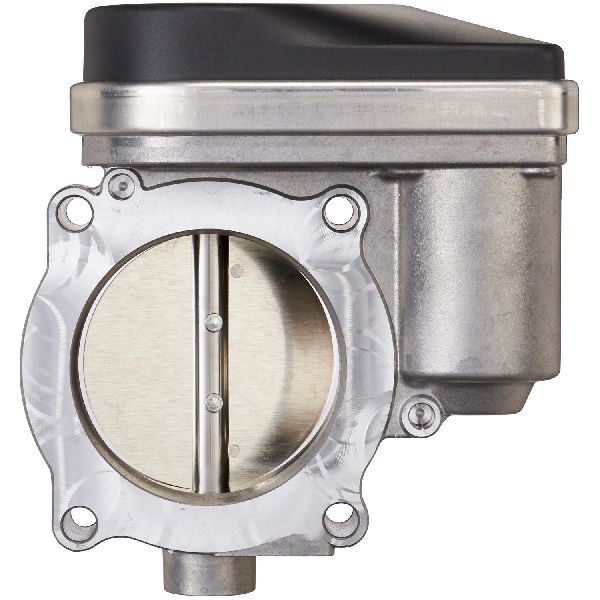
- Electronic Throttle Body Assembly
(OEM #4591847AC)— This is the most common cause of P0223, as the throttle position sensors are integrated into this unit and are not serviceable separately.
Trusted brands: Mopar, Bosch, BBK Performance, ECCPP
OEM price range: $300-$450
Aftermarket price range: $200-$350
Related Codes That Often Appear With This One
- P0123 — This code is for 'Throttle Position Sensor 'A' Circuit High'. Seeing both codes together strongly indicates a failure within the electronic throttle body, as both internal sensors are malfunctioning.
- P2111 — This code means 'Throttle Actuator Control System - Stuck Open'. It often appears with TPS codes and points to a mechanical or electrical failure of the throttle body assembly.
- P0222 — This is the opposite code, for 'Throttle Position Sensor 'B' Circuit Low'. Seeing intermittent P0222 and P0223 codes can indicate a failing sensor or a wiring issue causing erratic readings.
Mechanic-Grade Diagnostic Values
- TPS 'B' (TPS 2) Signal Voltage — expected: Smoothly sweeps from a low voltage (~0.3-0.8V) at closed throttle to a high voltage (~4.5-4.8V) at wide-open throttle.. Failure: Voltage is stuck high, above 4.9V, regardless of pedal position.
- 5-Volt Reference at Throttle Body Connector — expected: Approximately 5.0 volts (typically 4.8-5.2V) with key on, engine off.. Failure: Voltage is significantly below 4.8V or is absent, indicating a wiring or PCM issue.
- Sensor Ground Circuit Resistance — expected: Less than 5.0 ohms between the sensor ground pin at the connector and a known good chassis ground.. Failure: Resistance is higher than 5.0 ohms, indicating an open or high-resistance ground circuit.
- Signal Wire Short to Power Test — expected: 0 volts on the signal wire at the harness connector with the throttle body unplugged and key on.. Failure: Any voltage present indicates a short to voltage in the wiring harness.
Scan Tool Commands That Help
- wiTECH (Chrysler/Dodge/Jeep Dealer Tool): ETC Learn (Electronic Throttle Control Learn) — This function must be performed after replacing the throttle body. It forces the PCM to relearn the fully closed and fully open positions of the new throttle plate, which is essential for correct idle speed and throttle response.
- wiTECH (Chrysler/Dodge/Jeep Dealer Tool): Throttle Follower Test — A bidirectional test where a technician can command the throttle plate to open to specific percentages. This is used to verify if the throttle motor is responding and if the TPS sensors are tracking the movement accurately, helping to distinguish a mechanical failure from a sensor/wiring issue.
Wiring & Ground Locations
- Throttle Body Connector (6-Pin) — Directly on the electronic throttle body, located at the front of the intake manifold.. This is the primary connection point. P0223 relates specifically to the circuit for Pin 4. Pinout is as follows: Pin 1: TP Signal 1 (TPS 'A'); Pin 2: 5 Volt Supply; Pin 3: ETC Motor (+); Pin 4: TP Signal 2 (TPS 'B'); Pin 5: ETC Motor (-); Pin 6: TP Sensor Ground.
- G102 — On the right side of the engine compartment, near the PCM and front control module.. This is a primary ground point for several engine management components, including the PCM. A poor connection here can cause erratic sensor readings and various electrical issues.
- G300 — In the trunk, near the battery on the right side, sometimes specified as below the left 'B' pillar.. This is the main battery ground to the chassis. While less likely to cause an isolated TPS code, corrosion or a loose connection here can disrupt power to the entire vehicle and cause unpredictable electrical faults.
OEM Part Supersession History
04591847AA, 04591847AB, 68060354AA→4591847AC— Standard part revision by the manufacturer, likely for improved reliability or minor design changes.
Heads up: All previous part numbers are superseded by 4591847AC, which is the correct service part for this application.
Diagnostic Flowchart
Other Known Issues on This Vehicle
Issues unrelated to this code that are worth knowing about as an owner of this generation:
- Shifter Stuck in Park ('Pink Thingy' Failure) 🔴 High — Extremely common on 2005-2007 models. A small plastic lever in the shifter assembly breaks, immobilizing the vehicle. (Ref: No recall, but it is a widely documented failure. Aftermarket metal replacement parts (e.g., Dorman 924-706) are a common, permanent fix.)
- Front Suspension Clunking/Rattling 🟠 Medium — Very common. Noise over bumps is often caused by worn tension struts (forward lower control arms), sway bar bushings, or sway bar end links. (Ref: Multiple TSBs exist for suspension noises on related platforms, but a specific one for the 6.1L is not consistently cited. Diagnosis is required to pinpoint the worn component.)
- Alternator Failure 🟠 Medium — Alternators can fail, leading to various electrical issues, dimming lights, and eventually a no-start condition. The LX platform has a history of alternator-related recalls, though not always for this specific model year/engine. (Ref: Recall P60 / NHTSA 14V-634 affected some 2011-2014 models for sudden alternator failure, highlighting a known issue with the component family.)
- Valve Seat Dropping / Lifter Failure 🔴 High — Less common on the 6.1L than other Hemi engines but still a known, catastrophic failure mode. A valve seat can dislodge from the cylinder head, causing major engine damage. Hemi engines are also known for potential lifter roller bearing failure, often preceded by a ticking noise.
Used vs. New Parts: Buying Guide for This Vehicle
When a used part is the smart pick: For this specific repair, a used throttle body is NOT recommended. The internal electronic sensors are a known high-failure item. Buying a used part carries a significant risk of premature failure, often with no warranty.
Donor-vehicle mileage cap: roughly under 30000 miles for the part to have meaningful remaining life.
What to inspect on the donor part:
- If buying used is unavoidable, source from a low-mileage, collision-damaged vehicle.
- Inspect the connector pins for any signs of corrosion, bending, or damage.
- Ensure the throttle bore is relatively clean and the throttle plate moves freely without binding (do not force it by hand).
- Ask for a warranty, even if it's only 30-90 days.
OEM-only on this vehicle (don't cheap out):
- While not strictly OEM-only, using a new Mopar throttle body is the highest-probability fix. Aftermarket units can be a viable alternative, but quality varies.
Aftermarket brands forum-validated for this vehicle:
- Bosch (often the OEM supplier)
- BBK Performance (Note: These are often larger-bore performance upgrades and may require patience for the PCM to adapt, with some users reporting initial check engine lights or erratic idle).
Brands owners have reported issues with on this vehicle:
- Unbranded, low-cost units from online marketplaces can be poorly calibrated and have a high failure rate. Some users have reported issues with brands like 'EVIL ENERGY' not fitting correctly or having mismatched sensors.
Real Owner Stories
Aggregated from forums and TSBs cited above. Mileages and costs reflect what owners reported in those sources.
2006 Chrysler 300C 6.1L V8
Symptoms: The 'lightning bolt' and check engine light appeared simultaneously, followed immediately by the car entering limp mode.
What fixed it: Replacement of the throttle body assembly; the owner described it as a simple 15-30 minute DIY job.
Source hint: 300cforums.com
2008 Chrysler 300 SRT8 6.1L V8
Symptoms: The car suddenly lost power while driving on the highway.
What fixed it: Throttle body replacement after confirming the fault by watching the TPS voltage drop on a scanner when the unit was disconnected.
Source hint: lxforums.com
Related OBD-II Codes
Frequently Asked Questions
My 6.1L Chrysler 300 has the 'lightning bolt' light and is in limp mode. Is this related to the P0223 code?
Can I just replace the Throttle Position Sensor (TPS) on my 2006 Chrysler 300 SRT8?
Is there a specific TSB for the alternator failure mentioned in the common issues for the LX platform?
Should I buy a used throttle body from a salvage yard to fix my P0223 code?
Do I need a scan tool to fix the car after I install a new throttle body?
Are there any performance throttle body brands I should be cautious of for my 6.1L V8?
Helpful Videos
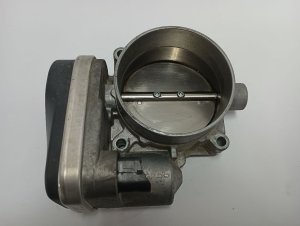
Used OEM Parts in Stock

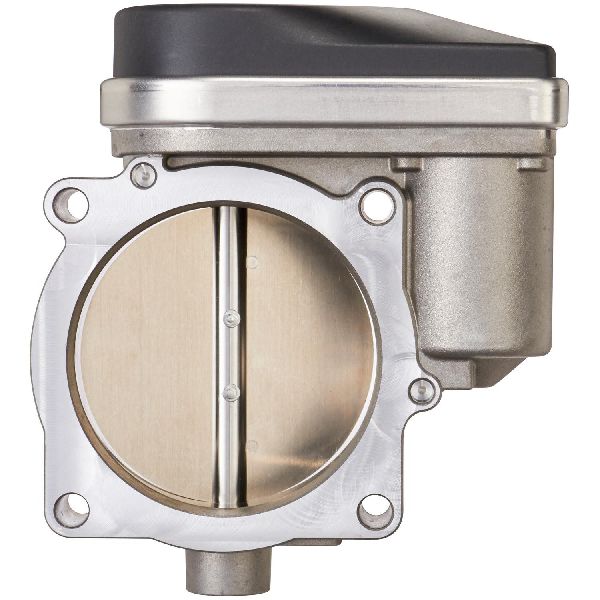
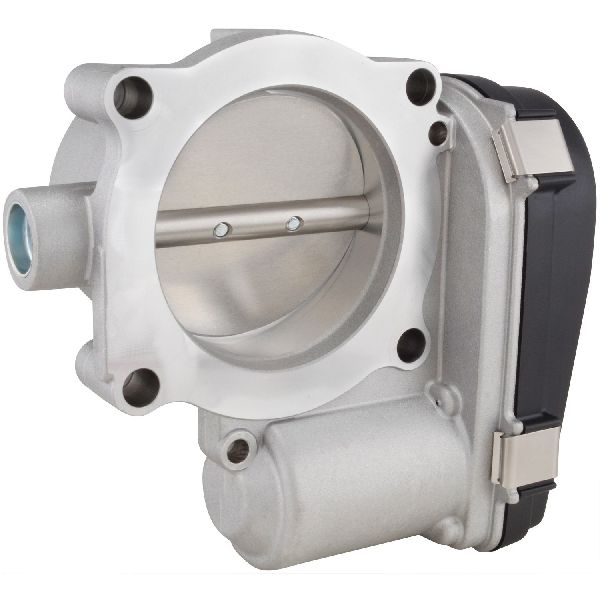
New Aftermarket Parts Available


The information in this article is provided for general reference and educational purposes only. Vehicle specifications, procedures, and part compatibility can vary by production date, trim level, and region. Always consult your vehicle's factory service manual and verify part numbers before purchasing or performing repairs. Safety-critical components such as airbags, seat belts, and braking systems should be installed by a qualified professional.
- Chrysler 300:
- 🎬 Helpful Videos
- 🛍️ Shop This Part
- What's Unique About the 2005-2010 Chrysler 300
- Symptoms You May Notice
- Most Likely Causes
- Rare But Worth Checking
- Diagnosis Steps
- Parts You'll Likely Need
- Related Codes That Often Appear With This One
- Mechanic-Grade Diagnostic Values
- Scan Tool Commands That Help
- Wiring & Ground Locations
- OEM Part Supersession History
- Diagnostic Flowchart
- Other Known Issues on This Vehicle
- Used vs. New Parts: Buying Guide for This Vehicle
- Real Owner Stories
- 2006 Chrysler 300C 6.1L V8
- 2008 Chrysler 300 SRT8 6.1L V8
- Related OBD-II Codes
- Frequently Asked Questions
- 🎟️ Get 5% Off