

P0223 on 2007-2013 Chevrolet Silverado 1500: Throttle Position Sensor 'B' High Voltage Fixes
P0223 on a 2007-2013 Silverado almost always indicates a failing throttle body assembly. The internal Throttle Position Sensor (TPS) is the culprit. Expect to replace the entire throttle body, which costs around $120-$250 for a quality aftermarket part and is a common DIY repair. Before replacing, perform a 'wiggle test' on the wiring harness to rule out a simple electrical fault.
- P0223 on a 2007-2013 Silverado is a strong indicator of a failed electronic throttle body.
- The most common symptom is the 'Reduced Engine Power' message appearing on the dash.
- Do not replace the gas pedal (APP sensor) first; the code points to the throttle body at the engine.
- Replacing the throttle body is a straightforward DIY job that typically takes less than an hour.
- Always check the wiring and connector for damage before buying parts, as this is the second most likely cause.
- A throttle relearn procedure is necessary after replacement and can be done without a scan tool.
What's Unique About the 2007-2013 Chevrolet Silverado 1500
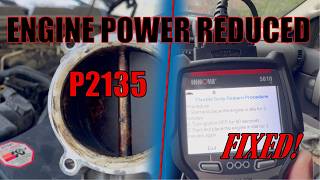
On the GMT900 generation of Silverado trucks, the electronic throttle body is a well-documented weak point. The internal, non-serviceable throttle position sensors are prone to failure over time, leading to codes like P0223. While wiring issues can occur, the vast majority of owner experiences point directly to the throttle body assembly itself being the root cause, often after 100,000 miles. This failure is so common that it's one of the first things to suspect when the 'Reduced Engine Power' message appears, often in conjunction with code P2135 (TPS Voltage Correlation).
Symptoms You May Notice
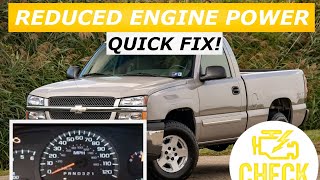
- "Reduced Engine Power" message on the instrument cl 🎬 See this video on fixing the Reduced Engine Power messageuster
- Check Engine Light is on
- Poor or no throttle response
- Vehicle will not accelerate properly
- Unstable or high idle speed
- Hesitation or stalling during acceleration
- Hard starting
- Replacing the Accelerator Pedal Position (APP) Sensor. While the APP sensor is part of the throttle control system, it has its own set of diagnostic codes (e.g., P2122, P2127). P0223 specifically points to a fault at the throttle body end of the system. However, in some cases, a failing APP sensor can cause confusing symptoms that lead to misdiagnosis.
Most Likely Causes
- Failed Throttle Body Assembly 🔴 High Probability The integrated Throttle Position Sensors (TPS) within the throttle body are a known failure point on this generation of GM trucks. Wear and tear on the internal electronic components leads to erratic voltage signals, particularly in cold weather. The sensors are not sold separately from the throttle body assembly.
How to confirm: Using a scan tool, monitor the live data for TPS Sensor 1 and TPS Sensor 2 voltages while slowly pressing the accelerator pedal. The voltages should move smoothly in opposite directions. A jumpy, stuck, or out-of-range reading for Sensor 2 (often stuck high near 5V) confirms a bad throttle body.
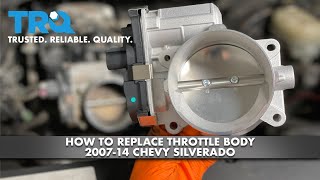
Typical fix: Replace the entire throttle body assembly. After replacement, a throttle relearn procedure is required. 🎬 Watch: Step-by-step GM throttle body relearn procedure This can be done without a scan tool by starting the engine and idling in Park for 3 minutes, turning the ignition off for 60 seconds, and then restarting to idle for another 3 minutes.
Est. part cost: $120-$250 - Wiring Harness or Connector Issue 🟡 Medium Probability The wiring harness leading to the throttle body can chafe against engine components or the connector pins can become corroded or loose over time, causing a high resistance or short to voltage.
How to confirm: Visually inspect the wiring harness for any signs of damage, rubbing, or melting. Unplug the connector and check for corrosion or bent pins. Perform a 'wiggle test' on the harness while monitoring TPS voltage on a scan tool to see if the reading fluctuates erratically.
Typical fix: Repair the damaged section of wire or replace the throttle body connector pigtail.
Est. part cost: $15-$40 - Poor Ground Connection ⚪ Low Probability GM trucks of this era can develop issues with main engine and chassis ground points due to corrosion. A bad ground can cause floating voltages and erratic sensor readings, which can trigger a variety of electrical-related trouble codes.
How to confirm: Locate the primary engine ground straps (often on the front of the cylinder heads). Remove, clean all contact surfaces to bare metal, and securely re-fasten them. Use a multimeter to check for low resistance (less than 0.5 ohms) between the throttle body housing and the negative battery terminal.
Typical fix: Clean or replace corroded ground straps and bolts.
Est. part cost: $10-$30
Rare But Worth Checking
- Faulty Engine Control Module (ECM): This is very rare. Before condemning the ECM, all other possibilities, especially the throttle body and wiring, must be exhaustively ruled out. An ECM failure is a last resort diagnosis.
Diagnosis Steps
- Read the code with an OBD-II scanner and check for any other related codes like P0122 or P2135.
- Using the scanner's live data function, observe the voltage readings for both TPS Sensor 1 and TPS Sensor 2. At idle (throttle closed), Sensor 1 should be low (~0.5V) and Sensor 2 should be high (~4.5V). As you press the pedal, Sensor 1's voltage should rise and Sensor 2's should fall smoothly.
- If the TPS 2 voltage is stuck high (near 5V) or doesn't change smoothly, the throttle body is the primary suspect.
- Perform a thorough visual inspection of the wiring harness and connector going to the throttle body. Look for any chafing, melting, or corrosion. Perform a 'wiggle test' on the harness while monitoring live data.
- With a multimeter, check for a stable 5-volt reference and a good ground at the throttle body connector with the key on, engine off. The ground circuit should read less than 0.1V.
- Inspect and clean the main engine ground connections, typically located on the front of the engine block or cylinder heads.
- If wiring and grounds are confirmed to be good, replace the throttle body assembly.
- After replacement, perform the throttle relearn procedure to allow the ECM to calibrate to the new part.
Parts You'll Likely Need
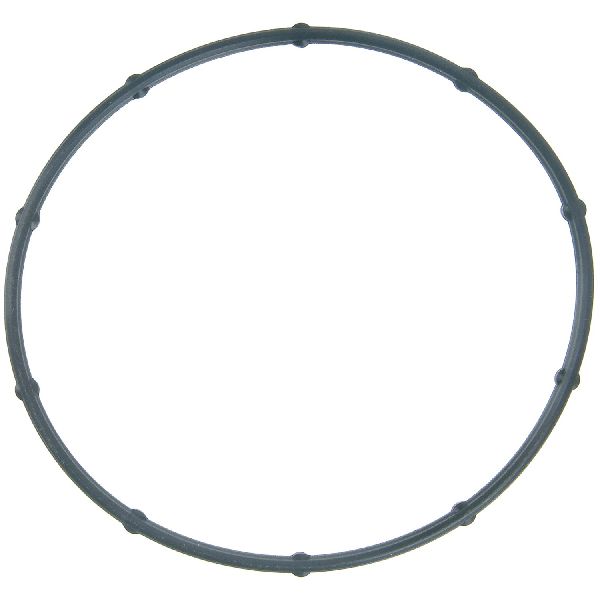
- Throttle Body Assembly
(OEM #12678223, 217-3153 (ACDelco numbers, verify by VIN))— This is the most common failure for code P0223 on this platform, as the internal sensors are not sold separately and fail frequently.
Trusted brands: ACDelco, Hitachi, Bosch, Standard Motor Products
OEM price range: $200-$300
Aftermarket price range: $120-$200
Related Codes That Often Appear With This One
- P0122 — This code means 'TPS 'A' Circuit Low'. Seeing P0122 and P0223 together strongly indicates a complete internal failure of the throttle body assembly, as the two sensors are sending opposing and out-of-range signals.
- P2135 — This code means 'Throttle/Pedal Position Sensor/Switch 'A'/'B' Voltage Correlation'. It sets when the ECM sees that the signals from TPS 'A' and TPS 'B' don't make sense together, which is a direct result of one sensor failing high (P0223). This is the most common code to appear alongside P0223.
Platform-Specific Known Issues
- A user on a GM-Trucks.com forum noted that after replacing the throttle body, a proper relearn procedure was critical. They described the manual process of idling for 3 minutes, shutting off for 1 minute, and repeating, which eventually stabilized the idle around 600 RPM.
- A YouTube tutorial for a 2010 Silverado with code P2135 (often seen with P0223) highlighted that the issue is extremely common for 2008-2013 models and would have been a warranty repair under 100,000 miles. The creator emphasized cleaning the throttle body bore while replacing the sensor/assembly.
Mechanic-Grade Diagnostic Values
- 5-Volt Reference at Throttle Body Connector — expected: 4.8 - 5.2 Volts. Failure: Voltage below 4.8V or above 5.2V points to a wiring or ECM issue.
- Low Reference (Ground) Circuit Resistance to Chassis Ground — expected: Less than 5.0 Ohms. Failure: Resistance higher than 5.0 Ohms indicates a bad ground connection.
- Scan Tool - TPS Sensor 2 Voltage (Key On, Engine Off, Throttle Closed) — expected: ~4.5 Volts. Failure: Voltage is stuck high near 5.0V or does not change when the throttle is manually opened (with care).
- Scan Tool - TPS Sensor 1 Voltage (Key On, Engine Off, Throttle Closed) — expected: ~0.5 Volts. Failure: Voltage is not low or does not sweep up smoothly as the throttle is opened.
Scan Tool Commands That Help
- GDS2 (GM Global Diagnostic System 2): Engine Control Module > Output Controls > Throttle Actuator Control (TAC) Motor — This bidirectional control allows a technician to command the throttle plate to open to specific percentages. If the throttle plate does not respond correctly to the commands, it confirms a failure in the throttle body motor or its internal circuitry, assuming the wiring is intact. This is a definitive way to test the component after checking voltages.
Wiring & Ground Locations
- G103 — On the front of the passenger side (right) cylinder head.. This is a critical engine and ECM ground. A loose or corroded connection at G103 can cause a floating ground, leading to erratic and high voltage readings from sensors like the TPS.
- G104 — On the rear of the driver's side (left) cylinder head.. This is another primary engine block ground. Ensuring it is clean and tight is essential for stable sensor operation. Problems here can cause a range of seemingly unrelated electrical issues.
- Throttle Body Connector (X107) — Directly on the electronic throttle body at the front of the intake manifold.. This is the primary connection point for the TPS sensors. The pins for the 5V reference, ground, and both TPS signal wires are located here. Corrosion or backed-out pins in this connector are a common point of failure.
Real Owner Repair Stories
- SilveradoSierra.com forum user (2008 Chevrolet Silverado 1500 5.3L) — Reduced Engine Power message, Check Engine Light with codes P0223 and P2135.
❌ Tried (didn't work) Cleaned the original throttle body., Replaced the throttle body with a new, non-OEM (aftermarket) part, which did not resolve the issue and caused an immediate return of the codes.
✅ What actually fixed it The owner purchased a genuine ACDelco throttle body. After installing the OEM part and performing the manual throttle relearn procedure, the codes were cleared and did not return. The final conclusion was that the aftermarket part was faulty out of the box.
OEM Part Supersession History
12678223→12740727— Standard part number update by the manufacturer.
Heads up: The new part number (12740727) is a direct replacement for the old one (12678223) and is fully compatible.
Diagnostic Flowchart
Other Known Issues on This Vehicle
Issues unrelated to this code that are worth knowing about as an owner of this generation:
- Active Fuel Management (AFM) Lifter Failure 🔴 High — Common, especially on engines over 75,000 miles. Can lead to misfires (P0300), ticking noises, and eventually camshaft damage.
- Excessive Oil Consumption 🟠 Medium — Widespread issue often linked to the AFM system and PCV design. Many owners report consuming over 1 quart of oil per 2,000 miles. (Ref: TSB 10-06-01-008M)
- Cracked Dashboard 🟡 Low — Extremely common across all GMT900 trucks and SUVs. Cracks typically form near the passenger airbag and instrument cluster cowling. (Ref: Subject of class-action lawsuits, but no recall was issued.)
- Oil Pressure Sensor / Filter Screen Failure 🟠 Medium — The oil pressure sensor, located in a difficult-to-reach spot at the back of the engine, is prone to failure. A small filter screen underneath it often clogs with sludge, causing low or erratic oil pressure readings on the gauge. (Ref: TSB PIP4786C)
- Steering Shaft Clunk/Noise 🟡 Low — A common complaint is a clunking or popping noise from the steering column, often caused by the intermediate steering shaft needing lubrication or replacement.
Used vs. New Parts: Buying Guide for This Vehicle
When a used part is the smart pick: Due to the high failure rate of the internal electronics, buying a used throttle body is generally NOT recommended for this vehicle. The risk of purchasing a part that has already failed or is near the end of its service life is very high. A used part should only be considered as a temporary, emergency fix if a new part is unavailable.
Donor-vehicle mileage cap: roughly under 60000 miles for the part to have meaningful remaining life.
What to inspect on the donor part:
- Verify the part came from a running and driving vehicle with no throttle-related codes.
- Inspect the connector pins for any signs of corrosion, moisture, or damage.
- Check the throttle plate for smooth, unrestricted movement by hand.
- Ask for the VIN of the donor vehicle to confirm compatibility and check its history if possible.
OEM-only on this vehicle (don't cheap out):
- Throttle Body Assembly - While some aftermarket brands are reliable, many forum users report issues with cheaper, off-brand units failing prematurely or being defective out of the box. Sticking with OEM (ACDelco) or a top-tier aftermarket brand is the safest bet.
Aftermarket brands forum-validated for this vehicle:
- Hitachi
- Bosch
- Standard Motor Products (SMP)
Brands owners have reported issues with on this vehicle:
- Unbranded, 'white box' parts from online marketplaces are frequently cited in forums as being problematic.
Real Owner Stories
Aggregated from forums and TSBs cited above. Mileages and costs reflect what owners reported in those sources.
2010 Chevrolet Silverado 1500 5.3L V8 — ~95000 miles
Symptoms: Code P2135 (often seen with P0223) and 'Reduced Engine Power' mode.
What fixed it: Replacement of the throttle body assembly and cleaning of the throttle body bore.
Source hint: YouTube tutorial for a 2010 Silverado with code P2135
2007-2013 Chevrolet Silverado 1500 5.3L V8
Symptoms: Unstable idle after replacing the throttle body.
What fixed it: Manual relearn process: idling for 3 minutes, shutting off for 1 minute, and repeating until idle stabilized at 600 RPM.
Source hint: GM-Trucks.com thread titled 'THrottle Re-learn Proceedure'
Related OBD-II Codes
Frequently Asked Questions
Can I replace just the Throttle Position Sensor (TPS) on my 5.3L Silverado, or do I need the whole assembly?
Is there a specific TSB for the oil consumption issues on my 2007-2013 Silverado 5.3L?
How do I perform the throttle relearn on my Silverado without a scan tool after fixing P0223?
Would the P0223/P2135 issue have been covered under warranty for my 2010 Silverado?
My truck has a 'Reduced Engine Power' message and P0223; could this be a ground issue?
Is there a TSB for the oil pressure sensor and filter screen failure on the 5.3L V8?
Helpful Videos
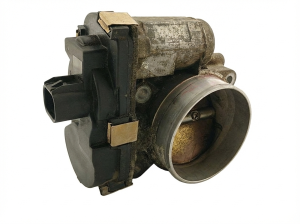
Used OEM Parts in Stock



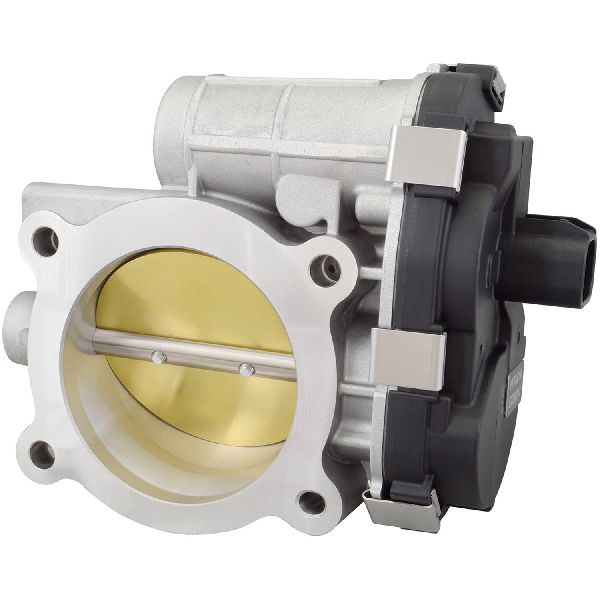
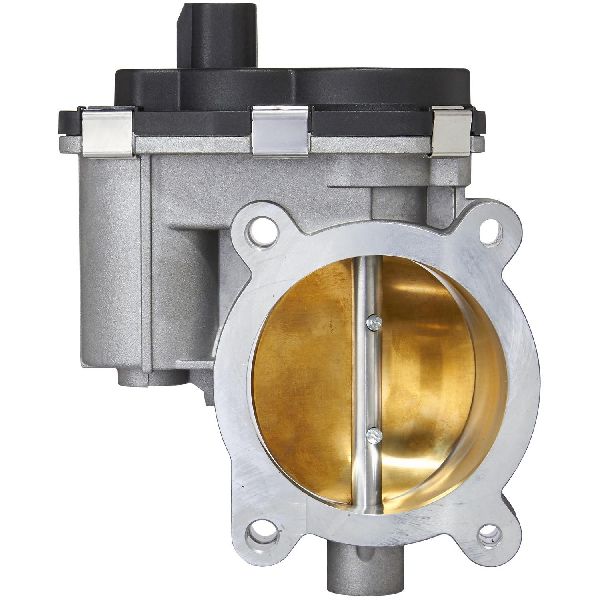
New Aftermarket Parts Available



The information in this article is provided for general reference and educational purposes only. Vehicle specifications, procedures, and part compatibility can vary by production date, trim level, and region. Always consult your vehicle's factory service manual and verify part numbers before purchasing or performing repairs. Safety-critical components such as airbags, seat belts, and braking systems should be installed by a qualified professional.
- Chevrolet Silverado 1500:
- 🎬 Helpful Videos
- 🛍️ Shop This Part
- What's Unique About the 2007-2013 Chevrolet Silverado 1500
- Symptoms You May Notice
- Most Likely Causes
- Rare But Worth Checking
- Diagnosis Steps
- Parts You'll Likely Need
- Related Codes That Often Appear With This One
- Platform-Specific Known Issues
- Mechanic-Grade Diagnostic Values
- Scan Tool Commands That Help
- Wiring & Ground Locations
- Real Owner Repair Stories
- OEM Part Supersession History
- Diagnostic Flowchart
- Other Known Issues on This Vehicle
- Used vs. New Parts: Buying Guide for This Vehicle
- Real Owner Stories
- 2010 Chevrolet Silverado 1500 5.3L V8 — ~95000 miles
- 2007-2013 Chevrolet Silverado 1500 5.3L V8
- Related OBD-II Codes
- Frequently Asked Questions
- 🎟️ Get 5% Off