

P0222 on 2010-2012 Hyundai Santa Fe 2.4L: Causes and Throttle Body Fixes
On a 2010-2012 Santa Fe 2.4L, P0222 is almost always caused by a faulty electronic throttle body assembly, OEM P/N 35100-2G700. Before replacing it, thoroughly clean the throttle body bore and plate, as carbon buildup can cause the same symptoms. A replacement throttle body costs between $150 and $400, and the repair is critical as the vehicle will be forced into a low-power 'limp mode,' making it unsafe to drive normally.
- P0222 on a 2010-2012 Santa Fe 2.4L points to a problem with the secondary throttle position sensor.
- Always try cleaning the throttle body first; carbon buildup is a common issue that can mimic a sensor failure.
- The sensor is part of the throttle body assembly (P/N 35100-2G700); if the sensor is bad, the entire assembly must be replaced.
- After cleaning or replacing the throttle body, you must perform a throttle relearn procedure for the computer to recognize the new idle position.
- Do not drive the vehicle extensively in limp mode, as it is unsafe due to the lack of power.
What's Unique About the 2010-2012 Hyundai Santa Fe
On this generation of Hyundai with the 2.4L Theta II engine, the throttle position sensors are not separate, replaceable parts. Instead, they are integrated directly into the electronic throttle body assembly. This means that if the sensor itself fails, which is a common occurrence, the entire throttle body unit must be replaced. While this makes the repair more expensive than a simple sensor swap, it also simplifies diagnosis, as the most frequent point of failure is the complete assembly. This design is shared with its platform mate, the 2011-2013 Kia Sorento with the same 2.4L engine.
Symptoms You May Notice
- Check Engine Light is illuminated
- Engine enters 'limp home' mode with significantly reduced power
- Poor or no acceleration
- Hesitation or stumbling when pressing the gas pedal
- Rough, unstable, or high idle
- Engine may stall unexpectedly, especially when coming to a stop
- Jerking or surging during steady driving
- Replacing the accelerator pedal position (APP) sensor. While the APP sensor is part of the throttle control system, the P0222 code specifically points to the sensor at the throttle body ('B' circuit), not the pedal. 🎬 Watch: This quick guide explains how to fix code P0222.
Most Likely Causes
- Faulty Electronic Throttle Body Assembly 🔴 High Probability The integrated throttle position sensor is a known failure point on this platform. Internal wear and tear of the sensor's electronic components leads to signal loss. This is a well-documented issue across Hyundai/Kia vehicles using the 2.4L Theta II engine.
How to confirm: After confirming the wiring is intact and the throttle body is clean, the code returning points to an internal failure of the assembly. A scan tool can monitor live data for TPS1 and TPS2; if TPS2 voltage is consistently low (below 0.25V), erratic, or does not respond inversely to TPS1, the unit is bad.
Typical fix: Replace the entire electronic throttle body assembly (OEM P/N 35100-2G700). A throttle position relearn procedure must be performed after installation.
Est. part cost: $150-$400 - Dirty or Sticking Throttle Body 🟡 Medium Probability The PCV (Positive Crankcase Ventilation) system routes oil and fuel vapors back into the intake, which can cause carbon and gunk to build up around the throttle plate and bore over time. This can cause the plate to stick and not return to its proper base position, fooling the sensor.
How to confirm: Remove the air intake hose from the throttle body. Visually inspect for a thick, black ring of carbon buildup around the throttle plate and inside the bore. The plate may feel sticky or sluggish when moved by hand (with the engine off).
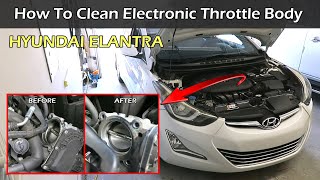
Typical fix: Thoroughly clean the throttle body bore and plate with a dedicated throttle body cleaner and a soft brush or microfiber towel. Do not spray directly into the electronic components. Perform a throttle relearn procedure afterward. 🎬 See this walkthrough on how to clean your electronic throttle body.
Est. part cost: $5-$15 - Wiring Harness or Connector Issue ⚪ Low Probability Vibrations, heat, and age can cause wires to fray or connectors to become loose or corroded. The main engine harness connector to the throttle body is the most likely point of failure.
How to confirm: Visually inspect the wiring harness leading to the throttle body for any signs of damage, chafing, or melting. Unplug the connector and check for corrosion or bent/broken pins. Use a multimeter to check for a short to ground or an open circuit on the TPS2 signal wire (typically Pin 6, Pink/Black wire).
Typical fix: Repair or replace the damaged section of wiring. Clean the connector pins with an electrical contact cleaner or replace the connector pigtail if necessary. 🎬 Watch: How to replace a damaged throttle body plug or wire.
Est. part cost: $10-$50
Rare But Worth Checking
- Faulty Powertrain Control Module (PCM): This is very rare. The PCM should only be considered after all other possibilities, including the throttle body and wiring, have been exhaustively tested and ruled out. Sometimes a PCM software update from the dealer can resolve logic-related issues, so check for available TSBs before replacing the module.
Diagnosis Steps
- Connect an OBD-II scanner and confirm P0222 is the active code. Check for any other related codes like P0122, P0123, or P2110.
- Turn the ignition off. Inspect the throttle body's electrical connector for a secure fit, corrosion, or damaged pins.
- Inspect the wiring harness leading to the throttle body for any visible signs of damage, such as chafing, melting, or breaks.
- Remove the air intake duct from the throttle body.
- Inspect the throttle bore and plate for heavy carbon buildup. If dirty, clean it thoroughly using throttle body cleaner and a soft cloth. Do not spray cleaner directly on the electrical components.
- After cleaning, perform a throttle relearn procedure. A common method is to turn the ignition to 'ON' (without starting the engine) for 15 seconds, then 'OFF' for 5 seconds. Repeat this process 5 times before starting the engine.
- Clear the code and test drive the vehicle. If the code and symptoms return, the throttle body assembly is likely faulty.
- Replace the electronic throttle body assembly with OEM part number 35100-2G700 or a compatible replacement.
- Perform the throttle relearn procedure again after installing the new part.
Parts You'll Likely Need
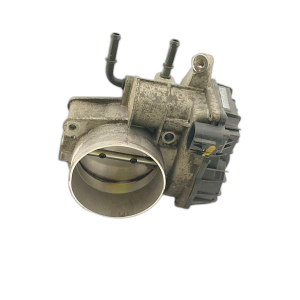
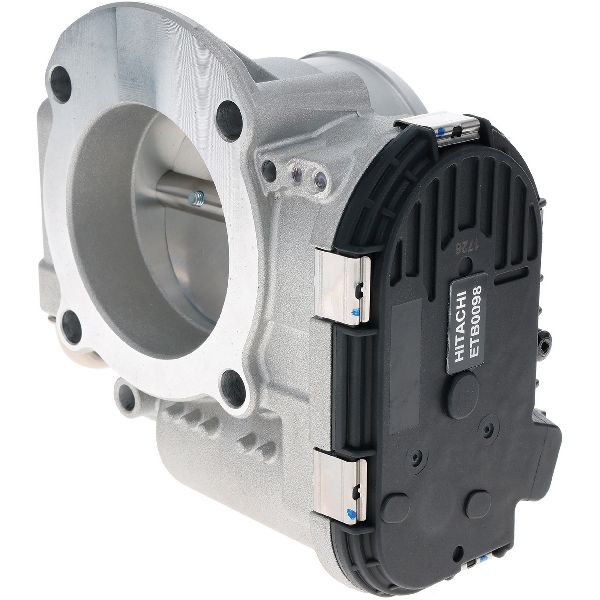
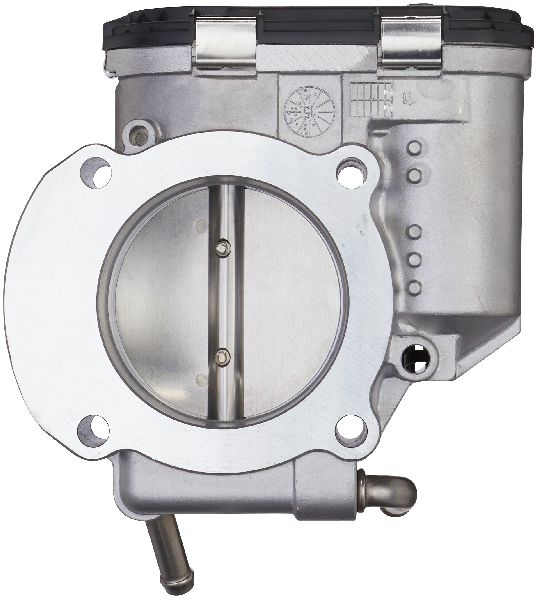
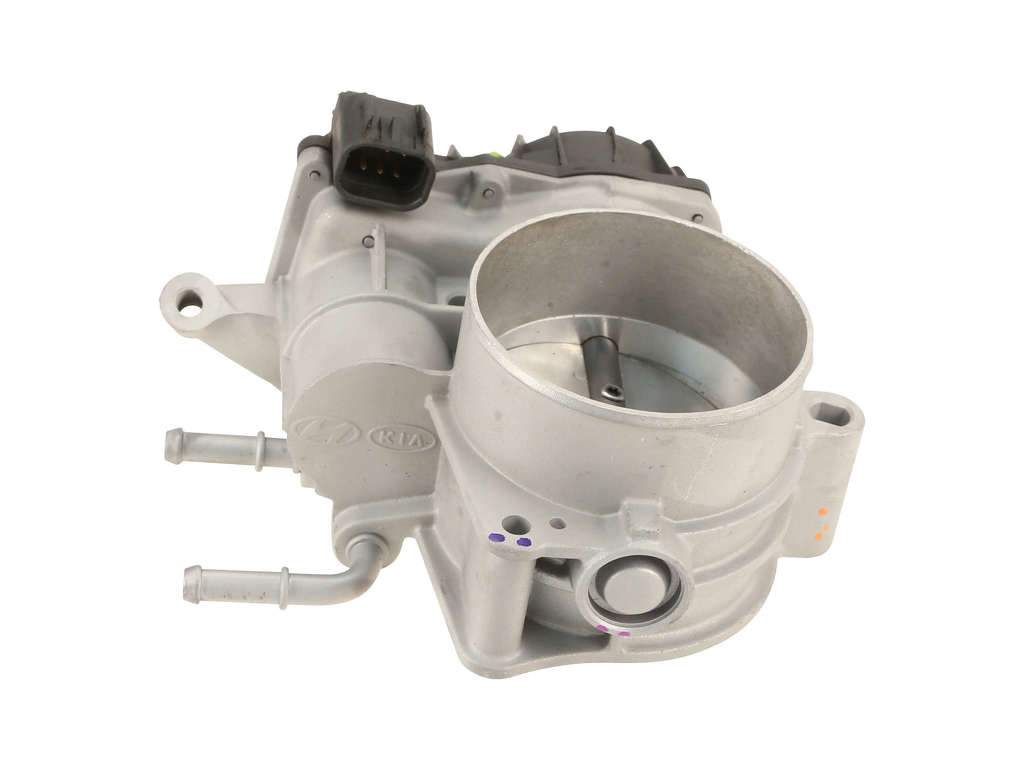
- Electronic Throttle Body Assembly
(OEM #35100-2G700)— This is the most common cause of code P0222 on this vehicle, as the internal, non-serviceable Throttle Position Sensor (TPS) fails.
Trusted brands: Hyundai (OEM), Kia (OEM), Bosch, Spectra Premium
OEM price range: $350-$520
Aftermarket price range: $150-$300
Related Codes That Often Appear With This One
- P0122 — This code is for 'Throttle Position Sensor 'A' Circuit Low'. If both P0122 and P0222 appear together, it strongly suggests a problem common to both sensors, such as a shared power/ground issue or a complete internal failure of the throttle body assembly.
- P2110 — This code means 'Throttle Actuator Control System - Forced Limited RPM'. The PCM will set this code when it detects a fault in the throttle control system (like P0222) and forces the engine into limp mode as a protective measure.
- P0123 — This code is for 'Throttle Position Sensor 'A' Circuit High'. Seeing a 'low' code for one sensor (P0222) and a 'high' code for the other (P0123) simultaneously is a strong indicator of a complete failure within the throttle body's internal electronics.
Technical Service Bulletins (TSBs) & Recalls
- TSB #SB-10-FL-018: Provides the official dealer procedure to reset the Electronic Throttle Control system, which may be necessary after cleaning or replacement.
- TSB #11-FL-001: Details a procedure for updating the Engine Control Module (ECM) software, which can sometimes address logic errors related to throttle control. It's worth checking if this update has been performed.
Platform-Specific Known Issues
- Owner Experience: Sudden Limp Mode: Many owners report experiencing a sudden and jarring transition into limp mode while driving, often on the highway, which can be a significant safety concern. The vehicle will abruptly lose the ability to accelerate. This is a hallmark symptom of the throttle body failing on this platform.
Mechanic-Grade Diagnostic Values
- TPS2 Signal Voltage (DTC Trigger Threshold) — expected: Must remain above 0.25V. Failure: The ECM will set code P0222 if the TPS2 signal voltage is below 0.25V for more than 0.1 seconds.
- TPS1 vs. TPS2 Voltage Correlation (Key On, Engine Off) — expected: TPS1 and TPS2 voltages should be inverse and add up to approximately 5.0V. At 0° throttle opening (closed), TPS1 is ~0.0V and TPS2 is ~5.0V. At 10° opening, TPS1 is ~0.5V and TPS2 is ~4.5V. At 50° opening, TPS1 is ~2.3V and TPS2 is ~2.7V.. Failure: A TPS2 reading that is stuck low, does not move, or does not respond inversely to TPS1 indicates a sensor failure.
- Throttle Body Connector Pinout Test (Key On, Engine Off) — expected: Pin 3 (Ground): ~0V. Pin 5 (Sensor Power): ~5V. Pin 6 (TPS2 Signal): ~5.0V at closed throttle, decreasing as throttle opens.. Failure: Missing 5V reference power or a bad ground points to a wiring or PCM issue. Signal voltage on Pin 6 that is stuck low (near 0V) confirms the fault lies in the throttle body or its signal wire.
- TPS2 Signal Wire Identification — expected: The signal wire for TPS2 is typically a Pink/Black wire located at Pin 6 of the 6-pin throttle body connector.. Failure: N/A - This is for identification purposes during testing.
Hidden / Shadow Codes Worth Checking
- DTC Status Parameter: Professional scan tools can distinguish between a 'Present fault' (currently happening) and a 'History(Not Present) fault' (occurred previously but is not currently active). This helps determine if the fault is intermittent. (see via Hyundai GDS or equivalent professional-grade scan tool in the DTC menu.)
Scan Tool Commands That Help
- Hyundai GDS (or equivalent): Erase Previous TPS Adaptation Value / Reset Adaptive Values — This function is mandatory after replacing the throttle body assembly or the ECM. It clears the learned values for the old part and forces the ECM to recalibrate to the new component's exact position and range.
Wiring & Ground Locations
- Throttle Body Connector — The 6-pin connector located directly on the electronic throttle body assembly at the front of the engine.. This is the primary test point. A fault in the TPS2 signal wire (Pin 6, Pink/Black), the 5V reference (Pin 5), or the sensor ground (Pin 3) will cause this code.
- G-05 / G-06 — Main engine compartment ground points, typically found bolted to the inner fender panels on the left and right sides.. The entire engine management system, including the PCM, relies on clean chassis grounds. A loose or corroded ground at these points can introduce electrical noise or a voltage offset, causing erratic sensor readings and triggering false codes.
Real Owner Repair Stories
- DIY Repair Story on Go-Parts.com (2011 Hyundai Tucson (similar 2.4L Theta II powertrain)) — P0222 and P0122 codes present, likely with limp mode.
❌ Tried (didn't work) Thoroughly cleaning the throttle body.
✅ What actually fixed it Replacing the entire electronic throttle body assembly with an aftermarket part (~$200). The repair took less than an hour, and after an idle relearn, the codes were cleared and did not return. - NHTSA ODI #11445835: An owner reported that even after a mechanic replaced the throttle body, codes P0222 and P0123 persisted, which were associated with the throttle position pedal.
- NHTSA ODI #11292479: A report involving multiple codes including P0222, P0122, and P0123 noted that problems persisted even after checking grounds and limping the car to a shop.
OEM Part Supersession History
35100-2G700→N/A— N/A
Heads up: When purchasing OEM part 35100-2G700, it may arrive in either a Hyundai-branded box or a Kia-branded box. The parts are identical and interchangeable.
Diagnostic Flowchart
Other Known Issues on This Vehicle
Issues unrelated to this code that are worth knowing about as an owner of this generation:
- Engine Failure due to Connecting Rod Bearing Wear 🔴 High — Widespread across the Theta II 2.4L engine family, leading to class-action lawsuits. Can occur at various mileages, often before 100,000 miles. (Ref: Multiple recalls and warranty extensions. Service Campaign 966 (TSB 21-01-023H-4) installs a Knock Sensor Detection System (KSDS) to provide early warning.)
- Excessive Oil Consumption 🟠 Medium — Common issue with the Theta II engine, often starting after 60,000 miles. Can be a precursor to more serious engine damage if the oil level is not monitored closely. (Ref: Related to the engine failure issue; addressed in part by the engine warranty extensions.)
- Faulty Fuel Level Sending Unit 🟡 Low — Very common. The fuel gauge becomes inaccurate, often reading empty after a fill-up or fluctuating wildly. Typically occurs after 70,000 miles.
- Faulty Clock Spring 🟠 Medium — Common failure leading to an airbag warning light and loss of steering wheel controls (cruise, audio). (Ref: Warranty Extension TXXJ (TSB 21-BE-003H) extends coverage to 15 years/unlimited miles.)
- Worn Steering Coupler 🟡 Low — A flexible rubber coupler in the power steering column wears out, causing a clicking or clunking noise when turning the steering wheel. (Ref: Warranty Extension TXX7 extended coverage to 10 years/100,000 miles for this specific part.)
Used vs. New Parts: Buying Guide for This Vehicle
When a used part is the smart pick: Not recommended for the electronic throttle body itself. The primary failure mode is internal electronic wear, not mechanical failure, so a used part has a high risk of failing soon. A used wiring pigtail from a junkyard is a smart choice if only the connector is damaged.
Donor-vehicle mileage cap: roughly under 80000 miles for the part to have meaningful remaining life.
What to inspect on the donor part:
- Check for zero corrosion on the electrical pins.
- Ensure the connector housing is not brittle, cracked, or damaged.
- With the engine off, gently move the throttle plate by hand; it should move smoothly without any binding or sticking points.
- Ask for the donor vehicle's mileage if possible; lower is always better.
OEM-only on this vehicle (don't cheap out):
- Electronic Throttle Body Assembly
Aftermarket brands forum-validated for this vehicle:
- Bosch
- Spectra Premium
- Standard Motor Products (SMP)
Brands owners have reported issues with on this vehicle:
- Dorman
- Cardone (Remanufactured)
Real Owner Stories
Aggregated from forums and TSBs cited above. Mileages and costs reflect what owners reported in those sources.
2010-2012 Hyundai Santa Fe 2.4L I4
Symptoms: Sudden and jarring transition into limp mode while driving on the highway, resulting in an abrupt loss of the ability to accelerate.
What fixed it: Replacement of the electronic throttle body assembly.
Source hint: vehicle_specific_issues: Owner Experience: Sudden Limp Mode
2011-2013 Kia Sorento 2.4L I4
Symptoms: P0222 and related throttle body failure modes shared with the Theta II engine platform.
What fixed it: Replacement of the electronic throttle body assembly.
Source hint: platform_mates: 2011-2013 Kia Sorento 2.4L I4
NHTSA Reported Diagnostic Experience
Symptoms: An owner reported that after a mechanic replaced the throttle body, the vehicle still displayed codes P0222 and P0123, which were identified as the throttle position pedal.
What fixed it: The owner noted difficulty obtaining the part as it was not a regular carried item (NHTSA ODI #11445835).
Related OBD-II Codes
Frequently Asked Questions
Is there a specific TSB for the throttle control system on my 2010-2012 Santa Fe?
Can I just replace the sensor, or do I need the whole throttle body assembly (P/N 35100-2G700)?
My Santa Fe is jerking and entering 'limp home' mode; is this common for the 2.4L engine?
How do I perform the throttle relearn procedure after cleaning the carbon buildup?
What voltage should I see for TPS2 on my scan tool to confirm a P0222 fault?
Are there other major engine issues I should watch for on my 2.4L Santa Fe while fixing this code?
Helpful Videos
Used OEM Parts in Stock

New Aftermarket Parts Available


The information in this article is provided for general reference and educational purposes only. Vehicle specifications, procedures, and part compatibility can vary by production date, trim level, and region. Always consult your vehicle's factory service manual and verify part numbers before purchasing or performing repairs. Safety-critical components such as airbags, seat belts, and braking systems should be installed by a qualified professional.
- Hyundai Santa Fe:
- 🎬 Helpful Videos
- 🛍️ Shop This Part
- What's Unique About the 2010-2012 Hyundai Santa Fe
- Symptoms You May Notice
- Most Likely Causes
- Rare But Worth Checking
- Diagnosis Steps
- Parts You'll Likely Need
- Related Codes That Often Appear With This One
- Technical Service Bulletins (TSBs) & Recalls
- Platform-Specific Known Issues
- Mechanic-Grade Diagnostic Values
- Hidden / Shadow Codes Worth Checking
- Scan Tool Commands That Help
- Wiring & Ground Locations
- Real Owner Repair Stories
- OEM Part Supersession History
- Diagnostic Flowchart
- Other Known Issues on This Vehicle
- Used vs. New Parts: Buying Guide for This Vehicle
- Real Owner Stories
- 2010-2012 Hyundai Santa Fe 2.4L I4
- 2011-2013 Kia Sorento 2.4L I4
- NHTSA Reported Diagnostic Experience
- Related OBD-II Codes
- Frequently Asked Questions
- 🎟️ Get 5% Off