

P0217 on 2017-2020 Lincoln Continental: Engine Overtemperature Causes and Fixes
P0217 indicates an engine overheat condition. On 2.7L models, this is frequently a *false* overheat caused by a faulty engine coolant temperature (ECT) sensor wiring harness, a known issue cited in Lincoln TSBs. The official fix involves replacing the ECT sensor and its associated harness. Inspecting the ECT sensor connector and wiring is the first step before replacing any parts.
- P0217 is a critical code indicating your engine is overheating. Stop driving immediately to prevent severe damage.
- On 2.7L V6 models, the most likely cause is not a mechanical failure but a faulty wiring harness or connector for the ECT sensor, as documented in manufacturer TSBs.
- Before replacing expensive parts like the water pump or thermostat, thoroughly inspect the ECT sensor wiring and connector for damage or a loose fit.
- The OEM Motorcraft ECT sensor (DY-1309) is an affordable part, making it a wise choice if replacement is necessary.
- This code is often seen with other sensor codes (P0116, P0117, P0330) which strongly points to the common wiring harness fault.
What's Unique About the 2017-2020 Lincoln CONTINENTAL
For the 2017-2020 Lincoln Continental, the P0217 code has a very specific and well-documented cause, but it is almost exclusive to models with the 2.7L twin-turbo V6. Multiple Technical Service Bulletins (TSBs) issued by Ford/Lincoln point not to a mechanical cooling system failure, but to an electrical issue. The problem is often a poorly seated connector or, more commonly, a damaged wiring harness shared by the Engine Coolant Temperature (ECT) sensor and the knock sensor. This harness can develop faults, causing an intermittent voltage drop that sends false overheating signals to the computer. TSB SSM 46906 specifically notes to check for damaged wiring between connectors C1016 (at the ECT sensor) and C1168 (inline harness connector) on these vehicles.
Diagnostic Flowchart
Tap your situation to follow the diagnostic path that matches what you're seeing on this vehicle.
Symptoms You May Notice
- Engine temperature gauge reading in the 'Hot' or red zone.
- Illuminated Malfunction Indicator Lamp (Check Engine Light).
- Engine over-temperature warning light or message on the dashboard.
- Reduced engine power as the vehicle enters 'limp mode' or 'Cylinder Head Overtemperature Protection Active' (may set code P1299).
- Cooling fans running on high speed constantly, even when the engine is cold.
- Steam or smoke coming from the engine bay (indicates a true overheat).
- A sweet, syrupy smell of boiling coolant (indicates a true overheat).
- Replacing the thermostat, water pump, or radiator on a 2.7L engine when the actual cause is the known ECT sensor wiring harness issue, resulting in a false overheat signal.
Most Likely Causes
- ECT Sensor Wiring Harness or Connector Fault (2.7L Engine) 🔴 High Probability This is a documented issue specifically for the 2.7L engine, as per TSBs SSM 48991, SSM 47791, and SSM 46906. The harness for the ECT and knock sensor is prone to damage, and the ECT connector itself may not be fully seated. The sensor's location under the intake manifold subjects the wiring to heat and vibration.
How to confirm: Visually inspect the ECT sensor wiring harness for any signs of damage, chafing, or melting. Ensure the electrical connector is clean, free of corrosion, and securely clicked into place. TSB SSM 46906 specifically advises checking the wiring between connectors C1016 and C1168.
Typical fix: Per TSB SSM 48991, the official fix is to replace both the ECT sensor and the entire ECT/knock sensor harness (Ford part 12A699) as a unit. In some cases, simply reseating the connector firmly or repairing a small section of wire can resolve the issue, but harness replacement is the more robust repair. 🎬 Watch: How to install the TSB-recommended ECT relocation kit.
Est. part cost: $70-$150 for the sensor and harness assembly - Low Engine Coolant 🟡 Medium Probability
How to confirm: When the engine is completely cool, check the coolant level in the coolant reservoir. If it is below the 'MIN' or 'LOW' line, the system is low on coolant.
Typical fix: Top off the coolant with the correct type specified for your Lincoln (Motorcraft VC-13-G Yellow is often specified). If the level drops again, you must find and repair the leak (e.g., hoses, radiator, water pump).
Est. part cost: $20-$40 for a gallon of coolant - Faulty Engine Coolant Temperature (ECT) Sensor 🟡 Medium Probability While the harness is the more common culprit on the 2.7L, the sensor itself can fail. TSB SSM 48991 recommends replacing it along with the harness.
How to confirm: Use an OBD-II scanner to monitor the live ECT data stream. If the temperature reading is erratic, jumps to maximum heat instantly on a cold start, or doesn't change as the engine warms up, the sensor is likely faulty.
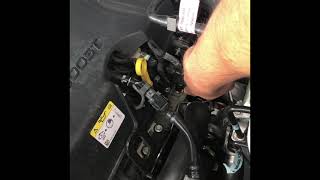
Typical fix: Replace the Engine Coolant Temperature sensor. On the 2.7L, this sensor is located under the intake manifold 🎬 Watch: Finding the sensor location on the 2.7L EcoBoost. and can be difficult to access.
Est. part cost: $30-$60 - Thermostat Stuck Closed ⚪ Low Probability
How to confirm: After the engine has warmed up, carefully feel the upper and lower radiator hoses. If the upper hose is hot and the lower hose is cool, it indicates coolant is not circulating through the radiator, likely due to a stuck thermostat.
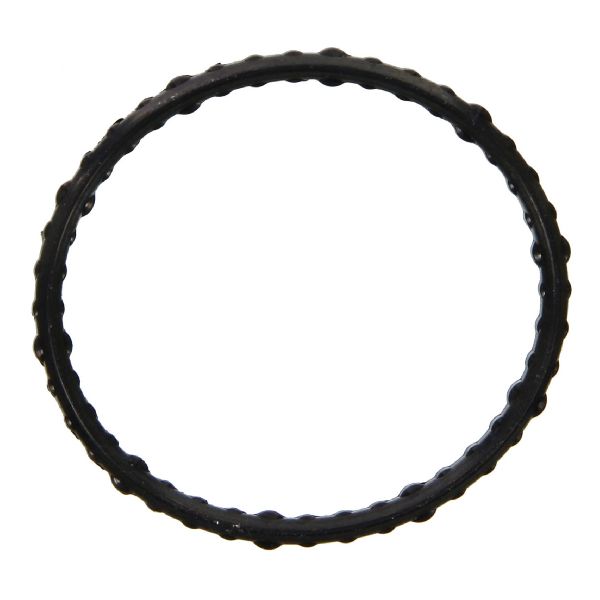
Typical fix: Replace the thermostat and gasket.
Est. part cost: $40-$100
Rare But Worth Checking
- Failing Water Pump (All Engines): A failure of the water pump will stop coolant circulation entirely, leading to rapid overheating.
- Internal Water Pump Failure (3.7L V6 ONLY): The 3.7L V6 uses an internal, timing-chain-driven water pump. A failure can leak coolant directly into the engine oil, causing catastrophic engine damage. Any overheating or coolant loss on this engine requires immediate and careful inspection.
- Cooling Fan Malfunction: If the electric cooling fans fail to activate, the engine will overheat, especially in stop-and-go traffic or at idle.
- Restricted Radiator: Internal clogs or external debris blocking airflow can reduce the radiator's effectiveness and cause overheating.
Diagnosis Steps
- Verify the engine is actually overheating. Check the temperature gauge and look for physical signs like steam or boiling coolant. If these signs are present, treat it as a true overheat and allow the engine to cool completely.
- If the engine does not appear to be physically overheating (e.g., fans are blasting on a cold engine), suspect an electrical fault. Turn the vehicle off.
- Crucial Step for 2.7L Engine: Locate the Engine Coolant Temperature (ECT) sensor, which is under the intake manifold. Carefully inspect its electrical connector for a secure fit and examine the wiring harness leading to it (specifically the section between connectors C1016 and C1168) for any signs of damage, chafing, or melting, as described in TSBs.
- If the engine IS physically overheating, allow it to cool completely. Check the coolant level in the reservoir and radiator. Top off if low and check for leaks from hoses, the radiator, or water pump.
- If coolant level is correct, start the engine and monitor the cooling fans as the engine warms up. Ensure they turn on.
- Check for a stuck thermostat by carefully feeling the radiator hoses for a significant temperature difference (hot upper, cool lower).
- If the above steps do not identify the cause, more complex diagnostics for the water pump or a restricted radiator may be needed. For the 3.7L engine, any coolant loss should prompt an inspection for coolant in the oil.
Parts You'll Likely Need
- ECT and Knock Sensor Harness (2.7L)
(OEM #12A699 (Base Part Number))— This is the official causal part listed in TSBs SSM 48991 and SSM 46906 for the false P0217 code on the 2.7L engine. Replacing the harness is the recommended fix.
Trusted brands: Motorcraft
OEM price range: $70-$150
Aftermarket price range: $50-$100 - Engine Coolant Temperature (ECT) Sensor
(OEM #FT4Z-12A648-B (or Motorcraft DY-1309))— On the 2.7L engine, the wiring to this sensor is a primary suspect. TSB SSM 48991 recommends replacing the sensor along with the harness. On other engines, the sensor itself can fail and cause a true P0217.
Trusted brands: Motorcraft (DY-1309)
OEM price range: $27-$45
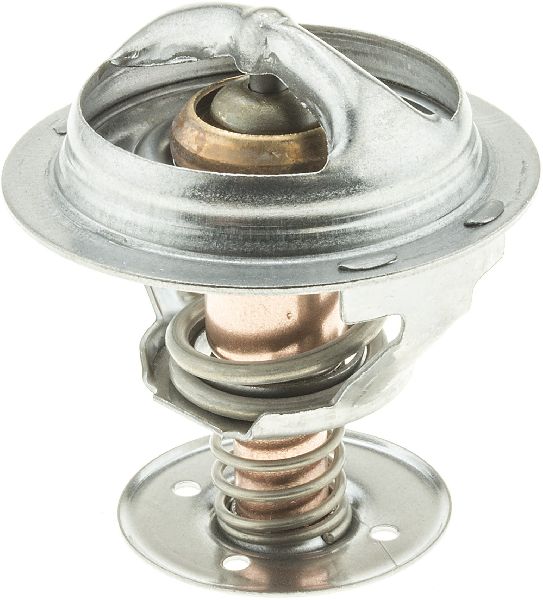
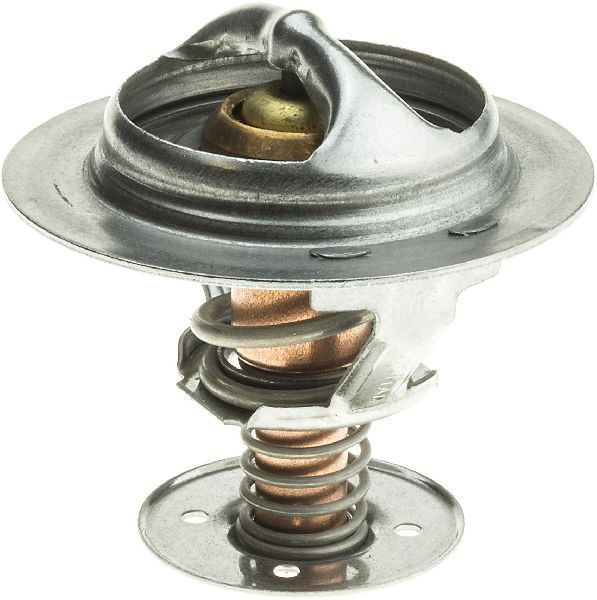
Aftermarket price range: $20-$50 - Engine Coolant Thermostat — If the code is caused by a legitimate overheating condition (not an electrical fault), a thermostat stuck in the closed position is a common mechanical cause.
Trusted brands: Motorcraft
OEM price range: $50-$100
Aftermarket price range: $30-$70
Related Codes That Often Appear With This One
- P0116, P0117, P0118, P0119 — These codes indicate ECT sensor circuit range/performance, low input, high input, or intermittent faults. They are all explicitly listed in the TSBs and directly point to the same sensor/wiring issue.
- P1299 — Indicates 'Cylinder Head Overtemperature Protection Active'. This is the PCM taking protective action (like reducing power) based on the high temperature signal from the faulty ECT circuit.
- P0128 — Indicates the thermostat has not reached its required operating temperature. This can be triggered by the erratic and illogical signals from the failing ECT sensor circuit.
- P0330 — Knock Sensor 2 Circuit Malfunction. TSB SSM 48991 explicitly states the ECT and knock sensor share a harness, and damage to this harness is the root cause, often triggering both codes simultaneously.
- P1026 — Indicates a fault in the cylinder head temperature sensing system. This is another code listed in the TSBs that can be caused by the same faulty wiring harness.
Technical Service Bulletins (TSBs) & Recalls
- SSM 48991: Recommends replacing the ECT sensor (12A648) and the knock sensor harness (12A699) together to resolve P0217 and a list of related codes on 2.7L engines.
- SSM 47791: Cites a not fully seated ECT sensor connector or damaged wiring as a cause for P0217 on 2.7L engines.
- SSM 46906: An earlier bulletin that specifies to check for damaged wiring between connectors C1016 and C1168 on 2.7L engines.
- TSB 21-2168: While specific to the F-150, this TSB is highly relevant as it details a permanent fix for the same 2.7L engine issue by relocating the ECT sensor.
Platform-Specific Known Issues
- A series of Technical Service Bulletins (SSM 48991, SSM 47791, SSM 46906) were released for 2017-2020 Lincoln Continentals with the 2.7L engine. They state that P0217, often accompanied by other codes (P0116-P0119, P0330, P1299), is likely due to the engine coolant temperature (ECT) and knock sensor wiring harness being damaged or having a loose connection.
- On the related Ford F-150 platform with the same 2.7L engine, the issue was so prevalent that Ford issued TSB 21-2168, which provides a kit (ML3Z-14A411-H) to relocate the ECT sensor to a more reliable location on a heater hose, away from the heat and vibration under the intake manifold.
Mechanic-Grade Diagnostic Values
- ECT Sensor Resistance — expected: Approximately 2,265 Ohms at 30°C (86°F). Resistance decreases as temperature increases.. Failure: No reading (open circuit) or a reading that doesn't change when the sensor's temperature is changed (e.g., with a heat gun).
- ECT Sensor Voltage (Signal Wire to Ground) — expected: Typically ranges from ~4.5V on a cold engine to ~0.5V at full operating temperature. The voltage should decrease smoothly as the engine warms up.. Failure: Voltage that is stuck high (e.g., >4.7V, which can trigger P0118) or low (e.g., <0.3V, which can trigger P0117), or voltage that jumps erratically when wiggling the harness.
Scan Tool Commands That Help
- High-end scanners (e.g., iCarsoft CR MAX, Ford IDS): Cooling Fan Activation / Bidirectional Control — This command allows the technician to manually turn the cooling fans on and off directly from the scan tool. It is used to verify if the fan motors, relays, and control circuits are working, which helps rule them out as a cause for a true overheating condition.
Wiring & Ground Locations
- C1016 — The electrical connector at the Engine Coolant Temperature (ECT) sensor itself, located under the intake manifold on the 2.7L V6.. TSBs SSM 47791 and SSM 46906 identify this connector as a primary failure point, either from not being fully seated or from damage to the wiring near it.
- C1168 — An inline harness connector for the ECT/knock sensor harness on the 2.7L V6.. TSBs specifically call out checking for damaged wiring between the ECT sensor connector (C1016) and this inline connector, indicating the fault often lies in this specific section of the harness.
- G108 / G104 — Refers to a primary chassis ground stud, often located on the frame rail in the engine compartment, sometimes near the battery.. While not specifically cited in the TSBs for this fault, a poor engine or sensor ground can cause erratic voltage readings for multiple sensors, including the ECT. Verifying that main engine and chassis grounds are clean and tight is a fundamental step in diagnosing any electrical fault.
Real Owner Repair Stories
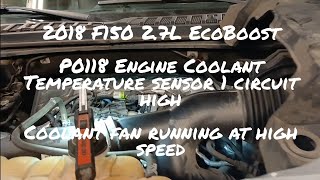
- YouTube video detailing TSB 21-2168 for a Ford F-150 (2018 Ford F-150 2.7L EcoBoost (same engine family and issue)) — Check engine light, cooling fan running on high, codes P0118 and P1299.
❌ Tried (didn't work) The video directly addresses the known issue, bypassing other diagnostic steps.
✅ What actually fixed it Instead of performing the 8.2-hour book time job to replace the sensor and harness in the original location, the technician used a Ford-issued relocation kit (Part #ML3Z-14A411-H). This kit includes a new heater hose with an integrated ECT sensor port and a jumper harness, moving the sensor to a more accessible and less heat-soaked location. This resolved the false overheating signals.
OEM Part Supersession History
FT4Z-12A648-A→FT4Z-12A648-B— Part revision by the manufacturer. While the exact reason is not stated, supersessions often address durability, material, or design improvements.
Heads up: The new part number (FT4Z-12A648-B) is the current direct replacement for the original.
Model Year Variations Within This Range
- 2018-2020 (per F-150 TSB): For vehicles with the 2.7L engine experiencing this issue, Ford released a TSB for the F-150 (TSB 21-2168) that prescribes a sensor relocation kit (ML3Z-14A411-H) as the definitive fix. While this TSB is for the F-150, it addresses the identical set of DTCs and engine, suggesting the underlying problem and repair strategy are highly relevant for the Continental, especially for later model years within this range.
Helpful Videos

![What is P0217 Engine Code [Quick Guide]](https://img.youtube.com/vi/oDk_XOwYu90/mqdefault.jpg)
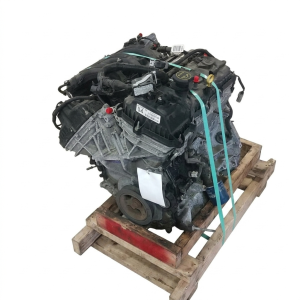
Used OEM Parts in Stock

New Aftermarket Parts Available


The information in this article is provided for general reference and educational purposes only. Vehicle specifications, procedures, and part compatibility can vary by production date, trim level, and region. Always consult your vehicle's factory service manual and verify part numbers before purchasing or performing repairs. Safety-critical components such as airbags, seat belts, and braking systems should be installed by a qualified professional.
- Lincoln CONTINENTAL:
- 🎬 Helpful Videos
- 🛍️ Shop This Part
- What's Unique About the 2017-2020 Lincoln CONTINENTAL
- Diagnostic Flowchart
- Symptoms You May Notice
- Most Likely Causes
- Rare But Worth Checking
- Diagnosis Steps
- Parts You'll Likely Need
- Related Codes That Often Appear With This One
- Technical Service Bulletins (TSBs) & Recalls
- Platform-Specific Known Issues
- Mechanic-Grade Diagnostic Values
- Scan Tool Commands That Help
- Wiring & Ground Locations
- Real Owner Repair Stories
- OEM Part Supersession History
- Model Year Variations Within This Range
- 🎟️ Get 5% Off