

P0217 on 2016-2020 Ford Mustang GT350: Engine Overheat Causes and Fixes
P0217 means your GT350's engine is overheating. Stop driving immediately. The cause can range from a simple coolant leak or bad thermostat to platform-specific issues like inadequate cooling for track use on early models. A proper diagnosis is critical to prevent catastrophic engine damage to the high-strung Voodoo V8.
- P0217 is a critical code indicating your engine is overheating. Stop driving immediately to prevent catastrophic engine failure.
- Common causes are the same as any vehicle: low coolant from leaks, a stuck thermostat, or failing cooling fans.
- For the GT350, especially early models, overheating during aggressive driving can be a known issue, sometimes related to insufficient auxiliary cooling for the transmission and differential.
- Always perform a thorough diagnosis. Start with the basics (coolant level, leaks, fan operation) before replacing more expensive parts.
- Due to the high-performance nature and value of the 5.2L Voodoo engine, professional diagnosis and repair are strongly recommended if the cause is not immediately obvious.
What's Unique About the 2016-2020 Ford Mustang
The Shelby GT350, particularly the 2016 model year, is known for overheating issues, especially when driven hard on a track. A class-action lawsuit was filed alleging that 2016 models with the Base and Technology packages were sold as 'track-ready' but lacked the necessary transmission and differential coolers that came standard on the Track package. This would cause the transmission and differential to overheat, sending the car into limp mode, though it's a separate issue from a primary engine coolant overheat (P0217). For the 2017 model year, Ford made the previously optional coolers standard. This history highlights the platform's sensitivity to temperature and the importance of a robust cooling system for the high-output 5.2L Voodoo engine.
Symptoms You May Notice
- Check Engine Light is on
- Engine temperature gauge reading 'Hot' or in the red zone
- Engine temperature warning light illuminated on the dashboard
- Reduced engine power as the car enters 'limp mode'
- Steam or smoke coming from the engine bay
- Boiling or gurgling sounds from the engine
- Noticeable sweet smell of coolant
- Sudden loss of power at high speeds on a track
- Replacing the coolant temperature sensor without verifying its reading. While a sensor can fail, P0217 is most often triggered by a genuine overheat event, not a false reading. Always confirm the engine is actually overheating using an infrared thermometer on the cylinder heads or coolant hoses before replacing the sensor.
Most Likely Causes
- Low Engine Coolant Level / Coolant Leak 🔴 High Probability High-performance engines generate significant heat, and any leak in the cooling system can quickly lead to an overheat condition. A notable issue for 2015-2017 GT350s was Safety Recall 16S40, which addressed engine oil cooler tubes with insufficient crimps that could lead to a hose separating, causing a massive oil leak and potential fire, but also highlighting the vulnerability of fluid lines. Coolant hoses, the radiator, water pump, and reservoir cap are also common failure points.
How to confirm: Visually inspect the coolant reservoir. When the engine is completely cool, check the radiator level. Look for puddles of orange/pink coolant under the car or white/crusty residue on cooling system components. A cooling system pressure test can pinpoint hard-to-find leaks.
Typical fix: Identify and repair the source of the leak. This could involve replacing a hose, clamp, radiator, water pump, or reservoir cap. Use only Ford's specified Motorcraft Orange Coolant.
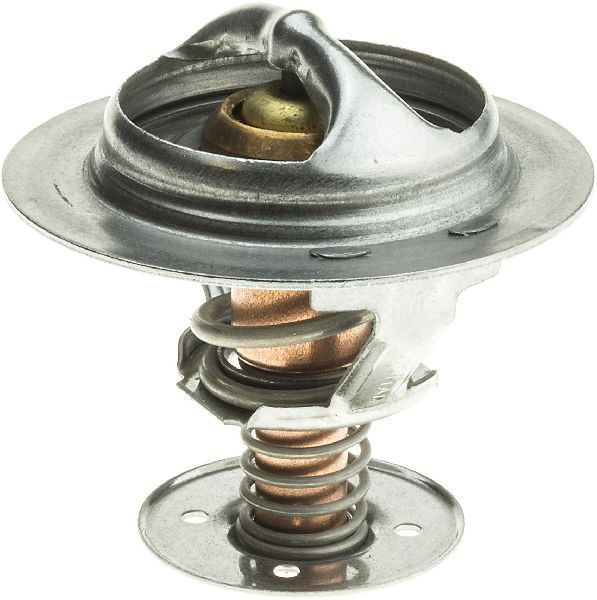
Est. part cost: $20-$600 - Stuck-Closed Thermostat 🟡 Medium Probability Thermostats are a common wear item. A thermostat that fails in the closed position will prevent coolant from circulating to the radiator, causing a rapid overheat. The factory thermostat is designed to open around 190°F.
How to confirm: After starting a cold engine, feel the upper radiator hose. It should get hot as the engine warms up and the thermostat opens. If the engine is overheating but the hose remains cool, the thermostat is likely stuck closed. An infrared thermometer can also confirm a large temperature difference between the inlet and outlet of the radiator.
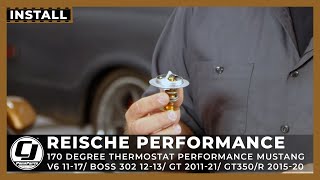
Typical fix: Replace the thermostat and housing assembly. The OEM Motorcraft part is FR3Z-8575-B. Some owners opt for a lower-temperature aftermarket thermostat (e.g., 160°F or 180°F) for track use 🎬 Watch: How to install a performance low-temp thermostat or hotter climates.
Est. part cost: $50-$150 - Cooling Fan Malfunction 🟡 Medium Probability The electric cooling fans are critical for providing airflow across the radiator, especially at low speeds or idle. Fan motors, relays, or the fan control module can fail, preventing activation.
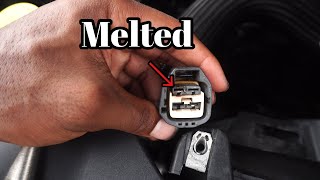
How to confirm: With the engine at operating temperature (or with the A/C turned on), verify that the cooling fans are spinning. If they are not, check the corresponding fuses and relays in the under-hood fuse box. A scan tool can be used to command the fans on to test the circuit and fan motors directly. 🎬 See how to troubleshoot fans that aren't kicking on
Typical fix: Replace the faulty fuse, relay, or the entire cooling fan assembly.
Est. part cost: $15-$800 - Failing Water Pump ⚪ Low Probability The water pump is the heart of the cooling system. While not as common as leaks or thermostat issues, a failure of the pump's impeller or bearing will stop coolant circulation. Ford Performance offers an upgraded water pump (M-8501-M52A) that provides a 30% improvement in flow over the standard pump. In other Ford vehicles, NHTSA ODI #11639979 describes a P0217 and P1285 diagnosis where a coolant leak was found specifically at the water pump weep hole.
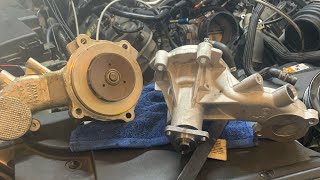
How to confirm: Check for coolant leaks from the water pump's 'weep hole'. Listen for grinding or whining noises from the pump pulley area. With the engine off and cool, check for play in the water pump pulley. 🎬 Watch this step-by-step guide to replacing your water pump
Typical fix: Replace the water pump and flush the cooling system. The standard OEM replacement part number has been superseded, but a common replacement is BR3Z-8501-D, though verification with VIN is critical.
Est. part cost: $150-$500
Rare But Worth Checking
- Faulty Coolant Overflow Tank Cap: A forum member on TrackMustangsOnline.com reported that a failing coolant overflow cap (de-gas bottle cap) caused a P0217 code. The cap is designed to hold the system at a specific pressure (e.g., 1.5 bar); if it fails, the coolant can boil at a lower temperature, leading to an overheat condition. A user on Mustang6G.com also suspected a new, higher-pressure aftermarket cap was causing issues. The OEM cap is a relatively inexpensive part to replace as a preventative measure.
- Blown Head Gasket: This is a worst-case scenario. A failed head gasket can allow hot combustion gases to enter the cooling system, overwhelming its capacity and causing a rapid overheat. While more notorious on the 2.3L EcoBoost Mustang, it is not impossible on the Voodoo V8. NHTSA ODI #11520798 notes a case where P0217 was found alongside misfire codes after coolant was discovered in a cylinder. Similarly, NHTSA ODI #11566450 describes a technician finding minor coolant intrusion and a "shiny" piston via borescope after a P0217 code. This requires a chemical block test or a cylinder leak-down test to confirm.
- Restricted Radiator: External fins can get clogged with road debris or tire rubber from track days, reducing airflow. Internal passages can become blocked by corrosion or contaminants, especially if incorrect coolant has been used. This reduces the radiator's ability to dissipate heat.
- Corrupted PCM Software: In rare cases, the Powertrain Control Module's firmware may be corrupted, causing it to set an over-temperature limit that is too low or misinterpret sensor data. This would typically require a dealer to re-flash the PCM to the latest calibration.
Diagnosis Steps
- DO NOT open the radiator or coolant reservoir cap when the engine is hot. Severe injury from pressurized, hot coolant can occur.
- Safely pull over and shut off the engine immediately. Allow it to cool for several hours.
- Once cool, visually inspect the coolant level in the overflow reservoir (de-gas bottle). The correct coolant is Motorcraft Orange.
- Check for obvious signs of coolant leaks on the ground, on hoses, the radiator, and around the water pump. Look for orange/pink residue.
- Scan the vehicle for any other stored trouble codes that may provide more clues (e.g., P1299, fan control codes). As seen in NHTSA ODI #11650985, P0217 may appear with misfire codes like P0302 and fuel injector codes like P06E9.
- If coolant is low, top it off with a 50/50 mix of distilled water and Ford-specified VC-3-D Orange coolant. Start the engine and monitor the temperature gauge. NHTSA ODI #11569516 describes a scenario where a vehicle was very low on coolant and required topping off before being diagnosed with P0217, P1285, and P1299.
- Verify cooling fan operation as the engine warms up (they should turn on at a set temperature or when the A/C is on).
- If no leaks are visible and the fans work, perform a cooling system pressure test to find hidden leaks. This includes testing the pressure cap.
- Test the thermostat to ensure it is opening correctly. The upper radiator hose should become hot as the engine reaches operating temperature (around 190-200°F).
- If the cause is still not found, a professional should perform advanced diagnostics, such as using a chemical block tester to check for combustion gases in the coolant (indicating a head gasket failure).
Parts You'll Likely Need
- Engine Coolant Thermostat Assembly
(OEM #FR3Z-8575-B)— A thermostat stuck in the closed position is a frequent cause of overheating and is a common wear item. This part includes the housing and gasket.
Trusted brands: Motorcraft
OEM price range: $70-$150
Related Codes That Often Appear With This One
- P1299 — This is a Ford-specific code for 'Cylinder Head Over Temperature Sensed'. It often appears with P0217 as it confirms the PCM has detected a critical overheat at the cylinder head and has likely entered a fail-safe mode.
- P1285 — Similar to P1299, this Ford code also indicates 'Cylinder Head Over Temperature Sensed' and serves as another layer of protection and confirmation of an overheat event.
Technical Service Bulletins (TSBs) & Recalls
- Recall 16S40: Affects 2015-2017 GT350/R models for engine oil cooler tubes that may have insufficient crimps, leading to hose separation and oil leaks. While for oil, it speaks to the vulnerability of high-performance fluid systems on this car.
- Customer Satisfaction Program 17B04: Addressed oil filters (FL-2069-ST) loosening due to engine vibration and also noted that oil consumption of 1 quart per 500 miles is possible under track use.
- SSM 46173: Addressed owner concerns about piston slap noise on cold engines, noting it was a normal characteristic for forged pistons and not indicative of a fault.
- TSB 17-2271: For 2016-2017 models, addresses potential oil leaks from the engine oil pressure sensor threads.
Platform-Specific Known Issues
- A class-action lawsuit was filed for 2016 GT350 models (base and Tech package) due to overheating during track use, attributed to the lack of transmission and differential coolers that were standard on later models and Track Package cars. This can cause the car to enter 'limp mode'.
- A recall was issued for some 2015-2017 GT350 models for improperly crimped engine oil cooler lines that could separate, causing a rapid loss of engine oil and potential engine failure. While not a coolant issue, it's a critical fluid-related problem on this platform.
Mechanic-Grade Diagnostic Values
- Cylinder Head Temperature (CHT) Sensor Resistance — expected: Approximately 37.3 kΩ at 68°F (20°C), 5.9 kΩ at 140°F (60°C), and 1.18 kΩ at 212°F (100°C).. Failure: Resistance values that are significantly outside the expected range for a given temperature, or an open/short circuit reading. An inaccurate CHT reading can cause the PCM to miscalculate engine temperature, potentially delaying fan activation or triggering a false overheat condition.
- Live Data: Cylinder Head Temperature (CHT) — expected: On a fully warm engine under normal load, CHT should typically read between 195°F and 220°F. On track, it may climb to ~240°F before cooling systems are overwhelmed.. Failure: A CHT reading that rapidly spikes to 250°F+ indicates a severe overheat. A reading that never rises above ambient temperature may indicate a failed sensor or wiring issue. The PCM uses CHT for its fail-safe cooling strategy, making this PID critical for diagnosis.
Scan Tool Commands That Help
- Ford IDS (Integrated Diagnostic System): Cooling Fan Control (On/Off/Variable Speed) — This bidirectional control is used to directly command the cooling fans to turn on at various speeds, bypassing the PCM's standard logic. It is essential for verifying the functionality of the fan motors, fan control module, relays, and wiring independently of the temperature sensors. If the fans operate with the scan tool but not automatically, the issue lies with the sensor inputs or PCM, not the fan circuit itself.
- Ford IDS (Integrated Diagnostic System): Datalogger - PID Monitoring — When diagnosing an intermittent P0217, use the IDS datalogger to record PIDs like CHT, ECT, Fan Speed Command (FAN_DC), and Vehicle Speed (VSS). Graphing these parameters together can reveal if the fans are being commanded on at the correct temperature and if their activation corresponds with a drop in CHT, helping to isolate sensor, fan, or airflow problems.
Wiring & Ground Locations
- G103 — On the S197 platform (predecessor to the S550), G103 was located on the passenger side of the engine compartment, near the hood prop. While S550 locations differ, this ground is critical as it often provides the ground path for the engine cooling fan motor.. A corroded or loose G103 ground can cause intermittent or complete failure of the cooling fan. The fan may fail to activate when commanded by the PCM, leading to overheating, especially in low-speed traffic. Technicians should inspect and clean this ground connection when diagnosing any cooling fan-related issues.
- Engine-to-Chassis Ground Strap — Typically a braided metal strap connecting the engine block to the vehicle's frame/chassis, often on the driver's side.. While not directly part of the cooling fan circuit, a poor engine ground can cause a host of electrical issues, including erratic sensor readings. The CHT sensor and other critical engine sensors rely on a stable ground reference. A compromised strap can lead to incorrect temperature readings by the PCM, potentially contributing to a P0217 code.
Real Owner Repair Stories
- Mustang6G.com user 'Billy2015GT' (2015+ Mustang (specific year not mentioned)) — Car running hotter than normal, eventually triggering a P0217 code.
❌ Tried (didn't work) The user did not report trying other fixes first; the issue began after installing an aftermarket part.
✅ What actually fixed it The user reported the issue started after installing a Radium Engineering coolant tank and a 1.5 bar radiator cap. The implication from the forum thread is that the higher-pressure cap was potentially causing an issue or that an air pocket was introduced during the installation, leading to the overheat condition. The final resolution was not posted, but the aftermarket cap was the primary suspect.
OEM Part Supersession History
BR3Z-8501-A, BR3Z-8501-E→BR3Z-8501-D— Standard part evolution, likely for improved reliability or manufacturing efficiency. This water pump is listed for the 3.7L V6 but is often cited in forums and parts catalogs as a replacement for V8 models, highlighting the need for VIN verification.
Heads up: While BR3Z-8501-D is a common replacement, it is officially listed for the 3.5L/3.7L engines. Using it on a 5.2L Voodoo without VIN confirmation from a Ford dealer is risky. The Voodoo engine has specific cooling requirements, and using a non-specified pump could lead to inadequate flow, even if it physically bolts on.
Model Year Variations Within This Range
- 2016 only: Base and Technology Package GT350s lacked the standard transmission and differential coolers that came on the Track Package. While not a direct cause of P0217 (engine coolant overheat), this highlights the cooling deficiencies of the early models and led to a class-action lawsuit.
- 2017-2020: Ford made the 'Track Package' cooling systems (engine oil, transmission, and differential coolers) standard on all GT350s, improving the car's overall thermal management, especially for track use.
- 2019-2020: The GT350 received a refresh including aerodynamic improvements and revised chassis tuning. While Ford didn't announce major changes to the primary cooling system, software calibrations in the PCM for managing engine temperatures and fan control may have been updated. A dealer can verify if a vehicle has the latest software calibration.
Diagnostic Flowchart
Other Known Issues on This Vehicle
Issues unrelated to this code that are worth knowing about as an owner of this generation:
- Excessive Oil Consumption 🔴 High — Common on Gen 1 Voodoo engines (2016-2018). Ford stated in owner supplements that 1 quart per 500 miles can be normal under track conditions. Some engines required replacement due to extreme consumption. (Ref: No official recall, but addressed in Customer Satisfaction Program 17B04 and handled on a case-by-case basis by dealers.)
- Engine Vibration and 'BBQ Tick' 🟠 Medium — The flat-plane crank design naturally produces more vibration than a cross-plane V8. A characteristic ticking noise, often called the 'BBQ tick,' is common and generally considered normal. However, excessive vibration led to issues like loosening oil filters. (Ref: CSP 17B04 was issued to address loosening oil filters.)
- Oil Starvation / Catastrophic Engine Failure 🔴 High — Though not affecting a majority of cars, a notable number of early Voodoo engines (Gen 1, 2016-2018) suffered catastrophic failures, often attributed to oil starvation, spun bearings, or oil pump gear issues. (Ref: No official recall for engine failure, but many were replaced under warranty.)
- Oil Cooler Line Failure 🔴 High — Affected 2015-2017 models, where insufficient crimps on oil cooler lines could lead to hose separation, sudden loss of oil, and potential engine failure or fire. (Ref: Safety Recall 16S40)
- Lack of Track Cooling (2016 Base/Tech Pack) 🔴 High — Specific to 2016 models without the Track Package. The lack of transmission and differential coolers caused cars to enter limp mode during track use. (Ref: Subject of a class-action lawsuit; coolers were made standard for 2017+ models.)
Used vs. New Parts: Buying Guide for This Vehicle
When a used part is the smart pick: For this high-performance vehicle, used parts for the core cooling system are generally not recommended. However, cosmetic or simple structural parts like the coolant reservoir (degas bottle), fan shroud, or mounting brackets can be sourced from a reputable salvage yard if they are in good condition with no cracks or damage.
Donor-vehicle mileage cap: roughly under 40000 miles for the part to have meaningful remaining life.
What to inspect on the donor part:
- For a used radiator or condenser, inspect fins for heavy damage or corrosion.
- Check plastic components like reservoirs and fan shrouds for brittleness, hairline cracks, or discoloration from heat.
- Ensure all hose connection points are free of cracks or deep scoring.
- Verify the donor vehicle was not in a major front-end collision, which could have caused unseen damage to cooling components.
OEM-only on this vehicle (don't cheap out):
- Engine Coolant Thermostat (Motorcraft FR3Z-8575-B)
- Water Pump (VIN-verified Motorcraft part)
- Cylinder Head Temperature (CHT) Sensor
- Coolant Reservoir Cap (Motorcraft FR3Z-8100-A)
Aftermarket brands forum-validated for this vehicle:
- Radiator: C&R Racing (often considered a premium upgrade for track use), Mishimoto, Fluidyne. Note that some users report Mishimoto quality can be inconsistent, though they have a good warranty.
- Coolant: Stick to OEM Motorcraft Orange Coolant (VC-3-D or prediluted VC-3DIL-B). Do not mix coolant types.
Brands owners have reported issues with on this vehicle:
- Unbranded, low-cost 'OEM replacement' thermostats and sensors from online marketplaces. The risk of premature failure or incorrect calibration is too high for this engine.
Real Owner Stories
Aggregated from forums and TSBs cited above. Mileages and costs reflect what owners reported in those sources.
2016-2020 Ford Mustang Shelby GT350 5.2L
Symptoms: Owner experienced a P0217 code shortly after installing an aftermarket coolant tank and cap.
What fixed it: The issue was linked to the aftermarket coolant tank/cap setup not maintaining proper pressure.
Source hint: https://www.mustang6g.com/forums/threads/code-p0217-engine-coolant-overtemperature-condition.191899/
2016-2020 Ford Mustang Shelby GT350 5.2L
Symptoms: Intermittent overtemperature codes and cooling issues.
What fixed it: Replacing a faulty coolant overflow cap resolved the pressure loss causing the code.
Source hint: https://trackmustangsonline.com/threads/gt350-intermittent-codes.16259/
2016 Ford Mustang Shelby GT350 5.2L
Symptoms: Extreme oil consumption that eventually led to the engine failing.
What fixed it: The entire engine was replaced under warranty by the dealer.
Source hint: https://trackmustangsonline.com/threads/engine-replaced-due-to-high-oil-consumption.12423/
Documented NHTSA Reports
Ford Platform Overheat and Misfire
Symptoms: An owner reported codes P0217, P0303, P0316, P1285, and P1299 after finding the vehicle was very low on coolant.
What fixed it: NHTSA ODI #11569516 describes the vehicle being topped off with coolant before being taken to a dealership for diagnosis of the over-temperature and misfire codes.
Ford Platform Overheat and Misfire
Symptoms: Diagnostic trouble codes P0217, P0302, P0316, and P06E9 were stored in the ECM.
What fixed it: NHTSA ODI #11650985 reports these codes were retrieved during an inspection for engine overheating and misfire issues.
Related OBD-II Codes
Frequently Asked Questions
Does the engine oil cooler recall 16S40 apply to my 2017 GT350?
Why is my 2016 GT350 base model entering limp mode during track use even if the coolant level is fine?
Is it normal for my Voodoo engine to use a lot of oil on the track?
What is the correct coolant type for topping off my GT350?
Can a faulty reservoir cap cause a P0217 overtemperature code?
Is there an upgraded water pump available for the 5.2L Voodoo?
Helpful Videos
Used OEM Parts in Stock
New Aftermarket Parts Available




The information in this article is provided for general reference and educational purposes only. Vehicle specifications, procedures, and part compatibility can vary by production date, trim level, and region. Always consult your vehicle's factory service manual and verify part numbers before purchasing or performing repairs. Safety-critical components such as airbags, seat belts, and braking systems should be installed by a qualified professional.
- Ford Mustang:
- 🎬 Helpful Videos
- 🛍️ Shop This Part
- What's Unique About the 2016-2020 Ford Mustang
- Symptoms You May Notice
- Most Likely Causes
- Rare But Worth Checking
- Diagnosis Steps
- Parts You'll Likely Need
- Related Codes That Often Appear With This One
- Technical Service Bulletins (TSBs) & Recalls
- Platform-Specific Known Issues
- Mechanic-Grade Diagnostic Values
- Scan Tool Commands That Help
- Wiring & Ground Locations
- Real Owner Repair Stories
- OEM Part Supersession History
- Model Year Variations Within This Range
- Diagnostic Flowchart
- Other Known Issues on This Vehicle
- Used vs. New Parts: Buying Guide for This Vehicle
- Real Owner Stories
- 2016-2020 Ford Mustang Shelby GT350 5.2L
- 2016-2020 Ford Mustang Shelby GT350 5.2L
- 2016 Ford Mustang Shelby GT350 5.2L
- Documented NHTSA Reports
- Ford Platform Overheat and Misfire
- Ford Platform Overheat and Misfire
- Related OBD-II Codes
- Frequently Asked Questions
- 🎟️ Get 5% Off